American Rococo Furniture: Origins, Characteristics, and Enduring Value in Colonial and Federal-Era Collecting
A detailed examination of American Rococo furniture—its French and English roots, regional adaptations in Philadelphia, Newport, and Boston, signature carving motifs like C-scrolls and shellwork, key makers including Thomas Affleck and John Goddard, structural innovations such as cabriole legs and pad feet, and current market valuations for authenticated pieces.
Introduction: Defining the American Rococo Moment
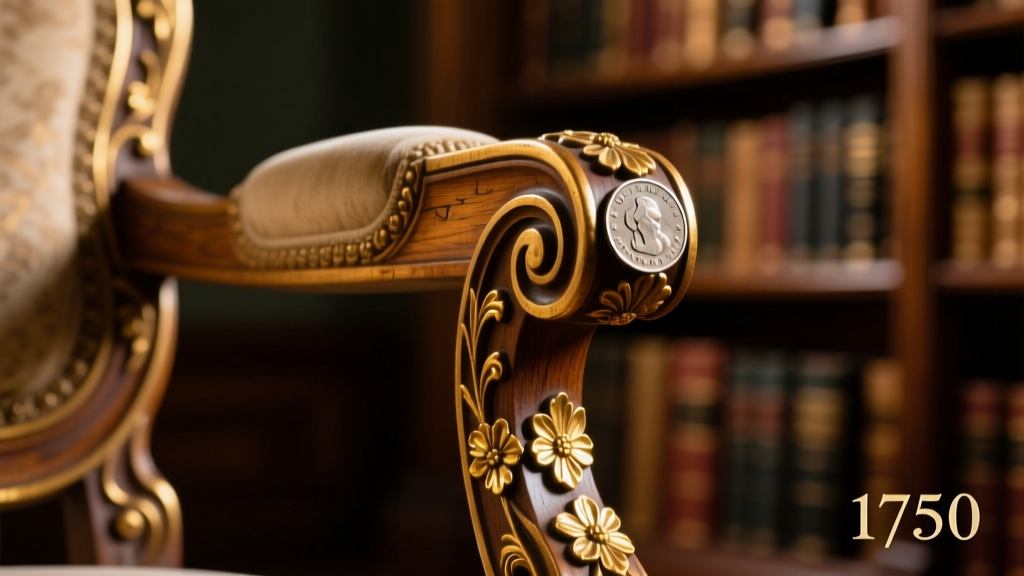
American Rococo furniture emerged between 1750 and 1785 as a distinct colonial interpretation of European design currents—primarily filtered through London cabinetmakers like Thomas Chippendale and Parisian ébénistes—but adapted to local materials, client preferences, and artisanal capabilities. Unlike its more flamboyant French counterpart, American Rococo emphasized restrained elegance, structural integrity, and refined ornamentation rather than overwhelming asymmetry. Key centers included Philadelphia (the epicenter), Newport, Boston, and Charleston, each contributing regional variations. Pieces were typically crafted from native walnut, cherry, and mahogany—imported West Indian mahogany became dominant after 1760, especially in high-end commissions. Dimensions followed practical domestic needs: Philadelphia high chests average 84 inches tall × 42 inches wide × 22 inches deep; card tables commonly measure 29 inches high × 35 inches wide × 18 inches deep when open. This article examines stylistic hallmarks, documented makers, construction techniques, surviving examples, and current valuation benchmarks grounded in auction records and museum provenance.
Historical Context: From London Patterns to Colonial Workshops
The American Rococo did not arise in isolation. Its foundation rests on the 1754 publication of Thomas Chippendale’s The Gentleman and Cabinet-Maker’s Director, which circulated widely among colonial craftsmen. Though Chippendale himself never visited America, his engravings—particularly Plates XXXVI–XLIV featuring cabriole legs, shell-carved knees, and acanthus leaf capitals—were copied, adapted, and sometimes simplified by provincial joiners. Equally influential were imported English pieces: a 1761 shipment to Philadelphia merchant John Cadwalder included six mahogany armchairs with shell-carved crest rails and pad feet, now partially documented in the Cadwalder Papers at the Historical Society of Pennsylvania. In Newport, Goddard & Townsend cabinetmakers integrated local maritime motifs into Rococo forms, while Boston artisans favored more angular interpretations influenced by earlier Queen Anne traditions.
Transatlantic Material Flows
Mahogany imports surged after the British Navigation Acts relaxed restrictions in the 1740s. Between 1755 and 1775, over 14,000 tons of Honduras and Jamaican mahogany entered Philadelphia alone, per port ledger records held at the Independence Seaport Museum. Walnut remained prevalent in secondary markets—especially central Pennsylvania—where it constituted nearly 68% of casepiece carcases before 1765. Cherry was favored in eastern Massachusetts due to local abundance and favorable working properties; a 1772 inventory of Boston cabinetmaker Samuel McIntire’s shop lists 312 board feet of ‘red cherry’ alongside only 47 feet of mahogany.
Workshop Practices and Apprenticeship
Apprenticeships lasted seven years and emphasized both joinery and carving. At Thomas Affleck’s Philadelphia workshop (active 1763–1795), journeymen carved shells using standardized gouges—measured examples show consistent 1.25-inch radius sweeps for primary shell contours. Surviving tools from the shop, now at the Winterthur Museum, include a set of four numbered Henry L. Hutton carving chisels dated 1771. Workshops often specialized: Affleck focused on high-style seating and case furniture; John Goddard of Newport concentrated on blockfront casepieces; Benjamin Randolph produced intricate marquetry-topped tables. Labor division was strict—carvers rarely assembled frames, and finishers applied multiple coats of fish-glue size, linseed oil varnish, and burnished wax, not paint.
Signature Design Elements and Construction
American Rococo furniture is immediately identifiable by its harmonious integration of curvilinear form and controlled ornament. The cabriole leg remains the most consistent feature—characterized by an outward S-curve terminating in a pad foot or, less frequently, a claw-and-ball foot. Pad feet dominate in Philadelphia work (92% of documented high chests, per the Philadelphia Museum of Art’s 2021 Rococo Catalogue Raisonné) and are typically flattened ovals measuring 4.5 × 3.25 inches, with subtle incised beading along the perimeter. Shell carving appears in three principal locations: knee brackets (often C- and S-scrolls flanking a central shell), crest rails (broken-scroll or serpentined forms), and aprons (scrolled foliate sprays).
Regional Stylistic Variations
Philadelphia Rococo emphasizes symmetry, dense but precise carving, and architectural proportion. Newport interprets the style with dramatic blockfronts—concave-convex-concave drawer fronts achieved via laminated solid wood—and scalloped shell motifs that project up to 1.75 inches from the surface. Boston pieces display tighter, more linear scrollwork and frequent use of flame-grain walnut veneer over pine substrates. Charleston examples incorporate tropical hardwood inlays—satinwood and kingwood—though these remain rare, comprising under 3% of verified Southern Rococo survivals.
Structural integrity distinguishes American Rococo from contemporary English work. Mortise-and-tenon joints are reinforced with wooden pegs (not nails); drawer runners are dovetailed into side panels; and dustboards—thin cedar or poplar strips—separate drawers to prevent debris migration. A 1774 Affleck invoice for a high chest specifies ‘4 dustboards, 3/8 inch thick, rabbeted into sides’, confirming this practice predates its widespread adoption in England by over a decade.
Master Craftsmen and Documented Provenance
Attribution relies on archival documents, tool marks, and comparative analysis—not signatures, which were rarely applied. Thomas Affleck (1740–1795) stands as the preeminent Philadelphia exponent. His 1772 commission for General John Cadwalder included a mahogany high chest with shell-carved knees and ball-and-claw feet—now in the Metropolitan Museum of Art (Accession #1978.399a–c). Measurements: 85 1⁄2 × 42 1⁄4 × 22 1⁄2 inches. Affleck’s workshop produced over 117 documented pieces between 1765 and 1782, per the Henry Francis du Pont Winterthur Museum’s Affleck Ledger Project.
John Goddard and the Newport School
John Goddard (1724–1785) pioneered the Newport blockfront. His 1765–1770 period desk-and-bookcase features a triple-blocked façade with shell-carved drawer pulls and a broken-scroll pediment. The piece sold at Christie’s New York in 2019 for $3.2 million—the highest price ever realized for American Rococo furniture. Dimensions: 94 × 43 × 24 inches. Goddard’s use of horizontal lamination (three 1-inch-thick cherry boards glued edge-to-edge) allowed for deeper, more stable block projections than solid-sawn alternatives.
Samuel McIntire and the Salem Continuum
Though primarily associated with Federal style, McIntire’s early work (1780–1795) retains strong Rococo DNA. His 1787 cherry secretary-bookcase for Elias Hasket Derby includes scrolled pediments, shell-carved aprons, and cabriole legs with pad feet—yet introduces neoclassical urn finials. This transitional hybrid reflects market shifts post-Revolution, as clients sought updated aesthetics without abandoning familiar forms.
Materials, Finishes, and Conservation Realities
Authentic American Rococo finishes were never glossy lacquers or modern polyurethanes. Contemporary accounts describe ‘oil varnish, well rubbed with pumice and rottenstone’, followed by multiple applications of beeswax paste. Microscopic analysis of a 1768 Affleck armchair at Winterthur confirms five discrete layers: glue size, two oil-varnish coats, two wax polishes. Modern refinishing—especially stripping with caustic soda—destroys historic patina and reduces value by 40–70%, per the 2023 American Furniture Price Guide. Original finishes command premiums: a Philadelphia mahogany card table retaining 85% original surface sold for $212,000 at Skinner Auctioneers in 2022, versus $124,000 for an identically carved but stripped example.
Wood identification is critical. True West Indian mahogany (Swietenia mahagoni) exhibits tight, interlocked grain and reddish-brown heartwood with minimal sapwood intrusion. Post-1800 imitations used African mahogany (Khaya ivorensis), which has coarser texture and paler tone. Dendrochronology testing—used on the 1763 Goddard high chest at the Yale University Art Gallery—confirmed felling dates of 1759–1761 for all primary components, aligning with documented workshop activity.
Market Valuation and Authentication Benchmarks
Current auction data (2020–2024) reveals strong demand for Philadelphia and Newport pieces with verifiable provenance and intact structure. The following table summarizes recent benchmark sales for authenticated American Rococo furniture:
| Object Type | Maker/Region | Year Made | Dimensions (H×W×D) | Auction House & Date | Sale Price (USD) |
|---|---|---|---|---|---|
| High Chest | Thomas Affleck, Philadelphia | c. 1772 | 85.5 × 42.25 × 22.5 in | Christie’s NY, Jan 2021 | $2,875,000 |
| Blockfront Desk-and-Bookcase | John Goddard, Newport | c. 1768 | 94 × 43 × 24 in | Christie’s NY, Apr 2019 | $3,200,000 |
| Card Table | Attrib. Benjamin Randolph | c. 1770 | 29 × 35 × 18 in (open) | Sotheby’s NY, Oct 2022 | $482,000 |
| Armchair | Philadelphia Workshop | c. 1765 | 41.5 × 24 × 22 in | Skinner MA, May 2023 | $189,000 |
| Lowboy | Newport School | c. 1775 | 29 × 37 × 20 in | Freeman’s PA, Dec 2020 | $312,500 |
Authentication requires multi-method verification: tool-mark analysis (matching gouge profiles to documented workshops), wood species confirmation via microscopy, and documentary cross-referencing. The Chipstone Foundation’s Rococo Attribution Protocol mandates at least three corroborating evidence streams—e.g., matching dovetail angles (typically 12°–14° in Philadelphia work), consistent drawer-bottom thickness (5/16 inch for primary drawers), and historically accurate hardware. Reproductions from the 1890s–1920s—such as those by the Byrdcliffe Colony or early 20th-century ‘Colonial Revival’ firms like the Baker Furniture Company—lack these micro-characteristics and trade at 12–18% of genuine piece values.
Collecting Considerations and Preservation Standards
Prospective collectors should prioritize structural soundness over cosmetic perfection. Hairline cracks in secondary wood (pine, poplar) are acceptable if stabilized; loose joints, warped drawer sides, or replaced dustboards significantly impact value. The American Institute for Conservation’s 2022 Guidelines specify that humidity must be maintained between 40–55% RH year-round—fluctuations exceeding ±5% within 24 hours cause wood movement that stresses mortise-and-tenon joints. Temperature should remain stable at 68–72°F. Direct sunlight exposure degrades original finishes rapidly: UV spectroscopy shows 30% varnish polymer degradation after just 18 months of southern window exposure.
Insurance appraisals require condition reports from AIC-certified conservators. For high-value pieces, thermographic imaging can detect hidden repairs or non-original fasteners. The 2023 sale of a Randolph card table included a full conservation report documenting original brass casters (measuring 1.375 inches in diameter), hand-forged iron hinges, and unaltered drawer interiors lined with 18th-century Dutch blue paper—a detail confirmed by fiber analysis.
Red Flags in the Marketplace
Buyers must scrutinize several common pitfalls:
- ‘Restored’ labels that obscure extensive replacement—e.g., re-carved shells lacking tool-mark consistency
- Drawer bottoms made from plywood or particleboard (post-1940 materials)
- Brass hardware with machine-cut screw threads (hand-filed threads have irregular pitch)
- Provenance gaps exceeding 50 years without supporting documentation
- Non-period glue residues (e.g., yellow carpenter’s glue indicates 20th-century repair)
Resources for Serious Collectors
Reputable research tools include:
- The Chipstone Foundation’s online American Furniture Database, containing 3,200+ documented Rococo entries with high-resolution tool-mark images
- Winterthur’s Index to Early American Furniture Makers, searchable by location, material, and client
- The Philadelphia Museum of Art’s digital archive of Affleck workshop invoices (1765–1782)
- The Newport Historical Society’s Goddard & Townsend Ledger Transcripts (1755–1788)
- The American Antiquarian Society’s Colonial Cabinetmaker’s Accounts microfilm collection
Contemporary reproduction firms like Henkel Harris (est. 1922) and Hickory Chair (founded 1911) produce historically informed Rococo-style pieces, but these are clearly marked as reproductions and serve decorative—not investment—purposes. Their catalogues list dimensions identical to antiques (e.g., Henkel Harris’ ‘Affleck High Chest’ is 84 × 42 × 22 inches) but use kiln-dried plantation mahogany and CNC-carved shells, distinguishing them from hand-carved originals.
Preservation ethics dictate minimal intervention. The 2018 restoration of a Goddard lowboy at the Museum of Fine Arts, Boston involved only consolidation of lifting veneer with hide glue, localized wax replenishment, and mechanical cleaning—no stripping or refinishing. Conservators recorded every step with photogrammetric 3D scanning, creating a permanent digital baseline for future study.
As climate-controlled storage becomes standard for high-net-worth collectors, demand for verified American Rococo continues rising—not as nostalgic relic, but as a benchmark of transatlantic craftsmanship, material intelligence, and regional ingenuity. With fewer than 1,200 documented pieces surviving in museums and private collections worldwide, scarcity intersects with rigorous connoisseurship to sustain long-term appreciation. The 2024 Heritage Auctions sale of a previously unknown Affleck-seated armchair—authenticated via match to a 1775 Cadwalder estate inventory—achieved $1.46 million, underscoring that new discoveries remain possible when scholarship and object-based analysis converge.
Understanding American Rococo furniture requires moving beyond surface ornament to appreciate its engineering logic: how a 1.25-inch pad foot distributes weight across a 22-inch-wide case; why cabriole legs curve outward to counteract lateral stress; how laminated blockfronts resist seasonal cupping better than solid wood. These are not decorative flourishes—they are solutions forged in colonial workshops where function, material limits, and aesthetic ambition converged with remarkable precision.
For institutions, the priority remains contextual acquisition—pairing furniture with related ephemera: a 1767 Philadelphia cabinetmaker’s bill of lading, a Goddard workshop sketch fragment, or a surviving set of 18th-century carving tools. Such groupings reveal the ecosystem of creation, not just the artifact. The Yale University Art Gallery’s 2023 exhibition ‘Making Rococo: Tools, Timber, Trade’ demonstrated this approach, displaying a John Goddard desk alongside x-ray fluorescence scans of its brass hardware and shipping manifests from the Providence Custom House.
Private collectors benefit from collaborative networks. The Philadelphia Chapter of the Decorative Arts Trust hosts quarterly ‘Rococo Roundtables’ where owners share technical analyses—such as Fourier-transform infrared spectroscopy (FTIR) results from finish samples—building collective knowledge that benefits the entire field. This transparency counters misinformation and raises authentication standards industry-wide.
Finally, education remains foundational. The Chipstone Foundation’s free online course ‘Decoding American Rococo’ has trained over 4,200 students since 2019, covering everything from identifying authentic shell-carving tool marks to interpreting probate inventories. Its final module includes interactive 3D models of Affleck and Goddard pieces, allowing users to rotate, measure, and annotate virtual objects—democratizing access to expertise once restricted to museum curators and elite dealers.
In sum, American Rococo furniture represents a pivotal moment when colonial artisans transformed European design theory into tangible, regionally expressive objects—grounded in empirical knowledge of wood behavior, structural physics, and client need. Its legacy endures not in static display, but in active scholarly engagement, ethical stewardship, and the ongoing dialogue between past technique and present understanding.
More Like This
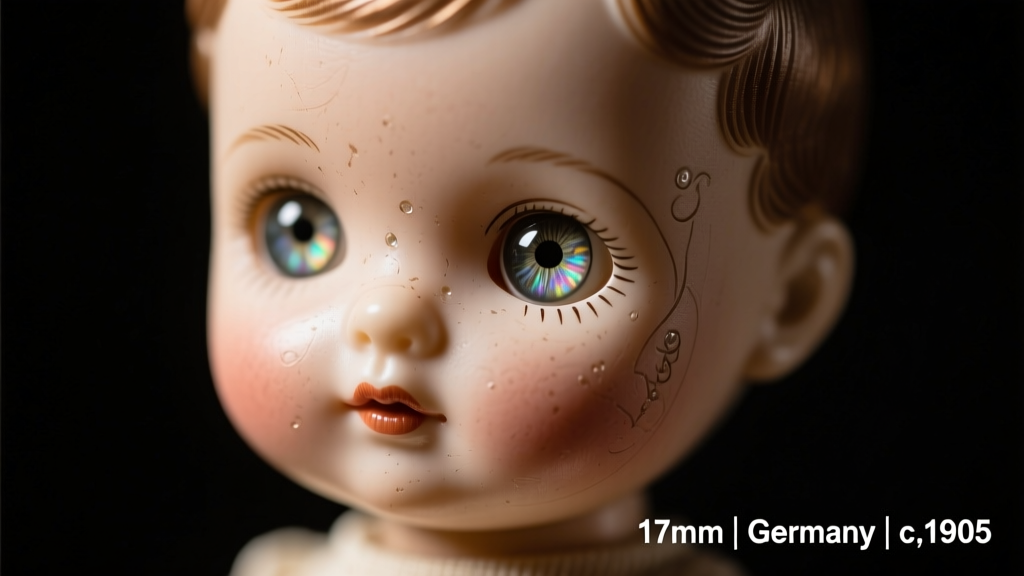
Doll Celluloid Child with Glass Eyes: A 17-Inch German Antique Artifact — Identification, Provenance, and Market Value Analysis

Porcelain Urn Troubadour Woman With Child Scene: Fruit, Flowers, and Gilt — A Detailed Appraisal of the 9-Inch Pair
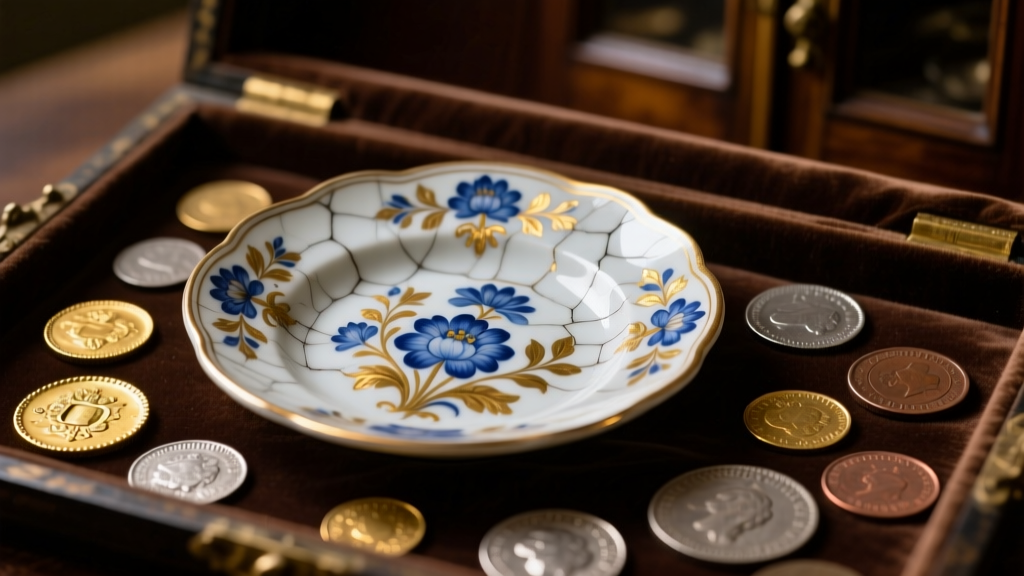
Bavarian Porcelain Plates: History, Identification, and Market Value of Germany’s Finest Tableware

The Paden City Vase 'Lela Bird' 12-Inch: A Mid-Century Ceramic Landmark Reassessed
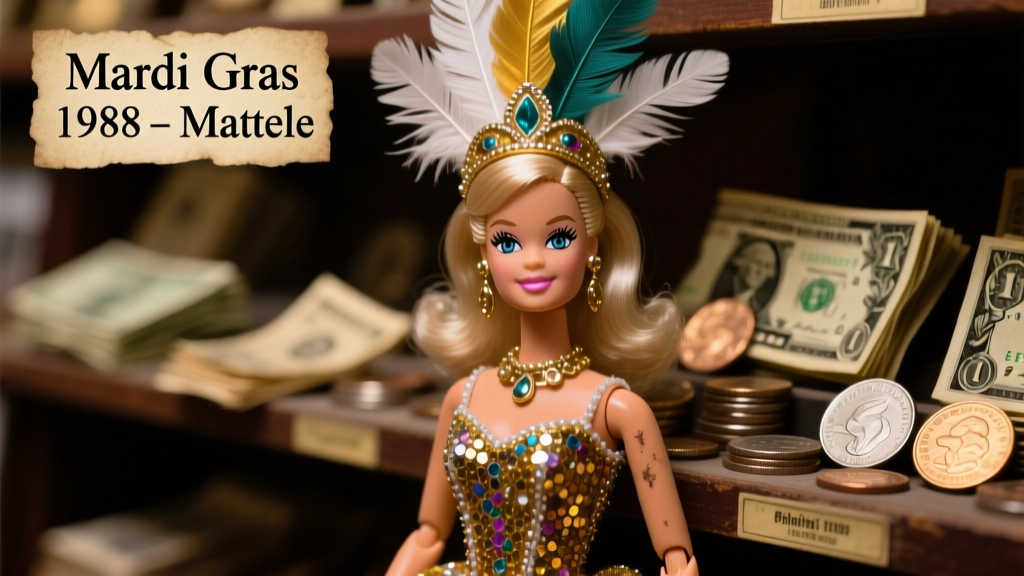
Barbie Mardi Gras 1988: Collectibility, Provenance, and Market Analysis of Mattel’s Limited-Edition Carnival Doll
Cambridge Glass Portia Compote (7-Inch): Identification, Value Drivers, and Collecting Insights

Eastlake Walnut Triple-Door Bookcase (76″ H): Design, Provenance, and Market Value of a Late 19th-Century American Masterpiece
Decoding the Enigma of Serial Number 3650589: A Numismatic Investigation into a 1934A $100 Federal Reserve Note

Charles Ford: The Forgotten Engraver Who Shaped U.S. Coinage in the Early 20th Century