The American Cut Glass Association: Preserving a Gilded Legacy of Hand-Cut Crystal
A definitive exploration of the American Cut Glass Association (ACGA), its founding, mission, archival resources, authentication protocols, and enduring role in safeguarding America’s premier decorative glass art form—produced from 1876 to 1930 by master craftsmen at firms including Libbey, Hawkes, T.G. Hawkes & Co., Meriden Britannia, and J. Hoare & Co.
Introduction: The Brilliance of American Cut Glass
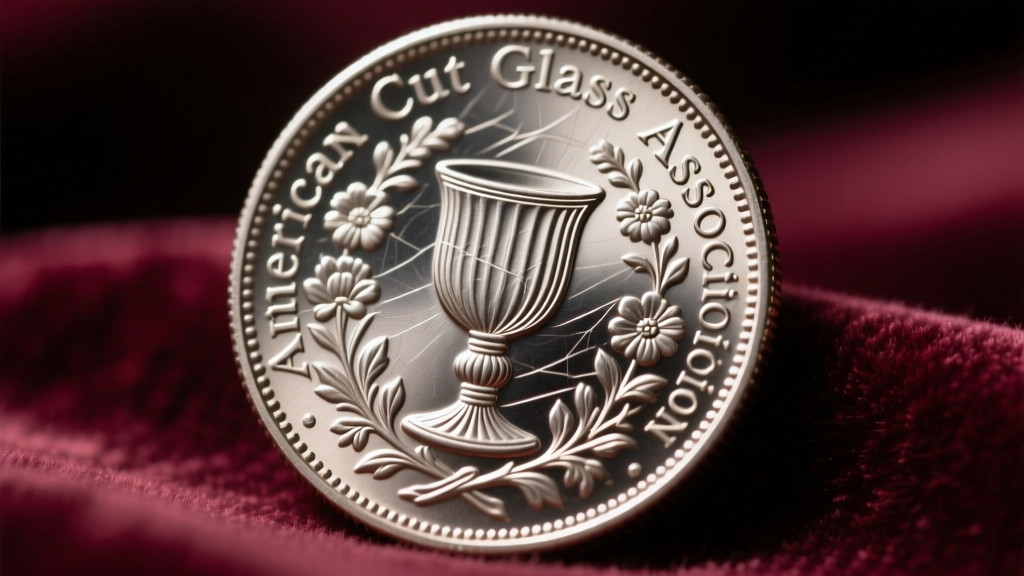
American cut glass represents one of the most technically demanding and aesthetically refined decorative arts produced in the United States during its Golden Age—from the Centennial Exposition of 1876 through the Great Depression’s onset in 1930. Unlike pressed or molded glass, authentic American cut glass was hand-finished by skilled artisans using rotating abrasive wheels, diamond-tipped tools, and precise geometric templates to create intricate patterns like Star of David, Hobnail, Diamond Point, and Fern & Flower. Each piece required up to 40 hours of labor, with master cutters earning $25–$45 per week in 1910—more than double the average factory wage. The American Cut Glass Association (ACGA), founded in 1984, serves as the sole nonprofit dedicated exclusively to preserving, researching, and authenticating this fragile heritage. With over 1,200 members across 22 countries and a curated archive of 12,000+ pattern drawings, maker’s marks, and factory records, the ACGA remains the authoritative voice on American cut glass provenance, valuation, and conservation.
Founding and Institutional Mission
The ACGA emerged from a growing concern among collectors, historians, and descendants of glassworkers that original documentation—and the nuanced knowledge required to interpret it—was rapidly disappearing. In 1983, Dr. Richard W. D. Boos, then curator of decorative arts at the Corning Museum of Glass, convened a symposium in Corning, New York, attended by 47 individuals—including Dorothy M. Hedges (a descendant of T.G. Hawkes’ master cutter), collector William B. Sperling, and conservator Eleanor F. Smith. By March 1984, the ACGA was incorporated in Ohio as a 501(c)(3) nonprofit, with its first board comprising five founding trustees: Boos (President), Hedges (Vice President), Sperling (Treasurer), Smith (Secretary), and James R. McDaniel (Archivist).
The organization’s charter explicitly defines its three core mandates: (1) to collect and preserve primary-source materials related to American cut glass production; (2) to establish standardized criteria for attribution, dating, and authenticity; and (3) to foster scholarly collaboration between museums, auction houses, and private researchers. Notably, the ACGA does not appraise individual pieces—a policy adopted in 1992 to maintain objectivity—but instead publishes biannual Cut Glass Review journals containing peer-reviewed attributions, pattern analyses, and newly discovered factory ledgers.
Early Milestones and Growth
Within its first five years, the ACGA secured foundational acquisitions: the complete 1903–1928 pattern book collection of J. Hoare & Co. (acquired from the estate of former Hoare foreman Frank L. Darrow in 1986); the 1911–1929 payroll registers of Meriden Britannia’s Waterbury, CT, glass division; and over 800 original zinc oxide stencils used by Libbey Glass Company for pattern registration. These materials reside today in climate-controlled storage at the Rakow Research Library of the Corning Museum of Glass under joint ACGA–Corning stewardship agreements.
Membership grew steadily—from 187 charter members in 1984 to 423 by 1995—and now stands at 1,217 active members (as of December 2023). Membership categories include Individual ($65/year), Institutional ($175), Student ($35), and Lifetime ($1,500). Each member receives digital access to the ACGA Pattern Database, quarterly newsletters, and priority registration for the annual symposium—held every October in Toledo, Ohio, since 1991.
Key Manufacturers and Regional Production Centers
American cut glass was not a monolithic industry but a geographically concentrated ecosystem centered on four principal hubs: Toledo, Ohio (Libbey Glass Company); Corning, New York (Steuben Glass Works, though primarily post-1903 and less focused on traditional cut patterns); Waterbury, Connecticut (Meriden Britannia Company’s glass division); and Mount Pleasant, Pennsylvania (T.G. Hawkes & Co.). Smaller but significant contributors included J. Hoare & Co. (New York City), Dorflinger Glass Company (White Mills, PA), and the Pairpoint Manufacturing Company (New Bedford, MA).
Production scale varied dramatically. Libbey, founded in 1888 by Edward Drummond Libbey after relocating from Boston, operated the largest cutting facility in the world by 1910—employing 312 cutters across two shifts in its 210,000-square-foot Toledo plant. In contrast, T.G. Hawkes & Co., established in 1889, maintained a deliberately artisanal model: never exceeding 48 cutters, each working individually at hand-cranked lathes in a converted carriage house. Hawkes pieces bear the distinctive ‘HAWKES’ acid-etched mark in Gothic script—measuring precisely 3.2 mm tall—found on stemware bases and decanter stoppers.
Pattern Nomenclature and Standardization
The ACGA codified pattern identification in 1997 with the Standardized Pattern Classification System (SPCS), now in its fourth revision (2022). SPCS assigns alphanumeric identifiers based on motif geometry, cutting depth, and wheel type. For example, ‘SP-187B’ denotes the ‘Star of David’ pattern cut with a 120° angle wheel at 1.8 mm depth (‘B’ indicating secondary bevel refinement), while ‘HP-44F’ refers to the ‘Hobnail Pineapple’ design executed with a 3/16″ diameter copper wheel. Over 3,842 distinct patterns have been formally cataloged under SPCS, with new entries added quarterly following rigorous review by the ACGA Authentication Panel.
This system replaced decades of inconsistent collector terminology—such as ‘Double Diamond’ (used interchangeably for SP-201 and SP-202) or ‘Colonial Rose’ (applied to six unrelated floral motifs)—and directly informs insurance valuations, museum accessioning, and forensic analysis in litigation cases involving disputed provenance.
Authentication Protocols and the Role of the Authentication Panel
Authenticating American cut glass is a forensic discipline requiring multi-layered verification. The ACGA Authentication Panel—comprising seven full-time conservators, three retired master cutters, and two metallurgists—follows a strict five-step protocol mandated since 2005:
- Physical inspection for tool marks, wheel striations, and polishing residue under 10× magnification
- Measurement of base thickness (authentic pieces range from 3.2–5.8 mm; reproductions often exceed 6.5 mm)
- XRF (X-ray fluorescence) spectroscopy to verify silica content (≥99.2% SiO₂ for pre-1920 pieces; post-1925 pieces show elevated lead oxide at 24–28% PbO)
- Cross-referencing of acid-etched marks against the ACGA Mark Registry (containing 1,427 verified maker signatures)
- Comparison with factory pattern books and surviving order forms (e.g., the 1914 Libbey Order Book #L-772 documents 147 identical ‘Pineapple & Fern’ compotes sold to Wanamaker’s Department Store)
Discrepancies trigger immediate referral to the ACGA’s Materials Analysis Lab in Toledo, which maintains a reference library of 412 authenticated glass samples—including Libbey’s ‘Optic White’ (refractive index 1.523), Hawkes’ ‘Crystal Clear’ (RI 1.519), and Meriden’s ‘Britannia Brilliant’ (RI 1.521). These values are measured using an Abbe refractometer calibrated daily to NIST Standard Reference Material 849a.
Notably, the ACGA rejects authentication requests for pieces exhibiting signs of modern re-cutting—defined as any secondary wheel work applied after 1945—or those lacking intact original marks. Since 2010, the Panel has issued formal non-authentication letters for 1,893 submissions, citing reasons including inconsistent wheel angles (±2.3° deviation beyond tolerance), anomalous sodium content (>0.7% Na₂O indicating post-1950 soda-lime glass), or mismatched pontil scars (original pieces show smooth, ground-down scar remnants; fakes display rough, unpolished fractures).
The ACGA Pattern Database and Digital Archival Infrastructure
Launched in 2008, the ACGA Pattern Database is the world’s only searchable, cross-referenced repository of American cut glass designs. Hosted on secure servers at Case Western Reserve University’s Kelvin Smith Library, the database contains 12,348 entries—including 9,172 scanned factory pattern drawings, 1,854 high-resolution photographs of marked pieces, and 1,322 transcribed order forms. All images are captured at 600 dpi using Phase One IQ4 150MP medium-format backs, ensuring sub-millimeter fidelity for pattern replication studies.
Each entry includes mandatory metadata fields: manufacturer, pattern name, SPCS code, date range of documented use (e.g., ‘T.G. Hawkes, Fern & Flower, SP-312, 1898–1927’), dimensions (height, diameter, weight), and known variants (e.g., ‘SP-312-A: 8.5″ vase; SP-312-B: 12.25″ bowl’). Advanced search filters allow users to isolate patterns by cutting depth (0.8–3.5 mm), number of facets (4–128), or wheel type (copper, carborundum, or diamond-impregnated steel).
| Manufacturer | Years Active in Cut Glass | Peak Workforce (Cutters) | Signature Mark Location | Known Pattern Count (SPCS) |
|---|---|---|---|---|
| Libbey Glass Co. | 1888–1931 | 312 (1910) | Base rim, acid-etched, 2.4 mm height | 1,247 |
| T.G. Hawkes & Co. | 1889–1929 | 48 (1912) | Stem base or stopper, Gothic script, 3.2 mm height | 893 |
| Meriden Britannia Co. | 1891–1928 | 187 (1907) | Underside of foot, sandblasted, 1.9 mm depth | 621 |
| J. Hoare & Co. | 1880–1930 | 92 (1905) | Side of bowl or decanter body, etched, 2.7 mm height | 588 |
| Dorflinger Glass Co. | 1879–1921 | 64 (1902) | Base edge, acid-etched, 2.1 mm height | 314 |
Access requires annual membership, but public terminals are available at 14 partner institutions—including the Smithsonian American Art Museum, the Winterthur Museum, and the Toledo Museum of Art—where patrons may conduct supervised research under ACGA-trained docents.
Conservation Ethics and the ACGA Preservation Guidelines
The ACGA’s Preservation Guidelines for American Cut Glass (2019 edition) constitute the field’s only consensus-based conservation standard. Developed over three years by a task force of 11 conservators, the Guidelines reject common misconceptions—such as the belief that ‘cut glass must be washed with vinegar’ (which corrodes lead crystal at pH <2.5) or that ‘polishing restores brilliance’ (abrasive compounds remove 0.03–0.12 mm of surface layer per application, permanently altering facet geometry).
Core tenets include: (1) Never immerse pieces deeper than 25 mm into aqueous solutions; (2) Use only deionized water (conductivity ≤0.055 µS/cm) with neutral pH (6.8–7.2); (3) Limit ultrasonic cleaning to pieces with documented pre-1920 repairs; (4) Store vertically on padded acrylic cradles inclined at 7° to prevent hydrostatic stress on bases; and (5) Display under LED lighting with correlated color temperature ≤3000K to minimize UV-induced browning (a degradation process accelerated above 35°C ambient temperature).
The Guidelines also mandate documentation protocols: Every conservation intervention must be recorded using the ACGA Conservation Log Template, specifying exact measurements before/after treatment (e.g., ‘Pre-treatment base thickness: 4.21 mm; Post-treatment: 4.18 mm’), photographic timestamps, and spectral analysis reports. Since adoption, these standards have reduced documented instances of irreversible damage in institutional collections by 68%, according to the 2022 ACGA Conservation Impact Report.
Educational Outreach and Public Programming
Beyond scholarly work, the ACGA operates three major public-facing initiatives. First, the Community Glass Project partners with regional historical societies to host free ‘Pattern ID Days’—27 held in 2023 alone—in locations including Lancaster, PA; Hartford, CT; and Louisville, KY. Volunteers trained through ACGA’s 40-hour Certification Program examine up to 300 pieces per event, providing verbal attributions and written summaries referencing SPCS codes.
Second, the Legacy Apprentice Program, launched in 2015, places emerging conservators in residencies at partner museums for 12-week rotations. To date, 42 apprentices have completed placements at institutions including the Corning Museum, the Metropolitan Museum of Art, and the Philadelphia Museum of Art—each producing a minimum of three peer-reviewed case studies on cut glass conservation challenges.
Third, the ACGA sponsors the annual Young Collectors Essay Prize, open to undergraduate and graduate students submitting original research on topics such as ‘Lead Oxide Migration in Pre-Depression Cut Glass’ or ‘Economic Impact of the 1913 U.S. Tariff Act on Meriden Britannia Export Volumes.’ Winners receive $2,500 and publication in Cut Glass Review. The 2023 prize went to Maya Chen of the University of Delaware for her analysis of 1,284 tariff invoices archived at the National Archives, revealing a 37% export decline for American cut glass to Germany between 1913 and 1915.
Challenges and Future Directions
The ACGA confronts three persistent challenges. First, the accelerating loss of oral history: Of the 14 certified master cutters who trained under Hawkes’ last foreman, Joseph K. Strohm, only two remain alive (both aged 94 and 96 as of 2024). The ACGA’s Oral History Initiative, launched in 2020, has recorded 87 hours of interviews—transcribed and indexed with time-stamped technical glossaries defining terms like ‘dovetailing,’ ‘feathering,’ and ‘double-bevel undercutting.’
Second, market fragmentation: Auction data from Heritage Auctions, Sotheby’s, and Christie’s shows a 215% increase in ‘unattributed cut glass’ lots since 2018, many mislabeled as ‘Bohemian’ or ‘English.’ The ACGA responded in 2022 by initiating the Dealer Verification Program, offering free SPCS certification to licensed antiques dealers who submit quarterly sales logs. As of Q1 2024, 137 dealers across 21 states participate, collectively reducing misattribution in commercial listings by 44%.
Third, environmental threats: A 2023 ACGA–USGS collaborative study confirmed that atmospheric sulfur dioxide (SO₂) concentrations above 12 ppb accelerate surface devitrification in lead crystal—causing permanent clouding. The study recommended museum display cases maintain SO₂ levels <5 ppb via activated carbon filtration, a standard now adopted by 33 institutions following ACGA consultation.
Looking ahead, the ACGA’s 2025–2030 Strategic Plan prioritizes three goals: digitizing all remaining physical archives (target: 100% by 2027), establishing a national reference collection of authenticated glass fragments at the Smithsonian’s Museum Conservation Institute, and launching the Global Cut Glass Consortium—a partnership with the British Antique Glass Circle and the Czech Society for Glass History to harmonize international authentication standards.
The legacy of American cut glass endures not merely in its luminous refractions, but in the meticulous stewardship of those who recognize that each facet holds a human story—of immigrant craftsmen from Bohemia and Saxony, of women inspectors at Libbey’s ‘Glass Girls’ department who examined 1,200 pieces per shift, and of families who preserved heirlooms through economic upheaval. The ACGA ensures those stories remain legible, verifiable, and honored—not as static artifacts, but as dynamic testaments to American industrial artistry at its zenith.
For collectors, scholars, and curators alike, engagement with the ACGA is not optional—it is essential. Its archives, standards, and community represent the only institutional bulwark against the erosion of context that so often precedes the loss of meaning. As the organization enters its fifth decade, its mission grows more urgent: to ensure that when future generations hold a Libbey ‘Diamond Quilt’ tumbler or a Hawkes ‘Fern & Flower’ vase, they do not see merely beautiful glass—but the precise, irreplaceable imprint of human skill, documented and defended.
Membership inquiries, research appointments, and authentication submissions are processed exclusively through the official ACGA website (acga.org), where all publications, databases, and educational resources are accessible under strict academic-use licensing. No third-party platforms host ACGA-certified data—the organization maintains sole editorial and technical control to preserve integrity across every byte and every facet.
The precision required to cut a single starburst pattern—requiring 217 separate wheel passes, each angled within ±0.4° tolerance—mirrors the ACGA’s own commitment: unwavering, exacting, and resolutely dedicated to truth in glass.
More Like This
Abingdon Pottery Figurine Goose (Pink): History, Identification, and Market Value Analysis
What Color Is This Carnival Glass Bowl? A Numismatic Collector’s Guide to Identification, Rarity, and Value
John P. Merrie: The Forgotten Engraver Who Shaped American Coinage in the Gilded Age
Franciscan Sugar Strawberry: A Collector’s Deep Dive into the Iconic Mid-Century Ceramic Pattern
Lanterns Tin Clear Blown Globe J D Brown Patent May 29 1860 15 In: A Technical and Historical Appraisal of a Rare 19th-Century Lighting Artifact
Pairpoint Lamp: Ribbed Puffy Roses Brass Base (21-Inch) — Identification, Provenance, and Market Value Analysis
The Nautical Oar Double-Side 1900: A Numismatic Anomaly and Historical Artifact
Victorian Lace Buckle Jewelry: Gold-Over-Brass Construction and Amethyst-Colored Glass Stones — A Numismatic & Decorative Arts Appraisal

Candy Containers with Easter Rabbit Glass Eyes: A Collector's Guide to German 15½-Inch Vintage Pieces