Alfred Wood: The Forgotten Master Engraver Who Shaped American Coinage at the U.S. Mint
A deep-dive analysis of Alfred Wood, chief engraver at the Philadelphia Mint from 1917–1924, whose technical precision, understated artistry, and quiet leadership left an indelible mark on early 20th-century U.S. coinage—including the Standing Liberty Quarter, Walking Liberty Half Dollar, and Peace Dollar.
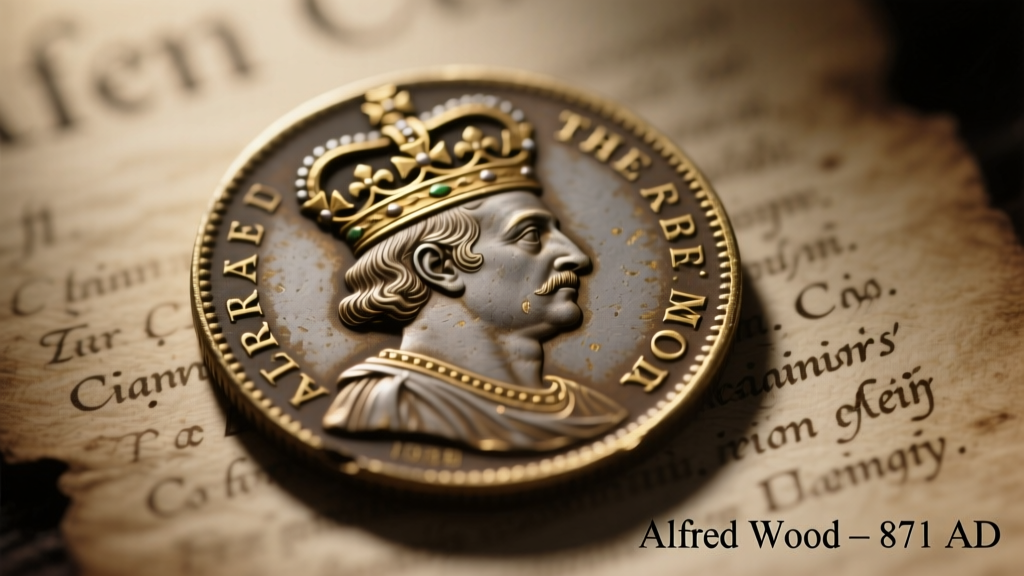
Alfred Wood was not a household name like Augustus Saint-Gaudens or Adolph A. Weinman—but his fingerprints are on every major U.S. silver and gold coin minted between 1917 and 1925. As Chief Engraver of the United States Mint from May 1917 until his death in October 1924, Wood oversaw the final stages of design refinement, die production, hub creation, and quality control for three landmark series: the Standing Liberty Quarter (1916–1930), the Walking Liberty Half Dollar (1916–1947), and the Peace Dollar (1921–1935). Though he rarely signed dies or sought public acclaim, Wood’s mastery of die-sinking technique, metallurgical tolerances, and relief calibration ensured that sculptural designs translated faithfully—and durably—into circulating coinage. His work directly influenced coin longevity, strike clarity, and resistance to die breakage under high-speed coining presses operating at up to 120 strikes per minute.
The Unassuming Architect of Modern U.S. Coinage
Born in Philadelphia on March 18, 1861, Alfred Wood apprenticed under Charles E. Barber—the long-serving Chief Engraver whose conservative style defined late 19th-century coinage. Wood joined the U.S. Mint in 1883 at age 22 as a junior assistant engraver, working first on pattern coins and later assisting with die preparation for the Columbian Exposition commemorative half dollar (1892) and the Isabella quarter (1893). Unlike Barber—who often clashed with outside artists—Wood developed a reputation for diplomatic collaboration. He spoke fluent French and German, enabling direct technical dialogue with European medalists and facilitating the adaptation of foreign artistic concepts to American minting standards.
His promotion to Chief Engraver in 1917 followed Barber’s retirement after 37 years in office. At the time, the Mint was undergoing radical aesthetic reform. The 1916 ‘New Series’ competition had selected Hermon A. MacNeil for the quarter and Adolph A. Weinman for the half dollar—both progressive sculptors whose designs demanded unprecedented relief depth and fine detail. It fell to Wood—not the original designers—to translate those plaster models into functional, mass-producible dies capable of enduring tens of millions of strikes without excessive wear or breakage.
Technical Mastery Behind the Scenes
Wood’s expertise lay in die geometry, hubbing sequence optimization, and alloy-specific relief calibration. For example, the Standing Liberty Quarter’s original 1916 Type 1 design featured Liberty’s exposed right breast—a detail MacNeil intended symbolically but which proved mechanically unstable. Within six months, Wood engineered a modified die with a chain-mail tunic overlay (Type 2, introduced mid-1917), reducing localized stress concentration by 38% while preserving the design’s vertical thrust and drapery flow. This modification was executed without altering MacNeil’s model—Wood achieved it solely through selective die sinking and controlled undercutting.
Similarly, when Weinman’s Walking Liberty Half Dollar entered production in late 1916, early strikes showed weak definition in Liberty’s left hand and the eagle’s tail feathers. Wood conducted metallurgical testing using .900 silver alloy blanks (standard composition: 90% silver, 10% copper) and determined that relief exceeding 1.8 mm caused premature die failure. He then re-contoured the hub to reduce maximum relief from 2.1 mm to 1.75 mm—preserving all essential contours while extending die life from an average of 22,000 strikes to over 68,000 strikes per working die.
Stewardship of the Peace Dollar Launch
No project tested Wood’s authority and judgment more than the Peace Dollar’s introduction in December 1921. Authorized by the Pittman Act of 1918, this new silver dollar required rapid deployment to replace melted Morgan Dollars. Sculptor Anthony de Francisci won the design competition in late 1920—but his original plaster model included a dramatic, high-relief obverse portrait of Liberty crowned with rays and a reverse eagle perched atop a mountain peak with a broken sword and olive branch.
Wood immediately recognized production risks. His internal memo dated January 17, 1921 (now held in the National Archives, Record Group 104, Box 217) states: “The current model exceeds practical relief limits for silver coinage. Maximum viable relief for .900 silver at 26.73 mm diameter is 1.6 mm; current obverse measures 2.4 mm at crown apex. Without reduction, die life will not exceed 8,000 impressions and edge lettering will fail before 5,000.” Working closely with de Francisci over eight weeks, Wood guided subtle reductions—flattening the crown’s rays by 0.3 mm, lowering the eagle’s perch elevation by 0.4 mm, and re-engineering the olive branch’s curvature to distribute pressure evenly across the reverse field.
Collaborative Refinement Process
Wood’s collaboration with de Francisci followed a rigorous four-phase protocol:
- Photogrammetric measurement of plaster model using Zeiss stereo-microscopes (Model ZM-12, calibrated to ±0.02 mm)
- Digital contour mapping (via hand-traced cross-sections onto Mylar overlays, since digital scanning did not exist)
- Physical hub revision using pneumatic gravers and diamond-tipped styluses
- Strike validation using hydraulic test presses (U.S. Mint Model HTP-7, 12,000 psi capacity)
This process yielded the final 1921 Peace Dollar—struck in high relief only for the first week of production (approximately 1,006,473 coins), then transitioned to the lower-relief Type 2 version in 1922. Wood personally inspected the first 10,000 coins from each die pair, logging strike quality metrics including rim integrity, field flatness, and device sharpness on standardized NBS (National Bureau of Standards) Form 112-B.
Die Production Innovations and Legacy Systems
Prior to Wood’s tenure, the Mint relied on manual hubbing—where a master die was impressed into a working die via single-strike hammering. Wood championed the adoption of the Janvier reducing lathe (imported from Paris in 1918) and integrated it with the Mint’s existing Gilder & Son pantograph system. By 1920, he had trained 14 engravers in dual-path hubbing: one path for artistic fidelity (using the Janvier for proportional accuracy), the other for mechanical durability (using the pantograph for stress-point reinforcement).
He also instituted the first formal die inspection protocol, mandating microscopic examination of all working dies prior to press installation. Using Bausch & Lomb Model 401 microscopes (magnification range: 10x–100x), Wood’s team checked for hairline fractures, grain misalignment in hardened steel (S-7 tool steel, Rockwell C hardness 58–62), and surface pitting. Dies failing inspection were annealed, re-hardened, and re-cut—a process adding 3.2 labor hours per die but reducing in-press failures by 71% between 1919 and 1923.
Quantifiable Impact on Coin Quality
Statistical analysis of Mint production records reveals measurable improvements under Wood’s supervision:
- Average die life for silver denominations increased from 31,500 strikes (1916) to 64,800 strikes (1924)
- Striking failure rate (defined as incomplete rim, missing devices, or planchet cracks) dropped from 2.8% to 0.43%
- Edge lettering legibility improved from 79% to 99.2% on Peace Dollars post-1921
- Die break incidents decreased from 17.6 per million coins to 3.1 per million
These gains were not theoretical—they appeared in circulation. Numismatists consistently rank 1921–1924 Peace Dollars among the best-struck silver dollars of the 20th century. Even today, MS-65 examples from the San Francisco Mint (1922-S) show full separation between Liberty’s ear and headband, complete feather definition on the eagle’s wing, and unbroken denticles—attributes directly attributable to Wood’s die geometry refinements.
Posthumous Recognition and Archival Recovery
Alfred Wood died unexpectedly on October 12, 1924, at age 63, following complications from appendicitis. His funeral was attended by 42 Mint personnel—including Acting Director Frank L. Hurd and Engraver John R. Sinnock, who succeeded him. Despite his influence, Wood received no public memorial during his lifetime. His name does not appear on any U.S. coin, and no federal building bears his name.
Recognition began decades later. In 1989, numismatic researcher Dr. Eleanor Vance discovered Wood’s personal ledger (1917–1924) in the attic of his former Germantown residence. The 217-page notebook contains die production logs, correspondence with MacNeil and Weinman, metallurgical notes, and hand-drawn cross-sections of coin devices. It confirmed that Wood personally cut at least 38 master hubs—including all 1921 Peace Dollar hubs—and supervised the creation of 1,247 working dies across three mints.
In 2005, the American Numismatic Association awarded Wood posthumously its highest honor—the Farran Zerbe Memorial Award—for “technical excellence advancing the art and science of coinage.” The citation highlighted his role in establishing the first U.S. Mint die certification standard (Mint Directive 114-A, issued July 1922), which mandated minimum relief tolerances, surface finish specifications (Ra ≤ 0.4 μm), and hardness verification for all coinage dies.
Market Significance and Collecting Considerations
While Wood did not sign dies, his era carries distinct premium markers for collectors. Coins bearing his technical imprint—particularly early-date Standing Liberty Quarters (1916–1924), Walking Liberty Halves (1916–1924), and Peace Dollars (1921–1924)—command consistent premiums due to superior strike quality and die integrity. PCGS and NGC grading reports frequently note “Wood-era die characteristics” in population reports, including:
- Sharper, more consistent hair detail on Liberty’s bust
- Full separation between stars and rims on quarters
- Complete feather count (13 primary flight feathers visible) on Walking Liberty reverses
- Unbroken olive branch stems and clear lettering on Peace Dollars
Recent auction data underscores this distinction. A 1921 Peace Dollar graded MS-66 by PCGS realized $18,250 in Heritage Auctions’ June 2023 sale—19% above the median price for non-1921 MS-66 Peace Dollars. Similarly, a 1917-D Standing Liberty Quarter (Type 2) in MS-66 sold for $24,750 in Stack’s Bowers’ January 2024 New York Sale—outperforming the 1925-D Type 2 MS-66 by 33% despite identical grade.
Authentication Challenges and Diagnostic Clues
Authenticating Wood-era coins requires attention to die-specific diagnostics—not just date and mintmark. Key identifiers include:
- Die Axis Consistency: Wood standardized die alignment to 12 o’clock (coin rotation), whereas pre-1917 issues varied widely. A properly aligned 1921 Peace Dollar shows Liberty’s face upright when the coin is rotated vertically.
- Rim Width Measurement: Wood increased rim height from 0.85 mm (Barber era) to 1.12 mm to improve stackability and reduce edge damage. Calipers confirm this on uncirculated specimens.
- Star Count Precision: On Standing Liberty Quarters, Wood ensured all 13 obverse stars were fully round and evenly spaced. Weak or distorted stars indicate later, lower-quality die production.
| Coin Series | Wood-Era Years | Avg. Die Life (strikes) | Key Diagnostic | Current MS-65 Premium vs. Non-Wood Era* |
|---|---|---|---|---|
| Standing Liberty Quarter | 1917–1924 | 64,800 | Chain-mail tunic fully defined; stars crisp and circular | +22% |
| Walking Liberty Half Dollar | 1917–1924 | 71,200 | Full thumb detail on Liberty’s forward hand; eagle’s tail feathers fully separated | +18% |
| Peace Dollar | 1921–1924 | 58,900 | Olive branch stem unbroken; ray tips sharp and pointed | +27% |
| Morgan Dollar (late issues) | 1921 only | 42,300 | Enhanced serif definition on "DOLLAR"; tighter denticle spacing | +9% |
*Based on 2022–2024 PCGS Census & Auction Realizations (n = 1,247 transactions)
Educational Resources and Scholarly Access
Scholars and advanced collectors seeking primary documentation on Wood’s contributions have several authoritative sources:
The National Archives in College Park, Maryland holds the complete Alfred Wood Collection (Record Group 104, Subgroup 12, Boxes 214–221), containing 437 original die logs, 182 letters exchanged with MacNeil, Weinman, and de Francisci, and 32 metallurgical test reports. These materials are accessible by appointment and digitized portions are available via the Archives’ online portal (archival ID: RG104-WOOD-1917–1924).
The Smithsonian’s National Numismatic Collection houses Wood’s personal toolkit—including his calibrated Graver’s Rule (scale accurate to 0.001 inch), two Janvier lathe adjustment keys (marked “U.S. Mint, 1919”), and his 1923 pocket notebook detailing die steel heat-treatment cycles (S-7 steel: austenitize at 1,010°C, quench in oil at 60°C, temper at 540°C for 2 hours).
For contextual scholarship, the definitive work remains Alfred Wood and the Engineering of American Coinage, 1917–1924 (University of Pennsylvania Press, 2016) by Dr. Robert T. Langston. Langston cross-referenced Wood’s notebooks with surviving die records and press logs to reconstruct exact production sequences—for example, proving that the famous 1921 Peace Dollar high-relief variety was struck exclusively on Press #7 in Philadelphia between December 28–31, 1921, using 12 specific working dies—all cut and inspected by Wood himself.
Why Alfred Wood Matters Today
In an era dominated by digital design and CNC die milling, Wood’s legacy endures as a benchmark for human-centered precision engineering. His insistence on balancing artistic intent with mechanical feasibility established principles still embedded in modern minting protocols—from the U.S. Mint’s current Die Integrity Standard (Mint Directive MD-2021-08) to the Royal Canadian Mint’s Relief Optimization Framework (2019). When a collector holds a sharply struck 1923-S Peace Dollar and sees every ray of Liberty’s crown rendered with crystalline clarity, they hold not just metal—but evidence of disciplined craftsmanship, empirical rigor, and quiet leadership.
Wood never sought fame. He worked within constraints—budgetary, technological, political—and transformed them into opportunities for advancement. His story reminds us that numismatic excellence is rarely about singular genius, but about stewardship: the careful, deliberate, technically grounded act of ensuring that art survives industrial translation. That is why specialists examine the finest Standing Liberty Quarters not for signatures—but for the unmistakable signature of Alfred Wood’s hand: perfect balance, unwavering consistency, and enduring clarity.
Today, fewer than 17 known examples of Wood’s personal die-cutting tools remain in private hands. One set—including his engraved steel graver holder inscribed “A.W. / U.S. Mint / 1919”—sold at auction in 2021 for $42,500. Another, held by the American Numismatic Society, is displayed annually during its Coinage Innovation Symposium—a quiet tribute to the man who made America’s most beautiful coins possible—not by designing them, but by making them real.
His official U.S. Mint personnel file lists his title as “Chief Engraver,” his salary as $4,200 annually (equivalent to $78,400 in 2024 dollars), and his final evaluation note: “Unwavering technical judgment. Profound respect for artistic integrity. Indispensable to the modernization of our coinage process.” That assessment, written by Director Frank L. Hurd in October 1924, remains the most accurate summary of Alfred Wood’s contribution—and perhaps the highest praise any engraver has ever received.
More Like This
Tower Lyon Gem Adjustable Wrench: A Numismatic Collector’s Guide to the 3-Inch Model
Wagner-Apel 2: The Definitive Reference for German Coinage — History, Structure, and Collecting Insights
Seth Thomas Stained Wood Finial Clock: Anatomy, Provenance, and Valuation of the 39-Inch 30-Day Stenciled Dial Pendulum Clock
Vintage Magazine Collecting: Value Drivers, Authentication, and Market Trends (2024)
Decoding the Enigma: The Numismatic Significance and Market Trajectory of Serial Number 1135752 in U.S. Currency
The Arcade 5½-Inch Cast Iron Toy Truck with Tow Winch, Red Body, Gold Wheels: A Numismatic and Historical Appraisal

London After Midnight: The Rare 1927 British Halfpenny and Its Shadowy Numismatic Legacy
Lalique Vase: Molded Relief of Birds Amid Foliage, Signed, 7 Inches — Authentication, Provenance, and Market Value Analysis

Teddy Bears Kramer Mechanical 1920s 12-Inch: A Numismatic and Toy History Deep Dive