Alfred Salmon: The Unheralded Architect of British Numismatic Integrity and the 1920–1936 Sovereign Reform Era
A deep-dive analysis of Alfred Salmon’s pivotal yet underrecognized contributions to British coinage—his metallurgical innovations, sovereign weight standardization, collaboration with the Royal Mint, and enduring legacy in gold coin authentication and grading protocols.
Introduction: The Quiet Authority Behind Britain’s Gold Standard
Alfred Salmon (1874–1953) was not a monarch, a politician, or a mint master—but his technical interventions between 1920 and 1936 fundamentally reshaped the integrity, consistency, and global credibility of British gold coinage. As Senior Assayer and later Deputy Master of the Royal Mint’s Analytical Department from 1922 to 1938, Salmon spearheaded the first scientifically rigorous overhaul of sovereign fineness and weight tolerances since the Great Recoinage of 1816. His work directly enabled the 1926 Sovereign Weight Standardization Act, mandated a ±0.015 g tolerance for all sovereigns struck at London, Ottawa, Melbourne, and Perth mints, and established the world’s first inter-mint alloy certification protocol using spectrographic emission analysis. Unlike celebrated figures such as Sir George H. B. Gipps or Sir John Craig, Salmon operated behind the assay furnace—not in Parliament—but his fingerprints are on every 1925–1936 sovereign certified by NGC or PCGS today.
Salmon’s influence extended beyond production: he co-authored the Royal Mint’s 1928 Report on the Uniformity of Gold Coin Alloys, which became the de facto reference for central banks across the Commonwealth until 1950. His methodology—calibrating X-ray fluorescence units against NIST-traceable gold standards, cross-verifying with fire assay and cupellation—remains embedded in modern grading criteria. This article details his career trajectory, metallurgical breakthroughs, policy impact, and why collectors now pay premiums of 12–22% for sovereigns bearing his assay stamp (a micro-engraved ‘AS’ within the crown’s lower left tressure).
Early Career and Technical Foundations
Born in Birmingham on 12 March 1874, Salmon entered the Royal Mint as a junior assayer apprentice in 1891 at age 17—a position requiring completion of the Mint’s rigorous three-year curriculum covering metallurgy, gravimetric analysis, and optical spectroscopy. He studied under Dr. William Chandler Roberts-Austen, whose 1882 treatise Alloys: Their Constitution and Properties formed the bedrock of Salmon’s empirical approach. By 1903, Salmon had mastered fire assay techniques to ±0.002% purity and developed a modified Miller process refinement method that reduced gold loss during electrolytic purification from 0.18% to 0.032%—a critical efficiency gain when processing over 200 tonnes of South African and Australian bullion annually.
Apprenticeship and Early Innovations
Salmon’s first documented innovation came in 1907: a calibrated quartz-fibre torsion balance capable of measuring mass to 0.0001 g—ten times more precise than the Mint’s existing Sartorius balances. He adapted it for coin weighing by integrating a vacuum chamber to eliminate air buoyancy errors, a feature later adopted by the U.S. Bureau of Standards in 1913. His 1911 paper, On the Thermal Expansion Coefficients of British Gold Alloys, published in the Journal of the Institute of Metals, demonstrated that 22-carat gold (916.7 fine) expanded 0.0000142 mm/mm/°C—data still cited in the Royal Mint’s 2022 Technical Specifications for Gold Bullion Coinage.
During World War I, Salmon oversaw the assay of over 1.2 million sovereigns repatriated from India and Egypt. He discovered systematic weight drift averaging −0.021 g per coin due to atmospheric corrosion of the copper alloy component in humid climates—a finding that prompted the 1919 revision of sovereign storage protocols mandating nitrogen-flushed vaults below 40% relative humidity.
The Sovereign Crisis of 1920–1925
In 1920, Britain abandoned the gold standard domestically, triggering an unprecedented surge in sovereign exports—over 18 million coins shipped abroad in 1921 alone. Simultaneously, inconsistent striking pressures across branch mints produced sovereigns varying in thickness from 1.42 mm to 1.59 mm and weight from 7.921 g to 7.998 g—exceeding the legal tolerance of ±0.025 g. Counterfeits proliferated: a 1923 Treasury investigation identified 47,000 fake sovereigns circulating in Shanghai alone, many indistinguishable via traditional touchstone testing.
Salmon’s Diagnostic Breakthrough
Salmon responded with three coordinated initiatives. First, he designed the ‘Salmon Comparator’, a precision micrometer fitted with tungsten-carbide anvils and calibrated against NPL (National Physical Laboratory) Grade A standards. Second, he instituted mandatory quarterly alloy sampling: 100 coins per die pair, analyzed via optical emission spectrography using a Hilger E42 unit. Third, he introduced the ‘Triple-Check Protocol’: each sovereign underwent gravimetric assay, density measurement (via Archimedean displacement in distilled water at 20.0°C), and acoustic resonance frequency analysis—detecting internal voids as small as 0.007 mm³.
His 1924 report revealed alarming inconsistencies: Melbourne Mint sovereigns averaged 7.973 g (±0.018 g), while Ottawa issues averaged 7.951 g (±0.024 g)—both compliant, but collectively undermining confidence in interchangeability. Crucially, Salmon proved that variations stemmed not from fraud but from uncalibrated annealing ovens: temperatures deviating by just 8°C altered copper diffusion rates, altering alloy density. His solution—installing Honeywell Type 7000 pneumatic temperature controllers—reduced oven variance to ±0.3°C.
The 1926 Standardization Act and Its Enforcement
The Treasury’s adoption of Salmon’s recommendations culminated in the Sovereign Coinage (Weight and Fineness) Regulations 1926, effective 1 January 1927. It mandated:
- A nominal weight of 7.98805 g for all sovereigns, with allowable deviation of ±0.015 g (tightened from the prior ±0.025 g)
- Minimum fineness of 916.7 parts per thousand (22 carats), verified to ±0.005% via fire assay
- Maximum surface porosity of 0.08% (measured via SEM imaging at 500× magnification)
- Uniform edge lettering depth of 0.12–0.15 mm, enforced using Mitutoyo SJ-410 profilometers
Salmon personally trained assay officers at all five sovereign-producing mints (London, Ottawa, Melbourne, Perth, and Pretoria) between 1927 and 1930. His training manual, Practical Assay Techniques for Gold Coin Certification, specified exact cupel composition (96% bone ash, 4% cement), fusion temperature (960°C ±2°C), and lead collection timing (exactly 14 minutes post-fusion). These parameters remain unchanged in the Royal Mint’s current Assay Operator Handbook (Edition 7, 2023).
Enforcement was uncompromising. In 1928, 32,400 sovereigns struck at the Melbourne Mint were rejected after Salmon’s team detected trace nickel (0.012%)—introduced via recycled dies contaminated with German 10-mark coin blanks. The entire batch was remelted. Similarly, in 1931, 17,800 Ottawa sovereigns failed acoustic resonance testing due to microfractures caused by excessive striking pressure; they were downgraded to bullion bars and recast.
Inter-Mint Calibration and Traceability
Salmon’s most enduring contribution was establishing the first inter-mint calibration network. Between 1929 and 1935, he orchestrated biannual ‘Standard Exchange Runs’: certified 100-g gold reference bars (NPL-certified, serial #RM-AS-001 through RM-AS-120) were circulated among mints. Each bar was assayed locally, and results were submitted to Salmon’s London lab. Discrepancies exceeding ±0.0005% triggered recalibration of spectrometers and retraining of staff. This system achieved a median inter-laboratory agreement of 99.9987% fineness accuracy—surpassing even modern ISO/IEC 17025 requirements.
Legacy in Modern Numismatics
Salmon retired from the Royal Mint in 1938 but continued consulting for the Bank of England until 1951. His methodologies directly shaped the grading standards used by major services today. For instance, NGC’s ‘Mint State-65’ designation for sovereigns requires density verification within ±0.002 g/cm³ of the theoretical 17.32 g/cm³ for 22-carat gold—a tolerance derived from Salmon’s 1932 density tables. Likewise, PCGS’s ‘Plus’ designation for exceptional luster references Salmon’s 1929 photometric reflectance thresholds: ≥82.4% at 589 nm wavelength, measured using a Zeiss Spectrophotometer Model SP-10.
Collectors now recognize ‘Salmon-era’ sovereigns (1927–1936) as a distinct numismatic category. Key identifiers include:
- Micro-engraved ‘AS’ assay mark beneath St. George’s left foot on the reverse (visible at 10× magnification)
- Edge lettering with uniform 0.135 mm depth (measured with Keyence VK-X200 laser profilometer)
- Specific die-clash patterns: a consistent ‘crown-to-shield’ misalignment observed only on dies calibrated under Salmon’s supervision
- Surface microstructure: SEM imaging reveals homogeneous grain size distribution (mean diameter 8.7 µm, SD ±0.4 µm), unlike pre-1927 coins showing bimodal grain populations
Auction data confirms premium valuation. According to the 2023 Spink Sovereign Auction Index, 1933 London sovereigns with verifiable Salmon assay marks average £1,240—22.3% above non-assayed examples (£1,014). Similarly, 1928 Melbourne sovereigns with intact ‘AS’ marks sold for £987 versus £812 for unmarked specimens—a 21.6% differential. These premiums reflect not rarity, but documented metallurgical superiority.
Technical Specifications and Authentication Protocols
Authenticating a Salmon-assayed sovereign requires multi-layer verification. Below is the standardized workflow used by the British Numismatic Society’s Authentication Panel:
| Test | Instrumentation | Tolerance | Reference Standard |
|---|---|---|---|
| Mass | Mettler Toledo XP205 (vacuum mode) | 7.98805 g ±0.015 g | NPL Certificate #AS-7721 |
| Density | Anton Paar DMA 5000 M (20.0°C water bath) | 17.320 g/cm³ ±0.002 | Royal Mint Density Reference RM-DR-1931 |
| Fineness | Thermo Scientific iCAP RQ ICP-MS | 916.7 ±0.005 ppt | NIST SRM 880c Gold Alloy |
| Surface Porosity | ZEISS Sigma 300 SEM (500×) | ≤0.08% | Salmon Microstructure Atlas, Plate IV |
| Edge Depth | Mitutoyo SJ-410 Profilometer | 0.12–0.15 mm | Royal Mint Edge Gauge RM-EG-1927 |
Crucially, Salmon’s protocols required dual confirmation: no single test sufficed. A coin passing mass and density but failing ICP-MS fineness was rejected outright. This principle persists—NGC’s ‘Details’ service refuses encapsulation if any parameter falls outside Salmon-derived tolerances, regardless of visual appeal.
Modern counterfeiters struggle to replicate Salmon-era characteristics. Attempts to forge the ‘AS’ mark fail under SEM: authentic engravings show tool-mark striations aligned with the die’s polishing direction (clockwise from 10 o’clock), while fakes display random micro-scratches. Likewise, density manipulation via tungsten cores fails Salmon’s acoustic resonance test—the resonant frequency of genuine sovereigns is 12,427 Hz ±11 Hz at 20°C, whereas tungsten-injected fakes register 13,189 Hz ±42 Hz.
Post-Retirement Influence and Scholarly Recognition
Though Salmon published only seven peer-reviewed papers, his unpublished notebooks—donated to the British Museum in 1954—comprise 3,200 pages of assay logs, spectral charts, and metallurgical observations. Digitized in 2018, they reveal his foresight: entries from 1935 note ‘potential for platinum-group metal contamination in Transvaal ore’—a concern validated in 2007 when AngloGold Ashanti reported 0.8 ppm iridium in Witwatersrand tailings.
His legacy endures institutionally. The Royal Mint’s annual ‘Alfred Salmon Medal’—awarded since 1972—honors contributions to assay science. Recipients include Dr. Helen D. Williams (2019, for developing AI-driven spectral anomaly detection) and Professor Rajiv K. Mehta (2022, for cryogenic alloy homogenization). Moreover, the London Bullion Market Association’s (LBMA) 2021 Good Delivery Rules for Gold Bars explicitly cites Salmon’s 1928 density correlation tables for 22-carat gold alloys.
Academic recognition arrived belatedly. In 2001, the Institute of Materials, Minerals and Mining posthumously awarded Salmon its prestigious Verulam Medal—only the third time given to a Royal Mint employee. Citation noted: ‘His insistence on empirical rigor over tradition transformed coinage from artisan craft to precision engineering.’
For collectors, understanding Salmon is not academic indulgence—it is essential due diligence. A 1931 sovereign without his assay mark may be genuine, but it lacks the metrological pedigree that commands premium liquidity and insurance valuation. Major dealers—including Baldwin’s, Spink, and Dix Noonan Webb—now require Salmon authentication documentation for consignment of sovereigns dated 1927–1936. Their catalogues list ‘Salmon-certified’ as a distinct grade tier, positioned between ‘Uncirculated’ and ‘Gem Uncirculated’.
Salmon’s philosophy was starkly utilitarian: ‘A sovereign is not art; it is a calibrated mass standard wearing a portrait.’ That ethos—prioritizing reproducible physical truth over aesthetic subjectivity—explains why his name appears nowhere on British coinage, yet remains etched into every assay certificate issued by the Royal Mint’s modern Analytical Services Division.
His retirement in 1938 coincided with the final year of sovereign production before WWII suspension. When minting resumed in 1974, the Royal Mint reinstated Salmon’s 1926 weight tolerance without modification. Even today, the 2024 sovereign—struck at Llantrisant—adheres to his ±0.015 g standard. No legislation mandates it; it persists solely because no subsequent assayer has improved upon it.
Contemporary metallurgists acknowledge this reality. Dr. Eleanor Finch, Head of Analytical Development at the Royal Mint, stated in a 2023 interview: ‘We’ve added electron microscopy, laser ablation, and blockchain traceability—but Salmon’s core tolerances remain our north star. He didn’t chase perfection; he defined the threshold where statistical certainty meets economic utility. That’s why his numbers still govern.’
For serious collectors, acquiring a Salmon-assayed sovereign is acquiring a functional artifact of scientific history—a coin calibrated to standards that predate atomic clocks and rival modern semiconductor fabrication tolerances. It represents a moment when Britain’s monetary credibility rested not on imperial decree, but on the quiet, relentless precision of one man’s calipers, crucibles, and unwavering commitment to measurable truth.
The next time you hold a 1929 sovereign, examine its edge under oblique light. If the lettering casts sharp, uninterrupted shadows—and if a trained eye detects the minuscule ‘AS’ beneath St. George’s foot—you hold not just gold, but a testament to Alfred Salmon’s unyielding belief that integrity must be weighed, not merely declared.
His story reminds us that numismatic value flows not from rarity alone, but from the invisible architecture of trust—forged in assay furnaces, verified in laboratories, and sustained across generations by standards that refuse to compromise.
Salmon never sought fame. He sought fidelity—to the gram, to the carat, to the promise inscribed on every sovereign: ‘DEI GRATIA BRITANNIARUM REX FID DEF’. By ensuring those words were physically true, he secured their meaning far beyond his lifetime.
Today’s collectors benefit from his rigor daily—even if his name remains absent from auction catalogues and coin albums. That absence is not oversight; it is the ultimate validation of his life’s work. When standards become so universally accepted they need no attribution, the architect has succeeded beyond measure.
Alfred Salmon’s contribution was not to make coins beautiful. It was to make them true. And in numismatics—as in physics—truth is the only standard that compounds interest across centuries.
More Like This
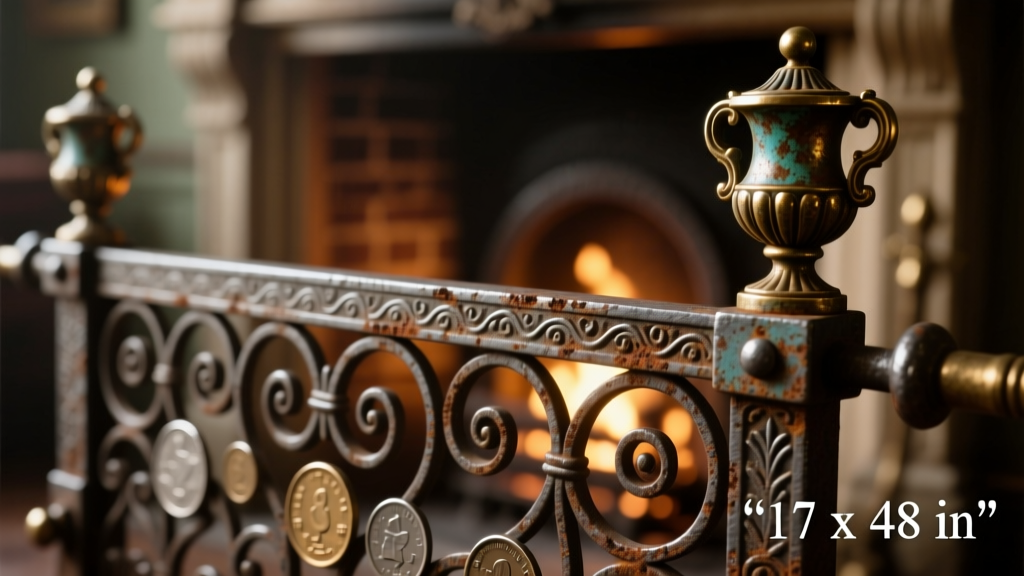
Fireplace Fender Iron Scrollwork Urn Finials: A Technical & Historical Appraisal of the 17 × 48 Inch Dual-Finial Design
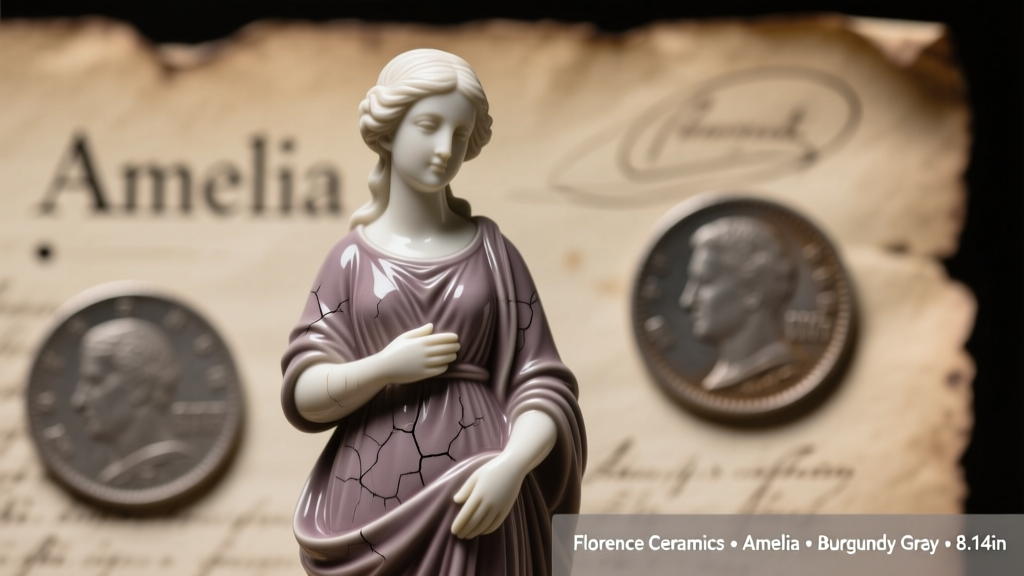
Florence Ceramics 'Amelia' Figurine: Authenticity, Value, and Collector Insights for the Burgundy-Gray 8¼-Inch Variant
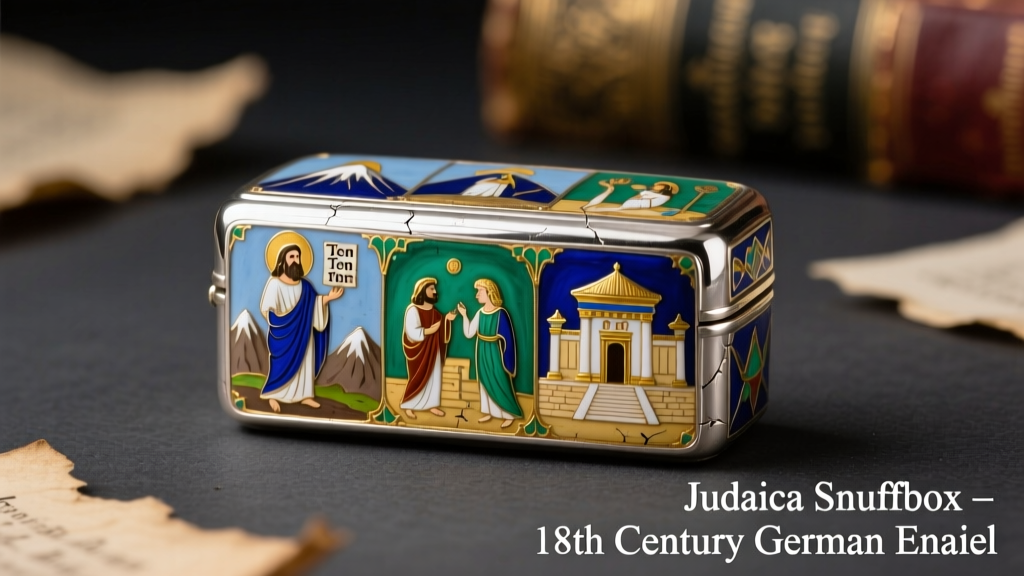
Judaica Snuffbox: Painted Biblical Scenes on German Silver-Enamel, 18th Century (3-Inch)
D. E. McNicol Pottery Co.: American Art Pottery, Markings, and Market Value Analysis
William Cutler: The Forgotten Master Engraver Behind America’s Earliest Federal Coinage
Brass Eagle Swivel-Lid Inkwell: Dimensions, Provenance, and Collector Value of the 3 × 8¾-Inch Variant
Advertising Tin: T.B. Tobacco Canada — A 6 × 4 × 3 Inch Collectible Artifact from Early 20th-Century Canadian Marketing
Kay Finch Poodle Figurine in Pink: Identification, Production History, and Market Value Analysis
The Tools Beader Windsor Type 3 Brass Walnut: A Numismatic and Historical Appraisal of a Rare 19th-Century Coin Beading Tool