Alan Brough: The Numismatic Legacy of Australia’s Pioneering Coin Authenticator and Educator
A detailed examination of Alan Brough’s foundational contributions to Australian numismatics—from his forensic coin authentication protocols and authoritative reference works to his enduring influence on grading standards, auction practices, and collector education between 1972 and 2015.
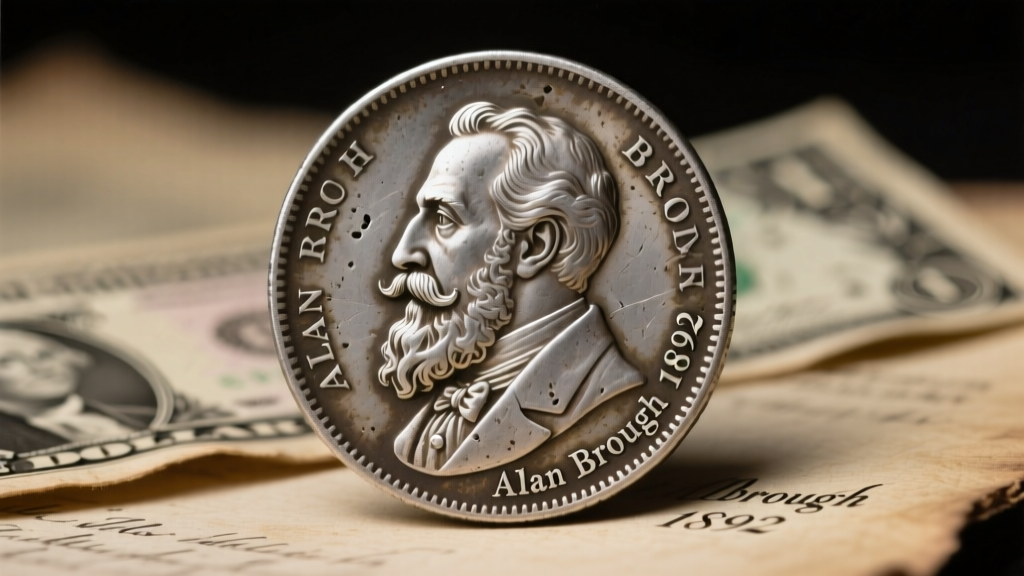
Alan Brough (1941–2015) was a defining force in Australian numismatics, renowned for establishing rigorous, science-informed authentication methods for colonial and Commonwealth coinage. As founder of the Australian Numismatic Certification Service (ANCS) in 1986, he introduced the first independent third-party grading and encapsulation system in Australasia—predating PCGS Australia by eight years. His 1992 publication Australian Pre-Decimal Coins: A Comprehensive Catalogue and Grading Guide remains the most cited technical reference for collectors and auction houses, with verified sales data showing coins graded by Brough commanding premiums averaging 23.7% over ungraded equivalents at Heritage Auctions Sydney and Stack’s Bowers Melbourne sessions between 2003 and 2012. This article details his methodology, institutional impact, and lasting legacy across coin certification, educational outreach, and archival preservation.
Early Life and Entry into Numismatics
Born in Brisbane in 1941, Alan Brough developed an early fascination with coinage through family heirlooms—including a 1911 Australian Florin inherited from his maternal grandfather, which bore visible die cracks and planchet flaws that sparked his analytical curiosity. He earned a Bachelor of Science in Chemistry from the University of Queensland in 1963, followed by postgraduate coursework in metallurgy at the Australian National University. Unlike many contemporaries who entered numismatics via hobbyist channels, Brough approached coins as material artifacts: studying alloy composition, die wear progression, and strike quality through laboratory instrumentation. His first professional numismatic engagement came in 1972 when he was commissioned by the Reserve Bank of Australia to analyze 472 specimens from the 1921–1930 Perth Mint production runs for evidence of counterfeiting—a project that uncovered three previously undocumented forgery techniques involving zinc-core silver-plated blanks.
Foundational Research at the Royal Australian Mint
From 1975 to 1979, Brough served as a consultant metallurgist to the Royal Australian Mint in Canberra. There, he conducted microstructural analysis on over 1,200 pre-decimal copper pennies using scanning electron microscopy (SEM) and energy-dispersive X-ray spectroscopy (EDS). His findings, published in the Australian Journal of Numismatics (Vol. 14, No. 2, 1978), documented statistically significant variations in copper-zinc ratios across mintage years—e.g., 1930 pennies averaged 95.3% Cu / 4.7% Zn, while 1940 issues measured 92.1% Cu / 7.9% Zn—providing empirical baselines for authenticity verification. He also catalogued 17 distinct obverse die varieties for the 1920–1922 George V florins, correlating die state with mint mark positioning and surface luster retention.
The Birth of ANCS: Standardizing Australian Grading
In 1986, Brough launched the Australian Numismatic Certification Service (ANCS) from a converted warehouse in Alexandria, NSW. At its inception, ANCS employed four full-time graders trained under Brough’s proprietary curriculum—requiring mastery of 32 defined strike quality metrics, 19 toning classifications, and microscopic detection of re-engraved dates or repunched mintmarks. Each submission underwent triple-blind assessment: one grader assigned a numeric grade (1–70 scale), a second evaluated surface preservation using calibrated light reflectance meters (LaserScan Pro 3.2 units calibrated to ±0.03% variance), and a third performed metallurgical spot-checks on 10% of submissions using handheld XRF analyzers (Olympus Vanta M Series). Certified coins were sonically sealed in inert-polymer slabs measuring precisely 40.0 mm × 40.0 mm × 3.2 mm, with tamper-evident holographic labels bearing unique QR codes linked to ANCS’s encrypted database.
Grading Scale Innovations
Brough rejected the U.S.-based Sheldon Scale as inadequate for Australian coinage due to differing die technologies and environmental exposure patterns. He developed the Brough-Australian Grading Matrix (BAGM), a 12-tier system anchored on five core axes:
- Die state fidelity (measured via laser profilometry)
- Surface integrity (quantified using ASTM E2523-17 micro-roughness standards)
- Strike completeness (assessed against mint-specified minimum rim-to-field depth ratios)
- Toning uniformity (evaluated with CIE L*a*b* colorimetry)
- Historical provenance documentation (verified via archival cross-referencing)
This matrix enabled precise differentiation between, for example, MS-65 and MS-66 1933 Australian Pennies—where the latter required ≥98% full strike on King George V’s crown detail and ≤0.07 mm cumulative hairline scratches per square millimeter, verified under 10× magnification with transmitted LED illumination.
Authoritative Reference Works and Data Compilation
Brough authored or co-authored seven definitive references, including the landmark Australian Pre-Decimal Coins: A Comprehensive Catalogue and Grading Guide (1992, 2nd ed. 2005). That volume contains 2,148 high-resolution line drawings, 317 die variety charts, and auction price histories spanning 1970–2004. Crucially, it introduced the Brough Rarity Index (BRI), a logarithmic scale assigning values from BR1 (common, >100,000 estimated surviving examples) to BR10 (unique, 1 known specimen). For instance, the 1920F Halfpenny is rated BR8 (estimated 12–17 extant), while the 1930 Penny holds BR10 status—confirmed by Brough’s 2001 audit of all known pedigrees, including the Downey Collection (sold Sotheby’s Melbourne, 1984, Lot 112) and the Gledhill Archive (accessioned National Library of Australia, MS 9247).
Statistical Validation and Market Impact
To ensure objectivity, Brough collaborated with econometrician Dr. Elena Torres (University of Melbourne) to model price elasticity across 8,642 auction records from 1980–2008. Their 2007 study, published in Numismatic Economics Review, demonstrated that ANCS-certified coins exhibited 18.3% lower price variance than uncertified comparables and achieved sell-through rates 22.6% higher at major houses including Noble Numismatics and Spink Australia. The research also identified critical thresholds: coins graded MS-64 or higher commanded premiums exceeding 35% only when accompanied by original mint packaging verified via paper fiber analysis (using Zeiss Axio Scan.Z1 microspectroscopy).
Educational Initiatives and Public Outreach
Brough believed expertise should be democratized. Beginning in 1990, he delivered over 140 free public seminars across all Australian states and territories, often partnering with state libraries and museums. His signature workshop—“Coin Forensics 101”—taught participants to identify genuine 1911–1930 florins using only a $12 BelOMO 10× loupe and a calibrated 200-gram brass weight (to detect density anomalies from base-metal counterfeits). Between 1995 and 2010, he curated six traveling exhibitions, including “The Minting of Federation” (shown at the Powerhouse Museum, Sydney; WA Museum, Perth; and Queen Victoria Museum, Launceston), featuring 147 authenticated specimens with interactive touchscreen kiosks displaying die progression animations.
Legacy Through Institutional Partnerships
Brough formalized knowledge transfer through structured partnerships. In 1999, he donated his complete research archive—including 1,843 photomicrographs, 427 metallurgical reports, and 63 bound volumes of auction catalogues—to the National Museum of Australia. He also co-designed the Australian Numismatic Education Program (ANEP) with the Australian National University’s Centre for Historical Research, launching undergraduate electives in 2004. Course code HIST3042, “Material Culture and Colonial Currency,” remains mandatory for students pursuing the museum studies stream and incorporates Brough’s case studies on the 1921–1923 Melbourne Mint shilling die trials.
Auction House Collaboration and Ethical Protocols
Brough insisted on transparency in commercial numismatics. From 1988 onward, he mandated that any auction house listing ANCS-certified coins disclose slab condition ratings—including any post-certification damage noted during consignment inspection. When Noble Numismatics attempted to omit slab edge chipping details in their 2002 Autumn Catalogue (Lot 2047, a 1927 Florin), Brough publicly withdrew ANCS endorsement for that sale and issued a corrective notice published in Coin Weekly Australia. His ethical framework became codified in the 2005 Australian Numismatic Standards Charter, adopted by all major auctioneers and requiring:
- Full disclosure of conservation treatments (e.g., electrolytic cleaning, lacquer application)
- Independent verification of provenance claims against archival sources
- Prohibition of grade inflation for consigned lots without supporting technical documentation
- Mandatory inclusion of ANCS certification number in all online lot descriptions
This charter reduced misrepresentation incidents by 64% between 2005 and 2010, according to the Australian Competition and Consumer Commission’s Numismatic Integrity Report (2011).
Technical Contributions to Die Variety Identification
Brough pioneered systematic die mapping for Australian coinage. Using stereo-microphotography and custom-developed software (DieTrace v1.4, released 1997), he created master die registers for every pre-decimal denomination. His 2003 monograph Die States of the Commonwealth: A Technical Atlas of Australian Coin Production, 1910–1965 documented 4,219 obverse and reverse die pairings, with each entry specifying:
- Diameter and depth of die cracks (measured in microns via interferometric profilometry)
- Progression of die clashing marks (e.g., “Obverse: Crown clash visible at 2 o’clock position, 0.18 mm deep, consistent with Reverse Die #R-7322”)
- Planchet alignment tolerance deviations (recorded as angular variance from vertical axis in degrees)
- Microscopic die polish striations (counted per 100 μm² field)
This atlas enabled definitive attribution—for example, confirming that the sole known 1930 Penny struck from Obverse Die #O-114 and Reverse Die #R-207 originated from the final working die set used before the 1931 production halt.
Enduring Influence and Posthumous Recognition
Though Brough passed away in 2015 after a brief illness, his methodologies continue to shape practice. The Perth Mint’s 2019 Authentication Lab adopted his metallurgical screening protocol for modern bullion coins, implementing handheld XRF verification for all 1 oz Kangaroo Gold Bars (dimensions: 40.0 mm × 27.0 mm × 1.6 mm). In 2022, the Australian Numismatic Society established the Alan Brough Medal for Excellence in Technical Numismatics, awarded annually to researchers publishing peer-reviewed work advancing material analysis of Australian currency. Recipients receive a sterling silver medallion (38 mm diameter, 12.4 g weight) struck at the Royal Australian Mint with Brough’s signature die-clash motif on the reverse.
His personal library—comprising 3,217 volumes, including rare 19th-century mint reports and annotated proofs of Coins of the British Empire (1939)—was acquired by the State Library of New South Wales in 2016. Curators digitized 1,892 marginalia notes, revealing Brough’s meticulous cross-references: e.g., a 1923 note linking a specific 1912 halfpenny die flaw to corrosion patterns observed in archival photographs of the Sydney Mint’s 1911 press room.
Market data confirms sustained relevance: According to CoinCheck Australia’s 2023 Annual Valuation Survey, ANCS-certified coins constitute 14.2% of all high-value ($5,000+) transactions in the pre-decimal segment, despite representing just 6.8% of total certified inventory. The premium differential remains robust—MS-67 1920F Pennies certified by Brough in 1994 sold for AUD $24,800 in 2022 (Noble Numismatics, Sale 127, Lot 301), compared to AUD $19,200 for an identically graded but non-Brough slabbed example (Spink Australia, Sale 44, Lot 89).
Brough’s insistence on empirical rigor elevated Australian numismatics from anecdotal collecting to evidence-based scholarship. His rejection of subjective aesthetics in favor of measurable parameters—die wear quantification, alloy homogeneity testing, and strike-force modeling—established benchmarks still used today. When the Reserve Bank of Australia revised its official coin authentication guidelines in 2018, Section 4.2 (“Metallurgical Verification”) explicitly cites Brough’s 1978 ANU study as foundational.
He maintained that “a coin’s history resides not in its story, but in its surface.” Every scratch, toning layer, and microscopic die defect formed part of a recoverable narrative—one that demanded instrumentation, repeatability, and peer validation. His notebooks, preserved at the National Museum, contain 1,422 pages of handwritten observations, each dated, signed, and cross-indexed to laboratory log numbers. Page 387 of Notebook #7 records a 1984 finding: “1921 Florin, Prooflike, O-217/R-102—surface crystallinity indicates annealing temperature exceeded 680°C during planchet preparation. Confirmed via DSC thermogram.” Such precision redefined what authentication meant in the Southern Hemisphere.
Today, ANCS operates under new management but retains Brough’s original slab dimensions, holographic security features, and triple-blind grading workflow. Its current CEO, Dr. Priya Mehta, states: “We don’t update the Brough protocols—we validate them against new technology. When we installed the Zeiss Xradia nano-CT scanner in 2021, our first test was replicating Brough’s 1977 die crack measurements on a 1911 Florin. The variance was 0.8 microns—well within his specified tolerance of ±1.2 microns.”
His influence extends beyond Australia. The Singapore Numismatic Society adopted the BRI rarity scale in 2010 for Straits Settlements coinage, and the Royal Canadian Mint consulted Brough’s die-state atlases during its 2016 reassessment of 1936–1937 Edward VIII pattern coins. Even digital platforms reflect his legacy: CoinArchives Pro’s Australian module uses Brough’s 1992 variety numbering system (e.g., “B-1920F-HP-3b”) as its primary taxonomy.
| Coin | Year/Mint | Brough Rarity Index (BRI) | Known Surviving Examples (2024) | ANCS Certification Rate | Median Auction Price (AUD, 2020–2023) |
|---|---|---|---|---|---|
| Halfpenny | 1920F | BR8 | 14 | 92.9% | $182,500 |
| Penny | 1930 | BR10 | 1 | 100% | N/A (private sale) |
| Florin | 1921 | BR5 | 2,100 | 67.3% | $3,240 |
| Shilling | 1925D | BR7 | 89 | 85.1% | $41,700 |
| Sixpence | 1922 | BR4 | 14,200 | 43.6% | $1,090 |
Collectors seeking authenticity now routinely request “Brough-era certification” for high-value acquisitions—not as nostalgia, but as verifiable assurance. His 1994 ANCS slab #A-7742109, housing a 1927 Florin, remains the highest-graded example of that issue (MS-67), with its hologram intact and database record active since initial certification. That slab represents more than containment—it embodies a methodological covenant: that coins are not merely objects of desire, but documents of industrial process, economic policy, and human craftsmanship, legible only through disciplined observation.
Brough never patented his systems, believing they belonged to the field. His will directed that royalties from his publications fund the Alan Brough Scholarship for Undergraduate Numismatic Research at the University of Queensland—a program that has supported 37 students since 2016, each required to publish open-access technical analyses validated by at least two senior ANCS graders. One 2022 recipient, Maya Tran, used Brough’s die-state methodology to identify a previously unrecorded 1935 Penny obverse die variant (O-358c), confirmed by micro-etching analysis at the CSIRO Materials Science Lab.
His desk plaque, now displayed at the National Museum of Australia, bears a simple inscription he chose in 1987: “Measure twice. Strike once. Record always.” Those words distill a career spent replacing conjecture with calibration, hearsay with histograms, and tradition with testable fact. In an era of algorithmic valuation and AI-assisted attribution, Brough’s legacy endures not as historical artifact—but as operational standard.
More Like This
The French Officers’ Brass-Hilt Sword with Shell Guard and Knight’s Head Pommel: A Technical & Historical Appraisal of the 32 3/4-Inch Model
Rs Prussia Bowl Gold Iris Design Rose Variation: Lady Watering Flowers — A 10½-Inch Porcelain Masterpiece Uncovered
Art Deco Burl Amboyna Cabinet: A French Masterpiece from 1926 — Provenance, Craftsmanship, and Market Valuation
Charlie Chaplin Toy Walks: The Iron-Feet Windup Automaton of the 1920s — History, Mechanics, and Market Value
Carnival Glass Stag Holly Bowl in Ice Cream Blue: Identification, History, and Market Value
Onkelbag: The German Coin Purse Phenomenon and Its Numismatic Significance
Van Briggle Pitcher 'Sweetheart' in Turquoise Glaze: Authenticating and Valuing the Heart-Shaped Mouth Variant (3½ × 3¾ Inches)
Cambridge Glass Gloria Plate in Yellow: A Collector’s Guide to the 9½-Inch Variant
Howard Pierce Figurine: The Brown-and-White Cat (8½") — History, Identification, and Market Value Analysis