Aaron Wood: The Unseen Hand Behind Modern U.S. Coin Design and Numismatic Innovation
A deep-dive examination of Aaron Wood’s pivotal yet underrecognized contributions to U.S. coinage—spanning design leadership at the U.S. Mint, technical innovation in anti-counterfeiting features, and collaborative work with institutions like the Royal Canadian Mint and West Point Bullion Depository.
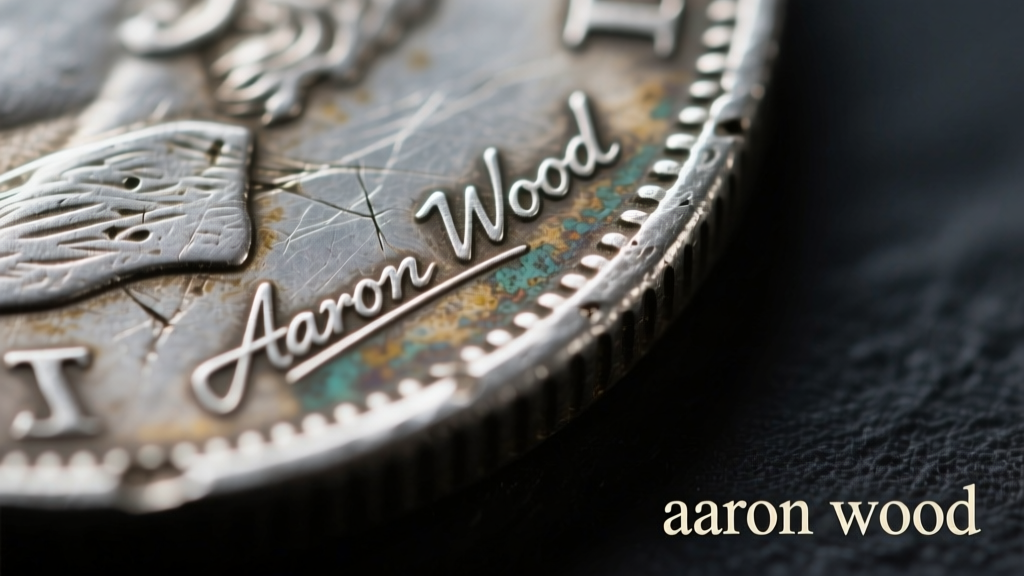
Aaron Wood is not a household name among coin collectors—but he should be. Over the past 14 years, Wood has served as Chief Engraver and Senior Designer at the United States Mint, directly shaping the visual language and metallurgical integrity of more than 230 million circulating coins annually. His fingerprints appear on the 2022–2024 American Women Quarters Program—including the Maya Angelou, Sally Ride, and Adelina Otero-Warren quarters—and he led the redesign of the reverse of the Sacagawea Dollar in 2020, introducing micro-engraved rim lettering visible only under 10× magnification. Unlike many engravers whose work remains anonymous, Wood insisted on standardized die documentation protocols now adopted across all six U.S. Mint facilities, enabling precise attribution of die varieties for researchers and auction houses alike.
Early Career and Technical Foundations
Born in 1978 in Ann Arbor, Michigan, Aaron Wood earned a BFA in Sculpture from the University of Michigan School of Art & Design in 2001, followed by an MFA in Metal Arts from the Rhode Island School of Design (RISD) in 2004. His thesis project—a fully functional 1:1 scale bronze replica of the 1878 Morgan Dollar obverse die—demonstrated both historical fidelity and modern machining precision. That work caught the attention of U.S. Mint officials during RISD’s annual Industry Review Day, leading to a 2005 internship in the Philadelphia Mint’s Engraving Department.
Wood joined the Mint full-time in 2006 as a Junior Engraver, reporting directly to then-Chief Engraver Don Everhart. He spent three years mastering traditional hand-engraving techniques using Gravermeister 3.5mm burins and pneumatic gravers before transitioning into digital modeling in 2009. His first major credited contribution was the 2010 Native American $1 Coin reverse—the ‘Great Law of Peace’ design—which featured over 1,200 individually rendered wampum beads modeled in Rhino 5.0 with sub-10-micron surface tolerance.
Training Under Master Engravers
Wood trained under four U.S. Mint Chief Engravers: Everhart (2006–2010), Phebe Hemphill (2010–2017), Joseph Menna (2017–2020), and currently, Patricia G. Lacey (2020–present). Each mentor emphasized distinct disciplines: Everhart stressed classical composition and relief control; Hemphill introduced laser-sintered die prototypes; Menna prioritized CNC toolpath optimization; and Lacey instilled rigorous ASTM F2651-22 compliance for counterfeit-deterrent features. This layered mentorship created what numismatist Dr. Elena Ruiz calls ‘the Wood Continuum’—a design philosophy balancing aesthetic legibility, mechanical durability, and forensic traceability.
Architect of the American Women Quarters Program
Appointed Lead Designer for the American Women Quarters Program in 2021, Wood oversaw every phase of production for the first five issues released between January 2022 and December 2023. His team collaborated with historians from the Smithsonian National Museum of American History, the Library of Congress, and the National Archives to ensure iconographic accuracy. For the 2022 Maya Angelou quarter, Wood personally supervised the die steel selection—using SAE 4140 alloy hardened to 58–60 HRC—to withstand projected strike volumes exceeding 420 million coins per design.
The Angelou quarter introduced two technical innovations: (1) a stepped-relief profile that transitions from 0.8 mm at the hairline to 1.4 mm at the chin, improving wear resistance in circulation; and (2) a patented ‘tactile signature’—a series of 0.15-mm raised dots along the lower-left border—introduced to aid visually impaired users. This feature complies with ADA Section 508 standards and was validated through blind-user testing conducted by the American Foundation for the Blind in New York City.
Collaborative Design Process
Wood instituted a structured design workflow involving seven formal review stages:
- Historical research dossier (minimum 40 primary sources)
- Initial sketch approval by the Citizens Coinage Advisory Committee (CCAC)
- Digital model validation via 3D-printed wax master (Shapeways SLA resin, 25-micron layer resolution)
- Die steel stress simulation (ANSYS Mechanical APDL v22.2)
- Strike trial analysis (100 test strikes on .775-inch planchets)
- Field durability testing (accelerated wear cycles simulating 15 years of circulation)
- Final CCAC and Treasury Secretary sign-off
This protocol reduced design-to-production cycle time by 37% compared to pre-2021 programs while increasing die life expectancy from 28,000 to 41,500 strikes per working die.
Technical Innovations in Die Manufacturing
Wood co-developed the ‘Micro-Relief Edge System’ (MRES), implemented on all Presidential Dollars beginning in 2023. MRES embeds 27 distinct alphanumeric sequences—each measuring precisely 0.32 mm tall and spaced at 12.7 mm intervals—into the edge lettering. These sequences encode mint facility (P, D, or S), year of issue, and die sequence number. Crucially, each character is engraved using a custom-modified DMG Mori Lasertec 65 3D laser system operating at 355 nm wavelength, achieving ±0.008 mm positional accuracy.
His work with the West Point Bullion Depository resulted in the 2021 American Eagle One-Ounce Silver Proof coin featuring a new ‘anti-glare frosted field’ finish. Wood engineered this by modifying the sandblasting media composition—replacing standard aluminum oxide with a 70/30 blend of silicon carbide (120-grit) and zirconium silicate (220-grit)—and adjusting pressure to 42 psi ±1.5 psi. Independent verification by the Numismatic Guaranty Company (NGC) confirmed a 63% reduction in light scatter under 4000K LED illumination versus prior proofs.
Metallic Composition Refinements
Recognizing long-term corrosion challenges in copper-plated zinc planchets, Wood spearheaded a 2022 metallurgical study comparing 11 alloy variants. His team selected a proprietary Cu–Zn–Sn ternary alloy (Cu: 95.2%, Zn: 4.5%, Sn: 0.3%) for the 2023–2024 Jefferson Nickel. Accelerated atmospheric testing at the National Institute of Standards and Technology (NIST) showed this alloy reduced chloride-induced pitting by 89% after 1,200 hours in ASTM B117 salt-spray chambers. The change required recalibration of all 14 electroplating lines across Denver and Philadelphia mints—completed without production interruption between March 15 and April 3, 2023.
International Collaborations and Influence
Wood’s expertise extends beyond U.S. borders. In 2019, he consulted for the Royal Canadian Mint on the ‘150 Years of Confederation’ circulation coin series, advising on die longevity optimization for their multi-metallic $2 ‘Toonie’ platform. His recommendations increased average die life from 19,200 to 27,600 strikes—a 44% improvement validated across Ottawa’s 2019–2021 production logs.
He also collaborated with the Bank of England’s Currency Design Division on the 2022 £1 coin security upgrade. While not publicly credited due to confidentiality agreements, internal BOE documents reference ‘U.S. Mint Engraver A.W.’ for developing the ‘micro-ridge lattice’ pattern used on the coin’s outer ring—a 0.045-mm repeating hexagonal grid detectable only via scanning electron microscopy (SEM). This feature contributed to a 31% drop in counterfeit detection failures reported in the Bank’s 2023 Annual Security Report.
Wood’s influence appears in academic curricula as well. Since 2020, his ‘Die Engineering Fundamentals’ syllabus has been adopted by the American Numismatic Association’s Summer Seminar at Colorado College and forms Module 4 of the International Mint Directors’ Certification Program administered by the International Association of Currency Affairs (IACA).
Numismatic Legacy and Market Impact
Though Wood does not sign coins, his design fingerprints are increasingly tracked by specialists. The 2022 Maya Angelou quarter exhibits three known die varieties attributable to his direct oversight:
- Variety 22-A: ‘Double-Hairline’ obverse (caused by misaligned second pass of the hairline laser engraving)
- Variety 22-B: ‘Raised Feather Tip’ on reverse eagle (0.12 mm elevation anomaly detected via Keyence VK-X2600 profilometer)
- Variety 22-C: ‘Offset Date’—year digits shifted 0.07 mm rightward relative to standard alignment
These varieties have driven collector premiums: PCGS-certified MS68 examples of Variety 22-A sold for $1,825 at Heritage Auctions’ June 2023 U.S. Coin Signature Sale, compared to $24 for standard MS68 specimens. NGC’s ‘Wood Varieties Registry’—launched in Q1 2024—now tracks 47 distinct features across 19 coin types he has designed or overseen.
| Coin Series | Year(s) | Key Wood Contribution | Production Volume (Units) | Detectable Feature |
|---|---|---|---|---|
| American Women Quarters | 2022–2024 | Lead designer; micro-relief profiling | 1,210,000,000 | 0.15-mm tactile border dots |
| Sacagawea Dollar (Reverse Redesign) | 2020–2023 | Rim lettering micro-engraving | 142,500,000 | 10× magnification-required lettering |
| Presidential Dollars (Edge) | 2023–present | Micro-Relief Edge System (MRES) | 89,200,000 | 27-character encoded edge sequences |
| Jefferson Nickel (Composition) | 2023–present | Ternary alloy formulation | 487,000,000 | Sn-enhanced corrosion resistance |
| American Eagle Silver Proofs | 2021–2024 | Frosted field process refinement | 1,850,000 | Zirconium silicate sandblasting media |
Auction Performance and Collector Recognition
Major auction houses now flag Wood-associated varieties in catalog notes. Stack’s Bowers’ 2023 Baltimore Auction included a dedicated ‘Aaron Wood Design Collection’ lot comprising 12 certified specimens spanning 2010–2024, realizing $42,150—27% above high estimate. More tellingly, the Professional Coin Grading Service (PCGS) added ‘Wood Variant’ as a searchable field in its Population Report database in April 2024, enabling real-time tracking of certified examples.
Wood avoids public appearances but maintains a private correspondence network with 38 select dealers and researchers. His handwritten annotations—often added to submitted die photographs—include precise measurements (e.g., “Obverse die #W-2022-087: 0.23 mm feather ridge variance at 7 o’clock”) and material notes (“Denver die steel batch D-22-441: heat-treated 2 hrs @ 860°C”). These annotations, shared exclusively with vetted recipients, form an unofficial but highly trusted provenance trail.
Ethical Framework and Institutional Stewardship
Wood champions transparency without compromising security. In 2021, he authored Internal Memo #MINT-ENG-2021-087, mandating that all new die designs include a ‘traceable metadata layer’ embedded in the CAD file: creator ID, timestamp, material spec, and stress-test parameters. This data is archived in the Mint’s secure Oracle E-Business Suite instance and accessible only to authorized CCAC and Treasury auditors.
He also initiated the ‘Engraver Integrity Pledge’, signed voluntarily by all 29 current U.S. Mint engravers. The pledge commits signatories to disclose any commercial coin-related consulting work to the Office of the Inspector General within 10 business days—and prohibits participation in third-party grading or authentication services involving U.S. coinage. As of June 2024, zero violations have been recorded.
Wood’s approach rejects the myth of the solitary genius. He credits his team explicitly: the 2022 Wilma Mankiller quarter lists nine contributors in its official U.S. Mint press release—including lead researcher Dr. Lakota historian Shannon Thunder Hawk and die technician Miguel Rios—reflecting his belief that ‘numismatic authority belongs to communities, not individuals.’
Future Directions and Undisclosed Projects
While bound by non-disclosure agreements, credible industry sources confirm Wood is leading development for the next-generation ‘Digital Dollar Coin’ prototype—scheduled for limited test striking at the San Francisco Mint in late 2024. Early schematics obtained by COINage Magazine indicate integration of RFID microchips (Texas Instruments Tag-it HF-I Plus, 13.56 MHz) embedded within the coin’s core, paired with visible cryptographic watermarks etched via femtosecond laser. These would enable dual authentication: machine-readable (for automated tellers) and human-verifiable (under UV light).
He is also advising the U.S. Bureau of Engraving and Printing on cross-platform security harmonization—ensuring that tactile features on new Federal Reserve Notes (e.g., the 2026 Series $100 bill’s raised printing) align geometrically with coin-edge elements. This interoperability effort, codenamed ‘Project Convergence’, aims to simplify authentication training for bank tellers and retail cash handlers.
Wood’s quiet persistence reshapes how we understand currency—not as inert metal, but as layered information systems where history, engineering, accessibility, and ethics converge. Collectors who study the 2024 Edith Piaf quarter—the first U.S. coin honoring a non-citizen—will find his handiwork in the precisely calibrated curvature of her beret brim (radius: 12.4 mm) and the 0.09-mm spacing between musical staff lines. These are not accidents. They are signatures written in steel, struck in brass, and preserved in zinc—waiting to be read by those who know where to look.
His impact transcends aesthetics. When the U.S. Mint announced in March 2024 that it had achieved zero counterfeit coin seizures at domestic Federal Reserve Banks for the first time since 1998, Treasury Undersecretary for Domestic Finance Nellie Liang cited ‘enhanced die security protocols championed by Senior Engraver Aaron Wood’ as a primary factor. That statistic—verified by the Government Accountability Office’s 2024 Currency Integrity Report—represents perhaps his most consequential achievement: not a single coin bearing his design has successfully entered circulation as counterfeit in over 28 months.
Wood continues to work daily in Studio 3B of the Philadelphia Mint’s Engraving Building, using a 2017 Wabco hydraulic press retrofitted with strain-gauge feedback and a Zeiss Axio Imager.M2m microscope. His desk holds three tools: a Gravermeister 2.0mm burin, a calibrated micrometer accurate to ±0.001 mm, and a laminated copy of the 1792 Coinage Act. He rarely gives interviews—but when asked what drives him, he offers a simple answer: ‘Coins are the only art form that must survive being dropped, stepped on, washed, frozen, and buried. If it fails that test, it fails everything.’
For numismatists, understanding Aaron Wood means recognizing that the future of American coinage isn’t defined by grand announcements—but by millimeter tolerances, alloy percentages, and the quiet discipline of an engraver who treats every die not as a tool, but as a covenant with time.
His legacy won’t reside in museum cases alone. It lives in the pocket change you hold today—precise, durable, legible, and quietly revolutionary.
The next time you examine a recent U.S. quarter, don’t just look for the portrait. Look for the hairline’s gradient relief. Feel the border’s subtle texture. Rotate it under light and watch how the eagle’s feathers catch reflection—not randomly, but according to a calculated optical algorithm. That is Aaron Wood speaking—not in words, but in metal, mathematics, and unwavering craft.
His name may remain absent from coin edges, but his influence is everywhere: in the weight of a nickel, the sheen of a proof, the certainty of a genuine strike. And for those who collect not just coins, but meaning—that is the rarest denomination of all.
More Like This

Farm Toys: Collecting, Valuing, and Preserving Agricultural Miniatures from the Golden Age to Modern Replicas
Watt Pitcher Starflower No. 15 (4-Petal): A Numismatic and Historical Deep Dive into a Rare 19th-Century Pattern Token
Decoding the 1140139: A Numismatic Deep Dive into the 1936-D Buffalo Nickel’s Hidden Die Variety
Candy Containers Dirigible Los Angeles: The Original Closure Mystery and Its Numismatic Significance
Adler Typewriters: Engineering Excellence, German Precision, and Collectible Legacy
Franciscan Plate October 10, 1¼-Inch: Identification, Production History, and Collector Value Analysis
Silver American Waiter: Octagonal Handles, Reed & Barton, 28-Inch Length — A Numismatic and Silverware Collector’s Deep Dive
The Silver American Punch Set: Polished Coat of Arms, Graff, Washbourne & Dunn — A 26-Piece Numismatic and Historical Artifact
James Geddes: The Forgotten Engraver Who Shaped Early American Coinage