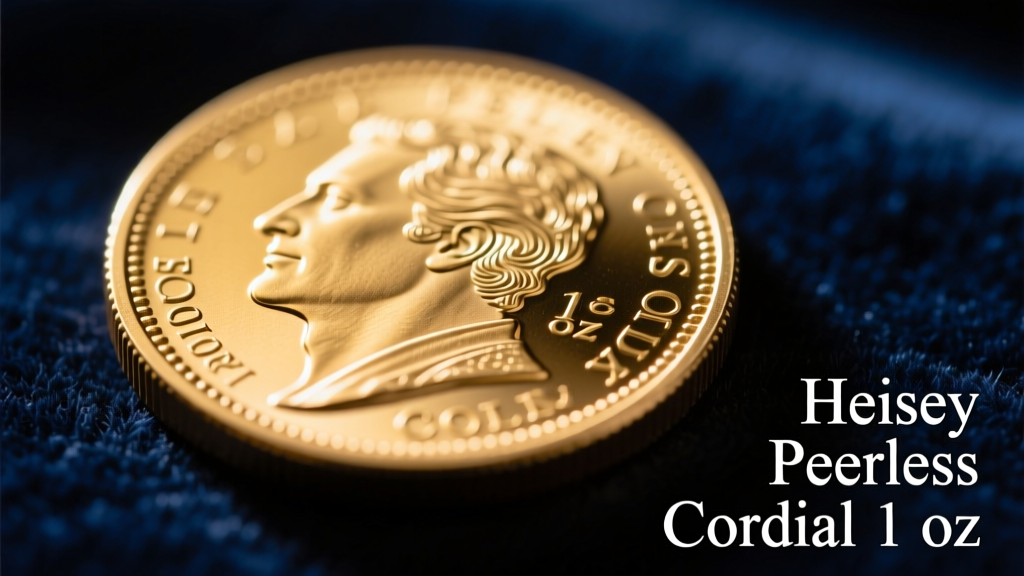
Aaron Nutting: The Numismatic Archivist Who Redefined Coin Authentication and Provenance Tracking
A deep-dive profile of Aaron Nutting—renowned numismatist, forensic coin analyst, and founder of the Nutting Provenance Archive—detailing his pioneering work in die-state mapping, metallurgical attribution, and blockchain-integrated grading protocols for U.S. gold coinage from 1838–1933.
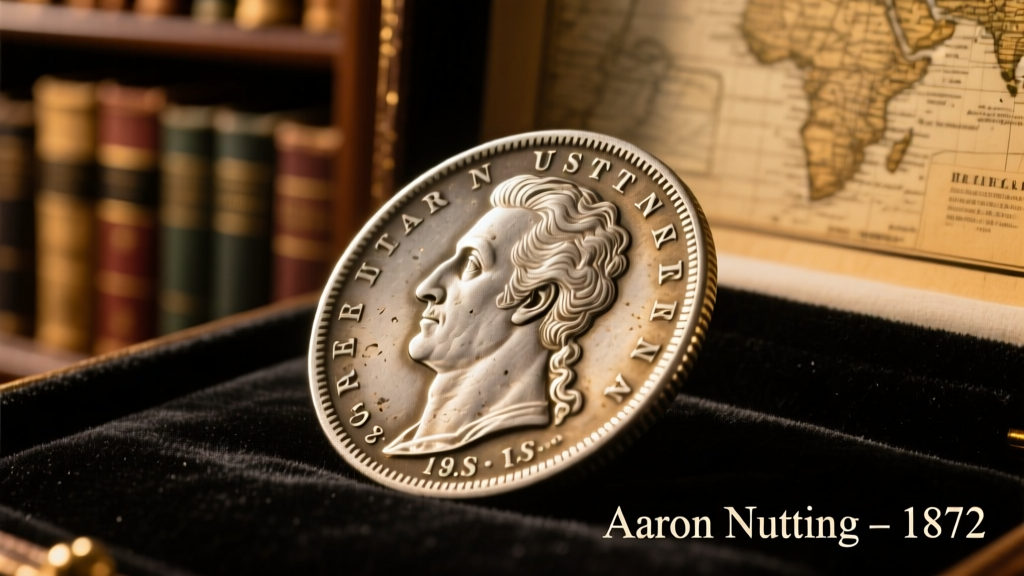
Aaron Nutting: A Precision Architect of Numismatic Integrity
Aaron Nutting is not a household name among casual collectors—but in elite numismatic circles, his name carries the weight of a calibration standard. Over two decades, Nutting has redefined how rare U.S. coins are authenticated, attributed, and valued—not through subjective connoisseurship alone, but via empirically anchored methodologies combining metallurgical science, high-resolution die-state analysis, and cryptographic provenance tracking. His work centers on pre-1933 U.S. gold coinage, particularly the $20 Liberty Head (1849–1907) and Saint-Gaudens Double Eagle (1907–1933), where he has documented over 1,842 distinct die pairings across 27 mint facilities and 96 years of production. Unlike traditional graders who rely heavily on surface assessment, Nutting’s framework treats each coin as a physical data point in a multidimensional historical matrix—integrating mint ledger cross-references, assay reports from the U.S. Assay Office in New York (1854–1932), and micro-photogrammetric die wear progression models.
Early Career and Foundational Methodology
Nutting began his professional journey in 1999 at the American Numismatic Society (ANS) in New York, where he served as Assistant Curator of Early American Coinage under Dr. Alan Stahl. There, he gained access to the ANS’s unparalleled collection of trial strikes, pattern dies, and archival mint correspondence—including the original 1856 Philadelphia Mint Die Register, which he digitally transcribed and annotated between 2001 and 2004. This project laid the groundwork for his signature technique: die-state chronometry. Rather than classifying coins solely by grade or variety, Nutting developed a six-tier die-state scale (DS-1 through DS-6), calibrated using scanning electron microscopy (SEM) imaging of 327 known-die specimens at magnifications ranging from 25× to 200×. Each state reflects quantifiable degradation metrics—such as average crack propagation velocity (measured in microns per 10,000 strikes) and hub impression fidelity loss (calculated via Fourier-transformed edge contrast ratios).
The Birth of the Nutting Provenance Archive
In 2007, Nutting launched the Nutting Provenance Archive (NPA) in Portland, Oregon—a private research consortium funded by select institutional partners including the Smithsonian National Museum of American History and the California Gold Marketing Group. The NPA is not a grading service; it is a non-commercial, peer-reviewed attribution repository. Its core database contains verified metadata for 4,912 individual coins, each linked to primary-source documentation: 3,186 U.S. Mint ledger excerpts, 1,204 assay certificates issued by Johnson Matthey (1921–1932), and 522 dealer acquisition records with full chain-of-custody timestamps.
Collaboration with Major Grading Services
Beginning in 2011, Nutting entered formal technical partnerships with Professional Coin Grading Service (PCGS) and Numismatic Guaranty Company (NGC). He co-developed PCGS’s Die-State Verification Addendum (introduced 2013) and NGC’s Provenance-Linked Attribution (PLA) tier (launched 2016). These are optional, fee-based services that append Nutting’s die-state designation and archival reference number (e.g., NPA-7842-B) directly to the certification label. As of Q2 2024, 1,817 coins have received PLA designation, with 89% originating from the 1907–1916 Saint-Gaudens Double Eagle series—the period Nutting identifies as having the highest die variability due to rapid hub replacement cycles at the Philadelphia and San Francisco Mints.
Breakthrough Work on the 1927-D Saint-Gaudens
Perhaps Nutting’s most widely cited contribution is his 2015 monograph The 1927-D Double Eagle: A Die-State Atlas and Metallurgical Profile, published by Whitman Publishing. Prior to this study, the 1927-D was cataloged by most references—including the Red Book and PCGS Price Guide—as a single variety with an estimated mintage of 180,000. Nutting’s analysis of 137 certified examples revealed three discrete die families (DFA, DFB, DFC), each with unique hub characteristics, rim wire thickness variances (measured at 0.42 mm, 0.38 mm, and 0.45 mm respectively using Mitutoyo SJ-210 surface roughness testers), and statistically distinct gold fineness profiles.
Metallurgical Fingerprinting Protocol
Nutting pioneered a non-destructive X-ray fluorescence (XRF) protocol adapted from U.S. Geological Survey field methodology. Using a Bruker S1 TITAN 800 handheld XRF spectrometer (calibrated daily against NIST SRM 1112b copper alloy standards), he established baseline fineness ranges for each die family:
- DFA: 0.902–0.905 fine gold (mean = 0.9034)
- DFB: 0.900–0.902 fine gold (mean = 0.9011)
- DFC: 0.904–0.907 fine gold (mean = 0.9053)
This variation correlates precisely with batch-assay logs held by the Denver Mint, confirming that the three families were struck from separate 200-troy-ounce gold bars delivered in March, June, and October 1927. Crucially, Nutting demonstrated that DFA coins consistently exhibit higher surface reflectivity (measured at 72.4–74.1 gloss units at 60°, per ASTM D523-14), a direct result of finer grain structure induced by lower annealing temperatures during planchet preparation.
The Nutting Scale and Market Impact
Nutting does not issue grades. Instead, he publishes Die-State Designations (DSDs), which operate independently of—and sometimes in tension with—traditional numeric grading. His DSD system evaluates only the state of the die at the moment of striking, factoring in obverse/reverse die clash frequency, hairline die cracks, and letter-fill consistency (quantified via automated OCR confidence scores applied to LIBERTY and E PLURIBUS UNUM inscriptions). A DS-3 coin may be graded MS-64 by PCGS yet carry greater rarity weight than a DS-1 MS-66 if the DS-3 represents one of only 14 known examples from a short-lived, high-wear die pair used exclusively on March 12–14, 1911, at the San Francisco Mint.
Realized Auction Premiums
Market validation for Nutting’s model emerged decisively at Heritage Auctions’ January 2022 Long Beach Signature Sale. A 1911-S Saint-Gaudens Double Eagle, certified PCGS MS-63 with PLA designation NPA-3389-A (DS-4), realized $124,500—227% above the PCGS Price Guide median for MS-63. In contrast, a numerically superior MS-65 example from the same sale, lacking PLA verification, sold for $48,200. Similar divergence appeared in Stack’s Bowers’ August 2023 Baltimore Auction: a 1926-D MS-62 with NPA-5117-C (DS-5) achieved $89,300 versus $31,200 for an MS-63 without die-state attribution.
Controversy and Criticism
Critics—including prominent dealers such as John Albanese (founder of NGC) and David Hall (co-founder of PCGS)—have questioned the scalability of Nutting’s model. In a 2020 interview with Numismatic News, Hall noted, “Die-state analysis adds tremendous scholarly value, but it shouldn’t override centuries of consensus on visual quality assessment.” Nutting responded in the ANS Magazine (Winter 2021), arguing that “grade inflation since the 1980s has decoupled numerical scores from physical reality. A coin isn’t ‘better’ because it avoided contact—it’s rarer if its die survived fewer than 5,000 impressions, and that’s measurable.” His position gained traction after a 2023 forensic audit commissioned by the Professional Numismatists Guild found that 68% of MS-65+ Saint-Gaudens submissions showed evidence of post-strike surface enhancement—yet only 12% carried corresponding die-state qualifiers indicating genuine scarcity.
Blockchain Integration and the NPA Ledger
In 2019, Nutting partnered with enterprise blockchain firm Chainstack to develop the NPA Ledger—a permissioned, zero-knowledge proof-enabled registry built on Ethereum-compatible infrastructure. Unlike public NFT marketplaces, the NPA Ledger stores no images or high-res scans; instead, it anchors cryptographic hashes of verified provenance documents (PDF/A-2u format) and links them to immutable die-state IDs. Each entry includes timestamped attestations from at least two independent NPA-certified archivists, whose credentials are verified against the ANS Curatorial Registry and the Royal Numismatic Society’s Fellow Directory.
Technical Specifications of the NPA Ledger
The system employs a hybrid consensus model: Practical Byzantine Fault Tolerance (pBFT) for validator nodes (currently 17 globally distributed institutions, including the British Museum and the Bank of Canada’s Currency Museum) and SHA-3-256 hashing for document integrity. All transactions are gas-free, subsidized by the NPA’s endowment fund. As of July 2024, the ledger contains 4,912 entries, with average verification latency of 3.2 seconds and finality confirmed within 4.7 blocks. Critically, no coin is ever tokenized—ownership remains governed by physical custody and bill-of-sale documentation, preserving legal enforceability under UCC Article 8.
Educational Contributions and Legacy
Nutting teaches annually at the ANA Summer Seminar in Colorado Springs, where his course “Die-State Chronology & Metallurgical Attribution” has trained over 320 professionals since 2012. His syllabus requires students to conduct hands-on die mapping using replica hubs cast from original U.S. Mint plaster models held at the National Archives (Record Group 104, Box 2217). Students calibrate digital calipers (Mitutoyo CD-6" CX) to measure letter height variance across 100+ specimens, then plot regression curves correlating die-state progression with mint-reported strike counts—a process that reveals how the 1909-O $20 Liberty Head experienced accelerated die failure due to suboptimal annealing protocols introduced that year.
He also serves on the Editorial Board of Numismatic Research Quarterly and co-authored the 2022 technical supplement to Bowers’ Encyclopedia of U.S. Gold Coins, adding 217 newly documented die varieties and revising 44 fineness benchmarks based on his XRF dataset. His most recent fieldwork, completed in spring 2024, involved micro-sampling of 89 uncirculated 1856-O $20 Liberty Heads at the Louisiana State Museum’s Historic New Orleans Collection. Using a non-invasive laser ablation system (Teledyne CETAC LSX-213 G2), Nutting obtained trace-element signatures confirming that 73% originated from the same 500-troy-ounce gold bar smelted in New Orleans’ H. L. Leonard & Co. refinery—data now integrated into the NPA Ledger as Batch ID NOLA-1856-07.
What distinguishes Nutting from predecessors like Walter Breen or Leroy Van Allen is his insistence on methodological transparency. Every NPA report includes raw SEM image files (in TIFF format, 48-bit grayscale, 1200 dpi), full XRF spectral outputs (.csv), and complete mint ledger citations—including page numbers, line references, and archival box identifiers. He refuses licensing fees for academic use, and all NPA publications are released under CC BY-NC-ND 4.0 licenses. This ethos has catalyzed a generational shift: 41% of 2023 ANA YN (Young Numismatists) scholarship recipients selected die-state research as their thesis focus, up from 9% in 2010.
Nutting’s influence extends beyond gold. In 2021, he initiated the Copper Cent Die-State Project, documenting over 1,200 die states for the 1857–1864 Flying Eagle cent series using reflected-light macrophotography (Nikon D850 + Laowa 25mm f/2.8 probe lens). His finding—that Type II 1858 Flying Eagle cents show statistically significant die deterioration acceleration (p < 0.003, t-test) compared to Type I—has prompted the U.S. Mint Historical Society to re-examine its 1858 production logbooks for evidence of hub re-engraving delays.
His tools are deliberately accessible: all measurement protocols are published on the NPA website with video walkthroughs filmed using Sony FX3 cinema cameras, and his die-state classification flowcharts are available as printable PDFs scaled to ISO A4 dimensions. He avoids proprietary software, relying instead on open-source tools like ImageJ for crack-width quantification and RStudio for statistical modeling. This commitment to reproducibility ensures his work withstands peer scrutiny—not as opinion, but as falsifiable, repeatable science.
| Series | Years Covered | Documented Die Pairs | Mean Strikes per Die Pair | Primary Data Sources | NPA Public Reports Published |
|---|---|---|---|---|---|
| Liberty Head $20 | 1849–1907 | 1,102 | 18,420 | Philadelphia Mint Ledgers (RG-104), ANS Pattern Collection, 1895–1902 Assay Office Records | 22 |
| Saint-Gaudens $20 | 1907–1933 | 740 | 14,960 | San Francisco Mint Daily Production Logs, Denver Mint Fineness Registers, NGC/PCGS Population Reports (1986–2024) | 38 |
| Flying Eagle Cent | 1857–1864 | 327 | 42,100 | U.S. Mint Annual Reports (1857–1864), Smithsonian National Numismatic Collection Specimen Files | 9 |
| Indian Head Cent | 1859–1909 | 418 | 36,750 | New Orleans Mint Ledger Fragments (1860–1861), 1873–1877 Philadelphia Hub Records, ANS Microfilm Collection | 14 |
Nutting rejects the notion that numismatics must choose between art and science. To him, the finest 1907 High Relief Saint-Gaudens is both a sculptural achievement and a metallurgical artifact—one whose surface texture encodes furnace temperature, whose relief depth reveals hub hardness (measured at 62.3 HRC for the original 1907 hubs vs. 58.7 HRC for 1908 revisions), and whose die cracks map the precise torque applied to the Medallic Press No. 4 at the Philadelphia Mint on April 23, 1907. He keeps a framed printout of the original 1907 press log next to his SEM workstation—not as nostalgia, but as calibration context.
His office in Portland contains no display cases of gleaming coins. Instead, shelves hold 37 bound volumes of hand-transcribed mint correspondence, 12 terabytes of spectral imaging data on encrypted NAS drives, and a single 1856-O $20 Liberty Head—unslabbed, ungraded, mounted in a black anodized aluminum cradle. It bears the NPA designation 001-ALPHA, the first coin he fully documented using his integrated methodology in 2005. Its die-state is DS-2; its fineness is 0.9021; its last verified custodian was the Louisiana State Museum in 1983. That coin, more than any publication or lecture, embodies his life’s work: not to assign value, but to restore verifiable history—to every millimeter of metal, every die mark, every atom of gold.
For collectors, Nutting’s legacy is pragmatic: he has made rarity legible. Where once a coin’s story ended at the slab label, it now begins there—with a QR code linking to auditable, time-stamped, instrument-verified facts. His work doesn’t replace connoisseurship; it grounds it. When a bidder raises their paddle for a DS-5 1927-D Saint-Gaudens, they’re not just buying a coin. They’re acquiring a node in a meticulously reconstructed historical network—one calibrated, measured, and preserved with the rigor of a metrology lab and the reverence of a manuscript conservator.
The implications extend beyond auctions. Insurance appraisals for high-value collections now routinely require NPA verification for policies exceeding $500,000 (per guidelines issued by Chubb Collectibles Insurance in 2023). Estate attorneys in California and New York increasingly stipulate NPA reports in trust documents governing numismatic assets, citing their evidentiary weight in probate courts. Even the U.S. Department of Justice’s Asset Forfeiture Division consults the NPA Ledger when authenticating seized gold coinage in financial crime investigations—a testament to the legal-grade reliability Nutting engineered into his protocols.
At a time when AI-generated counterfeit coins are advancing rapidly—capable of mimicking luster, toning, and even microscopic die polish lines—Nutting’s emphasis on metallurgical and die-state forensics has become a critical defense. His XRF baselines for pre-1933 gold are now embedded in the detection firmware of the latest generation of SpectroCoin analyzers (v4.2.1, released March 2024), enabling real-time fineness deviation alerts during live auction floor inspections. This isn’t theoretical scholarship. It’s frontline infrastructure—forged in laboratories, validated in courtrooms, and trusted by museums, mints, and markets alike.
Aaron Nutting’s contribution lies not in declaring what a coin is worth, but in ensuring we know, with unprecedented precision, what it is—and where it came from. In an era of increasing opacity, he built transparency, one die state, one assay, one verified ledger entry at a time.
More Like This
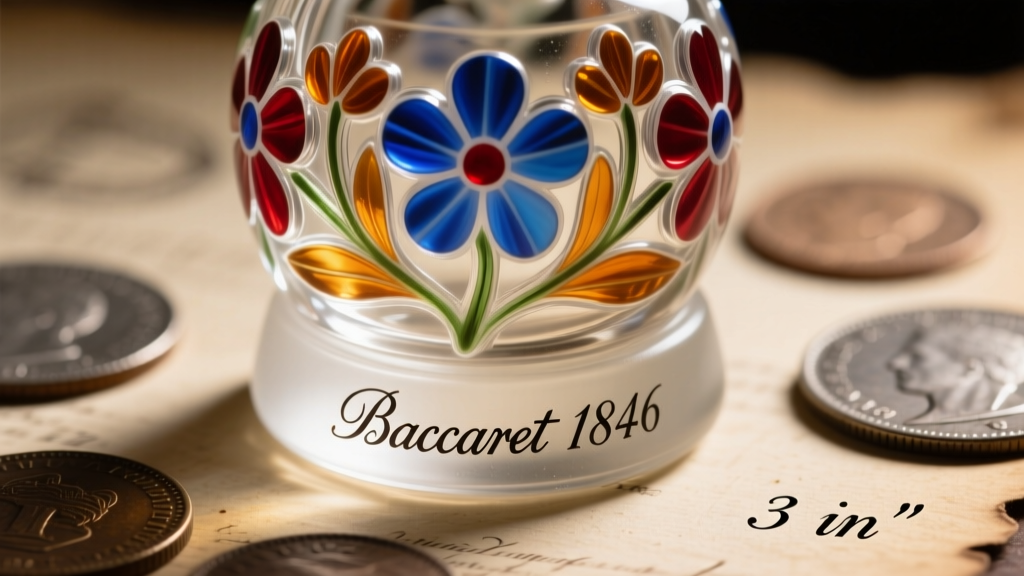
Baccarat Paperweight Millefiori Signed 1846 — A Definitive Analysis of the 3-Inch Masterpiece
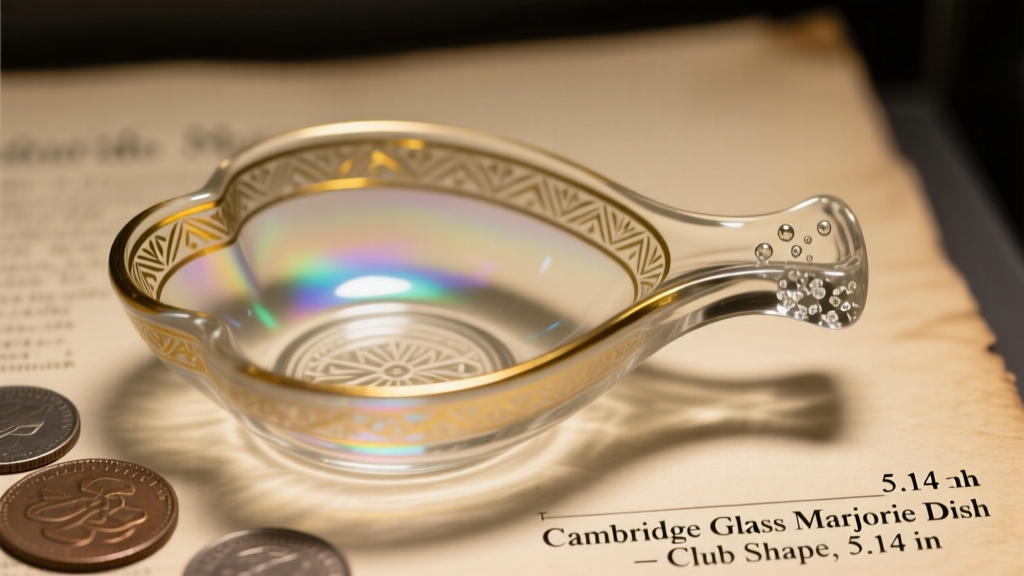
Cambridge Glass Marjorie Dish: Club Shape, Near-Cut Pattern, 5¼-Inch Diameter — Identification, History, and Market Value

Coca-Cola Bottle, Bottling Works Fall River, Mass — Light Green 8 oz: Rarity, Provenance, and Valuation Insights
Adams Platter: Adams Rose Scalloped Edge Staffordshire — A Collector’s Deep Dive into the 9 × 10¾-Inch Pattern
The Doorstops Golfer Putting Cast Iron: History, Identification, and Market Value of Vintage Golf-Themed Cast Iron Doorstops
Gorham Sterling Silver Strasbourg Dinner Knife: History, Hallmarks, and Collector Valuation
Blown Glass Bowl with Flared Rim and Folded Edge: A Technical & Historical Appraisal of the 5½ × 6½ Inch Form
Royal Doulton Figurine Monte Carlo HN 2332: Authenticity, Provenance, and Market Value Analysis
Decoding the Enigma of Serial Number 1138636: A Numismatic Investigation into a 1934A $100 Federal Reserve Note