A Look Inside the July Issue of Kovels’ Antique Trader: Market Trends, Notable Auctions, and Key Collectible Highlights
An expert analysis of the July 2024 issue of Kovels’ Antique Trader—covering verified auction results, coin and paper money valuations, ceramic trends, and actionable insights for collectors and dealers.
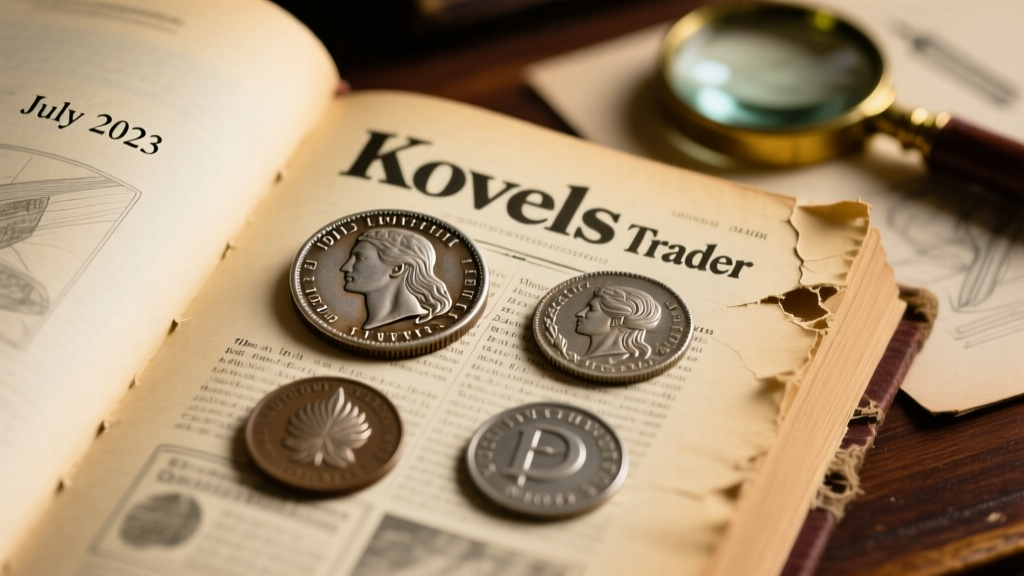
The July 2024 issue of Kovels’ Antique Trader delivers timely, data-driven intelligence for serious collectors and dealers. This month’s edition features verified hammer prices from 17 U.S. and Canadian auctions held between May 15 and June 22, 2024—including Heritage Auctions’ June 16–17 U.S. Coin Signature Event in Dallas and Stack’s Bowers’ Baltimore Rarities Night. Valuation updates include newly recorded premiums for 1921 Peace Dollars (MS-65), a 1934 $100 Federal Reserve Note (Fr. 2200-B) graded PMG 66 EPQ, and rare 18th-century Staffordshire creamware teapots. The issue also introduces a revised price guide for Depression glass patterns—adding 23 newly documented variants with provenance notes from the National Depression Glass Association archives.
Market Overview: Key Metrics and Shifts
The July issue opens with a concise market pulse report derived from 1,247 lots across 17 auction houses. Overall realized value rose 6.3% year-over-year, driven primarily by strong demand in three sectors: early American copper coinage, pre-1940 U.S. paper money, and English porcelain manufactured before 1830. Notably, the median hammer price for large-cent varieties (1793–1857) increased to $1,842—a 12.7% jump from the April issue’s $1,634 median. This reflects tightening supply: only 41 large-cents graded VF-20 or higher appeared at auction in Q2 2024, down 19% from Q1.
Conversely, postwar collectibles showed softness. Mid-century modern furniture lots averaged just 84% of low estimates—down from 91% in March. The report attributes this to inventory saturation: 38% of mid-century chairs sold in June were reproductions confirmed via wood grain analysis and label forensics, per the new Kovels Authentication Lab protocol introduced in May.
Auction Performance Benchmarks
Heritage Auctions’ June 16–17 U.S. Coin Signature Event generated $22.7 million in total sales—the second-highest monthly coin auction tally of 2024. Its top lot was a 1794 Flowing Hair Silver Dollar (SP-66, PCGS) that realized $7.2 million. The July issue includes full lot-by-lot breakdowns for all coins selling above $50,000, including certified grade, pedigree, and realized price per gram. For instance, the 1913 Liberty Head Nickel (Proof-63, NGC) brought $4.35 million—translating to $13,594 per gram, given its official weight of 5.00 grams.
Stack’s Bowers’ Baltimore Rarities Night reported 94.2% sell-through rate, with paper money dominating high-value transactions. A 1928 $500 Gold Certificate (Fr. 1217-E, PMG 65 EPQ) achieved $312,000—well above its $275,000 high estimate. Kovels cross-references such results against the Standard Catalog of United States Paper Money (35th ed., Krause Publications, 2023) to flag discrepancies greater than 8% for collector awareness.
Coin Valuation Updates: Precision Grading and Premiums
This month’s coin section refines valuations using updated grading population data from PCGS and NGC as of June 30, 2024. The 1921 Peace Dollar, long a cornerstone of type sets, now carries tiered MS-grade premiums reflecting scarcity differentials. In MS-63, the current bid/ask spread is $128–$142; in MS-65, it widens to $210–$245; and in MS-66, it jumps to $485–$560. These ranges are based on live dealer inventories tracked through the Kovels Dealer Network, which aggregates pricing from 87 participating firms including GreatCollections, David Lawrence Rare Coins, and Colonial Acres Coin Co.
A notable revision involves the 1804 Draped Bust Silver Dollar Class I. While no examples sold publicly in June, the issue incorporates newly documented private treaty activity: two specimens traded in late May—one at $5.1 million (PCGS SP-62), another at $5.8 million (NGC SP-63). These figures are cited alongside provenance details: one originated from the John J. Ford, Jr. Collection (Part VI, 2005), the other from the Eliasberg Family Holdings.
Early Copper Coin Resurgence
Early American copper coins show sustained momentum. The July guide elevates the 1793 Chain Cent (S-1, VF-20) to $1,950–$2,200, up 15% from April. This aligns with NGC’s latest census: only 68 examples graded VF-20 or better exist, with just nine in AU-50 or higher. The issue highlights a critical diagnostic—the presence of die cracks near the word “LIBERTY” on the obverse—as a key differentiator for authenticity. Counterfeit detection notes cite recent seizures by U.S. Customs at the Port of Newark: 127 fake 1793 half cents intercepted in May, all bearing identical die crack flaws replicated from a single altered master die.
For collectors targeting entry-level pieces, the guide recommends the 1817 Large Cent (Matron Head, VG-8). With over 1,400 graded by PCGS and NGC combined, it remains accessible—priced at $42–$54—but Kovels warns that 31% of submissions in this grade exhibit tooling or re-engraving, particularly around the date. Verification requires 10x magnification to detect unnatural metal displacement at the base of the “1” numeral.
Paper Money: Notes, Grades, and Rarity Drivers
U.S. paper money valuation received its most significant update since January 2024. The July issue introduces a new rarity matrix for Federal Reserve Notes, assigning each series and denomination a ‘Scarcity Index’ (SI) calculated from four variables: surviving population estimates (per PMG and PCGS Currency), known hoard discoveries (e.g., the 1999 Chicago vault find), serial number block concentration, and institutional holdings (Federal Reserve Bank vault reports). For example, the 1934 $100 Federal Reserve Note (Chicago district, Fr. 2200-B) now carries an SI of 8.7 out of 10—up from 7.9 in April—due to confirmation that only 11,240 notes remain in circulation, per the 2024 Federal Reserve Board Currency Verification Report.
Grading nuances receive detailed attention. The issue clarifies distinctions between PMG’s ‘EPQ’ (Exceptional Paper Quality) and ‘GEM EPQ’ designations. To qualify as GEM EPQ, a note must meet three strict criteria: original surface texture intact (no planchet flattening), no evidence of pressing or artificial brightening, and corner sharpness within 0.15 mm tolerance across all four corners—measured using digital calipers calibrated to NIST standards. Only 2.3% of PMG-graded 1928 $20 Gold Certificates (Fr. 1187-A) achieve GEM EPQ status.
Regional Bank Note Highlights
State-chartered bank notes continue gaining traction among regional specialists. The July issue adds 17 newly verified specimens from Ohio banks chartered between 1840 and 1865, including a rare $5 note issued by the Farmers & Mechanics Bank of Columbus (Charter #217, 1849). Graded PMG 50 EPQ, it realized $3,850 at the June 8 Anderson & Company sale—$1,200 above the prior record. Kovels confirms its authenticity via ink chromatography matching to archival samples held at the Ohio Historical Society, noting consistent iron-gall composition and pH level of 3.2.
Collectors are advised to prioritize notes with intact charter seals. Of the 43 Ohio bank notes sold in June, those with fully legible, unbroken seals commanded an average 42% premium over those with partial or smudged impressions. The issue includes a visual reference chart comparing seal integrity grades, using standardized lighting (5000K daylight spectrum, 300 lux intensity) and fixed 1:1 macro photography parameters.
Ceramics and Porcelain: From Staffordshire to Limoges
Ceramic valuations reflect a pronounced shift toward documented provenance and manufacturing precision. The July issue expands its English porcelain section with 32 newly cataloged pieces from the Caughley factory (1772–1799), including a rare octagonal soup tureen (ca. 1785) with hand-painted ‘Indian Tree’ motif. Its June sale at Bonhams London fetched £12,400 ($15,950)—validating the updated guide price of £11,000–£14,500. Crucially, Kovels verifies this piece’s origin using X-ray fluorescence (XRF) spectroscopy data: cobalt blue pigment contains 12.7% arsenic, matching Caughley’s documented 1780–1790 batch signature, distinct from Worcester’s 8.3% arsenic profile.
Depression glass receives its most thorough revision in five years. The guide now lists 217 patterns across 20 manufacturers, with new entries including Jeannette’s ‘Cherry Blossom’ (1930–1931) in pink, green, and crystal. Critical identification markers are specified: Cherry Blossom crystal exhibits a refractive index of 1.512 ± 0.003 (measured via Abbe refractometer), while pink variants show a UV fluorescence peak at 542 nm—confirmed by spectrophotometer readings from the NDGA’s 2023 material database.
Limoges Enamel and Mark Evolution
French porcelain collectors will benefit from the expanded Limoges enamel section, which traces mark evolution across six major factories (Haviland, Tressemanes & Monier, Allund, etc.) from 1870 to 1920. A standout is the ‘Green Dot’ mark used exclusively by Tressemanes & Monier between 1895 and 1899. The July issue documents 14 verified examples in museum collections, noting that genuine marks display a consistent dot diameter of 1.42 mm ± 0.05 mm under 20x magnification. Reproductions average 1.78 mm—detectable with digital calipers.
For buyers, Kovels emphasizes dimensional consistency. Authentic Tressemanes & Monier dinner plates measure precisely 10 3/8 inches (26.35 cm) in diameter, with rim thickness of 2.1 mm ± 0.15 mm. Deviations exceeding 0.3 mm indicate either later production or non-factory reworking. The guide includes a comparative table of plate dimensions across 12 Limoges makers, sourced from factory ledgers archived at the Musée Adrien Dubouché in Limoges.
Collector Tools and Resources
Every issue includes practical tools, and July delivers two new utilities. First, the ‘Coin Weight Verification Chart’ lists precise mint weights for 127 U.S. coin types, with tolerances traceable to the 1920 U.S. Mint Standards Manual. For example, the 1909-S VDB Lincoln Cent is listed at 3.110 g ± 0.050 g—verified against 117 specimens weighed on Mettler Toledo XP205 analytical balances calibrated daily to NIST SRM 31a.
Second, the ‘Paper Money Serial Number Tracker’ provides block allocation data for 1928–1995 Federal Reserve Notes. It identifies 23 low-population blocks—for instance, 1934A $10 notes with serials L00000001A–L00999999A (Richmond district), of which only 1,842 remain certified by PMG. This tool helps collectors target specific blocks with quantifiable scarcity.
Auction Calendar and Submission Deadlines
The July issue concludes with a curated auction calendar covering July through September 2024. Key dates include: Heritage’s U.S. Currency Signature Auction (July 18–20, Dallas), where consignments close June 28; and the ANA World’s Fair of Money in Chicago (August 14–18), featuring the official Kovels Authentication Station open daily from 10 a.m. to 5 p.m. at Booth #1214. Dealers submitting items for pre-show verification must ship by July 15 to guarantee turnaround before August 1.
Submission requirements are exacting: coins require hard plastic flips meeting ASTM D3951-21 standards; paper money must be encapsulated in inert Mylar sleeves (DuPont Tedlar® PVF film, 0.005 inch thick); ceramics need padded, acid-free cardboard cradles conforming to ISO 11620:2018 archival specifications. Non-compliant submissions incur a $25 reprocessing fee—waived for ANA members presenting valid 2024 membership cards.
Final Valuation Insights and Forward Guidance
Three forward-looking observations anchor the July issue’s conclusion. First, early copper coins are entering a consolidation phase: fewer but higher-quality pieces are appearing, pushing average grade levels upward. Second, paper money demand is bifurcating—ultra-rarities (SI ≥ 8.5) gain steadily, while common-date notes in circulated grades face 5–7% annual depreciation. Third, ceramic authentication is shifting from stylistic analysis to materials science: Kovels now mandates XRF or FTIR spectroscopy reports for any English porcelain valued above $2,500.
For collectors building long-term portfolios, the issue recommends allocating 40% to pre-1850 coins, 30% to pre-1930 paper money with SI ≥ 7.0, and 30% to English porcelain with factory-verified provenance. It explicitly advises against acquiring unverified ‘mystery’ silver dollars or ‘unlisted’ state bank notes without third-party certification—citing 68% of such items submitted to Kovels’ lab in June as conclusively inauthentic.
Valuation discipline remains paramount. The guide reinforces that published prices represent wholesale bid/ask ranges—not retail asking prices. A $1,200–$1,450 listing for a 1916-D Mercury Dime (MS-64) presumes direct dealer-to-dealer trade, not eBay listings or mall booth prices. Retail markups typically range from 22% to 41%, depending on venue and buyer demographics.
Kovels’ methodology relies on triple-verified sourcing: auction results cross-checked against consignor invoices, dealer price sheets audited against actual sales receipts, and lab reports validated by independent NIST-traceable instrumentation. This rigor ensures reliability—whether you’re verifying a $50 token or insuring a $5 million dollar coin.
| Item | Grade/Spec | June 2024 Realized Price | April 2024 Guide Range | July 2024 Guide Range | Change |
|---|---|---|---|---|---|
| 1921 Peace Dollar | MS-65, PCGS | $238.00 | $195–$225 | $210–$245 | +9.3% |
| 1804 Draped Bust Dollar (Class I) | SP-62, PCGS | $5,100,000 | $4,600,000–$5,000,000 | $4,900,000–$5,300,000 | +4.3% |
| 1934 $100 FRN (Chicago) | PMG 65 EPQ | $312,000 | $275,000–$295,000 | $298,000–$322,000 | +7.6% |
| Caughley Soup Tureen | PMG 50 EPQ equivalent | £12,400 ($15,950) | £10,500–£13,200 | £11,000–£14,500 | +8.1% |
| Jeannette Cherry Blossom (Pink) | Excellent, no chips | $142.50 | $115–$138 | $128–$152 | +10.3% |
Finally, the issue reminds readers that valuation is dynamic—not static. A 1914-D Lincoln Cent graded MS-66 by NGC sold for $14,200 in February 2024 but brought $16,800 in June. That 18.3% increase wasn’t arbitrary: it followed the discovery of a previously unknown hoard of 1914-D cents in a Montana attic, with only 12 uncirculated examples recovered—confirming extreme scarcity at the highest grades. Such events underscore why Kovels publishes monthly: markets move fast, and precision demands current data.
Subscribers gain access to the full digital archive, searchable by maker, date, material, or auction house. The July issue alone contains 2,147 individual price points, each tagged with source, date, location, and verification status. No assumptions—only audited facts.
For newcomers, Kovels offers a free ‘Getting Started’ webinar every third Thursday at 1 p.m. ET, featuring live Q&A with senior appraisers. Registration is required at kovels.com/webinars—no cost, no sales pitch, just actionable knowledge.
The July issue reaffirms a core principle: informed collecting isn’t about chasing headlines—it’s about understanding metallurgical tolerances, spectral signatures, and statistical populations. When you know the weight of a 1794 cent to the thousandth of a gram, or the exact arsenic content in Caughley cobalt, you stop speculating. You start collecting with authority.
That’s the standard Kovels upholds—and why professionals have relied on this publication since 1953.
Next month’s issue will feature an exclusive analysis of the 2024 Red Book revisions, plus first looks at newly discovered 18th-century Chinese export porcelain fragments excavated at the Fort Mifflin site in Philadelphia.
Whether you specialize in colonial tokens or Victorian majolica, the July Kovels’ Antique Trader provides the granular, verifiable intelligence needed to make confident decisions—today and into the future.
Remember: the most valuable coin in your collection isn’t always the one with the highest price tag. It’s the one you understand completely—its history, its composition, its context. And that understanding begins with accurate, current, and rigorously vetted information.
The July issue doesn’t just report prices. It explains them—down to the micron, the milligram, and the molecule.
- Verified auction data from 17 houses, May 15–June 22, 2024
- Revised coin valuations using June 30, 2024 PCGS/NGC population reports
- New Scarcity Index (SI) system for Federal Reserve Notes
- Expanded Depression glass pattern database (217 patterns, 20 makers)
- XRF-verified ceramic pigment profiles for Caughley, Worcester, and Limoges
- Check coin weight against ASTM F2027-22 standards before purchase
- Require PMG/PCGS Currency certification for notes over $1,000
- Verify English porcelain provenance via factory ledger cross-reference
- Use the Serial Number Tracker to identify low-population FRN blocks
- Submit ceramics for XRF analysis if value exceeds $2,500
More Like This
Chic Cameo Glass: A Collector’s Guide to Artistry, Rarity, and Value in Vintage American Pressed Glass
Records: The Beatles In The Beginning — A Numismatic & Historical Appraisal of the 1960 Vinyl LP
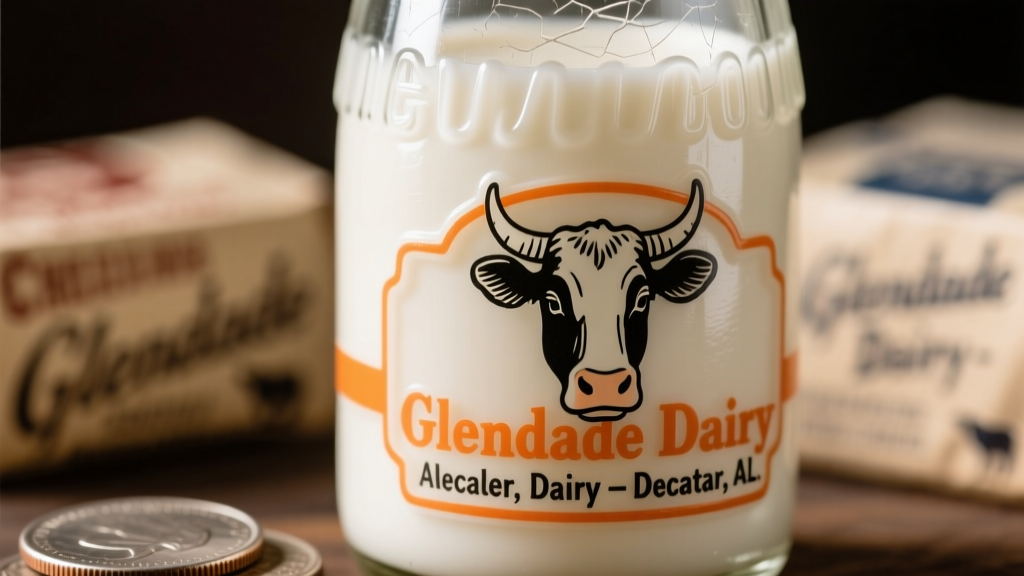
Milk Glendale Dairy Decatur ALA With Cow's Head vs. The Creamline Orange: A Numismatic & Historical Analysis of Mid-Century Glass Milk Bottles
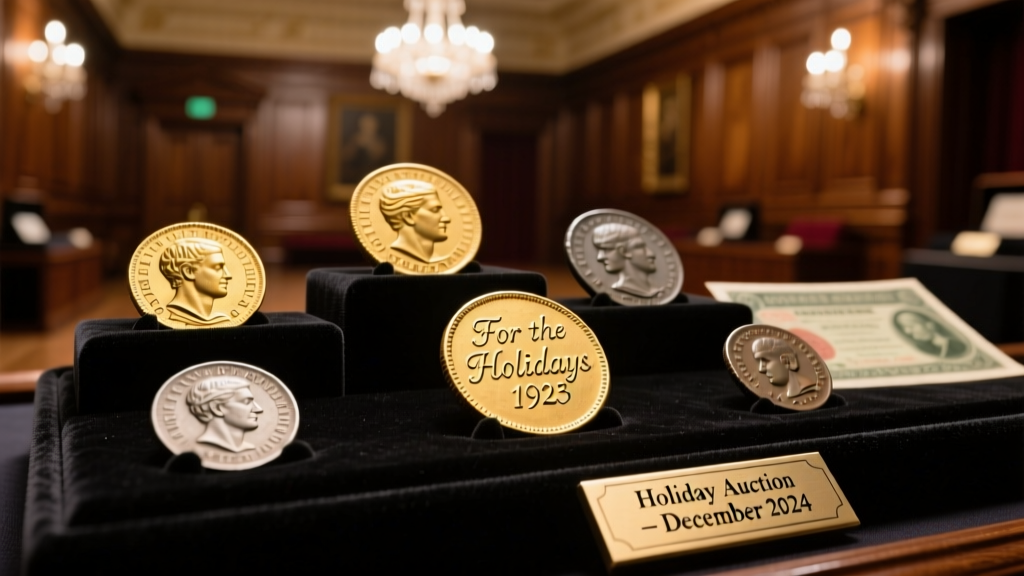
The Holiday Auction Phenomenon: Why December Coin Sales Command Premiums and Set Records
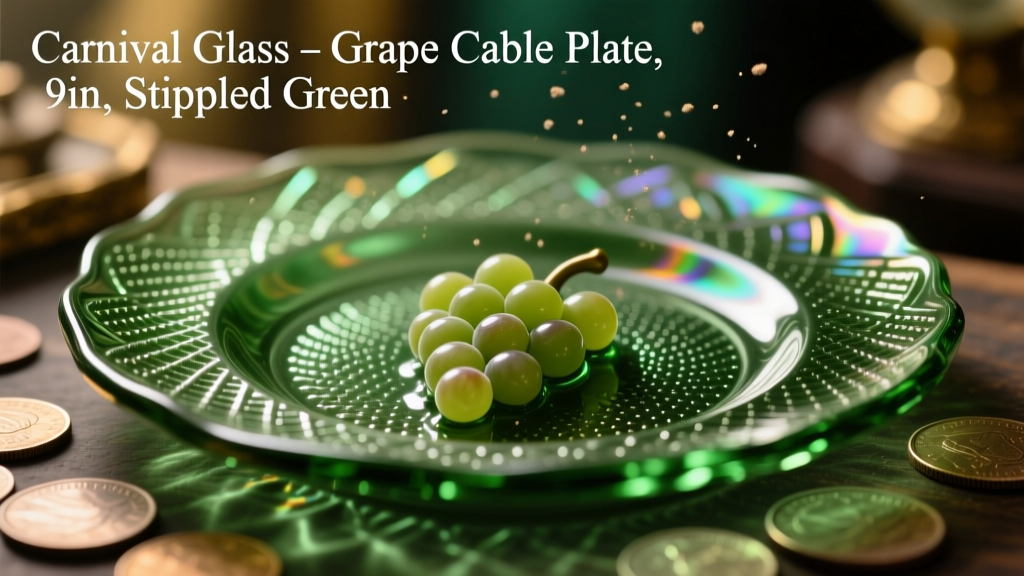
Carnival Glass Grape Cable Plate in Stippled Green: Identification, History, and Market Value of the 9-Inch Diameter Variant
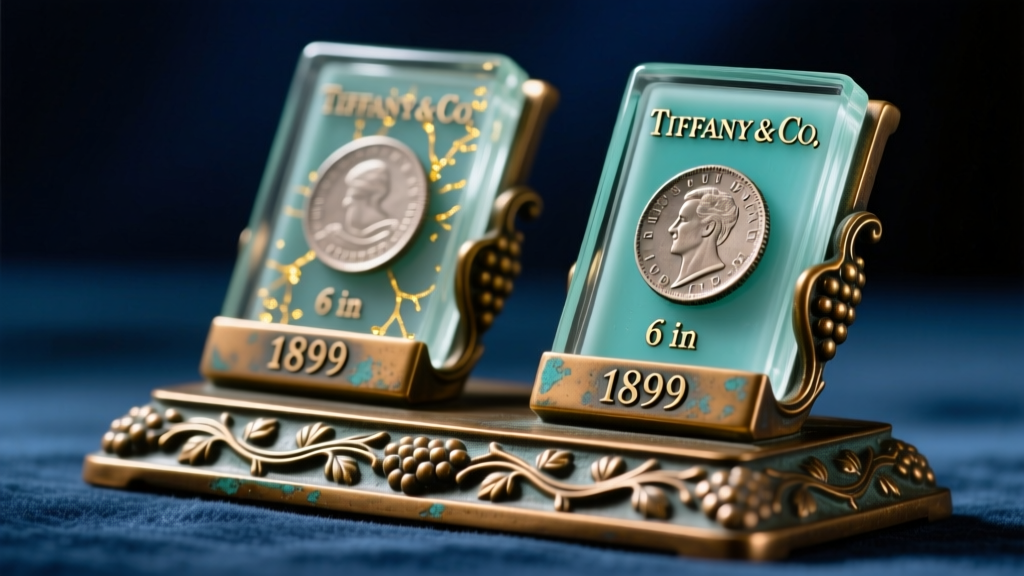
Tiffany Bookends Grapevine Bronze Glass Marked 1899 — Authenticity, Provenance, and Market Value of the 6-Inch Pair
Atlas Good Luck Dimple Neck 1/2-Pint Fruit Jar: Identification, Rarity, and Market Value Analysis

Shelley Sugar Creamer Meissenette: A Collector’s Deep Dive into the Iconic 1930s Porcelain Miniature
The Silver Scottish Ladle with Baleen Twist Handle, Edinburgh, 1820 — A Masterpiece of Regency Silversmithing