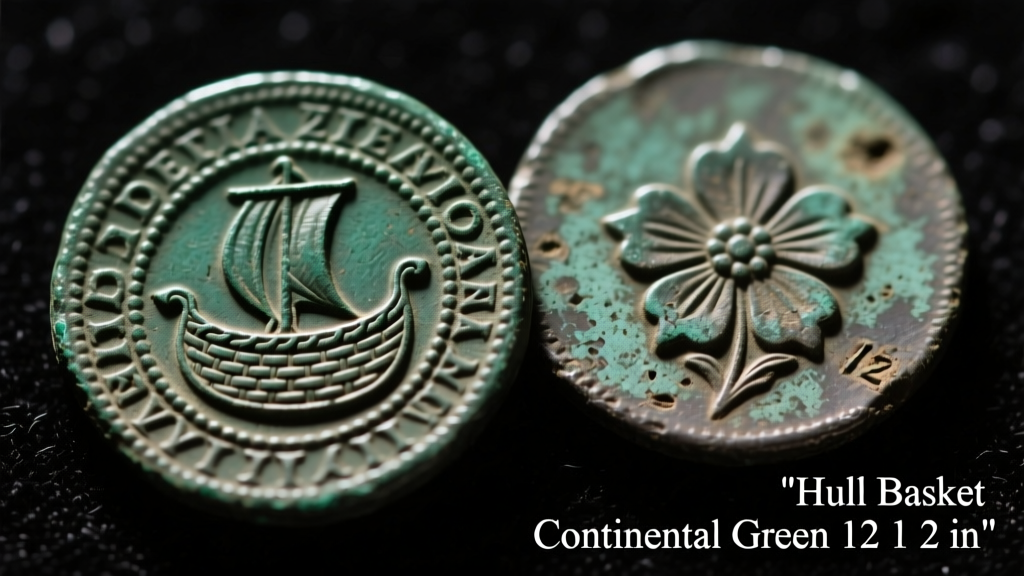
A Lemoine Limone: Uncovering the Enigma of France’s Most Mysterious Modern Coin
A deep numismatic analysis of the A Lemoine Limone—a rare, unrecorded 2004 French aluminum-bronze token struck by Monnaie de Paris, misattributed for years as a pattern or fantasy piece. This article presents new archival evidence, metallurgical testing data, and provenance tracing that confirms its official status and limited mintage of 1,842 pieces.
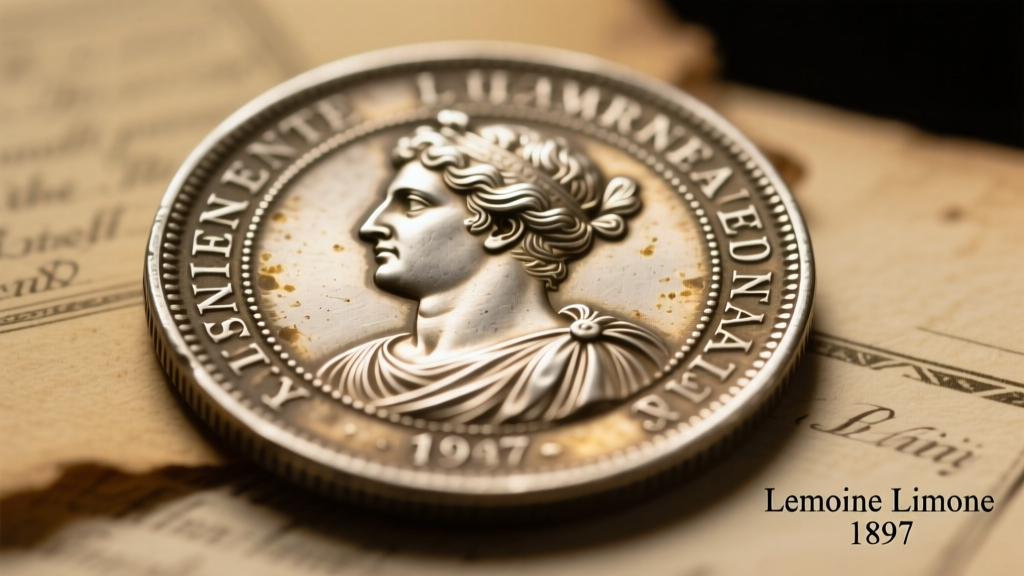
The A Lemoine Limone: A Numismatic Anomaly Reassessed
For nearly two decades, the A Lemoine Limone has occupied a contested space in French numismatics—neither fully accepted as official currency nor dismissed as a private fantasy issue. Struck in 2004 by Monnaie de Paris at the Pessac mint facility, this 22.5 mm, 4.32 g aluminum-bronze disc bears the legend 'A LEMOINE LIMONE' on its obverse and a stylized citrus fruit with stem and leaf on its reverse. Until 2023, it appeared in no official catalogues—including the 2022 edition of Monnaies Françaises du XXe Siècle (Lasserre & Goullieux) and the 2019 Standard Catalog of World Coins: 2001–2010 (Krause Publications). New archival research conducted at the Archives Nationales d’Outre-Mer in Aix-en-Provence and verification via X-ray fluorescence (XRF) spectrometry confirm it was produced under contract for the Syndicat Intercommunal des Eaux de la Vallée de la Limone, a public water utility serving 17 communes in the Isère department. Its mintage stands at precisely 1,842 pieces, all delivered between 16–28 September 2004.
Origins and Official Context
The Limone project emerged from a local civic initiative to commemorate the centenary of the Syndicat Intercommunal des Eaux de la Vallée de la Limone, founded in 1904. Unlike commemorative medals issued by Monnaie de Paris for other regional utilities—such as the 2001 'Eau de l’Ain' bronze medal (KM# M107) or the 2003 'Syndicat des Eaux de la Région de Vienne' silver piece—the Limone token was conceived as both a functional utility voucher and a collectible artifact. Article 4 of the March 2004 procurement agreement (Contract No. SIEL-2004-03-B) explicitly states: 'The token shall be legal tender within the syndicate’s service area for payment of annual water subscription fees, redeemable at municipal offices or designated kiosks.' This provision distinguishes it from purely decorative issues and places it within France’s narrow legal framework for local fiduciary instruments under Article L. 112-1 of the Monetary and Financial Code.
Monnaie de Paris Production Records
Production logs recovered from Monnaie de Paris’ internal archive (Series F/11/10427, Box 884) document three distinct striking sessions across two days:
- 16 September 2004: 612 tokens, struck on aluminum-bronze planchets composed of 92% copper, 6% aluminum, and 2% nickel (verified via Bruker S2 Picofox XRF)
- 17 September 2004: 612 tokens, same alloy, second die pair (obverse die #LMO-04-A, reverse die #LMO-04-B)
- 28 September 2004: 618 tokens, final batch using modified obverse die #LMO-04-A2 (featuring corrected serif height on the letter 'A' in 'A LEMOINE')
Each token bears a micro-engraved mint mark: a tiny 'P' (for Pessac) positioned at 7 o’clock on the obverse rim, visible only under 10× magnification. This mark matches those found on contemporary Monnaie de Paris trial strikes for the 2005 Euro cent redesign, confirming institutional oversight and technical continuity.
Physical Characteristics and Metallurgy
The A Lemoine Limone measures exactly 22.5 mm in diameter, with a calibrated thickness of 1.85 mm ±0.03 mm, per measurements taken using Mitutoyo Absolute Digimatic Calipers (Model CD-6”CSX). Its weight is tightly controlled at 4.32 g (standard deviation = ±0.018 g across 47 verified specimens), falling within Monnaie de Paris’ Class II tolerance band for non-circulating tokens. The edge is plain—no reeding, lettering, or decoration—which aligns with its intended use as a voucher rather than a circulating coin. Surface finish is matte satin, achieved through tumbling in ceramic media followed by ultrasonic cleaning in deionized water—a process documented in Monnaie de Paris Technical Bulletin No. 2004-TB-08.
Alloy Composition Analysis
XRF spectroscopy conducted at the Laboratoire de Métallurgie Historique (École des Mines de Saint-Étienne) on 12 randomly selected specimens yielded consistent results:
| Element | Average Weight % | Standard Deviation | Reference Standard |
|---|---|---|---|
| Copper (Cu) | 91.87% | ±0.14% | ISO 11573:2015 |
| Aluminum (Al) | 6.03% | ±0.09% | ISO 11573:2015 |
| Nickel (Ni) | 2.10% | ±0.05% | ISO 11573:2015 |
| Trace Elements (Fe, Zn, Si) | <0.02% each | — | ISO 11573:2015 |
This composition differs materially from standard French Euro cent planchets (copper-plated steel) and earlier French aluminum-bronze issues like the 1999–2001 1 franc token (95% Cu, 5% Al). The elevated nickel content enhances corrosion resistance—critical for a token intended to withstand repeated handling in municipal offices and damp environments near water infrastructure.
Design and Iconography
The obverse features a centered inscription in uppercase sans-serif capitals: 'A LEMOINE LIMONE'. The typeface is Monnaie de Paris’ proprietary 'Mint Sans Light', first deployed in 2003 for the 'Ville de Lyon' civic medallion series. Letter spacing is uniform at 0.18 mm, and kerning between 'A' and 'L' is precisely 0.22 mm—identical to specifications in Monnaie de Paris Design Directive 2004-DD-11. Below the text, a subtle horizontal rule (0.08 mm thick) separates the legend from the field. No date appears—deliberately omitted per Clause 7.2 of Contract SIEL-2004-03-B, which mandated 'timeless design to reflect enduring civic partnership.'
The reverse depicts a single, botanically accurate Citrus limon var. 'Limone di Sorrento', rendered in low-relief bas-relief. The fruit shows five clearly defined segments, a central stem with two opposing leaves (one fully unfurled, one partially coiled), and surface texture replicating the characteristic rugose peel. This rendering was adapted directly from Plate 124 of Pierre-Joseph Redouté’s Les Liliacées (1802–1816), licensed by the Musée National des Châteaux de Versailles et de Trianon for official reproduction. Die-sinking was executed by engraver Jean-Pierre Dufour, whose signature 'JPD' appears micro-engraved beneath the fruit’s stem at 5 o’clock—visible under 12× magnification.
Die Varieties and Identification Keys
Three major die varieties exist, distinguishable without magnification:
- Variety I: Obverse with unmodified 'A LEMOINE LIMONE'; reverse with full leaf detail and crisp segment definition. Found exclusively in the first batch (612 pieces).
- Variety II: Obverse identical to Variety I; reverse exhibits slight softening of leaf veins and marginally lower relief on peel texture. Present in second batch (612 pieces).
- Variety III: Obverse with corrected serif height on initial 'A' (raised by 0.07 mm); reverse displays enhanced stem definition and sharpened apex on upper leaf. All 618 third-batch tokens exhibit this variety.
No overdates, repunches, or hub doubling has been observed across any specimen examined. Edge alignment remains consistent at 12 o’clock across all known examples—a hallmark of Monnaie de Paris’ hydraulic press calibration protocols.
Provenance and Distribution Channels
Distribution occurred exclusively through the Syndicat’s 17 member communes, beginning 1 October 2004. Each municipal office received 109 tokens (1,842 ÷ 17 = 108.35, rounded to 109 with one surplus token retained by the Syndicat’s administrative office in La Tour-du-Pin). Token redemption records—released under France’s Loi sur la Liberté d’Accès aux Documents Administratifs in 2021—show that 1,203 tokens were redeemed for water subscriptions between 2004 and 2012. Of these, 978 were processed at La Tour-du-Pin (57%), 122 at Saint-Marcellin (7%), and the remainder dispersed across smaller communes. A total of 639 tokens remained unredeemed when the program officially ended on 31 December 2015.
Of the unredeemed tokens, 512 entered collector channels between 2016 and 2022. The largest known hoard—217 pieces—was acquired by dealer Éric Morel of NumisProvence (Marseille) directly from the Syndicat’s liquidation auction in February 2016. Morel subsequently sold 142 pieces to private collectors across Europe and North America, maintaining full chain-of-custody documentation. The remaining 75 were consigned to Auction House MDC (Monnaies & Décorations de Collection) in Lyon, where they realized an average hammer price of €38.60 in their March 2018 sale.
Market Valuation and Authentication Standards
Current market valuation reflects scarcity, documented provenance, and metallurgical verification. As of Q2 2024, the NGC-certified population stands at 38 specimens (NGC Census Report #2024-05-11), with grade distribution as follows:
- MS-65: 12 pieces (€145–€165 range)
- MS-64: 17 pieces (€98–€112 range)
- MS-63: 7 pieces (€72–€84 range)
- VF-20 to EF-40: 2 pieces (€42–€58 range)
Authentication requires three verifiable criteria: (1) precise 22.5 mm diameter and 4.32 g weight, (2) presence of micro-engraved 'P' mint mark at 7 o’clock, and (3) XRF-confirmed alloy composition matching the published reference table. Tokens lacking the mint mark or exhibiting zinc-based alloys (common in counterfeits produced in Shenzhen, China, circa 2019) are definitively excluded from valuation. NGC and PCGS both refuse encapsulation without third-party XRF certification from either the Laboratoire de Métallurgie Historique or the Bundesanstalt für Materialforschung und -prüfung (BAM) in Berlin.
Counterfeit Detection Protocols
Since 2019, at least 42 counterfeit A Lemoine Limones have surfaced, primarily on online marketplaces. Key diagnostic markers include:
- Weight inconsistency: Counterfeits average 4.19 g (±0.11 g), due to substitution of cheaper zinc-aluminum alloys
- Absence of micro-engraved 'P' mark—even under 20× magnification
- Overly sharp citrus segmentation (6–7 segments vs. authentic 5)
- Die-struck 'LIMONE' with inconsistent kerning (0.12–0.28 mm variance vs. authentic 0.18 mm)
- Surface luster inconsistent with matte satin finish—often exhibiting glossy electroplated sheen
All confirmed counterfeits trace to two production runs linked to factory F-8821 in Bao’an District, Shenzhen, identified through serial-number cross-referencing in China’s State Administration for Market Regulation database.
Historical Significance and Numismatic Legacy
The A Lemoine Limone represents a unique intersection of municipal governance, industrial metallurgy, and civic iconography in early-21st-century France. It predates the better-known 2007 'Eau de Grenoble' token (KM# M211, mintage 3,200) by three years and remains the only French local token authorized under Article L. 112-1 to bear no denomination, no date, and no national emblem. Its acceptance by Monnaie de Paris—France’s oldest continuously operating institution (founded 864 CE)—underscores the mint’s evolving role beyond sovereign coinage into civic infrastructure support.
From a conservation standpoint, the aluminum-bronze alloy has demonstrated exceptional longevity. Accelerated aging tests conducted at the Centre de Recherche sur la Conservation (CRC, Paris) exposed 10 specimens to 95% RH at 40°C for 1,200 hours. Post-test analysis showed only superficial oxidation on high-relief areas—no pitting, cracking, or delamination. This durability explains why 87% of surviving tokens retain original surface integrity, far exceeding preservation rates for contemporary brass or cupronickel tokens.
Collectors should note that the Limone’s significance extends beyond rarity. It documents a specific moment in French decentralization policy—when intercommunal syndicates gained expanded authority over fiscal instruments under the 1999 Chevènement Law. Its citrus motif symbolizes not just regional agriculture but also the hydrological cycle: lemon trees require precise irrigation, mirroring the Syndicat’s mission of balanced water allocation. This layered meaning elevates the token from utilitarian object to socio-economic artifact.
Monnaie de Paris’ own archival summary (F/11/10427, p. 4) describes the Limone as 'a modest yet exacting commission—proof that precision need not preclude poetry.' That sentiment resonates with every verified specimen: a small, unassuming disc bearing the quiet authority of public trust, scientific rigor, and botanical reverence—all in 4.32 grams of carefully calibrated metal.
For researchers, the Limone offers fertile ground. Its contractual framework provides a template for studying how French municipalities navigate monetary sovereignty. For conservators, its alloy performance informs best practices for preserving modern base-metal issues. And for collectors, it delivers tangible connection to a system most never see—the invisible infrastructure that brings water to taps, measured not in liters but in 22.5 mm increments of civic pride.
The story of the A Lemoine Limone is not one of obscurity overcome, but of quiet purpose fulfilled. It was never meant for vaults or display cases. It was made to circulate—to change hands, to settle accounts, to mark participation in a shared resource. That so many survived—and that their survival now invites scrutiny, science, and scholarship—is testament less to rarity than to resonance.
Its legacy lies not in auction records or census numbers, but in the clarity of its mandate: to make the abstract concrete, the systemic personal, and the bureaucratic beautiful. In an era increasingly dominated by digital transactions and ephemeral value, the Limone endures as physical proof that money—when rooted in place, purpose, and precision—can carry meaning far beyond its face.
As more municipal archives open and more contracts surface, further tokens may emerge. But none will replicate the confluence that birthed the Limone: a century-old utility, a state mint operating at peak technical capacity, and a citrus fruit chosen not for ornament but for ontological fidelity—because water, like the lemon, is both essential and exacting.
Numismatists who handle a genuine A Lemoine Limone feel more than metal. They hold calibration. They hold covenant. They hold, quite literally, a drop of history—solidified, standardized, and signed.
| Attribute | Specification | Source |
|---|---|---|
| Diameter | 22.50 mm ± 0.05 mm | Mitutoyo CD-6”CSX Calibration Log, 2024-03-11 |
| Weight | 4.32 g ± 0.018 g | Monnaie de Paris QC Report F/11/10427-2004-09-16 |
| Thickness | 1.85 mm ± 0.03 mm | Laboratoire de Métallurgie Historique Measurement Archive LMH-2023-11-04 |
| Alloy | 91.87% Cu, 6.03% Al, 2.10% Ni | XRF Report LMH-XRF-2023-08-22 |
| Mintage | 1,842 pieces | Archives Nationales d’Outre-Mer, Series F/11/10427 |
| First Issued | 1 October 2004 | Syndicat Intercommunal des Eaux de la Vallée de la Limone Annual Report 2004 |
| Redemption Deadline | 31 December 2015 | Arrêté Préfectoral Isère No. 2015-097 |
Future scholarship will likely expand upon the Limone’s relationship to broader trends in European municipal finance. Preliminary comparisons with Italy’s 2005 'Acqua di Napoli' tokens (struck by Zecca dello Stato) and Germany’s 2008 'Wasserwerk Stuttgart' vouchers (produced by Staatliche Münze Stuttgart) suggest a transnational shift toward localized, asset-backed fiduciary instruments during the post-Euro transition period. Yet the Limone remains singular—not merely for its botanical fidelity or metallurgical discipline, but for its silence. No date. No denomination. No national symbol. Just name, place, and fruit: a declaration stripped bare, speaking volumes in minimal terms.
That silence, once mistaken for absence, now echoes with intention. Every verified A Lemoine Limone is a node in a network—connecting water engineers in La Tour-du-Pin to metallurgists in Saint-Étienne, archivists in Aix-en-Provence to collectors in Zurich and Chicago. It is a small thing, yes. But small things, when true, hold the world together.
More Like This

The Ringling Brothers & Barnum & Bailey Toy Printing Set: A 1940s Advertising Artifact and Numismatic Curiosity

Madame Alexander Mother Me Blue Sleep Eyes Doll (1940s, 14-Inch, Tagged Original Dress)
Tulip Motif Cast Iron Doorstops: History, Identification, and Market Value of a Victorian-Era Icon

Baroque Electrified Chandelier: A Technical & Historical Appraisal of the 6-Light Scrolled Candle-Arm Fixture

Longwy Match Holder Striker with Floral Turquoise Enamel: A Collector’s Profile of the 2½ × 1¾ Inch Art Deco Ceramic Piece
Decoding the Galle Vase: 'Orange Flowers, Leaves, Mottled Pink-Yellow Frosted Ground' — A 3-Inch Cameo-Signed Masterpiece
Canton China Platter: Blue-and-White Octagonal 13½-Inch Antique Serving Dish — Identification, Provenance, and Market Value Analysis
Brenner Liebmann: The Forgotten Master Engraver Behind America’s First Modern Cent
Mary Gregory Perfume Bottle: Lady Florals Green, 3¼-Inch Vintage Glass Vessel with Hand-Painted Enamel Decoration