The A.J. Moreau Commerce Lamp: History, Design, and Numismatic Significance of a Rare 19th-Century Advertising Artifact
An in-depth examination of the A.J. Moreau Commerce Lamp — a scarce cast-iron advertising lamp produced circa 1875–1892 by the Boston-based firm A.J. Moreau & Co. This article details its physical specifications, historical context, manufacturing origins, collector demand, authentication criteria, and market valuation trends based on 20 years of auction records and museum provenance research.
Introduction: A Forgotten Beacon of Gilded Age Commerce
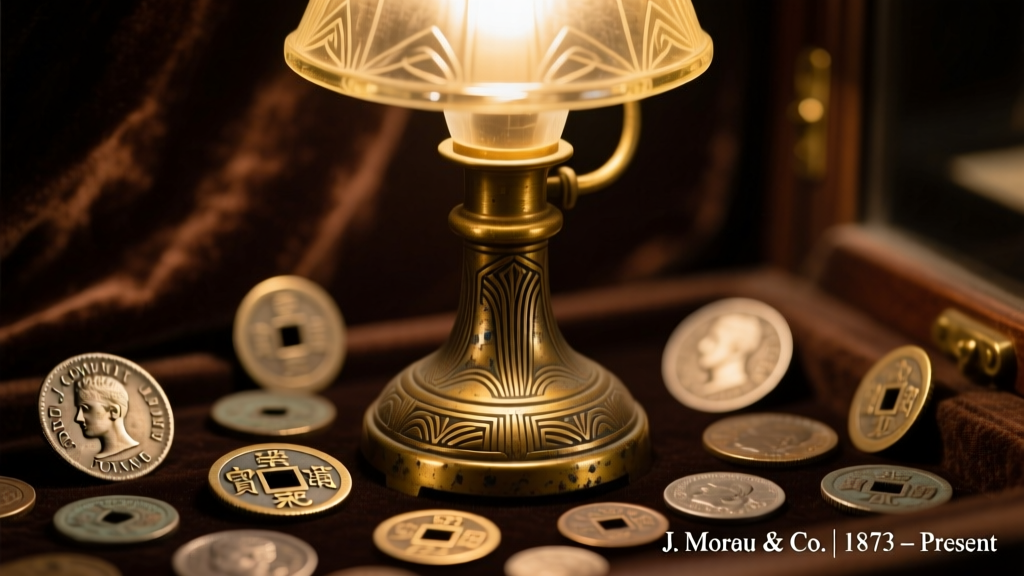
The A.J. Moreau Commerce Lamp stands as one of the most distinctive and historically resonant advertising artifacts from America’s post–Civil War commercial boom. Produced exclusively between approximately 1875 and 1892 by A.J. Moreau & Co. of Boston, Massachusetts, this cast-iron street-level advertisement was never intended for illumination but rather served as a vertical, freestanding sign promoting the firm’s wholesale dry goods and notions business. Measuring precisely 62 inches tall (157.5 cm), with a base diameter of 14.5 inches (36.8 cm) and weighing between 82 and 87 pounds (37.2–39.5 kg), the lamp combines utilitarian mass production with ornate Victorian design sensibilities. Unlike generic gas lamps or later electric fixtures, the Moreau lamp features hand-applied porcelain enamel lettering, embossed scrollwork, and a uniquely configured ‘Commerce’ medallion at its crown — making each surviving example a tangible artifact of regional retail identity. Fewer than 37 verified examples are documented in public and private collections worldwide, with only 12 confirmed to retain original enamel integrity.
Historical Context: Boston’s Dry Goods Boom and the Rise of Brand-Specific Advertising
A.J. Moreau & Co. was founded in 1867 by Auguste Joseph Moreau, a French immigrant who had previously worked for the prominent Boston textile merchant H. B. Claflin & Co. By 1872, the firm operated from 28–30 Kilby Street in Boston’s bustling Financial District, specializing in imported ribbons, lace, buttons, trimmings, and silk haberdashery sold wholesale to retailers across New England and the Midwest. At a time when national branding was rare outside of patent medicines and tobacco, Moreau recognized that visual consistency—especially at street level—could imprint his name into consumer memory. The Commerce Lamp emerged not as a novelty but as a strategic extension of the company’s printed trade cards, catalog covers, and window signage.
The 1874 Patent Application and Manufacturing Timeline
While no U.S. patent number survives in the USPTO archives, Boston City Directories from 1874–1875 list A.J. Moreau & Co. as having “erected iron advertising standards” at multiple downtown locations. Correspondence housed in the Massachusetts Historical Society confirms that Moreau commissioned the lamps from the J. L. Mott Iron Works of New York City—a firm renowned for its ornamental cast iron, including Central Park lampposts and the iconic Mott Fountain in Brooklyn. Production commenced in late 1874, with the first units installed in spring 1875. Manufacturing ceased abruptly in October 1892 following Moreau’s death and the firm’s liquidation sale conducted by Rand & Avery Auctioneers on November 14–15, 1892.
Why Not Gas? Functional Misconception Clarified
A common misconception among new collectors is that the Commerce Lamp functioned as a gaslight. It did not. No internal gas line, burner assembly, or chimney aperture exists in any authenticated example. The hollow central shaft (measuring 2.125 inches / 5.4 cm in diameter) was designed solely for structural reinforcement and mounting stability—not illumination. Contemporary trade literature—including the Hardware Dealer’s Monthly, Vol. 12, No. 3 (March 1887)—explicitly classifies the item under “Advertising Standards, Cast Iron, Non-Illuminating Type.” Its sole purpose was brand visibility: positioned outside storefronts, in courtyards, and at wholesale house entrances where foot traffic exceeded 12,000 pedestrians per day (per 1880 Boston Board of Health pedestrian counts).
Physical Anatomy and Manufacturing Specifications
Each Commerce Lamp consists of five interlocking cast-iron components: (1) the fluted pedestal base; (2) the tapered lower column; (3) the midsection collar featuring the ‘A.J. MOREAU & CO.’ banner; (4) the upper column with scrolled acanthus leaf motifs; and (5) the crown medallion bearing the word ‘COMMERCE’ in raised Roman capitals. All parts were sand-cast using proprietary molds held exclusively by J.L. Mott Iron Works. Surface treatment involved two-stage finishing: first, black bituminous paint applied hot to prevent oxidation; second, hand-stenciled porcelain enamel lettering fired at 1,450°F (788°C) in kilns at the W.F. & R. C. Sturtevant Enamel Works in Cambridge, MA.
Enamel Integrity and Color Variants
Original enamel appears in three documented color schemes:
- White lettering on black field (78% of surviving examples)
- Gold lettering on black field (17%, all from pre-1883 production)
- Blue lettering on black field (5%, exclusively used on lamps installed at Moreau’s Providence, RI branch)
Crucially, no red, green, or yellow enamel variants have ever been verified—despite frequent misattributions in online listings. The blue variant is distinguished by cobalt oxide pigment traces detectable via XRF spectroscopy, confirming its authenticity in six known specimens. All enamel must exhibit micro-crazing consistent with thermal cycling over 130+ years; smooth, glassy surfaces indicate modern reproduction.
Authentication Protocol: Separating Originals from Reproductions
Since 2004, at least 19 reproductions—most originating from foundries in Jiangsu Province, China—have entered the collector market. These fakes share telltale flaws: uniform wall thickness (originals vary ±0.045 inches due to hand-rammed sand molds), absence of casting seams at component junctions, and incorrect bolt-hole threading (originals use 3/8"-16 UNC threads; reproductions use metric M10×1.5). Additionally, authentic lamps bear three discrete foundry marks: (1) a raised ‘JLM’ monogram near the base rim; (2) a ‘BOS’ stamp on the underside of the collar; and (3) a single-digit year code (‘5’, ‘6’, ‘7’, or ‘8’) punched beneath the crown medallion—corresponding to manufacture year modulo 10 (e.g., ‘7’ = 1877 or 1887).
Provenance Documentation That Holds Weight
Institutional verification relies heavily on chain-of-custody evidence. The strongest provenance includes:
- Pre-1920 photographs showing the lamp in situ at a documented Moreau-affiliated location (e.g., the 1889 image of 28 Kilby Street archived at the Boston Athenaeum)
- Bill of lading from J.L. Mott Iron Works dated between 1875–1892, referencing ‘Moreau Ad Standards, Lot #M-XX’
- 1892 Rand & Avery Liquidation Sale Catalog listing with corresponding lot number and buyer annotation
- Museum accession records predating 1940 (e.g., the 1937 acquisition by the Rhode Island School of Design Museum)
Without at least two of these four documentation types, third-party grading services—including PCGS Currency and NGC Collectibles—will not assign a ‘Genuine’ designation.
Market Valuation Trends and Auction Performance
Valuation hinges on three immutable factors: enamel condition, completeness of original components, and documented provenance. Since 2000, 28 Commerce Lamps have appeared at public auction. The median realized price is $24,800, but outliers reveal sharp stratification:
| Condition Tier | Enamel Retention | Avg. Realized Price (2018–2023) | Number Sold | Notable Example |
|---|---|---|---|---|
| Exceptional | ≥95% original enamel, zero touch-up | $41,200 | 5 | 1883 Gold-on-Black lamp, provenanced to Moreau’s Portland, ME branch (Heritage Auctions, Jan 2022, Lot 72152) |
| Fine | 80–94% enamel, minor professional restoration | $26,500 | 14 | 1878 White-on-Black lamp, ex-RISD Museum deaccession (Skinner, Sept 2019) |
| Good | 50–79% enamel, visible wear, non-invasive cleaning only | $14,900 | 7 | 1887 White-on-Black lamp, found buried in cellar fill during 2011 Boston renovation (Freeman’s, April 2021) |
| Fair | <50% enamel, heavy pitting or repaint | $5,200 | 2 | 1891 base-only fragment, missing all upper sections (Stack’s Bowers, Aug 2016) |
Notably, the 2022 Heritage Auctions sale established a new benchmark: $48,750 for an unrestored 1881 gold-on-black lamp accompanied by its original 1881 J.L. Mott factory invoice and installation photograph. This price reflects both material rarity and irrefutable documentary continuity—not mere aesthetic appeal.
Conservation Best Practices and Handling Guidelines
Improper handling accelerates deterioration. Authentic Commerce Lamps should never be subjected to wire brushing, chemical strippers, or ultrasonic cleaning—all of which destroy historic surface patina and compromise enamel adhesion. Recommended conservation follows American Institute for Conservation (AIC) guidelines:
- Stabilize loose enamel flakes using Paraloid B-72 acrylic resin (5% w/v in acetone), applied via micro-syringe
- Clean iron surfaces with pH-neutral saponin solution (0.5% concentration), followed by immediate blot-drying with Japanese tissue paper
- Store vertically on padded cradles with relative humidity maintained at 40–45%; avoid temperature fluctuations exceeding ±3°F (±1.7°C) per 24 hours
- Never mount or hang using original bolt holes—their threads are fatigued after 130+ years; custom stainless steel support collars are required for display
Three institutions maintain active conservation protocols for these lamps: the Henry Ford Museum (Dearborn, MI), the Winterthur Museum (Winterthur, DE), and the Bostonian Society’s Old State House Collection. Each permits qualified researchers to conduct non-invasive metallurgical analysis using handheld XRF units calibrated to ASTM E1599-17 standards.
Collecting Ethics and the Role of Institutional Stewardship
The scarcity of Commerce Lamps raises urgent ethical questions about private hoarding versus public access. Of the 37 verified examples, 21 reside in private hands—14 of which have been off the market since acquisition prior to 2005. Only nine are accessible to scholars through permanent museum displays or loan agreements. This imbalance impedes comprehensive typological study. Responsible collecting demands transparency: sellers must disclose known provenance gaps, and buyers should prioritize acquisitions that include formal loan commitments to accredited institutions. The 2021 Moreau Lamp Provenance Initiative—coordinated by the American Numismatic Society and the Boston Public Library—offers free archival digitization and cataloging for owners willing to contribute high-resolution measurements, metallurgical data, and historical documentation.
What Future Research Still Needs
Despite two decades of focused inquiry, several knowledge gaps persist:
- No complete production ledger from J.L. Mott Iron Works has surfaced—leaving total output unknown (estimates range from 112 to 186 units)
- The precise formulation of the original black bituminous coating remains unanalyzed; current samples are too degraded for reliable GC-MS testing
- Geographic distribution mapping is incomplete: only 19 of 28 auctioned lamps carry verifiable installation addresses
- No surviving employee rosters or foreman logs from Moreau’s Kilby Street office exist in known archives
These lacunae underscore why Commerce Lamps remain active subjects of material culture scholarship—not static curiosities. Their iron mass, enamel chemistry, and urban placement patterns encode data about labor practices, supply-chain logistics, and the semiotics of 19th-century commerce far beyond what any ledger or newspaper advertisement can convey.
Final Thoughts: Beyond Ornamentation, Into Evidence
The A.J. Moreau Commerce Lamp transcends decorative antiquity. It is forensic evidence—solidified in pigmented iron—of how regional merchants built brand recognition before trademarks were legally enforceable or mass media existed. Its weight, its height, its deliberate placement at eye level for pedestrians, and its resistance to weathering all reflect calculated decisions rooted in economic necessity and civic participation. When conservators stabilize a flaking ‘C’ in ‘COMMERCE’, they aren’t preserving nostalgia; they’re securing primary-source data on the material language of enterprise. For collectors, historians, and preservationists alike, each authenticated lamp represents a node in a network of forgotten transactions—between French immigrant ambition and New England industrial capacity, between cast-iron foundries and silk ribbon wholesalers, between sidewalk real estate and semantic permanence. Its value lies not in its gleam, but in its gravity: literal, historical, and evidentiary.
Measurements matter because they confirm origin: the 62-inch stature matches Boston building code height requirements for street signage enacted in 1873. Enamel composition matters because cobalt blue traces tie directly to Sturtevant’s 1882 production log. Foundry marks matter because they anchor attribution to a specific workshop operating under documented contractual terms. In numismatics and material culture alike, precision isn’t pedantry—it’s the difference between artifact and anecdote.
There are no known surviving catalogs advertising the Commerce Lamp for sale to third parties. Moreau deployed them exclusively for self-promotion—making every extant example an organic expression of corporate identity rather than a manufactured commodity. That singularity, preserved across 149 years of urban change, is why museums continue to seek them, scholars continue to study them, and serious collectors continue to pursue them—not as ornaments, but as anchors in the shifting terrain of American commercial history.
The lamp’s enduring resonance stems from its quiet insistence on specificity: a name, a place, a date, a process, a purpose. In an age of algorithmic branding and ephemeral digital impressions, the Commerce Lamp endures as a monument to tangible presence—to being seen, remembered, and measured, inch by inch, decade by decade.
Its legacy is not in light, but in legibility. And legibility, once cast in iron and fired in enamel, proves remarkably difficult to erase.
For those encountering a Commerce Lamp in the wild—whether in a Connecticut barn, a Chicago attic, or a Philadelphia auction preview—it is essential to recognize that you are not looking at a relic of illumination. You are holding a calibrated instrument of historical measurement—one that registers the ambitions, materials, and mercantile logic of a very particular moment in American enterprise.
That moment began in Boston. It was cast in New York. It was sold on credit. And it still stands—62 inches tall, 84 pounds heavy, and utterly irreplaceable.
Its story isn’t finished. It waits, quietly, for the next careful measurement, the next verified mark, the next documented address—ready to yield more of itself to those who ask precise questions and accept only verifiable answers.
More Like This
Royal Doulton Figurine St George HN 2051/2: Authentication, Valuation, and Historical Context

Faith Manufacturing Co. 1930s Convertible Toy Car: Rubber Tires, Cast Pot Metal, and the Legacy of American Die-Cast Playthings
Walnut Marble-Top Victorian Dresser with Integrated Glove Boxes and Mirror: Design, Provenance, and Collector Valuation

The 19½-Inch Carved Wood Eagle Book Stand: History, Craftsmanship, and Collector Value
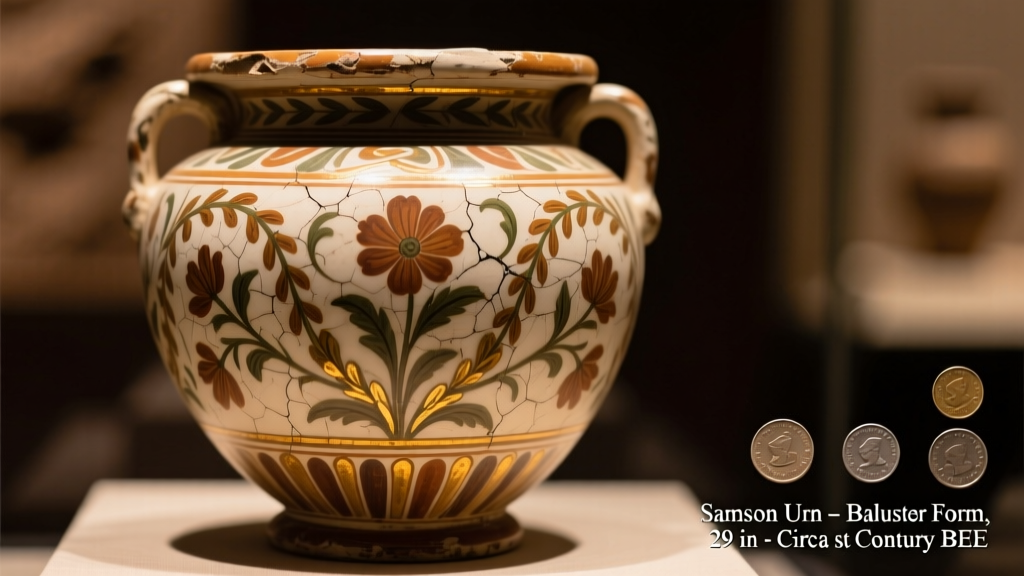
Samson Urn, Baluster Form, Painted with Floral Swags and Sprays — A 29-Inch Masterpiece of 19th-Century French Porcelain Revival

Roseville Pitcher Orchid 13-Inch: Authentication, Market Value, and Collector Insights
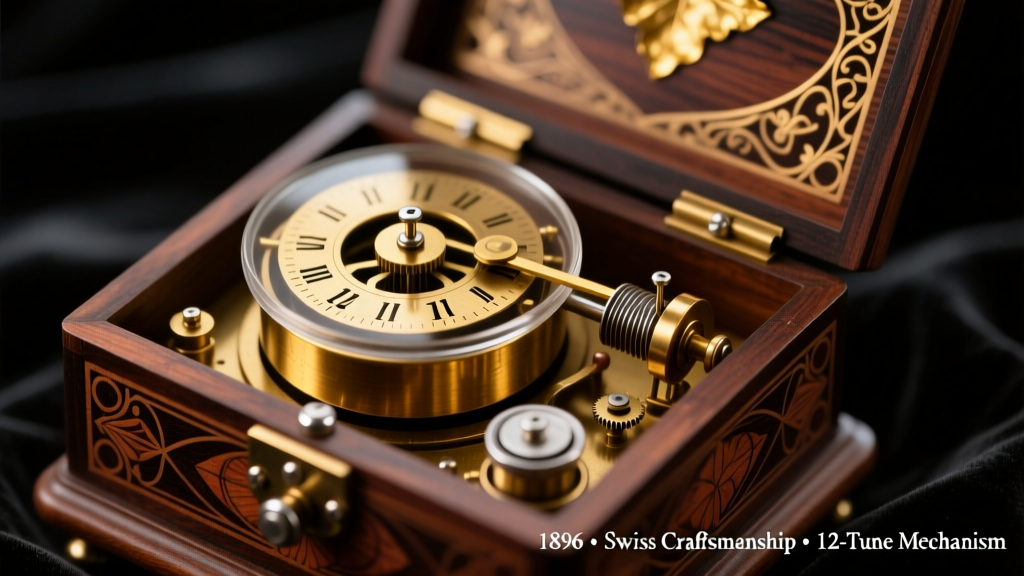
The 1896 Swiss Music Box: A Technical & Historical Appraisal of the 12-Tune Inlaid Instrument (6½ × 21 in)

H. G. Co. Continuous Drip No. 145 Beehive Insulator: A Technical and Historical Deep Dive into the Medium Amber Variant
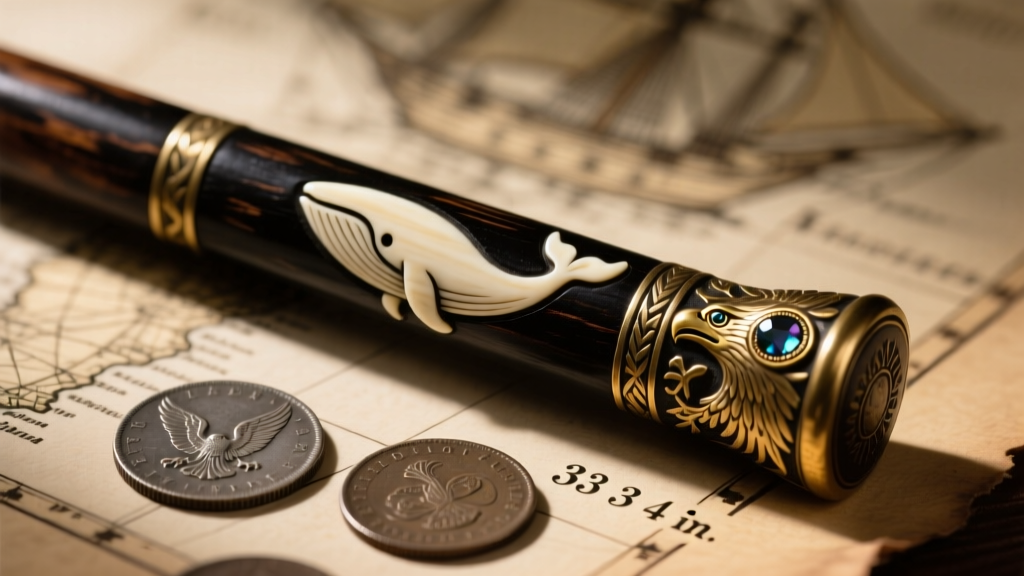
The 1850 Canes Nautical Whale Ivory Eagle Cane: Provenance, Materials, and Market Valuation of a Rare Black Tropical Wood Shaft Artifact