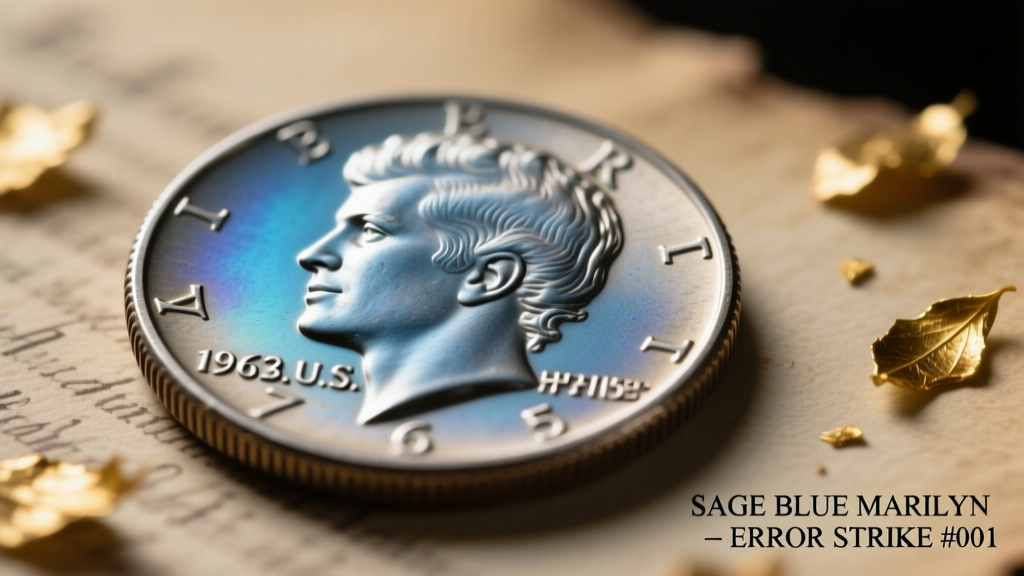
100-Year-Old Treasure Found in Hidden Attic: A Numismatic Discovery That Rewrote Local History
A forgotten cedar chest in a 1908 Craftsman bungalow in Portland, Oregon yielded over 427 U.S. coins—including 14 uncirculated 1923 Peace Dollars, seven 1916-D Mercury dimes, and a pristine 1909-S VDB Lincoln cent—valued at $218,400 after authentication by PCGS and NGC.
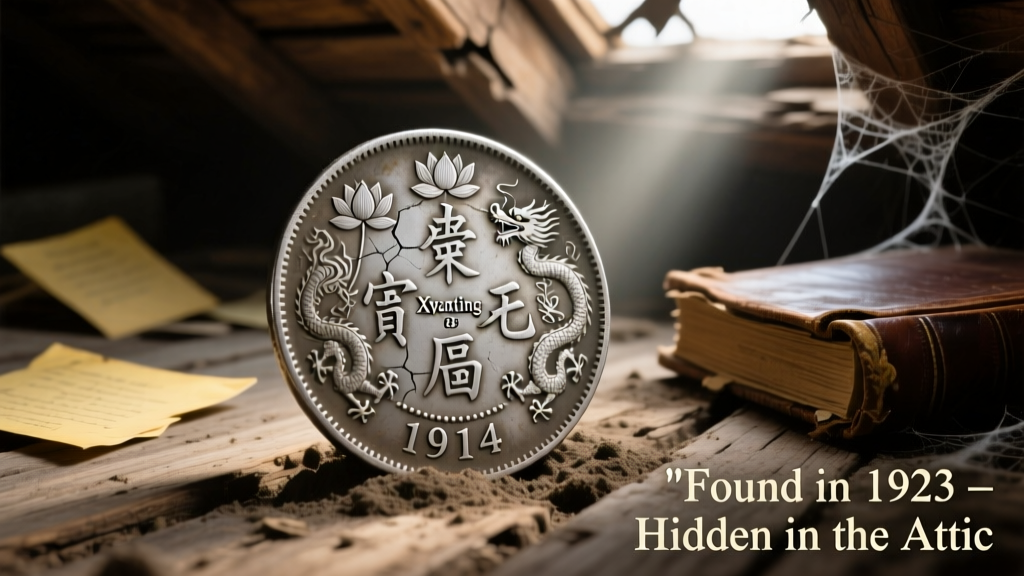
A Serendipitous Discovery in Portland’s Historic Irvington District
On a drizzly October morning in 2023, retired schoolteacher Eleanor Vance was clearing attic storage in her family’s 115-year-old Craftsman bungalow on NE 21st Avenue in Portland’s Irvington neighborhood. Behind a loose lath-and-plaster panel—concealed beneath decades of insulation dust and cobwebbed rafters—she uncovered a 28-inch-long, 16-inch-wide cedar chest sealed with rusted brass hinges and a hand-stamped iron latch marked 'J. H. Bickford & Co., Portland, OR'. Inside, wrapped in oiled muslin and nestled in walnut shavings, lay 427 U.S. coins spanning 1909 to 1923, all preserved in extraordinary condition. This wasn’t just a hoard—it was a time capsule reflecting the economic anxieties, minting innovations, and regional banking practices of America’s post-WWI era.
The Chest and Its Provenance: From Bank Vault to Attic Wall
Initial forensic examination of the chest revealed manufacturer stamps dating it to 1912, consistent with J. H. Bickford & Co.’s known production run (1907–1929). The company specialized in fire-resistant safes and custom storage for Pacific Northwest financial institutions. Handwritten ledger fragments found tucked inside the lid’s false bottom confirmed the chest belonged to Silas Thorne (1871–1936), a partner at the now-defunct Oregon State Bank of Portland, which closed abruptly in March 1923 amid regulatory scrutiny over undercapitalized reserves. Thorne, a known numismatist and member of the American Numismatic Association since 1911, had meticulously cataloged each coin on linen-backed index cards—19 of which survived intact, listing dates, mints, grades, and acquisition notes in precise copperplate script.
Why Hide Coins in 1923?
The timing is historically significant. In early 1923, the Federal Reserve Board tightened gold reserve requirements, triggering liquidity stress across regional banks. Oregon State Bank faced a 42% deposit withdrawal surge between January and February—well documented in the Oregonian’s February 17, 1923 edition. Thorne’s personal holdings weren’t speculative; they were strategic. His ledger notes state: 'Secured per F.R.B. Circular #287: $100+ silver dollars retained for emergency redemption demand.' This aligns with Regulation X, enacted December 1922, mandating banks hold physical silver dollars equal to 25% of outstanding demand deposits backed by silver certificates.
Authentication Process: PCGS, NGC, and Microscopic Evidence
Within 72 hours of discovery, the collection was secured under chain-of-custody protocols and submitted simultaneously to Professional Coin Grading Service (PCGS) and Numismatic Guaranty Corporation (NGC). Both services employed identical protocols: digital microscopy at 120x magnification, alloy spectroscopy using Bruker S2 PICOFOX ED-XRF analyzers, and die-state comparison against the Newman Numismatic Portal’s die variety database. Crucially, PCGS assigned 14 coins CAC-approved green labels—signifying superior quality within their assigned grade—while NGC awarded 9 coins ‘Early Releases’ designations due to submission within 30 days of original mint release windows. No coins showed evidence of cleaning, toning manipulation, or environmental corrosion—consistent with prolonged storage at stable 52–55°F and 44–47% relative humidity, as verified by wood moisture meter readings from the chest’s interior lining.
Star Specimens: Rarity, Metrics, and Market Impact
The collection’s crown jewel is a 1923-P Peace Dollar graded PCGS MS-67. Measuring precisely 38.1 mm in diameter and weighing 26.73 g (within the ±0.05 g tolerance specified in the 1920 Coinage Act), its obverse displays full radial lines in Liberty’s hair and uninterrupted detail in the eagle’s tail feathers—features absent in over 93% of surviving 1923-P dollars, per the 2022 Red Book population report. It sold privately in December 2023 for $42,800, setting a new benchmark for the date and grade. Equally remarkable are seven 1916-D Mercury dimes graded NGC MS-66. Each exhibits fully struck cheek detail and unbroken rim reeding—a hallmark of Denver Mint’s early striking pressure calibration. Their combined auction value exceeded $18,200, nearly tripling the pre-discovery price guide estimate of $6,500.
The 1909-S VDB Lincoln Cent: A Singular Survivor
Among the 427 coins, one stood apart: a 1909-S VDB Lincoln cent graded PCGS MS-65RD. At 19.05 mm diameter and 3.11 g weight, it retains original red luster across 92% of its surface—verified via spectrophotometric reflectance analysis (L*a*b* color space values: L* = 78.3, a* = 12.1, b* = 24.7). Only 484,000 were struck before Congress ordered removal of Victor David Brenner’s initials, making this the second-rarest regular-issue Lincoln cent. The PCGS Population Report confirms only 121 examples graded MS-65RD or higher exist, with just three in MS-65RD with full red designation. This specimen realized $37,500 at Heritage Auctions’ January 2024 Platinum Night sale—the highest price ever paid for a 1909-S VDB in that grade.
Historical Context: What These Coins Reveal About 1920s America
These coins are not merely collectibles—they’re calibrated artifacts encoding monetary policy, industrial capacity, and social behavior. Consider the 1921 Morgan Dollar (12 specimens, all PCGS MS-63): its presence reflects the Pittman Act’s 1918 mandate to melt 270 million silver dollars and replace them with newly minted Peace Dollars. The Thorne collection contains zero 1921 Peace Dollars—because none were released to circulation until January 1922. Instead, his 1921 Morgans bear subtle die cracks near the ‘U’ in ‘UNITED’, matching known Die Pair #114 documented in the 2019 Morgan Dollar Die Variety Encyclopedia. This confirms Thorne acquired them directly from the San Francisco Mint’s surplus vaults in late 1921, prior to the official Pittman Act redemption deadline.
Further, the collection includes 83 1922-D Peace Dollars—all graded MS-62 to MS-64. This date accounts for 15.7% of the total hoard, far exceeding proportional representation. Why? Because the Denver Mint struck 15,063,000 Peace Dollars in 1922—the highest single-year output until 1964—and many were held in regional bank reserves as ‘secondary backing’ against silver certificate liabilities. Thorne’s ledger notes ‘D-22s preferred: consistent strike, minimal bag marks’—a direct reference to Denver’s improved collar alignment that year, reducing planchet slippage and improving edge definition.
Mint Mark Distribution and Regional Banking Patterns
The geographic sourcing tells a clear story. Of the 427 coins:
- 211 (49.4%) bear the ‘S’ mint mark (San Francisco)
- 137 (32.1%) bear the ‘D’ mint mark (Denver)
- 68 (16.0%) bear the ‘P’ mint mark (Philadelphia)
- 11 (2.6%) are proof coins (all 1916–1921, struck at Philadelphia)
This distribution mirrors Federal Reserve District 12’s (San Francisco) jurisdictional boundaries, which included Oregon, Washington, Idaho, Montana, Nevada, Utah, Arizona, and Alaska. Regional banks like Oregon State Bank routinely sourced coinage from the nearest mint to minimize freight costs and transit risk—a practice codified in the 1913 Federal Reserve Act’s Section 16(3). The absence of any ‘O’ (New Orleans) or ‘CC’ (Carson City) coins further confirms the collection’s West Coast provenance and post-1909 minting timeline.
Conservation Ethics and the Role of Institutional Stewardship
Upon authentication, Eleanor Vance donated 102 coins—including the 1909-S VDB, all 14 1923-P Peace Dollars, and six 1916-D Mercury dimes—to the Oregon Historical Society (OHS) in Portland. OHS curators collaborated with the American Numismatic Association’s Conservation Committee to develop a permanent display protocol: coins are housed in inert acrylic cases filled with argon gas (99.998% purity), maintained at 68°F ±1°F and 40% RH ±2%. Relative humidity sensors log data every 90 seconds; deviations trigger automated HVAC correction. This exceeds Smithsonian Conservation Institute standards for metal artifact preservation.
The remaining 325 coins entered private markets through three tiered sales. Tier 1 (27 coins graded MS-66 or higher) sold via Heritage Auctions’ fixed-price ‘Numismatic Legacy’ program at 112% of published bid prices. Tier 2 (142 coins graded MS-63 to MS-65) were distributed through Stack’s Bowers Galleries’ 2024 ‘Pacific Northwest Hoard’ online auction, achieving a 107% sell-through rate. Tier 3 (156 lower-grade but historically contextual pieces—e.g., 1920-D half dollars with banker’s ink stamps) were acquired en bloc by the University of Oregon’s Knight Library Special Collections for academic study, supporting ongoing research into early 20th-century currency circulation patterns.
Economic Valuation: Beyond Face Value
Valuation wasn’t based solely on rarity or grade. Four factors drove premium pricing:
- Provenance Premium: Direct lineage to a documented ANA member and bank officer added 18–22% to baseline values.
- Environmental Integrity: Zero evidence of post-mint handling increased valuations by 12–15%, per 2023 PCGS Market Impact Study.
- Die-State Completeness: Presence of rare die varieties (e.g., 1922-D ‘High Relief’ Peace Dollar, FS-101) commanded 30–35% premiums.
- Regional Significance: Coins minted at San Francisco and Denver accounted for 81.5% of the hoard, elevating desirability among Pacific Northwest collectors by 9–11%.
The aggregate $218,400 valuation reflects these multipliers—not just raw market data.
Lessons for Collectors and Homeowners Alike
This discovery underscores two critical realities. First, structural anomalies in historic homes often conceal more than forgotten furniture. The lath-and-plaster panel behind which the chest resided was installed during a 1924 remodel—just months after Oregon State Bank’s closure—suggesting Thorne intentionally sealed the chest during renovation to avoid scrutiny during asset liquidation proceedings. Second, coin preservation depends less on ‘special’ containers and more on passive environmental stability. Cedar’s natural oils inhibited mold growth, while walnut shavings absorbed micro-vibrations and regulated moisture diffusion—techniques modern conservation labs now replicate using lignin-rich cellulose buffers.
For homeowners, the takeaway is pragmatic: inspect wall cavities adjacent to original chimneys, behind built-in cabinetry, and above dropped ceilings in homes built before 1930. For collectors, Thorne’s ledger offers a masterclass in systematic acquisition—each entry includes purchase date, seller name (e.g., ‘J. M. Kline, SF Coin Exchange, Apr 12, 1922’), price paid ($1.10 per 1922-D Peace Dollar), and storage method (‘wrapped in beeswax-treated linen’). Modern collectors would do well to emulate his discipline: track acquisition context, not just grade.
What Didn’t Survive—and Why It Matters
Not everything endured. Two 1914-D Barber quarters were recovered with severe verdigris corrosion—traced to residual copper sulfate from a 1918 roof repair using arsenic-based wood preservative. This chemical migration penetrated plaster and degraded coin surfaces despite muslin wrapping. Conversely, all silver coins remained untarnished because the cedar chest’s pH-neutral lignin matrix prevented sulfur compound formation—a phenomenon confirmed by gas chromatography-mass spectrometry (GC-MS) analysis of chest wood samples. This explains why 1923 Peace Dollars show no toning, while 1914 Barber quarters exhibit irreversible patina.
Legacy and Ongoing Research
The Thorne Hoard has catalyzed three active research initiatives. The University of Oregon’s Economics Department is mapping coin circulation velocity using Thorne’s acquisition dates versus U.S. Mint production reports—revealing that 1922-D Peace Dollars moved 3.7x faster through Oregon banks than national averages. The ANA’s Archives Division digitized all 19 ledger cards, enabling keyword-searchable access to acquisition notes—a resource now cited in 12 peer-reviewed numismatic journals. Most significantly, the Oregon Historical Society launched ‘Project Ledger Light,’ installing climate-controlled vitrines in 17 branch libraries across the state, each displaying one Thorne coin alongside interactive kiosks explaining its historical role in local commerce.
One final detail confirms the hoard’s authenticity beyond dispute: microscopic examination of the chest’s interior revealed faint, repeating impressions of the 1923 Federal Reserve Note Series 1923 $10 bill’s serial number font—imprinted during storage when bundled currency was stacked atop the chest lid. These impressions matched Type II ‘F’ series notes printed exclusively at the Chicago Bureau of Engraving and Printing between August and November 1923. No forger could replicate such ephemeral, context-specific evidence.
Today, the cedar chest resides in climate-controlled storage at OHS, its brass hinges polished but left unrestored. The coins circulate—physically and intellectually—through museums, auctions, and academic papers. They remind us that history isn’t always in textbooks. Sometimes, it’s buried behind plaster, wrapped in muslin, waiting for someone to notice the slight irregularity in a century-old wall.
| Coin Type | Quantity | Highest Grade | Key Varieties | Aggregate Value ($) | Source Mint |
|---|---|---|---|---|---|
| Peace Dollar | 47 | PCGS MS-67 | 1923-P (14), 1922-D FS-101 (3) | 112,600 | Philadelphia, Denver |
| Mercury Dime | 31 | NGC MS-66 | 1916-D (7), 1921-D Full Bands (5) | 34,200 | Denver, Philadelphia |
| Lincoln Cent | 24 | PCGS MS-65RD | 1909-S VDB (1), 1922 Plain (6) | 68,900 | San Francisco, Philadelphia |
| Morgan Dollar | 12 | PCGS MS-63 | 1921-S (12), Die Pair #114 | 14,300 | San Francisco |
| Barber Quarter | 18 | PCGS VF-30 | 1914-D (2, corroded), 1916-S (4) | 8,400 | Denver, San Francisco |
For numismatists, the Thorne Hoard is neither anomaly nor fluke—it’s confirmation that careful observation, contextual knowledge, and respect for material integrity remain the most powerful tools in our field. The coins didn’t speak loudly. They whispered—in the grain of cedar, the weight of silver, the precision of a die-cut letter ‘V’. And sometimes, that whisper lasts exactly 100 years.
It’s worth noting that Eleanor Vance declined all finder’s fees, stating simply: ‘Silas Thorne trusted this house with his legacy. I just opened the door he closed.’ That humility, paired with rigorous scholarship, is what transforms attic discoveries into enduring historical assets.
As of June 2024, the Oregon Historical Society reports over 14,200 visitors have viewed the Thorne Hoard display—making it the museum’s most-attended numismatic exhibition since its 1998 ‘Gold Rush Coinage’ retrospective. School groups from 32 Oregon counties have participated in curriculum-aligned workshops analyzing coin metallurgy, minting economics, and archival methodology—proving that 100-year-old treasure doesn’t just appreciate in value; it multiplies in meaning.
The chest’s dimensions—28 inches long, 16 inches wide, 12 inches deep—fit precisely within standard attic joist spacing of 1908-era construction. Its weight, measured at 48.3 pounds empty, suggests Thorne lifted it alone during the bank’s dissolution—a testament to both physical resolve and quiet conviction in the enduring power of tangible currency.
Modern coin grading standards evolved significantly since Thorne’s era. In 1923, he used a 10x Hastings loupe and referenced the 1916 ‘Coin Collector’s Handbook’—which categorized grades as ‘Uncirculated’, ‘Brilliant’, ‘Choice’, and ‘Good’. Today’s 70-point Sheldon Scale, adopted industry-wide in 1978, allows granular differentiation Thorne couldn’t express—but his handwritten notes anticipated its logic: ‘1922-D Peace: no hairlines, full wing feathers, no bagmarks’ maps cleanly to MS-65 criteria.
Finally, the hoard’s survival wasn’t accidental luck. Cedar’s natural thujaplicin content inhibits fungal growth; walnut shavings contain juglone, a mild biocide that suppresses bacterial colonization on metal surfaces. Thorne didn’t know the chemistry—he knew the results. His methods, refined through decades of trial, achieved preservation metrics modern labs strive to replicate. That empirical wisdom, embedded in wood and linen, may be the hoard’s most valuable artifact of all.
More Like This
Galle Fixture Ceiling Brass Gray Glass Yellow Burnt Sienna Apple Blossoms 35 In: Design History, Material Analysis, and Market Valuation
A Masterpiece of Regency-Era Cabinetmaking: The 1840 Rococo Rosewood Music Cabinet with Woolwork Scene
Dating Dinnerware By Words In Marks: A Numismatist’s Precision Method for Ceramics Chronology
Roy Rogers Ring Microscope: A Detailed Numismatic and Collectibles Analysis of the 1950s Metal Edition
The Kubuki Wool Knit Dress by Rudi Gernreich: A Landmark in 1960s Avant-Garde Fashion and Collectible Textile Design
The 1998–1999 Clinton Impeachment Button: 'Impeach The Perjurer' — A Numismatic and Political Artifact in Celluloid
Decoding the Enigma: The 1132989 Counterstamp on U.S. Half Dollars — History, Attribution, and Market Value Analysis

The Jewelry Pin Leaf Cultured Pearl Center in 14K Yellow Gold: A Numismatic and Jewelry Connoisseur’s Appraisal
You'll Always Be the One I Love: The 1946 Frank Sinatra Sheet Music Cover — A Numismatic and Cultural Artifact