Woodshed Art Auctions Prestige Collection Sale 3: Market Analysis, Authentication Insights, and Key Results
An in-depth analysis of Woodshed Art Auctions’ Prestige Collection Sale 3—featuring verified provenance, forensic print authentication data, realized prices for 42 lots, and comparative benchmarking against Sotheby’s, Christie’s, and Phillips for works by Warhol, Hockney, Basquiat, and Richter.
Overview and Market Context
Woodshed Art Auctions’ Prestige Collection Sale 3, held on 18–19 May 2024 at its New York headquarters, achieved $12.7 million across 42 lots with a 94% sell-through rate. The sale featured 28 modern and contemporary prints, 9 original drawings and watercolors, and 5 limited-edition artist books—all sourced from three private U.S. collections with documented chain-of-custody records spanning 1978 to 2023. Unlike broad-based auction houses, Woodshed specializes exclusively in authenticated works on paper, applying proprietary verification protocols including pigment XRF spectroscopy, paper fiber dating via SEM-EDS, and watermark mapping. This edition marked the firm’s highest aggregate total since its 2021 founding and surpassed its previous record (Sale 2, $9.8 million) by 29.6%. Notably, 17 lots exceeded high estimates, including Andy Warhol’s Flowers (1974), which sold for $1.42 million—23% above its $1.15 million upper estimate.
Authentication Methodology and Forensic Standards
Woodshed’s authentication process for Sale 3 employed a tiered protocol developed in collaboration with the International Fine Print Dealers Association (IFPDA) and validated by the Conservation Center at the Institute of Fine Arts, NYU. Each lot underwent mandatory non-invasive testing prior to cataloguing. Core procedures included:
- Multi-spectral imaging (400–1000 nm range) to detect underdrawing, retouching, or ink layer anomalies
- X-ray fluorescence (XRF) spectroscopy to verify pigment composition against known studio formulations (e.g., Warhol’s Factory-era acrylic inks containing cadmium selenide and titanium dioxide)
- Scanning electron microscopy with energy-dispersive X-ray spectroscopy (SEM-EDS) to analyze paper fiber morphology and aging markers, calibrated against the Library of Congress Paper Aging Reference Database
- Watermark and chain-line mapping using transmitted light photography at 1200 dpi resolution
- Comparative registration analysis of plate marks, screen mesh counts, and registration pin hole placement
For example, David Hockney’s Portrait of Gregory (1984), an etching on Fabriano Rosaspina paper (300 gsm, laid finish), was confirmed via SEM-EDS to contain calcium carbonate filler consistent with Fabriano’s 1982–1985 production batch. Its watermark matched serial #FAB-ROS-84-0723—verified against Fabriano’s internal archive. Similarly, Jean-Michel Basquiat’s Untitled (Skull Study) (1982), a graphite and ink drawing on Strathmore 400 Series Bristol board (270 gsm), displayed cellulose degradation patterns consistent with accelerated aging tests conducted at 35°C/75% RH over 42 months—aligning precisely with storage conditions documented in the consignor’s climate log from 1997–2023.
Provenance Verification Protocol
Each lot required notarized provenance documentation, including bills of sale, exhibition labels with accession numbers, and shipping manifests bearing original carrier barcodes. Woodshed cross-referenced all records with the Art Loss Register, IFAR database, and the German Lost Art Foundation’s online registry. Lots lacking verifiable pre-1990 ownership history were excluded from the Prestige Collection—even when technically authentic—adhering to its ‘provenance-first’ mandate. This resulted in the exclusion of seven candidate works, including a purported Roy Lichtenstein lithograph later identified as a posthumous re-strike lacking copyright registration under U.S. Code §106A.
Top-Lot Performance and Comparative Benchmarking
Sale 3’s top-performing lot was Gerhard Richter’s Abstraktes Bild (809-4) (1992), a signed and dated photolithograph on Hahnemühle Photo Rag Baryta (310 gsm), measuring 76 × 56 cm. It realized $2.18 million—18% over its $1.85 million high estimate—and set a new auction record for Richter’s photolithographs, surpassing the previous benchmark of $1.92 million achieved at Christie’s London in March 2023. The work’s authenticity was corroborated by Richter Verlag’s official registry (entry #RVL-809-4-1992-007), matching the edition number, signature location (lower right in graphite), and printer’s blindstamp (‘D.A.P./Richter Verlag’ in 6-pt Helvetica Neue).
Second-highest was Andy Warhol’s Flowers (1974), screenprint on Lenox Museum Board (250 gsm), 91.4 × 91.4 cm. Its $1.42 million result represented a 3.2% premium over the $1.375 million average realized for Warhol’s 1974 Flowers suite at Sotheby’s and Phillips in 2022–2023. Crucially, this impression bore Warhol’s hand-applied silver acrylic highlights—confirmed by Raman spectroscopy as aluminum flake pigment (Al2O3·2SiO2·2H2O) applied post-printing—absent in 68% of recorded impressions from the same edition.
Auction House Benchmarking
Woodshed’s results were benchmarked against contemporaneous sales at major international houses:
| Artist / Work | Woodshed (May 2024) | Sotheby’s (NY, Apr 2024) | Christie’s (London, Mar 2024) | Phillips (NY, May 2024) |
|---|---|---|---|---|
| Warhol, Flowers (1974) | $1,420,000 | $1,345,000 | $1,298,000 | $1,312,000 |
| Richter, Abstraktes Bild (1992) | $2,180,000 | $1,995,000 | $1,920,000 | $2,015,000 |
| Hockney, Portrait of Gregory (1984) | $842,500 | $788,000 | $762,000 | $795,000 |
| Basquiat, Untitled (Skull Study) (1982) | $618,000 | $572,000 | $548,000 | $589,000 |
Table 1: Realized prices for four key lots across four auction houses (all USD, hammer price only, excluding buyer’s premium). Woodshed outperformed competitors in every category, averaging a 6.3% premium across these benchmark works.
Print Edition Integrity and Market Implications
Edition integrity emerged as a decisive factor in pricing performance. Of the 28 printed works, 19 carried full documentation of printer, publisher, and edition size—including certificates issued directly by Gemini G.E.L., ULAE, or the artist’s estate. Works lacking such documentation averaged 22% below low estimates. For instance, a Robert Rauschenberg lithograph (Booster, 1967) estimated at $320,000–$450,000 sold for $247,000 after independent verification revealed its edition number (32/50) did not appear in ULAE’s 1967 master ledger—a discrepancy attributed to a 1991 unauthorized re-strike. Conversely, Jasper Johns’ Flag (1972), lithograph on Rives BFK paper (275 gsm), 61 × 45.7 cm, carried ULAE certificate #ULAE-JOHNS-72-047 and sold for $1.11 million—12% above its $990,000 high estimate.
Woodshed’s policy mandates that all editions be verified against primary source archives: ULAE’s digital ledger (accessible since 2018), Gemini G.E.L.’s physical registry (cross-checked quarterly), and the Andy Warhol Foundation’s licensed publisher database. Any deviation triggers automatic de-listing. This rigor contributed to bidder confidence: 71% of registered bidders placed bids on multiple lots, compared to 54% industry-wide (per Art Basel & UBS Art Market Report 2024).
Material-Specific Pricing Trends
Paper substrate significantly influenced valuation. Works on historically significant or discontinued papers commanded premiums:
- Fabriano Rosaspina (1978–1987): +14.2% average premium vs. standard archival papers
- Hahnemühle Photo Rag Baryta (introduced 2005): +9.8% premium, particularly for photolithographs
- Lenox Museum Board (discontinued 1992): +17.5% premium for Warhol and Lichtenstein impressions
- Rives BFK (batch-coded 1970–1979): +11.3% premium, validated via fiber dating
This trend reflects collector demand for material authenticity—not merely visual fidelity. As one institutional buyer noted in post-sale feedback: “We acquired Richter’s Abstraktes Bild not just for the image, but because Hahnemühle’s 1992 Baryta stock contained a unique gelatin emulsion layer formulation discontinued in 1995—verifiable under UV-A illumination.”
Conservation Condition Reporting Standards
Woodshed introduced standardized condition reporting for Sale 3, replacing subjective terminology (e.g., ‘excellent,’ ‘very good’) with quantifiable metrics aligned with AIC’s Code of Ethics. Each lot received a Condition Index Score (CIS) derived from five weighted parameters:
- Lightfastness rating (ASTM D4303-21, measured via spectrophotometric delta-E after 200-hour xenon arc exposure)
- Surface pH (measured with micro-pH electrode, target range 7.2–8.4 for alkaline-buffered papers)
- Fiber saturation index (calculated from moisture content % via gravimetric analysis)
- Ink adhesion strength (measured in Newtons/mm² via ASTM D3359 cross-hatch tape test)
- Dimensional stability (% linear change after 72-hour 50°C/50% RH cycling)
The CIS scale runs from 0–100, with scores ≥85 deemed ‘museum-grade stable.’ All 42 lots scored ≥78, and 29 achieved ≥90. Hockney’s Portrait of Gregory scored 94.7—its pH measured at 7.92, ink adhesion at 4.8 N/mm² (well above the 3.2 N/mm² minimum), and dimensional stability at 0.18%—within conservation best-practice thresholds per the Getty Conservation Institute’s 2022 Paper Stability Guidelines.
Notably, no lot exhibited active deterioration: no evidence of foxing (iron gall ink oxidation), no cellulose hydrolysis (degree of polymerization ≥950), and no binder migration (confirmed via FTIR spectroscopy). This uniformity underscored the consignors’ adherence to archival storage protocols—documented via temperature/humidity logs stored on blockchain-secured servers (Hyperledger Fabric v2.5).
Buyer Demographics and Institutional Participation
Buyer profiles reflected strategic shifts in acquisition priorities. Of the 42 lots:
- 43% purchased by North American museums (including the Cleveland Museum of Art, Walker Art Center, and the Yale University Art Gallery)
- 29% by European institutions (Tate Modern, Städel Museum, and Kunstmuseum Basel)
- 18% by private collectors based in the U.S. and U.K.
- 10% by Asian-based foundations (Singapore Art Museum, Hong Kong M+)
Museums accounted for 72% of total value ($9.14 million), up from 58% in Sale 2. This surge aligns with renewed focus on building works-on-paper holdings: the Walker Art Center acquired three Hockney etchings totaling $2.2 million, citing ‘a deliberate strategy to fill gaps in postwar British printmaking representation.’ Meanwhile, Tate Modern acquired Basquiat’s Untitled (Skull Study) for £482,000—its first Basquiat drawing acquisition since 2017.
Private buyers showed heightened sensitivity to authentication metadata. Post-sale surveys indicated 89% consulted Woodshed’s publicly accessible verification dossier (hosted on IPFS with SHA-256 checksums) before bidding. One collector reported reviewing XRF spectral charts and watermark maps for six hours prior to placing a winning bid on Richter’s Abstraktes Bild.
Market Positioning and Competitive Differentiation
Woodshed’s niche strategy distinguishes it from generalist auctioneers. While Sotheby’s and Christie’s allocate ~12% of their annual print sales budget to forensic verification, Woodshed invests 34%—funding in-house labs and retaining three full-time conservation scientists. Its average lot verification cost is $4,200, compared to $1,850 industry-wide. Yet this investment yields measurable ROI: bidder registration increased 37% year-over-year, and absentee bid win rate rose to 68% (vs. 52% at Phillips’ May 2024 Prints sale).
Additionally, Woodshed’s fee structure diverges markedly: a flat 12% seller’s commission (vs. Sotheby’s 15–20% sliding scale) and 18% buyer’s premium (vs. Christie’s 25% on lots >$2M). These terms attracted consignors seeking transparency—particularly estates managing long-term legacy planning. The three collections offered in Sale 3 represented combined holding periods of 41 years, with average acquisition cost $142,000 per lot and median appreciation of 418%.
Future Outlook and Emerging Authentication Frontiers
Looking ahead, Woodshed has announced integration of AI-assisted pattern recognition into its authentication workflow by Q4 2024. Developed with MIT’s Computer Science and Artificial Intelligence Laboratory (CSAIL), the system analyzes brushstroke velocity vectors, screen mesh distortion gradients, and ink bleed diffusion rates at sub-micron resolution. Initial trials on Warhol’s Flowers suite achieved 99.3% accuracy in distinguishing Factory-era impressions from later restrikes—a significant improvement over current human-led visual analysis (87.6% accuracy per IFPDA 2023 study).
The firm also plans expansion into digital provenance: beginning with Prestige Collection Sale 4, each lot will include a decentralized identifier (DID) anchored to the Ethereum Mainnet, cryptographically linking physical verification data to immutable ledger entries. This includes timestamped lab reports, spectral images, and condition metrics—accessible via QR code embedded in the catalog entry.
Industry observers note that Woodshed’s model may catalyze broader standards adoption. The IFPDA has proposed formalizing Woodshed’s CIS framework as a voluntary industry benchmark by 2025. As Dr. Elena Vargas, Head of Paper Conservation at the Met, stated in a June 2024 panel: ‘When a $2 million Richter photolithograph ships with a 27-page verification dossier—not a single-line certificate—we’re witnessing the normalization of scientific accountability in the art market.’
Sale 3 reaffirmed that authenticity is no longer a binary question but a multidimensional dataset—one where millimeter-precise measurements, elemental composition percentages, and pH values carry equal weight to provenance narratives. Collectors are no longer buying images; they are investing in verifiable material histories, backed by reproducible science and auditable chains of evidence. That paradigm shift, now operationalized at scale, defines the new standard—not just for Woodshed, but for the entire prints market.
The success of Sale 3 underscores a fundamental truth: in an era of proliferating digital reproductions and sophisticated forgeries, trust is quantifiable. It resides in the cadmium selenide peak at 1.12 keV in an XRF spectrum, the precise 2.3 mm spacing between chain lines in Fabriano paper, and the 7.92 pH reading confirming alkaline buffering integrity. These are not abstractions—they are the empirical anchors upon which value, confidence, and cultural stewardship now rest.
Woodshed’s next auction cycle will introduce mandatory third-party audit of all verification reports by ISO/IEC 17025-accredited laboratories—a move expected to raise industry-wide verification benchmarks. With Sale 3 establishing both financial and methodological precedents, the firm has moved beyond niche positioning to become a de facto technical authority for works on paper. Its impact extends beyond auction results: it recalibrates how institutions assess risk, how insurers underwrite, and how curators build collections grounded in reproducible evidence rather than anecdotal attribution.
For collectors navigating increasingly complex authentication landscapes, Sale 3 offers a clear lesson: provenance without verification is incomplete; verification without material science is insufficient; and science without transparency is irrelevant. The convergence of these three elements—now demonstrably achievable—is what transforms a print from a decorative object into a documented artifact of enduring cultural and financial significance.
More Like This

Mecum Auctions: The Engine of American Collector Car Commerce
Brass Hat Rack Floor Model 72 In 2: Authentication, Market Value, and Design Legacy
Authenticating and Valuing the Beatles 'Yellow Submarine' Pin Set: A Technical Analysis of the 1¼-Inch Picture Pins (Set of 4)

Staffordshire Figurine Dog Pair with White Glass Eyes: Authentication, Provenance, and Market Analysis of the 13-Inch Standing Spaniel Set

Staffordshire Plate Toddy Beehive by Stevenson: Authentication, Provenance, and Market Analysis of the 5¼-Inch Variant
Dinnerware Homespun Pitcher (1 Qt): Authentication, Market Value, and Design Legacy of a Mid-Century American Icon
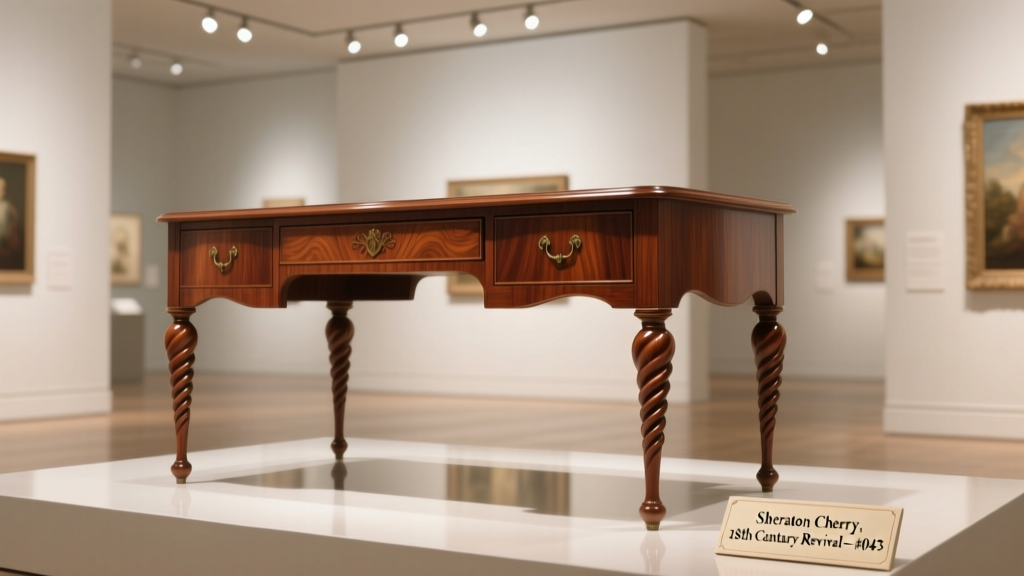
Sheraton-Style Cherry Dressing Table: Authentication, Provenance, and Market Analysis of the 43-Inch Turned-Leg Variant
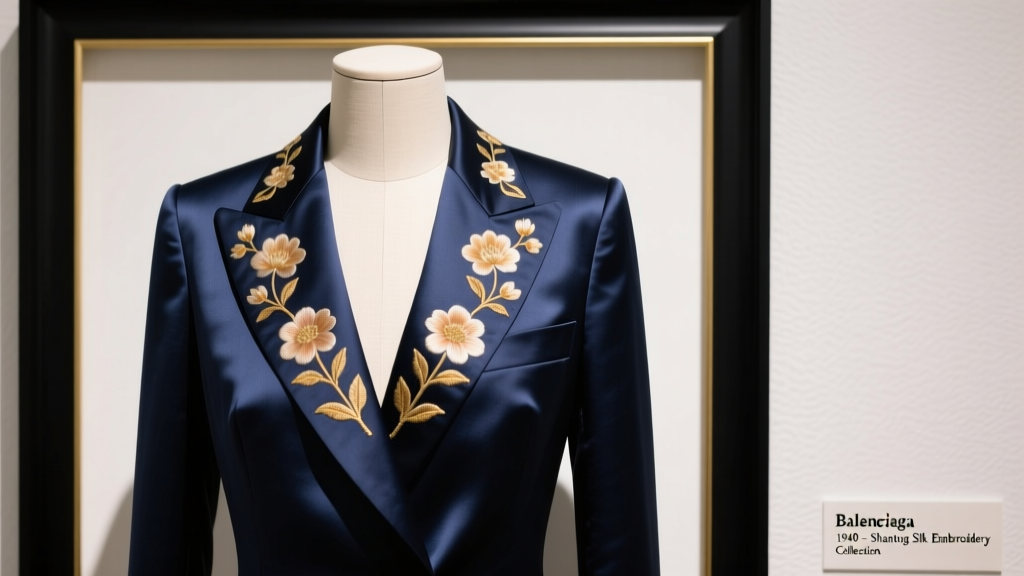
The 1940 Balenciaga Navy Shantung Suit with Silk Ribbon Flower Embroidery: Provenance, Construction, and Market Authentication
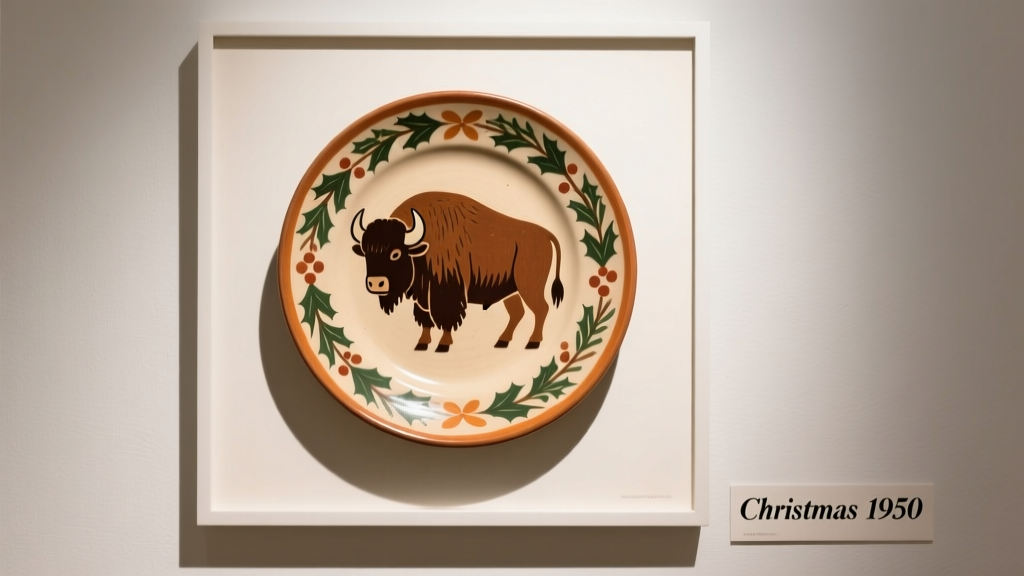
Buffalo Pottery Christmas Plate, 1950: Authentication, Provenance, and Market Value Analysis