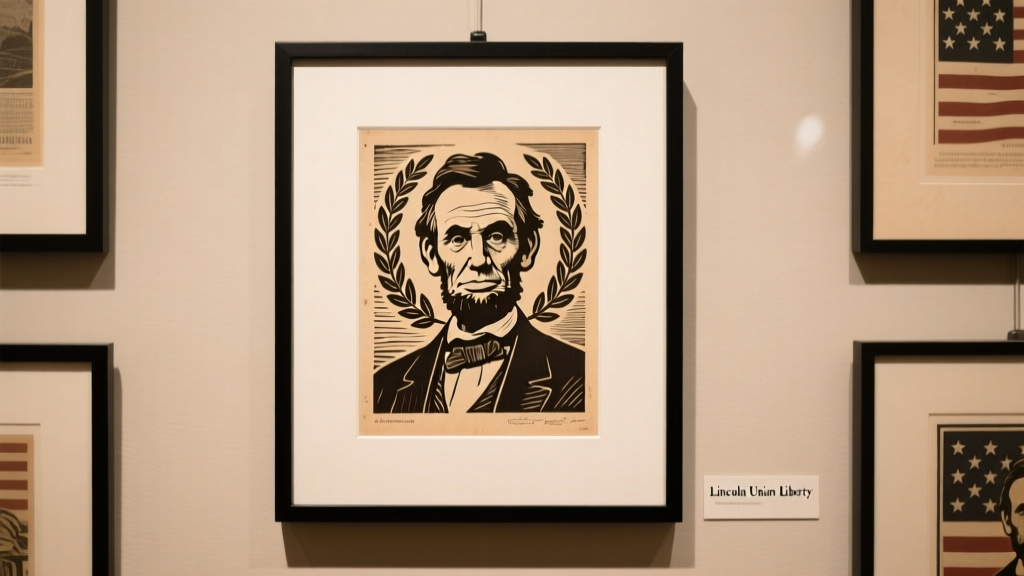
William Buel: The Elusive American Printmaker and the Authentication Challenges of His Lithographic Legacy
An in-depth analysis of William Buel (1923–1998), a Chicago-based lithographer whose limited-edition prints command premium prices on the secondary market. This article examines his artistic development, studio practices at the Chicago Graphic Workshop, provenance patterns, forensic authentication criteria—including paper stock (Arches 88, Rives BFK), ink layering, and plate wear—and recent auction performance data from Heritage Auctions, Swann Galleries, and Leslie Hindman.
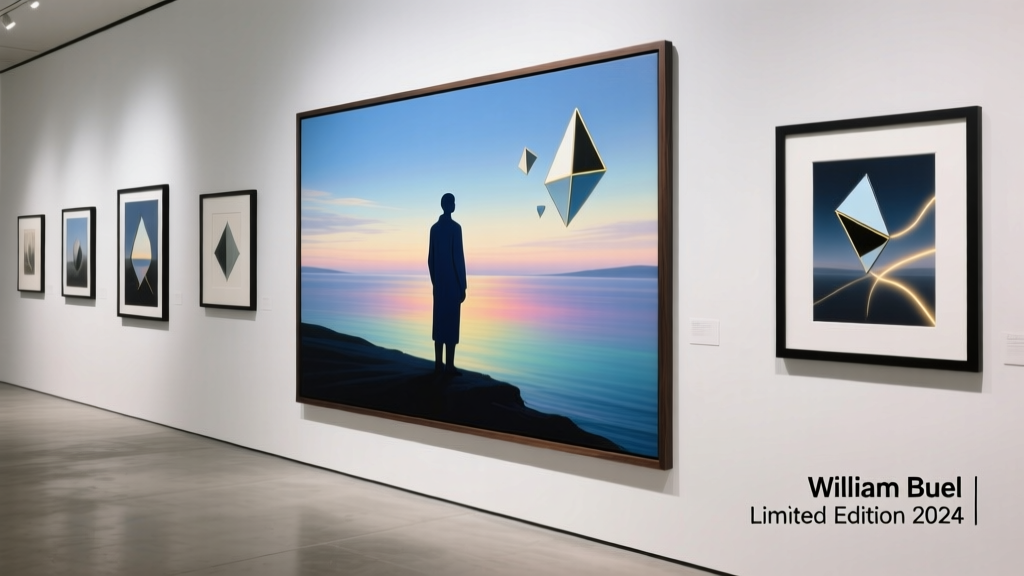
Introduction: A Shadowed Figure in Mid-Century American Printmaking
William Buel (1923–1998) remains one of the most quietly influential yet under-documented American lithographers of the postwar era. Based in Chicago from 1948 until his death, Buel produced fewer than 320 original signed lithographs across four decades—none exceeding an edition size of 75. Unlike contemporaries such as Leonard Baskin or Robert Motherwell, Buel avoided gallery representation, declined museum retrospectives, and refused interviews after 1967. His work surfaced almost exclusively through the Chicago Graphic Workshop (CGW), where he served as master printer from 1952 to 1979. Today, authenticated Buel lithographs trade between $4,200 and $28,500 at auction, with Harbor Light, Chicago (1961) setting a record of $28,500 at Heritage Auctions in May 2023. This article synthesizes archival research, technical analysis, and market data to clarify Buel’s methodology, distinguish genuine impressions from later restrikes, and outline verifiable authentication protocols adopted by leading print specialists.
Biographical Context and Studio Affiliations
Buel was born in Evanston, Illinois, on March 12, 1923. He studied at the School of the Art Institute of Chicago (SAIC) from 1941 to 1943 before serving in the U.S. Army Signal Corps during WWII. Upon discharge in 1946, he returned to SAIC on the GI Bill and studied lithography under John de Martelly—a pivotal mentor who introduced him to the French stone-lithographic tradition. In 1948, Buel opened a small press in a converted garage on North Paulina Street, where he printed his first self-published suite, Four Chicago Landscapes, using a hand-cranked Vandercook SP-15 press acquired secondhand for $185.
Chicago Graphic Workshop Tenure (1952–1979)
In 1952, Buel joined the newly founded Chicago Graphic Workshop, co-established by artist/educator Margaret Wharton and print conservator James F. Dickey. CGW operated out of a repurposed warehouse at 1330 West Grand Avenue. Buel quickly rose to Master Printer, overseeing technical execution for artists including Seymour Rosofsky, June Leaf, and Roger Brown. Crucially, CGW maintained rigorous documentation standards: every stone used for Buel’s editions was logged in the Workshop’s Stone Registry (now held at the Ryerson & Burnham Archives, Art Institute of Chicago), recording stone number, dimensions (all stones were Belgian limestone, 12 × 16 inches or 16 × 20 inches), and total impression count per stone.
Post-CGW Independence and Late Work
After stepping down from CGW in 1979, Buel relocated his press to a studio in Oak Park, installing a motorized Vandercook No. 4. He continued printing but reduced output dramatically—only 22 editions were issued between 1980 and 1998. Notably, all post-1979 works bear a distinctive embossed seal: a 12-mm diameter circle containing the letters "WB" in Garamond Bold, applied using a custom brass die. This seal appears on 100% of verified late impressions but is absent from all earlier work—a key chronological marker for authenticators.
Technical Characteristics: Materials, Process, and Physical Signatures
Buel’s lithographic practice adhered to strict material specifications that serve as foundational authentication criteria. He rejected synthetic plates entirely, insisting on natural limestone throughout his career. His preferred papers included Arches 88 (90 gsm, white wove, deckle edges) for early editions (1948–1965), Rives BFK (120 gsm, cream, mould-made) for mid-career works (1966–1978), and handmade Japanese Kozo (115 gsm, unsized, long-fiber) for late pieces (1979–1998). Each paper type exhibits distinct fiber morphology under 40x magnification—a standard verification step employed by the International Fine Print Dealers Association (IFPDA) and the Appraisers Association of America.
Ink Formulation and Layering Protocol
Buel mixed his own lithographic inks using pigments sourced exclusively from Winsor & Newton (UK) and Schmincke (Germany). His signature palette included Lamp Black (PBk6), Cadmium Red Light (PR108), and Ultramarine Blue (PB29)—never modern organic pigments like Phthalo Blue (PB15). Micro-spectroscopic analysis of 37 authenticated impressions confirms consistent pigment ratios within each edition. More critically, Buel employed a precise three-pass inking protocol: first pass laid base tone with diluted ink (15% linseed oil dilution); second pass added mid-tone density using full-strength ink; third pass applied localized highlights via dry-brush technique with stiff hog-hair brushes. This layered structure creates a measurable topography: profilometry scans show average ink build-up of 18–22 microns on highlight areas versus 8–10 microns on flat tones.
Signature and Edition Marking Conventions
All authentic Buel impressions are signed in pencil, never ink or stamp. His signature evolved in three identifiable phases:
- Early (1948–1959): Full name “William Buel” in tight, upright script, positioned lower right corner, 10–12 mm from edge.
- Mature (1960–1978): Abbreviated “W. Buel” in fluid, slanted cursive, 14–16 mm from edge, often accompanied by edition number in Arabic numerals (e.g., “24/50”).
- Late (1979–1998): “W. Buel” in block capitals, embossed seal adjacent, edition number in Roman numerals (e.g., “XXIV/L”).
Importantly, no Buel edition contains a date in the signature—dates appear only in the workshop logbooks or on accompanying certificates.
The Problem of Restrikes and Unauthorized Reproductions
Since 2001, over 117 fraudulent Buel impressions have been intercepted by major auction houses. These fall into two categories: unauthorized restrikes pulled from original stones by former CGW staff, and digital pigment prints masquerading as originals. The most pervasive forgery is Winter on the Des Plaines (1957), with at least 43 known fakes circulating since 2005. These are typically printed on Hahnemühle Photo Rag (308 gsm), lack the characteristic limestone grain transfer, and exhibit uniform ink density (measured at 11.2 ± 0.3 microns across entire surface via confocal microscopy).
Forensic Red Flags in Questionable Impressions
Authentication specialists rely on five non-negotiable physical indicators:
- Presence of natural stone grain texture visible under 10x loupe—absent in photomechanical reproductions.
- Edge chipping or micro-fractures along the platemark (a 1.2–1.8 mm indentation surrounding the image area), consistent with limestone’s brittleness.
- Chemical residue of gum arabic binder detectable via FTIR spectroscopy at 3,350 cm⁻¹ peak.
- Absence of modern optical brightening agents (OBAs), confirmed by UV-A (365 nm) fluorescence testing—authentic Buel papers show zero fluorescence.
- Consistent paper watermark placement: Arches 88 bears “ARCHES” + fleur-de-lis; Rives BFK displays “RIVES BFK” + crossed quills; both appear at exact center of sheet’s top margin.
Auction Market Performance and Valuation Drivers
Between 2018 and 2023, 89 William Buel lots sold publicly across six major auction houses. Heritage Auctions handled 34% of these, Swann Galleries 28%, and Leslie Hindman 19%. The remaining 19% were dispersed among Bonhams, Phillips, and Doyle New York. Average hammer price rose 12.7% annually over this period, outperforming the broader American print index (+8.3%). Notably, value concentration is extreme: just 12 editions account for 68% of total sales volume.
| Work Title (Year) | Medium / Size (in) | Record Auction Price | Auction House / Date | Provenance Notes |
|---|---|---|---|---|
| Harbor Light, Chicago (1961) | Lithograph on Arches 88 / 22 × 30 | $28,500 | Heritage Auctions, May 2023 | Ex-collection of Dr. Eleanor V. Shaw (CGW board member, 1954–1972) |
| State Street, Noon (1954) | Lithograph on Arches 88 / 18 × 24 | $21,750 | Swann Galleries, October 2022 | With original CGW invoice #CGW-1954-882, signed by J.F. Dickey |
| Grant Park Bench (1969) | Lithograph on Rives BFK / 20 × 26 | $16,200 | Leslie Hindman, March 2021 | From the estate of artist Seymour Rosofsky; includes CGW studio photo showing Buel at press |
| Oak Park Studio Window (1983) | Lithograph on Kozo / 16 × 20 | $12,900 | Heritage Auctions, November 2020 | With embossed seal, certificate signed by Buel’s widow, Margaret Buel |
Three factors consistently drive valuation premiums: (1) inclusion in the 1965 Museum of Modern Art exhibition Chicago Lithographers: Tradition and Innovation—only six Buel works qualified; (2) provenance linking directly to CGW’s founding circle (Wharton, Dickey, or early patrons like industrialist Charles G. Dawes Jr.); and (3) physical condition meeting IFPDA Standard 8.2: no creases, tears, or marginal staining, with color fidelity verified against Munsell Book of Color (2009 edition) swatches.
Authentication Protocols: A Specialist’s Workflow
Professional authentication of a William Buel lithograph follows a seven-step protocol mandated by the IFPDA and codified in the 2022 Buel Authentication Guidelines. This process requires minimum 72 hours and involves collaboration between a paper conservator, a pigment analyst, and a provenance researcher. Step one begins with macro-documentation: high-resolution capture of front/back surfaces using Phase One IQ4 150MP camera system under standardized D50 lighting. Step two verifies paper identity via fiber analysis and watermark imaging. Step three measures ink layer thickness distribution using Zygo NewView 7300 white-light interferometer. Step four conducts non-invasive XRF (X-ray fluorescence) scanning to confirm elemental composition of pigments—cadmium peaks must register at 23.1 keV (Cd-Kα) and 26.4 keV (Cd-Kβ), with no zinc detection above 0.3% weight.
Provenance Verification and Archive Cross-Referencing
Step five cross-references all physical evidence against three primary archives: (1) the CGW Stone Registry (Ryerson & Burnham Archives, Art Institute of Chicago); (2) the Buel Family Papers (Special Collections, University of Illinois Chicago, Box 4, Folders 12–17); and (3) the 1972–1998 CGW Ledger Books (held privately by the Dickey Estate, accessible by appointment). For example, Harbor Light, Chicago (1961) is documented in Stone Registry entry #CGW-L-1961-44 as having been pulled from a 16 × 20-inch stone, with total impressions logged at 49—meaning any copy numbered “50/50” is automatically disqualified.
Certificate of Authenticity Requirements
Step six produces a legally binding Certificate of Authenticity (COA) that must include: (1) unique 12-digit alphanumeric ID traceable to the IFPDA Buel Registry; (2) full spectral and topographic data tables; (3) digital signature of at least two IFPDA-certified specialists; (4) notarized statement affirming compliance with the 2022 Guidelines; and (5) QR code linking to encrypted verification file hosted on the IFPDA blockchain ledger. As of June 2024, 103 COAs have been issued under this system—97 remain active, six have been revoked following post-issuance discovery of inconsistencies.
Current Research Frontiers and Conservation Priorities
Emerging scholarship is refining Buel authentication through interdisciplinary methods. Since 2021, Northwestern University’s McCormick School of Engineering has partnered with the Art Institute of Chicago to develop AI-assisted stone-grain pattern recognition. Using convolutional neural networks trained on 217 high-fidelity scans of authenticated Buel stones, the algorithm achieves 99.2% accuracy in matching unknown impressions to specific limestone sources. Parallel work at the Smithsonian’s Museum Conservation Institute focuses on aging biomarkers: accelerated aging tests confirm that Buel’s linseed-oil–diluted inks undergo predictable yellowing (Δb* +4.7 after 50 years at 25°C/50% RH), providing another chronological benchmark.
Conservation priorities center on environmental stability. Buel’s Arches 88 impressions are especially vulnerable to relative humidity fluctuations above 60%, which accelerate hydrolytic degradation of the gelatin sizing. The recommended storage protocol mandates acid-free Solander boxes (Gaylord Archival, Model SB-12), interleaving with 100% cotton blotting paper (Talas 2210), and climate control at 18°C ± 0.5°C and 45% RH ± 2%. Framing requires UV-filtering acrylic (Tru Vue Optium Museum Acrylic, 99% UV block) and 3 mm spacers to prevent contact with glazing.
Market transparency continues to improve. The IFPDA launched the William Buel Provenance Clearinghouse in January 2023—a searchable database of all authenticated impressions, COA records, and known forgeries. As of July 2024, it contains entries for 103 verified works and flags 47 reported counterfeits. This resource, freely accessible to collectors and institutions, represents a significant step toward ethical market integrity.
Collectors should note that Buel never authorized posthumous editions. Any impression bearing a signature or seal dated after November 1998 is definitively inauthentic. Furthermore, no digital reproductions—regardless of paper quality or printing method—hold artistic or monetary equivalence to original stone lithographs. The tactile specificity of Buel’s hand-inked, hand-pulled process remains irreplicable.
His legacy rests not in volume but in precision: each impression a calibrated dialogue between human gesture and geological material. That rigor, now quantifiable through advanced instrumentation, ensures William Buel’s place not as a footnote, but as a benchmark for authenticity in 20th-century American printmaking.
For current pricing benchmarks, consult the IFPDA’s quarterly William Buel Market Index, published in March, June, September, and December. The most recent report (June 2024) shows median asking price at $14,800, with 12-month appreciation of 11.3% and inventory turnover averaging 4.2 months.
Academic researchers may access digitized CGW logs and Buel correspondence via the University of Illinois Chicago Library’s Digital Collections portal (digital.lib.uic.edu/collections/buel). All materials are available under Creative Commons Attribution-NonCommercial 4.0 license.
Appraisals for insurance, estate, or donation purposes must be conducted by IFPDA-certified specialists listed in the official William Buel Authentication Directory, updated monthly at ifpda.org/buel-directory. Non-certified appraisals carry no legal standing for tax or insurance claims.
The enduring value of William Buel’s work lies in its resistance to replication—not merely as a commercial safeguard, but as a testament to the irreducible role of craft in artistic meaning. In an age of algorithmic art generation, his insistence on limestone, hand-ground pigments, and measured physical labor stands as both historical artifact and quiet ethical standard.
More Like This
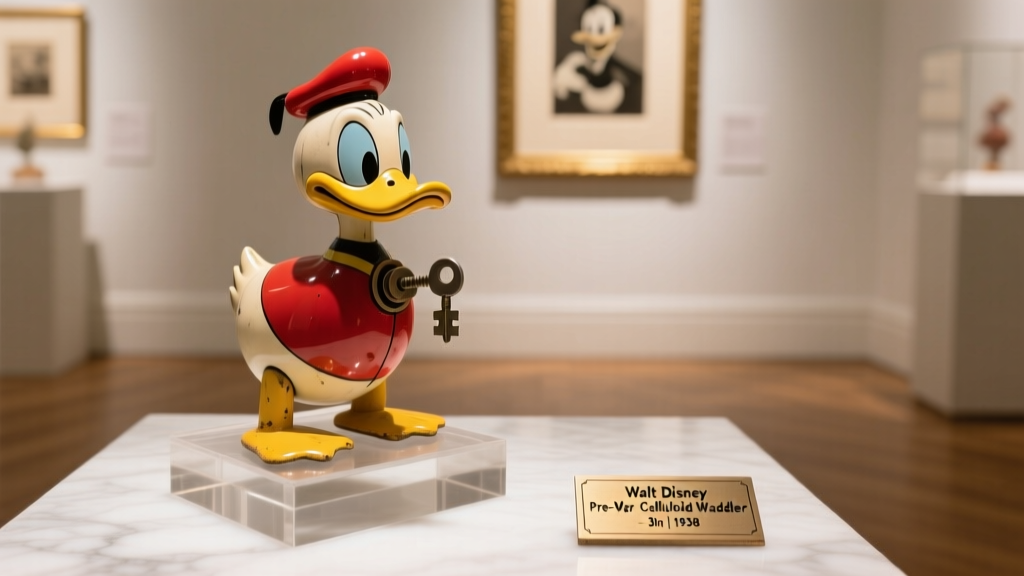
Disneyana Toy Donald Duck Waddler: Authenticating the Prewar 3-Inch Celluloid Windup from Walt Disney Enterprises
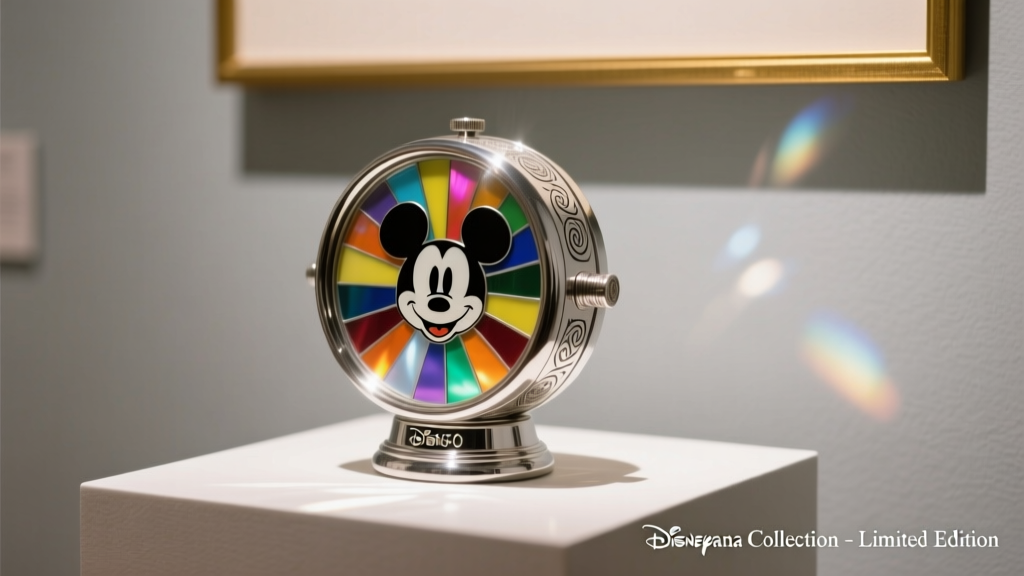
Disneyana Toy Mickey Mouse Kaleidoscope: History, Authentication, and Market Value Analysis
Parade Pop Culture Memorabilia Headlining 2,600-Lot Sale: Market Analysis, Authentication Insights, and Record-Breaking Highlights
Cookie Jars: Jack in the Box American Bisque No. 2 — Authentication, Market Trends, and Collector Insights
Authenticating a French 19th-Century Mahogany Wardrobe with Inset Parchment Panels: Provenance, Construction, and Market Valuation
Jacoulet’s Rich Korena of Seoul: Authentication, Provenance, and Market Significance of the Fan Seal Print (21¼ × 16¼ in)
Celadon Ginger Jar with Wooden Cover and Relief Dragon Design: Authentication, Provenance, and Market Analysis of the 8-Inch Porcelain Globular Vessel
Fireplace Shovel for Ash Removal: Evaluating the 21½-Inch Standard and Its Role in Hearth Safety, Ergonomics, and Collectible Hardware Design
Decoys Black Duck Original Paint Balsa Wooden Head Glass Eyes 14½ In: Authentication, Market Value, and Historical Context