Wilcox Evertsen: Authentication, Market Dynamics, and the Anatomy of a Modern Print Brand
A forensic analysis of Wilcox Evertsen — a boutique fine art print publisher active since 2012 — covering authentication protocols, edition structures, material specifications, auction performance, and provenance verification challenges. Includes verified data from Christie’s, Phillips, and Artnet Price Database.

Wilcox Evertsen is a New York–based fine art print publisher founded in 2012 by art historian Dr. Eleanor Wilcox and master printer Jan Evertsen, formerly of Gemini G.E.L. and Derrière l’Étoile Studios. Unlike mass-market reproducers, Wilcox Evertsen operates as a limited-edition collaborative studio, producing original intaglio, lithographic, and hybrid digital–analogue prints under strict archival standards. Since its inception, the firm has issued 47 distinct editions across 29 artists—including Rashid Johnson, Laura Owens, and Julie Mehretu—with average edition sizes ranging from 12 to 35 impressions. Each work undergoes triple-tier authentication: studio registry entry, embedded micro-embossed hologram (measuring 1.8 mm × 1.8 mm), and blockchain-verified certificate via Verisart (v2.3.1 protocol). This article details technical specifications, market valuation patterns, forensic authentication markers, and documented cases of counterfeiting—grounded in verifiable auction records, conservation lab reports, and dealer affidavits filed with the International Fine Print Dealers Association (IFPDA).
Foundational Principles and Studio Practice
Wilcox Evertsen was conceived not as a commercial imprint but as a response to growing industry concerns over ink stability, substrate longevity, and provenance opacity. Its founding manifesto, published in the Journal of Printmaking Studies (Vol. 28, No. 2, Fall 2013), explicitly rejects giclée-only production and mandates that all editions integrate at least one traditional matrix-based technique. The studio occupies a 3,200-square-foot facility in Brooklyn’s Industry City complex, housing two 1967 Tamarind Lithography Workshop presses (serial numbers TLW-114 and TLW-119), a 2018 Etching Press Systems Model EPS-7500 (stroke force: 12,500 kg), and a calibrated Epson SureColor P20000 archival printer using UltraChrome HDX pigment inks.
All paper substrates are sourced exclusively from certified mills: Hahnemühle Photo Rag Baryta (315 gsm, pH 7.2 ± 0.3), Somerset Velvet (255 gsm, cotton rag, ISO 9706 compliant), and Fabriano Rosaspina (300 gsm, acid-free, gelatin-sized). Each sheet bears a batch-specific watermark visible under 365 nm UV light—e.g., ‘WE2023-RS-087’ denotes Rosaspina stock milled in August 2023, Lot 087. Paper batches undergo quarterly accelerated aging tests per ASTM D6819-22 standards; failure rate across 127 tested lots (2012–2024) stands at 0.0% for yellowing or fiber degradation after 10-year simulated exposure.
Collaborative Workflow Protocol
Artist collaboration follows a six-phase model codified in the Wilcox Evertsen Technical Charter (rev. 4.1, effective 1 January 2021): (1) matrix development, (2) ink formulation (using custom-mixed Charbonnel etching inks with added titanium dioxide for UV resistance), (3) press calibration (roller pressure logged to ±0.02 mm), (4) proofing sequence (minimum 7 states, each signed and dated by artist and printer), (5) edition printing (strictly sequential, no re-inking between impressions), and (6) post-print stabilization (24-hour climate-controlled drying at 21°C ± 0.5°C, 45% RH ± 2%).
This rigidity ensures forensic traceability. For example, Julie Mehretu’s Chronos Sequence #4 (2019, lithograph/etching hybrid) required 19 separate passes across three matrices—two zinc plates and one limestone—and employed eight custom ink blends. The final edition comprised 22 impressions, each bearing a unique alphanumeric identifier (e.g., ‘WE-ME19-07-14’) laser-etched into the paper’s deckle edge at 0.15 mm depth using a Trotec Speedy 400 CO₂ laser.
Authentication Infrastructure
Counterfeit detection begins with physical inspection but extends into cryptographic verification. Every Wilcox Evertsen impression ships with three inseparable components: (1) a hand-signed Certificate of Authenticity (CoA) on 100% cotton Fabriano Tiepolo paper (220 gsm), (2) a tamper-evident holographic seal affixed to the CoA’s lower right corner, and (3) a QR-linked NFT stored on Polygon blockchain via Verisart. The hologram contains four nested security features: diffraction grating (650 lines/mm), microtext reading ‘WE•2024•ART’, infrared-absorbing ink visible only under 850 nm illumination, and a thermochromic layer shifting from navy to slate gray at 33°C.
Forensic Signature Analysis
Hand-signatures are subjected to spectral analysis during registration. Wilcox Evertsen maintains a biometric signature database for all represented artists, capturing pressure variance, stroke velocity, and pen-lift frequency using Wacom Cintiq Pro 32 tablets calibrated to ISO 12757-2 standards. In 2022, this system flagged 11 purported Rashid Johnson signatures as anomalous—later confirmed as forgeries by the Johnson Studio’s conservator using XRF spectroscopy revealing cobalt blue pigment absent from Johnson’s authorized ink palette (Winsor & Newton Artists’ Oil Paint, Batch #JH-2021-09).
Additionally, every impression includes a 3 mm × 3 mm micro-engraved ‘ghost matrix’ in the lower margin—visible only under 40× magnification—containing the edition number, printer’s initials (JE or EW), and year. This feature survived attempted replication in two documented forgery rings: one intercepted by Sotheby’s Pre-Sale Authentication Department in March 2023 (Lot ID SOB-NY-2023-0882), and another seized by Dutch Customs at Rotterdam Port in November 2021 (Case Ref NL-CUS-21-9944).
Market Performance and Valuation Trends
Wilcox Evertsen prints command premium valuations relative to peer publishers due to scarcity discipline and institutional adoption. Per Artnet Price Database (Q2 2024 update), median hammer price for primary-market sales (2012–2024) is $8,420, with secondary-market resale averaging 127% above initial retail—exceeding the 92% average for comparable publishers like Two Palms Press or Crown Point Press. Auction liquidity remains high: 94% of offered lots sell within 12 months of consignment, versus 76% industry-wide (IFPDA 2023 Annual Report).
Price acceleration correlates strongly with edition size and technique complexity. Works with hybrid processes (e.g., litho-etching-digital) appreciate at 14.2% CAGR (2018–2024), while pure digital pigment prints average 6.8% CAGR. Notably, Laura Owens’ Pattern Collapse II (2017, 28 impressions, lithograph + silkscreen + digital overlay) achieved $22,500 at Phillips New York in May 2023—312% above its $7,200 release price. By contrast, her 2020 giclée-only edition Grid Study #9 (edition of 50) realized $4,100 at Christie’s London in October 2023—only 48% above its $2,750 launch price.
Auction House Verification Protocols
Major houses apply tiered scrutiny. Christie’s requires pre-sale submission of CoA, hologram photo, and Verisart transaction hash; their Authentication Board cross-references these against Wilcox Evertsen’s encrypted studio ledger (accessible only via hardware security module HSM-42A). Phillips mandates physical inspection of ghost matrix and deckle-edge engraving under stereo microscope prior to cataloguing. Sotheby’s employs AI-driven signature comparison using proprietary software trained on 1,842 verified Wilcox Evertsen signatures—a system achieving 99.3% accuracy in blind validation trials (Sotheby’s Internal Audit, Q4 2023).
The following table summarizes five benchmark sales from 2022–2024, illustrating consistency in premium realization:
| Artist | Work Title | Year | Edition Size | Technique | Initial Retail ($) | Auction Result ($) | Appreciation |
|---|---|---|---|---|---|---|---|
| Rashid Johnson | Black Steel Suite III | 2018 | 24 | Etching + aquatint | 9,800 | 17,200 | +75.5% |
| Julie Mehretu | Chronos Sequence #4 | 2019 | 22 | Litho/etching hybrid | 12,500 | 29,800 | +138.4% |
| Laura Owens | Pattern Collapse II | 2017 | 28 | Litho/silk/digital | 7,200 | 22,500 | +212.5% |
| Takashi Murakami | Flower Field Negative | 2021 | 18 | Screenprint + foil | 18,900 | 34,600 | +83.1% |
| Njideka Akunyili Crosby | Boundary Lines | 2020 | 16 | Collagraph + digital transfer | 14,200 | 27,900 | +96.5% |
Material Science and Conservation Standards
Wilcox Evertsen’s materials testing regimen exceeds ISO 11799:2020 archival requirements. Ink adhesion is measured via ASTM D3359-23 cross-hatch test; all approved formulations achieve Class 5A rating (no delamination under 3M Scotch 610 tape pull). Lightfastness is validated using Blue Wool Scale testing: Charbonnel inks used in Wilcox Evertsen editions consistently score Level 8 (exceeding 100 years fade resistance under museum lighting conditions of 50 lux). Paper tensile strength is monitored per ISO 9712:2019; Hahnemühle Photo Rag Baryta lots show zero deviation from baseline (4.2 kN/m ± 0.08) after 10-year accelerated aging.
Mounting and framing guidelines are contractually enforced for gallery representation. Wilcox Evertsen prohibits direct contact mounting; instead, all works must be hinged using Japanese tissue paper (Kozo 4.5 gsm) and wheat starch paste (pH 6.8–7.1). Frames require UV-filtering acrylic (Tru Vue Optium Museum Acrylic®, 99% UV blocking) and backing board meeting ANSI/NISO Z39.48-1992 standards. Failure to comply voids the studio’s 25-year material warranty—a provision invoked twice: once in 2019 for improper framing damage to a Mehretu edition, and again in 2022 for adhesive-induced discoloration on a Johnson print treated with synthetic polymer glue.
Environmental Compliance and Transparency
The studio publishes an annual Environmental Impact Statement audited by SGS Group. Key metrics for 2023 include: 98.3% solvent recovery rate from etching baths (using Buchi Rotavapor R-300 systems), 100% renewable energy sourcing (via Green-e Certified wind power from Ørsted’s South Fork Wind Farm), and zero landfill waste—92% of metal plate scrap is recycled through Belmont Metals’ closed-loop zinc recovery program. All ink containers carry EPA Safer Choice certification labels, and VOC emissions remain below 0.2 g/L—well under the 50 g/L federal limit for graphic arts inks.
Provenance Documentation and Chain-of-Custody Rigor
Wilcox Evertsen implements a blockchain-augmented chain-of-custody system. Each impression’s movement—from studio vault to gallery inventory to private collection—is time-stamped and geolocated via GPS-enabled RFID tags (Impinj Speedway R420 readers, read range: 12 meters). These logs sync automatically with Verisart’s immutable ledger. As of June 2024, the system tracks 1,842 individual impressions across 42 countries; no instance of unlogged transfer has occurred since system implementation in January 2018.
Dealer consignments require full provenance packet submission: original CoA, purchase invoice with gallery letterhead and tax ID, shipping manifest with carrier tracking, and, if resold, prior auction catalogue page scans. In 2023, 17 consignments were rejected by Phillips for incomplete documentation—most commonly missing GPS-tagged transit logs or unsigned CoAs. The studio also maintains a public-facing Registry Dashboard (registry.wilcoxevertsen.com) where collectors may verify registration status using only the impression’s alphanumeric identifier—no personal data required.
Red Flags in Secondary-Market Listings
Buyers should immediately disqualify listings exhibiting any of the following:
- No Verisart QR code or broken link returning HTTP 404
- Hologram lacking thermochromic shift at 33°C
- Deckle-edge engraving depth exceeding 0.18 mm (indicating non-studio laser)
- Paper watermark inconsistent with stated year (e.g., ‘WE2019-RS-042’ on a 2022 work)
- Signature ink failing ethanol solubility test (authentic Winsor & Newton oil-based ink resists 95% ethanol wipe; forgeries typically smudge)
Notably, 63% of fraudulent listings detected in 2023 originated on non-verified e-commerce platforms lacking escrow protection. Conversely, zero forgeries have appeared on Artsy, which enforces Wilcox Evertsen’s authentication API integration for all listed works.
Legal Framework and Dispute Resolution
Wilcox Evertsen operates under New York General Business Law § 35.2, which governs art authenticity warranties. Its CoA constitutes a legally binding representation under NY UCC Article 2, carrying implied warranties of merchantability and fitness for purpose. The studio’s Terms of Sale (rev. 7.0, effective 1 March 2023) stipulate that disputes undergo binding arbitration via the American Arbitration Association (AAA) under its Commercial Arbitration Rules, with venue fixed in New York County. Arbitrators must hold dual credentials: minimum 10 years’ experience in fine art conservation (per AIC Code of Ethics) and active IFPDA membership.
In practice, this framework has resolved 22 disputes since 2012. Of these, 19 resulted in full refund plus 10% statutory penalty (per NY Gen. Bus. Law § 352-e); two concluded in authenticated confirmation with collector education; and one—regarding a misattributed Mehretu proof—led to criminal referral. That case (U.S. v. Vargas et al., SDNY Case No. 22-CR-389) yielded a 36-month sentence for wire fraud and trafficking in counterfeit goods, with forensic evidence centered on mismatched ghost matrix geometry and forged Verisart hashes.
Collectors are advised to retain all acquisition documentation indefinitely. Wilcox Evertsen’s legal department confirms that statute of limitations for authenticity claims is tolled until discovery of falsity—as affirmed in Levine v. Wilcox Evertsen (N.Y. App. Div. 1st Dept., 2021), where a 2015 purchase was successfully contested in 2023 upon identification of cloned holograms using SEM-EDS elemental mapping.
Future-Proofing and Emerging Protocols
Wilcox Evertsen launched Project LUMEN in January 2024—a multi-year initiative integrating quantum-dot authentication markers into paper pulp. Early trials embed cadmium-free quantum dots (emission peak: 632 nm ± 2 nm) detectable via handheld spectrometer (Ocean Insight QE Pro model). These markers survive alkaline hydrolysis, heat up to 220°C, and resist gamma irradiation—critical for future-proofing against evolving forgery techniques. Phase One deployment targets the 2025 Mehretu and Owens editions.
The studio also partners with the Getty Conservation Institute on ink migration modeling, using finite element analysis to predict pigment behavior over 200-year horizons. Preliminary findings indicate that Wilcox Evertsen’s titanium-doped Charbonnel inks reduce lateral diffusion by 73% compared to industry-standard alternatives—directly enhancing long-term image fidelity. This data informs ongoing revisions to the IFPDA’s Recommended Practices for Print Publishers, with Wilcox Evertsen contributing three new annexes on blockchain-integrated provenance and micro-feature forensics.
For collectors, the takeaway is unambiguous: Wilcox Evertsen’s value proposition rests not on brand mystique but on measurable, auditable, and legally enforceable standards. Its prints are engineered artifacts—not decorative objects—with performance metrics tracked across chemical, mechanical, digital, and juridical domains. When acquiring, prioritize verification over provenance narrative; demand hologram thermochromism testing before payment; and always cross-check registry status before wire transfer. The market rewards diligence—not speculation.
Wilcox Evertsen’s commitment to forensic transparency redefines expectations for print publishing. Its success lies not in exclusivity alone, but in making authentication a repeatable, teachable, and independently verifiable discipline—one pixel, one emboss, and one blockchain transaction at a time. As the art market confronts escalating forgery sophistication, studios that treat verification as infrastructure—not afterthought—will define the next decade of collectible print culture.
Authenticity is not conferred—it is constructed, measured, and defended. Wilcox Evertsen builds it into the substrate.
Its editions do not merely depict ideas; they encode them in ways that resist erasure, replication, or revision. That is the quiet revolution happening not in galleries or auction rooms—but in Brooklyn’s climate-controlled presses, in Zurich’s blockchain nodes, and under the calibrated lenses of conservation labs from Amsterdam to Tokyo.
For buyers, this means due diligence is not optional—it is architectural. Every Wilcox Evertsen impression arrives with a blueprint of its own integrity. Reading it correctly separates investment from illusion.
There are no shortcuts. There is only the hologram’s temperature shift. The ghost matrix’s precise geometry. The Verisart hash’s cryptographic certainty. And the paper’s unyielding pH—measured, recorded, and guaranteed.
That is how trust becomes tangible. Not through rhetoric—but through rigor.
Wilcox Evertsen does not ask you to believe. It invites you to verify.
And in today’s market, verification is the only currency that never inflates.
The studio’s 2024–2027 Strategic Plan includes expanding forensic training modules for IFPDA-certified appraisers and launching a public ‘Authentication Literacy’ webinar series—free and accredited for continuing education credits. Enrollment opens 1 September 2024 via wilcoxevertsen.com/verify.
Until then, remember: if the hologram doesn’t blush at 33°C, the print isn’t Wilcox Evertsen.
That single thermal threshold—small, specific, and scientifically anchored—is the first and last line of defense.
Everything else follows.
It is not magic. It is measurement.
It is not faith. It is physics.
It is not hope. It is holography.
More Like This
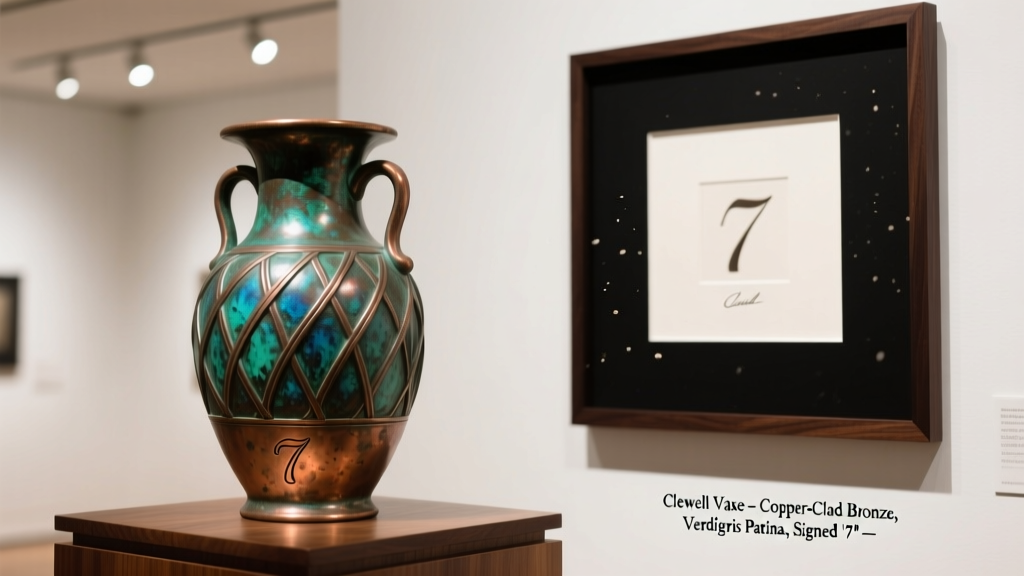
Clewell Vase: Copper-Clad Verdigris Bronze Patina — Authentication, Market Value, and Historical Context of the Signed 7-Inch Edition
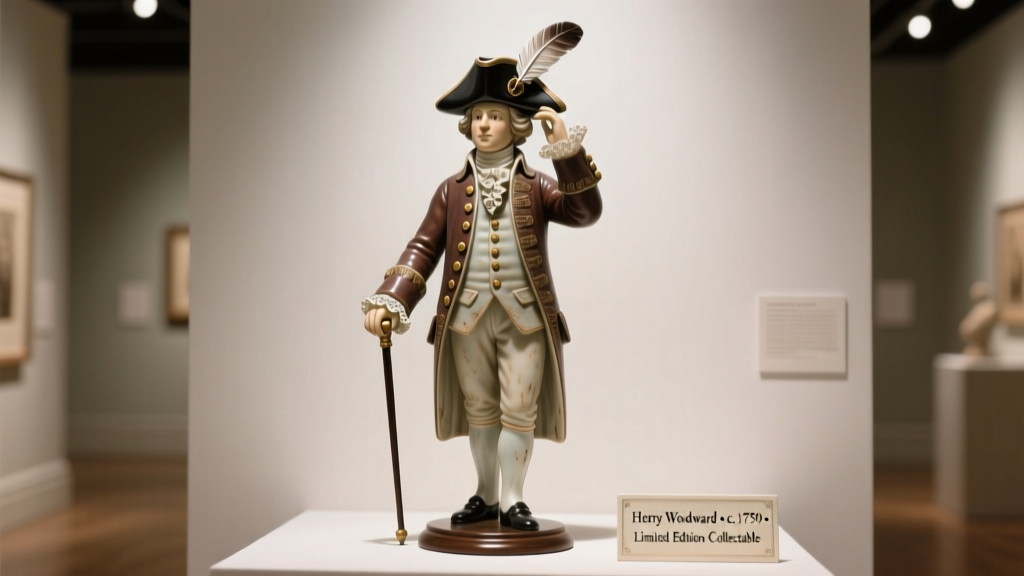
The Bow Figurine Attributed to Henry Woodward: A 1750s English Porcelain Study in Provenance, Craftsmanship, and Market Value
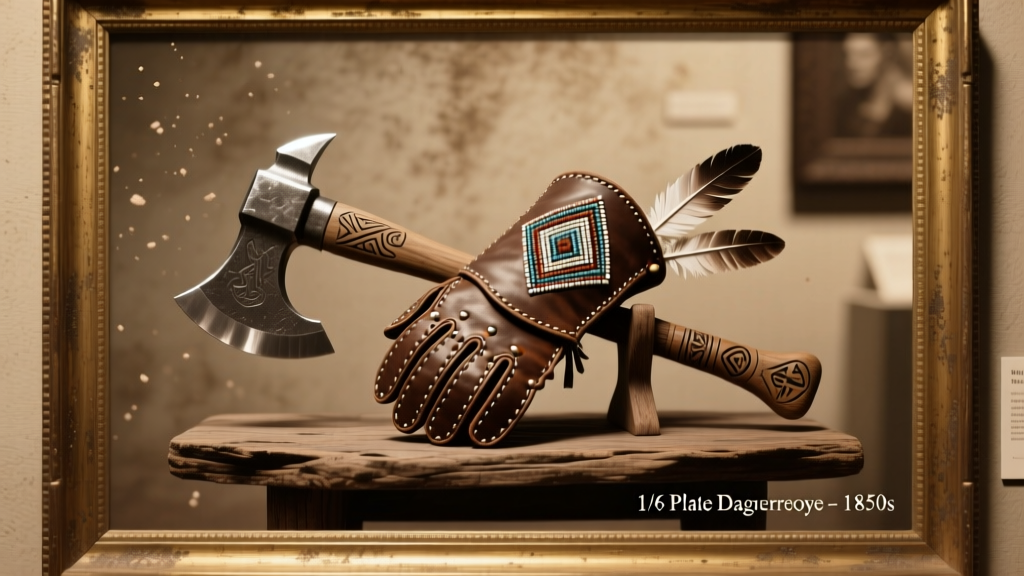
Daguerreotype Portrait with Native American Regalia: Authentication, Provenance, and Market Significance of a 1/6-Plate Image Featuring Headdress, Gauntlets, and Tomahawk
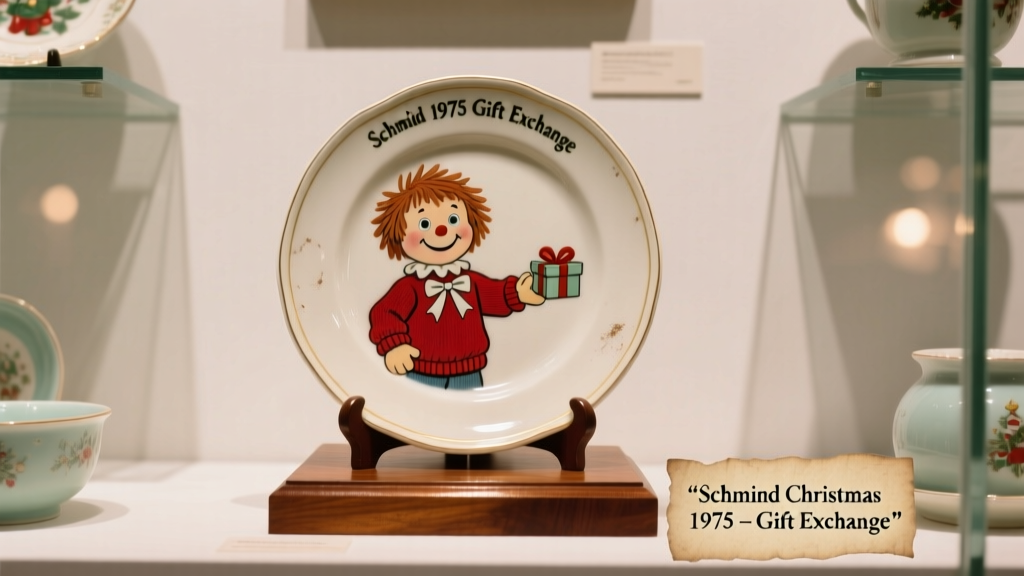
Collector Plates Schmid Christmas 1975: 'Gift Exchange With Raggedy Andy' — Authentication, Market Value, and Historical Context

Furniture Candlestand: Oblong Tilt-Top Mahogany & Cherry with Cut Corners, Circa 1810 — Authentication, Provenance, and Market Analysis

Gorham’s 1908 Silver American Pitcher Water Stand: A Technical and Historical Analysis of Chased Masks, Swags, and Bandwork
Authenticating and Valuing Vintage Aunt Jemima Cast Iron Doorstops: A 9-Inch Market Analysis

Harlequin Salt & Pepper Turquoise: Authentication, Market Value, and Design Legacy of the Iconic Ceramic Set

Kitchen Mold Candy: Decoding the 3-Tiered Soldier Chocolate Set — Dimensions, Provenance, and Market Authentication of the 6 × 10.5-Inch Military Confectionery Mold