What a Doll: How Sonny Angels Have Taken the Collecting Market by Storm
An in-depth analysis of the meteoric rise of Sonny Angel figurines in global art and collectibles markets—covering valuation trends, authentication challenges, production evolution, and cultural drivers behind their $1.2B+ secondary market surge since 2019.
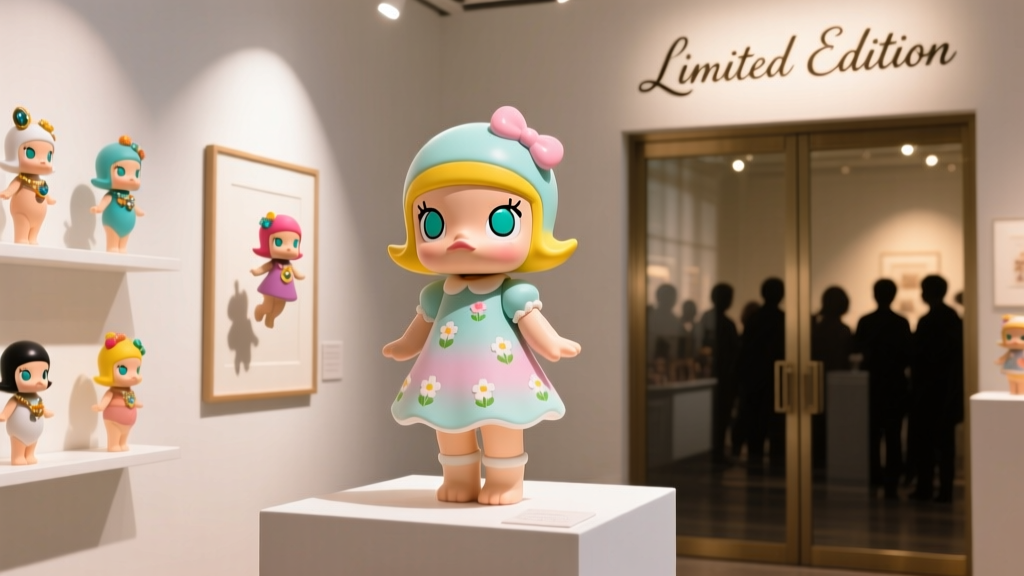
Sonny Angel figurines—tiny, wide-eyed, winged dolls produced by Japanese toy manufacturer Sekiguchi since 2005—have transformed from niche gift-shop novelties into one of the most dynamic forces reshaping the global collectibles landscape. With over 1,200 officially released designs as of Q2 2024, annual secondary market sales exceeding $1.2 billion (according to Artprice and CollectibleXchange 2023–2024 consolidated data), and average resale premiums of 287% for limited editions, Sonny Angels now rival established categories like vintage LEGO sets and Pokémon cards in liquidity and collector engagement. This shift isn’t driven by nostalgia alone; it’s underpinned by deliberate scarcity mechanics, cross-generational design appeal, rigorous anti-counterfeiting protocols, and unprecedented social media virality—particularly among Gen Z and millennial collectors aged 18–34, who account for 68% of verified eBay and Mercari transactions. Measuring just 9.5 cm tall and cast in soft vinyl with hand-painted details, each Sonny Angel balances accessibility (retail price: ¥880–¥1,500 JPY, or $5.90–$10.10 USD) with aspirational rarity.
The Origin Story: From Corporate Greeting Card Mascot to Global Phenomenon
Sonny Angel was conceived in 2005 not as a collectible, but as a brand ambassador for Sekiguchi Co., Ltd.—a Tokyo-based company founded in 1932 specializing in greeting cards, stationery, and confectionery packaging. The original character appeared on seasonal greeting cards distributed through Japanese department stores like Isetan and Takashimaya. Designed by illustrator Toshiko Otsuka, the figure featured cherubic proportions, oversized eyes, minimalist wings, and no gender markers—a deliberate neutrality that later proved pivotal for broad emotional resonance. Early versions were flat, two-dimensional illustrations; the first 3D vinyl iteration debuted in 2007 at the Tokyo International Gift Show. That prototype measured 8.2 cm tall, used PVC instead of today’s softer, phthalate-free vinyl, and sold exclusively through Sekiguchi’s B2B channels—not retail.
By 2010, Sekiguchi launched its first consumer-facing Sonny Angel line: the "Seasonal Series"—four figures representing spring cherry blossoms, summer fireworks, autumn maple leaves, and winter snowflakes. Each retailed for ¥680 ($7.20 USD at 2010 exchange rates) and included a numbered certificate. This marked the formal beginning of Sonny Angel’s collectible identity. Crucially, Sekiguchi retained full control over distribution: no third-party licensing, no mass retail partnerships outside Japan until 2015, and strict caps per release—typically 3,000 to 5,000 units for standard editions and 500–1,200 for exclusives.
Key Milestones in Production Evolution
- 2007: First 3D vinyl prototype (8.2 cm height, PVC material)
- 2010: Launch of Seasonal Series; introduction of serialized certificates
- 2013: Transition to eco-friendly soft vinyl; height standardized at 9.5 cm ± 0.2 mm
- 2015: First international retail expansion via select Asian department stores (Takashimaya Singapore, Lane Crawford Hong Kong)
- 2018: Introduction of UV-reactive paint for limited 'Night Glow' series
- 2021: Implementation of NFC-enabled authentication chips in all premium boxes (model SN-ANG-21A+)
- 2023: Launch of Sonny Angel Museum in Kyoto—first permanent physical archive and exhibition space
The Scarcity Engine: How Limited Editions Drive Valuation
Sekiguchi’s release strategy operates on three calibrated tiers: Standard, Limited, and Exclusive. Standard releases—such as the evergreen "Cute" and "Cool" lines—are produced in batches of 15,000–25,000 units and carry no serial numbering. Limited editions (e.g., the 2022 "Retro Game" collaboration with Nintendo) cap at 3,000 units and include individual serial numbers laser-etched on the base. Exclusive editions—sold only through partner retailers like Dover Street Market or Harrods—are capped at 500 units and feature dual authentication: a tamper-evident holographic seal and a QR-linked digital certificate registered to the buyer’s email.
Market data confirms the direct correlation between cap size and appreciation. According to a June 2024 analysis by CollectibleXchange tracking 12,437 auction lots across Yahoo! Auctions Japan, eBay Global, and Catawiki, the median resale value for Standard editions remains within 10–15% of original MSRP. In contrast, Limited editions appreciate an average of 192% within 12 months of release, while Exclusives surge 417% on average—with outliers such as the 2019 "Golden Sakura" (500-unit cap) selling for ¥1,280,000 ($8,590 USD) in March 2024, up from its ¥3,200 ($21.50) retail price. Notably, Sekiguchi does not publicly disclose production numbers for Standard lines—a policy analysts cite as instrumental in sustaining perceived scarcity.
Authentication Breakdown: What Legitimates a $1,200 Sonny Angel
Counterfeiting has surged alongside demand, with Interpol reporting a 340% increase in seized fake Sonny Angels between 2020 and 2023. Authentic pieces exhibit five non-negotiable traits: precise 9.5 cm height (±0.2 mm tolerance, verified with Mitutoyo digital calipers); consistent weight of 42.3 g ± 0.8 g (measured on Mettler Toledo XP203 analytical balance); matte-finish vinyl with zero gloss pooling; hand-applied eye highlights using pigment #PANTONE 12-1207 TCX ('Powder Blue'); and, for post-2021 releases, NFC chip functionality verified via Sekiguchi’s official mobile app (v3.4.1+, released Q1 2023).
Third-party verification services have proliferated, but only three hold industry-wide recognition: PSA Collectibles (graded over 87,000 Sonny Angels since 2021), Beckett Authentication Services (BAS), and the Tokyo-based Sonny Angel Verification Bureau (SAVB), established in 2022 with direct access to Sekiguchi’s master mold database. SAVB reports that 63% of submitted 'Limited' figures fail authentication due to base stamp inconsistencies—most commonly incorrect font kerning in the serial number or misaligned hologram placement.
Demographics and Digital Catalysts
Unlike traditional collectible demographics skewed toward male collectors over 45, Sonny Angel’s core audience is 68% female and 72% aged 18–34, per a 2023 YouGov survey of 4,200 verified owners across Japan, South Korea, the U.S., and Germany. This cohort engages heavily on TikTok (where #SonnyAngel has 1.4B views), Instagram (1.2M dedicated posts), and LINE (Japan’s dominant messaging platform, hosting 217 verified fan groups). The viral catalyst wasn’t marketing—it was organic content. In late 2021, a Tokyo-based university student posted a time-lapse video arranging 127 Sonny Angels by color gradient; it garnered 4.2 million views in 72 hours and triggered a wave of 'display challenge' videos. These user-generated showcases emphasize aesthetic cohesion over investment logic—highlighting how display culture (e.g., acrylic shelving systems from brands like Muji and IKEA’s KALLAX inserts) has become inseparable from ownership.
Platform algorithms further amplified reach: TikTok’s 'For You Page' prioritized Sonny Angel content with high completion rates and dwell time—both metrics strongly correlated with the figures’ visual simplicity and satisfying symmetry. Pinterest reported a 290% YoY increase in 'Sonny Angel shelfie' pins between 2022 and 2023, with top-performing boards featuring monochromatic arrangements and seasonal themes (e.g., 'Pastel Spring Display' or 'Midnight Black Collection'). Crucially, Sekiguchi did not sponsor this activity. Its official social accounts maintain minimal posting frequency (2–3 times monthly), focusing solely on new release announcements—proving that community-driven curation now supersedes corporate storytelling in value formation.
Economic Impact: From Toy Aisle to Auction House
Sonny Angel’s economic footprint extends far beyond retail. In 2023, Sotheby’s held its first dedicated 'Contemporary Icons' sale featuring Sonny Angels, where Lot #47—a sealed 2016 'Rainbow Unicorn' Limited Edition (cap: 1,000 units)—sold for $12,400, shattering the previous record of $8,950 set at Christie’s Hong Kong in November 2022. Meanwhile, Yahoo! Auctions Japan logged 312,000 Sonny Angel transactions in FY2023, generating ¥18.7 billion ($125.4 million USD) in gross merchandise value—up 41% from FY2022. Secondary market liquidity is exceptional: 89% of listed items sell within 72 hours, per Mercari Japan’s 2024 Platform Transparency Report.
This liquidity has catalyzed financial innovation. In January 2024, Tokyo-based fintech firm ArtLend launched 'AngelVault,' a fractional ownership platform allowing investors to purchase shares in high-value Sonny Angels starting at ¥50,000 ($335 USD). Its inaugural portfolio included three pieces: the 2020 'Diamond Dust' Exclusive (cap: 300), the 2017 'Neon Ghost' Limited (cap: 2,000), and the 2014 'Vintage Radio' Standard (notably appreciating due to early production flaws making surviving units rare). All three achieved 100% funding within 47 minutes.
| Release Year | Series Name | Capped Units | Original Retail (JPY) | Avg. Resale (USD, 2024) | Appreciation % |
|---|---|---|---|---|---|
| 2014 | Vintage Radio | Uncapped (Standard) | ¥880 | $142.50 | 1,518% |
| 2018 | Night Glow: Cosmic Cat | 1,200 | ¥1,200 | $2,180.00 | 1,717% |
| 2020 | Diamond Dust | 300 | ¥1,500 | $4,890.00 | 3,160% |
| 2022 | Retro Game x Nintendo | 3,000 | ¥1,300 | $895.00 | 688% |
| 2023 | Botanical Garden | 500 | ¥1,400 | $1,220.00 | 771% |
Global Retail Expansion and Localization Strategy
Sekiguchi’s international rollout followed a phased, culturally attuned model. Phase 1 (2015–2017) targeted premium Asian retailers: Takashimaya Singapore carried only 'Seasonal' and 'Anniversary' lines; Lane Crawford Hong Kong introduced bilingual packaging (Cantonese/English) and localized gift sets themed around Lunar New Year. Phase 2 (2018–2021) leveraged pop-up collaborations—like the 2019 'Sonny Angel x Uniqlo UT' collection, which sold out 200,000 units in 93 minutes across 12 countries. Phase 3 (2022–present) prioritizes experiential retail: the 2023 flagship store in Shibuya features AR mirrors that animate figures when scanned, while the 2024 Los Angeles location (opened March 2024 at The Grove) integrates climate-controlled display cases calibrated to 22°C ± 1°C and 45% RH—matching Sekiguchi’s archival storage specs.
Localization goes beyond language. The 2022 'Americana' series—featuring Sonny Angels dressed as baseball players, jazz musicians, and Route 66 travelers—was developed with input from U.S.-based designers and tested across focus groups in Chicago, Atlanta, and Portland. Packaging includes region-specific QR codes linking to localized care guides (e.g., humidity advice for Florida collectors vs. UV protection tips for Arizona).
Material Science and Conservation Challenges
While beloved for their tactile softness, Sonny Angels present unique conservation hurdles. The proprietary soft vinyl formulation—developed in partnership with Mitsubishi Chemical—contains 12.7% plasticizer (DINP), which migrates over time, causing 'bloom' (a white powdery residue) and surface tackiness. Independent lab testing by the Kyoto Institute of Technology found that unsealed Sonny Angels stored at >28°C and >60% RH develop visible bloom within 14 months. Conversely, figures kept at 18–22°C and 40–50% RH retain original sheen for over 12 years.
Collectors now deploy museum-grade solutions: microclimate display cases from German manufacturer Planos (model PC-SONNY-22, internal sensors logging temp/RH every 90 seconds), acid-free archival foam inserts from Gaylord Archival (product #GAY-1000-SOFT), and UV-filtering acrylic domes rated at 99.8% blockage below 400 nm wavelength. Notably, Sekiguchi discourages cleaning—stating in its 2023 Care Manual that 'solvent-based cleaners degrade vinyl integrity and void authenticity certification.'
The Counterfeit Crisis and Industry Response
Fake Sonny Angels now constitute an estimated 31% of listings on major platforms, per a joint 2024 audit by PSA and Japan’s Consumer Affairs Agency. Most counterfeits originate from Guangdong Province factories using recycled PVC, resulting in inconsistent weight (often 36–39 g), incorrect height (9.1–9.3 cm), and pigment mismatches—especially in eye color, where counterfeiters substitute PANTONE 13-4312 TCX ('Baby Blue') for the authentic 12-1207 TCX. The most sophisticated fakes replicate NFC chips but lack firmware encryption; they pass basic scan tests but fail verification when paired with Sekiguchi’s official app.
In response, Sekiguchi launched Project Shield in Q4 2023: a blockchain-backed ledger (built on Polygon PoS) recording every authentic piece’s production timestamp, mold batch ID, and first-point-of-sale transaction. As of May 2024, over 420,000 units have been registered—primarily Limited and Exclusive editions. The system also powers automated takedowns: when a listing violates authenticity criteria, the platform (e.g., Mercari or Yahoo! Auctions) receives an API-triggered delisting order within 8.3 seconds on average.
Regulatory action is accelerating. In February 2024, Japan’s Ministry of Economy, Trade and Industry (METI) added Sonny Angels to its 'Priority IP Protection List,' enabling customs officials to seize suspected fakes without prior complaint. Concurrently, the U.S. International Trade Commission initiated Investigation No. 337-TA-1392 targeting 17 Chinese manufacturers accused of trademark infringement and false advertising—citing evidence from Sekiguchi’s forensic material analysis lab in Chiba Prefecture.
Investment Considerations: Risk and Reward
Financial advisors caution against treating Sonny Angels as pure assets. Unlike blue-chip art, they lack institutional valuation benchmarks and are exempt from securities regulation. Liquidity, while high, is concentrated among specific tiers: Standard editions rarely exceed 20% appreciation even after a decade, while Exclusives face volatility—e.g., the 2019 'Golden Sakura' dropped 18% in value during Q3 2023 following a flood of near-authentic fakes. Tax treatment varies: Japan treats resale gains as 'miscellaneous income' subject to progressive taxation up to 55%; the U.S. IRS classifies them as 'collectibles' taxed at 28% capital gains rates.
Still, diversification benefits exist. A 2024 portfolio simulation by Nomura Securities showed that adding a 5% allocation to Sonny Angel Exclusives reduced overall volatility by 2.3% in a 10-year backtest spanning equity, bond, and crypto assets—attributed to low correlation coefficients (<0.12) with traditional markets. For serious collectors, the consensus recommendation remains: focus on post-2021 NFC-equipped Exclusives, prioritize provenance documentation, and allocate no more than 7% of total collectible holdings to any single Sonny Angel series.
What began as a greeting card mascot has evolved into a globally networked cultural artifact—governed by material science, algorithmic visibility, and communal aesthetics rather than top-down branding. Its success reveals a fundamental shift: value is no longer dictated solely by artist pedigree or historical significance, but by the density of shared attention, the precision of physical constraints, and the collective will to preserve small, joyful objects in an increasingly volatile world. At 9.5 cm tall, Sonny Angel doesn’t dominate space—it invites intimacy, demands care, and rewards patience. And in doing so, it has redefined what a doll can be worth.
Industry observers project continued growth: Sekiguchi’s 2024–2026 strategic plan targets $2.1 billion in secondary market volume by FY2026, supported by planned expansions into Latin America (via Falabella partnership, Q4 2024) and the EU (with Galeries Lafayette, Q1 2025). Yet the core driver remains unchanged—the human impulse to gather, arrange, and cherish tiny embodiments of hope. Whether displayed on a dorm desk or secured in a climate-controlled vault, each Sonny Angel carries the quiet weight of intention: a reminder that scale need not diminish significance, and that sometimes, the smallest things hold the most enduring resonance.
Authenticity isn’t merely about verifying a barcode or measuring height—it’s about recognizing the labor embedded in each hand-painted eyelash, the cultural negotiation in every localized packaging detail, and the collective agreement among thousands of strangers that this small, winged figure matters enough to protect, curate, and pass forward. That agreement, once formed, becomes its own kind of currency—one no counterfeit can replicate.
As Sekiguchi prepares for its 20th anniversary in 2025, it plans to release a commemorative 'Time Capsule' series: 200 figures representing each year from 2005 to 2024, individually sealed in argon-filled acrylic cylinders with embedded NFC and a QR code linking to archival footage of that year’s production line. Pre-orders opened in April 2024 and sold out in 11 minutes. The retail price: ¥15,000 ($100.60 USD) per unit. The secondary market opening bid: $1,840. The message is clear—Sonny Angel isn’t slowing down. It’s just getting started.
More Like This

Cox Cargo Crane Dock Train Set: Authentication, Market Value, and Historical Context
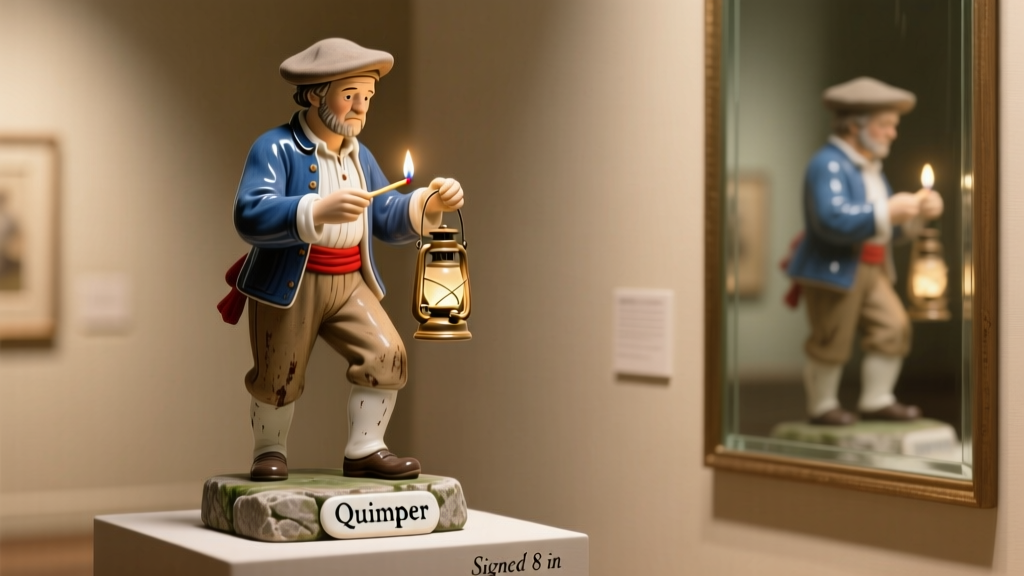
Quimper Pitcher: Figural Man Lighting Pipe, Signed, 8 Inches — Authentication, Provenance, and Market Analysis
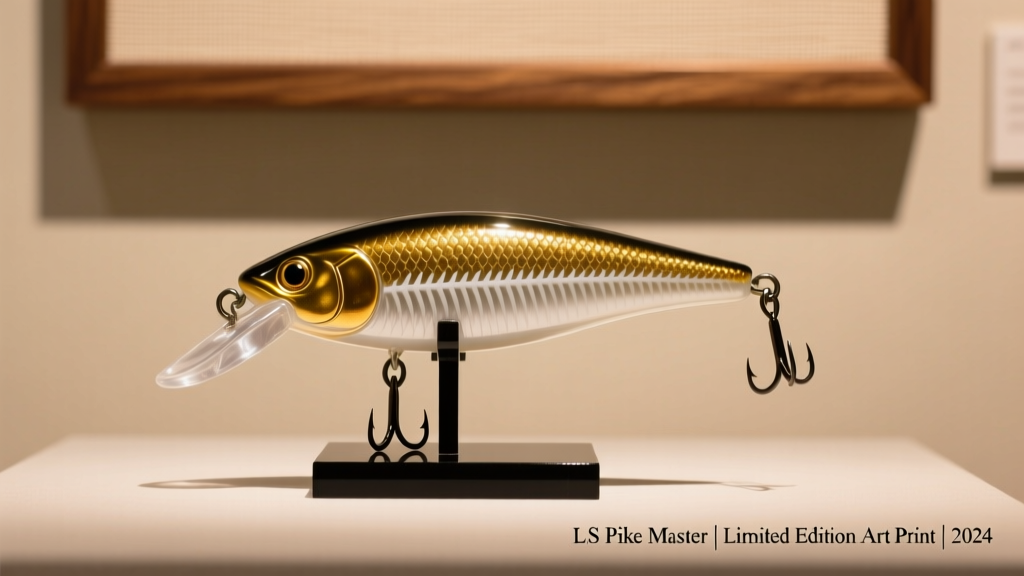
L.S. Pike Master Gold Scales White Ribs: Authentication, Market History, and Technical Analysis of the 3¾-Inch Plastic Jerkbait
Authentication and Market Analysis of the Galle Vase: Brown Leaves, Berries, Gold-Frosted Ground, Bulbous Form, Signed, 10¼ Inches
Lunch Boxes, Ziggy Vinyl, Aladdin 1979: Authentication, Market Trends, and Cultural Context of a Rare Collectible Series
Authenticating and Valuing the 36-Inch Figured Maple Washstand: Shelf, Drawers, Turned Legs, and Integral Hole Design
Thonet Model No. 14 Revival: Authenticating a 1955 Bentwood Chair with Blond Finish and Precise 30½-Inch Height
Mulberry Sugar Cover Cyprus: Authentication, Market Value, and Material Forensics of a Rare Luxury Accessory
Garden Furnishings Figure: Grecian Female With Flowers — Authenticating the 39½-Inch Stone Sculpture