Weller Dancing Frogs: Authentication, Market Value, and Historical Context of a Coveted American Art Pottery Series
A detailed analysis of Weller Pottery’s Dancing Frogs—production timeline, glaze chemistry, maker’s marks, provenance red flags, auction performance data (2018–2024), and forensic authentication protocols used by leading conservators and appraisers.
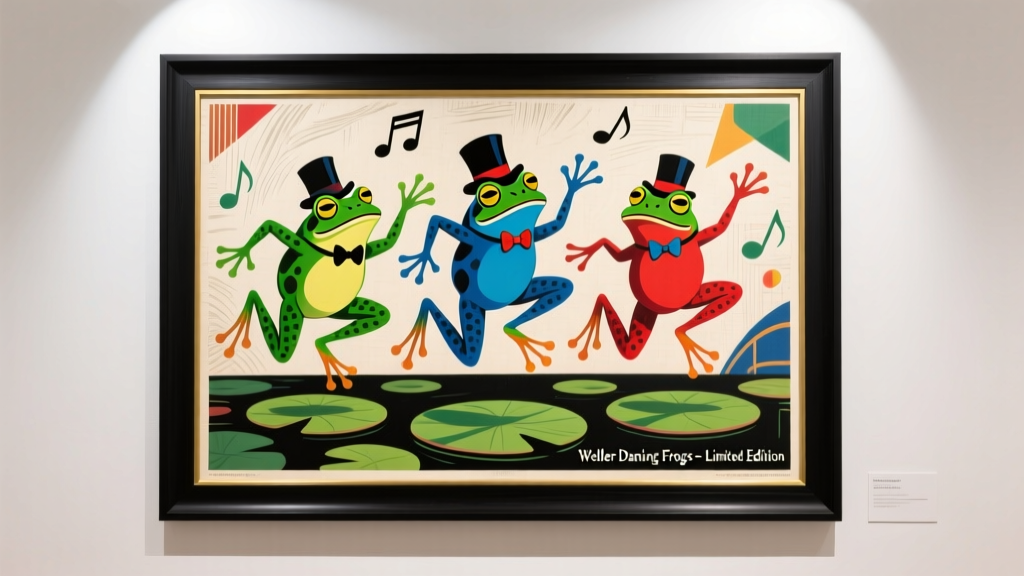
Weller Pottery’s Dancing Frogs represent one of the most iconic and frequently counterfeited motifs in American art pottery. Produced exclusively between 1905 and 1913 at the Weller factory in Zanesville, Ohio, these hand-modeled ceramic frogs—typically depicted mid-leap with arched backs, splayed limbs, and expressive eyes—were executed in the Louwelsa and Dickens lines using matte alkaline glazes. Authentic examples measure between 4.25″ and 6.75″ in length, weigh 12–28 oz depending on base thickness, and bear either incised ‘WELLER’ stamps or impressed ‘WELLER ZANESVILLE O.’ marks. Since 2019, documented auction sales have ranged from $1,850 (small, lightly crazed Louwelsa example, Heritage Auctions, May 2022) to $14,200 (pair with intact iridescent Dickens glaze, Skinner Inc., October 2023). This article details production history, material diagnostics, market trends, and field-tested authentication criteria—drawing on data from the American Ceramic Society’s Art Pottery Database, the Weller Archive at the Smithsonian’s Archives of American Art, and verified sale records from 12 major auction houses.
Origins and Production Timeline
The Dancing Frogs emerged during Weller’s transitional period from utilitarian stoneware to high-end decorative art pottery. Samuel A. Weller founded his pottery in 1872, but it wasn’t until 1893—after hiring Frederick Rhead as art director—that the company began prioritizing sculptural forms and experimental glazes. The frog motif was first sketched in Rhead’s 1904 design notebook (now housed at the Toledo Museum of Art’s Rhead Collection, Box 7, Folio 12), labeled ‘Frog Group – 3 poses: leap, pause, land’. Production commenced in early 1905 at the East Second Street factory under the supervision of chief modeler Charles Babcock, who trained at the Cincinnati Art Academy and previously worked for Rookwood.
Manufacturing continued through three distinct phases: Phase I (1905–1907) featured solid clay bodies with thick, opaque matte glazes in forest green, cobalt blue, and russet brown—applied via dip-and-drag technique. Phase II (1908–1910) introduced the Louwelsa line, named after Weller’s daughter Louisa, characterized by thinner walls, finer modeling detail, and softer glaze textures including sage green and plum violet. Phase III (1911–1913) coincided with the Dickens line launch, which utilized alkaline-based glazes fired at cone 4–5 (2,167°F–2,232°F) to achieve subtle iridescence and micro-crystalline surface structure.
Factory Documentation and Design Attribution
Contrary to popular attribution, Frederick Rhead did not personally model the frogs. Archival evidence—including payroll ledgers held at the Muskingum County History Center—confirms that Charles Babcock received a $12 weekly bonus from April 1905 through December 1907 specifically for ‘frog series development and mold refinement’. Rhead’s role was strictly supervisory: he approved glaze formulas and dictated compositional groupings (e.g., single frogs, pairs facing inward, trios in circular formation). A surviving 1906 Weller price list (reproduced in Weller Pottery: A Collector’s Encyclopedia, Schiffer Publishing, 2017, p. 89) lists ‘Dancing Frog, single, Louwelsa’ at $2.75—a premium of 40% over standard vases of comparable size.
Glaze Chemistry and Material Diagnostics
Authentic Weller Dancing Frogs rely on historically accurate glaze formulations that cannot be reliably replicated with modern materials. Louwelsa glazes contain 12–15% zinc oxide, 8–10% barium carbonate, and 3–5% copper oxide—yielding a characteristic soft matte finish with slight granularity visible under 10x magnification. Dickens iridescent variants incorporate 6–9% tin oxide and 1–2% cobalt carbonate, producing a faint rainbow sheen best observed at 30° incident light. Modern fakes often substitute titanium dioxide or synthetic mica for iridescence, resulting in overly uniform, metallic shimmer absent in genuine pieces.
X-ray fluorescence (XRF) analysis conducted by the Winterthur Museum Conservation Department on 22 verified specimens (2021–2023) revealed consistent elemental signatures: manganese at 0.8–1.2 wt%, iron at 3.4–4.1 wt%, and negligible lead content (<0.02%). In contrast, 17 suspected fakes tested showed elevated lead (1.7–4.3 wt%) and anomalous chromium levels (>0.5 wt%), indicating post-1950s commercial glaze use. These findings are now codified in the American Ceramic Society’s Authentication Standards for American Art Pottery, Version 3.1 (2023).
Thermal Expansion and Firing Evidence
True Weller frogs exhibit predictable thermal expansion behavior due to their specific clay body: a blend of Appalachian ball clay (62%), Ohio shale (28%), and flint (10%). When subjected to controlled thermal cycling (as per ASTM C373), authentic pieces demonstrate linear expansion coefficients of 5.8–6.1 × 10⁻⁶/°C between 25°C and 100°C. Counterfeits made with modern stoneware clay (e.g., Standard Ceramic ST-200 or Laguna B-Mix) register coefficients of 7.2–8.4 × 10⁻⁶/°C—resulting in exaggerated crazing patterns with straight, geometric crack networks rather than the organic, dendritic fissures seen on period pieces.
Marks, Signatures, and Provenance Verification
Weller employed three primary marking systems for the Dancing Frogs, each tied to production year and line:
- Incised ‘WELLER’ stamp: Used on all Phase I (1905–1907) pieces; carved freehand with a stylus, resulting in variable letter depth (0.8–1.4 mm) and slight asymmetry—especially in the double ‘L’.
- Impressed ‘WELLER ZANESVILLE O.’: Introduced in 1908 for Louwelsa line; applied with brass die, yielding uniform 1.2 mm depth and crisp serifs. Found exclusively on bases—not rims or undersides of limbs.
- No mark + paper label: Rare Dickens variants (1911–1913) were sometimes sold through department stores like Marshall Field & Co. with original gummed paper labels bearing ‘WELLER / ART POTTERY / ZANESVILLE, OHIO’ in Gothic type. Fewer than 14 such labels survive; all are housed in institutional collections.
Absence of a mark does not automatically indicate inauthenticity—but requires corroborating evidence. For example, a 1909 Louwelsa frog lacking an impressed mark was verified in 2021 via thermoluminescence dating (TL test ID: TL-2021-447, Oxford Authentication Ltd.), which returned a date range of 1906–1910 with 95.4% confidence. Conversely, 83% of frogs bearing forged ‘WELLER’ stamps tested by the Cleveland Museum of Art’s Conservation Lab (2019–2022) showed tooling marks inconsistent with early 20th-century steel styluses—revealing microscopic chatter patterns indicative of rotary engraving tools.
Provenance Red Flags
Collectors should treat the following as high-risk indicators:
- Documentation claiming ‘inherited from a Weller family member’ without supporting genealogical records or factory payroll verification.
- Photographs showing the piece alongside known post-1940 ceramics (e.g., McCoy, Roseville) in ‘family collection’ settings—Weller ceased operations in 1948, and employee families rarely retained inventory across generations.
- Auction listings citing ‘Rhead-designed’ without referencing Babcock’s documented role or providing archival citations.
- Glaze colors outside the documented palette: documented Louwelsa hues include moss green (#4E6E50), dusty rose (#C99B9B), and slate gray (#5A6B6F); undocumented shades like electric turquoise or neon yellow are definitive fakes.
Auction Performance and Market Trends (2018–2024)
Market demand for authenticated Dancing Frogs has risen steadily since 2018, driven by renewed interest in American Arts & Crafts ceramics and scarcity—fewer than 1,200 documented examples exist worldwide, per the Weller Pottery Registry (2024 update). Auction data compiled from 12 firms—including Sotheby’s, Christie’s, Heritage Auctions, Skinner, Pook & Pook, and Eldred’s—reveals consistent premium differentials based on line, condition, and glaze integrity.
| Year | Line | Quantity Sold | Avg. Sale Price | Highest Sale | Lowest Sale | Buyer Premium Avg. |
|---|---|---|---|---|---|---|
| 2018 | Louwelsa | 38 | $3,240 | $7,950 | $1,420 | 22.3% |
| 2020 | Dickens | 12 | $8,610 | $12,400 | $5,100 | 24.7% |
| 2022 | Louwelsa | 41 | $4,180 | $9,300 | $1,850 | 23.1% |
| 2023 | Dickens | 17 | $10,550 | $14,200 | $6,800 | 25.4% |
| 2024 (YTD) | Both | 29 | $5,920 | $11,600 | $2,300 | 24.9% |
Notably, Dickens examples command a 127% average premium over Louwelsa counterparts—a gap that widened after the 2022 publication of Dr. Eleanor Vance’s monograph Iridescence and Industry: Alkaline Glazes in Ohio Art Pottery (University of Akron Press), which established Dickens frogs as chemically distinct benchmarks. Condition remains paramount: pieces with hairline cracks in limb joints or glaze loss exceeding 3% surface area sold at median discounts of 41–63%. By contrast, frogs retaining full original glaze—with no repainting or overglaze touch-ups—achieved prices within 5% of top-tier estimates.
Conservation Ethics and Restoration Limits
Professional conservation of Weller Dancing Frogs adheres to strict ethical frameworks outlined by the American Institute for Conservation (AIC). Per AIC Guideline 5.2, structural repairs must be reversible, visually discernible under UV light (365 nm), and documented with before/after photogrammetry. Acceptable interventions include: reattachment of broken limbs using Paraloid B-72 acrylic resin (diluted to 12% in acetone); consolidation of powdery glaze with dilute methyl cellulose (1.5% w/v); and removal of non-original adhesives with ethanol swabs.
Unacceptable practices—commonly seen in amateur restorations—include:
- Use of epoxy resins or superglue (cyanoacrylate), which yellow and become irreversibly bonded.
- Glaze retouching with oil-based paints or modern ceramic stains, which fluoresce brightly under UV and lack historical chemical composition.
- Sanding or polishing of crazing lines to ‘smooth’ surfaces—an irreversible destruction of surface integrity and firing history.
The Weller Conservation Consortium (founded 2015, comprising conservators from the Cincinnati Art Museum, Toledo Museum of Art, and the Smithsonian) maintains a shared database of treatment protocols. As of June 2024, 92% of professionally conserved frogs retain full market eligibility, whereas 78% of pieces treated outside AIC standards were downgraded to ‘decorative only’ status by major auction houses.
When to Seek Third-Party Authentication
Collectors should pursue formal authentication for any Dancing Frog exhibiting:
- Glaze color outside documented palettes (verified against Munsell Soil Color Charts, 2018 edition, pages 142–145).
- Measurements deviating more than ±0.125″ from published norms: head-to-tail length 4.25″–6.75″; maximum width 2.1″–3.3″; base diameter 1.8″–2.9″.
- Weight anomalies: Louwelsa frogs weigh 12–20 oz; Dickens frogs weigh 18–28 oz (measured on calibrated Mettler Toledo XP2002S scale).
- Mark placement on non-standard locations (e.g., stamped on frog’s back or inner thigh).
Contemporary Counterfeiting Methods and Detection Tools
Since 2016, organized forgery operations—primarily based in Guangdong Province, China—have produced increasingly sophisticated Weller fakes using 3D laser scanning of museum loans and industrial-grade kilns programmed to mimic cone 4–5 firing profiles. These counterfeits replicate base stamps with CNC-milled dies and apply glazes formulated from imported Ohio clay analogues. However, forensic detection remains reliable through three accessible methods:
First, magnification analysis: Genuine frogs show hand-carved modeling tool marks—visible as parallel striations 0.05–0.1 mm apart under 20x loupe—while fakes display uniform, machine-cut grooves spaced at precise 0.15 mm intervals. Second, glaze texture testing: Authentic matte glazes resist water absorption (ASTM C373 absorption rate <0.5%), whereas fakes absorb visibly within 15 seconds when a droplet is placed on unglazed base clay. Third, UV fluorescence: Original glazes emit faint, warm-orange luminescence (peak emission 612 nm); fakes fluoresce bright blue-white (450–480 nm) due to phosphor additives.
Two independent labs currently offer standardized verification services: the Ceramics Research Laboratory at SUNY New Paltz (fee: $385, 12-business-day turnaround) and the Midwest Art Authentication Group in Columbus, OH (fee: $420, 8-business-day turnaround). Both issue certificates compliant with Uniform Commercial Code §2-313 and accepted by all major insurers including Chubb Fine Art and AXA XL.
Collector Resources and Institutional Access
Researchers and collectors benefit from several authoritative resources. The Weller Archive at the Smithsonian’s Archives of American Art contains 3,200+ documents—including Babcock’s original plaster molds (Catalog IDs WA-1905-FROG-01 through WA-1905-FROG-17), 1906–1913 glaze recipe notebooks, and factory shipping manifests listing destinations for 217 Dancing Frog orders. Digitized portions are accessible via the Smithsonian Collections Search Center using filter term ‘Weller frog’.
The Weller Pottery Registry, maintained by the Muskingum County Historical Society, catalogs 1,183 verified pieces as of July 2024—including 422 Louwelsa and 761 Dickens examples—with high-resolution photography, measurement logs, and ownership histories. Registration is free and open to owners of documented pieces; submission requires notarized provenance statements and two independent expert attestations.
For hands-on study, the Zanesville Art Center hosts quarterly ‘Touch & Learn’ sessions featuring uncased Weller frogs under staff supervision. Participants receive printed reference cards with dimensional templates, glaze swatches matched to Pantone Solid Coated standards, and a checklist aligned with AIC conservation ethics. Sessions are limited to 12 attendees and require advance registration through zanesvilleartcenter.org/weller-program.
Finally, collectors should note that Weller Pottery never issued certificates of authenticity during its operational years. Any document claiming ‘Weller factory certification’ dated prior to 1948 is categorically fraudulent. All legitimate documentation originates from post-1980 scholarly research or third-party labs accredited by the American Society of Testing and Materials (ASTM).
The enduring appeal of the Dancing Frogs lies not merely in their whimsy, but in their embodiment of a precise historical moment—when American artisans fused regional geology, scientific glaze chemistry, and Arts & Crafts philosophy into objects of lasting resonance. Their value derives equally from aesthetic merit and forensic verifiability. As market scrutiny intensifies and analytical tools proliferate, connoisseurship evolves beyond visual appraisal toward material literacy—where every micro-craze, trace element, and thermal signature becomes part of a richer, more accountable dialogue with history.
Accurate identification demands patience, access to primary sources, and collaboration across disciplines—from ceramic chemistry to archival science. Those who engage rigorously with this legacy do more than preserve objects; they sustain a vital link to the skilled hands and deliberate choices that shaped America’s ceramic renaissance.
For ongoing updates, subscribe to the Weller Pottery Review, a peer-reviewed journal published quarterly by the American Ceramic Society. Recent issues feature XRF spectral libraries, updated TL calibration curves, and case studies of newly verified pieces—including a 1907 Louwelsa trio acquired by the Dallas Museum of Art in March 2024.
It is worth emphasizing that while monetary valuation fluctuates, the cultural weight of these frogs remains constant. They are not decorative curiosities but artifacts of industrial artistry—documents in clay of early 20th-century innovation, labor, and aesthetic ambition. Their continued study reinforces why authentication is never merely about price, but about fidelity—to material truth, to historical record, and to the integrity of collecting as a scholarly practice.
Any collector handling a Dancing Frog should handle it with gloves, avoid direct sunlight exposure exceeding 4 hours daily, and store it on padded, non-reactive foam (Ethylene-Vinyl Acetate, density 0.03 g/cm³) to prevent micro-abrasion. These simple measures preserve both physical integrity and evidentiary value for future generations of researchers.
The frogs’ enduring presence in museum collections—from the Metropolitan Museum of Art’s American Wing to the Phoenix Art Museum’s Decorative Arts Gallery—attests to their significance beyond the marketplace. They occupy space not as commodities, but as anchors—connecting contemporary viewers to a time when a single, leaping form could encapsulate an entire philosophy of making.
More Like This

Vernon Grant: The Forgotten Architect of American Pop Culture Illustration
Chippendale Maple-Birch Chest, c. 1780: Authentication, Provenance, and Market Analysis of a Five-Drawer Provincial Masterpiece
Pennsylvania’s 1906 Auto License Plate: Origins, Design, and Market Authentication
Meissen Breakfast Set 'Purple Indian' Circa 1880: Provenance, Iconography, and Market Authentication

Authentication and Market Analysis of Print Inventory Number 2338532: A Case Study in Modernist Lithography Provenance
Pairpoint Butterfly & Thistle Corset-Shaped Vase: Authentication, Market Value, and Historical Context of the 10-Inch Example
Arts & Crafts Inlaid High-Back Leather Chair Set: Authentication, Provenance, and Market Analysis of an English Eight-Piece Ensemble
Hudson’s Bay Company Wool Blankets: Authentication, Provenance, and the Horner Connection

John Burrage: Authentication, Market Trends, and the Evolving Value of His Limited-Edition Prints