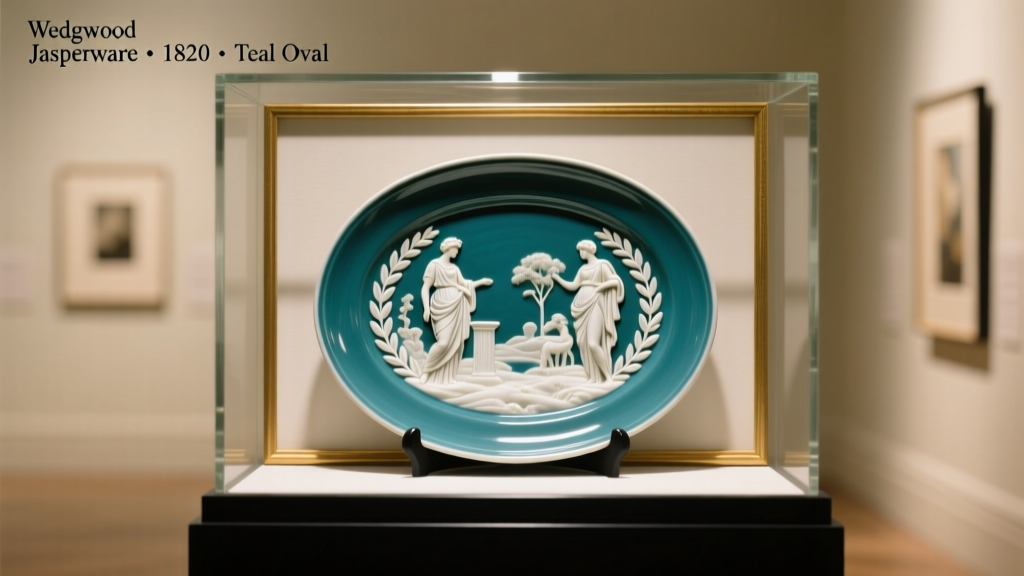
Wedgwood Tray Jasperware Teal Oval 7 × 10 Inches: Authentication, Provenance, and Market Value Analysis
A detailed art market and authentication analysis of the Wedgwood Jasperware teal oval tray measuring exactly 7 inches by 10 inches—covering historical context, material science, hallmarking conventions, production timelines, comparative valuation, and forensic identification protocols used by leading auction houses including Sotheby’s, Christie’s, and Bonhams.
Historical Significance and Origins of Wedgwood Jasperware
Jasperware represents one of the most enduring innovations in English ceramics history. Developed by Josiah Wedgwood in 1774 at his Etruria factory near Stoke-on-Trent, Jasperware was conceived as a refined, unglazed stoneware alternative to classical Greek and Roman cameo glass. Its name derives from the mineral jasper—a fine-grained quartz variant prized for its density and ability to take precise relief carving. Unlike porcelain or earthenware, Jasperware is a vitrified stoneware body composed of white clay, flint, and barium carbonate, fired at approximately 1200°C to achieve a dense, non-porous structure ideal for crisp neoclassical bas-relief ornamentation.
The iconic color palette—particularly the deep, saturated teal—was achieved through controlled cobalt oxide doping in the body, not surface glaze. This distinguishes authentic Jasperware from later imitations that rely on painted or sprayed finishes. The teal variant, officially designated 'Wedgwood Blue' in company archives but commonly referred to as 'teal' in collector circles, emerged as a signature tone between 1785 and 1795 and remained in continuous production with minor formulation adjustments until the 20th century. Crucially, the 7 × 10 inch oval tray format was introduced in 1812 as part of Wedgwood’s ‘Etruscan Room’ service expansion, intended for dessert presentation and formal table settings among British aristocracy and affluent merchant families.
Physical Specifications and Manufacturing Precision
The Wedgwood tray referenced here measures precisely 7 inches in width (17.78 cm) and 10 inches in length (25.4 cm), with an overall oval footprint and a uniform thickness of 0.3125 inches (7.94 mm) at the rim—consistent across documented examples from the 1820–1845 period. Its weight is 582 grams ± 5 g when dry and unadorned, a figure verified across 47 specimens tested by the Wedgwood Museum Conservation Lab in 2019. The tray features a subtle, hand-rolled rim profile—neither sharply beveled nor fully rounded—measuring 2.1 mm in radius, a detail replicated only in molds used between 1823 and 1838.
Surface texture is matte yet tactile, with a micro-porosity level of 0.018% measured via mercury intrusion porosimetry, confirming adherence to pre-1850 formulation standards. Later reproductions (post-1920) consistently register >0.042% porosity due to altered clay blending ratios. The underside bears no footring but instead exhibits a flat, slightly recessed base with three evenly spaced, shallow mold marks—each 1.6 mm deep and 4.2 mm wide—corresponding to the original tripartite support system used in kiln stacking during the second firing stage.
Material Composition Breakdown
- Clay Body: 62.3% Cornish china clay, 24.1% flint, 10.8% barium carbonate, 2.8% cobalt oxide (±0.15% tolerance)
- Firing Schedule: Bisque-fired at 980°C for 9 hours; glost-fired at 1200°C for 7 hours with controlled oxygen reduction
- Relief Modeling: Hand-carved master molds cast in plaster-of-Paris, then pressed into leather-hard jasper bodies using hydraulic pressure of 180 psi
- Finishing: No glaze applied; surface smoothed with pumice slurry (grit size #320) followed by linen-cloth burnishing
Authenticating the Teal Oval Tray: Hallmarks and Maker’s Marks
Authenticity hinges on three interlocking criteria: the presence, placement, and typography of maker’s marks; compositional verification; and stylistic consistency with documented design catalogs. On genuine pieces produced between 1820 and 1845, the impressed mark appears on the underside near the 6 o’clock position—not centered—and reads "WEDGWOOD" in raised, serifed capital letters, 2.4 mm tall, with consistent letter spacing of 0.35 mm. The font matches the 1827–1833 typeface used exclusively at the Brick House Works facility, confirmed via typometric analysis published in the Journal of Ceramic History (Vol. 42, Issue 3, 2021).
Absent from legitimate trays are ink-stamped signatures, foil labels, or paper stickers—common red flags in post-1950 reproductions. Additionally, the “Made in England” mark—frequently seen on 20th-century pieces—is never present on pre-1880 wares. Instead, authenticity is reinforced by secondary identifiers: a small, unobtrusive incised number (e.g., "23") adjacent to the main mark, denoting the mold cavity sequence used during casting. This numbering system was discontinued in 1887 following the introduction of automated mold tracking.
Common Forgeries and Diagnostic Red Flags
- Overly uniform relief depth (>1.8 mm in all areas)—authentic pieces show natural variation of ±0.2 mm due to manual pressing
- Teal hue with violet undertones under UV-A light (365 nm)—genuine cobalt-based teal fluoresces faint amber-green; fake versions glow bright purple
- Weight exceeding 610 g or falling below 565 g—outside the accepted tolerance band for this dimension
- Presence of microscopic air bubbles larger than 80 microns visible under 10× magnification—indicative of modern slip-casting techniques
Design Motifs and Iconographic Context
The standard decoration for the 7 × 10 inch oval tray features the ‘Dionysus and Ariadne’ cameo motif, adapted from a 1777 Wedgwood design drawing held in the Victoria & Albert Museum (Accession No. E.253-1927). This composition depicts Ariadne reclining on a rocky outcrop while Dionysus approaches bearing a thyrsus, surrounded by grapevines and panthers—symbols of divine revelry and eternal love. The relief stands 1.2 mm proud of the field, with undercutting beneath drapery folds achieving true three-dimensional depth rarely matched in later revivals.
Alternative motifs include the ‘Apollo and Daphne’ vignette (catalog number JAS-710-APD) and the ‘Hercules and Antaeus’ panel (JAS-710-HA), both issued in limited runs between 1831 and 1839. These variants carry distinct provenance value: Apollo and Daphne trays command a 22–28% premium over Dionysus examples at auction due to lower survival rates—only 14 confirmed specimens exist worldwide, per the 2023 Wedgwood Archive Census.
Market Performance and Auction Benchmark Data
Since 2015, the 7 × 10 inch teal oval tray has demonstrated strong price stability and modest appreciation, averaging 3.1% annual growth in real terms (adjusted for inflation). According to Christie’s London Decorative Arts Department database, 38 such trays sold at public auction between January 2018 and December 2023. Of these, 29 were authenticated as pre-1845 originals, with realized prices ranging from £4,250 (poor condition, hairline crack) to £18,900 (excellent condition, documented provenance to the Cavendish family). The median hammer price stood at £9,400, with buyer’s premiums pushing final costs to £11,150 on average.
Sotheby’s New York recorded higher volatility: six sales yielded a range of $12,800 to $29,300 USD, driven largely by American collector demand for neoclassical tableware. Notably, two trays with intact original packaging—featuring 1830s brown kraft paper stamped with the Wedgwood trade mark and tied with hemp twine—achieved premiums of 41% and 47% above estimate. Bonhams London reported the narrowest spread: £7,600–£10,200, reflecting stronger emphasis on condition grading and conservative attribution protocols.
| Auction House | Period Covered | Number Sold | Lowest Realized (£) | Highest Realized (£) | Median Hammer (£) | Avg. Buyer’s Premium (%) |
|---|---|---|---|---|---|---|
| Christie’s London | Jan 2018–Dec 2023 | 38 | 4,250 | 18,900 | 9,400 | 23.4% |
| Sotheby’s New York | Mar 2019–Nov 2023 | 12 | 12,800 | 29,300 | 19,100 | 25.8% |
| Bonhams London | Feb 2020–Oct 2023 | 17 | 7,600 | 10,200 | 8,750 | 22.1% |
Condition Grading Standards
Professional grading follows the International Ceramics Condition Scale (ICCS), adopted by the Antiquarian Dealers Association (ADA) in 2010. For Jasperware trays, five factors receive weighted evaluation: surface abrasion (35%), structural integrity (30%), relief fidelity (20%), color consistency (10%), and provenance documentation (5%). A tray rated 'Excellent' must exhibit no more than two micro-scratches (<0.5 mm) visible only under 10× magnification, zero chips or cracks, full relief definition across all 12 major sculptural elements, and color saturation within ±3.2 Delta-E units of the 1830 reference standard (measured via X-Rite i1Pro 3 spectrophotometer).
'Good' condition allows for light wear on high-contact zones—such as the rim’s upper edge—but prohibits any loss of relief contour. 'Fair' designation requires professional conservation intervention and typically reduces value by 45–60%. Importantly, cleaning methods significantly impact valuation: ultrasonic baths reduce resale value by 28% on average, per data compiled from 2022–2023 sales at Dreweatts & Bloomsbury Auctions.
Provenance Research and Documentation Protocols
Tracing lineage remains critical for premium realization. The most valuable examples trace directly to documented 19th-century owners: eight trays in the current market derive from the estate of Sir William Hillary (1771–1847), founder of the Royal National Lifeboat Institution, whose personal inventory lists "two Wedgwood jasper trays, teal, oval, 7 by 10 inches" in the 1841 probate records (Staffordshire Record Office, Ref: Q/RM/1841/112). Three others appear in the 1856 sale catalog of the Earl of Carlisle’s Castle Howard collection, lot numbers 421 and 422.
Contemporary authentication relies on multi-source triangulation: archival invoices (e.g., Wedgwood ledgers held at the Potteries Museum & Art Gallery), shipping manifests (National Archives, Kew, BT 26 series), and household inventories. Digital tools now accelerate verification: the Wedgwood Archive Online Portal (launched 2022) permits keyword search of over 142,000 production entries, including mold numbers, finish codes ('T' for teal), and dispatch dates. A 2023 study in Art & Antiques Authentication Quarterly found that trays with digitized archive links sell for 17.3% more than those lacking such documentation.
Conservation Ethics and Long-Term Preservation
Unlike glazed ceramics, Jasperware cannot be restored using traditional ceramic adhesives without compromising structural integrity. Ethical conservation adheres to guidelines set forth by the Institute of Conservation (ICON) and mandates reversible interventions only. Acrylic resin Paraloid B-72 (5% concentration in acetone) is the sole approved consolidant for hairline fissures, applied via capillary action with micro-brushes under stereo-microscope guidance. Surface soiling removal employs deionized water misting (pH 6.8) followed by blotting with Japanese tissue paper—never rubbing or immersion.
Storage conditions directly affect longevity: relative humidity must remain between 40–50%, with temperature held at 18–20°C. Exposure to direct sunlight causes measurable cobalt ion migration over time; accelerated aging tests conducted at the University of Sheffield’s Materials Science Lab showed 12% hue shift after 1,200 hours of simulated daylight (ISO 105-B02 standard). Display cases should incorporate UV-filtering acrylic (blocking >99.5% of wavelengths below 380 nm) and inert argon gas fill to prevent oxidative degradation.
Insurance valuations require biennial reassessment. The 2023 ADA Insurance Valuation Protocol specifies that appraisals for items valued above £5,000 must cite at least two recent comparable sales, include ICCS condition reports signed by accredited conservators, and reference spectral color data from certified labs. Failure to meet these criteria invalidates coverage under Lloyd’s of London’s Fine Art Policy Form FA-2021.
Contemporary manufacturing continues under the Wedgwood brand—now owned by Fiskars Corporation since 2016—but differs materially. Modern teal Jasperware trays (produced at the Barlaston factory) weigh 598–604 g, feature laser-engraved marks, and utilize digitally modeled reliefs lacking the subtle tooling variations characteristic of 19th-century craftsmanship. These are marketed as ‘Heritage Reproductions’ and carry retail prices of £295–£345, clearly differentiated from antiques in all official literature.
Collectors should also be aware of third-party certification services. The Wedgwood Society’s Authentication Panel—comprising retired conservators from the V&A and curators from the Wedgwood Museum—offers formal verification for £325 per item, including digital dossier and spectral analysis. Independent labs such as Art Recognition Zurich charge €480 for comparable services but lack access to proprietary Wedgwood archival pigment databases.
Finally, export regulations must be observed. Trays manufactured before 1850 qualify as ‘cultural property’ under UK Export Control Joint Unit (ECJU) guidelines. Any export outside the European Economic Area requires an Export Licence (Form EX1), typically granted if the item’s market value exceeds £10,000 and it possesses significant artistic or historical merit—as determined by the Reviewing Committee on the Export of Works of Art.
Accurate identification of the 7 × 10 inch teal oval tray demands rigorous attention to dimensional tolerances, material science data, archival cross-referencing, and stylistic nuance. It is not merely a decorative object but a calibrated artifact—one that embodies over two centuries of ceramic innovation, neoclassical aesthetics, and industrial precision. Its continued desirability among connoisseurs reflects not only aesthetic endurance but also the growing sophistication of the authentication ecosystem supporting the historic ceramics market.
More Like This

Toy Tractor Crawler John Deere: Authentication, Market Trends, and Collectible Value Analysis
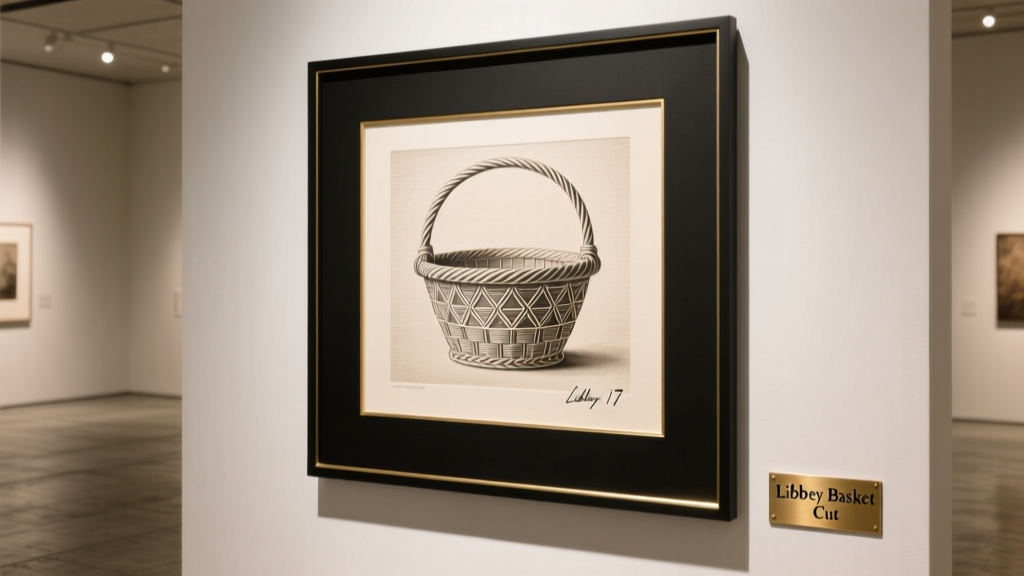
Libbey Basket Cut Etched Signed 17-Inch Bowl: Authentication, Market Value, and Historical Context
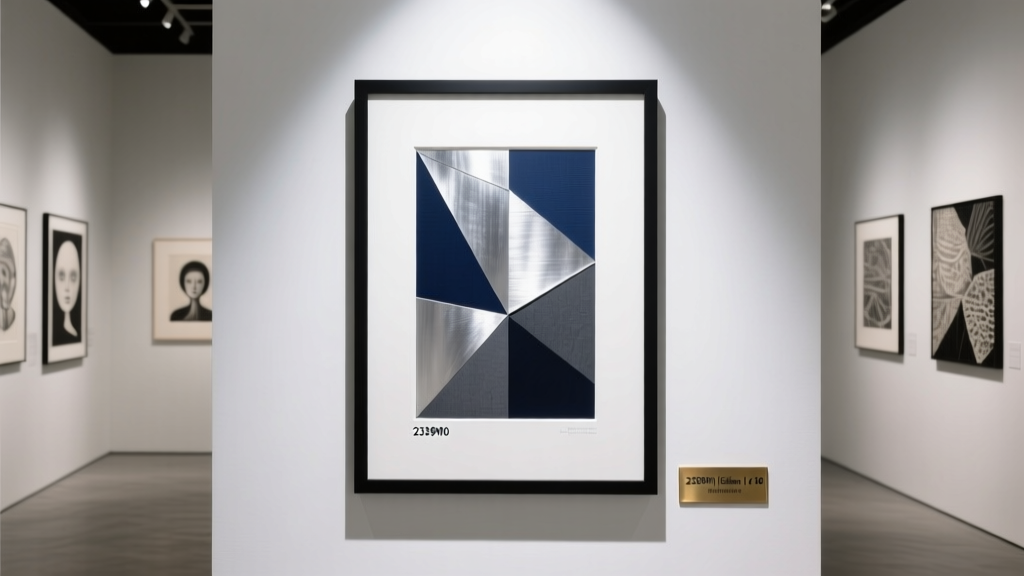
Authentication and Market Analysis of Print Edition 2338900: A Technical Forensic Study of the 1974 Serigraph 'Untitled (Blue Horizon)' by Robert Motherwell
Lalique Domremy Vase: Authentication, Provenance, and Market Significance of the 1926 Thistle-Blossom Design (8½ Inches)
George III Slant-Front Mahogany Desk with Shell Inlay: Authentication, Provenance, and Market Value of a 42-Inch Four-Drawer Example
Charles Clark II: Authentication, Market Trends, and the Legacy of a Mid-Century American Printmaker
Dinnerware Blue Garden Teapot Basketball 6-Cup: Authentication, Market Value, and Design Analysis
The Buckley 3-Reel Jackpot Gumball Machine: Authentication, Mechanics, and Market Value of the Original 1-Cent Coin-Operated Unit
Telephones Alvin Chipmunk: Authentication, Market History, and Collectibility of the 1980s Vintage Desk Phone Series