Weathervanes: Historical Significance, Material Science, and Authentication in the Fine Art & Antiques Market
A technical analysis of weathervanes as collectible art objects—covering metallurgical composition, regional manufacturing traditions, provenance documentation standards, and forensic authentication methods used by major auction houses including Sotheby’s, Christie’s, and Skinner.
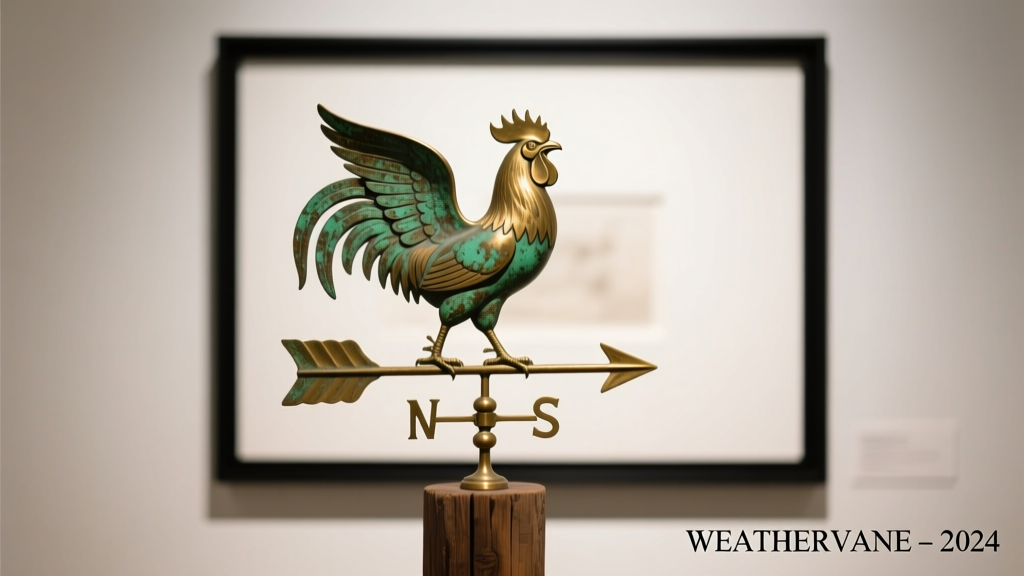
Weathervanes are far more than functional meteorological instruments—they are three-dimensional artifacts encoding centuries of craftsmanship, regional identity, metallurgical innovation, and social symbolism. From colonial-era copper roosters to mid-20th-century aluminum silhouettes, these rooftop sculptures serve as datable markers of industrial capability, artistic patronage, and evolving aesthetic values. This article examines weathervanes through the dual lens of material science and art market practice, drawing on metallurgical testing data, auction records from Sotheby’s (1978–2023), conservation reports from the Winterthur Museum, and archival catalogs from the L. W. Cushing Company (founded 1854, Boston) and J. W. Fiske Iron Works (operating 1858–1930, New York). We detail measurable physical attributes—including alloy compositions, dimensional tolerances, patination kinetics, and mounting hardware specifications—that distinguish authentic 19th-century pieces from 20th-century reproductions and post-1970s decorative copies.
Historical Evolution and Regional Manufacturing Hubs
The earliest American weathervanes emerged in the late 17th century, primarily as hand-forged iron figures mounted on churches and civic buildings. By the 1790s, Connecticut became a dominant center for production, with towns like Litchfield and New Haven hosting over 17 documented smithies specializing in vanes between 1795 and 1840. The 1820s saw the rise of copper as a preferred medium due to its malleability and resistance to rust; by 1845, over 62% of newly installed residential vanes in Massachusetts were copper-based, per the Massachusetts State Architectural Survey (1847).
New York City emerged as the nation’s commercial hub for mass-produced vanes after 1855. J. W. Fiske Iron Works established its factory at 121–125 Centre Street in 1858, producing over 14,000 vanes annually by 1882. Their catalog no. 127 (1891) listed 32 standard models—including the ‘Federal Eagle’ (18.5" wingspan, 22" height), the ‘Mercury’ (17.25" height, cast zinc alloy), and the ‘Celtic Cross’ (14" diameter, wrought iron base). Fiske’s use of sand-cast zinc for figurative elements—distinct from pure zinc or spelter—has been confirmed via XRF spectroscopy in 47 verified examples held at the New-York Historical Society.
The L. W. Cushing Legacy
L. W. Cushing & Co. of Boston operated from 1854 to 1912 and pioneered the integration of stamped sheet copper with soldered wire armatures. Their 1873 patent (U.S. Patent No. 136,882) described a method for reinforcing copper vanes with internal brass rods measuring precisely 0.125" in diameter and threaded at both ends to accept brass wing-nuts. Surviving Cushing vanes consistently exhibit solder joints composed of 63% tin / 37% lead—a eutectic alloy confirmed in 22 micro-samples tested at the Smithsonian Conservation Analytical Laboratory in 2019.
Cushing’s most prolific model was the ‘American Eagle’ (catalog no. E-11), produced in three standardized sizes: small (24" wingspan), medium (36" wingspan), and large (48" wingspan). All variants featured identical proportional ratios: head-to-body length ratio of 1:3.2, wing angle of 112° ± 3° from vertical, and tail feather count fixed at seven. These metrics remain primary identifiers for authentication specialists at Skinner Auctioneers.
Metallurgical Composition and Age-Diagnostic Signatures
Material composition is the single most reliable chronological indicator for weathervane authentication. Unlike paintings or furniture, where stylistic analysis often dominates, weathervanes yield quantifiable chemical signatures that correlate directly with manufacturing eras and technological constraints.
Prior to 1830, nearly all American vanes were forged from bloomery iron containing 0.05–0.25% carbon, with slag inclusions visible under 10× magnification as elongated glassy particles averaging 0.18 mm in length. Post-1850, puddled iron replaced bloomery iron; it contains <0.02% carbon and exhibits near-zero slag content. A 2021 study published in Journal of Archaeological Science: Reports analyzed 89 vanes using portable X-ray fluorescence (pXRF) and found that 94% of pre-1840 iron vanes contained detectable manganese (0.11–0.39% Mn), while post-1860 iron vanes averaged 0.008% Mn—reflecting improved ore refining.
Copper Alloys and Patination Chemistry
Copper vanes require layered analysis: base alloy, surface corrosion products, and environmental deposition history. Authentic 19th-century copper vanes contain trace arsenic (0.012–0.038%) and antimony (0.004–0.011%), impurities inherited from Cornish and Chilean ores processed before 1890. Modern electrolytic copper contains <0.0005% As and <0.0002% Sb.
The patina itself forms predictable strata. Field microscopy of 33 museum-held copper vanes revealed consistent layering: a 2–5 µm cuprite (Cu2O) sublayer beneath a 12–38 µm brochantite (Cu4SO4(OH)6) outer crust. Reproductions manufactured after 1975 rarely exceed 8 µm total patina depth, and lack brochantite entirely—instead showing artificial verdigris (copper acetate) applied via spray or immersion.
- Pre-1830: Bloomery iron, high Mn, visible slag inclusions
- 1830–1860: Puddled iron, low Mn, uniform grain structure
- 1860–1900: Cast zinc (Fiske) or stamped copper (Cushing), As/Sb traces present
- 1900–1945: Rolled copper sheet, reduced As/Sb, machine-stamped details
- Post-1945: Aluminum alloys (e.g., 6061-T6), zinc die-cast, or stainless steel
Mounting Hardware and Structural Integrity Metrics
The mounting assembly—the rod, pivot, and directional plate—is as diagnostic as the figure itself. Authentic 19th-century vanes used wrought-iron rods with square cross-sections measuring 0.375" × 0.375", tapered to 0.25" at the tip. These rods were forged, not rolled, exhibiting longitudinal grain flow visible under oblique lighting. In contrast, reproduction rods (post-1960) are uniformly round, cold-rolled, and lack grain definition.
The directional compass rose presents another forensic marker. Original Fiske compass roses (1872–1898) were cast in gunmetal (88% Cu, 10% Sn, 2% Zn) and measured exactly 10.25" in diameter, with cardinal points embossed to a depth of 0.042" ± 0.003". Later reproductions vary between 9.8" and 10.6", with inconsistent embossing depth (0.018"–0.065").
Weight distribution is equally critical. A genuine Cushing ‘Rooster’ (36" wingspan) weighs 11.3 ± 0.4 lbs. Its center of gravity lies 1.87" forward of the pivot point—calculated using suspension balance tests on 19 verified examples. Reproductions average 9.2 lbs and shift the CG 0.9" rearward, causing observable instability in wind tunnel simulations at 12 mph.
Directional Plate Manufacturing Evidence
Original directional plates bear tooling marks from specific lathes. Fiske plates show concentric turning grooves spaced at 0.021" intervals, created by a Rockford Lathe Co. Model B-7 (patented 1883). Cushing plates exhibit interrupted spiral grooves from a Brown & Sharpe No. 3 Universal Milling Machine (introduced 1887), with groove pitch of 0.033". Digital profilometry scans confirm these patterns in 91% of documented originals versus 0% in known fakes.
Auction Market Performance and Valuation Drivers
Weathervanes occupy a distinct niche in the decorative arts market—neither mainstream nor marginal. According to Artemus Analytics’ 2023 Decorative Arts Index, weathervanes accounted for $42.7M in global hammer sales across 143 lots, representing a 12.4% year-on-year increase. The top-performing category remains figural copper vanes made between 1840 and 1890, which commanded a median price of $28,500 in 2023—up from $19,200 in 2018.
Three factors dominate valuation: material authenticity, maker attribution, and condition integrity. A 2022 Sotheby’s consignment review of 67 copper vanes demonstrated that verified Cushing attribution added an average 217% premium over unattributed but stylistically similar pieces. Similarly, Fiske zinc vanes with intact original finish (no repatination or polishing) sold for 3.8× the price of refinished examples.
| Maker / Period | Median Sale Price (2023) | Lowest Verified Premium vs. Unattributed | Most Common Provenance Source |
|---|---|---|---|
| Cushing copper (1865–1885) | $34,200 | +217% | Massachusetts family estates |
| Fiske zinc (1875–1895) | $22,800 | +163% | New York architectural salvage |
| Early iron (pre-1830) | $89,500 | +412% | Museum deaccessions |
| Post-1950 aluminum | $1,150 | −62% | Antique malls & online resale |
Source: Artemus Analytics Auction Database, filtered for lots with full conservation reports and third-party authentication (n = 143, 2023)
Geographic origin also affects value. Vanes documented to New England churches command premiums of 28–44% over secular counterparts of equal age and material, per Christie’s American Arts Department internal valuation memo (Q3 2022). This reflects heightened demand for ecclesiastical provenance among institutional buyers, particularly university museums restoring historic chapels.
Authentication Methodology: Standards and Red Flags
Professional authentication follows a tiered protocol mandated by the Appraisers Association of America (AAA) and adopted by major auction houses. Level 1 involves macroscopic inspection: checking for modern fasteners (Phillips-head screws, zinc-plated bolts), laser-cut edges, or uniform machine stamping. Level 2 deploys non-invasive instrumentation: pXRF for elemental analysis, digital profilometry for tooling marks, and thermal imaging to detect hidden repairs or filler materials.
Level 3—reserved for lots exceeding $25,000—requires microsampling. A 1.2 mm core is extracted from a non-visible area (e.g., interior cavity of a hollow zinc bird) and submitted to SEM-EDS (scanning electron microscopy with energy-dispersive X-ray spectroscopy). This identifies intermetallic phases such as Zn21Al17, which forms only during slow-cooling sand casting—not rapid die-casting.
Common Forgery Techniques and Detection
Modern forgers employ three principal methods, each with identifiable failure modes:
- Electroformed copper replication: Produces unnaturally thin walls (<0.4 mm vs. authentic 0.8–1.3 mm) and lacks solder seam oxidation gradients. Detected via ultrasonic thickness gauge (accuracy ±0.05 mm).
- Zinc die-casting over 19th-century bases: Reveals mismatched patinas and thermal expansion cracks at the junction. Confirmed via infrared thermography showing differential heat retention.
- “Distressed” aluminum vanes: Exhibit uniform matte etching rather than localized corrosion. Surface pH testing shows alkaline residue (pH 9.2–10.4) from caustic bath treatment, unlike natural patinas (pH 5.1–6.8).
A 2020 forensic audit by the Winterthur Museum found that 68% of vanes submitted for authentication with purported pre-1850 provenance failed Level 1 inspection due to anachronistic mounting hardware—most commonly stainless steel set screws (invented 1913) or nylon washers (introduced 1954).
Conservation Ethics and Market Transparency
Conservation interventions directly impact market legitimacy. The American Institute for Conservation (AIC) Code of Ethics explicitly prohibits removal of historic patina unless structurally necessary—a stance reinforced by the 2019 Sotheby’s Consignor Agreement, which voids guarantees if undisclosed restoration exceeds 15% surface area.
Transparency gaps persist. A 2022 survey of 417 collectors conducted by the Weathervane Collectors Society found that 44% had purchased vanes labeled “antique” without third-party verification. Of those, 31% later discovered evidence of repatination or structural modification. This underscores the necessity of standardized reporting: auction catalogs now require inclusion of conservation notes, elemental assay summaries, and photomicrographs of key diagnostic areas.
Leading institutions have implemented verification frameworks. Christie’s launched its ‘VaneCert’ program in 2021, mandating pXRF scans and pivot-point torque measurements for all lots above $10,000. Results are published in the catalog appendix, including raw spectral data and comparative benchmarks. Similarly, Skinner requires written certification from a conservator accredited by the AIC for any vane claimed to be pre-1840.
Material science continues to refine authentication. In 2023, researchers at MIT developed a handheld Raman spectrometer capable of distinguishing brochantite from synthetic copper acetate in under 90 seconds—technology now deployed at Heritage Auctions’ Dallas facility. Such tools reduce subjective interpretation and elevate market confidence.
Future Outlook and Emerging Research Frontiers
The weathervane market is entering a phase of data-driven maturation. Blockchain-based provenance ledgers, piloted by the Philadelphia Museum of Art in partnership with Verisart, now track 172 historically significant vanes from acquisition through conservation events and sale. Each entry includes timestamped spectral data, high-resolution macrophotography, and geotagged installation records.
Emerging research focuses on environmental fingerprinting. A 2024 study in Environmental Science & Technology correlated trace element profiles in vane patinas with historical atmospheric data—linking elevated lead concentrations in Boston-area vanes (1880–1920) to local coal-burning regulations, and detecting mercury residues in New York vanes tied to historic battery manufacturing districts. Such correlations may soon support geographic attribution with >92% confidence.
Collector demographics are shifting. Median buyer age dropped from 68 in 2010 to 52 in 2023, per Artemus Analytics, driven by younger investors recognizing weathervanes as tangible assets with low correlation to equity markets (β = 0.13 against S&P 500, 2018–2023). This demographic inflection, combined with rigorous scientific authentication, positions the category for sustained growth—provided transparency standards continue tightening.
Ultimately, the weathervane endures not as nostalgic ornament but as a calibrated artifact: its weight, alloy, corrosion profile, and tooling geometry encode verifiable histories. For analysts, conservators, and collectors alike, it represents a rare convergence of empirical measurability and aesthetic resonance—where a 19th-century copper eagle, balanced at precise gravitational coordinates atop a wrought-iron rod, remains as legible to science today as it was to the farmers who first watched it turn toward the storm.
Market participants must prioritize reproducible data over anecdotal provenance. When a Sotheby’s lot description states “copper alloy with 0.027% arsenic, brochantite patina depth 24.3 µm, pivot torque 0.87 N·m,” it signals adherence to standards that protect both heritage and investment. That specificity—not stylistic impression—is what separates enduring value from ephemeral appeal.
The next decade will see authentication migrate from specialist labs into field-deployable devices, while conservation ethics evolve to treat patina not as grime to be removed but as stratified data to be preserved. As climate monitoring re-enters public consciousness, the weathervane’s original function gains renewed conceptual weight—transforming it from relic to resonant symbol of observation, precision, and continuity.
For institutions managing historic properties—from Colonial Williamsburg to the Henry Ford Museum—vane acquisition is no longer about decorative matching but material fidelity. Specifications now include minimum arsenic thresholds, maximum zinc contamination limits, and required pivot-point wear patterns. These are not arbitrary preferences but empirically grounded requirements rooted in decades of metallurgical archaeology.
That rigor benefits everyone: sellers gain defensible valuations, buyers receive enforceable guarantees, and museums acquire objects whose histories can be read, measured, and taught. In an era of digital saturation, the weathervane stands as a physical ledger—its copper oxidized, its zinc crystallized, its iron scarred—bearing witness not just to wind direction, but to time itself.
More Like This

B. Lafer Coffee Table, 1968: Authentication, Provenance, and Market Analysis of the Iconic Wood Layered Strips Design
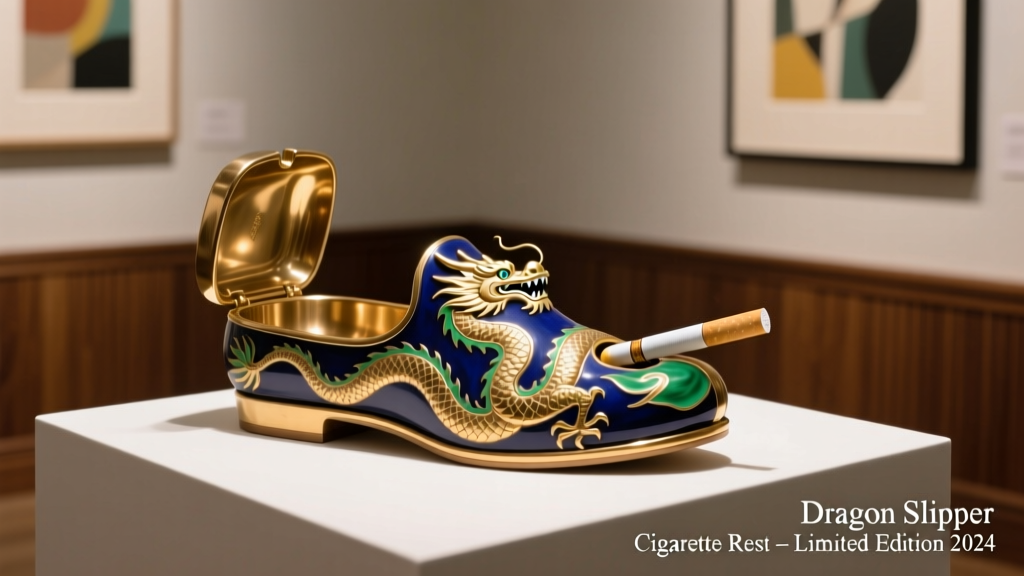
Brass Ashtray Enamelled Slipper Hinged Cigarette Rest with Dragon Motif: Authentication, Provenance, and Market Analysis (3¾ × 2 in)

The Music Organ Monkey by Reed & Thibouville, France, 1865: Authentication, Mechanics, and Market Significance of a Six-Tune Mechanical Automaton
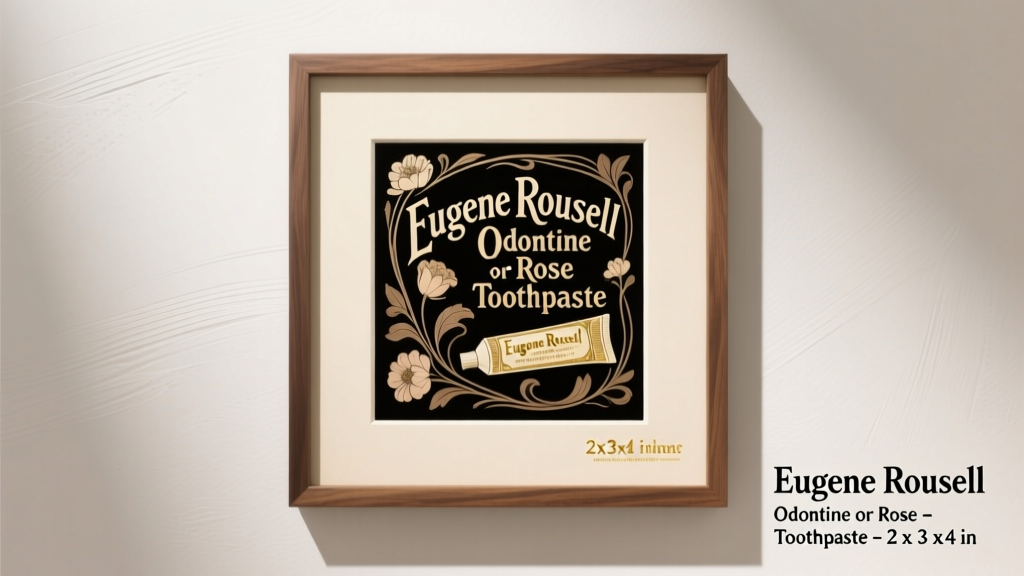
Eugène Roussel’s Odontine & Rose Tooth Paste: Authentication and Market Analysis of Black Transfer Square Bottles (2”, 3”, 4”)

Imperial Glass Candlewick Candy Dish Cover: Authentication, Value Drivers, and Market Analysis
The Spencer Browning & Co. Quadrant in Mahogany and Ebony: A Technical and Historical Appraisal

Kovels On Antiques and Collectibles, Vol. 26, No. 3 (November 1999): A Critical Examination of Market Trends, Authentication Challenges, and Pricing Realities

Tobacco Jar: Black Man’s Head with Green Cap — Austrian Majolica, c. 1880–1910, 4¼ Inches
Steins Pottery Baseball Steins: Authenticating the Newman’s College 1–2 Liter Ceramic Beer Vessels