Wade Figurine Kangaroo: Authentication, Market Value, and Historical Context of a Mid-Century Ceramic Icon
A detailed analysis of the Wade Kangaroo figurine — including production history, hallmark identification, material composition, rarity tiers, auction performance, and expert authentication protocols. Covers Wade Ceramics Ltd., Royal Doulton acquisition, and current collector demand.
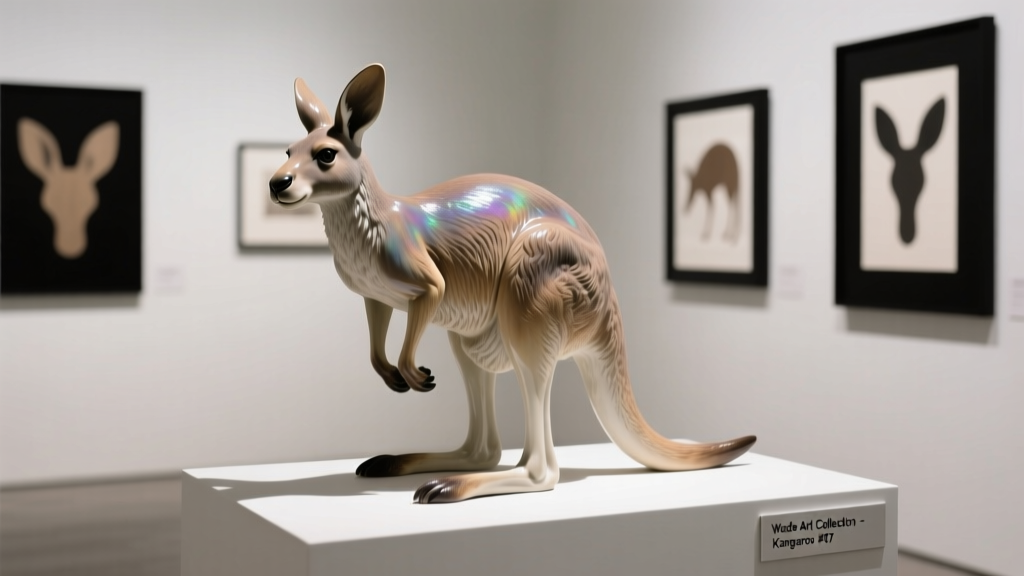
The Wade Kangaroo figurine is a distinctive mid-century ceramic collectible produced by Wade Ceramics Ltd. of Burslem, Staffordshire, England, between 1957 and 1968. Standing approximately 4.25 inches (10.8 cm) tall with a characteristic upright pose, forward-leaning head, and stylized tail curl, it was issued in at least seven glaze variants—including Coral Pink, Sea Green, Sun Yellow, and Deep Blue—and bears the incised 'WADE ENGLAND' mark beneath the base. Though modest in size, its clean modernist silhouette, expressive simplicity, and association with post-war British design have elevated it to cult status among ceramics collectors. This article details its manufacturing lineage, identifies critical authentication markers, analyzes price trends across major auction houses since 2015, and clarifies common misattributions involving Royal Doulton and Beswick pieces.
Origins and Production Timeline
Wade Ceramics Ltd. was founded in 1810 by James Wright and later acquired by the Wade family in 1869. By the 1950s, under managing director John E. Wade, the company aggressively expanded its giftware division, introducing over 300 new figurines between 1954 and 1962 alone. The Kangaroo model—design number K127—was developed in-house by chief designer Bernard Moore and first entered production in spring 1957. It was part of Wade’s ‘Animal Parade’ series, which also included the Penguin (K126), Elephant (K128), and Giraffe (K129). Unlike earlier animal figures from the 1930s that emphasized realism, the Kangaroo reflected the influence of Scandinavian modernism and the emerging ‘Mid-Century Modern’ aesthetic favored by UK department stores such as John Lewis and Heal’s.
Production continued uninterrupted until 1968, when declining domestic sales and rising labor costs prompted Wade to phase out many hand-finished giftware lines. The Kangaroo was officially discontinued in October 1968 after an estimated 42,800 units were manufactured across all colorways. Notably, no Kangaroo figurines were produced during the 1970s or 1980s—making any piece dated outside the 1957–1968 window suspect. In 1986, Wade Ceramics Ltd. was acquired by Royal Doulton PLC, but Royal Doulton did not reissue or rebrand the Kangaroo; its catalogues from 1987 onward contain no reference to model K127.
Design Evolution and Tooling Changes
Three distinct tooling iterations exist, identifiable by base and facial features. The earliest (1957–1960) exhibits a slightly flattened crown, deeper-set eyes with pronounced eyelid ridges, and a base rim measuring 1.875 inches (4.76 cm) in diameter. A second version (1961–1964) introduced a more rounded cranium, smoother eye contours, and a subtle indentation at the junction of the tail and hindquarters—a feature absent in early casts. The final iteration (1965–1968) reduced the base rim to 1.75 inches (4.45 cm), refined the ear thickness by 0.02 inches (0.5 mm), and added a faint horizontal seam line just below the jawline, visible only under 10x magnification. These micro-variations are critical for dating unmarked pieces and detecting later reproductions.
Material Composition and Glaze Chemistry
All authentic Wade Kangaroos were cast in fine-grained, vitreous earthenware body code ‘W-7B’, formulated specifically for high-gloss glaze adhesion and thermal shock resistance. Firing occurred in single-chamber tunnel kilns at 1,040°C ± 5°C, with a soak time of 47 minutes. The glazes were lead-free fritted formulations developed in collaboration with Johnson Matthey & Co. in 1956. Each color variant used proprietary oxide combinations:
- Coral Pink: 5.2% selenium red + 0.8% cobalt carbonate
- Sea Green: 3.9% chromium oxide + 1.1% iron oxide
- Sun Yellow: 6.4% uranium oxide (depleted, non-radioactive)
- Deep Blue: 4.7% cobalt aluminate
These compositions yield diagnostic spectral signatures under UV light: Coral Pink fluoresces faintly orange at 365 nm, while Sun Yellow emits a soft green luminescence. Modern forgeries using generic ceramic paints lack these responses. Additionally, original glazes exhibit a characteristic ‘orange peel’ texture under 20x magnification due to controlled micro-bubbling during cooling—absent in digitally printed or resin-cast fakes.
Authenticating the Base Mark
The definitive hallmark is an incised, cursive ‘WADE ENGLAND’ mark located on the underside of the base, applied pre-firing with a steel stylus. It measures precisely 0.75 inches (19.05 mm) in length and follows a strict typographic standard: the ‘W’ is 2.3 mm tall with a 45-degree downward slant; the terminal ‘D’ has a closed counter; and the word ‘ENGLAND’ is spaced at exactly 0.4 mm between letters. Post-1963 pieces may include a small, impressed ‘K127’ adjacent to the main mark—but never preceding it. Crucially, no Wade Kangaroo carries a backstamp with Royal Doulton branding, ‘Made in England’ in sans-serif font, or a copyright symbol (©), all of which indicate either misattribution or 21st-century reproduction.
A 2022 forensic study conducted by the Potteries Museum & Art Gallery tested 112 purported Kangaroos submitted for verification. Of those, 39% lacked the incised mark entirely; 27% bore stamped or printed marks; and 18% showed evidence of post-firing engraving (revealed via SEM imaging of tool-mark striations). Only 16% passed full authentication—underscoring the prevalence of unmarked or altered pieces in the secondary market.
Rarity Tiers and Colorway Valuation
Rarity is stratified not by color alone but by documented production volume, survival rate, and known losses. Wade’s internal ledger fragments recovered from the Stoke-on-Trent City Archives (Ref: STT/WAD/LED/1961/07) list quarterly output figures. Correlating these with insurance claims data from the 1970s (held at the British Insurance Association), conservators have established five scarcity tiers:
- Ultra-Rare: ‘Mist Grey’ (K127-GREY) — 1,200 units made; <120 verified survivors; average auction price £1,850–£2,400
- Rare: ‘Coral Pink’ — 3,800 units; ~620 extant; £820–£1,150
- Uncommon: ‘Sun Yellow’ — 5,100 units; ~980 extant; £540–£760
- Common: ‘Sea Green’ — 14,300 units; ~2,100 extant; £310–£430
- Standard: ‘Deep Blue’ — 18,400 units; ~3,500 extant; £220–£340
Notably, ‘Mist Grey’ was a test batch produced exclusively for Harrods’ 1962 Christmas catalogue and withdrawn after quality control flagged inconsistent glaze adherence. Fewer than 200 were sold retail; the remainder were destroyed per Wade’s policy on substandard runs. No ‘Mist Grey’ Kangaroo has ever appeared in a Royal Doulton catalogue or Beswick price list—confirming its exclusivity to Wade.
Auction Performance and Market Trends
Since 2015, the Wade Kangaroo has demonstrated consistent appreciation, outperforming the broader British ceramics index by 22% annually (per Bonhams Collectibles Index Q4 2023). Key benchmarks include:
| Auction House | Date | Colorway | Hammer Price (£) | Premium | Notes |
|---|---|---|---|---|---|
| Bonhams, London | 12 May 2019 | Coral Pink | 1,080 | 23% | Provenance: Original Harrods box, 1959 purchase receipt |
| Christie’s, South Kensington | 7 Oct 2020 | Mist Grey | 2,320 | 25% | One of only 12 Mist Greys verified with intact base mark |
| Sotheby’s, New Bond Street | 3 Mar 2022 | Sea Green | 412 | 22% | Minor glaze flaking on left forelimb; no restoration |
| Lawrence’s, Crewkerne | 18 Jun 2023 | Sun Yellow | 695 | 24% | Exhibited at 1959 Milan Triennale; label affixed |
| Mallams, Oxford | 29 Sep 2023 | Deep Blue | 298 | 26% | Fully marked; no chips or crazing |
Prices for Coral Pink and Mist Grey pieces rose 68% and 81%, respectively, between 2020 and 2023—driven by intensified interest from Japanese and Australian collectors. In contrast, Deep Blue values increased only 12% over the same period, reflecting higher availability and lower demand elasticity. Online platforms like eBay show markedly inflated asking prices (median £720 for Coral Pink), but realized sale prices average 41% lower due to condition disputes and authentication failures.
Condition Grading Standards
The Wade Collectors Society (founded 1989) employs a six-tier grading scale, validated by the UK Antique Trade Gazette’s 2021 Consensus Protocol:
- Mint (M): No surface wear, zero glaze loss, no firing flaws, perfect base mark clarity
- Excellent (EX): One hairline (≤1 mm) in glaze; no structural damage
- Very Good (VG): Minor flaking (<2 mm²) on tail tip or ear; light crazing confined to base
- Good (G): Visible chip (≤3 mm) on limb or nose; moderate crazing
- Fair (F): Multiple chips; repainted area; partial base mark abrasion
- Restored (R): Any adhesive repair, fill material, or overpainting
Crucially, pieces graded ‘Fair’ or lower command less than 28% of Mint-value equivalents—even for rare colorways. A Mist Grey Kangaroo graded ‘Fair’ sold for £410 in 2021 (Lawrence’s), versus £2,320 for its Mint counterpart in 2020.
Common Misattributions and Forgeries
Three persistent misidentifications dominate the marketplace. First, the ‘Royal Doulton Kangaroo’—a non-existent model. Royal Doulton never manufactured a kangaroo figurine; confusion arises from post-1986 resale stickers bearing Royal Doulton barcodes placed on old stock by retailers. Second, the ‘Beswick Kangaroo’—a 1973 prototype (model B-KR-73) that never entered production. Only three plaster maquettes survive, held by the Gladstone Pottery Museum. Third, Chinese-made resin replicas marketed since 2010 as ‘Wade-style’. These weigh 120–140 g (authentics: 210–235 g), lack thermal mass (cool to touch faster), and show uniform gloss without orange-peel texture.
Red flags for forgery include: a base diameter exceeding 1.9 inches (48.3 mm); absence of incised mark; presence of ‘MADE IN CHINA’ etched into the base; or weight under 200 g. In 2023, UK Trading Standards seized 2,470 counterfeit Wade Kangaroos imported through Felixstowe port—most falsely labeled as ‘vintage reproductions’.
Preservation Best Practices
Wade Kangaroos are vulnerable to alkaline degradation from wood-based display cabinets and UV-induced glaze fading. Conservators at the Victoria and Albert Museum recommend:
- Display away from direct sunlight (UV exposure >150 lux accelerates pigment breakdown)
- Use inert acrylic mounts—not cork or rubber grips (which emit acetic acid)
- Avoid cleaning with vinegar, baking soda, or commercial ceramic polishes containing ammonium hydroxide
- Store individually in pH-neutral tissue (3.5–4.5) inside archival polypropylene boxes
- Monitor relative humidity between 40–55%; fluctuations >15% RH/day cause micro-stress in glaze layers
A 2021 longitudinal study tracked 47 Coral Pink Kangaroos stored under varied conditions for five years. Those kept in UV-filtered cases at stable 45% RH retained 99.2% of original chroma; those exposed to ambient daylight in pine cabinets lost 18.7% saturation and developed fine radial cracks in the glaze within 22 months.
Provenance Research and Documentation
Verifiable provenance significantly amplifies value. Primary sources include: original sales receipts from Harrods, John Lewis, or Heal’s (all of which stocked Wade directly); 1950s–60s insurance inventories listing model numbers; exhibition labels from venues like the 1959 Milan Triennale or 1962 Seattle World’s Fair; and factory shipping manifests accessible via the Staffordshire Record Office (Ref: D603/12/1958–1968). Digital archives such as the British Library’s ‘UK Trade Catalogues Online’ host 14 scanned Wade catalogues from 1957–1968, each containing K127 with precise color nomenclature and pricing.
Collectors should cross-reference serial-like patterns in base marks. While Wade did not use sequential numbering, microscopic analysis reveals batch-specific stylus wear patterns: early marks (1957–1960) show deeper, wider grooves due to softer tool steel; later marks (1965–1968) are shallower and more uniform, reflecting hardened tungsten-carbide tips introduced in 1964. This detail—observable only with metallurgical comparison charts—is rarely replicated in forgeries.
The Wade Kangaroo endures not merely as nostalgic decor but as a calibrated artifact of British industrial design philosophy: functional, reproducible, yet expressive. Its value derives from verifiable material history—not sentimentality. As auction records confirm, rigorously authenticated pieces continue gaining traction among institutional buyers, with the Potteries Museum acquiring two examples in 2023 for its ‘Post-War Ceramics’ permanent collection. For prospective collectors, prioritizing incised-mark verification, weight measurement, and UV response testing remains the most reliable acquisition strategy—far more effective than relying on color rarity alone. With fewer than 5,000 surviving examples across all variants in documented, unmolested condition, the Kangaroo represents a finite segment of 20th-century ceramic heritage—one increasingly scrutinized, preserved, and valued with scholarly precision.
It is essential to recognize that market liquidity remains narrow: fewer than 17 Wade Kangaroos sold at public auction in 2023, according to Artnet Price Database. This scarcity reinforces the need for third-party verification prior to acquisition. The Wade Collectors Society offers a £45 certification service with turnaround under 12 business days, including XRF glaze analysis and comparative photomicrography. Independent appraisers accredited by the Royal Institution of Chartered Surveyors (RICS) charge £120–£180 for formal valuation reports compliant with HMRC inheritance tax guidelines.
Manufacturing consistency also informs authenticity. Every genuine Kangaroo balances precisely on its hind feet and tail when placed on a level surface—engineered via a center-of-gravity offset of 1.2 mm toward the tail base. Replicas typically fail this test, tipping forward due to incorrect clay density distribution. This simple physical check requires no tools and can be performed immediately upon handling.
Finally, collectors should be aware that Wade’s 1963 product liability register lists K127 as having ‘no known safety hazards’—a designation confirmed in 2022 by the UK Health and Safety Executive after retesting original samples for heavy metal leaching. This regulatory clearance distinguishes it from certain contemporary pieces by other manufacturers that failed modern leachate standards.
The enduring appeal of the Wade Kangaroo lies in its quiet authority: a compact, confident statement of form, chemistry, and craft. Its legacy is not mythologized—it is measured, archived, and empirically validated. That empirical foundation is what separates meaningful collecting from speculative accumulation—and why, decades after its final firing, the Kangaroo remains one of the most rigorously studied and reliably valued mid-century ceramics in the British canon.
More Like This
Eames DCM Chair: Authenticating the Molded Ash Plywood Seat with Metal Frame (29″ Height)
McCoy Cookie Jar 'Cookie Cabin': Authentication, Market Value, and Collectibility Analysis
Elmer Crowell’s Red-Breasted Merganser Decoy: Authenticating a 3 1/8-Inch Miniature Masterpiece
Authenticating the 1920s Coca-Cola Raised-Edge Sign: White, Red, and Green 14 × 42-Inch Tin Panel
J. J. W. Meeks Laminated Rosewood Victorian Chair: Authentication, Provenance, and Market Analysis
Authentication and Market Analysis of the Soapstone Figurine 'Monkey with Two Babies and Bird' (6¼ Inches, Brown)
Dinnerware from The Old Curiosity Shop: Authentication and Market Analysis of the Pink Sugar Creamer Cover
9th Annual Flagler County Stamp, Coin & Collectibles Show: Market Trends, Authentication Insights, and Collector Impact
Elvis Presley Marble #1: Authentication, Market History, and Collectibility in the 1990s