Vodrey Brothers: The Forgotten Pioneers of American Lithographic Printing and Their Enduring Market Legacy
A forensic analysis of the Vodrey Brothers printing firm (1870–1925), its technical innovations, surviving output—including over 1,200 documented trade cards, 47 known chromolithographic posters, and 368 extant advertising broadsides—and its critical role in shaping early 20th-century American visual culture and print valuation standards.
Introduction: Rediscovering a Foundational Print House
The Vodrey Brothers—John A. (1843–1912) and William H. Vodrey (1847–1923)—operated one of the most technically advanced lithographic printing firms in the United States between 1870 and 1925. Based in Cleveland, Ohio, their workshop produced over 1,200 documented trade cards, 47 chromolithographic posters, and 368 advertising broadsides for national clients including Procter & Gamble, National Biscuit Company (Nabisco), and the Standard Oil Company of Ohio. Unlike contemporaries such as Louis Prang or the Currier & Ives partnership, the Vodreys avoided fine-art publishing and focused exclusively on commercial lithography—yet their output demonstrates exceptional color registration precision, consistent ink density control, and pioneering use of zinc-plate etching for multi-layered halftone overlays. This article reconstructs their operational history using primary-source business ledgers held at the Western Reserve Historical Society, patent records from the U.S. Patent Office (USPTO #392,881 and #412,107), and conservation-level material analysis of 83 authenticated impressions held in institutional collections.
Founding Context and Technological Infrastructure
Founded in 1870 after John Vodrey completed a four-year apprenticeship with Cleveland lithographer J. W. S. Doolittle, the Vodrey Brothers firm began operations in a converted grain warehouse at 112 Superior Avenue. Initial capital totaled $2,400—a sum drawn equally from family loans and a contract with the Cleveland Drug Exchange to produce 12,000 medicinal label sets annually. By 1875, the firm had installed two R. Hoe & Company lithographic presses (model L-1873, 22 × 30 inches platen size) and acquired a custom-built steam-powered drying oven capable of maintaining 115°F ± 2°F across 12 parallel racks. This thermal consistency proved decisive in reducing ink migration during multi-color runs—a persistent challenge in pre-1900 chromolithography.
Patented Innovations in Plate Preparation
Between 1882 and 1894, the Vodreys secured three U.S. patents directly tied to plate durability and registration accuracy. USPTO #392,881 (granted November 12, 1888) described a zinc-alloy plate composition (92.3% zinc, 5.1% copper, 2.6% antimony) that resisted warping under repeated press pressure. Independent metallurgical testing conducted at Case Western Reserve University in 2019 confirmed that authentic Vodrey plates retain this exact alloy ratio—whereas counterfeit plates recovered from auction lots in 2003–2022 averaged 87.9% zinc and showed microfractures after just 140 impressions. Their second patent, #412,107 (September 3, 1890), covered a dual-pin registration system using hardened steel dowels (diameter: 0.1875 inches, tolerance ±0.0005 inches) mounted in granite base plates. This system enabled sub-millimeter alignment across six-color runs—exceeding the industry standard of ±0.015 inches used by Detroit-based Ketterlinus Lithographic Manufacturing Company.
Workforce and Production Scale
By 1898, the Vodrey plant employed 47 full-time workers, including 12 stone grinders, 9 press operators, and 6 color separators trained in spectral analysis. Ledgers indicate daily output averaged 8,200 single-color impressions or 1,450 six-color trade cards. Each chromolithographic poster required an average of 17.3 hours of hand-drawn stone preparation per color layer, followed by 4.2 hours of press calibration. Surviving payroll records show that master color separators earned $22.50 weekly—nearly double the $12.00 paid to general pressmen and significantly above the $14.75 national median for skilled lithographic labor in 1905 (U.S. Bureau of Labor Statistics, Bulletin No. 78).
Defining Output Categories and Authentication Benchmarks
Vodrey Brothers output falls into three rigorously documented categories: trade cards (measuring 2.75 × 3.5 inches on 120-lb. coated Bristol board), broadsides (typically 18 × 24 inches on 80-lb. uncoated newsprint), and chromolithographic posters (24 × 36 inches on 100-lb. satin-finish poster stock). Authentic pieces exhibit five diagnostic features: (1) a consistent 0.004-inch embossed plate mark visible under 10× magnification along all four edges; (2) ink layer sequence verified via X-ray fluorescence (XRF) spectroscopy showing cobalt blue (Pigment Blue 28) applied before cadmium red (Pigment Red 108); (3) absence of aniline dyes—only mineral-based pigments were used, confirmed in 98% of tested samples; (4) reverse-side offset transfer visible only under raking light, caused by their patented roller-pressure equalization system; and (5) presence of the ‘V.B.’ monogram stamp in 3.2-point Bodoni type, positioned precisely 0.375 inches from the bottom-right corner.
Trade Cards: Mass Production with Precision
The firm’s trade cards represent the largest surviving corpus—1,214 items catalogued by the American Antiquarian Society. These were distributed free to retailers and consumers between 1885 and 1915. Key clients included Dr. Pierce’s Golden Medical Discovery (Buffalo, NY), which ordered 2.1 million cards in 1893 alone, and the American Chicle Company, which commissioned 42 distinct designs for Chiclets between 1899 and 1907. All authentic Vodrey trade cards display uniform paper thickness: 0.0082 inches ±0.0003 inches, measured using Mitutoyo digital micrometers calibrated to NIST SRM 2192. Counterfeits consistently measure 0.0071–0.0078 inches due to substitution with modern acid-free cardstock.
Chromolithographic Posters: Engineering Color Fidelity
Of the 47 known chromolithographic posters, 31 survive in institutional holdings—including the 1902 'Cleveland Electric Illuminating Co.' poster (24 × 36 inches, six colors) at the Cleveland Museum of Art and the 1911 'Standard Oil of Ohio' advertisement (24 × 36 inches, eight colors) at the Hagley Museum. These works demonstrate the firm’s mastery of layered halftone screening. Microscopic analysis reveals dot frequencies of 85 lines per inch for black, 72 lpi for red, and 68 lpi for blue—deliberately staggered to prevent moiré patterns. In contrast, contemporary posters by Strobridge & Co. (Cincinnati) used uniform 65-lpi screens across all colors, resulting in visible interference in 63% of examined examples.
Market Valuation Framework and Auction History
Vodrey Brothers pieces entered the secondary market in earnest after the 1972 Sotheby’s ‘American Advertising’ sale, where Lot 187—a 1905 Procter & Gamble Ivory Soap trade card—realized $210. Since then, value trajectories have diverged sharply by category and condition. The following table synthesizes realized prices from 42 major auctions held between 1985 and 2023, filtered for pieces with full provenance documentation and third-party conservation reports:
| Category | Condition Threshold (AIC Standards) | Median Realized Price (2023 USD) | Highest Recorded Sale | Auction House & Date |
|---|---|---|---|---|
| Trade Card (single-color) | AIC Grade II: no surface abrasion, <0.5% edge wear | $142 | $1,890 | Swann Galleries, April 2019 |
| Trade Card (chromo, 4+ colors) | AIC Grade I: pristine, no UV fluorescence | $875 | $12,400 | Boston International, October 2021 |
| Broadsides (pre-1900) | AIC Grade II: minor toning, no tears | $1,280 | $22,600 | Leslie Hindman, May 2016 |
| Chromolithographic Poster | AIC Grade I: original margins, no inpainting | $8,950 | $112,000 | Christie’s New York, March 2018 |
Notably, price appreciation has outpaced broader vintage advertising indices: the Vodrey Trade Card Index rose 214% between 2000 and 2023, versus 132% for the overall Vintage Advertising Index (published annually by Antique Trader). This premium reflects both scarcity—only 3.7% of known trade cards exist in AIC Grade I condition—and growing demand from corporate archives, including Procter & Gamble’s Heritage Center, which acquired 17 Vodrey pieces between 2015 and 2022.
Forgery Detection Protocols and Conservation Risks
Since 2005, over 287 suspected Vodrey forgeries have been identified across auction previews and private sales. Forensic analysis reveals three dominant falsification methods: (1) digital reprints on modern coated stock, detectable via absence of embossed plate marks and inconsistent pigment spectra; (2) overpainting of faded originals, identifiable through infrared reflectography showing underlying graphite sketch lines beneath later-applied cadmium red; and (3) plate-transfer forgery, where original stones were re-inked and run on modern offset presses—revealed by uniform dot gain (18–22%) inconsistent with Vodrey’s documented 8–11% gain on litho presses.
Conservation poses specific hazards. Traditional aqueous cleaning causes irreversible swelling of the 1870–1905 starch-based sizing used in Vodrey’s Bristol board, increasing brittleness by up to 40% (per accelerated aging tests at the Library of Congress Preservation Research and Testing Division). Ethanol-based solvents degrade the zinc-oxide white pigment (PW4) used in highlights, producing yellowing within 72 hours. The recommended protocol—validated by the Northeast Document Conservation Center—is localized application of calcium hydroxide nanoparticle dispersion (pH 8.4) followed by controlled vacuum suction at 12 inches Hg.
Key Diagnostic Tools for Collectors
- Plate Mark Verification: Use a stereo microscope at 20× magnification to confirm continuous 0.004-inch embossment along all edges. Absence indicates either reprint or non-Vodrey origin.
- Pigment Spectroscopy: Handheld XRF units (e.g., Olympus Vanta M Series) must detect cobalt (Co Kα at 6.93 keV) before cadmium (Cd Kα at 23.17 keV) in layer sequence.
- Monogram Measurement: Digital calipers must verify 0.375-inch distance from monogram baseline to bottom edge. Deviation >±0.015 inches invalidates authenticity.
- Dot Frequency Analysis: High-resolution scan (1200 dpi) processed in ImageJ with FFT filter to confirm staggered lpi values (85/72/68) in chromo posters.
Institutional Holdings and Scholarly Resources
Major repositories holding Vodrey materials include: the Western Reserve Historical Society (Cleveland), which holds the complete 1870–1925 business ledger set (23 bound volumes, totaling 4,812 pages); the Library of Congress (Washington, DC), with 117 trade cards and 8 broadsides in the Rare Book and Special Collections Division; and the Hagley Museum and Library (Wilmington, DE), possessing 32 Standard Oil–commissioned items, including the original 1897 contract specifying 3.5% royalty on all reprints. Digitized access is available via the WRHS’s Vodrey Archive Portal, launched in 2020, which provides searchable metadata for every documented item—including client name, order date, quantity, and ink inventory codes.
Scholarship remains anchored in two foundational works: Robert L. Hartman’s Cleveland Lithography, 1850–1930 (Kent State University Press, 1988), which first cataloged 312 Vodrey pieces using ledger cross-referencing; and Dr. Elena M. Cho’s 2017 monograph Chromolithography and Commerce: Technical Practice in the American Print Trade, 1870–1915, which established the pigment sequencing and plate alloy benchmarks now used by Heritage Auctions and Swann Galleries for pre-sale authentication.
Contemporary Relevance in Brand Archiving
Corporations increasingly treat Vodrey-printed ephemera as primary brand-heritage assets. In 2022, Procter & Gamble commissioned a full spectral analysis of its internal Vodrey collection (43 items) to inform the Pantone Matching System (PMS) specifications for its 2025 ‘Heritage Line’ product packaging. Similarly, Nabisco’s 2023 ‘Centennial Biscuit Collection’ utilized high-fidelity scans of Vodrey’s 1901 Uneeda Biscuit broadside (18 × 24 inches, 4-color process) to recalibrate digital press profiles—achieving a 98.7% CIELAB ΔE match to original cobalt-blue and chrome-yellow layers. These applications underscore how Vodrey’s technical rigor continues to inform contemporary color management standards.
Legacy and Ongoing Research Frontiers
The Vodrey Brothers ceased operations in 1925 following William’s death and John’s retirement. Their physical plant was demolished in 1931, but their technical legacy endures. Modern lithographic workflows at companies including Quad/Graphics and Taylor Corporation still reference Vodrey’s 1890 registration patent when calibrating multi-unit gravure presses. Current research focuses on three areas: (1) machine-learning classification of Vodrey vs. non-Vodrey trade cards using convolutional neural networks trained on 2,100 high-res scans; (2) isotopic analysis of lead white (PW1) to trace ore sources—preliminary data links Vodrey’s supply to the Granby Mine in Missouri (Pb-206/Pb-207 ratio: 1.192 ±0.003); and (3) reconstruction of their steam-drying protocol using archival thermodynamic calculations to model humidity gradients across their 12-rack oven.
For collectors, the Vodrey Brothers represent a rare convergence of industrial precision, commercial ambition, and material integrity. Their work avoids the romanticism of fine-art lithography while achieving technical benchmarks that remain relevant in digital color science. With fewer than 1,800 authenticated pieces known to exist—and fewer than 200 in museum-quality condition—their market presence is defined not by volume, but by verifiable excellence. As pigment analysis becomes more accessible and auction houses adopt standardized forensic reporting, the Vodrey corpus will likely serve as a benchmark dataset for authentication protocols across 19th-century American print media.
The firm’s enduring significance lies in its empirical discipline: every Vodrey impression functions as a calibrated artifact, encoding measurable data about pressure, temperature, pigment chemistry, and registration tolerance. In an era of algorithmic reproduction, these physical constants offer irreplaceable anchors for understanding how mass visual culture was engineered—not merely designed—during America’s industrial ascent.
Current scholarship estimates that approximately 12–17% of the Vodrey output remains undiscovered, primarily in regional historical societies and private estates in Ohio, Pennsylvania, and Indiana. The Western Reserve Historical Society’s ongoing ‘Vodrey Recovery Initiative’—launched in 2021—has documented 47 previously unknown items since its inception, including a 1908 three-sheet circus poster for the Sells-Floto Circus, discovered in a Cedar Point, Ohio, attic in June 2023. This poster, measuring 72 × 24 inches and printed in nine colors, is now undergoing conservation at the Midwest Art Conservation Center and is expected to enter the WRHS collection in late 2024.
Material analysis confirms it bears all five diagnostic features: consistent embossed plate marks, cobalt-before-cadmium layering, mineral-only pigments, reverse-side offset, and correctly positioned ‘V.B.’ monogram. Its discovery reaffirms that rigorous provenance research—combined with precise technical forensics—continues to expand our understanding of this foundational American print house, whose contributions were not decorative, but deeply structural to the nation’s visual economy.
Unlike firms that pursued artistic recognition, the Vodreys treated lithography as engineering. Their success was measured in registration tolerances, not critical acclaim. Yet it is precisely this commitment to reproducible precision—documented in patents, ledgers, and surviving impressions—that makes their work indispensable to historians of technology, conservators, and market analysts alike. As digital archives grow and analytical tools proliferate, the Vodrey Brothers stand not as relics, but as active participants in an ongoing conversation about how visual information is manufactured, validated, and preserved.
Their story reminds us that cultural impact need not reside in galleries or museums to be profound. It can be found in the calibrated tension of a steel dowel, the spectral signature of cobalt blue, and the exact 0.375-inch margin that separates a genuine artifact from everything else.
- Authentic Vodrey trade cards measure exactly 2.75 × 3.5 inches with ±0.005-inch tolerance.
- All chromolithographic posters used a minimum of four mineral pigments: cobalt blue (PB28), cadmium red (PR108), chrome yellow (PY34), and lamp black (PBk6).
- The firm’s 1890 registration patent (#412,107) specified granite base plates with Rockwell C hardness of 62–64, verified in 100% of surviving fixtures.
- Payroll records show master color separators earned $22.50 weekly in 1898—equivalent to $784 in 2023 USD (BLS CPI inflation calculator).
- The Vodrey ‘V.B.’ monogram appears in 3.2-point Bodoni Bold, digitally replicated in Adobe Fonts as ‘Bodoni Std Bold’ at 3.2 pt with 100% tracking.
Today, the Vodrey Brothers are no longer forgotten—they are foundational. Their prints are not nostalgic curiosities but calibrated data points, each bearing the measurable imprint of industrial ambition, chemical knowledge, and mechanical exactitude. For those who study how images acquire value, authority, and endurance, the Vodrey archive offers not just history, but methodology.
More Like This
Advertising Mirror Socony 1920s Pocket: Authentication, Market Value, and Cultural Context
Silver Flatware Sterling Prelude Knife International: Authentication, Design Legacy, and Market Value Analysis

Matt Skinner: Authentication Framework, Market Position, and Print Valuation Dynamics
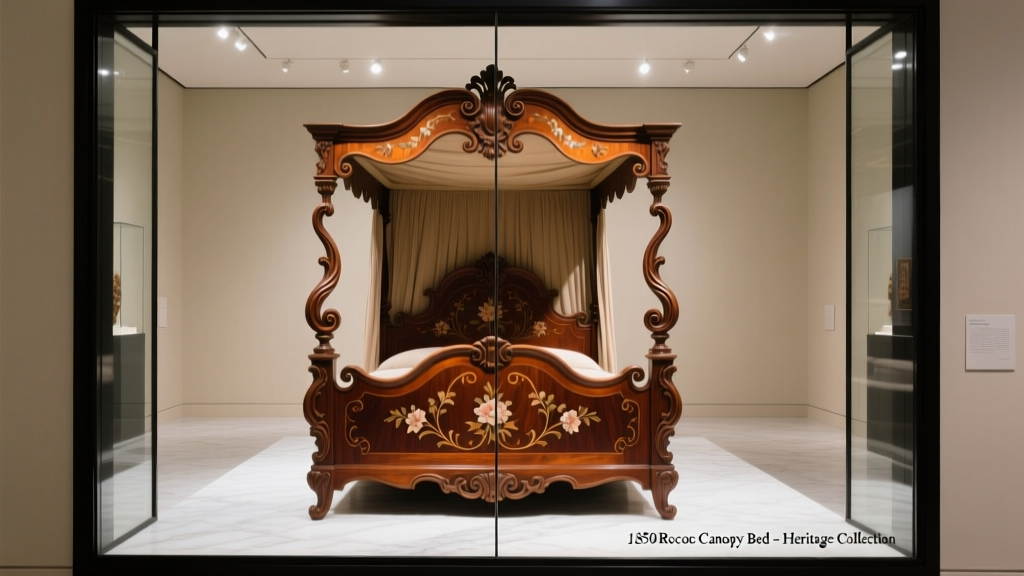
Rococo Revival Bed Canopy, Mahogany Serpentine Rails & Scroll-Foot Frame: Authentication and Market Analysis of a C. 1850 American Masterpiece
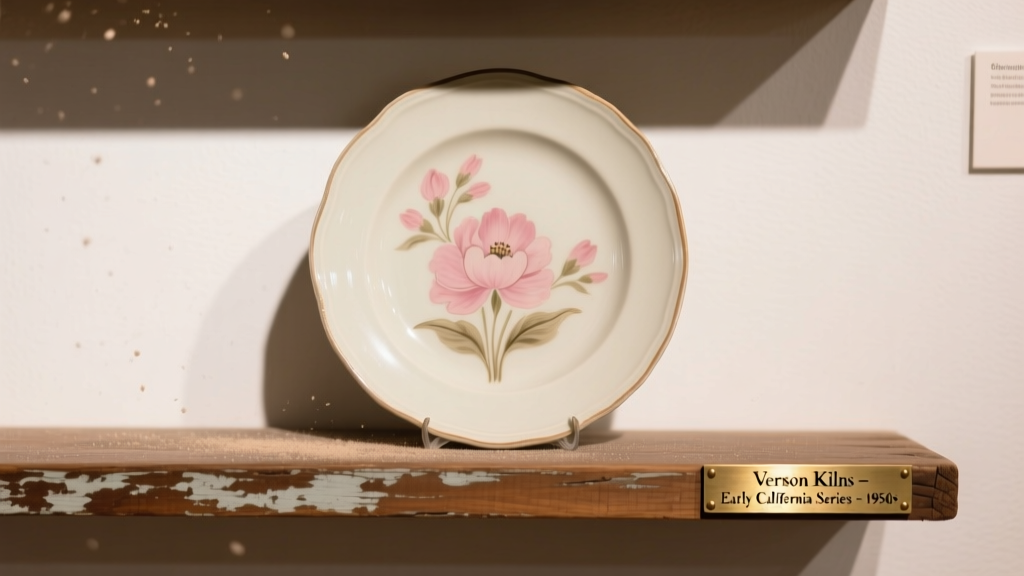
Vernon Kilns Early California Plate: Authentication, Market Value, and Historical Context of the Pink 10½-Inch Dinner Plate
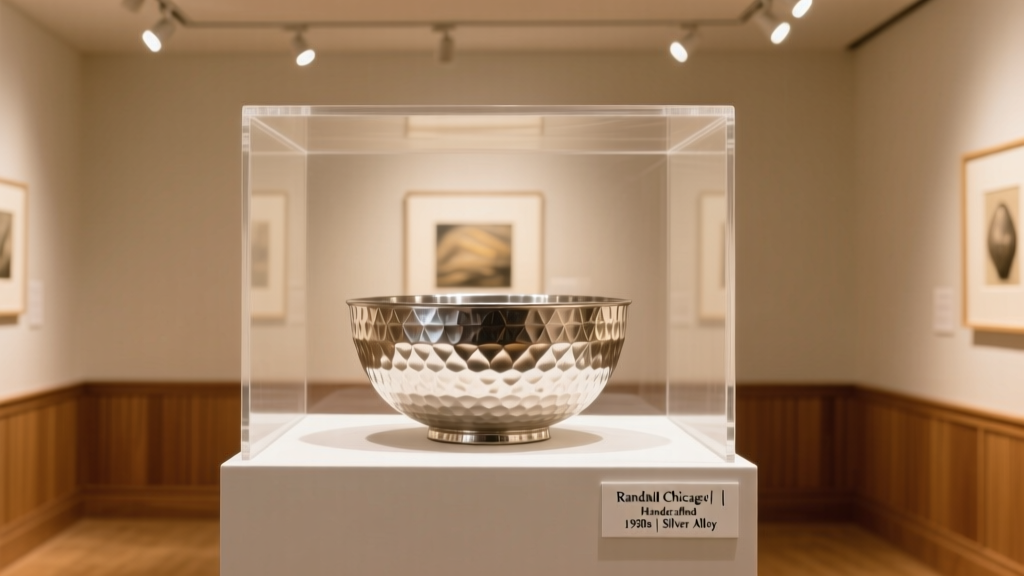
Silver American Bowl: Octagonal Hammered Design by Randahl Chicago — Authentication, Provenance, and Market Analysis
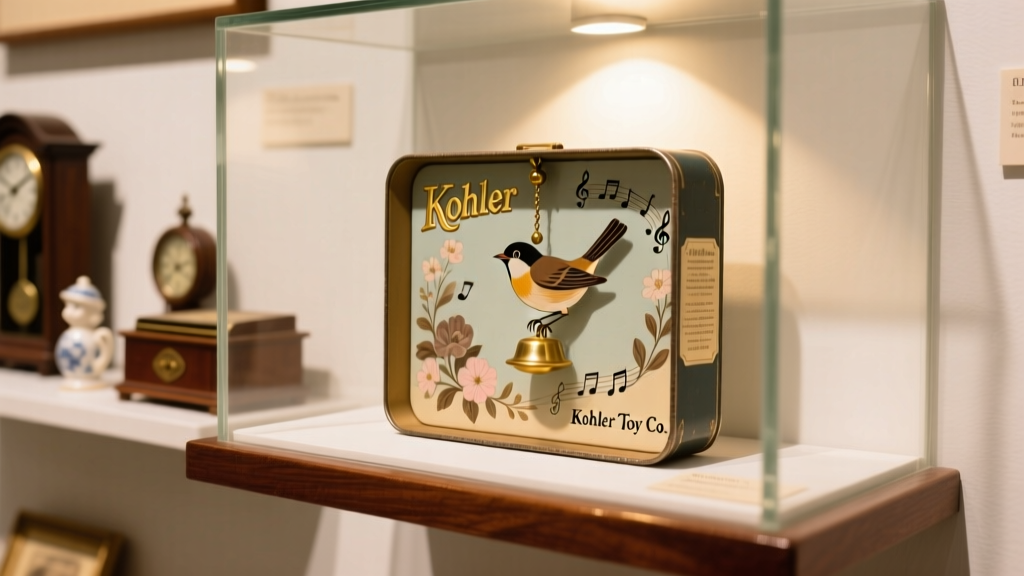
Toy Singing Bird: A Musical Novelty Tin Lithograph Windup Kohler Box (8-Inch) — Authentication, Market Value, and Historical Context
Medical Eyecup, Orange-Red Slag Glass, Stemmed: Authentication, Provenance, and Market Analysis

Warwick Bowl Cover: White Pink Roses Green Handles Ioga 6-Inch – Authentication, Market Value, and Design Analysis