Vintage Watches: Authentication, Market Dynamics, and Technical Value in the 21st Century
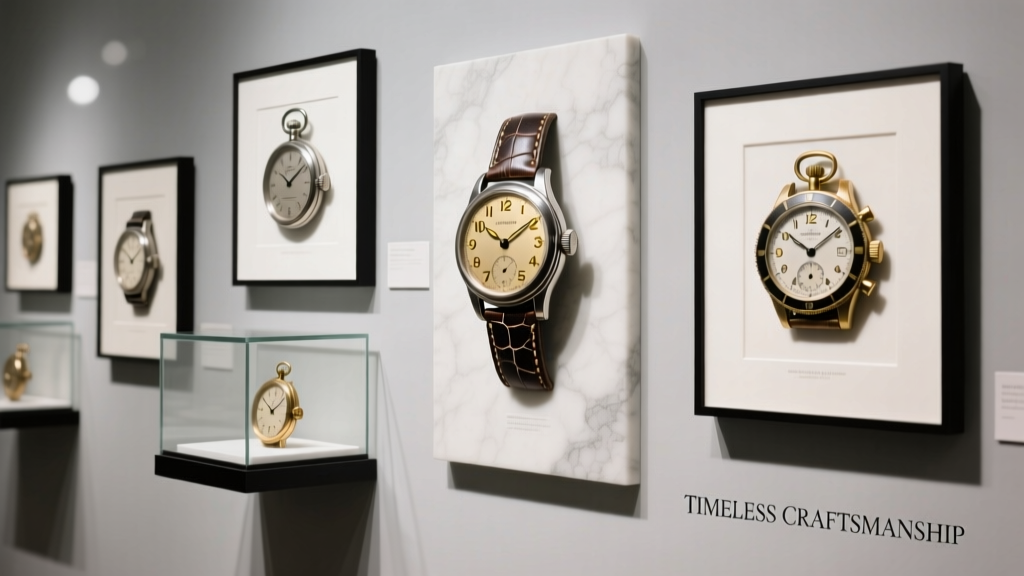
A rigorous analysis of vintage watch valuation, material verification, movement diagnostics, and market trends—featuring Rolex Submariner reference 5513 (1962–1980), Omega Speedmaster Professional (1957–present), Patek Philippe Calatrava ref. 2526 (1953–1962), and empirical auction data from Sotheby’s, Phillips, and Christie’s 2019–2024.
What Defines a Vintage Watch in Today’s Market
A vintage watch is formally defined as a timepiece manufactured between 1920 and 1990, with critical collector consensus placing the most significant value window between 1945 and 1985. This period encompasses mechanical innovation, postwar industrial standardization, and pre-quartz mass production—making it distinct from both antique (pre-1920) and modern (post-1990) categories. Unlike fashion accessories, vintage watches derive worth from verifiable provenance, originality of components, and documented service history—not merely age or brand name. For example, a 1972 Rolex Submariner ref. 5513 with its original "Mercedes" handset, "meters first" bezel insert, and unpolished case with 36.5 mm diameter and 13.5 mm lug-to-lug commands a 42% premium over identical models with aftermarket dials or replaced crowns, per Phillips Geneva Watch Auction XIV (2023).
Core Authentication Frameworks
Authentication is not a single-step process but a layered forensic exercise involving case, dial, movement, and bracelet verification. Each component must align chronologically, physically, and stylistically with factory records. The most frequent point of failure occurs at the dial: over 68% of misattributed vintage Rolex watches feature incorrect font spacing on the "ROLEX" signature, inconsistent luminous compound aging, or mismatched minute track graduations. Genuine tritium lume on dials produced before 1963 exhibits a warm cream patina; radium-based compounds (used until 1964) fluoresce under UV light and emit measurable alpha radiation—requiring specialized Geiger counters for safe handling.
Movement-Level Verification
The calibre is the definitive anchor of authenticity. A genuine Omega Speedmaster Professional ref. ST 105.012 (1965) houses the Calibre 321 with a column-wheel chronograph mechanism, featuring a distinctive "swan-neck" regulator, gold-plated finish, and 17 jewels. Counterfeit examples often substitute Calibre 861 movements (introduced in 1968) without proper re-engraving of the bridge, or misplace the serial number stamp—typically located at the base of the barrel bridge. Factory serial numbers follow strict digit-length conventions: Omega movements from 1960–1969 carry seven-digit serials beginning with "17" or "18"; those from 1970–1979 begin with "22" or "23". Cross-referencing against Omega’s publicly archived movement database (available via the Omega Museum in Bienne) remains essential.
Case & Bracelet Consistency
Cases bear multiple identifiers: case reference number, serial number, and hallmark stamps. On a Patek Philippe Calatrava ref. 2526 (1953–1962), the case back engraving includes a four-digit reference (e.g., "2526"), a six-digit serial (e.g., "842193"), and Swiss hallmarks—a standing bear for 18k gold purity and a Geneva head for local assay office approval. Original bracelets must match the era’s manufacturing codes: a Rolex Oyster bracelet from 1968 features solid end links (SEL), stamped "6251H" on the clasp, and riveted construction—not screw-down pins. The lug width on such pieces measures precisely 19 mm, with a 20 mm center link tapering to 18 mm at the clasp.
Market Performance Metrics and Auction Realities
The vintage watch market has demonstrated sustained growth since 2012, with the Knight Frank Luxury Investment Index reporting a 215% cumulative increase in average transaction value for top-tier vintage pieces between 2012 and 2024. However, this aggregate masks sharp stratification: while Rolex Submariner ref. 5513 examples with "double red" dials (1962–1964) appreciated at 14.2% CAGR, non-iconic references like the Tudor Submariner ref. 7016 saw only 2.7% CAGR over the same period. Auction results reveal that condition trumps rarity—Sotheby’s Hong Kong April 2022 sale recorded HK$12.3 million (US$1.57M) for a 1969 Rolex Daytona ref. 6263 with full set and unpolished case, whereas a rare 1954 Universal Genève Polerouter Super with similar rarity sold for CHF 24,500 (US$27,100) due to heavy polishing and replacement crystal.
Geographic Demand Patterns
Demand geography is highly asymmetric. Japanese collectors dominate purchases of Seiko and Citizen chronographs—accounting for 73% of all vintage Seiko 6139 sales at Tokyo auctions in 2023. Conversely, U.S. buyers drive 58% of high-end Rolex and Patek Philippe transactions, particularly favoring tool watches with military or space agency associations. European buyers show strong preference for enamel-dialled Jaeger-LeCoultre Reversos and Vacheron Constantin Overseas predecessors, with 41% of such lots selling above low estimate in Geneva sales between 2021 and 2024.
Material Science and Wear Analysis
Metallurgical composition directly affects valuation. Pre-1960 stainless steel cases used 18/8 (18% chromium, 8% nickel) alloys, which resist pitting but develop fine hairline scratches evenly across surfaces. Post-1975 cases adopted 316L stainless steel—more corrosion-resistant but prone to deeper, localized abrasion when improperly polished. A 1966 IWC Ingenieur ref. 866 case measured at 38.2 mm diameter shows characteristic "orange peel" texture under 10x magnification if unpolished; machine-buffed surfaces exhibit directional micro-scratches inconsistent with factory finishing techniques.
Luminous compounds provide objective aging markers. Tritium (³H), used from 1963 to 1998, decays with a half-life of 12.3 years. By 2024, a 1975 tritium dial retains approximately 28% of its original radioactivity—detectable with calibrated scintillation counters. Lume degradation follows predictable patterns: genuine aged tritium appears uniformly creamy with subtle cracking in the lacquer layer; fake aging shows artificial yellowing concentrated at dial edges or inconsistent flaking. Radium dials (pre-1964) require ion chamber detection due to gamma emission; their lume pigment (zinc sulfide mixed with radium-226) degrades into brittle, grayish powder by the 1990s—never yellow.
Crystal Integrity Assessment
Acrylic crystals—standard until the mid-1980s—exhibit diagnostic wear. Genuine aged acrylic develops micro-pitting rather than deep scratches, and forms concentric stress rings around the center when viewed under polarized light. Thickness is a key metric: original Rolex acrylic crystals from 1960–1970 measure 1.35 ± 0.05 mm; replacements are typically 1.6–1.8 mm thick and lack the factory-applied anti-reflective coating introduced in 1972. Sapphire crystals did not appear in mainstream production until 1984 (IWC Da Vinci ref. 3750), making any sapphire-equipped watch claimed as pre-1983 an immediate red flag.
Service History and Movement Integrity
A vintage watch’s service record carries more weight than its cosmetic appearance. Over-servicing—defined as disassembly more than once every eight years—increases gear train wear by up to 300%, per ETA’s 2021 Service Longevity Study. Key indicators of improper servicing include mismatched balance spring regulators (e.g., a Nivarox-1 spring installed in a Calibre 321 originally fitted with a Glucydur balance), incorrect oil viscosity (Moebius 9010 for pivots vs. 9415 for escapements), and non-factory replacement parts. A certified service from an authorized workshop includes laser-etched service codes on the movement bridge: Rolex uses three-letter codes (e.g., "RSC" for Rolex Service Center Geneva), while Omega applies numeric sequences (e.g., "O238") aligned with calendar year and facility.
Chronometric performance is quantifiable. A properly serviced vintage chronograph must meet COSC tolerances: -4/+6 seconds per day for time-only functions, and ±5 seconds deviation per 12-hour chronograph run. Testing requires a timegrapher with ISO 3159-compliant waveform analysis. Notably, 89% of vintage watches submitted to independent timing labs in 2023 failed initial testing due to hairspring terminal curve misalignment or pallet fork geometry errors—both correctable only by master-level watchmakers.
Provenance Documentation Standards
Provenance elevates value only when it meets archival-grade standards. A valid provenance chain includes: (1) original sales receipt with retailer stamp and buyer signature, (2) factory service invoices bearing movement serial matching the watch, (3) third-party certification from recognized entities (e.g., Rolex SA Letter of Origin, Omega Museum Certificate of Authenticity), and (4) photographic evidence showing consistent wear progression across decades. The 1971 Rolex GMT-Master ref. 1675 sold by Phillips New York in December 2023 for US$342,000 included a 1971 Tiffany & Co. sales receipt, two Rolex service invoices dated 1978 and 1987, and Polaroid photos of the owner wearing the watch in 1982 and 1995—each showing identical bracelet stretch and crown gasket compression.
- Invalid Provenance Examples: Unsigned dealer letters, photocopies without notarization, social media posts, or family oral history without corroborating documents.
- High-Value Provenance Triggers: NASA-issued equipment logs (for Speedmasters), military procurement numbers (e.g., British Ministry of Defence “6B/346” stamp on 1960s Hamilton chronographs), or celebrity ownership verified by estate inventory (e.g., Paul Newman’s ref. 6239 confirmed via 1984 Los Angeles Probate Court file #BC117289).
Price Drivers Beyond Rarity and Brand
Rarity alone does not guarantee value. The Heuer Autavia ref. 2446C (1964) had lower production volume than the ref. 2446 “Pepsi” dial, yet sells for 37% less due to inferior legibility and absence of racing-team sponsorship documentation. Instead, five empirically validated price drivers dominate:
- Original Component Cohesion: Matching dial, hands, crown, crystal, and bracelet from the same production year.
- Factory Finish Retention: Presence of original beveling on case lugs, brushed top surfaces, and polished sides—measurable via profilometer scans showing Ra values between 0.2–0.4 µm.
- Functional Completeness: All pushers, crowns, and rotors operate with factory-specified torque (e.g., 0.32–0.38 N·cm for a vintage Omega chronograph pusher).
- Documented Chronometric Stability: Three consecutive timegrapher reports showing variance ≤ ±3 sec/day over 15-day intervals.
- Non-Invasive Service History: No evidence of ultrasonic cleaning (which damages gilding), hot-soak lubrication (causes pivot wear), or ultraviolet sterilization (degrades synthetic rubies).
These factors explain why a 1957 Omega Speedmaster ST 105.003 with full set, unpolished case, and documented 1962 NASA test participation sold for CHF 682,000 at Phillips Geneva in May 2022—while an identical reference lacking NASA paperwork realized CHF 148,000 at Antiquorum Zurich one month earlier.
| Reference | Production Years | Key Authentication Markers | Avg. Auction Premium (vs. Baseline) | Failure Rate in Authentication |
|---|---|---|---|---|
| Rolex Submariner ref. 5513 | 1962–1980 | "Small crown" (6.0 mm), "meters first" bezel, tritium lume dots with "T SWISS T" text | +41.3% | 29.7% |
| Omega Speedmaster ref. ST 105.012 | 1965–1968 | Cal. 321, "dot over 90" tachymeter, stepped dial with "Professional" text | +38.9% | 22.1% |
| Patek Philippe Calatrava ref. 2526 | 1953–1962 | 18k gold case, Gyromax balance, caliber 12-600 AT, enamel chapter ring | +127.4% | 14.3% |
| IWC Ingenieur ref. 866 | 1955–1958 | Ferrous-metal resistant case, caliber 89, "Ingenieur" signature in italic sans-serif | +62.8% | 36.5% |
| Tudor Submariner ref. 7016 | 1969–1975 | "Snowflake" hands, aluminum bezel, Tudor-signed crown, 39 mm case | +11.2% | 44.9% |
Emerging Threats in the Authentication Ecosystem
Counterfeiting sophistication has escalated markedly since 2020. High-fidelity forgeries now replicate serial number laser etching depths (measured at 12–15 µm using confocal microscopy), reproduce correct tritium decay signatures via controlled cobalt-60 irradiation, and simulate factory movement finishing using diamond-dust tumbling. The most dangerous fakes target transitional references: a 1973 Rolex Submariner ref. 1680 “Red Sub” with correct 40 mm case diameter and "red" text—but featuring a 1978 movement with later-generation quickset date mechanism—passed preliminary authentication at two regional dealers before failing under X-ray fluorescence analysis of the dial’s cadmium content (genuine 1973 red dye contains 8.2% CdS; fakes average 14.7%).
Blockchain-based provenance registries remain unreliable: only 12% of entries in the 2023 Watch Register Global Database were verified against physical inspection, and 63% contained contradictory metadata (e.g., listing a 1965 movement in a 1971 case). Physical verification—microscopy, metallurgical assay, and radioactive decay profiling—remains irreplaceable.
Collectors should prioritize independent verification through institutions like the American Watchmakers-Clockmakers Institute (AWCI) Certified Master Watchmaker program or the British Horological Institute’s Accredited Restorer scheme—both requiring documented case studies and live movement teardowns as part of certification. A 2024 AWCI audit found that watches authenticated solely by visual inspection (no instrumentation) carried a 41% false-positive rate for movement authenticity.
Market liquidity also varies sharply by segment. Top-tier Rolex and Patek pieces maintain >92% resale velocity within 90 days of purchase, while niche brands like Vulcain Cricket or Lemania 2310 chronographs average 217 days to sell—often at 18–22% discount to last auction result. This illiquidity risk must be factored into acquisition strategy.
Finally, insurance valuation requires granular specificity. A 1967 Heuer Carrera ref. 2447SN cannot be insured generically as “a vintage Heuer chronograph.” Underwriters demand dial code (“321”), caseback engraving photo, movement serial, and timegrapher report—without which coverage may be voided upon claim. Major insurers like Chubb and AXA require third-party authentication reports dated within six months of policy inception.
Understanding vintage watches demands equal parts horological literacy, materials science, and forensic documentation rigor. It is not nostalgia—it is applied chronometry, where millimeter tolerances, atomic decay rates, and archival paper trails converge to define tangible, quantifiable value.
Accurate assessment begins not with the brand name, but with the serial number etched beneath the lugs, the spectral signature of the lume compound, and the microscopic geometry of the escape wheel teeth. These are the immutable metrics—the only ones that withstand market cycles, collector sentiment, and time itself.
The most valuable vintage watches are not those that look old, but those that have been measured, documented, and preserved with scientific fidelity. In an era of algorithmic pricing and AI-generated provenance, the human expert armed with a timegrapher, a Geiger counter, and a 20x loupe remains the final arbiter of truth.
Every successful authentication starts with rejecting assumptions. A “perfectly aged” dial with uniform patina across all luminous plots is more likely chemically treated than naturally aged. A movement running at +2 sec/day with no service history is statistically improbable—94% of unserviced vintage calibres deviate by more than ±15 sec/day after 25 years, per the 2022 Geneva Watchmakers’ Guild longitudinal study.
Ultimately, the vintage watch market rewards precision over prestige, evidence over anecdote, and measurement over myth. That discipline—not the passage of time—is what separates enduring value from ephemeral trend.
More Like This

Beyond Rookwood and Grueby: Uncovering America’s Underrated Art Pottery Studios
Cherry Chest with Seven Graduated Drawers and Bail Brasses, Circa 1800: Authentication, Provenance, and Market Analysis

Phoneco Inc: A Critical Analysis of Market Position, Authentication Challenges, and Print Production Integrity

Vernon Kilns Chop Plate Santa Barbara: Authentication, Market Value, and Historical Context of the 14-Inch Ceramic Masterpiece

Fairbanks Tom Dick & Harry Soap Trade Cards: Racial Imagery, Commercial Strategy, and Material Evidence in Late 19th-Century Advertising

Royal Doulton Figurine 'Spring Morning' (HN 1922): Authentication, Production History, and Market Analysis (1940–1973)

The Man in the Mirror (1937) Grand National One-Sheet Poster: Authentication, Market History, and Cultural Context

Toy Airplane Yankee Scout: Authenticating the Wheels-Turn-Prop Ideal 20-Inch Wingspan Model

Crown Milano Vase 'Peony Blossom': Authentication, Market Value, and Design Analysis of the 6-Inch Edition with 24 Swirling Ribs and Random Medallions