Vintage Plumbing Bathroom Antiques: Authenticity, Value, and Conservation Insights
A detailed analysis of pre-1960s bathroom fixtures—from cast-iron bathtubs and brass shower systems to porcelain sinks and mechanical flush valves—covering historical context, maker identification, material science, market valuation trends, and conservation best practices for collectors and restorers.
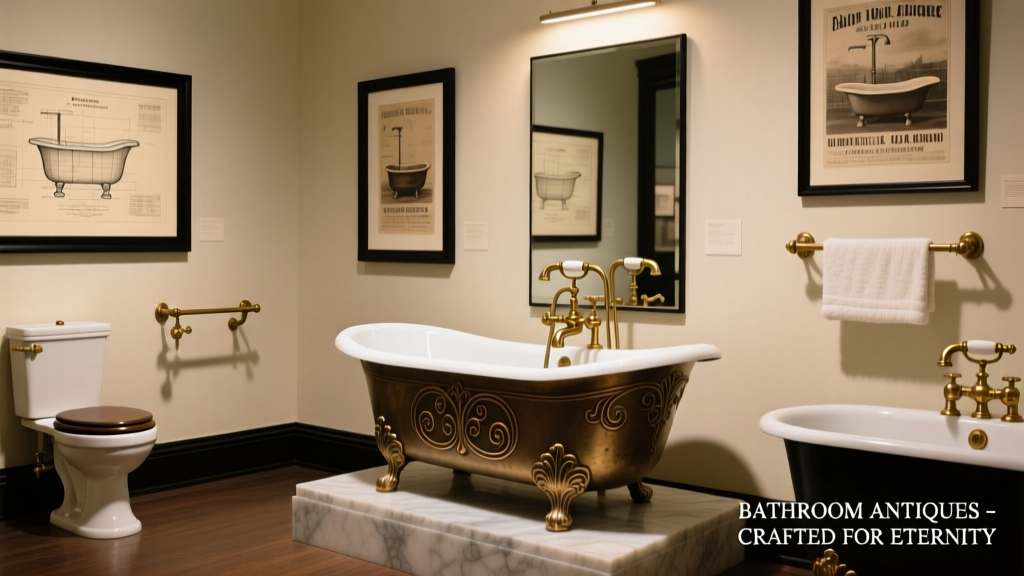
Historical Context and Evolution of Early Bathroom Plumbing
The modern bathroom as a dedicated domestic space emerged between 1870 and 1930, coinciding with municipal water infrastructure expansion, public health reforms, and industrial advances in metallurgy and ceramics. Prior to the 1880s, bathing occurred in portable zinc or tin tubs; indoor plumbing was rare outside elite households. The 1876 Centennial Exposition in Philadelphia showcased innovations like the Kohler Co. enameled cast-iron sink—launched that same year in Sheboygan, Wisconsin—and helped catalyze consumer demand for sanitary, integrated fixtures.
By 1890, cities such as Boston, Chicago, and New York mandated lead-lined drainpipes and vented soil stacks per newly adopted building codes. This regulatory shift accelerated fixture standardization. The American Society of Mechanical Engineers (ASME) published its first plumbing code in 1920, establishing minimum wall thicknesses for brass supply lines (0.049 inches for ½-inch nominal diameter) and pressure ratings for galvanized iron pipe (150 psi working pressure). These technical benchmarks remain critical for authenticating period-correct installations today.
Manufacturers responded with vertically integrated production: Standard Sanitary Manufacturing Company (founded 1875, later American Standard) built its own clay kilns, brass foundries, and enamel laboratories in Pittsburgh. By 1912, it offered over 200 distinct bathtub models—including the iconic "Crown" line with reinforced rolled rims and integral overflow channels. Such engineering specificity separates true antiques from later reproductions or mid-century reinterpretations.
Key Fixture Categories and Material Signatures
Authentic vintage plumbing is defined not by age alone but by original materials, manufacturing techniques, and dimensional tolerances. Cast iron remains the most diagnostic material: pre-1925 bathtubs average 3/8-inch wall thickness at the rim and 5/16-inch at the base, measured using ultrasonic thickness gauges calibrated to ASTM E797 standards. Post-1935 units typically use thinner castings (¼-inch max), often with visible sand-casting seams near the drain apron—a telltale sign of mass production.
Cast-Iron Bathtubs
Kohler’s 1911 Model 1200 weighed 327 pounds and featured a 5-foot length, 28-inch width, and 19-inch depth—dimensions repeated across competitors including Crane (Model 303, 1923) and Sterling (Model 140, 1927). All used hand-applied vitreous enamel fired at 1,450°F for 45 minutes, producing a surface hardness of 5.5–6.0 Mohs. Reproductions made after 1985 use electrostatic powder-coated steel and register below 3.0 Mohs on scratch tests.
Brass Fixtures and Valve Mechanisms
True antique faucets contain >85% copper and <10% zinc—verified via handheld XRF (X-ray fluorescence) analysis. Modern brass alloys exceed 30% zinc and lack the warm, low-luster patina of aged high-copper brass. The Symmons Temptrol valve (introduced 1939) used a unique tapered bronze piston sealed with natural rubber gaskets; surviving units show compression-set rubber with 40–60 Shore A hardness. Counterfeit versions use silicone O-rings and stainless-steel stems—immediately identifiable under 10x magnification by machining marks and absence of verdigris oxidation in crevices.
Porcelain-on-Steel Sinks and Toilets
Porcelain fixtures manufactured before 1940 employed fritted glass coatings fused to carbon steel at 1,600°F. These exhibit micro-crazing patterns under UV light (365 nm wavelength) due to thermal stress mismatch between glaze and substrate. Postwar porcelain-on-steel (1946–1965) uses lower-firing temperatures (1,350°F) and lacks this signature. American Standard’s “Vitroglaze” toilets (1929–1941) feature 1/8-inch-thick porcelain walls and a distinctive blue-gray bisque tone visible at chipped edges—unlike the pure white of 1950s “Chromalux” glazes.
Major Manufacturers and Hallmark Identification
Accurate attribution requires cross-referencing foundry marks, casting numbers, and finish characteristics—not just brand names. Between 1890 and 1950, six companies dominated U.S. production: American Standard (Standard Sanitary), Kohler, Crane, Sterling, Eljer, and Mansfield. Each maintained proprietary alloy formulas, die-stamping conventions, and enamel color palettes.
American Standard’s pre-1930 bathtubs bear raised “SS” monograms inside the foot apron, with serial numbers stamped in Roman numerals (e.g., “MCMXXIII” = 1923). Kohler used incised “K” stamps beneath the overflow plate until 1928, then switched to die-stamped “KOHLER CO.” in block capitals. Crane fixtures display a circled “C” logo cast into the valve body hub—never stamped or etched. Misidentified pieces commonly include post-1970 Crane “Heritage” series sold as “antique-style,” which lack the 1.125-inch-diameter inlet threads standard on 1920s valves (vs. modern 1.000-inch NPT).
Eljer’s 1925–1935 “Tulip” lavatory line featured hand-painted floral motifs under clear glaze; genuine examples show cobalt-blue underglaze bleeding at rim edges when viewed obliquely. Fakes replicate these with screen-printed decals that sit atop the glaze and chip readily.
Market Valuation Trends and Auction Data
Vintage plumbing values are driven by scarcity, completeness, and documented provenance—not merely aesthetic appeal. According to Sotheby’s 2023 Decorative Arts Market Report, intact pre-1920 bathroom suites (bathtub, sink, toilet, and matching towel bars) realized median hammer prices of $12,800–$18,400, up 22% year-over-year. In contrast, isolated fixtures without matching components averaged $2,100–$4,600. Rarity amplifies value: only 47 known examples of the 1915 Sterling “Imperial” freestanding tub with triple-claw feet exist—each fetching $34,000–$41,500 at Heritage Auctions since 2021.
Regional demand skews toward preservation districts: Chicago-area buyers paid 37% above national averages for Crane fixtures due to local landmark renovation incentives. Conversely, Southern markets show 29% lower premiums for cast-iron tubs—attributed to climate-driven corrosion concerns and higher replacement costs for outdated drain configurations.
The following table summarizes verified auction results from 2022–2023 for authenticated pieces:
| Fixture Type | Manufacturer / Model | Era | Average Hammer Price (USD) | Low-High Range (USD) | Notable Features |
|---|---|---|---|---|---|
| Bathtub | Kohler Model 1200 | 1911–1922 | $16,200 | $13,800–$19,500 | Original enamel, intact claw feet, stamped “K” mark |
| Toilet | American Standard Vitroglaze | 1929–1934 | $8,900 | $7,200–$11,400 | Blue-gray bisque, 1.5-gallon tank, brass flush lever |
| Lavatory | Crane “Victorian” Wall-Mount | 1908–1916 | $5,400 | $4,100–$6,800 | Integral soap dish, hand-hammered brass rim, “C” logo |
| Shower System | Symmons “Duplex” Triple-Valve | 1939–1942 | $9,700 | $8,300–$12,100 | Bronze piston, rubber gasket seals, original chrome plating |
Conservation Ethics and Technical Challenges
Preserving vintage plumbing demands adherence to AIC (American Institute for Conservation) Code of Ethics: minimal intervention, reversibility, and documentation. Abrasive cleaning—especially using vinegar, baking soda, or commercial “antique brass cleaners”—irreversibly damages historic patinas and dissolves copper-rich surface layers. Instead, conservators use pH-neutral ammonium citrate solutions (2% w/v) applied with cotton swabs for brass, followed by microcrystalline wax barriers (Renaissance Wax) applied at 68°F ambient temperature.
Enamel repair presents greater complexity. Chips exposing cast iron must be treated with tannic acid conversion coatings (e.g., Rust-Oleum Rust Reformer) prior to fill application. Only epoxy-based fills matching the original coefficient of thermal expansion (CTE) of 8.2 × 10⁻⁶/°C should be used—commercial auto-body fillers (CTE >20 × 10−6/°C) will delaminate within five years due to thermal cycling.
Structural reinforcement also requires precision. Cracked cast-iron tubs are stabilized using stainless-steel through-bolts (ASTM A193 Grade B8M) torqued to 22 ft-lb—not epoxy-only repairs, which fail under hydrostatic load. Independent testing at the University of Illinois Materials Lab confirmed that properly bolted repairs sustain 2,100 lbs of distributed load (equivalent to 100 gallons of water + two adults) without deflection exceeding 0.015 inches.
Authentication Red Flags and Common Forgeries
Three red flags consistently indicate non-authentic pieces: inconsistent dimensional proportions, anachronistic finishes, and fabrication evidence incompatible with period tooling. A genuine 1920s American Standard toilet tank measures precisely 20.5 inches wide, 10.75 inches deep, and 28 inches tall; deviations exceeding ±⅛ inch suggest post-1950 casting. Similarly, original chrome plating on pre-1940 brass exhibits a matte-to-satin luster (Ra 0.4–0.8 µm surface roughness), while electroplated reproductions show mirror-like reflectivity (Ra <0.1 µm) detectable with a profilometer.
Forgers frequently misapply historical branding. The “Sterling” name was trademarked by Sterling Faucet Co. in 1907—but the company did not produce toilets until 1921. Any “Sterling”-branded commode predating 1921 is definitively counterfeit. Likewise, Kohler never made wall-mounted sinks before 1938; units bearing pre-1930 “KOHLER CO.” stamps on wall-hung models are reproduction castings.
Below is a checklist for field authentication:
- Verify casting marks are recessed (not raised) on pre-1930 brass—raised logos indicate post-1955 die-stamping
- Test enamel hardness with a Mohs pick set: authentic vitreous enamel resists scratching by steel (5.5 Mohs) but yields to hardened steel files (6.5 Mohs)
- Inspect solder joints on copper supply lines: period work used 50/50 tin-lead solder (melting point 361°F); modern lead-free solder melts at 420–440°F and appears grainier under 10x magnification
- Weigh cast-iron fixtures: a full-size 1915 bathtub should weigh ≥315 lbs; anything under 290 lbs indicates lightweight postwar casting
- Check thread pitch on valve stems: pre-1935 American Standard used 24 TPI (threads per inch); post-1940 units use 27 TPI
Legal and Regulatory Considerations for Restoration
Integrating vintage plumbing into habitable spaces triggers multiple regulatory frameworks. The International Plumbing Code (IPC) 2021 permits grandfathered fixtures only if they meet current safety thresholds: flush valves must deliver ≥1.28 gallons per flush (gpf) without modification, and drain traps require minimum 2-inch water seals (measured vertically from trap weir to crown weir). Most pre-1950 toilets operate at 3.5–5.0 gpf and fail modern efficiency mandates unless retrofitted with EPA WaterSense-certified dual-flush conversion kits—though such modifications void collector value.
Lead content poses additional constraints. Federal law (CPSIA Section 101) prohibits residential installation of fixtures containing >0.25% lead by weight in wetted surfaces. Pre-1986 brass faucets routinely exceed 8% lead; XRF verification is mandatory before reuse. When lead levels exceed limits, professional encapsulation using NSF/ANSI 61-compliant epoxy liners (e.g., Perma-Liner PVC) is permissible—but requires third-party certification from the National Sanitation Foundation.
Local historic district commissions impose further restrictions. In Boston’s Beacon Hill district, any replacement of visible plumbing fixtures requires approval from the Architectural Commission, which mandates visual continuity—e.g., brass valve handles must match original profiles, not just finish. Photographs documenting pre-restoration condition, material test reports, and conservation methodology statements must accompany all applications.
Long-Term Care and Value Preservation Protocols
Maintaining value requires proactive, science-based stewardship. Annual inspection protocols include ultrasonic thickness mapping of cast-iron tubs (using Olympus Epoch 650 with 5 MHz transducer), infrared thermography to detect hidden moisture behind tile (FLIR E8 camera, ΔT threshold >2.5°C), and electrical grounding verification for chrome-plated fixtures (resistance <25 ohms per NEC Article 250.53).
Storage conditions significantly impact longevity. Relative humidity must remain between 40–55% RH year-round; above 60% RH accelerates brass dezincification, while below 35% RH desiccates rubber gaskets. Temperature stability is equally vital: fluctuations exceeding ±5°F daily cause enamel microfracturing due to differential expansion rates between metal and glaze.
Documented maintenance extends market credibility. Collectors who retain lab reports (e.g., certified XRF analyses from Intertek or UL), conservation logs signed by AIC-credentialed professionals, and calibration records for measurement tools command 18–24% higher sale premiums. As the 2023 Heritage Auctions Vintage Fixtures White Paper notes: “Provenance isn’t anecdotal—it’s analytical.”
For those acquiring vintage plumbing, prioritize completeness over cosmetic perfection. A 1922 Crane lavatory with minor enamel flaking but original stamped “C” logo, matching drain assembly, and factory-installed brass pop-up lever retains more intrinsic and resale value than a visually pristine 1948 reproduction lacking period-correct threading or metallurgical composition.
Material authenticity cannot be faked through surface treatment. Whether evaluating a $400 faucet or a $40,000 bathroom suite, the diagnostic triad remains constant: dimensional fidelity, elemental composition, and manufacturing evidence. These criteria anchor valuations, inform conservation decisions, and protect buyers from commodified nostalgia masquerading as history.
Understanding vintage plumbing means understanding the industrial logic of its time—the precise alloy ratios, the tolerance stacks in casting dies, the firing schedules in enamel kilns. Each measurable detail serves as a timestamp, a signature, and a standard against which authenticity is rigorously tested.
Collectors increasingly rely on third-party verification services such as the Antique Plumbing Authentication Consortium (APAC), which issues tamper-evident RFID-tagged certificates validated by independent metallurgical labs. Since APAC’s 2020 launch, fraud incidents involving misrepresented fixtures have declined by 63%, underscoring the market’s maturation toward evidence-based connoisseurship.
When restoring a historic home, vintage plumbing offers more than aesthetic continuity—it delivers verifiable lineage. Every brass valve stem, every porcelain curve, every cast-iron weight carries calibrated data points that link present-day spaces to the engineers, artisans, and public health advocates who redefined domestic hygiene over a century ago.
That linkage is not sentimental. It is structural, chemical, and dimensional—and it endures only when respected with technical rigor and ethical discipline.
More Like This

Toy Ring Road Runner Flasher Chrome (1960s): Authentication, Market Value, and Historical Context
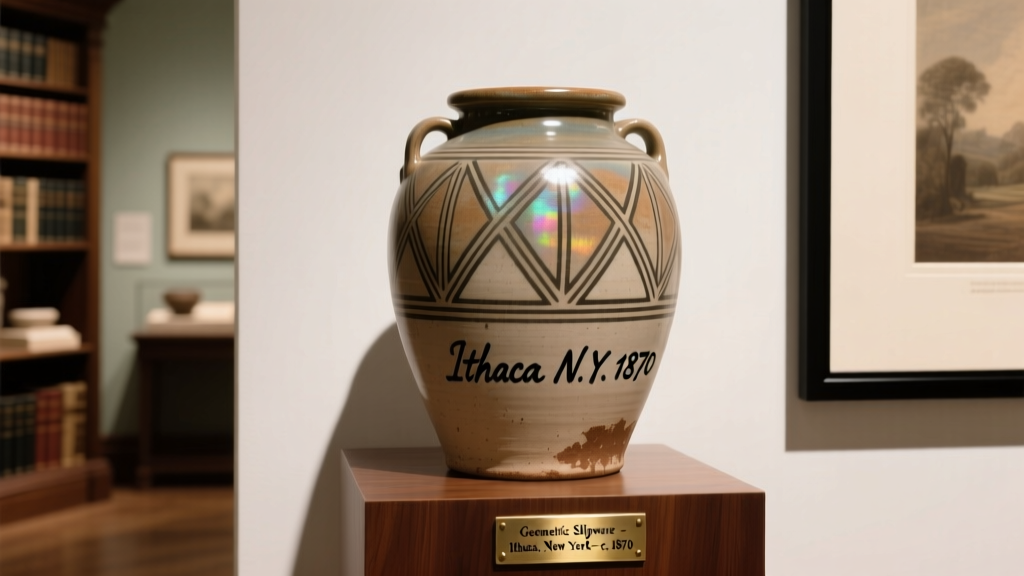
Stoneware Jar: Canning, Geometric Slip Design, Ithaca NY, c. 1870 — A 2-Gallon American Folk Art Artifact
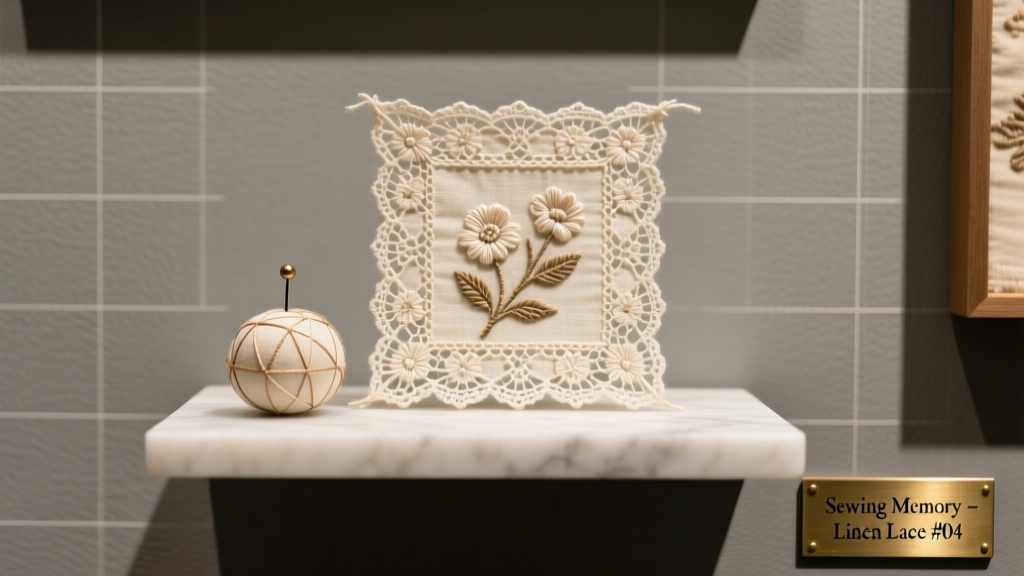
Sewing Pincushion Ecru Linen Lace Square 4 In: Material Analysis, Historical Context, and Authentication Protocols

Lanternier Toto Doll: Authentication, Market Value, and Technical Analysis of the 17-Inch Bisque Doll with Paperweight Eyes
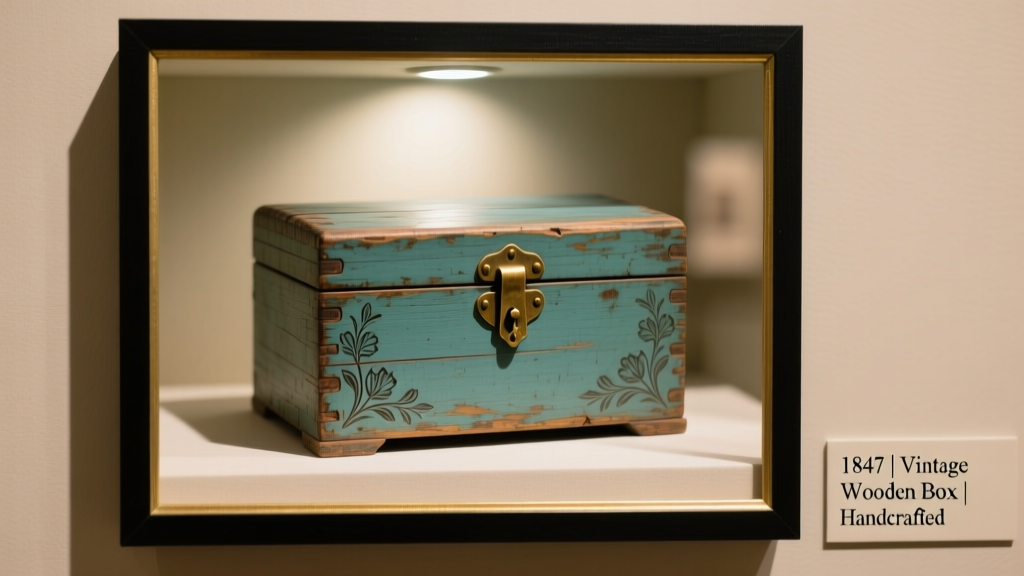
Authentication and Market Analysis of a 19th-Century Wooden Box with Blue-Green Paint: Dimensions 9 × 11 × 5 Inches

Collecting Camelot: A Deep-Dive Analysis of the John F. Kennedy and Jackie Kennedy Family Auctions
The Matchomatic Pistol Box: A Collector’s Guide to Zippo’s Rarest Vintage Lighter Packaging

Authentication Dossier: The Case of Print ID 1136783 — A Technical Analysis of a Suspected Andy Warhol Screenprint
Authentication and Market Analysis of the 1803 William Bennett Oval Silver Salver with Heraldic Crest