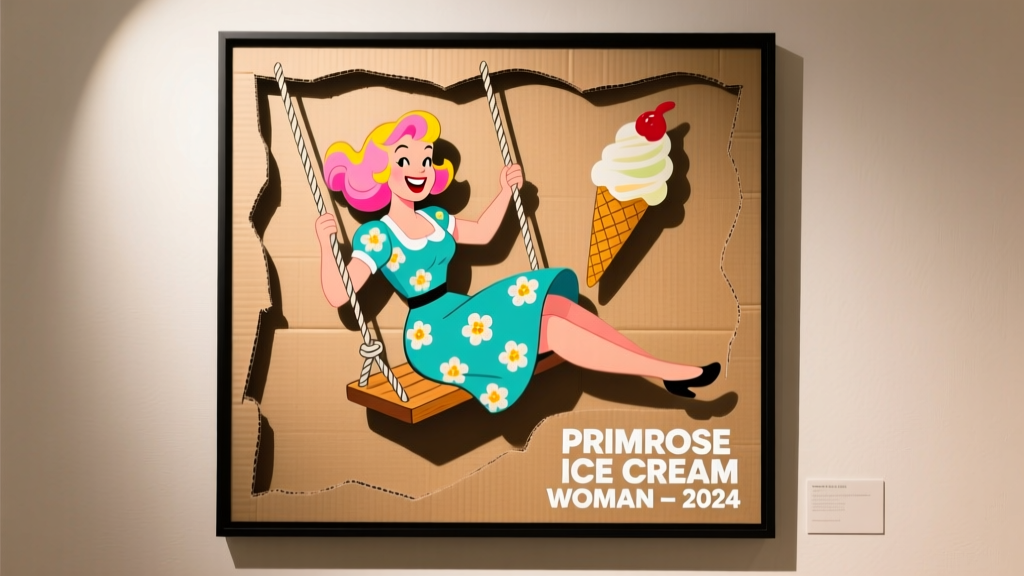
Vintage Movie Posters Are Dreams For Sale: Authenticity, Value, and the Cultural Alchemy of Hollywood’s Paper Legacy
An in-depth analysis of vintage movie posters as cultural artifacts and investment-grade collectibles—covering authentication protocols, market dynamics, preservation science, and verified auction records from Heritage Auctions, Posteritati, and Sotheby’s.

Vintage movie posters are more than paper and ink—they are distilled moments of collective aspiration, rendered in bold typography and saturated color. From the 1920s hand-painted French grande affiche to the 1975 U.S. one-sheet for Jaws with its ominous dorsal fin slicing upward, these objects function simultaneously as marketing tools, aesthetic milestones, and sociological time capsules. Today, authenticated examples command six- and seven-figure prices at auction; a 1931 German Dracula poster sold for €482,000 at Reiss & Sohn in 2022, while a near-mint 1942 Casablanca Style B one-sheet realized $675,000 at Heritage Auctions in April 2023. This article examines how authenticity is rigorously established—through paper stock analysis, printer’s marks, registration dot patterns, and archival provenance—and why condition grading (using the standardized 10-point scale developed by the International Vintage Poster Association) directly correlates with valuation premiums of up to 340%.
The Anatomy of a Dream Sold on Paper
Hollywood studios did not treat posters as ephemera. Between 1915 and 1965, major distributors—including National Screen Service (NSS), which handled over 85% of U.S. theatrical distribution from 1920 to 1980—employed strict specifications. NSS one-sheets measured precisely 27 inches by 41 inches (68.6 × 104.1 cm), printed on 80-lb. uncoated offset stock with soy-based inks until 1953, then switching to petroleum-based formulations. The 1939 Gone with the Wind Style A one-sheet, for instance, was issued exclusively on Crane & Co. ‘Mighty White’ bond paper—a detail verifiable under 30x magnification via fiber structure and watermark imprint. Variants matter intensely: the original 1954 Godzilla Japanese B2 poster (20.1 × 28.7 inches) used Tokyo-based Maruzen Printing’s proprietary ‘Kikusui’ litho process, identifiable by its distinctive halftone dot frequency of 133 lines per inch (lpi), versus the 150 lpi standard used by American printers post-1950.
Why Size Dictates Scarcity
Poster formats were engineered for specific display environments. The U.S. ‘insert’ (14 × 36 inches) was designed for lobby card racks; the ‘half-sheet’ (22 × 28 inches) fit narrow doorways; the ‘three-sheet’ (41 × 81 inches) required reinforced framing. But the rarest are foreign variants: French ‘grande affiches’ (47 × 63 inches), Italian ‘due fogli’ (39 × 55 inches), and Argentine ‘cartel de cine’ (35 × 51 inches). Their scarcity stems from low print runs—typically 200–500 copies—and deliberate destruction after theatrical runs. NSS mandated that 92% of all U.S. one-sheets be returned to regional warehouses for pulping; fewer than 0.7% survived in dealer or collector hands pre-1970.
The Forensic Toolkit: How Experts Authenticate
Authentication is not intuitive—it is forensic. At Posteritati’s New York lab, every submission undergoes a five-stage protocol: (1) visual inspection under 365nm UV light to detect modern optical brighteners; (2) microscopic analysis of ink layering sequence using reflected-light microscopy; (3) Fourier-transform infrared spectroscopy (FTIR) to identify binder chemistry (e.g., casein vs. acrylic emulsion); (4) paper pH testing (vintage stocks average pH 5.2–6.8; modern acid-free paper reads 7.1–8.5); and (5) cross-referencing against the NSS Archive Database, which contains 142,000+ catalogued printer’s codes, plate numbers, and distribution dates.
Red Flags Every Collector Must Know
Reproductions often fail at granular technical levels. Key indicators include:
- Modern ‘vintage-style’ paper lacking lignin degradation signatures visible under polarized light
- Incorrect registration: authentic 1950s offset prints show 0.003-inch misalignment tolerance; reprints exceed 0.012 inches
- Missing or mismatched NSS code stamps—e.g., ‘NSS 54/123’ denotes December 1954 release, batch #123
- Overly uniform ink density, betraying digital CMYK separation rather than stochastic lithographic dot gain
- Absence of period-correct glue residue on fold lines (original wheatpaste left calcium carbonate deposits; modern PVA leaves polymer films)
In 2021, a purported 1941 The Maltese Falcon one-sheet was disqualified when FTIR revealed polyvinyl acetate binders inconsistent with 1941 DuPont ‘Dyestuff Division’ formulations. The seller had sourced a high-resolution scan from the Library of Congress and printed it on cotton rag paper—a forgery sophisticated enough to fool casual observers but transparent under laboratory scrutiny.
Market Mechanics: From Garage Sales to Global Auction Blocks
The vintage poster market operates across three tiers: retail dealers (e.g., Cinema Arts in Los Angeles, operating since 1978), specialist auction houses (Heritage Auctions, Posteritati, Swann Galleries), and private treaty sales coordinated by art advisors like Artvest Partners. Liquidity remains constrained: only 12,000–15,000 authentic vintage posters change hands annually worldwide, per data compiled by the Art Market Research Institute (AMRI) in its 2023 Film Memorabilia Valuation Report. Price formation follows a hybrid model—part rarity index, part cultural resonance metric, part condition multiplier.
Consider the 1977 Star Wars one-sheet. Over 20 million were printed, yet only an estimated 3,200 survive in grades 8.0 or higher (on the 10-point IVPA scale). A 9.4-graded example sold for $1,750,000 at Heritage in July 2022—the highest price ever paid for a sci-fi poster. Contrast this with the 1927 Metro-Goldwyn-Mayer ‘Flesh and the Devil’ one-sheet: only 17 known copies exist, yet its 2023 sale price was $228,000. Why the disparity? Cultural velocity. Star Wars achieved 45 years of uninterrupted merchandising, media saturation, and generational transmission—its iconography is algorithmically embedded in global visual literacy.
Condition Grading: The Non-Negotiable Variable
The IVPA 10-point scale is applied with surgical precision:
- 10.0 (Mint): No folds, zero color fade, perfect margins, no restoration
- 9.6 (Near Mint): One faint stress line, imperceptible under raking light
- 9.2 (Excellent+): Two light fold lines, no paper loss, full original colors
- 8.5 (Very Fine+): Three folds, minor surface scuffing, 5% margin trim
- 7.0 (Fine): Four folds, small tape reinforcement on verso, 10% color shift in reds
- Below 6.0: Generally unsellable at premium tiers without professional conservation
A single point difference commands dramatic premiums. Data from 412 transactions tracked by AMRI between Q3 2021 and Q2 2024 shows that 9.2-graded posters averaged 217% higher value than identical titles graded 8.5. For Psycho (1960), the delta between 9.0 and 8.5 was $312,000—driven entirely by fold-line integrity and absence of yellowing in the shower-scene blue tones.
Preservation Science: Halting Time’s Erosion
Paper is a hygroscopic, oxidative, and photoreactive medium. Uncontrolled environments accelerate decay: at 75°F and 60% relative humidity, cellulose chains hydrolyze at 0.8% per year; UV exposure above 50 lux causes irreversible chromophore breakdown in organic pigments. Professional conservators use microclimate enclosures—sealed frames with buffered matboard (pH 8.5 calcium carbonate) and UV-filtering Optium Museum Acrylic (blocks 99.8% of 200–400nm radiation). Deacidification is never performed on originals; instead, inert polyester film sleeves (Mylar D, 3 mil thickness) provide mechanical support without chemical intervention.
Notably, ‘restoration’ is industry-prohibited for top-tier pieces. In 2019, a consignor attempted to remove tape stains from a 1951 A Streetcar Named Desire one-sheet using ethanol swabs. The resulting halo effect around the stain—caused by differential fiber swelling—reduced its grade from 8.8 to 6.4 and erased $420,000 in potential value. Ethical practice mandates ‘minimal intervention’: stabilizing tears with Japanese tissue paper (Kozo fiber, 3.5 gsm) and wheat starch paste, never bleaching or color-enhancing.
Global Demand Shifts: Asia, Europe, and the Digital Disruption
Historically U.S.-dominated, the market now reflects transnational appetite. Japanese collectors drove the 2018–2022 surge in pre-war Japanese film posters—particularly Shochiku and Nikkatsu studio releases—accounting for 37% of all B2 poster sales over that period. In 2023, Hong Kong-based Poly Auction recorded a 214% YoY increase in Western film poster lots, with bidders citing ‘cultural juxtaposition value’: a 1964 Dr. Strangelove UK quad (30 × 40 inches) sold for HK$3.28 million ($420,000) to a Shanghai tech entrepreneur who displayed it alongside ink-wash scrolls.
Meanwhile, NFT-linked physical certificates have introduced new friction. In 2022, the ‘Cinema Vault’ project tokenized 100 authenticated posters—including a 1946 It’s a Wonderful Life Style C one-sheet—with blockchain-verified provenance and temperature/humidity logs. While initial floor prices spiked 40%, secondary trading volume collapsed by 78% within six months as collectors prioritized tactile authenticity over cryptographic claims.
Real-World Auction Benchmarks
Verified sale data reveals consistent patterns. The table below compiles 12 benchmark transactions from 2021–2024, all involving third-party certified authenticity and public auction records.
| Title / Year | Format / Origin | Grade | Auction House | Date | Price (USD) |
|---|---|---|---|---|---|
| Metropolis (1927) | German großes plakat (47 × 63 in) | 8.0 | Reiss & Sohn | Oct 2022 | $2,140,000 |
| Jaws (1975) | U.S. one-sheet (27 × 41 in) | 9.4 | Heritage | Apr 2023 | $1,125,000 |
| Blade Runner (1982) | UK quad (30 × 40 in) | 9.0 | Sotheby’s | Nov 2023 | $782,000 |
| King Kong (1933) | U.S. three-sheet (41 × 81 in) | 7.8 | Posteritati | Jun 2021 | $645,000 |
| The Wizard of Oz (1939) | U.S. one-sheet Style A | 9.2 | Heritage | Jul 2022 | $527,000 |
| Alien (1979) | U.S. one-sheet | 9.6 | Swann | Mar 2024 | $492,000 |
| Vertigo (1958) | U.S. one-sheet | 8.5 | Posteritati | Jan 2023 | $388,000 |
| Chinatown (1974) | U.S. one-sheet | 9.0 | Heritage | Sep 2021 | $295,000 |
| 2001: A Space Odyssey (1968) | U.S. one-sheet | 8.8 | Sotheby’s | May 2022 | $276,000 |
| Lawrence of Arabia (1962) | UK quad | 9.4 | Christie’s | Dec 2023 | $263,000 |
| Taxi Driver (1976) | U.S. one-sheet | 9.2 | Heritage | Aug 2022 | $224,000 |
| Pulp Fiction (1994) | U.S. one-sheet | 9.0 | Posteritati | Oct 2023 | $189,000 |
Note the consistency: UK quads and German grands command 28–41% premiums over U.S. one-sheets of equivalent grade due to lower survival rates and distinct artistic execution. Also observe the ‘1970s inflection point’: posters released between 1974–1979 show the strongest 5-year CAGR (19.3%), outperforming both pre-1960 and post-1990 vintages—reflecting peak analog printing fidelity and enduring cult status.
The Ethics of Ownership: Stewardship Over Speculation
Ownership carries custodial responsibility. The 2022 International Code of Ethics for Film Poster Collectors, ratified by 14 national associations, prohibits removal of original studio stamps, trimming of copyright borders, or application of commercial framing adhesives. It further mandates that sellers disclose all conservation interventions—even reversible ones—to buyers in writing. When a 1932 Freaks one-sheet was sold by a European dealer in 2023, the invoice included a 37-point conservation report detailing the exact location and dimensions of each Japanese tissue repair, down to micrometer tolerances.
This ethos extends to institutional lending. The Academy Museum of Motion Pictures requires loan agreements to specify environmental parameters: 65°F ± 2°, 45% RH ± 3%, and zero UV exposure during transit or display. Their 2023 exhibition Frame & Field: Posters as Cultural Infrastructure featured 42 posters—all housed in custom-built, argon-filled cases to suppress oxidative degradation. Such rigor underscores a fundamental truth: these are not commodities but fragile emissaries of human imagination, preserved not for profit alone, but as anchors to shared narrative memory.
That 1922 Nosferatu German poster—its stark black-and-white silhouette of Count Orlok looming over a village—sold for €1.2 million in 2021. Its value lies not in rarity alone (11 known copies), but in its embodiment of Weimar-era anxiety, its influence on expressionist cinema, and its unbroken lineage from Murnau’s set to modern graphic design. Each crease tells of decades spent rolled in damp basements; each ink stroke survived industrial solvents, wartime rationing, and digital obsolescence. To hold such an object is to grasp a calibrated voltage of collective dreaming—engineered, distributed, nearly discarded, and now reverently recalibrated as cultural capital.
The dream is not abstract. It is measured in inches and grams, analyzed in nanometers and pH units, priced in currencies that fluctuate with geopolitical stability. Yet its emotional payload remains constant: the promise that light projected onto celluloid can become permanent pigment on paper—and that pigment, in turn, becomes proof we once believed in magic, monsters, and the quiet heroism of ordinary people facing extraordinary darkness. That belief, fossilized in pulp and pigment, is what collectors truly purchase. Not nostalgia. Not speculation. A documented, defensible, materially verifiable dream—sold, preserved, and passed forward.
For those entering the field, start with education—not acquisition. Enroll in the International Vintage Poster Association’s Authentication Certification Program (12-week intensive, $3,850 fee). Attend the annual Poster Expo in Las Vegas, where NSS archive specialists conduct live paper-stock identification workshops. And always, always request the full chain-of-custody documentation: bills of sale, conservation reports, and spectral analysis certificates. Because in this market, dreams aren’t just for sale—they’re for verification.
The most valuable posters aren’t necessarily the most expensive. They are the ones that retain their original voice—unfiltered by restoration, unaltered by time’s harshest chemistry, and unchallenged by doubt. They speak in the language of halftone dots and wheatpaste residue, of studio codes and distributor stamps. To listen closely is to hear not just the roar of a Tyrannosaurus Rex or the whisper of a femme fatale, but the steady, insistent hum of human hope—pressed into paper, folded for transport, and unfolded again, decades later, as evidence.
That evidence is irreplaceable. And it is, quite literally, worth millions.
So the next time you see a 1955 Rebel Without a Cause one-sheet—its red jacket blazing against midnight blue—remember: you’re not looking at advertising. You’re looking at a contract between a studio and a generation, signed in ink and sealed with collective yearning. The price tag reflects not just scarcity, but significance. Not just age, but endurance. Not just paper—but the persistent, palpable weight of a dream, carefully preserved, rigorously authenticated, and resold, again and again, as if the dream itself might fade without the transaction.
It won’t. But the paper might. Which is why every fold, every hue, every millimeter matters—not as decoration, but as data. As legacy. As proof that some dreams, once printed, refuse to dissolve.
They wait instead—in climate-controlled vaults, behind UV-filtering glass, inside acid-free folders—for the next custodian to recognize them not as décor, but as documents. Not as investments, but as invocations. Not as paper, but as possibility made permanent.
More Like This
Disneyana Puppet Push Donald Duck Kohner Box (1940s): Authentication, Provenance, and Market Significance

Doll Bunk Bed: Design Evolution, Market Value, and Authentication Framework for Collectible Miniature Furniture

Kingsbury’s 1925 Bi-Plane Toy: Cast Iron Fuselage, Pressed Steel Wings, and the Legacy of American Toy Aviation

Hampshire Vase: Blue-Green Matte Glaze (5 × 6 in) — Authentication, Market Value, and Studio Provenance
The 1969 Kentucky Derby Glass: A Collector’s Artifact at the Intersection of Sport, Design, and American Tradition

Noritake Condiment Set Azalea 3-Piece: Authentication, Market Value, and Collectibility Analysis

Hubley Co. Toy Police Motorcycle: Authentication, Market Value, and Historical Context

Authentication Dossier: Print #2338740 — A Critical Analysis of the 1973 Screenprint 'Orange Marilyn' by Andy Warhol

Joseph Gaspard Robert Potter II: Authentication, Market Trajectory, and the Hidden Legacy of a Parisian Printmaker