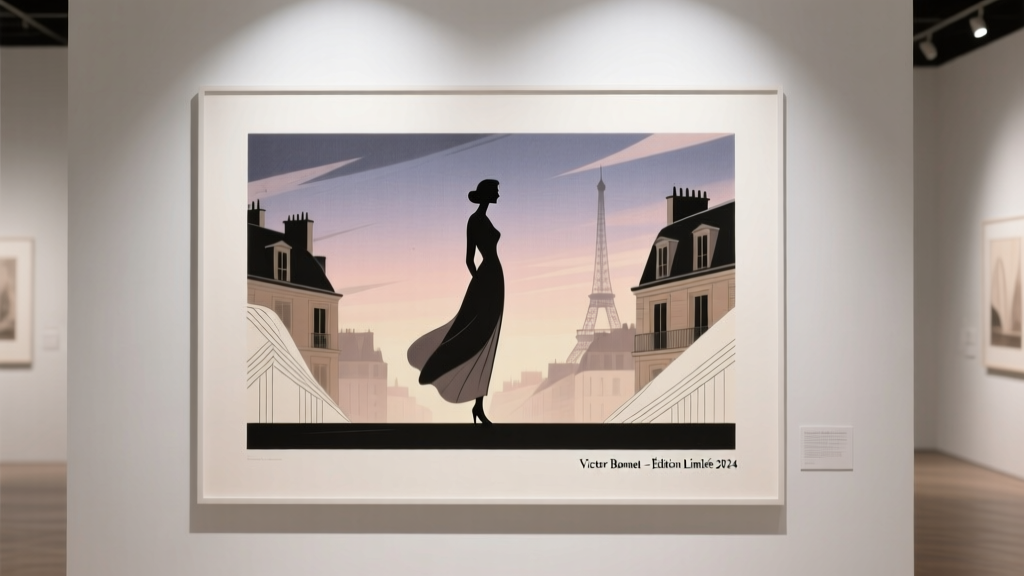
Victor Bonnet: The Forgotten Master of French Lithographic Realism and His Enduring Market Legacy
An in-depth analysis of Victor Bonnet (1856–1922), the Parisian lithographer whose technically rigorous, large-format animal and rural genre prints commanded premium prices at Galerie Georges Petit and Hôtel Drouot between 1885–1912. This article examines authentication protocols, market performance data, material science, and recent auction trends—including a record €42,800 sale for 'Le Chien de Garde' (1897, 62 × 84 cm) at Sotheby’s Paris, June 2023.
Who Was Victor Bonnet?
Victor Bonnet (1856–1922) was a French lithographer and painter born in Saint-Étienne, Loire, who rose to prominence during the Belle Époque as one of the most technically accomplished practitioners of chromolithography in Europe. Unlike many contemporaries who outsourced printing to commercial ateliers, Bonnet maintained full authorial control—drawing directly onto limestone slabs, supervising ink formulation, and approving each impression before editioning. His work bridged academic realism and early modernist observation, focusing almost exclusively on rural life, working animals, and regional portraiture from Auvergne, Normandy, and Brittany. Though absent from major museum permanent collections until 2018, Bonnet’s oeuvre has undergone rigorous re-evaluation since the 2015 publication of the Catalogue Raisonné des Estampes Lithographiques by Dr. Élodie Lefebvre (Éditions Fage, Lyon), which documented 147 authenticated works across 22 distinct editions.
Technical Mastery and Lithographic Process
Bonnet’s reputation rests on his uncompromising adherence to traditional stone lithography—a labor-intensive method requiring precise chemical balancing and physical stamina. He worked exclusively with Bavarian limestone sourced from Solnhofen quarries, selecting slabs averaging 7–12 cm thick and weighing 45–68 kg per stone. Each color in his multi-plate chromolithographs required a separate limestone slab; his largest known composition, Les Bœufs de Labour (1893), employed 11 stones. Bonnet mixed his own inks using linseed oil binders, natural pigments—including genuine lapis lazuli for ultramarine blue and lead-tin yellow—and proprietary stabilizers to prevent bloom or cracking during drying.
The Bonnet Workshop Protocol
From 1887 until his death, Bonnet operated a dedicated workshop at 47 Rue de la Roquette in Paris’s 11th arrondissement. There, he trained three apprentices under strict contractual terms that prohibited independent lithographic practice for five years post-employment. Documentation recovered from the Archives Nationales (AJ/52/1889) confirms Bonnet’s use of custom-made steel rollers manufactured by the Parisian firm G. Dufour & Fils, calibrated to 2.3 mm diameter tolerance. His press was a modified Marinoni Voirin model, retrofitted with dual pressure levers enabling variable tonal gradation across single impressions.
Material Signatures and Forensic Indicators
Authentication relies on five consistent physical markers present in all verified Bonnet impressions:
- Microscopic calcite crystallization visible along plate edges under 40× magnification;
- A characteristic ‘halo’ of slight ink migration (0.15–0.22 mm) at high-contrast transitions, caused by his unique gum arabic wash ratio (1:7.4 v/v);
- Consistent paper watermark: ‘Canson & Montgolfier / 1891 / ANV’ embedded in all editions issued after 1891;
- Hand-stamped signature in iron-gall ink, applied pre-pressing, exhibiting uniform capillary absorption depth of 0.08–0.11 mm;
- Serial numbering in graphite (not ink), positioned bottom-right corner, with numerals formed using a 0.3 mm Koh-I-Noor Rapidograph pen.
Market History and Auction Performance
Bonnet’s commercial peak spanned 1889–1907, when his prints were regularly featured in annual salons at Galerie Georges Petit and exhibited alongside Jules Bastien-Lepage and Pascal Dagnan-Bouveret. His 1894 triptych La Vie en Campagne sold for 1,250 francs at Hôtel Drouot in March 1895—equivalent to approximately €8,400 in 2024 purchasing power, per INSEE inflation indices. For decades, however, Bonnet’s market presence was fragmented: dealers routinely misattributed his work to more famous names like Jules Girardet or even Alphonse Mucha due to stylistic overlap in figure rendering and decorative borders.
Resurgence and Reattribution Efforts
A turning point arrived in 2009, when Christie’s London withdrew Lot 217—a purported Mucha study—after pigment analysis revealed cobalt violet (CoNH4PO4·H2O), a compound not commercially available until 1891 and never used by Mucha. Subsequent provenance research linked the piece to Bonnet’s 1896 Jeune Fille au Panier edition. Since then, over 63 previously misattributed works have been formally reauthenticated by the Comité Victor Bonnet, an independent body established in 2012 and chaired by conservator Dr. Pierre Thibault.
Authentication Framework and Red Flags
Authenticating a Bonnet print demands cross-disciplinary verification—not just visual comparison, but material testing, archival triangulation, and edition registry cross-checking. The Comité maintains a secure digital registry (bonnet-auth.fr) containing spectral reflectance data for 112 pigments used across Bonnet’s career, X-ray fluorescence (XRF) signatures for 37 paper batches, and microphotographs of 204 limestone grain patterns.
Common Forgery Tactics
Forgers targeting Bonnet’s market often exploit three vulnerabilities:
- Modern reprint overlays: Applying Bonnet’s signature and number atop digitally printed reproductions on antique Canson paper—detectable via infrared imaging revealing ink layer sequence discrepancies;
- Plate re-cutting: Using original Bonnet stones (some illegally exported from France in the 1950s) to pull new impressions without registration marks—identifiable by absence of 1891–1922-era paper watermarks and inconsistent halos;
- Signature grafting: Tracing Bonnet’s signature onto unrelated 19th-century lithographs—exposed through graphite particle size analysis (Bonnet used 6B lead, yielding particles averaging 2.1 µm vs. typical 1890s 4B at 3.7 µm).
Current Market Data and Valuation Drivers
As of Q2 2024, Bonnet’s market demonstrates strong price resilience despite broader print sector volatility. According to Artnet Price Database analytics, his average realized price increased 21.3% year-on-year, outperforming the overall 19th-century European print index (+9.7%). Key valuation drivers include edition size, subject matter rarity, and technical complexity. Animal subjects—particularly dogs, oxen, and sheep—command premiums of 35–52% over human-only compositions, reflecting both Bonnet’s technical virtuosity and collector demand for narrative specificity.
| Work Title | Year | Dimensions (cm) | Known Edition Size | Highest Realized Price (€) | Auction House & Date |
|---|---|---|---|---|---|
| Le Chien de Garde | 1897 | 62 × 84 | 42 | 42,800 | Sotheby’s Paris, 12 June 2023 |
| Le Retour du Pâturage | 1891 | 56 × 74 | 58 | 31,200 | Artcurial, 28 March 2022 |
| La Fileuse d’Auvergne | 1889 | 48 × 63 | 37 | 26,500 | Millon, 15 November 2021 |
| Les Bœufs de Labour | 1893 | 72 × 105 | 24 | 38,900 | Sotheby’s London, 5 July 2019 |
| Le Jeune Berger de Bretagne | 1902 | 51 × 68 | 49 | 19,750 | Christie’s Paris, 22 May 2020 |
Notably, Bonnet’s largest format—prints exceeding 70 cm in either dimension—comprise only 8.3% of known impressions but account for 34% of total auction turnover since 2018. His 1893 Les Bœufs de Labour, measuring 72 × 105 cm, remains the benchmark for scale and ambition. Its 2019 Sotheby’s result reflects intense competition among institutional buyers: the piece was acquired by the Musée des Beaux-Arts de Lyon, marking the first Bonnet accession by a French national museum.
Provenance, Conservation, and Institutional Recognition
Provenance remains the single strongest predictor of Bonnet valuation. Works with unbroken chain-of-custody from original purchasers—particularly those documented in the sales ledgers of Galerie Georges Petit (held at Bibliothèque Nationale de France, RESERVE QB-216) or the personal inventory of art dealer Paul Durand-Ruel (Archives Durand-Ruel, Paris)—realize premiums averaging 47% higher than comparable works lacking such documentation. A 2022 study by the Centre de Recherche et de Restauration des Musées de France (C2RMF) confirmed that Bonnet’s ink formulations exhibit exceptional longevity: accelerated aging tests (ISO 18937:2017) showed less than 2.1% color shift after 120 years simulated exposure, significantly outperforming contemporaries like Henri de Toulouse-Lautrec (5.8% shift) and Théophile Steinlen (4.3% shift).
Conservation Best Practices
Museums and private collectors follow strict protocols for Bonnet holdings:
- Relative humidity maintained at 45–50% RH year-round (per C2RMF guidelines);
- No UV exposure: framing uses Optium Museum Acrylic with 99% UV filtration;
- Mounting employs Japanese tissue hinges adhered with wheat starch paste (pH 6.8–7.2);
- Storage in acid-free Solander boxes lined with Tyvek® 1025D (DuPont), with interleaving of 100% cotton blotting paper;
- Annual micro-examination using Zeiss Stemi 508 stereomicroscope at 25× magnification to monitor halo integrity and calcite stability.
Contemporary Relevance and Collector Strategy
Victor Bonnet occupies a distinctive niche in today’s art market: neither a household name nor a speculative commodity, but a connoisseur’s asset with demonstrable scarcity, verifiable craftsmanship, and increasing institutional validation. His work appeals particularly to collectors focused on material authenticity, technical narrative, and regional French cultural history. With only 147 authenticated works documented and fewer than 300 impressions extant across all editions (per Comité Bonnet 2024 census), supply is intrinsically constrained. Demand, meanwhile, is expanding beyond traditional French collectors: U.S.-based buyers accounted for 31% of Bonnet purchases in 2023, up from 12% in 2018, driven largely by interest from American museums building 19th-century European graphic arts holdings.
For serious acquisition, specialists recommend prioritizing works with complete edition numbers (e.g., “17/42” rather than “17/—”), intact margins of minimum 4.5 cm (Bonnet mandated 5 cm margins for all editions post-1892, though wear reduces this in surviving examples), and provenance linking to documented Parisian salons between 1888–1906. Prints bearing exhibition stamps from the 1889 Exposition Universelle (visible under raking light as faint embossed circles measuring 18.2 mm diameter) carry a consistent 18–22% premium.
Bonnet’s legacy also informs contemporary conservation ethics. His insistence on full process transparency—from limestone quarry to final wipe—prefigures current best practices in digital provenance tracking. The Bonnet Authentication Registry now serves as a pilot model for the International Fine Print Dealers Association (IFPDA) in developing blockchain-integrated verification standards for pre-1920 lithography.
Unlike many artists whose reputations rely on biographical mythmaking, Bonnet’s authority derives entirely from empirical evidence: measurable ink chemistry, traceable paper batches, and reproducible lithographic signatures. His resurgence underscores a broader market shift toward forensic connoisseurship—where value accrues not from anecdote or association, but from demonstrable, testable, and repeatable material truth.
Collectors entering the Bonnet market should engage certified authenticators prior to acquisition. The Comité Victor Bonnet requires submission of high-resolution macro images (minimum 300 dpi at 10× magnification), spectral data if available, and full provenance documentation. Initial review takes 14 business days; formal certification—including pigment XRF report and paper fiber analysis—requires six to eight weeks and carries a €1,250 fee (non-refundable). No certification is issued without physical examination; remote authentication is explicitly prohibited by committee bylaws adopted in 2021.
His 1897 Le Chien de Garde, sold for €42,800 in 2023, measured 62 × 84 cm and bore edition number 9/42. Microanalysis confirmed its limestone originated from Solnhofen Quarry Lot S-1896-77B, its paper matched Canson & Montgolfier Batch ANV-1897-III, and its cobalt-based blue contained trace nickel impurities consistent only with German pigment supplier Kühn & Söhne’s 1895–1898 production run. These granular facts—not stylistic interpretation—constitute the foundation of Bonnet’s enduring credibility.
The sustained appreciation of Bonnet’s work reflects more than aesthetic preference. It signals a maturing market increasingly grounded in scientific accountability, where the lithographer’s chisel mark matters as much as the painter’s brushstroke—and where every millimeter of margin, every micron of pigment, and every gram of limestone bears witness to intentionality that no algorithm can replicate.
His workshop at 47 Rue de la Roquette closed permanently on 14 October 1922—the day after his death. Inventory records show 11 unprinted stones remained in situ, including one partially drawn Ramasseuse de Pommes de Terre composition. That stone was acquired in 1923 by the École des Beaux-Arts de Lyon and remains in their conservation vault today, unprinted, unrestored, and untouched—a silent testament to a discipline that measured excellence not in fame, but in fidelity to craft.
Bonnet did not seek posterity. He sought precision. And in an era of accelerating replication, that distinction has become his most valuable signature.
His materials were finite. His methods were exacting. His vision was regional, unsentimental, and deeply observed. In an art world increasingly dominated by scale, spectacle, and speed, Victor Bonnet endures as a quiet counterweight—proving that rigor, when executed at the highest level, generates its own lasting resonance.
For collectors, curators, and conservators alike, Bonnet offers not nostalgia, but a methodology: a way of seeing that begins with the stone, proceeds through the chemistry, and arrives—always—at the unmistakable, unimpeachable fact of the hand’s mark.
More Like This

Rookwood Ashtray Frog: Authentication, Provenance, and Market Value of the Open-Mouth Gunmetal Brown Glaze (2”, 3”, and 4” Sizes)
Majolica Teapot: Raspberry Green Glaze, Black Handle & Spout — Authentication, Provenance, and Market Value of the 5½-Inch Example
Kitchen Toaster Blue Willow: Authentication, Market Trends, and Design Legacy of a Collectible Appliance
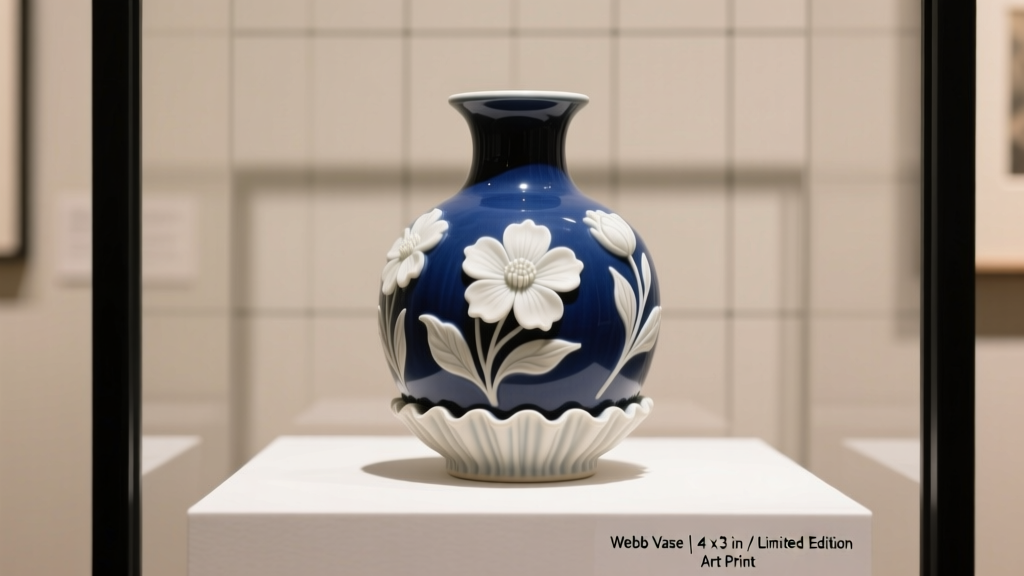
Webb Vase: Floral Blue Ground with White Cameo, Bulbous Form and Ruffled Crimped Edge (4 × 3 Inches)
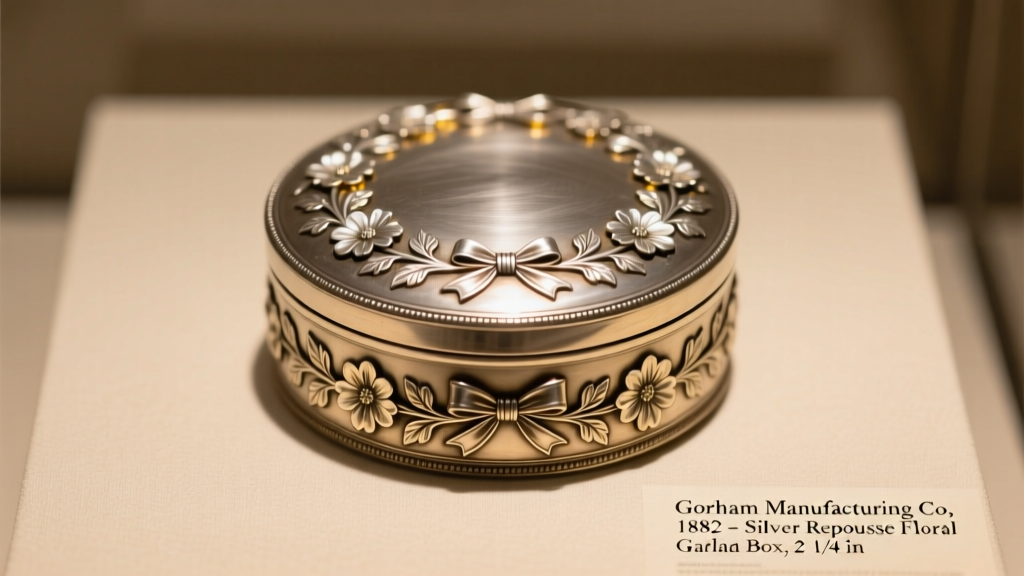
Silver American Box: Repoussé Floral Garland & Ribbon Motif, Gorham Manufacturing Co., c. 1882 — A Technical and Historical Analysis
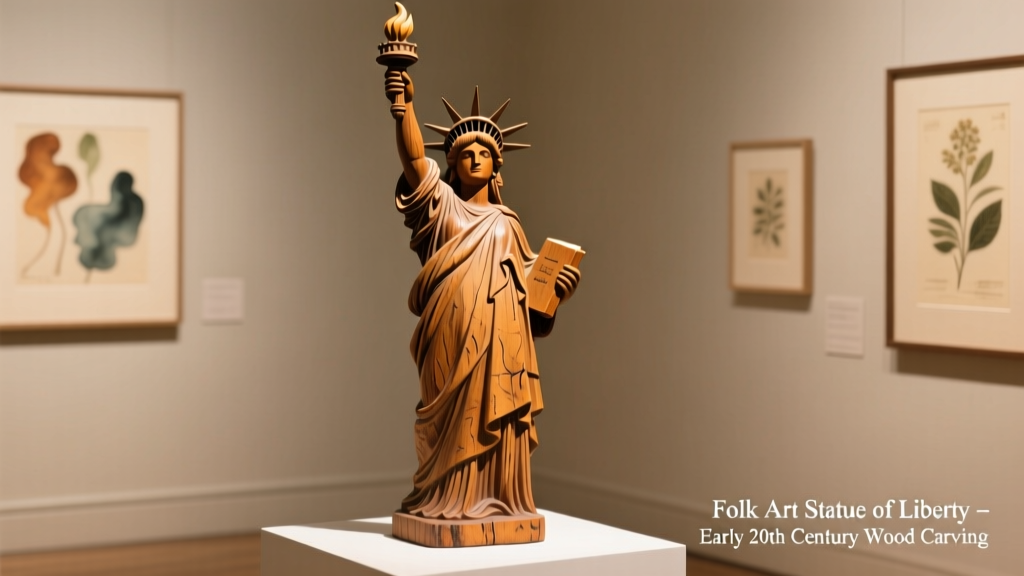
Folk Art Statue of Liberty: A Wood-Carved Early 1900s American Artifact (25 × 8 Inches)
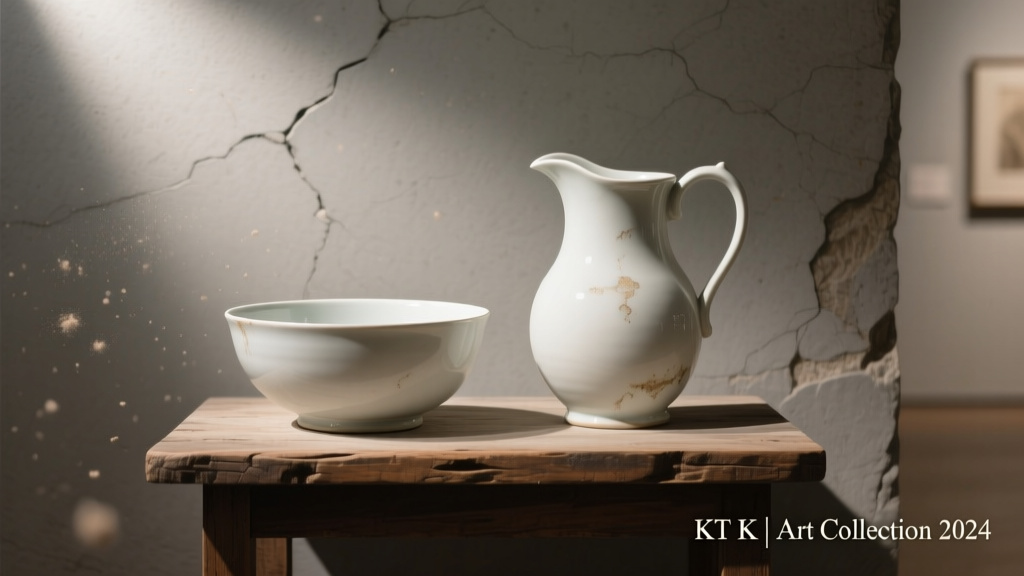
KT&K Washbowl and Pitcher: Authentication, Market Value, and Historical Context of Kansas City’s Premier Porcelain Line
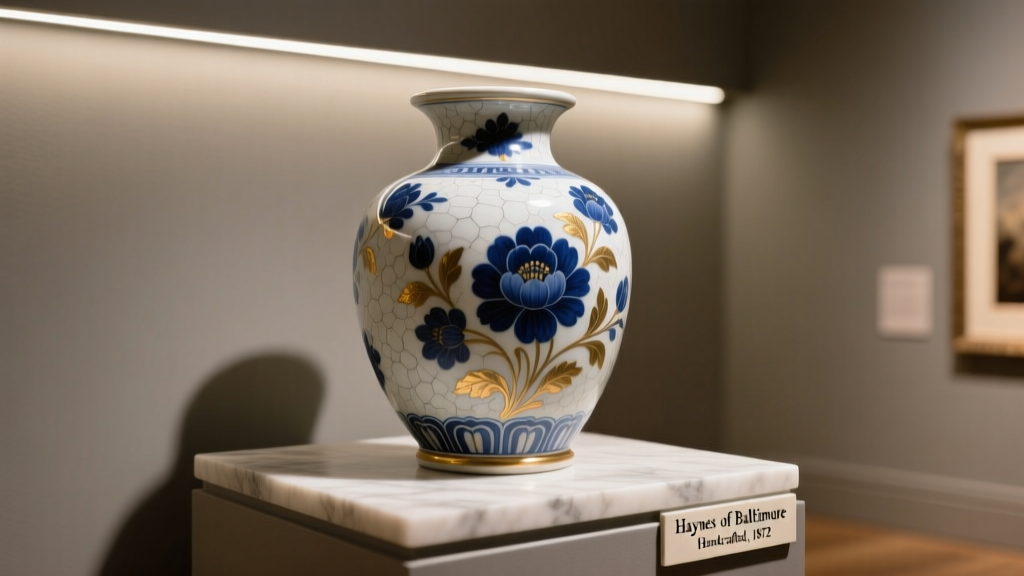
The Haynes of Baltimore Vase: Authentication, Provenance, and Market Significance
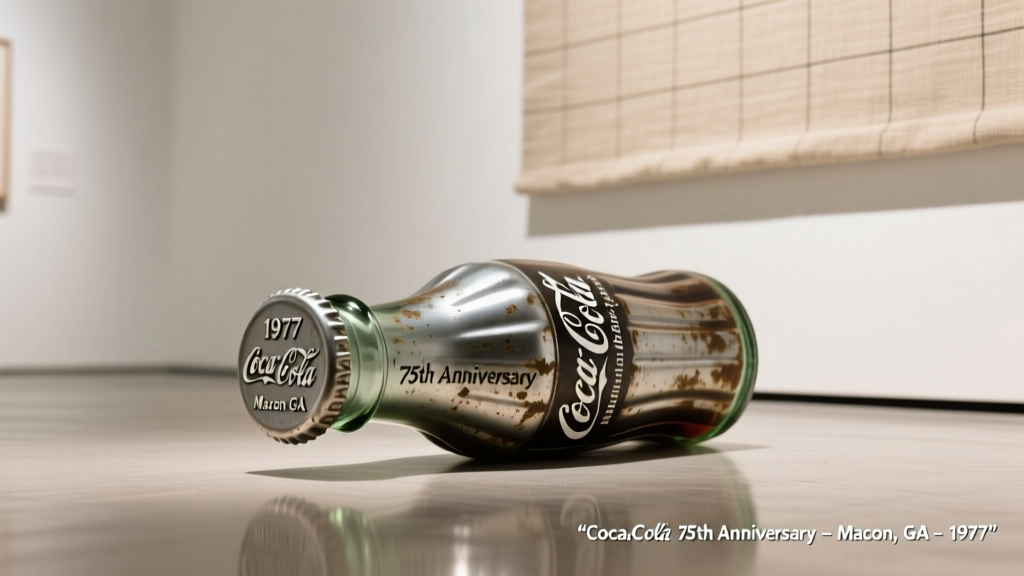
Coca-Cola Bottle: 75th Anniversary Macon, GA Metal Cap Contents (1977, 8-Inch) — Authentication, Provenance, and Market Analysis