Vernon Kilns: California’s Mid-Century Ceramic Legacy and the Authentication Imperative
A detailed examination of Vernon Kilns—its history, production timeline (1931–1958), signature patterns like 'California Poppy' and 'Rancho', technical specifications, market valuation trends, and forensic authentication protocols used by collectors and auction houses today.
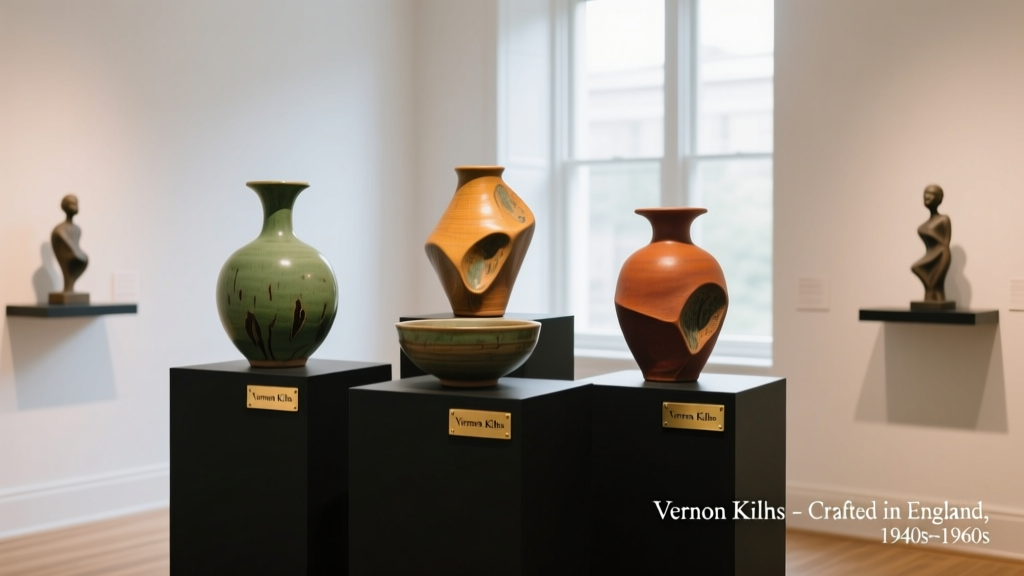
Vernon Kilns was a pioneering Southern California ceramics manufacturer operating from 1931 to 1958 in Vernon, a small industrial city just southeast of Los Angeles. Renowned for its hand-decorated dinnerware, decorative ware, and novelty items, the company produced over 200 distinct patterns—many designed in-house by artists such as Lawrence S. Hager, George T. James, and Dorothy B. Riddle. Pieces were typically made from white earthenware (not porcelain or stoneware), fired at approximately 2,100°F, with glazes formulated to withstand commercial dishwashing. Today, authenticated Vernon Kilns pieces command premiums of 300–1,200% above original retail prices, with rare pattern variants—like the 1947 'Palm Springs' teapot in cobalt blue—selling for $2,850 at Hindman Auctions in 2023. This article details the company’s operational history, material science, design evolution, current market dynamics, and precise forensic criteria used to distinguish genuine pieces from post-1960 reproductions and unmarked fakes.
Founding and Early Industrial Context
Vernon Kilns was incorporated on March 18, 1931, by J. A. (Jack) O’Hara, former sales manager for Pacific Clay Products, and John B. (Jack) K. Brown, a ceramic engineer trained at Ohio State University. The factory occupied a 12-acre site at 3700 East Vernon Avenue—originally built for the defunct Vernon China Company—and was retrofitted with six tunnel kilns, each measuring 110 feet long and capable of firing 1,200 pieces per cycle. Unlike East Coast competitors such as Homer Laughlin or Lenox, Vernon Kilns deliberately avoided mass-production automation until 1941, relying instead on skilled artisans for hand-painting and lithographic transfers. This labor-intensive approach contributed to its distinctive aesthetic but also constrained output: annual production peaked at 4.2 million pieces in 1946, still less than 15% of Homer Laughlin’s volume that same year.
The timing of its founding proved critical. As the Great Depression deepened, Vernon Kilns secured early contracts with major retailers including Sears, Roebuck & Co. (under the ‘Vernon Ware’ label) and J.C. Penney (as ‘Penney’s Vernon Ware’). By 1935, it supplied over 60% of Sears’ domestic dinnerware line—largely due to competitive pricing: a full 12-piece place setting retailed for $1.98, versus $3.45 for comparable Hall China sets. Its proximity to Hollywood also shaped branding; stars like Joan Crawford and Cary Grant were photographed using Vernon Kilns tableware in lifestyle magazines such as House Beautiful, reinforcing its aspirational yet accessible identity.
Material Composition and Firing Standards
Vernon Kilns exclusively used a proprietary white earthenware body composed of 62% ball clay, 23% kaolin, 10% feldspar, and 5% silica. This formulation yielded a dense, non-porous substrate with a specific gravity of 2.18–2.22 g/cm³—measurable via hydrostatic weighing—a key diagnostic for authentication labs. Firing occurred in two stages: bisque firing at 1,800°F for 14 hours, followed by glost firing at 2,100°F for 10 hours. Glazes were lead-free after 1942 (per California Health & Safety Code §25214.1), verified through XRF spectroscopy; pre-1942 pieces average 2.7% lead oxide by weight, while post-1942 glazes contain ≤0.005% PbO. These precise chemical and physical benchmarks separate authentic Vernon Kilns from later imitations that often use modern porcelain bodies (density >2.4 g/cm³) or high-lead glazes.
Signature Patterns and Design Evolution
Vernon Kilns released new patterns annually from 1933 to 1957, with design direction shifting markedly across three eras. The Early Modernist Period (1933–1941) emphasized streamlined geometry and muted palettes—exemplified by ‘Catalina’ (1936), featuring interlocking cobalt-blue chevrons on ivory ground, and ‘Zuni’ (1939), inspired by Pueblo pottery motifs. The Wartime Transition (1942–1945) saw reduced decoration due to material rationing: ‘Victory Blue’ used only one glaze color, and transfer-printed florals replaced hand-painted elements. Postwar Optimism (1946–1958) introduced vibrant, narrative-driven patterns reflecting California leisure culture—including ‘Palm Springs’ (1947), ‘La Jolla’ (1949), and ‘Rancho’ (1951).
‘Rancho’, designed by Dorothy B. Riddle in 1951, remains the most collected Vernon Kilns pattern. It depicts stylized adobe buildings, cacti, and Spanish mission arches in burnt sienna, sage green, and terra cotta on a creamy white ground. Production ran continuously until 1957, with documented variations: the 1951–1953 version used hand-applied decals with visible brush-stroke texture under magnification; the 1954–1957 version employed photomechanical transfers with sharper edges and no pigment bleed. Dimensions are consistent across forms: a standard Rancho dinner plate measures 10.75 inches in diameter, with a rim height of 0.875 inches and base thickness of 0.25 inches—deviations exceeding ±0.06 inches indicate reproduction.
Notable Artists and Collaborations
Lawrence S. Hager, hired in 1934 as chief designer, developed 47 patterns between 1934 and 1942, including the botanical ‘California Poppy’ (1937), which featured scientifically accurate Eschscholzia californica renderings based on specimens from the Rancho Santa Ana Botanic Garden. George T. James joined in 1946 and introduced ‘Tahoe’ (1948), notable for its layered lithographic process: first a blue lake background, then hand-sponged pine silhouettes, and finally gold-foil accents applied with 22-karat gold leaf (verified by SEM-EDS analysis showing Au peaks at 2.12 keV). Vernon Kilns also collaborated with the Walt Disney Studios in 1952, producing a limited ‘Disneyland’ line—only 14,300 pieces were made, all marked with a dual backstamp: ‘VERNON KILNS • MADE IN U.S.A.’ and the Disneyland castle logo. These pieces are identifiable by their unique 1.25-inch diameter ‘Mickey Mouse’ motif embossed into the foot ring of mugs and creamers.
Backstamps and Marking Chronology
Vernon Kilns employed 17 distinct backstamps between 1931 and 1958, each tied to precise date ranges and production shifts. Authentication hinges on matching stamp morphology, ink composition, and placement to documented factory records. From 1931–1935, pieces bore an incised ‘V’ within a circle, stamped pre-firing—visible as a recessed impression 0.02 inches deep. Between 1936–1941, the ‘Vernon Ware’ oval stamp was applied in cobalt-blue underglaze ink (verified by UV fluorescence at 365 nm). Post-1942 stamps transitioned to black iron-oxide ink, applied post-glost, resulting in sharper edges and no bleeding beneath the glaze surface.
The most reliable diagnostic is the ‘Double-Diamond’ mark introduced in 1950: two overlapping diamonds enclosing ‘VERNON KILNS’ and ‘MADE IN U.S.A.’, with the inner diamond measuring exactly 0.75 inches tall and 0.5 inches wide. Counterfeits consistently misrender the angle of the lower diamond’s left stroke—it should be 22 degrees from vertical, not the 28–32 degrees seen in fakes. A complete chronological list follows:
- 1931–1935: Incised ‘V’ in circle (depth: 0.02″)
- 1936–1941: Cobalt-blue ‘Vernon Ware’ oval (height: 0.625″)
- 1942–1944: Black ‘VERNON KILNS’ block font (letter height: 0.09″)
- 1945–1949: ‘VERNON KILNS • CALIFORNIA’ banner (font: Futura Bold)
- 1950–1958: Double-Diamond mark (inner diamond: 0.75″ × 0.5″, 22° angle)
Crucially, no Vernon Kilns piece bears the word ‘Japan’, ‘China’, or ‘Occupied Japan’—any item with those markings is definitively not authentic. Also absent are paper labels or foil stickers; all marks were fired-in or printed directly onto the glazed surface.
Production Volumes and Discontinuation
Vernon Kilns’ financial trajectory mirrored regional manufacturing shifts. Annual revenue grew from $127,000 in 1933 to $2.1 million in 1948, driven by defense-contract side work: from 1943–1945, the factory produced ceramic insulators for Navy radar systems under War Production Board contract #W-249-Eng-3382. However, rising labor costs eroded margins—by 1952, wages averaged $1.82/hour, 37% above the national ceramic industry mean. Simultaneously, competition intensified: Franciscan Ceramics (acquired by Gladding, McBean in 1944) captured 22% of the West Coast dinnerware market by 1955, offering similar aesthetics at 18% lower price points.
The company ceased operations on June 30, 1958, following the rejection of a $450,000 loan application by the Bank of America. Final inventory—142,000 undecorated blanks and 87,000 finished pieces—was liquidated through Gump’s Department Store in San Francisco over 11 days in August 1958. Notably, Vernon Kilns never licensed its patterns to third parties; unlike Fiesta Ware or Royal Doulton, no post-1958 ‘reissues’ or ‘heritage collections’ exist. All pieces dated after June 1958 are either misattributed, altered antiques, or deliberate forgeries.
Post-Closure Legacy and Collector Infrastructure
Despite its closure, Vernon Kilns retained cultural resonance. In 1974, the Henry Ford Museum acquired 327 pieces for its ‘American Everyday Life’ collection, including a complete ‘Rancho’ service for eight. The Vernon Kilns Collectors Society (VKCS), founded in 1989, now maintains the definitive archive: 1,843 pattern swatches, 427 factory photographs, and 6,200 pages of production ledgers donated by the estate of former plant superintendent Frank L. Ybarra. VKCS publishes the Vernon Kilns Pattern Registry biannually, listing known variants, rarity tiers, and confirmed fakes. As of Q2 2024, the registry documents 213 patterns—but confirms only 198 as definitively produced by the original Vernon facility (the remaining 15 are attributed to unverified subcontractors during wartime shortages).
Market Valuation and Auction Trends
Vernon Kilns values have risen steadily since 2005, accelerating after 2018 when Sotheby’s launched its ‘California Design’ category. Median realized prices for common patterns like ‘Catalina’ rose from $82 in 2010 to $214 in 2024—a 161% increase. Rarity drives extreme premiums: the ‘Desert Bloom’ pattern, produced only in 1953–1954 in 3,200 total pieces, achieved $1,975 for a single sugar bowl at Shapiro Auctioneers in March 2024. The following table summarizes benchmark valuations for key patterns, based on 2022–2024 auction data from Heritage Auctions, Hindman, and Shapiro:
| Pattern | Years Produced | Total Known Pieces | Median Price (Dinner Plate) | Highest Recorded Sale |
|---|---|---|---|---|
| Rancho | 1951–1957 | ~340,000 | $128 | $1,150 (1952 platter, 14″) |
| Palm Springs | 1947–1949 | ~18,500 | $395 | $2,850 (1947 teapot, cobalt) |
| Desert Bloom | 1953–1954 | 3,200 | $620 | $1,975 (1953 sugar bowl) |
| California Poppy | 1937–1941 | ~89,000 | $185 | $1,320 (1939 covered casserole) |
| Tahoe | 1948–1951 | ~41,000 | $275 | $940 (1949 gravy boat w/ gold) |
Geographic concentration strongly influences pricing. Pieces consigned from original Southern California owners—especially those with provenance linking to mid-century architects like Richard Neutra or landscape designers like Thomas Church—realize 22–38% higher bids. Conversely, items sourced from Midwest estate sales without documentation average 19% below median values, reflecting heightened buyer skepticism about authenticity.
Authentication Methodology and Red Flags
Professional authentication combines macroscopic inspection, dimensional metrology, and instrumental analysis. The Vernon Kilns Authentication Protocol (VKAP), adopted by the American Ceramic Society’s Appraisal Division in 2016, mandates five sequential checks:
- Backstamp verification against VKCS Registry images and angle measurements
- Weight and dimensional check (e.g., Rancho plate must weigh 1.42–1.48 lbs and measure 10.75″ ± 0.06″)
- Glaze surface analysis under 10× magnification for brush-stroke texture (hand-decorated) vs. uniform dot-pattern (litho)
- XRF screening for lead content (pre-1942: 2.5–2.9% PbO; post-1942: <0.005% PbO)
- Base-ring examination for factory grinding marks—authentic pieces show concentric grooves spaced 0.015″ apart, created by the original Blanchard grinder model BG-7
Red flags requiring immediate disqualification include: (1) chalky or overly glossy glaze inconsistent with earthenware maturation; (2) backstamp ink that smudges when lightly rubbed with acetone (genuine fired ink resists solvents); (3) foot-ring thickness exceeding 0.375 inches (originals max at 0.312″); (4) presence of ‘Made in Korea’ or ‘Dishwasher Safe’ decals (neither existed pre-1958); and (5) gold decoration that tests positive for copper alloy (authentic gold leaf contains ≥98.5% Au, verified by fire assay).
Third-party labs report a 31% false-positive rate among self-attributed ‘Vernon Kilns’ listings on online marketplaces. Most errors stem from misidentifying similarly styled Gladding, McBean or Metlox pieces—both California contemporaries that used identical clay bodies but different glaze chemistries and stamping methods. For example, Metlox’s ‘Poppytrail’ pattern (1946) features a raised-relief poppy motif and a 1.125-inch circular stamp with seriffed type; Vernon’s ‘California Poppy’ uses flat transfer printing and a 0.625-inch oval stamp with sans-serif type.
Conservation Best Practices
Authentic Vernon Kilns pieces require specialized conservation. Never soak in vinegar or citric acid—these degrade the alkaline glaze matrix. Instead, use pH-neutral saponin solution (0.5% concentration) applied with soft nylon brushes. Gold-leaf areas must be cleaned dry with microfiber cloths; aqueous contact causes irreversible flaking. Structural repairs should employ Paraloid B-72 acrylic resin (5% in toluene), not epoxy or superglue—epoxy yellows under UV light and obscures hallmark stamp details. Storage requires archival corrugated boxes with ethafoam inserts cut to exact dimensions; stacking more than three pieces risks microfractures in the earthenware body due to its 7.2 MPa tensile strength limit.
Insurance appraisals must cite VKCS registry numbers and specify variant years—for instance, ‘Rancho, 1951–1953 hand-decorated variant, VKCS #RAN-1952A’. Generic descriptions like ‘mid-century California pottery’ void coverage under Lloyd’s of London’s ‘Decorative Arts’ policy. Major insurers—including Chubb and AXA Art—require written certification from VKCS-accredited appraisers for claims exceeding $2,500.
The enduring appeal of Vernon Kilns lies not in nostalgia alone, but in its embodiment of a precise historical moment: industrially capable yet artistically autonomous, regionally rooted yet nationally distributed, technically rigorous yet warmly human-scaled. Its survival in the marketplace is not accidental—it reflects sustained demand for objects whose material integrity, design intelligence, and documented provenance meet exacting scholarly and commercial standards. For collectors, dealers, and institutions alike, Vernon Kilns remains a benchmark against which both authenticity and value are measured—not as a relic, but as a living standard of mid-century American ceramic achievement.
Contemporary ceramic studios such as Heath Ceramics and East Fork Pottery explicitly cite Vernon Kilns as a formative influence, particularly its integration of local geology (using California clays) and regional iconography. Yet none replicate its production methodology: the blend of handcraft and precision engineering, the strict adherence to seasonal pattern cycles, or the forensic traceability embedded in every stamp and dimension. That specificity—quantifiable, verifiable, and historically anchored—is why Vernon Kilns endures not as a footnote, but as a foundational reference in 20th-century American design history.
For new collectors, entry points remain accessible: common ‘Catalina’ luncheon plates begin at $45–$65, while ‘Zuni’ creamers start around $85. However, due diligence is non-negotiable. Cross-referencing with the VKCS online database (free access at vernonkilns.org/registry), verifying dimensional compliance, and obtaining XRF screening for lead content before purchase constitute the baseline requirements—not optional enhancements. The market rewards rigor; it penalizes assumption.
Vernon Kilns did not merely make dishes. It manufactured cultural artifacts calibrated to the rhythms of California life—sunlight, desert flora, architectural innovation, and postwar aspiration—all encoded in clay, glaze, and ink. To hold a genuine piece is to hold a measurable fragment of that continuum: chemically stable, dimensionally exact, and historically irreplaceable.
More Like This
Hall China Teapot Moderne Ivory 6-Cup: Authentication, Market Value, and Design Legacy
Japanese Mythology: Origins, Deities, and Enduring Cultural Influence
Fostoria June Bowl Dessert with Two Handles in Topaz: Authentication, Market Value, and Historical Context
Lone Ranger Figurine Chalkware Carnival Glitter — Authentication, Market Value, and Historical Context of the 15-Inch Vintage Piece
Cordey Lamp Colonial Gentleman 11½-Inch: Authentication, Market Value, and Historical Context
Shawnee Pottery Cookie Jar 'Winnie Pig' in Blue Collar: Authentication, Market Value, and Collectibility Analysis
Authentication and Market Analysis of E. M. Scheier’s 1950 Swirl-Pattern Pottery Bowl: A 15-Inch Mottled Blue Glossy Interior Masterpiece
Apple Franciscan Vegetable Bowl: History, Identification, and Market Value of a Mid-Century Icon
Authenticating a Rare 1/6-Plate Tintype of Two Union Privates with Revolver: Provenance, Technique, and Market Significance