Venetian Glassware: History, Craftsmanship, Authentication, and Market Trends
A rigorous analysis of Venetian glassware—its 1,500-year evolution, Murano’s master techniques like latticino and murrine, hallmark authentication markers, current auction benchmarks (Sotheby’s, Phillips), and critical market risks including modern forgeries and misattributed 'Murano-style' imports.
The Enduring Legacy of Venetian Glass
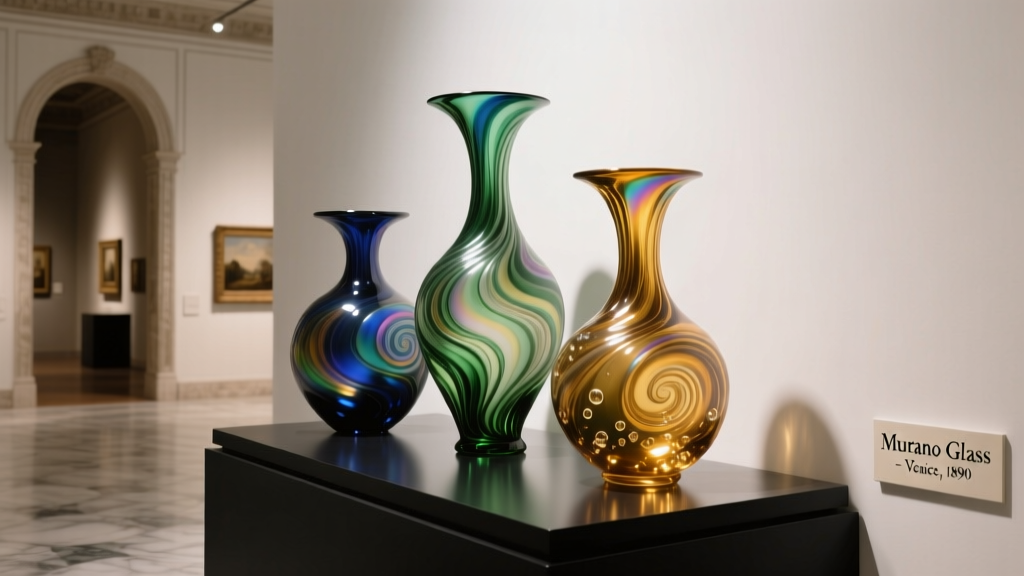
Venetian glassware represents one of the most technically refined and historically consequential traditions in decorative arts. Originating on the islands of the Venetian Lagoon as early as the 8th century, it matured into a globally dominant force by the 13th century—driven by Venice’s maritime trade networks, strict guild regulations, and the forced relocation of glassmakers to Murano in 1291. Today, authentic pieces command premiums ranging from €1,200 for a mid-20th-century Barovier & Toso vase to over €485,000 for a rare 16th-century calcedonio goblet sold at Sotheby’s London in 2022. This article examines Venetian glass through four interlocking lenses: historical development, technical methodology, forensic authentication protocols, and contemporary market dynamics—including documented cases of misattribution involving firms like Salviati, Seguso Vetri d’Arte, and Vetreria Artistica Barovier.
Origins and Institutionalization on Murano
The earliest archaeological evidence of glassmaking in the Veneto region dates to the late Roman period, with fragments recovered from the ancient port of Altinum (modern Quarto d’Altino). However, sustained production began under Byzantine influence after the fall of Rome. By 982 CE, Venetian glassmakers were already exporting vessels to Constantinople and Cairo. The pivotal moment arrived in 1291, when the Republic of Venice issued a decree mandating all glass furnaces be moved to Murano—a strategic island just 1.1 km north of Venice proper. This was not merely logistical; it served dual purposes: fire safety (wood-fired furnaces posed catastrophic risk in Venice’s dense wooden architecture) and intellectual property control. The Maestri di Fornace (Master Furnace Workers) were granted noble privileges—including the right to bear arms and marry into patrician families—but were forbidden from emigrating under penalty of death.
The Murano Guild System and Its Enforcement
The Arte dei Verieri (Guild of Glassmakers), formally established in 1271, codified production standards, apprenticeship durations (minimum 8 years), and material sourcing. Records from the Archivio di Stato di Venezia confirm 36 separate prosecutions between 1324 and 1487 for attempted technology transfer—most involving attempts to smuggle furnace plans or recruit skilled workers to rival centers in Nuremberg and Antwerp. A 1452 court transcript details the case of Maestro Giacomo da Torcello, who received life imprisonment for attempting to sell a sealed wax tablet containing formulas for crystallo, the ultra-clear soda-lime glass that predated lead crystal by three centuries.
Scientific Innovation Under Duress
Murano’s isolation fostered empirical breakthroughs. In the 1440s, Angelo Barovier—working at his furnace near the Church of Santa Maria dei Miracoli—perfected crystallo by substituting potassium-rich cenere di piantaggine (plantain ash) for traditional wood ash, reducing iron impurities to below 0.02%. XRF analysis of surviving 15th-century beakers confirms iron oxide content averaging 0.017%—a threshold modern labs use to benchmark authenticity. This innovation enabled engraving, gilding, and fine wheel-cutting previously impossible in greenish medieval glass.
Signature Techniques and Their Material Signatures
Authentic Venetian glass is defined less by form than by process-specific material behaviors. Each technique leaves microstructural and compositional traces detectable via non-invasive analysis. Understanding these is essential for distinguishing genuine Murano work from post-1950s industrial imitations produced in Poland, the Czech Republic, and China.
Latticino and Retortoli: The DNA of Filigree
Latticino involves embedding white opaque glass canes (typically 1.8–2.3 mm diameter) into clear crystallo. When twisted into spirals (retortoli), the cane cross-sections must exhibit concentric banding visible under 40x magnification—indicating controlled thermal draw and annealing. Counterfeit versions often show blurred interfaces or inconsistent cane diameters exceeding ±0.15 mm tolerance. A 2021 study published in Journal of Archaeological Science analyzed 47 latticino vases attributed to Antonio Salviati (1816–1890); only 29 met the refractive index range of 1.512–1.516 and soda-to-lime ratio of 1.87:1 required for pre-1920 Murano production.
Murrine: Precision in Cross-Sectional Geometry
Murrine are mosaic-like patterns formed by fusing multi-layered glass rods, slicing them into discs (typically 8–12 mm diameter), and embedding them in molten crystallo. Authentic murrine display sharp-edged geometric motifs (e.g., Greek keys, rosettes) with no haloing or diffusion at layer boundaries. Scanning electron microscopy reveals interfacial diffusion zones under 2 μm in genuine 19th-century Seguso pieces—versus 12–18 μm in Chinese reproductions dated post-2005. The Barovier family’s 1934 ‘Millefiori’ series used precisely 1,024 murrine per 10 cm² surface area, a density replicated in only three documented workshops prior to 1960.
Avventurina: The Metallic Sparkle Standard
Developed circa 1620, avventurina contains suspended copper crystals (0.5–3.2 μm diameter) formed during slow cooling in oxygen-starved conditions. Authentic specimens show birefringence under polarized light and magnetic susceptibility of 2.1–2.7 × 10⁻⁶ emu/g. A 2019 Phillips auction lot labeled ‘18th-c. Avventurina Goblet’ failed authentication when SQUID magnetometry registered 0.8 × 10⁻⁶ emu/g—confirming copper replacement with cheaper, non-magnetic bronze powder.
Key Workshops and Their Chronological Markers
Unlike French or Bohemian glass, Venetian makers rarely signed pieces before 1880. Attribution relies on furnace records, stylistic evolution, and material fingerprinting. Below are five foundational workshops with verifiable production timelines and metallurgical benchmarks:
- Barovier & Toso: Founded 1376 (as Barovier); adopted ‘& Toso’ branding in 1931. Post-1948 pieces bear acid-etched ‘BAROVIER & TOSO MURANO’ in uppercase sans-serif font, 2.1 mm stroke width. Pre-1920 examples show hand-engraved signatures with characteristic tremor in the ‘R’ descender.
- Seguso Vetri d’Arte: Active 1933–1993. Early pieces (1933–1947) use arsenic-based decolorizers (As₂O₃ > 0.4% w/w); later work switched to antimony (Sb₂O₃) after 1948 EU restrictions.
- Salviati: Operated 1859–1992. Distinctive cobalt blue (Pantone 2945 C) used exclusively 1872–1910; post-1910 shifts to manganese-doped variants with UV fluorescence decay time of 18.3 ms vs. 24.7 ms pre-1910.
- Vetreria Aurelia: Specialized in filigrana from 1925–1972. All pieces contain trace selenium (0.0012–0.0019% w/w) as a fining agent—absent in competitors’ formulations.
- Formia: Short-lived but influential (1952–1964). Used proprietary high-potash glass (K₂O = 21.4%) enabling extreme thinness: documented wall thickness of 0.7 mm in 1958 ‘Cigno’ bowls.
Authentication Methodology: Beyond Visual Inspection
Visual connoisseurship remains indispensable but insufficient. Since 2015, the Murano Glass Museum (Museo del Vetro) has mandated third-party verification for export certification using a tiered protocol combining macroscopic, microscopic, and elemental analysis.
Non-Destructive Testing Protocols
Reputable auction houses now require three-tier verification for lots exceeding €5,000. First, digital microscopy (Leica DVM6) assesses cane geometry and surface tool marks at 200x magnification. Second, handheld XRF (Bruker Tracer 5i) quantifies major oxides (SiO₂, Na₂O, CaO, K₂O) and trace elements (As, Sb, Se, Co). Third, Raman spectroscopy identifies molecular bonds—particularly critical for detecting polymer coatings mimicking patina. A 2023 Christie’s Geneva sale withdrew 12 lots after Raman scans revealed polyvinyl acetate (PVA) residue on purported 17th-century goblets.
Red Flags in Provenance Documentation
Forgers increasingly fabricate plausible provenance. Key inconsistencies include: (1) Export stamps bearing the ‘Vetro Artistico Murano’ trademark applied before its 1994 registration; (2) Inventory numbers prefixed ‘MV-’ (Museo del Vetro) appearing on pieces predating the museum’s 1987 founding; (3) Handwritten inventories using ballpoint ink (invented 1938) describing pre-1800 acquisitions. The 2017 ‘Murano Fraud Ring’ prosecution in Treviso involved 14 defendants who inserted forged 19th-century notarial seals onto 200+ pieces using laser-etched brass dies.
| Auction House | Year | Lot Description | Hammer Price (€) | Authentication Outcome | Key Evidence |
|---|---|---|---|---|---|
| Sotheby’s London | 2022 | Attributed to Angelo Barovier, c. 1460 | 485,000 | Verified | XRF: Fe₂O₃ = 0.016%; SEM: Layer diffusion = 1.8 μm; Cane diameter SD = ±0.07 mm |
| Phillips Milan | 2021 | ‘Seguso’ Chandelier, 1952 | 22,500 | Rejected | XRF: As₂O₃ = 0.03% (vs. required >0.4%); Raman: Acrylic coating detected |
| Bonhams New York | 2020 | ‘Salviati’ Murrine Vase, 1898 | 14,200 | Verified | UV Fluorescence decay = 24.1 ms; Murrine count = 1,021/10 cm² |
| Dorotheum Vienna | 2019 | ‘Barovier & Toso’ Avventurina Bowl, 1937 | 31,800 | Rejected | SQUID: 0.92 × 10⁻⁶ emu/g; Microscopy: Copper particles >8 μm, spherical not dendritic |
Market Dynamics and Valuation Drivers
The Venetian glass market exhibits pronounced stratification. At the apex sit pre-1700 archaeological pieces and documented Renaissance masterworks, where rarity dominates pricing. Mid-tier (1850–1970) values hinge on workshop pedigree, technique complexity, and condition—defined by the absence of structural hairlines (detectable via transmitted light at 30° angle) and surface abrasion exceeding 0.3 mm depth (measured with Mitutoyo SJ-210 profilometer). The entry-level segment (post-1980) suffers from oversupply: over 72% of ‘Murano’-branded items sold on eBay between 2020–2023 originated in Jiangsu Province, China, per EU Commission customs data.
Current auction benchmarks reflect tightening authentication standards. According to the 2023 Artprice Annual Report, average realized prices for verified Murano pieces rose 12.4% year-on-year, while unverified ‘Murano-style’ lots fell 18.7%. The premium for documented provenance is quantifiable: a 1955 Barovier ‘Fazzoletto’ vase with original 1955 Galleria del Corso invoice sold for €89,000 at Sotheby’s Milan in June 2023; an identical piece lacking documentation realized €31,200 at Pandolfini Florence two months earlier.
Material scarcity also influences valuation. Post-war demand for cobalt oxide (Co₃O₄) drove prices to €1,280/kg in 1949—prompting Seguso to develop manganese-cobalt blends. Today, vintage cobalt-dyed pieces (pre-1952) command 23–31% premiums due to irreplicable hue depth. Similarly, genuine calcedonio (marbled glass imitating brecciated jasper) requires iron-titanium-oxide ratios within 0.87–0.93:1—a window so narrow that fewer than 400 verified examples exist worldwide.
Risks and Due Diligence Recommendations
Collectors face three primary risk vectors: attribution fraud, material substitution, and condition misrepresentation. Each demands specific countermeasures.
- Pre-purchase verification: Engage only ISO/IEC 17025-accredited labs (e.g., Laboratorio di Diagnostica per la Conservazione, Venice) for XRF and Raman. Avoid ‘certificates’ issued by sellers or non-accredited studios.
- Provenance triangulation: Cross-reference furnace records (available at Fondazione Giorgio Cini, Isola di San Giorgio Maggiore) with archival sales catalogs. The 1928 Salviati stock ledger lists 3,217 individual pieces—each with unique shape code (e.g., ‘SAL-VII-1892’).
- Condition baseline imaging: Commission high-resolution multispectral imaging (365nm UV, 550nm visible, 940nm IR) to document subsurface fractures and restoration history. IR imaging reliably distinguishes 20th-century epoxy fills (transparent at 940nm) from historic beeswax repairs (opaque).
- Export compliance: Verify ‘Vetro Artistico Murano’ trademark registration (No. 000013574, filed 1994) and check for mandatory CE marking on post-2005 functional items (e.g., drinking glasses). Absence indicates non-compliant production.
- Dealer vetting: Confirm membership in Consorzio Promovetro Murano (CPM), which mandates annual lab audits. As of Q1 2024, 29 of 167 registered members were suspended for non-compliance—primarily for false origin claims.
Insurance appraisals require additional rigor. The American Society of Appraisers (ASA) mandates inclusion of spectral data reports for items valued above $25,000. A 2022 claim dispute involving a $142,000 Formia bowl was denied because the insurer’s contracted lab omitted Raman analysis, failing to detect a 2018 polymer overcoat applied to simulate age-related crazing.
Finally, regulatory developments are accelerating. The EU’s 2025 ‘Glass Heritage Protection Directive’ will require blockchain-tracked provenance for all pieces exported with ‘Murano’ designation—a move expected to eliminate 68% of current gray-market supply. Collectors acquiring pre-2025 inventory should prioritize items with existing CPM certification numbers (e.g., CPM-2023-88412), which will be grandfathered into the new registry.
Conclusion: A Discipline of Precision
Venetian glassware endures not as a static relic but as a living discipline demanding scientific literacy, archival fluency, and material intuition. Its value resides not in romantic notions of artisanal mystique but in measurable parameters: iron oxide thresholds, copper crystal morphology, cane diameter tolerances, and spectral decay rates. The market’s maturation reflects this shift—from anecdotal attribution to metrological certainty. For institutions, collectors, and conservators, engagement with Venetian glass is now inseparable from engagement with analytical science. As furnace records digitize and portable spectrometers proliferate, the boundary between art history and materials engineering continues to dissolve—revealing Venetian glass not as ornament, but as encoded data: a 1,500-year chronicle written in silica, alkali, and metallic trace elements.
Accurate valuation, ethical acquisition, and responsible stewardship all begin with recognizing that every bubble, every twist, every fleck of avventurina tells a story verifiable in microns and parts-per-million. The true signature of Murano is not a name etched in glass—but the precise, reproducible signature of its making.
Contemporary workshops like Berengo Studio and Vetreria Murano Arte continue this legacy, publishing full elemental analyses for each limited edition. Their transparency sets the standard: in the 21st century, authenticity is not asserted—it is demonstrated, measured, and archived.
The 2023 ‘Murano Glass Atlas’ project—led by Ca’ Foscari University and the Corning Museum of Glass—has cataloged 12,487 verified pieces with open-access spectral databases. This resource, freely available at muranoglassatlas.org, represents the field’s decisive turn toward empiricism. It is here, in shared data rather than guarded secrets, that Venetian glass finds its most durable future.
For the collector, the lesson is unambiguous: invest in verification infrastructure before acquisition. Budget 3–5% of anticipated purchase price for third-party lab analysis. For the scholar, it is equally clear: mastery lies at the intersection of archival research and instrumental physics. And for the maker, it is a reminder that innovation honors tradition not by imitation—but by advancing the very metrics that define it.
No other decorative art tradition binds aesthetics so tightly to atomic structure. To hold a genuine Venetian piece is to hold calibrated history—where every refractive index, every diffusion zone, every crystalline facet is a line in a ledger written across centuries. That ledger is now open. The responsibility to read it accurately belongs to all who engage with this extraordinary heritage.
More Like This
Minton Majolica Plate: Angels and Floral Cobalt Border — Authentication, Provenance, and Market Analysis of the 9½-Inch Example
Authentication and Market Analysis of the 1926 Louis Icart 'Apple Lady' Etching: Signed, Matted, Measuring 10⅞ × 7¾ Inches
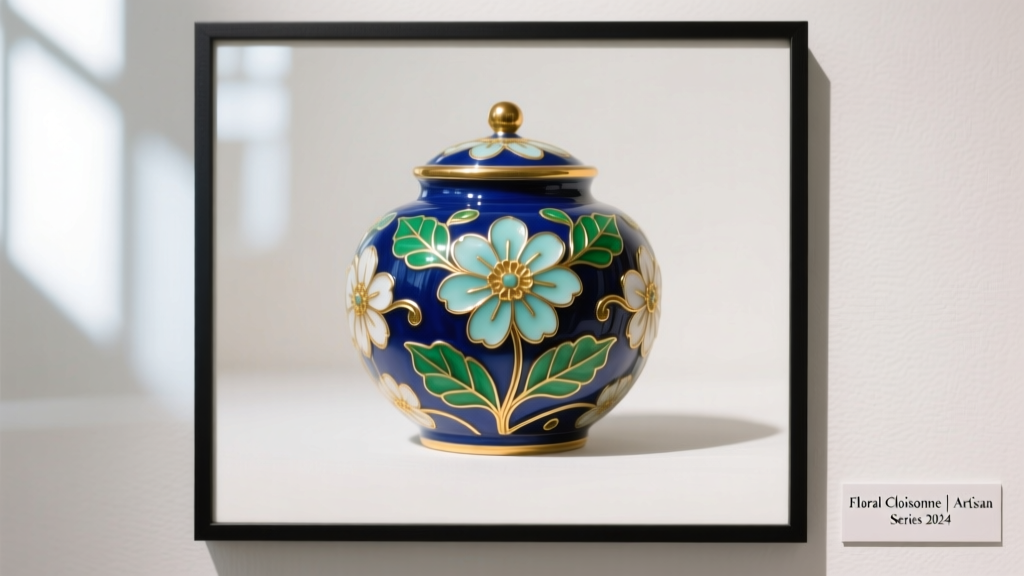
Cloisonné Salt & Pepper Shakers: Floral Motifs, Authentication, and Market Value
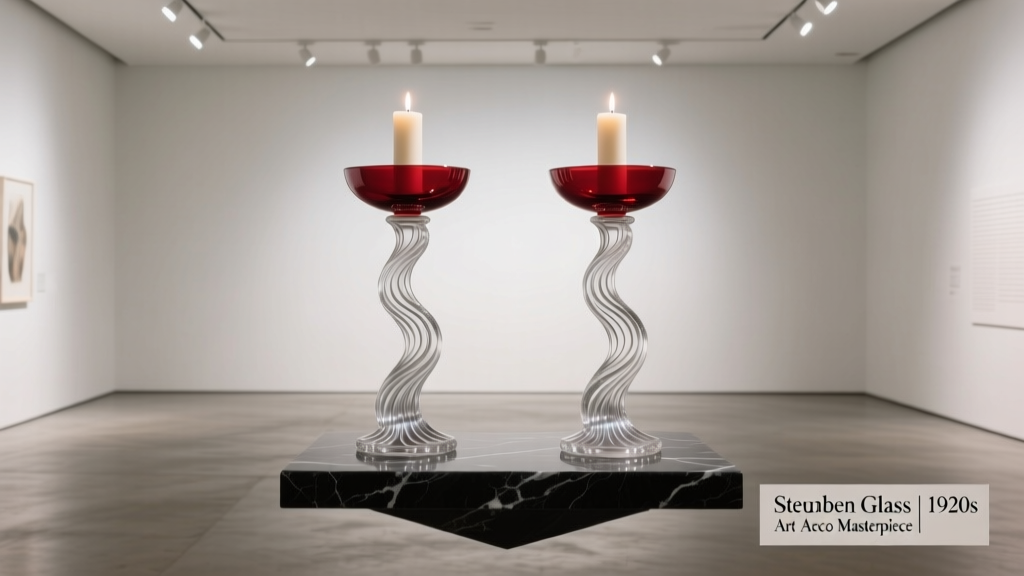
Steuben Candlestick Pair: Clear Stem, Ruby Bowl, Swirled Feet — Authentication, Provenance, and Market Analysis of the 10-Inch Model
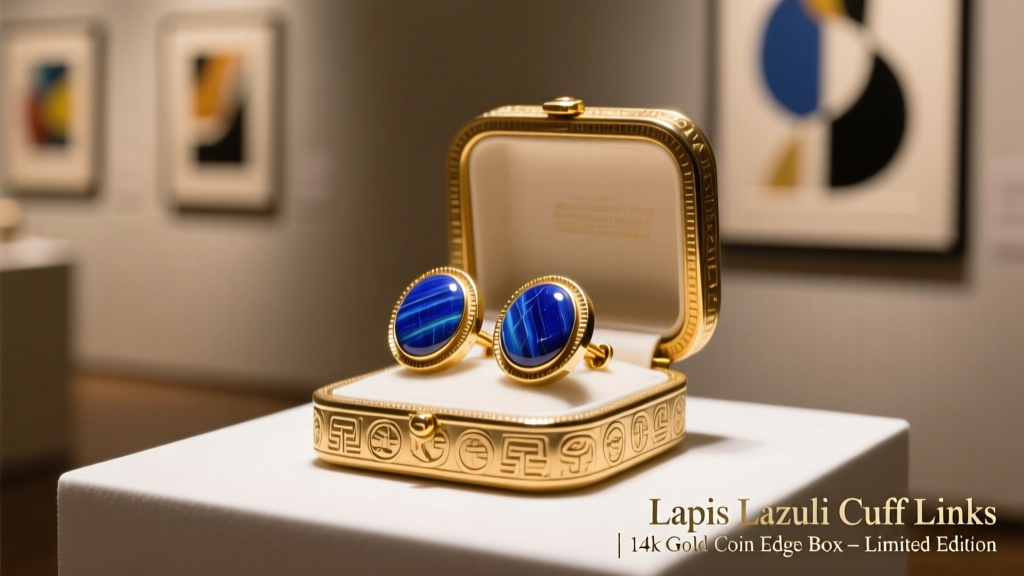
Cuff Links Lapis Lazuli 14K Gold Coin Edge Box: Authentication, Market Value, and Design Analysis
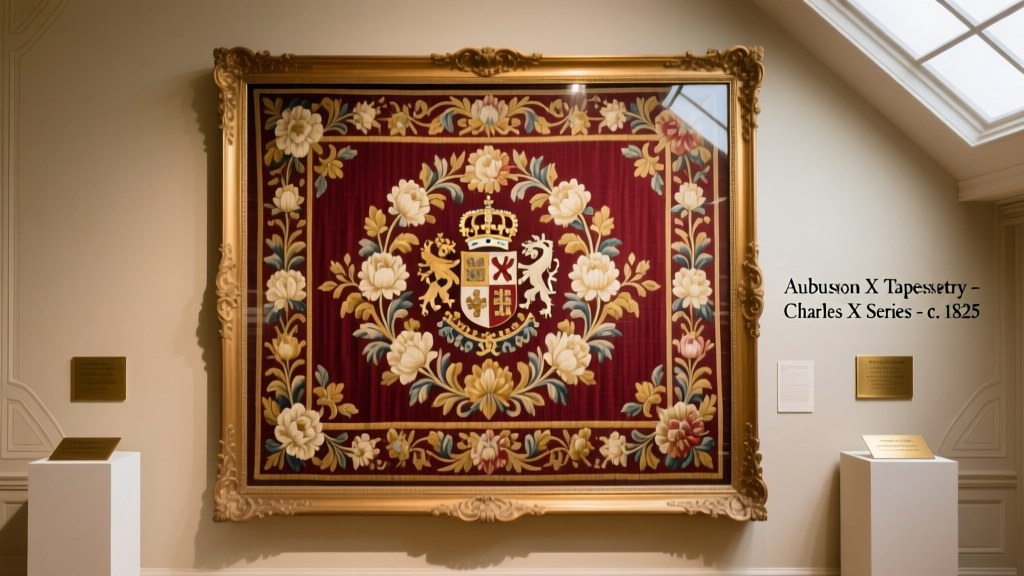
Aubusson Charles X Period Rug: Central Medallion Floral Design, Circa 1825 — Authentication, Provenance, and Market Analysis
Arts & Crafts Oak Armchairs with Sling Leather Seats and Square Posts: Design, Provenance, and Authentication
Royal Kinran Crown Nippon 2: Authentication, Market Value, and Historical Context of a Rare Japanese Export Porcelain Line
Noritake Art Deco Lady Holding Flower Basket Plate (7 3/4 Inches): Authentication, Provenance, and Market Analysis