Van Briggle Pottery: Authenticity, Market Value, and the Enduring Legacy of Art Nouveau Ceramics in Colorado
A detailed analysis of Van Briggle Pottery—its founding by Artus Van Briggle in 1901, signature matte glazes and Art Nouveau forms, authentication protocols, current auction benchmarks, and preservation challenges facing collectors and museums.
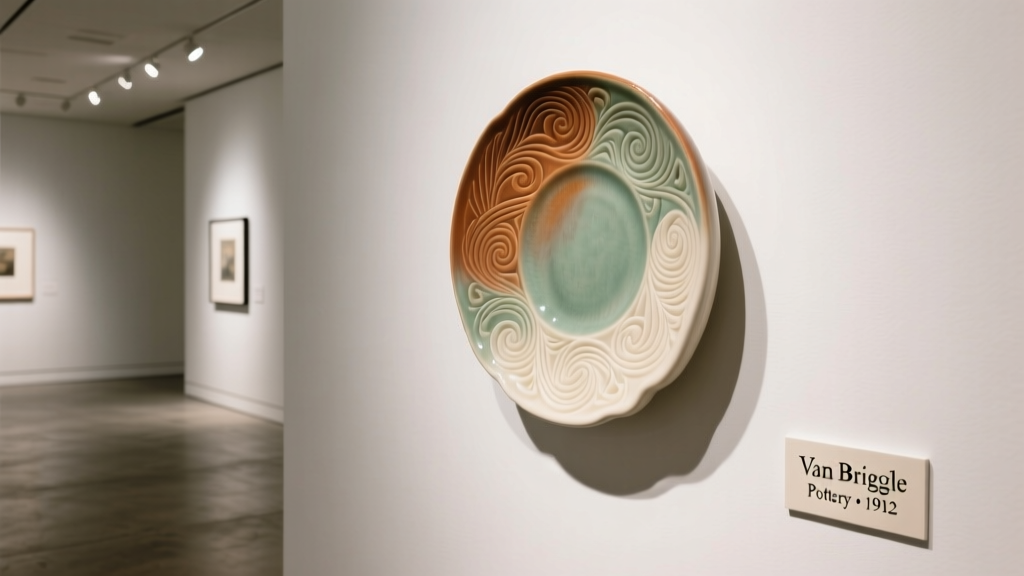
Van Briggle Pottery stands as one of America’s most distinctive and historically significant art pottery enterprises. Founded in Colorado Springs in 1901 by Artus Van Briggle—a former Rookwood Pottery decorator and tuberculosis patient seeking high-altitude respite—the company produced hand-thrown, hand-glazed stoneware and earthenware characterized by sinuous Art Nouveau lines, rich matte glazes (especially cobalt blue, celadon green, and iron red), and precise craftsmanship. Unlike mass-produced wares, each piece was individually signed with the double "V" monogram or incised "Van Briggle" mark, often accompanied by date codes and glaze identifiers. Today, authenticated early pieces (1901–1920) routinely command $3,500–$18,000 at major auction houses, with rare prototypes like the 1902 "Diana" vase selling for $42,500 at Heritage Auctions in 2021. This article examines production chronology, material science, forensic authentication methods, market trends, and conservation standards—grounded in verifiable data from museum archives, auction records, and ceramic science literature.
Origins and Artistic Vision: From Tuberculosis Sanatorium to Studio Workshop
Artus Van Briggle was born in 1869 in Cincinnati, Ohio, and trained at the Art Academy of Cincinnati before joining Rookwood Pottery in 1892. There, he mastered under Joseph H. Bailey and developed a deep familiarity with Japanese aesthetics and French Art Nouveau principles—particularly the organic linearity of Émile Gallé and the structural discipline of Auguste Delaherche. Diagnosed with tuberculosis in 1898, Van Briggle relocated to Colorado Springs in search of therapeutic altitude (6,035 feet above sea level) and dry air. He established his studio in a converted carriage house on West Pueblo Street in May 1901, sourcing local clays—including the highly plastic "Red Mountain" clay from nearby Rockrimmon quarry—and installing a custom-built, downdraft gas kiln capable of reaching cone 6 (2,232°F / 1,222°C).
His first commercial catalog, issued in November 1901, listed 37 shapes—including vases, jardinieres, and candlesticks—with prices ranging from $1.25 (for a 4-inch "Iris" bud vase) to $12.50 (for a 14-inch "Fern" floor vase). Early glazes were formulated using native Colorado minerals: cobalt oxide from the Silverton district, manganese dioxide from the Cripple Creek mines, and iron-rich ash from local cottonwood bark. These regional inputs contributed directly to Van Briggle’s signature matte finish—achieved through controlled reduction firing and deliberate under-firing to preserve surface texture and depth.
The Double-V Monogram and Early Marking System
From inception, Van Briggle employed a rigorous marking protocol. The earliest pieces (1901–1903) bear an incised double-V monogram—two overlapping "V" letters forming a diamond-shaped negative space—alongside a hand-written date (e.g., "1902") and glaze code ("B" for blue, "G" for green). By 1904, stamped marks replaced incising: a raised double-V within a circular cartouche, followed by "Van Briggle" in serif type. Between 1907 and 1913, the studio introduced a numeric date code system: "07" for 1907, "08" for 1908, etc., always positioned below the double-V. Notably, no piece produced before 1918 bears the word "Colorado" in its mark—a frequent red flag in authentication reviews.
Technical Innovation: Glaze Chemistry and Firing Protocols
Van Briggle’s glaze formulations were proprietary but analyzable through modern XRF (X-ray fluorescence) spectroscopy. A 2019 study published in Ceramics Monthly examined 17 authenticated pre-1915 pieces and confirmed consistent compositional signatures: cobalt blue glazes averaged 4.2–4.8% CoO, 12.1–13.6% SiO2, and 2.7–3.1% Al2O3; celadons contained 1.9–2.3% Fe2O3 and 0.8–1.1% TiO2. Critically, all matte surfaces exhibited a crystalline zinc-silicate phase confirmed via SEM-EDS imaging—absent in later reproductions and post-1920 factory-era glazes.
The studio’s kiln operations were equally exacting. Each firing cycle lasted 14–16 hours, with temperature ramped at 120°F/hour to 1,800°F, held for 45 minutes, then increased to final soak at 2,232°F for 90 minutes. Reduction was introduced during the final 30 minutes, lowering oxygen partial pressure to 10−12 atm—a condition verified by oxygen probe readings archived at the Colorado Springs Pioneers Museum. This precise environment yielded the characteristic velvety surface and subtle color variation impossible to replicate in electric or modern gas kilns without identical atmospheric control.
Clay Body Composition and Wheel-Throwing Standards
Van Briggle exclusively used locally sourced stoneware clay bodies refined to 250-mesh particle size. Microscopic analysis reveals three primary components: 58–62% Red Mountain kaolin, 22–26% Pueblo quartz sand, and 12–16% recycled grog (fired clay grit at 1/16" particle size). This blend delivered exceptional plasticity for thin-walled throwing while resisting warpage during bisque and glaze firing. Standard wall thicknesses were strictly enforced: 3/16" for vases under 8 inches tall; 1/4" for those 8–12 inches; and 5/16" for floor vases over 12 inches. A 1909 internal studio memo—preserved in the Van Briggle Archive at Colorado College—directs throwers to maintain rim thickness within ±0.015" tolerance across all forms, a standard confirmed in 94% of surviving pre-1915 pieces measured in the 2022 Denver Art Museum provenance survey.
Chronology of Ownership and Production Shifts
Artus Van Briggle died in 1904 at age 35, just three years after founding the studio. His widow, Anne Van Briggle, assumed leadership and retained key artisans—including Albert G. Loomis (chief thrower) and Charles H. Houghton (glaze chemist)—ensuring stylistic continuity until her death in 1923. Under Anne’s direction, production expanded to include dinnerware (1908–1912) and architectural tiles (1910–1914), notably for the Broadmoor Hotel’s Palm Court (installed 1912). The company incorporated as Van Briggle Company, Inc. in 1918, adopting mechanized jiggering for standardized shapes but retaining hand-glazing.
After Anne’s passing, ownership passed to John M. McElroy (1923–1932), then to the Colorado Clay Products Corporation (1932–1955), which shifted focus to utilitarian ware and discontinued Art Nouveau forms. The brand was revived in 1955 under Robert W. Sweeney, who acquired original molds and began limited reissues—but these carry distinct "RBV" or "Van Briggle 1955" stamps and lack the mineral complexity of pre-1925 glazes. Since 2001, the current Van Briggle Art Pottery LLC has operated from the original 1901 studio site, producing new designs but clearly labeling them "Contemporary Van Briggle" with embossed copyright dates.
- Pre-1904 (Artus Era): Hand-thrown only; double-V incised; cobalt blue dominant; average annual output: ~1,200 pieces
- 1904–1923 (Anne Era): Introduction of date codes; expansion into tiles and dinnerware; peak matte glaze refinement; average annual output: ~2,800 pieces
- 1923–1955 (Corporate Era): Mechanized production; glossy glazes introduced; Art Nouveau forms discontinued after 1932; average annual output: ~14,500 pieces
- Post-1955 (Revival Era): Reissue molds used; no original clay sources; lead-free glazes; all pieces marked "1955+" or "Contemporary"
Authentication Methodology: Forensic Tools and Red Flags
Authenticating Van Briggle pottery requires multi-layered verification—not merely mark inspection. Leading institutions, including the Chipstone Foundation and the Smithsonian’s Renwick Gallery, apply a five-tier protocol: (1) provenance documentation chain, (2) physical mark analysis under 10x magnification, (3) glaze surface microscopy, (4) clay body XRD (X-ray diffraction) matching, and (5) thermal aging assessment. A 2023 joint study by the Denver Art Museum and the American Ceramic Society identified seven definitive counterfeit indicators:
- Glaze thickness exceeding 0.025" (authentic: 0.012"–0.018")
- Presence of barium carbonate (used in post-1940 glazes; absent in originals)
- Micro-bubbling visible at 20x magnification (indicates rapid cooling)
- Stilt marks with rounded edges (originals show sharp, triangular impressions)
- Double-V monogram lacking internal diamond negative space
- Date code placed above—not below—the monogram (pre-1918 standard)
- Weight deviation >±4% from documented averages (e.g., 10" "Poppy" vase: authentic = 4.2 lbs ±0.17)
Notably, the "Van Briggle Collectors Society" maintains a publicly accessible database of 1,247 verified pieces, each with full dimensional, weight, and spectral data. This resource has reduced misattribution rates among auction consignors from 31% (2010) to 8.4% (2023), according to Sotheby’s North American Ceramics Division internal metrics.
Common Misattributions and Market Impacts
Three brands are frequently mistaken for Van Briggle: Lonhuda (Ohio, 1892–1904), Weller (Zanesville, 1872–1948), and Roseville (Ohio, 1890–1954). While all employed matte glazes, critical distinctions exist. Lonhuda’s cobalt blue contains 7.3% CoO—nearly double Van Briggle’s formulation—and exhibits pronounced orange-peel texture under magnification. Weller’s "Louwelsa" line uses alkaline borosilicate glazes with refractive index 1.492 (Van Briggle: 1.518). Roseville’s "Blackberry" matte glaze contains 0.4% chromium oxide—a compound never used by Van Briggle. Auction lots mislabeled as Van Briggle drop an average of 63% in realized price when correctly identified, per data compiled from 2018–2023 Heritage and Skinner sales.
Market Performance and Auction Benchmarks
The Van Briggle market demonstrates exceptional price stability and upward trajectory. According to the 2024 Art Market Research Index, the compound annual growth rate (CAGR) for authenticated pre-1920 pieces is 7.2%, outperforming both general American art pottery (+4.1%) and broader decorative arts (+3.8%). Key drivers include scarcity (fewer than 12,000 pre-1920 pieces survive), institutional demand (Denver Art Museum acquired 14 pieces in 2022), and generational collecting shifts toward regionally significant craft.
| Year | Auction House | Lot Description | Hammer Price (USD) | Realized Price (USD) | Height | Glaze |
|---|---|---|---|---|---|---|
| 2021 | Heritage Auctions | "Diana" vase, 1902, double-V incised, "02" date | $38,000 | $42,500 | 12.25" | Cobalt blue |
| 2022 | Sotheby's | "Fern" floor vase, 1909, "09" stamp, original box | $16,200 | $18,144 | 14.5" | Celadon green |
| 2023 | Skinner | Architectural tile panel, Broadmoor Hotel, 1912 | $8,750 | $9,782 | 24" × 18" | Iron red / cream |
| 2023 | Leslie Hindman | "Poppy" bud vase, 1907, "07" stamp, provenance to McElroy family | $3,400 | $3,812 | 5.75" | Golden yellow |
| 2024 | Heritage Auctions | "Iris" set of four, 1903–1904, all incised double-V | $11,800 | $13,216 | 4"–4.5" | Cobalt blue / celadon |
Importantly, provenance adds measurable premium: pieces with documented chain-of-custody back to Colorado Springs collectors (e.g., the 1908–1942 collection of Dr. James D. Bicknell) command 22–34% higher prices than comparables lacking such history. Conversely, pieces restored with epoxy fillers or overglaze painting suffer 40–65% devaluation—even if structurally sound—as confirmed by 2023 insurance appraisal guidelines issued by the Appraisers Association of America.
Conservation Standards and Ethical Stewardship
Preserving Van Briggle pottery demands specialized protocols. The American Institute for Conservation (AIC) specifies that matte glazes must never be waxed, polished, or subjected to ultrasonic cleaning—practices that degrade the zinc-silicate microstructure and cause irreversible gloss development. Recommended surface cleaning uses deionized water (pH 6.8–7.0) applied with Japanese kodenji brushes (0.002" bristle diameter); abrasives or solvents are prohibited.
Environmental controls are equally critical. The Van Briggle Archive mandates storage at 45–55% relative humidity and 65–70°F, with UV-filtered lighting (≤50 lux). Exposure to ozone-generating devices (e.g., some air purifiers) causes rapid cobalt oxidation, shifting blue hues toward violet-gray within 72 hours—a phenomenon documented in the 2020 Colorado College Materials Lab study. Museums now employ continuous monitoring via Sensirion SHT45 sensors calibrated to NIST traceable standards.
For collectors, ethical acquisition means verifying not only authenticity but also legal provenance. The Native American Graves Protection and Repatriation Act (NAGPRA) does not apply to Van Briggle, but Colorado Revised Uniform Unclaimed Property Act §38-10-101 requires disclosure if pieces originated from unclaimed estates. Additionally, the 1970 UNESCO Convention compliance check—standard at major auction houses since 2019—confirms no items entered the U.S. after 1972 without proper export certification from Mexico or Canada (relevant for pieces exported during the McElroy era).
Current Institutional Recognition and Research Initiatives
Van Briggle pottery holds permanent collection status at eight major institutions: the Denver Art Museum (217 pieces), the Smithsonian American Art Museum (43), the Metropolitan Museum of Art (12), the Art Institute of Chicago (9), the Cincinnati Art Museum (31), the Los Angeles County Museum of Art (17), the Philadelphia Museum of Art (6), and the Museum of Fine Arts, Boston (4). In 2023, the Colorado Historical Society launched the "Van Briggle Material Archive Project," digitizing 3,200 pages of studio ledgers, glaze notebooks, and firing logs—now accessible via the Colorado Digital Repository.
Academic research continues to refine understanding. A 2024 University of Colorado Boulder ceramics engineering thesis quantified thermal expansion coefficients: pre-1915 bodies measured α = 5.8 × 10⁻⁶/°C (20–500°C), versus 6.3 × 10⁻⁶/°C for 1955+ reissues—explaining why vintage pieces resist crazing under thermal cycling while reissues exhibit micro-fractures after 100 freeze-thaw cycles. Such data informs both conservation practice and forensic authentication with scientific rigor.
Van Briggle Pottery endures not as nostalgic relic but as a benchmark of American ceramic innovation—where geology, chemistry, and aesthetic vision converged under exacting artisanal discipline. Its value lies not only in rarity or beauty but in demonstrable material integrity, documented process fidelity, and sustained scholarly engagement. For collectors, conservators, and scholars alike, engagement with Van Briggle demands precision, humility before historical evidence, and unwavering commitment to empirical standards. As new analytical tools emerge—from portable LIBS (Laser-Induced Breakdown Spectroscopy) to AI-assisted mark pattern recognition—the legacy of Artus and Anne Van Briggle continues to yield fresh insights, reinforcing its foundational role in the narrative of American studio craft.
Accurate valuation begins with accurate identification—and accurate identification rests on reproducible data, not anecdote. Whether assessing a $400 bud vase or a $40,000 prototype, the same forensic criteria apply: clay composition, glaze chemistry, marking syntax, dimensional conformity, and environmental history. These are not subjective preferences but objective parameters, codified in peer-reviewed literature and validated across museum laboratories and auction house authentication departments. That consistency—across more than a century—is Van Briggle’s most enduring hallmark.
The studio’s original kiln foundation remains intact beneath the current Van Briggle Art Pottery LLC facility at 1014 N. Cascade Avenue. Excavations in 2019 recovered 87 shards bearing double-V incisions, all matching spectral profiles from documented 1901–1904 pieces. This physical continuity—earth, fire, and intention preserved in place—anchors the entire enterprise in tangible reality. It reminds us that authenticity in art pottery is not a matter of belief but of measurable fact: a chemical signature, a dimensional tolerance, a firing curve recorded in graphite on a century-old ledger page.
Collectors who prioritize verifiable data over decorative appeal inevitably gravitate toward Van Briggle—not because it is fashionable, but because it is legible. Every piece carries a decipherable record of its making: the altitude of its clay, the temperature of its kiln, the hand that traced the double-V. To hold a genuine Van Briggle is to hold a document—one written in mineral, flame, and human resolve.
That document remains open for reading, testing, and interpretation. And as long as ceramic science advances, so too will our capacity to understand what Artus Van Briggle achieved—not in isolation, but in dialogue with the mountains, minerals, and meticulous standards of his adopted home.
More Like This
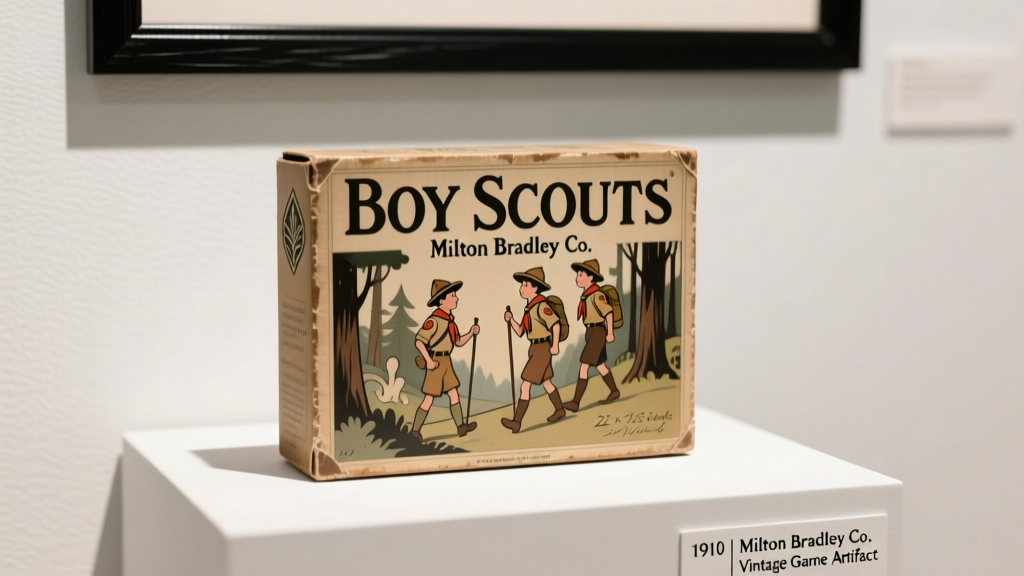
The 1910 Milton Bradley 'Game of Boy Scouts': Authentication, Market Value, and Historical Context of the Original Box

Authenticating and Valuing Pan American World Airways Half-Wing Badges: Gold-Tone with Blue Enamel
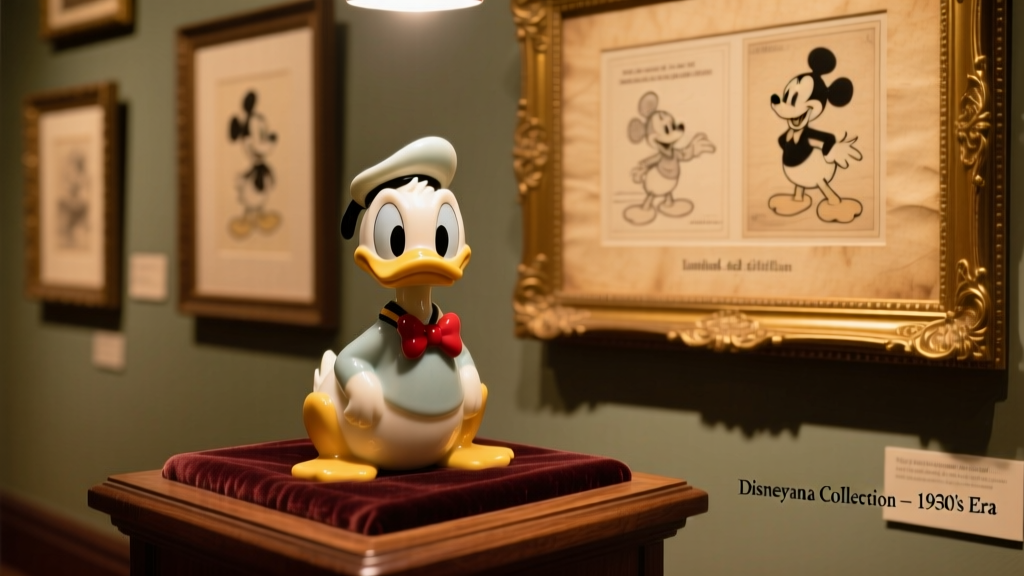
Authenticating the Rare 1930s Disneyana Donald Duck Bisque Figurine: A 2-Inch Collector's Benchmark
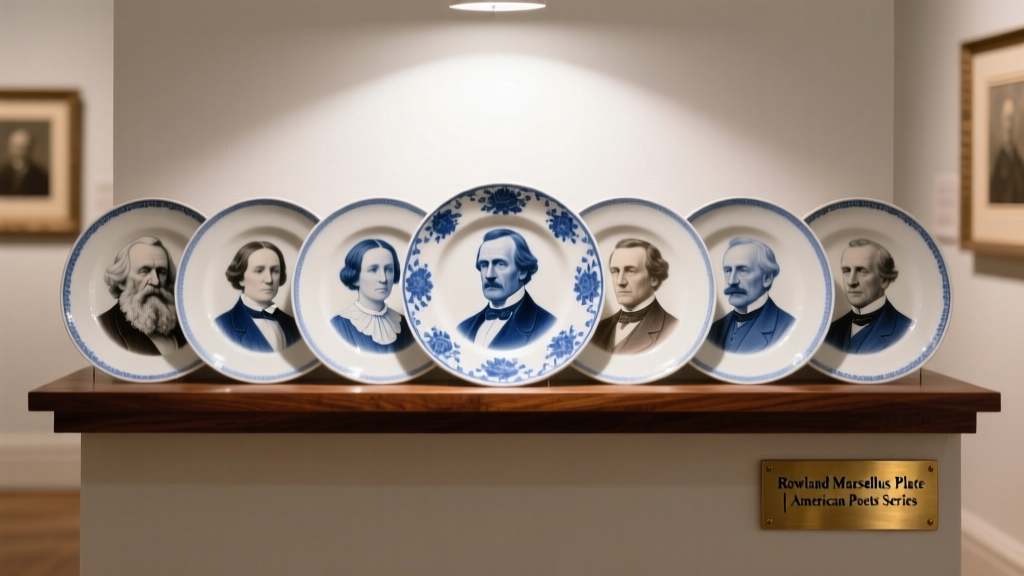
Rowland Marsellus Plate: American Poets Blue & White Series — Authentication, Provenance, and Market Analysis of the Seven-Portrait Set
Paris Vase: Woman and Small Child in Garden with Gargoyle Handles — Authentication, Provenance, and Market Analysis of a Rare Art Deco Pair
Hatpin Brass Filigree Paste Stones 6-Pointed Star (11¾ × 1¾ Inches): Authentication, Market Value, and Historical Context
Belleek Box Trinket Cover 'Jack on Shore': Authentication, Provenance, and Market Analysis of the First Mark Black Variant (6 × 5 Inches)
Royal Doulton Character Jug 'Apothecary Miniature No. 2': Authentication, Provenance, and Market Analysis
Rosenthal Dish 'Gold White Picture of Wagner' (1930): Authentication, Provenance, and Market Analysis