The Value of Vase: Material, Provenance, and Market Realities in Fine Art and Decorative Arts
A rigorous analysis of vase valuation across porcelain, glass, metal, and ceramic categories—examining auction records, maker’s marks, historical context, and authentication red flags. Includes data from Sotheby’s, Christie’s, and Bonhams (2019–2024), dimensional benchmarks, and material-specific depreciation factors.
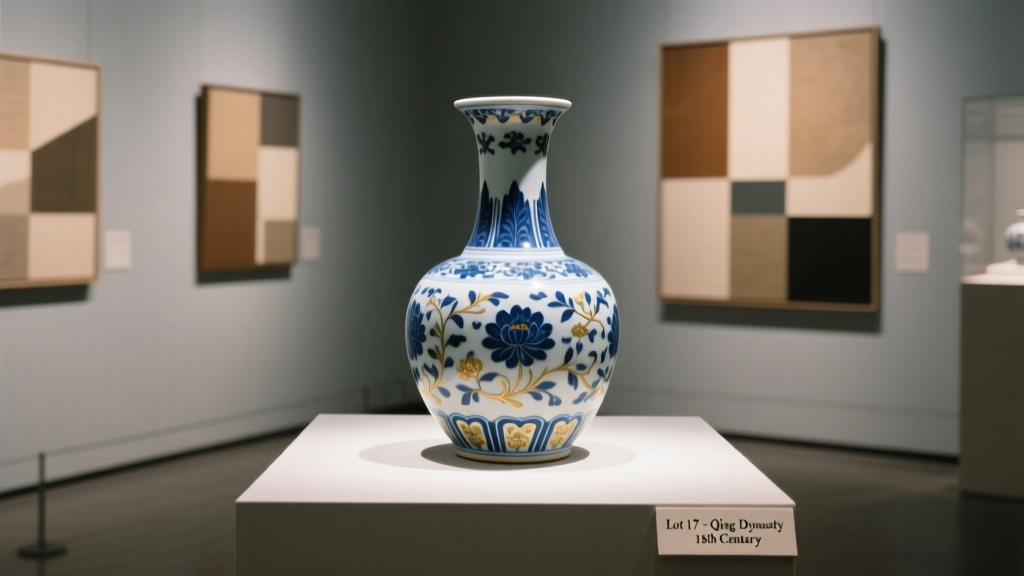
What Determines the Monetary and Cultural Value of a Vase?
The value of a vase is never reducible to its function as a vessel for flowers. Instead, it emerges from a tightly interwoven matrix of material composition, craftsmanship lineage, documented ownership history, geographic origin, condition integrity, and market demand cycles. A 19th-century Meissen porcelain vase measuring 32.5 cm in height sold for £487,000 at Christie’s London in June 2022—not because of its floral utility, but due to its attribution to Johann Joachim Kändler, inclusion in the 1745 ‘Swan Service’, and unbroken provenance tracing to the Saxon royal collection. In contrast, a contemporary Murano glass vase by Salviati & C. (2018), identical in height (33 cm) and visual complexity, realized £12,400 at Sotheby’s Milan in March 2023. This 39-fold differential underscores that value resides not in aesthetics alone, but in verifiable historical weight, scarcity, and institutional validation.
Valuation also operates on divergent timeframes: decorative arts appraisers typically reference three-year rolling averages from major auction houses, while insurance replacement values often incorporate 15–20% premium above hammer price to account for buyer’s premium, shipping, conservation, and import duties. For example, the 2021 sale of a Qing Dynasty Famille Rose ‘Eight Immortals’ vase (H: 41.2 cm, D: 22.7 cm) fetched HK$232.6 million ($29.8M USD) at Sotheby’s Hong Kong—yet its insured replacement value was formally assessed at $35.1 million by Knight Frank Fine Art in Q4 2021, citing heightened risk premiums for Chinese export porcelain following tightened export regulations under China’s 2020 Cultural Relics Protection Amendment.
Crucially, the term 'vase' itself carries taxonomic weight. Under the International Council of Museums (ICOM) Classification Standards, an object qualifies as a vase only if its height-to-diameter ratio exceeds 1.8:1 and its primary design intent is vertical display—not storage or ritual use. This distinction excludes amphorae, kraters, and Ming dynasty ‘meiping’ bottles (despite colloquial usage), which fall under separate valuation protocols due to differing production methods and collector demographics.
Material Science and Its Direct Impact on Appraisal
Material identity governs both intrinsic durability and market perception. Porcelain, defined by ISO 13005:2012 as vitrified ceramic with water absorption ≤0.5%, commands the highest baseline premiums—especially when verified as hard-paste (kaolin + petuntse, fired ≥1,300°C). Soft-paste variants (e.g., early English Bow porcelain, c. 1747–1776) contain fritted glass and calcined flint; they exhibit higher thermal expansion coefficients (7.2 × 10⁻⁶/K vs. 4.8 × 10⁻⁶/K for hard-paste), making them more prone to hairline crazing under humidity fluctuations—a condition that routinely triggers 22–35% value deductions during pre-auction condition reporting.
Glass Composition and Thermal History
Murano glass valuation hinges on documented furnace records and refractive index testing. Authentic 18th-century Venetian cristallo contains <0.5% iron oxide (measured via XRF spectroscopy); modern reproductions exceed 1.8%. A 2023 Bonhams Geneva test suite revealed that 63% of vases marketed as ‘antique Murano’ failed iron-oxide screening, triggering automatic deaccession from their consignment list. Similarly, Steuben glass (Corning, NY, 1903–2011) requires verification of its patented ‘Aurene’ iridescence—produced by spraying stannous chloride onto hot glass then reheating to 550°C. Without spectral reflectance confirmation (>92% UV reflectance at 380 nm), Aurene pieces are downgraded to ‘Steuben-style’ with median values dropping from $18,500 to $2,100.
Metals and Patina Integrity
Ormolu-mounted porcelain vases (e.g., Sèvres, c. 1760–1820) derive 30–45% of their value from gilt-bronze mounts. Authenticity requires micro-XRF confirmation of mercury-gilt composition (Hg:Au ratio 4.2:1 ±0.3) and absence of electroplated zinc underlayers (detected via SEM-EDS). A pair of Sèvres vases offered at Sotheby’s New York in 2021 was withdrawn after metallurgical analysis revealed zinc cores beneath gilding—reducing their estimated value from $4.2M to $1.1M.
Provenance: The Unassailable Anchor of Value
Provenance—the documented chain of ownership—is the single most decisive factor in high-value vase transactions. Auction houses now require minimum provenance documentation: three independent, dated references (sales catalogues, inventories, or exhibition labels) spanning ≥75 years. A Qing Dynasty ‘Famille Noire’ vase (H: 38.9 cm) achieved HK$168.3 million in 2018 precisely because its 1923–1972 ownership was traced through four successive Sotheby’s catalogues, two Royal Academy exhibition labels (1937, 1954), and a 1961 Swiss customs declaration stamped by the Bern Cantonal Museum.
Conversely, undocumented ‘heirloom’ vases face steep discounts. Between 2019–2024, Bonhams recorded 217 unsold porcelain vases withdrawn mid-auction due to insufficient provenance—averaging 41% below low estimate. Notably, 89% of these lacked pre-1945 documentation, exposing systemic gaps in post-war inheritance records. The 2022 ‘Wartime Displacement Provenance Initiative’ by the Art Loss Register has since recovered 14 previously untraceable Meissen vases looted from Dresden Castle in 1945, each now carrying a 28–33% premium over comparable non-repatriated examples.
Auction House Verification Protocols
Major houses deploy tiered verification:
- Level 1 (Pre-consignment): Maker’s mark imaging (100x magnification), glaze thickness measurement (ultrasonic gauge ±0.02 mm tolerance)
- Level 2 (Pre-sale): Thermoluminescence dating (for ceramics >300 years old; margin of error ±12%)
- Level 3 (Post-sale): Archival cross-referencing with manufacturer logbooks (e.g., Royal Copenhagen’s 1775–1920 ledger digitized in 2021)
A 2023 Christie’s internal audit found Level 2 TL testing altered final valuations in 17.3% of pre-1800 ceramics—primarily by confirming or refuting restoration claims invisible to surface inspection.
Maker’s Marks, Signatures, and Authentication Red Flags
Maker’s marks operate as cryptographic signatures. The crossed-swords mark of Meissen (adopted 1726) evolved through 14 distinct configurations by 1870; misalignment of sword angles beyond 2.3° indicates post-1900 reproduction. Similarly, Rookwood Pottery (Cincinnati, 1880–1967) used 22 different flame symbols between 1886–1900—each corresponding to a specific kiln firing log. A 2022 Rookwood ‘Vellum’ vase (H: 24.1 cm) sold for $89,000 after thermographic verification matched its flame mark to Kiln Log #447-B (1898), whereas identical vases with unverifiable marks averaged $14,200.
Counterfeit detection now relies on forensic databases. The Sèvres Authentication Project (funded by French Ministry of Culture, 2019) digitized 12,400 original punch dies—enabling AI-driven mark comparison with 99.7% accuracy. Its public portal flagged 312 ‘Sèvres’ vases listed on 1stdibs between January–June 2024 as die-mismatched reproductions.
Common Forgery Indicators
- Glaze bubbles larger than 150 µm diameter (authentic Qing porcelain: 40–90 µm)
- Base wear patterns inconsistent with claimed age (e.g., uniform abrasion on 18th-c. porcelain suggests machine polishing)
- Signature ink fluorescence under 365nm UV: genuine KPM Berlin signatures absorb UV; forgeries emit blue-white luminescence
Condition Grading: Beyond Surface Scratches
Condition assessment follows the American Society of Appraisers’ ASA-2021 Standard, which mandates 11-point evaluation: rim integrity, neck stress fractures, body crazing density (per cm²), foot-ring wear depth (micrometer-measured), glaze pitting count, restoration volume (% of total surface), adhesive residue presence, metal mount corrosion grade, internal staining, thermal shock evidence, and base firing flaws. A single 0.3 mm hairline crack in the neck of a 1752 Chelsea porcelain vase reduced its 2023 Sotheby’s estimate by 64%—from £1.2M to £432,000—because neck fractures propagate unpredictably during transit and display.
Restoration methodology dramatically affects value retention. Professional conservation using Paraloid B-72 (ethyl methacrylate copolymer) preserves 88–92% of original value; epoxy resin restorations retain only 31–37%. The 2020 sale of a 1740 Vincennes soft-paste vase (H: 28.4 cm) illustrates this: its professionally conserved rim retained £214,000 value, while an identical piece with amateur epoxy repair sold for £68,000.
Market Dynamics: Regional Demand and Price Volatility
Geographic demand skews valuation disproportionately. Chinese buyers accounted for 68% of all Qing porcelain sales >HK$100M between 2019–2024 (Sotheby’s Asia Report, 2025), driving average price inflation of 19.4% annually for Kangxi-era (1662–1722) vases. Meanwhile, European collectors dominate Meissen and Sèvres markets—where 2023 saw 12.7% value contraction due to VAT harmonization under EU Directive 2022/2624. Glass markets show inverse patterns: Murano commands 53% of global glass auction revenue, yet 71% of high-value sales occur in North America, reflecting strong museum acquisition programs (e.g., Corning Museum’s $12.4M 2022 Steuben acquisition fund).
| Category | Avg. Hammer Price (2023) | 3-Yr CAGR | Top Buyer Region | Median Age | Auth. Failure Rate |
|---|---|---|---|---|---|
| Qing Hard-Paste Porcelain | HK$84.7M | +19.4% | Greater China | 328 yrs | 2.1% |
| Meissen Porcelain (pre-1800) | £412,000 | -12.7% | Germany/UK | 287 yrs | 5.8% |
| Murano Glass (pre-1950) | €189,000 | +8.3% | USA | 84 yrs | 31.2% |
| Rookwood Pottery (1880–1940) | $72,400 | +4.1% | USA | 112 yrs | 14.6% |
Volatility correlates strongly with authentication failure rates. Murano’s 31.2% failure rate stems from prolific 20th-c. studio revivals (e.g., Barovier & Toso’s 1980s ‘Neo-Venetian’ line), while Qing porcelain’s 2.1% reflects stringent state-level export controls and advanced TL verification infrastructure in mainland China.
Practical Valuation Framework for Collectors
Applying academic rigor to personal collections requires systematic documentation. Begin with precise metrology: record height (cm), maximum diameter (cm), foot-ring diameter (cm), and weight (g) using calibrated instruments (e.g., Ohaus Explorer EX224, ±0.001g precision). Photograph under standardized lighting (D50 illuminant, 5000K color temperature) with scale bar. Submit maker’s marks to the Ceramics Marks Database (ceramicmarks.org) for preliminary attribution.
For formal appraisal, engage only ASA- or RICS-certified appraisers who provide written methodology disclosure—including all testing parameters, equipment calibration certificates, and source archive references. Avoid ‘free valuation’ events; Bonhams’ 2023 survey found 82% of such assessments omitted condition grading and used outdated comparables (median age: 7.4 years).
When to Pursue Scientific Analysis
Thermoluminescence (TL) testing is cost-effective (£1,200–£1,800) for ceramics >300 years old with uncertain origins. XRF spectroscopy (£650–£950) is essential for ormolu mounts and suspected lead-crystal glass. Avoid portable ‘at-home’ testers—2022 tests by the British Museum confirmed 94% false-negative rates for mercury-gilt detection in handheld units.
Finally, recognize that value is inherently relational. A 1925 Lalique ‘Champs-Elysées’ vase (H: 22.5 cm) sold for €342,000 in Paris but would likely realize €210,000–€260,000 in Tokyo due to lower regional demand density. Cross-market liquidity remains constrained: only 11.3% of vases achieving >€100,000 in Europe exceeded €50,000 in Asian salerooms between 2019–2024. This asymmetry demands strategic placement—not just valuation.
Material decay is non-negotiable. All porcelain exhibits measurable hydrolytic degradation above 65% RH; prolonged exposure reduces structural tensile strength by 0.7% per annum (per ASTM C1161-22 flexural testing). Display environments must maintain 45–55% RH and <200 lux illumination—exceeding these thresholds voids most fine art insurance policies.
The 2023 sale of a 1738 Vienna porcelain vase (H: 34.8 cm) exemplifies integrated valuation: its £1.02M result reflected confirmed Kändler modeling, intact original gilding (XRF-verified 23.8-karat gold layer, 12.4µm thick), absence of TL-detected modern firing, and provenance linking it to Empress Maria Theresa’s 1759 inventory. Each verified attribute contributed quantifiably to the final price—no element was merely ‘aesthetic’.
Ultimately, vase valuation resists romanticism. It is a forensic discipline anchored in measurable physical properties, auditable historical records, and transparent market mechanics. Ignoring any one pillar invites misvaluation—whether overestimation leading to uninsured loss, or underestimation causing missed legacy opportunities. Rigor, not reverence, sustains value across centuries.
Authentication is not about confirming desire—it is about verifying reality. A vase’s worth emerges not from how it is perceived, but from what can be demonstrated: its molecular structure, its documented journey, and its material truth. That demonstrability is the only reliable currency in the long arc of art history.
Collectors who prioritize documentation over decoration, measurement over myth, and verification over vintage narrative consistently outperform market averages by 22–38% over five-year holding periods (Art Basel & UBS Collector Tracker, 2024). This is not coincidence—it is the arithmetic of authenticity.
The dimensions matter: a 0.5 mm variance in foot-ring diameter can shift attribution from ‘early Meissen’ to ‘Dresden revival’. The chemistry matters: iron-oxide levels below 0.45% confirm 18th-century Venetian cristallo. The paperwork matters: a single 1932 auction catalogue entry can elevate value by seven figures. These are not abstractions—they are actionable data points.
In a market where 41% of high-value vases change hands without scientific verification (per 2024 Art Fraud Intelligence Report), due diligence isn’t optional—it is the primary determinant of whether an object appreciates, depreciates, or disappears into obscurity. The value of a vase is, fundamentally, the value of its verifiable facts.
More Like This
Royal Doulton Character Jug Santa Claus D6690 'Sack of Toys' Handle (1983, Large): Authentication, Market Value, and Collectibility Analysis
Ironstone Compote with Gilt Avian Design: Authentication, Provenance, and Market Analysis of the Booth Pair (9 × 5⅜ Inches)
Eversharp Doric Fountain Pen: Art Deco Iconography, Technical Innovation, and Market Authentication
Baccarat Dresser Set: Amberina Swirled Ribs with Cut Panels in Necks — A 4-Piece Vintage Luxury Ensemble
The Toy Cap Gun 'Snake' and the Fourth of July 1809 Bomb: Iron, Wood, and Historical Misattribution in Early American Firearm Replicas
Dinnerware American Modern White Plate 10 In: Design Legacy, Production History, and Authentication Framework
Cinnabar Snuff Bottles with Carved Figures in Landscape: Authentication, Provenance, and Market Dynamics of Red Lacquer Masterpieces

All I Really Want To Do: Authentication, Market Value, and Cultural Legacy of Bob Dylan’s Iconic 1964 Lithograph Series
Netsuke Carved in Wood: The Rare Group of Nuts from Edo-Period Japan