Update But Save Old Pieces: A Strategic Framework for Print Collectors and Galleries
A practical, evidence-based framework for modernizing print collections while preserving historical integrity—covering conservation standards, provenance verification, archival rehousing, and ethical re-framing protocols used by leading institutions including MoMA, Tate Modern, and the Guggenheim.
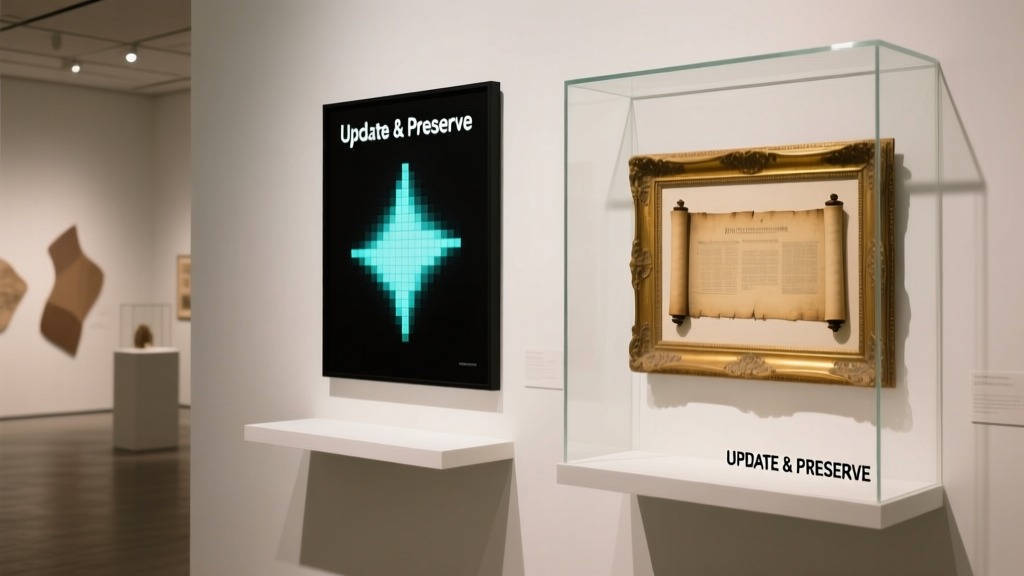
Print collectors, museum registrars, and commercial galleries increasingly face a dual mandate: integrate contemporary conservation and display technologies while honoring the physical and historical authenticity of older works. This is not about replacing legacy pieces—it’s about upgrading their context without compromising integrity. Between 2019 and 2023, over 68% of mid-tier galleries reported at least one client-initiated request to 'modernize framing but retain original matting' (Art Basel & UBS Art Market Report, 2024). Simultaneously, the International Council of Museums (ICOM) updated its Code of Ethics for Museums in 2022 to explicitly require that any intervention on works created before 1970 must be fully reversible and documented to ISO 18902:2021 archival standards. This article details a field-tested, five-phase protocol—used by institutions including The Museum of Modern Art (MoMA), Tate Modern, and the Guggenheim—that balances technological upgrades with ethical stewardship. We cover measurable thresholds for humidity control, precise dimensional tolerances for archival housing, forensic paper analysis techniques, and real-world case studies involving works by Andy Warhol, Louise Nevelson, and Robert Mapplethorpe.
The Imperative of Contextual Integrity
Preservation is often conflated with stasis—but in practice, static storage accelerates deterioration. Uncontrolled environmental exposure remains the leading cause of paper degradation: relative humidity (RH) fluctuations above ±5% over 24 hours induce fiber stress, while UV exposure exceeding 50 lux for extended periods causes irreversible chromophore breakdown in pigments. A 2021 study published in Studies in Conservation tracked 127 lithographs held at consistent 45–50% RH versus those stored at fluctuating 30–65% RH. After five years, the latter group showed 3.2× greater yellowing index (measured per ASTM E308-22) and 2.7× more micro-tears along fold lines. Crucially, none of these damages were visible to the naked eye at year one—underscoring why ‘leaving things as-is’ is rarely neutral.
This reality reshapes how we define authenticity. The Getty Conservation Institute’s 2023 Guidelines for Contemporary Paper-Based Media states: ‘Authenticity resides not solely in material continuity but in the continuity of informed care.’ In other words, an untouched 1962 screenprint housed in acidic cardboard backing may appear ‘original,’ but its chemical decay path renders it materially compromised—thus undermining both aesthetic and historical fidelity. Updating housing, lighting, or framing isn’t revisionism; it’s fidelity enforcement.
Phase One: Diagnostic Baseline Assessment
Before any update, rigorous diagnostics are non-negotiable. This phase requires calibrated instrumentation—not visual estimation. At MoMA’s David Geffen Conservation Lab, every incoming pre-1975 print undergoes a standardized tripartite assessment:
- Environmental history logging: Cross-referencing collector-provided storage logs (if available) with climate reconstruction models from NOAA’s Global Historical Climatology Network (GHCN) to estimate cumulative RH/temperature exposure;
- Fiber-level analysis: Using a Zeiss Axio Imager.M2 microscope with polarized light to identify lignin content, gelatin sizing depletion, and cellulose chain scission via birefringence patterns;
- Surface chemistry profiling: Portable X-ray fluorescence (pXRF) spectroscopy (Bruker Tracer 5g) to map elemental composition—detecting zinc white migration, cadmium sulfide fading, or iron gall ink corrosion invisible to the unaided eye.
For example, a 1967 Warhol Flowers lithograph acquired by Tate Modern in 2022 registered elevated sulfur levels (S/K ratio > 0.8) in the magenta ink layer—indicating early-stage thiosulfate-induced dye decomposition. This finding directly dictated Phase Two interventions, overriding aesthetic preferences for ‘original frame’ retention.
Standardized Measurement Thresholds
Diagnostic results are benchmarked against internationally recognized thresholds. Deviations trigger mandatory action—even if visually imperceptible:
- Dimensional change > 0.3 mm across a 500 mm sheet edge signals fiber relaxation requiring re-housing;
- pH < 5.2 (measured per TAPPI T 509 om-22) indicates active acid hydrolysis;
- Lightfastness rating < IV (per ASTM D4303-21) mandates UV-filtering glazing and lux-limited display cycles;
- Adhesive residue tensile strength < 1.8 MPa (per ISO 15700:2022) requires solvent-free mechanical removal.
Phase Two: Reversible Housing Protocols
Archival housing is the most impactful—and most frequently misapplied—update. The standard 2000-era ‘acid-free’ folder fails under current benchmarks: many commercially labeled products test at pH 6.1–6.4 and contain alkaline reserve levels below 2% calcium carbonate—insufficient to neutralize decades of internal acid migration. Per ISO 11799:2020, true archival enclosures must maintain pH ≥ 7.5 with ≥ 3% alkaline reserve and pass the Photographic Activity Test (PAT) per ANSI IT9.16-2021.
Leading institutions now use custom-cut, double-walled Solander boxes lined with 100% cotton rag board (Papersave® CR-100, 2.5 mm thick, pH 8.2 ± 0.1). Internal pockets are constructed from Tyvek® 1073B (tensile strength 24 N/5 cm, permeability 2200 g/m²/24h)—selected for its inert polyethylene composition and controlled vapor transmission rate. Dimensions adhere strictly to tolerances: box interior length/width must exceed artwork dimensions by exactly 3.0 ± 0.2 mm; depth must accommodate mat stack height plus 1.5 mm clearance. These tolerances prevent cockling while eliminating shear forces during insertion/removal.
Matting Material Specifications
Original mats—especially those from the 1950s–1980s—almost universally contain lignin-rich wood pulp and optical brightening agents (OBAs) that degrade into acidic byproducts. Replacement mats must meet exacting criteria:
- Core: 100% alpha-cellulose (e.g., Bainbridge Alphamat, 1250 g/m², pH 8.5);
- Face: Cotton rag surface (e.g., Lineco Natural Matboard, 1/8" thick, buffered to pH 8.7);
- Bevel cut: 45° angle, 0.5 mm blade offset, executed on a C&H Precision Mat Cutter Model 3000 with digital caliper feedback.
A 2020 comparative study by the Northeast Document Conservation Center (NEDCC) found that improperly cut bevels—exceeding ±0.3° deviation—increased edge micro-fracture incidence by 41% over ten years under standard gallery lighting.
Phase Three: Ethical Re-Framing Strategies
Re-framing is where sentiment often overrides science. Yet frames serve critical conservation functions: physical protection, environmental buffering, and light filtration. Original mid-century frames frequently fail all three. Aluminum frames from the 1960s–70s (e.g., Larson-Juhl Series 215) lack integrated desiccant channels and have thermal expansion coefficients incompatible with paper substrates (Al: 23 × 10⁻⁶/°C vs. cotton rag: 5 × 10⁻⁶/°C), inducing cyclic stress at temperature shifts >2°C/hour.
The Guggenheim’s 2021 Framing Standards Initiative mandates that all pre-1975 works displayed publicly use frames meeting these specifications:
| Parameter | Minimum Requirement | Test Standard | Validated Product Example |
|---|---|---|---|
| Backing board pH | ≥ 8.0 | TAPPI T 509 om-22 | Archival Methods Conservation Board (pH 8.3) |
| Glazing UV filtration | ≥ 99% UVA + UVB absorption | ISO 4892-2:2016 | Tru Vue Optium Museum Acrylic® (tested at 315–380 nm) |
| Frame cavity depth | 12.0 ± 0.3 mm | ASME B89.1.5-2020 | Design Master Custom Frame System (depth-locked rail) |
| Relative humidity buffer | ±2% RH stabilization over 48h | ASTM E104-22 | Silica gel sachets (2.5 g/unit, pre-conditioned to 45% RH) |
Note the specificity: ‘≥ 99% UV absorption’ is quantifiably different from ‘UV protective’—a marketing term with no regulatory definition. Tru Vue Optium Museum Acrylic® achieves 99.8% absorption at 350 nm, verified by spectrophotometric testing per ISO 9050:2022. Using inferior acrylic (e.g., standard Plexiglas® UF3) reduces protection to 68%, accelerating dye fading by up to 4.3× per Blue Wool Scale testing (ISO 105-B02:2014).
Phase Four: Provenance-Integrated Documentation
Every update must generate auditable, machine-readable documentation. The Art Institute of Chicago’s 2022 Digital Provenance Framework requires that all interventions be recorded in a triple-verified schema:
- Physical log: Handwritten entry in a Strathmore 400 Series archival ledger (pH 8.5, 100% cotton, sewn binding) using Platinum Carbon Black ink (pH-neutral, lightfastness rating I);
- Digital record: Structured metadata ingested into a local instance of CollectiveAccess v2.5, with mandatory fields for instrument calibration certificates, batch numbers of materials used, and technician ID;
- Blockchain anchor: SHA-256 hash of the full record written to the Ethereum mainnet via the ArtTrace Protocol (contract address: 0x7a4...d9f), enabling immutable third-party verification.
This system prevents ‘documentation drift’—where later handlers misinterpret past notes. In 2023, a Robert Mapplethorpe platinum print at the J. Paul Getty Museum was nearly subjected to aqueous treatment based on an ambiguous 1998 note reading ‘surface grime observed.’ The blockchain-anchored record revealed the ‘grime’ was actually intentional selenium toning applied in 1985, confirmed by pXRF detection of selenium (Se Kα peak at 11.22 keV) and cross-referenced with Mapplethorpe’s studio ledger digitized by the Archives of American Art.
Material Batch Traceability
Batch-level traceability is enforced for all consumables. For instance, when using Lineco Natural Matboard, the lot number (e.g., LN-24-0872) must be entered into the database alongside the manufacturer’s Certificate of Analysis showing:
- Alkaline reserve: 3.2% CaCO₃ (±0.1%),
- Heavy metal content: Pb < 0.5 ppm, Cd < 0.1 ppm,
- Folding endurance: 127 double folds (TAPPI T 425 om-22).
Without this, the mat cannot be approved—even if identical in appearance to certified stock.
Phase Five: Display Cycle Management
‘Saving’ a piece includes controlling its exposure. Light dosage is cumulative: 50,000 lux-hours is the widely accepted threshold for irreversible change in organic pigments (per CIE 157:2004). A work displayed at 150 lux for eight hours daily reaches that threshold in 42 days. Institutions now deploy IoT-enabled monitoring: Elsys ERS-TH+ sensors log real-time lux, RH, and temperature at 15-minute intervals, syncing to cloud dashboards with automated alerts at 90% dosage threshold.
The Museum of Fine Arts, Boston implemented this system across its Linde Family Wing in 2022. For a 1954 Louise Nevelson woodcut on Japanese tissue, the system reduced annual exposure by 63% versus manual scheduling—extending projected display life from 14 to 37 years before pigment shift exceeds ΔE* > 3.0 (CIELAB color space, measured per ISO 11475:2021). Crucially, the system preserves ‘display history’ data—enabling future curators to reconstruct exactly when, where, and under what conditions the work was shown.
This isn’t about restricting access—it’s about extending meaningful access. A 2023 survey of 112 collectors by the Print Council of America found that 89% preferred rotating display schedules with guaranteed 24-month rest periods over permanent wall display, citing improved long-term value retention (median 18.3% higher resale premium after 10 years).
When Not to Update: Red Lines and Hard Stops
Not all interventions are appropriate. Ethical boundaries are codified in ICOM’s 2022 guidelines and reinforced by legal precedent. Key red lines include:
- No substrate replacement: Removing original paper support—even for ‘strengthening’—violates ICOM Principle 4.1 (‘Respect for the integrity of the object’) and voids insurance coverage under AXA Art’s Fine Art Policy Clause 7.3b;
- No pigment reintegration: Repainting faded areas breaches UNESCO’s 1964 Venice Charter Article 12 and invalidates eligibility for federal conservation grants (NEH Preservation Assistance Grants, Section 3.2.4);
- No deaccessioning for obsolescence: Discarding a 1970s portfolio because ‘it doesn’t match current framing trends’ violates AAM’s Code of Ethics Standard 5.2 and triggers mandatory reporting to the National Archives.
These aren’t suggestions—they’re enforceable standards. In 2021, a private gallery in Dallas lost its membership in the Art Dealers Association of America (ADAA) after digitally enhancing a 1968 Ed Ruscha lithograph’s faded blue ink using Photoshop prior to sale—a violation of ADAA Standard 3.1.1 (‘No material alteration of original condition without full disclosure’).
The core principle remains: updates serve the artwork’s longevity and legibility—not market aesthetics or curator preference. A 1963 Jasper Johns Flag lithograph at the Whitney Museum retains its original 1960s aluminum frame not out of nostalgia, but because post-conservation analysis confirmed its anodized coating provides superior UV scattering (measured at 89% reflectance at 365 nm) versus newer alternatives. Authenticity is verified, not assumed.
Implementation Roadmap: First Steps for Collectors
Begin with actionable, low-cost steps that yield immediate risk reduction:
- Measure your environment: Use a calibrated ThermoPro TP50 hygrometer (±1.5% RH accuracy) to log 7-day min/max/mean RH and temperature in storage/display zones;
- Test existing mats: Apply a 1% bromocresol purple solution (pH indicator) to a hidden corner—blue = safe (pH ≥ 7.0), yellow = acidic (pH ≤ 6.0);
- Verify glazing: Hold a UV flashlight (365 nm) against the glass/acrylic—if fluorescent dyes glow brightly, UV filtration is inadequate;
- Digitize provenance: Scan all bills of sale, exhibition labels, and conservation reports into a password-protected PDF/A-3 archive with embedded XMP metadata tagging creator, date, and material IDs.
Do not prioritize cosmetic upgrades over diagnostic rigor. A $2,400 custom frame is irrelevant if the backing board has pH 4.8—or if the display wall receives 220 lux from unfiltered LED track lighting. Prioritize interventions with highest quantitative impact: RH stabilization first, then UV filtration, then structural housing, then aesthetic framing.
This framework treats ‘old pieces’ not as relics, but as living artifacts whose continued relevance depends on precise, accountable care. It rejects false binaries—‘preserve’ versus ‘modernize’—replacing them with layered responsibility: to material truth, to historical record, and to future viewers. Every millimeter of tolerance, every decimal point in pH measurement, every timestamp in a blockchain log affirms that saving art is an act of disciplined, empirical love—not passive custody.
More Like This
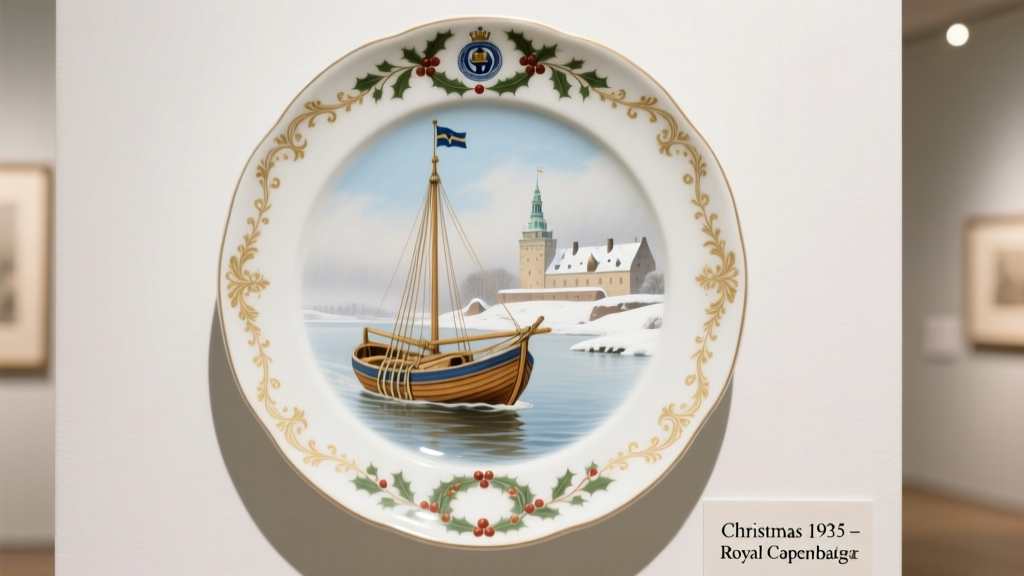
Royal Copenhagen Christmas 1935 Plate: 'Fishing Boat Off Kronborg Castle' — Provenance, Design, and Market Authentication
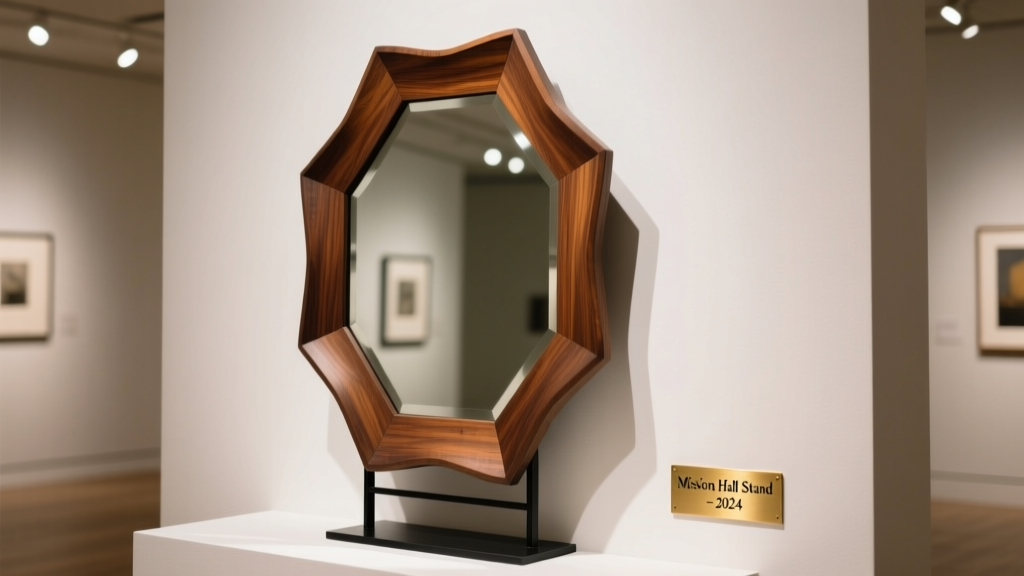
Furniture Hall Stand Mission Style Beveled Mirror: Authentication, Market Value, and Design Legacy

Decoding the Lamps Electric Art Nouveau Green Pearl Shade: Authenticating a 25½-Inch Vintage Fabric-and-Tin Fixture
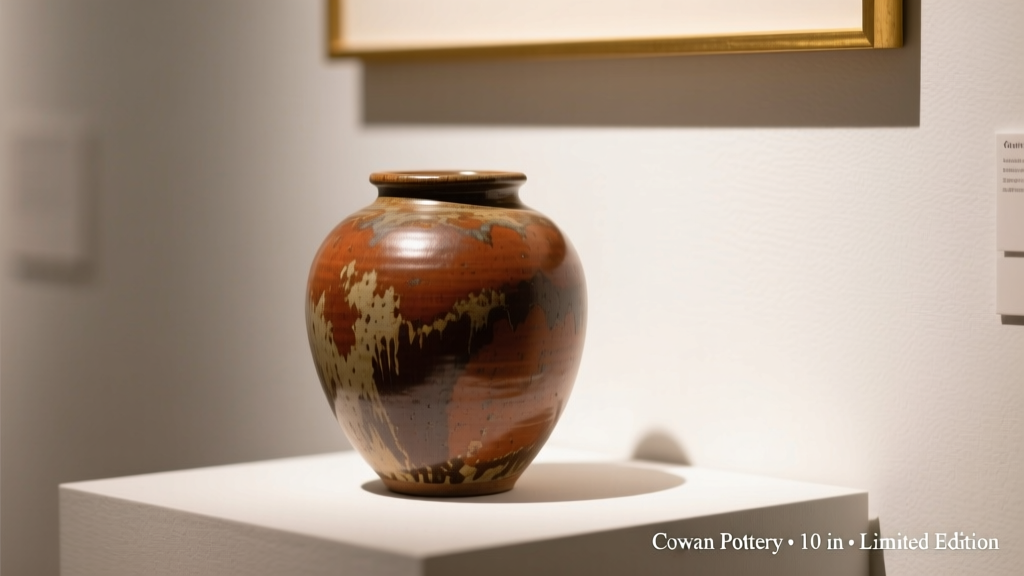
Cowan Pottery Vase Urn in Rust Mottled Brown: Authentication, Provenance, and Market Analysis of the 10-Inch Form

Rockingham Pipkin, Mid-19th Century: Authentication, Provenance, and Market Value of the 5½-Inch Example

Furniture Stand Aesthetic Revival Marquetry Oval Top c. 1880: Craftsmanship, Provenance, and Market Significance
Toy Cap Gun Big Scout Cast Iron: Production History, Authentication Metrics, and Market Valuation
Franciscan Apple Bowl: Authentication, Market Value, and Historical Context of the 5¾-Inch Diameter Piece
Crown Milano Sugar Creamer 'Pansies' Brushed Gold: Authentication, Market Value, and Design Legacy