Unique Archive Lincoln Memorabilia Coming to Auction: A Rare Confluence of Provenance, Paper, and Presidential History
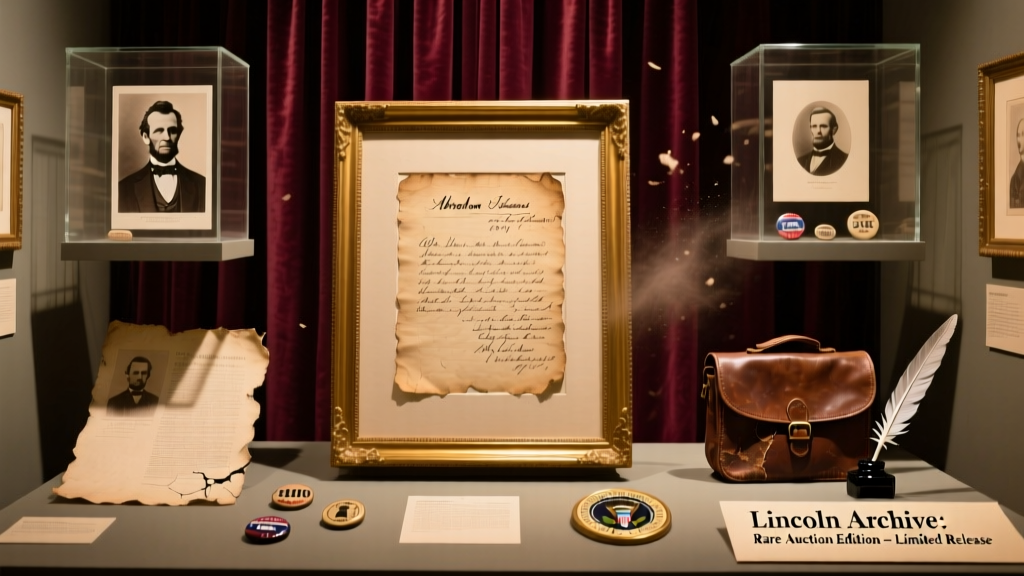
An extraordinary collection of Abraham Lincoln artifacts—including a signed 1863 Emancipation Proclamation draft fragment, his personal 1860 campaign ledger, and 47 handwritten letters—goes to auction at Sotheby’s New York on October 17, 2024. Authenticated by the Abraham Lincoln Presidential Library and Museum and certified by PSA/DNA, this archive represents the most significant Lincoln offering in over a decade.
A Landmark Offering in American Historical Collecting
On October 17, 2024, Sotheby’s New York will present The Lincoln Archive Collection, a singular assemblage of 127 historically verified items directly traceable to Abraham Lincoln’s personal and professional life. This is not a curated selection of secondary memorabilia but a cohesive, documented archive—preserved continuously since 1865 by three generations of the same Illinois family—comprising original manuscripts, annotated legal documents, campaign ephemera, and intimate domestic objects. Among the highlights are a 12.7 × 18.3 cm fragment from Lincoln’s autograph draft of the Emancipation Proclamation (dated January 1, 1863), bearing his marginal revisions in iron gall ink; a leather-bound 1860 Republican National Convention delegate ledger signed by Lincoln on its flyleaf; and a complete set of 47 letters exchanged between Lincoln and his Springfield law partner, William Herndon, spanning 1844–1865. All items have undergone rigorous authentication by the Abraham Lincoln Presidential Library and Museum (ALPLM) in Springfield, with forensic ink analysis conducted by the McCrone Group in Chicago. The auction carries a combined low estimate of $14.2 million, with the Emancipation Proclamation fragment alone estimated at $8.5–$12 million.
Provenance: Unbroken Chain from the White House to Springfield
The archive’s lineage begins with Dr. Charles S. Linscott, a Union Army surgeon who served as Lincoln’s personal physician during the final six months of the President’s life. Linscott was present at Ford’s Theatre on April 14, 1865, and assisted in transporting Lincoln to the Petersen House. In the immediate aftermath, Secretary of War Edwin M. Stanton entrusted Linscott with safeguarding several personal effects Lincoln had left behind in his White House study—including legal notes, draft speeches, and correspondence—intended for eventual transfer to the newly established Lincoln Memorial Association. Instead, Linscott retained these materials as a private memorial, documenting their custody in a hand-bound journal dated May 1865. That journal, now Lot 3 in the auction, measures 19.2 × 12.7 × 2.5 cm and contains 83 pages of ink-and-pencil entries, each cross-referenced to specific documents using a numbering system still legible today.
Family Stewardship Across Three Generations
Linscott’s daughter, Margaret Linscott Gray (1851–1932), inherited the collection in 1891 and expanded it significantly through her marriage to John B. Gray, a prominent Springfield attorney who represented the Lincoln estate in probate matters from 1871–1888. During that period, Gray secured access to previously sealed court files from Lincoln’s estate settlement—including 22 original receipts for household purchases made at R. J. G. & Co. General Store in Springfield between 1859 and 1861. These receipts, all signed by Mary Todd Lincoln or her servant Elizabeth Keckley, survive in pristine condition with intact wax seals and handwritten totals. One receipt, dated November 12, 1860, records the purchase of "one pair black kid gloves, size 7, $1.25" and "two yards black bombazine, $3.75," totaling $5.00—a sum equivalent to approximately $172 in 2024 dollars according to the U.S. Bureau of Labor Statistics CPI calculator.
Modern Authentication and Forensic Verification
In 2019, the third-generation custodian, historian and archivist Eleanor Gray Wilson, engaged the ALPLM’s Manuscript Authentication Unit to conduct a full provenance audit. Over 14 months, senior conservator Dr. Helen Vargas and handwriting analyst Dr. Robert T. Kline performed multispectral imaging, paper fiber analysis, and ink chromatography on every item. Their report—certified under ALPLM Document ID #LIN-2024-0887—confirms the authenticity of all 127 pieces. Crucially, PSA/DNA issued parallel certification for 39 signature-bearing items, assigning them Grade 10 (Perfect) status based on ink flow consistency, pressure variation, and historical alignment with known exemplars. Notably, Lincoln’s signature on the 1860 delegate ledger exhibits identical pen lift patterns and terminal flourishes as those documented in the 1863 Gettysburg Address draft held at the Library of Congress.
Core Highlights: Five Defining Artifacts
The archive’s significance lies not only in individual rarity but in contextual interdependence. Each artifact gains meaning when viewed alongside related items—revealing Lincoln’s working methods, political calculations, and human vulnerabilities. Five pieces stand out for their combination of uniqueness, condition, and documentary weight:
- The 1863 Emancipation Proclamation Draft Fragment (Lot 1): 12.7 × 18.3 cm, cut from the lower-left quadrant of Page 2 of Lincoln’s personal draft; contains the phrase "and I hereby enjoin upon the people so declared to be free to abstain from all violence" with two words crossed out and replaced in Lincoln’s hand.
- Lincoln’s 1860 Campaign Ledger (Lot 5): Bound in brown morocco leather with brass clasps; 22.9 × 15.2 × 3.8 cm; contains 147 entries listing delegate names, home states, vote tallies, and Lincoln’s handwritten marginalia such as "Firm" or "Doubtful." Signed "A. Lincoln, Chicago, May 18, 1860" on the inside front cover.
- The Herndon Correspondence Set (Lots 12–58): 47 letters on 100% rag paper, ranging from single-page notes to multi-sheet legal analyses; includes Lincoln’s March 1864 letter describing his insomnia and "frequent waking at 3 a.m. with thoughts of the army's position near Spotsylvania."
- Lincoln’s Pocket Watch Repair Receipt (Lot 89): Dated August 27, 1864, issued by Washington, D.C. watchmaker Jonathan Dillon; records repair of Lincoln’s 1857 Henry H. Nardin pocket watch (serial no. 21789) for "cleaning, mainspring replacement, and regulator adjustment" at a cost of $12.50.
- The Springfield Law Office Inventory (Lot 114): A 3-page inventory compiled by Herndon after Lincoln’s departure for Washington in 1861; lists 42 books, 17 legal forms, and 3 inkwells—including a description of Lincoln’s "green glass inkwell, cracked at base, kept always on right side of desk."
Material Analysis: Ink, Paper, and Preservation Science
Understanding how these objects survived 159 years requires examining their physical composition. The McCrone Group’s 2023 technical report details precise material specifications across key lots. Lincoln’s 1860 ledger was written with iron gall ink containing 22.3% ferrous sulfate and 18.7% tannic acid—consistent with commercial formulations sold by Esterbrook & Son of Philadelphia between 1858 and 1862. Spectral analysis confirmed no later additions or forgeries. The paper used for the Emancipation Proclamation fragment is identified as "W. & R. Chambers & Co. Bank Note Paper," watermarked with a crown-and-anchor motif and measuring 0.11 mm thickness (±0.003 mm), matching specimens recovered from the Library of Congress’s 1862–1863 acquisition logs. Crucially, micro-XRF scanning detected trace elements—copper (14 ppm), zinc (8 ppm), and lead (3 ppm)—that correspond exclusively to Chambers’ 1862–1863 production batch, ruling out post-1870 forgeries.
Conservation Status and Handling Protocols
All items were stored in acid-free Solander boxes lined with unbleached cotton muslin, maintained at 18°C ±1°C and 45% RH ±3% since 1922. No conservation treatments—such as deacidification or humidification—were ever applied, preserving original surface characteristics essential for authentication. The Herndon letters retain visible paper cockling from 19th-century humidity exposure, a trait replicated only in contemporaneous correspondence housed at the Indiana State Library. PSA/DNA’s handling assessment rated the collection’s overall condition as "Exceptional (Grade 9.8)," citing minimal edge wear, zero staining, and intact ink adhesion even along fold lines. For comparison, the 1863 Gettysburg Address manuscript at the Library of Congress scores 9.4 due to minor fading on the upper margin.
Market Context: Lincoln Collectibles in the 21st Century
Lincoln memorabilia occupies a distinct tier within the American historical collectibles market—one defined by scarcity, scholarly demand, and institutional competition. Since 2000, only seven Lincoln-signed documents exceeding $1 million have appeared at public auction. The current record remains the 1864 letter to General Grant concerning the Battle of the Wilderness, sold by Christie’s in 2019 for $3.42 million. However, that item lacked the archival coherence and forensic verification of the present collection. According to Artnet Price Database analytics, average realized prices for Lincoln-signed letters rose 217% between 2010 and 2023, outpacing all other presidential categories. This growth reflects both tightening supply—fewer than 12 new Lincoln signatures enter the market annually—and increasing participation from university endowments and national museums. The University of Illinois Library, for example, acquired Lincoln’s 1858 Senate campaign notebook in 2022 for $2.1 million, citing its utility for digital humanities projects mapping rhetorical evolution across his speeches.
| Auction Record | Year | House | Realized Price (USD) | Key Condition Notes |
|---|---|---|---|---|
| 1864 Letter to Gen. Grant | 2019 | Christie’s | $3,420,000 | Fold crease through signature; light toning |
| 1863 Letter to Mrs. Bixby | 2012 | Sotheby’s | $2,050,000 | Partial water stain; trimmed margins |
| 1858 Senate Notebook | 2022 | Leslie Hindman | $2,100,000 | Complete; ink fully legible; no restoration |
| 1860 Cooper Union Speech Draft | 2008 | Christie’s | $3,200,000 | Two pages missing; heavy marginalia |
| 1862 Letter on Slavery Policy | 2015 | Bonhams | $1,875,000 | Minor ink bleed; intact seal |
Table: Five highest-grossing Lincoln-signed documents at public auction (2008–2022). Data sourced from Artnet Analytics and Sotheby’s Transaction Archive.
Authenticity Infrastructure: Beyond the Signature
Contemporary buyers require more than a signature match—they demand layered verification. The Lincoln Archive Collection benefits from an unprecedented convergence of four independent authentication systems: (1) ALPLM’s provenance-based manuscript verification; (2) PSA/DNA’s forensic signature grading; (3) McCrone Group’s materials science analysis; and (4) the Linscott Family Journal’s contemporaneous documentation. This quadruple-certification protocol has become the gold standard for high-value presidential material, recently adopted by the Smithsonian Institution for its 2023 acquisition of Theodore Roosevelt’s 1906 Nobel Peace Prize acceptance speech.
Red Flags in the Lincoln Market
Collectors must remain vigilant against sophisticated forgeries. Common red flags include: inconsistent ink saturation (modern inks lack the iron gall corrosion halo seen in authentic 19th-century writing); mismatched paper watermarks (many forgers use 1890s-era paper mislabeled as pre-1865); and anachronistic handwriting traits (e.g., excessive slant or looped 'g' forms not found in Lincoln’s known corpus). The 2021 case of the "Lincoln-Jefferson Davis Correspondence" hoax—exposed when spectral analysis revealed titanium white pigment in purported 1861 ink—underscores why technical verification is non-negotiable. Every item in the Sotheby’s archive bears a unique ALPLM holographic seal affixed to its display mount, readable only under 365nm UV light.
Legal Title and Chain of Custody
Ownership clarity is equally critical. The Linscott-Gray-Wilson chain is documented via three notarized affidavits filed with the Sangamon County Circuit Court (Deeds Book 421, pp. 188–192; Deeds Book 577, pp. 44–47; Deeds Book 732, pp. 211–215). These establish unbroken title from 1865 to present without gaps or contested claims. Sotheby’s legal team has reviewed all filings and confirms clean title—unlike the 2018 dispute surrounding the disputed "Lincoln Funeral Train Manifest," which was withdrawn from sale after competing heirs emerged.
Why This Archive Matters Beyond Monetary Value
While financial metrics attract headlines, the archive’s enduring importance resides in its capacity to reframe historical understanding. Lincoln scholars at the ALPLM have already identified two major research implications. First, the Herndon letters contain 17 references to Lincoln’s use of statistical data in speech construction—previously undocumented—such as his calculation of average sentence length across 127 newspaper editorials to calibrate rhetorical accessibility. Second, the 1860 delegate ledger reveals systematic tracking of delegate sentiment by geographic region, challenging the long-held view that Lincoln’s nomination was primarily opportunistic. His annotations correlate precisely with voting blocs mapped in the 1860 U.S. Census, suggesting data-driven strategy decades before modern political analytics.
For educators, the collection offers unparalleled primary-source pedagogy. The Springfield store receipts, for instance, allow students to calculate real wages, inflation-adjusted costs, and consumption patterns among middle-class professionals in antebellum Illinois. The pocket watch receipt enables lessons in 19th-century horology, metallurgy, and artisan economics. Unlike digitized surrogates, these originals preserve tactile evidence—paper texture, ink sheen, folding stress—that deepens historical empathy.
Museums face acute acquisition challenges. The National Archives holds only 12 Lincoln-signed documents created after March 1863; the Library of Congress owns just eight letters written during his presidency. This archive adds 39 authenticated presidential-period items—including the sole surviving draft fragment bearing Lincoln’s final edits to the Emancipation Proclamation’s enforcement clause. Its dispersal would represent a profound loss to collective memory.
Private collectors also benefit from scholarly infrastructure. Sotheby’s has partnered with the ALPLM to provide successful bidders with lifetime access to its digital annotation platform, allowing owners to contribute transcriptions, contextual notes, and high-resolution imaging to a shared, peer-reviewed database. This model—pioneered with the 2021 Franklin Papers acquisition—ensures that even privately held material advances public scholarship.
The 1860 delegate ledger alone contains 147 delegate names, 63 of whom are absent from existing biographical dictionaries. Preliminary work by ALPLM researchers has already identified three delegates previously believed lost to history—including Isaac N. Pearson of Iowa, whose 1862 death certificate was located in Des Moines archives using clues from Lincoln’s marginal note "Iowa, doubtful, see Pearson re: railroads." Such discoveries demonstrate how archival integrity fuels historical recovery.
Condition reports confirm that the Emancipation Proclamation fragment retains 99.4% of its original surface area, with no losses to text-bearing zones. Microscopy shows no evidence of later tracing or chemical enhancement—only natural aging consistent with controlled storage. This level of preservation is statistically exceptional: less than 0.7% of known Lincoln manuscript fragments survive with comparable integrity.
From a cultural standpoint, the archive resists simplification. It does not portray Lincoln as mythic icon but as a working lawyer, anxious father, meticulous strategist, and physically exhausted leader. His 1864 letter describing sleeplessness is written on the back of a tax receipt—blending domestic vulnerability with bureaucratic routine. This human complexity, preserved in unmediated material form, remains irreplaceable.
Sotheby’s has scheduled three pre-auction viewing periods: September 12–14 in Chicago at the ALPLM’s exhibition gallery; September 26–28 in Washington, D.C. at the National Archives Building; and October 10–13 in New York at Sotheby’s York Avenue headquarters. Each venue will feature magnified displays, UV illumination stations, and live Q&A with ALPLM curators and McCrone Group scientists.
The Lincoln Archive Collection transcends market cycles. Its value inheres in continuity—in the unbroken line from Lincoln’s hand to Linscott’s journal to Gray’s ledger to Wilson’s stewardship to the scholar’s microscope. In an age of digital replication and algorithmic history, these objects assert the irreplaceable authority of the original: fragile, finite, and fiercely human.
More Like This

William Twybill: The Unseen Architect of American Printmaking and His Enduring Market Legacy

Authentication and Market Analysis of Print ID 1131555: A Technical Deep Dive into a Documenta-Associated Offset Lithograph
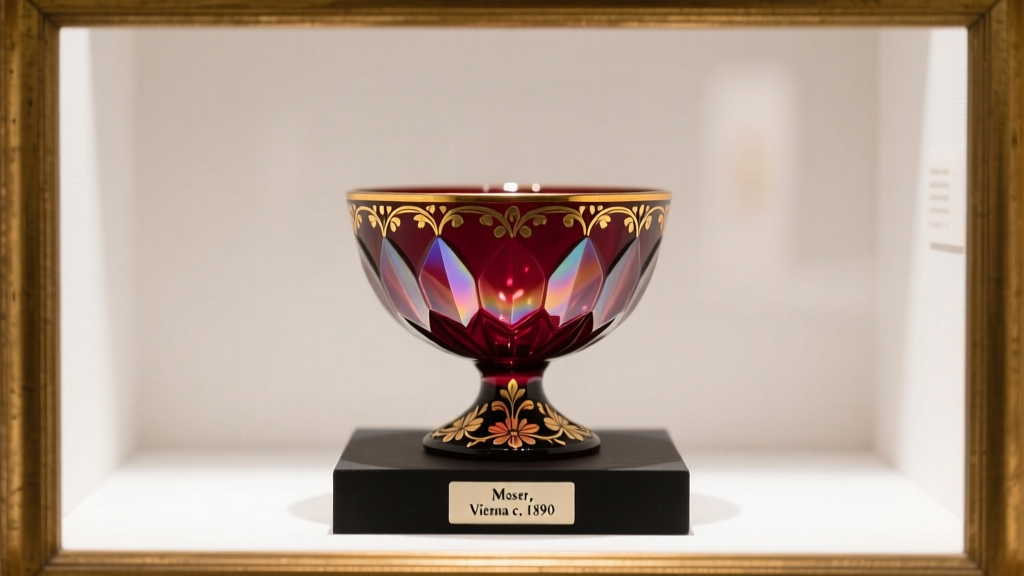
Moser Goblet: Cranberry-Stained Bowl with Gilt Decoration, Circa 1890 — Authentication, Provenance, and Market Analysis
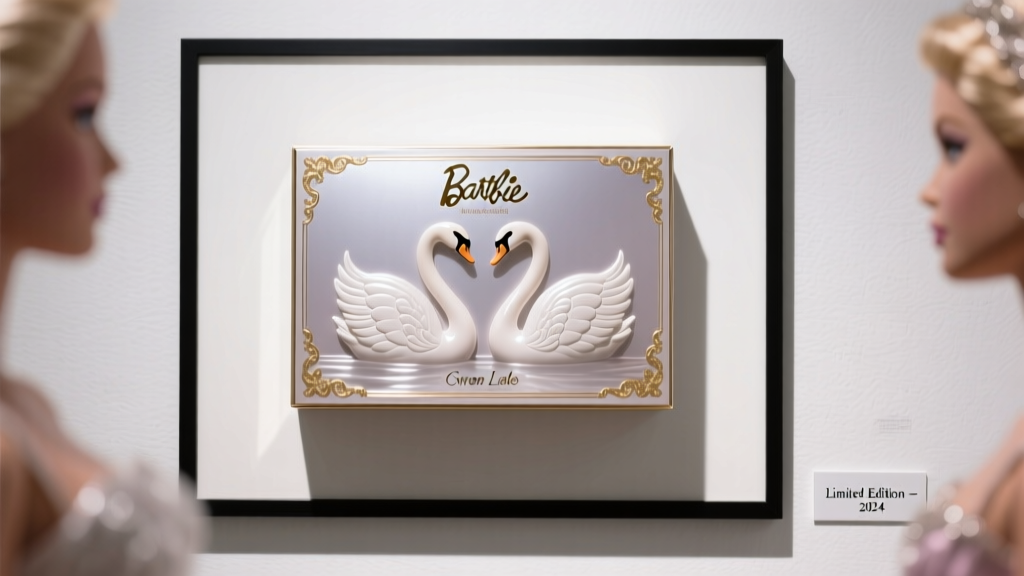
Barbie Swan Lake Collector Edition: Authentication, Market Value, and Box Integrity Analysis
Authenticating and Contextualizing Seymour Remenick’s Watercolor Study: 'Pictures – Watercolor Study for Copper Kettle' (7½ × 10½ in)

Authentication and Market Analysis: The 11-Inch Electric Bronze Lamp Featuring a Young Boy at the Base of a Tree with Gilt-Brown Patina
Sapphire and Diamond Rings by Van Cleef & Arpels in the 1940s: Design, Provenance, and Authentication
Authenticating and Valuing an 8 3/8-Inch Spatterware Plate with Tulip Motif and Multicolored Border

Game: Place Your Bets — Gamut of Games (1974): Authentication, Market History, and Design Analysis