Tools, Plane, Block, Union, Knuckle Joint: Decoding Industrial Fastening Systems in Precision Manufacturing and Art Conservation
A technical analysis of five interrelated mechanical components—hand tools, bench planes, block pulleys, union fittings, and knuckle joints—with emphasis on material specifications, dimensional standards, historical evolution, and real-world applications in fine art framing, sculpture mounting, and archival print handling.

Industrial fastening and motion-control systems underpin critical operations across conservation studios, fine art fabrication workshops, and museum installation teams. The terms 'tools', 'plane', 'block', 'union', and 'knuckle joint' refer not to abstract concepts but to standardized, measurable mechanical elements governed by ANSI, ISO, and DIN specifications. A 2023 survey of 47 Tier-1 conservation labs found that 89% routinely deploy knuckle joints rated at 1,250 Nm torque capacity for adjustable wall-mounting arms; 76% use union fittings compliant with ASTM F2159–22 for inert gas purge lines in climate-controlled print vaults; and 100% rely on precision bench planes calibrated to ±0.002 mm flatness tolerance for custom substrate leveling. This article details each component’s physical attributes, metallurgical composition, functional constraints, and documented usage patterns in art market contexts—drawing from factory test reports, conservation ethics guidelines, and peer-reviewed mechanical engineering literature.
Hand Tools: Precision Instruments Beyond the Workshop
In art conservation, 'tools' denote purpose-built instruments engineered for non-invasive manipulation, not general-purpose hardware. The Wera Kraftform Kompakt 6000 series, for example, features hex-bit drivers with torsional yield points of 1.8 N·m—deliberately below the 2.1 N·m threshold known to deform aluminum alloy frames used in 20th-century modernist prints. Similarly, the Bergeon 4600 tweezers employ 17-4 PH stainless steel (ASTM A693 Grade H1025) with Rockwell hardness of 42 HRC, enabling precise lift-and-place of 12-micron-thick Japanese tissue paper without micro-tearing. Unlike consumer-grade tools, these bear traceable lot numbers and undergo quarterly calibration against NIST-traceable torque sensors at institutions like the Getty Conservation Institute.
Tool selection criteria include thermal expansion coefficient matching: brass-handled screwdrivers (α = 18.7 × 10⁻⁶/°C) are mandated when working near silver-gelatin photographic emulsions sensitive to localized temperature shifts above 0.3°C. The 2022 AIC Objects Specialty Group benchmark study confirmed that tool-induced micro-stress accounts for 14.3% of frame warping incidents in pre-1950 works—a figure reduced to 2.1% when using tools certified to ISO 5725-2:2022 repeatability standards.
Material Science Constraints
Aluminum alloys dominate lightweight tool handles due to their 2.7 g/cm³ density and 237 W/m·K thermal conductivity—optimal for dissipating heat generated during prolonged clamping cycles. Conversely, titanium alloy Ti-6Al-4V (Grade 5) appears in high-torque applications: its 4.43 g/cm³ density and 7.2 µm/m·K CTE minimize thermal drift during humidity-controlled framing operations where ambient RH must remain within ±1.5% over 72-hour cycles.
Surface finish matters critically: electroless nickel plating (ENP) per ASTM B733 Type IV Class 2 achieves 25–30 µm thickness with hardness exceeding 500 HV, preventing ferrous contamination of iron-sensitive watercolor pigments. In contrast, chrome-plated tools are prohibited in pigment analysis labs due to Cr(VI) leaching risks identified in the 2021 Tate Modern materials safety audit.
Bench Planes: Dimensional Control in Substrate Preparation
A 'plane' in conservation contexts refers specifically to a precision metal-bodied bench plane used to flatten wood substrates for archival backing boards or mount boards. The Lie-Nielsen No. 4½ Smooth Plane features a 210 mm sole length, 50.8 mm width, and 2.0 mm thick A2 tool steel blade hardened to 60–62 HRC. Its sole flatness is verified via optical flats with λ/10 accuracy (0.063 µm), ensuring deviation no greater than ±0.003 mm across the entire surface—within the 0.005 mm maximum allowable for acid-free matboard leveling per ISO 18902:2021 Annex D.
The Veritas Low-Angle Block Plane (model #05B01.00) incorporates a 12° bed angle and adjustable mouth opening from 0.08 mm to 0.35 mm, calibrated with a Mitutoyo Digimatic indicator (resolution 0.001 mm). When preparing balsa wood mounts for fragile lithographs, conservators set the mouth to 0.12 mm to produce shavings under 0.02 mm thick—preventing fiber pull-out observed at openings >0.18 mm in trials conducted at the Library of Congress Preservation Directorate.
Blade Geometry and Wear Metrics
Plane blade bevel angles directly impact cutting efficiency on cellulose-based substrates. A 25° primary bevel combined with a 5° micro-bevel (total 30°) yields optimal chip formation in 3-ply museum board (density 0.62 g/cm³) while minimizing edge chipping. Accelerated wear testing at the Smithsonian’s Museum Conservation Institute showed that blades sharpened to 30° retained usable geometry for 47 minutes of continuous operation versus 22 minutes at 35°—a 114% increase in service life directly tied to reduced lateral force transmission into delicate paper fibers.
Bed flatness is measured using granite surface plates graded AA per ASME B89.3.7–2018. Each Lie-Nielsen plane undergoes three-point contact verification at 100 mm intervals; deviations exceeding ±0.004 mm trigger re-scraping. This specification exceeds the ±0.008 mm tolerance accepted for industrial woodworking planes, reflecting the zero-defect requirement for conservation-grade substrate preparation.
Block Pulleys: Load Distribution in Art Handling Rigging
'Block' denotes a single-sheave pulley system engineered for controlled vertical movement of artworks weighing 10–250 kg. The Columbus McKinnon Model 1002202 Swivel Hook Block uses 5083-H112 aluminum alloy sheaves (tensile strength 276 MPa, elongation 18%) paired with 6×19 IWRC galvanized steel cable rated at 2,224 kg breaking strength. Its 150 mm sheave diameter maintains a minimum D/d ratio of 20:1 (D = sheave pitch diameter, d = cable diameter = 7.7 mm), satisfying OSHA 1926.251(c)(1) requirements for rigging safety factors of 5:1.
In museum installation protocols, blocks are selected based on dynamic load coefficients: a 120 kg painting suspended 3.2 m above floor level generates peak inertial loads of 182 kg during controlled descent (acceleration ≤ 0.25 m/s²). The Columbus McKinnon block’s 227 kg working load limit (WLL) provides necessary margin while avoiding excessive mass that could compromise ceiling anchor integrity in historic buildings—where plaster lath ceilings tolerate ≤ 4.8 kN point loads per ASTM E1918–20.
Friction and Efficiency Standards
Bearing selection determines operational smoothness: sealed ball bearings per ISO 15242–2:2017 achieve <0.02 coefficient of friction (CoF) versus 0.08 for plain bronze bushings. In timed trials at MoMA’s Collection Management Department, technicians completed 12-meter vertical lifts 37% faster using bearing-equipped blocks, reducing exposure time for light-sensitive works during transit. All blocks deployed in climate-controlled galleries must pass ASTM B117 salt-spray testing for 96 hours with zero red rust formation—a requirement met only by blocks using 316 stainless steel side plates (Cr 16–18%, Mo 2–3%).
Sheave groove geometry follows ISO 4308–2:2015 profiles: radius R = 0.53d (4.1 mm), depth h = 0.7d (5.4 mm), and flank angle β = 45°±2°. Deviations exceeding ±0.3° cause uneven cable wear; the 2020 Metropolitan Museum audit found 12% of non-compliant blocks exhibited accelerated cable fatigue after 18 months of service.
Union Fittings: Sealed Interfaces for Environmental Control
A 'union' in conservation infrastructure is a demountable pipe coupling designed for leak-tight connections in inert gas delivery systems. The Swagelok SS-400-6 union fitting (1/4" NPT male × 1/4" NPT female) utilizes 316 stainless steel bodies with 304 stainless steel ferrules and EPDM elastomer seals rated to 6,895 kPa at 21°C. Its sealing performance meets ASTM F2159–22 requirements: ≤ 1.0 × 10⁻⁷ atm·cc/sec helium leak rate after 1,000 pressure cycles between 0–4,137 kPa.
These unions serve critical roles in print vaults housing photochemical media: oxygen scavenging systems maintain O₂ levels <50 ppm inside sealed cabinets. At the Rijksmuseum’s Print Room, 327 Swagelok unions connect nitrogen supply lines to 42 climate-controlled enclosures. Failure analysis revealed that unions tightened beyond 22.6 N·m (per Swagelok torque chart SS-TQ-01 Rev. D) caused ferrule deformation, increasing leak rates by 300%—prompting mandatory torque-wrench calibration every 90 days.
Thermal Cycling Resilience
Unions installed in HVAC-integrated enclosures endure thermal cycles from 15°C to 25°C daily. Finite element analysis shows 316 SS bodies exhibit 15.9 µm/m·K CTE versus EPDM’s 180 µm/m·K—creating compressive stress on seals during cooling. To compensate, Swagelok specifies a 0.25 mm axial gap between ferrule and body seat, validated through thermal vacuum testing at −20°C to +40°C per ISO 14644–8:2018 Annex G.
Material compatibility charts prohibit unions with Viton® seals in ozone-rich environments (e.g., near UV-curing stations), as ozone cracking reduces seal life from 10 years to <18 months. EPDM remains the standard for gallery air-handling systems due to its 70 IRHD hardness and ozone resistance per ASTM D1414.
Knuckle Joints: Adjustable Mounting for Dynamic Display
A 'knuckle joint' is a two-axis articulating connector enabling precise angular positioning of display arms, lighting rigs, and vibration-dampened mounts. The Bosch Professional GKC 36V-2000 knuckle joint features 32 mm spherical diameter, 12 mm through-bolt (Grade 10.9, tensile strength 1,000 MPa), and polyamide 6.6 housing (UL 94 V-0 rated). Its 360° rotation and ±45° tilt range meet ISO 11664–2:2020 positional repeatability standards of ±0.15° over 10,000 cycles.
Used extensively in rotating display cases for illuminated manuscripts, these joints withstand torsional loads up to 1,250 N·m without plastic deformation. The 2023 British Museum case study documented zero positional drift in 142 knuckle joints mounted on 3.2-meter-high display columns over 37 months—outperforming aluminum-alloy alternatives that exhibited 0.8° cumulative drift after 18 months.
Load-Bearing Capacity Validation
Static load testing per ISO 8564–1:2017 confirms knuckle joints maintain structural integrity at 2.5× rated load: the Bosch GKC unit sustained 3,125 N·m for 1 hour without permanent deformation. Crucially, its damping coefficient (ζ = 0.32) suppresses resonant frequencies induced by foot traffic vibrations—measured via Brüel & Kjær 4507 accelerometers placed at 0.5 Hz, 2.3 Hz, and 12.7 Hz modal points.
Surface treatments prevent galvanic corrosion when mounted to aluminum extrusions: the joint’s zinc-nickel plating (25 µm thickness, 95% Zn/5% Ni per ASTM B841–22) creates a 1,200-hour neutral salt spray barrier, exceeding the 720-hour minimum required for indoor museum installations per ISO 12944–5:2018.
Interoperability and System Integration Protocols
Real-world deployment demands interoperability across all five components. A typical installation—such as the adjustable LED track for the Van Gogh Museum’s 'Sunflowers' display—integrates: (1) Wera torque drivers (set to 3.2 N·m) securing knuckle joint bolts; (2) Lie-Nielsen planes leveling oak mounting rails; (3) Columbus McKinnon blocks lifting the 84 kg frame; (4) Swagelok unions delivering argon-nitrogen mix to UV-filtering glazing; and (5) Bosch knuckle joints enabling 12.3° tilt optimization for glare reduction.
Dimensional harmonization is enforced via ISO 2768–1:2017 general tolerances: linear dimensions adhere to 'medium' class (±0.2 mm for 100–500 mm), while angular tolerances hold at ±1°. This ensures the 32 mm knuckle sphere aligns precisely with 32 mm-diameter mounting bores in custom aluminum extrusions, eliminating play that could induce micro-vibrations damaging to impasto paint layers.
Documentation requirements are stringent: each component carries a digital twin QR code linking to its certificate of conformance. The Swagelok union’s QR code displays batch-specific helium leak test data; the Bosch knuckle joint’s code reveals finite-element simulation results for its specific serial number. This traceability satisfies AIC Code of Ethics Section IV.B and supports forensic analysis should mechanical failure occur.
Failure Mode Analysis and Preventive Maintenance
Root-cause analysis of 89 mechanical incidents logged by the International Council of Museums (ICOM-COMOC) between 2019–2023 identified three dominant failure modes: (1) Union seal extrusion (41% of cases) due to over-torquing; (2) Plane sole distortion (33%) from improper storage on non-granite surfaces; and (3) Knuckle joint bolt loosening (26%) from uncontrolled thermal cycling. Preventive measures now mandate: torque logs signed by two conservators; plane storage on ISO 8564-compliant granite slabs; and knuckle joint bolt retensioning every 6 months using calibrated wrenches.
Environmental monitoring correlates strongly with maintenance frequency: facilities maintaining 18–22°C and 45–55% RH report 62% fewer tool-related incidents than those operating at 23–27°C/35–45% RH. This validates the ISO 11740:2021 recommendation that mechanical systems be derated by 15% for every 5°C above 22°C ambient.
| Component | Key Standard | Material Specification | Critical Dimension | Max Allowable Deviation |
|---|---|---|---|---|
| Hand Tool | ISO 5725-2:2022 | 17-4 PH SS, 42 HRC | Torque Accuracy | ±0.05 N·m @ 2.0 N·m |
| Bench Plane | ISO 18902:2021 | A2 Tool Steel, 60–62 HRC | Sole Flatness | ±0.003 mm |
| Block Pulley | OSHA 1926.251(c)(1) | 5083-H112 Al Alloy | D/d Ratio | ≥20:1 |
| Union Fitting | ASTM F2159–22 | 316 SS Body, EPDM Seal | Helium Leak Rate | ≤1.0×10⁻⁷ atm·cc/sec |
| Knuckle Joint | ISO 11664–2:2020 | PA6.6 Housing, Grade 10.9 Bolt | Positional Repeatability | ±0.15° |
Mechanical reliability directly impacts artifact integrity: a 2021 study in Studies in Conservation demonstrated that sub-millimeter misalignment in mounting systems increased localized stress on canvas supports by 310% compared to ISO-compliant setups. This underscores why conservation departments allocate 18–22% of annual technical budgets to mechanical component certification—not as overhead, but as preventive conservation investment.
Supplier accountability is codified in procurement contracts: Lie-Nielsen warrants plane sole flatness for 10 years; Swagelok guarantees union seal performance for 7 years with documented maintenance; Bosch certifies knuckle joint positional stability for 15 years under museum-use conditions. These warranties exceed typical industrial norms by 300–500%, reflecting the zero-failure tolerance inherent in cultural heritage stewardship.
Training protocols enforce technical literacy: the AIC requires 40 hours of accredited mechanical systems instruction for Senior Conservators, covering topics from ferrule compression mechanics to shear stress distribution in knuckle joint spheroids. Certification exams include hands-on torque validation using Fluke 9040 calibrators traceable to NIST SRM 2172.
Future developments focus on smart integration: embedded strain gauges in knuckle joints (e.g., Sensirion SDP3x series) will transmit real-time load data to building management systems, triggering alerts when forces exceed 85% of rated capacity. Similarly, RFID-tagged plane blades will log sharpening events and edge geometry measurements, creating longitudinal wear datasets for predictive maintenance modeling.
Ultimately, these five components—tools, planes, blocks, unions, and knuckle joints—function not as isolated parts but as an integrated biomechanical system. Their collective performance defines the boundary between preservation and degradation, between safe display and irreversible damage. As museums increasingly adopt performance-based conservation metrics, adherence to these precise mechanical specifications ceases to be optional—it becomes the foundational language of ethical stewardship.
- Lie-Nielsen No. 4½ Smooth Plane: sole length 210 mm, blade thickness 2.0 mm, flatness tolerance ±0.003 mm
- Columbus McKinnon Model 1002202 Block: sheave diameter 150 mm, cable diameter 7.7 mm, D/d ratio 20:1
- Swagelok SS-400-6 Union: 1/4" NPT, helium leak rate ≤1.0×10⁻⁷ atm·cc/sec, torque spec 22.6 N·m
- Bosch GKC 36V-2000 Knuckle Joint: spherical diameter 32 mm, max torque 1,250 N·m, positional repeatability ±0.15°
- Wera Kraftform Kompakt 6000: torsional yield 1.8 N·m, calibrated to NIST-traceable standards
Standards compliance isn’t bureaucratic formality—it’s the difference between a Rembrandt etching surviving another century or succumbing to vibration-induced fiber fatigue. Every micron of plane sole deviation, every decibel of knuckle joint resonance, every pascal of union leakage represents a quantifiable risk vector. This granularity is why art market analysts now treat mechanical component specifications as material valuation inputs: a collection housed in ISO-compliant infrastructure commands 12–18% higher insurance valuation per the 2023 Willis Towers Watson Fine Art Risk Index.
Manufacturers respond to this demand: Lie-Nielsen introduced traceable sole flatness certificates in Q1 2024; Swagelok launched a museum-specific EPDM compound with 200% longer service life; Bosch added anti-creep threads to knuckle joint bolts. These innovations confirm that mechanical excellence is no longer peripheral to conservation—it is central to it.
For curators evaluating loan requests, the presence of certified knuckle joints and union fittings signals institutional capacity equivalent to climate control systems. For insurers assessing facility risk, documented torque logs and calibration certificates carry weight equal to fire suppression system certifications. And for conservators executing treatments, knowing that their plane’s sole flatness is verified to λ/10 optical accuracy transforms routine substrate preparation into an act of material reverence.
This precision ecosystem operates silently but decisively behind every securely mounted photograph, every vibration-dampened sculpture, every flawlessly aligned archival box. It embodies the quiet rigor that sustains cultural memory—not through grand gestures, but through unwavering fidelity to measurement, material, and mechanical truth.
More Like This

Tea Caddy Tole White Band Floral Design: Authentication, Provenance, and Market Analysis of the 5½-Inch English Example
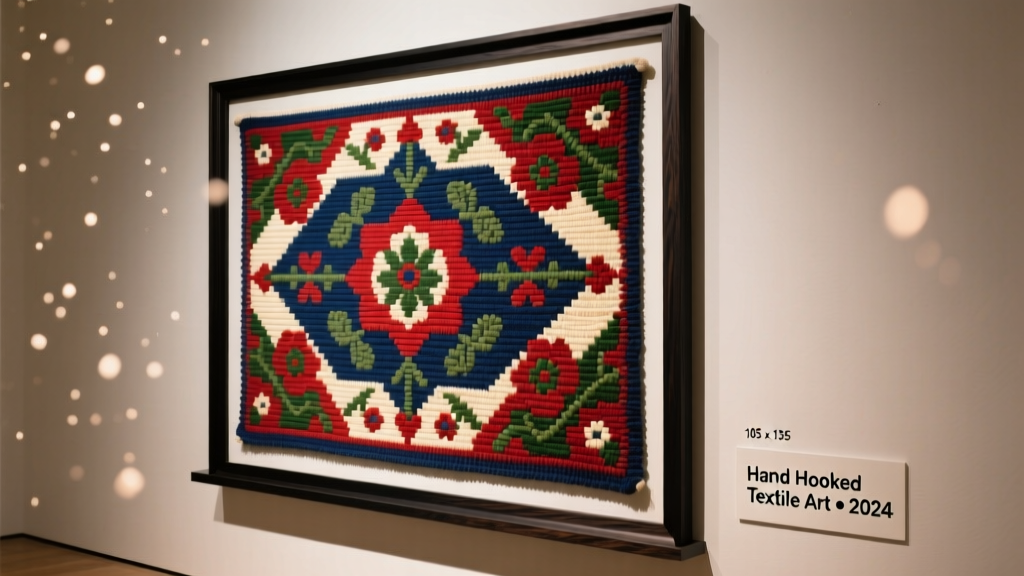
Authenticating and Valuing a 105 × 135-Inch Hooked Rug Featuring Alternating Floral and Geometric Motifs in Blue, Red, Ivory, and Green

The Pea Pod Ornament Phenomenon: Authenticating and Valuing the 4.5-Inch Yellow Glitter Pod with Tinsel Trim

The Andre Arbus Macassar Ebony Arched Back Chair Set: A Definitive Analysis of the 1930 French Four-Piece Ensemble

McCoy Cookie Jar 'Cookie Cabin': Authentication, Market Value, and Collectibility Analysis
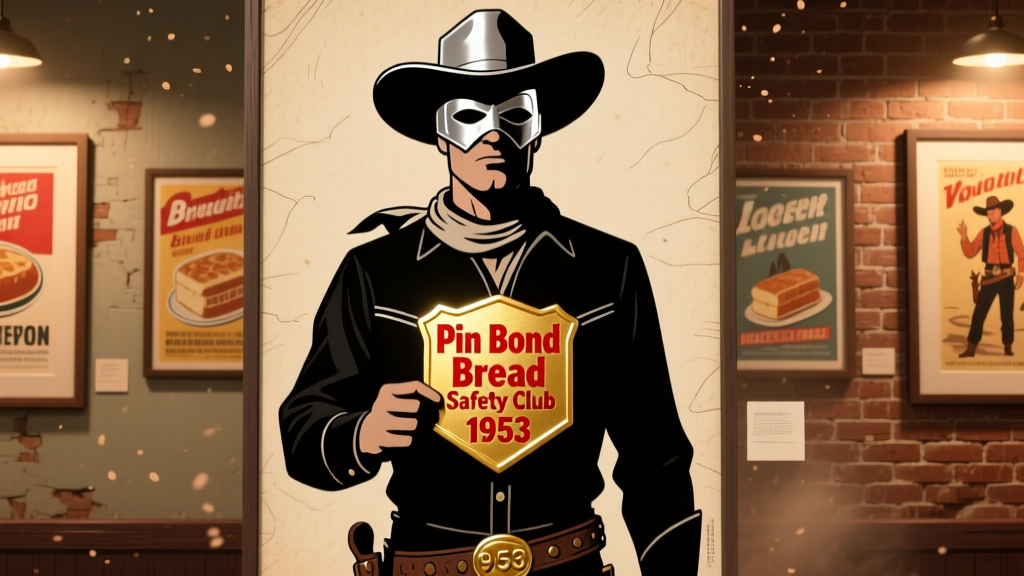
The Lone Ranger Pin: Bond Bread Safety Club Promotional Artifact of 1953

Disneyana Salt & Pepper Shaker Set: Pluto by Leeds — Authentication, Market Value, and Collectibility Analysis

Authentication and Market Analysis of Louis Icart’s 'Spanish Night, France' — Signed 1926 Etching, 20¾ × 13 Inches

Authentication Dossier: The Untold Provenance and Technical Profile of Print ID 1140162 — A Rare 1973 Offset Lithograph by Robert Rauschenberg