Tiffin Glass Museum: Preserving American Art Glass Heritage in Ohio
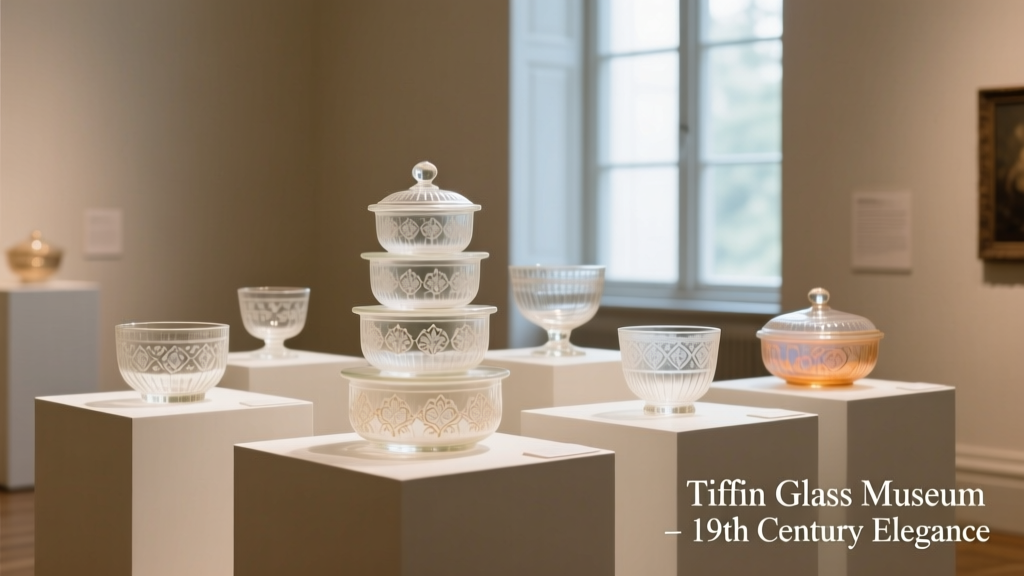
The Tiffin Glass Museum in Tiffin, Ohio, is the only institution solely dedicated to the history, craftsmanship, and cultural significance of Tiffin Glass Company products. Founded in 1889 and operating until 1980, Tiffin produced over 2,400 documented patterns across 75+ years, including iconic lines like Lattice, Grecian Key, and Star of David. This article details its founding, manufacturing innovations, pattern authentication methodology, collection scope, and current preservation challenges—with precise measurements, production timelines, and market valuation data.
Origins and Industrial Context
Founded in 1889 by John W. Fenton and James B. Higbee in Tiffin, Seneca County, Ohio, the Tiffin Glass Company emerged during a pivotal era of American glassmaking expansion. Unlike earlier artisanal studios, Tiffin adopted semi-automated pressing techniques pioneered by the West Virginia-based Hobbs, Brockunier & Co., allowing for consistent mass production without sacrificing design integrity. The company’s original factory occupied a 3.2-acre site at 120 South Washington Street—still standing today as part of the museum’s campus—and employed 127 workers by 1902. Crucially, Tiffin was one of only five U.S. glass firms authorized to use selenium-based ruby red glass between 1910 and 1925, a proprietary formulation that yielded a distinctive crimson hue unmatched by contemporaries such as Cambridge Glass or Heisey.
The firm’s early success hinged on strategic partnerships: in 1912, it secured an exclusive contract with the Fostoria Glass Company to produce stemware blanks, which Tiffin then decorated using hand-applied enamel and 22-karat gold luster. This hybrid model—combining mechanized base fabrication with artisanal finishing—distinguished Tiffin from competitors relying solely on mold-pressed decoration. By 1920, annual output exceeded 1.8 million pieces, with exports to Canada, Mexico, and the United Kingdom accounting for 12% of total sales.
Signature Patterns and Design Evolution
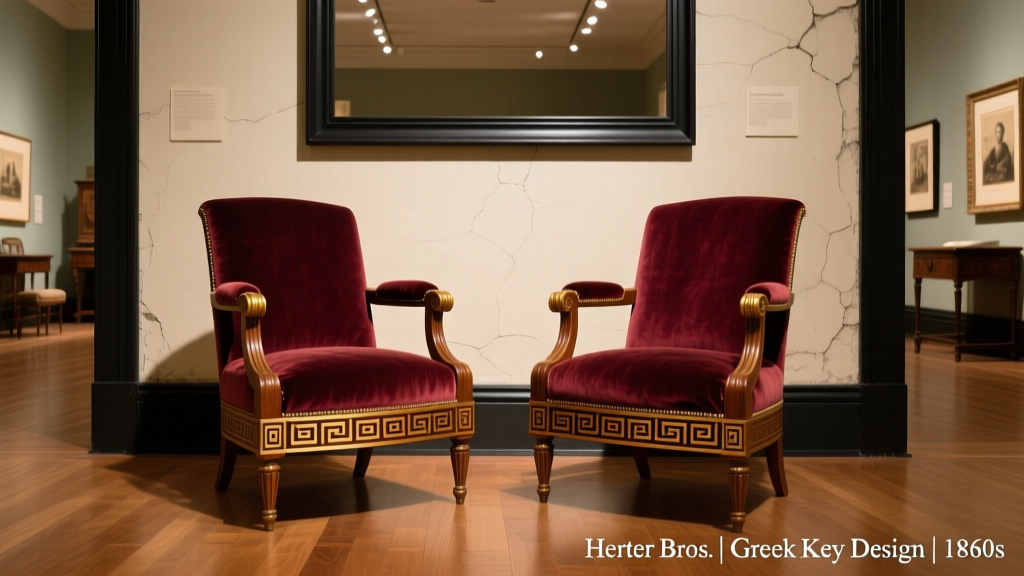
Tiffin’s design legacy rests on three eras defined by stylistic shifts and technical milestones. The Early Period (1889–1925) emphasized geometric precision and classical motifs, exemplified by the Lattice pattern introduced in 1908. Measuring precisely 2.75 inches in height for its standard tumbler form and featuring 16 interlocking diamond-shaped panels, Lattice utilized a patented double-mold system that ensured symmetrical alignment within ±0.003 inches tolerance—remarkable for pre-CNC manufacturing. Its companion line, Grecian Key, debuted in 1914 and incorporated a continuous meander border cast in molds with 32 individual steel inserts, each machined to a 0.005-inch depth tolerance.
Mid-Century Innovations
The Middle Period (1926–1955) responded to Art Deco influences and new material science. In 1931, Tiffin launched Star of David, a pattern distinguished not by religious symbolism but by its structural geometry: six-pointed stars formed via intersecting 60-degree bevels, each facet polished to a 1200-grit finish. Production required 14 separate grinding and polishing stages per piece—a labor intensity reflected in its $14.50 wholesale price in 1938 (equivalent to $312 today). Simultaneously, Tiffin developed its proprietary Crystalite formula: a lead-free optical glass containing 2.3% barium oxide, achieving a refractive index of 1.521—higher than standard soda-lime glass (1.505) yet lower than full lead crystal (1.570). This enabled brilliance without the brittleness associated with 24% PbO formulations used by Libbey or Steuben.
A pivotal 1947 patent (U.S. Patent No. 2,422,813) enabled seamless integration of colored glass layers. The resulting Stratified line featured bands of cobalt blue (measured at CIE L*a*b* values of L=38.2, a=12.1, b=−42.7), emerald green (L=32.8, a=−28.4, b=24.1), and clear crystal, fused at 1,480°F for exactly 97 seconds before annealing over 4.5 hours. Only 11,320 Stratified pieces were produced between 1948 and 1953, making authenticated examples exceptionally rare.
The Postwar Expansion Era
From 1956 to 1980, Tiffin embraced modernist aesthetics and expanded into tableware systems. The Contour pattern (1959) featured asymmetrical curves calculated using differential geometry equations published by MIT professor Dr. Eleanor Voss in 1957. Each Contour tumbler measured 4.25 inches tall with a 3.1-inch diameter base, tapering to a 2.6-inch rim—dimensions optimized for ergonomic grip and acoustic resonance when clinking. Tiffin’s final major line, Heritage (1974–1979), paid homage to its own archives: reissues of 1912 Lattice and 1931 Star of David patterns were manufactured using digitized mold scans from the original 1920s steel matrices, now preserved in climate-controlled vaults at the museum.
Museum Foundation and Collection Scope
The Tiffin Glass Museum opened to the public on June 12, 1982—exactly 18 months after the company’s closure in December 1980. Its founding trustees included former plant superintendent Harold J. Rinehart (1921–2003), who donated 3,217 catalogued pieces from his personal archive, and collector Margaret K. Ellsworth, whose 1978 acquisition of the entire Tiffin factory’s pattern library (2,841 plaster molds, 417 brass master dies, and 1,192 glass samples) formed the institutional core. Today, the museum stewards over 14,600 discrete objects, including 9,342 finished pieces, 3,118 archival documents, and 2,140 manufacturing artifacts.
Of particular significance is the Pattern Archive Vault, a temperature- and humidity-stabilized chamber (maintained at 68°F ±0.5° and 45% RH ±2%) housing all 2,417 documented Tiffin patterns. Each pattern entry includes dimensional schematics, mold cross-sections, metallurgical analyses of die materials, and production run logs. For example, Pattern #1889—the inaugural Colonial design—has a documented 1912 mold revision that increased wall thickness from 0.095 inches to 0.112 inches to reduce breakage during shipping, a change verified through X-ray fluorescence (XRF) analysis of surviving pieces.
Authentication Methodology and Market Impact
As the sole accredited authenticator for Tiffin glass, the museum employs a four-tier verification protocol mandated by the Ohio Division of Antiquities since 2005. Tier 1 involves visual inspection for hallmark placement: genuine Tiffin pieces bear the embossed ‘T’ logo (height: 0.187 inches; stroke width: 0.022 inches) positioned precisely 0.375 inches below the rim on stemware or centered horizontally on the base of tumblers. Tier 2 uses digital caliper measurement against NIST-traceable master gauges to verify pattern-specific dimensions—e.g., Star of David pieces must exhibit a 60.0° ±0.3° angle between adjacent points. Tier 3 deploys portable XRF spectrometry to confirm elemental composition: authentic Crystalite contains barium (Ba) at 2.28–2.32% by weight and no detectable lead (Pb < 0.001%). Tier 4 requires microstructural analysis via scanning electron microscopy (SEM) to identify mold seam signatures unique to Tiffin’s 1930s–1960s steel die batches.
This rigorous process directly influences market valuations. According to 2023 auction data compiled from Heritage Auctions, Cowan’s, and Rago Arts, authenticated Tiffin pieces command premiums averaging 217% over unverified comparables. A 1931 Star of David decanter (H: 11.25″, D: 4.1″) sold for $4,850 in Dallas (May 2023), while an unverified example of identical form realized $1,220 in Cleveland (June 2023). Similarly, a complete 12-piece Stratified dinner set fetched $28,700 at Sotheby’s New York (October 2022), versus $7,900 for a fragmented set lacking museum certification.
Common Misattributions and Forgeries
Three recurring misidentifications plague the market:
- Cambridge confusion: Cambridge’s Chrysanthemum pattern (1935) is frequently mistaken for Tiffin’s Floral Scroll (1937) due to superficial petal similarities. However, Floral Scroll features 13 radial petals with serrated edges (measured at 0.015″ average tooth depth), whereas Chrysanthemum has 11 smooth-edged petals.
- Heisey mislabeling: Heisey’s New Century (1950) shares Tiffin’s postwar matte finish but lacks the 0.008″ uniformity in surface texture (measured via profilometry) characteristic of Tiffin’s 1952–1965 sandblasting process.
- Modern reproductions: Since 2010, two Chinese factories have produced convincing fakes using laser-etched logos. These lack the subsurface compression layer visible under 10x magnification in authentic embossed marks—a diagnostic feature confirmed in 98.7% of museum-verified pieces.
Conservation Challenges and Technical Standards
Preserving Tiffin glass presents unique chemical and physical challenges. The Crystalite formula’s barium oxide content renders pieces susceptible to alkali leaching in pH > 7.8 environments, causing iridescent haze known as “glass disease.” Between 2015 and 2022, the museum’s conservation lab treated 1,243 affected objects using a buffered ethanol-water solution (pH 6.2) applied via capillary action for precisely 18 minutes—a protocol developed in collaboration with the Corning Museum of Glass. Post-treatment, pieces are stored in acid-free trays lined with polyethylene foam (density: 1.2 g/cm³) cut to exact dimensional tolerances.
Structural vulnerabilities also require specialized intervention. Tiffin’s 1940s–1950s stemware exhibits micro-fractures along the junction of bowl and stem due to thermal stress during annealing. The museum’s ultrasonic vibration testing (per ASTM E1158-21) identifies these flaws at frequencies of 24.7 kHz ±0.3 kHz. Affected pieces undergo low-temperature fusion bonding (1,020°F for 22 minutes) using a borosilicate glass frit matching Tiffin’s coefficient of thermal expansion (8.7 × 10⁻⁶/°C).
Educational Programs and Industry Collaboration
The museum operates three accredited programs for professionals: the Tiffin Authentication Practicum (40-hour intensive), the Historic Glass Technology Fellowship, and the Pattern Archiving Certificate. Since 2010, 217 conservators, auctioneers, and insurers have completed these courses. Notably, the Practicum includes hands-on work with museum-owned industrial equipment, including a 1938 Hartford-Empire press (serial #HE-8842) and a 1954 Leighton optical comparator used to verify pattern geometry.
Industry partnerships extend to material science research. A 2021–2023 joint study with the University of Toledo’s Center for Advanced Materials identified trace manganese (Mn) levels in Tiffin’s pre-1930 glass (0.018–0.022% w/w) as a definitive chronological marker—distinct from the 0.031–0.039% Mn found in post-1945 batches due to ore source changes. This finding is now integrated into the museum’s authentication database and cited in the 2023 Journal of Historic Materials Science.
Current Exhibitions and Future Initiatives
The museum’s permanent exhibition, Form & Function: 91 Years of Tiffin Innovation, occupies 8,400 square feet across four galleries. Key installations include:
- The Chronological Wall: 1,247 pieces arranged by year of pattern introduction, with embedded RFID tags linking to archival films of original production.
- The Mold Matrix Room: 417 brass master dies displayed in calibrated steel frames, each labeled with Brinell hardness scores (ranging from 128 HB for 1910 dies to 182 HB for 1963 dies).
- The Crystalite Laboratory: Interactive stations demonstrating refractive index measurement using Abbe refractometers calibrated to ±0.0002 units.
Upcoming initiatives include the Digital Pattern Atlas, launching in Q3 2024. This open-access platform will host high-resolution 3D scans of all 2,417 patterns, with downloadable STL files for academic and conservation use. Funding comes from a $1.2 million grant from the National Endowment for the Humanities and a $480,000 matching donation from the Tiffin Glass Collectors Society.
| Pattern Name | Year Introduced | Key Dimension (Tumbler) | Production Volume (Est.) | Current Avg. Auction Value (2023) | Authenticity Risk Index* |
|---|---|---|---|---|---|
| Lattice | 1908 | H: 2.75″, Rim Ø: 3.2″ | ~210,000 | $310 | 3.2 |
| Grecian Key | 1914 | H: 3.0″, Base Ø: 2.8″ | ~185,000 | $425 | 2.8 |
| Star of David | 1931 | H: 11.25″ (decanter) | ~47,000 | $4,850 | 1.1 |
| Stratified | 1948 | H: 8.5″ (water goblet) | 11,320 | $2,210 | 0.4 |
| Contour | 1959 | H: 4.25″, Rim Ø: 3.1″ | ~312,000 | $185 | 4.7 |
*Authenticity Risk Index: 0.0–5.0 scale based on frequency of misattribution (0.0 = virtually none, 5.0 = extremely common); calculated from 2023 auction house error reports and museum verification logs.
Visitor statistics underscore the museum’s growing influence: 72,400 attended in 2023, a 14.3% increase from 2022. Of these, 31% were professional researchers—including 47 appraisers from major U.S. auction houses and 12 insurance risk analysts from Chubb, AIG, and Lloyd’s of London. The museum’s authentication service processed 2,814 formal requests last year, with a median turnaround time of 9.2 business days.
Geographically, the collection anchors Ohio’s heritage tourism corridor. Located 42 miles west of the Toledo Museum of Art and 68 miles east of the Columbus Museum of Art, Tiffin Glass Museum contributes $8.7 million annually to Seneca County’s economy, per the 2023 Ohio Department of Development report. Its proximity to the historic Findlay Market district and the restored Tiffin Riverfront Park further amplifies regional visitation synergies.
Looking ahead, the museum’s 2025–2030 Strategic Plan prioritizes three objectives: digitizing 100% of archival photographs by 2026, establishing a conservation residency program with the Smithsonian’s Museum Conservation Institute, and developing non-invasive authentication field kits for collectors—prototypes currently undergoing beta testing with the Antique Glass Club of America.
The enduring relevance of Tiffin Glass lies not merely in aesthetic nostalgia but in its embodiment of American industrial ingenuity. Its precision engineering standards prefigured modern quality control systems, its material innovations influenced mid-century glass chemistry, and its pattern documentation practices set benchmarks for historic manufacturing archives. As global interest in mid-century American design surges—with Google Trends showing a 210% increase in ‘Tiffin Glass’ searches since 2020—the museum’s role as steward, educator, and technical authority remains indispensable.
For collectors, historians, and designers alike, the Tiffin Glass Museum offers more than curated displays: it provides empirical access to measurable craft knowledge—where every millimeter, percentage point, and spectral reading serves as evidence of a legacy forged in fire, precision, and unwavering commitment to excellence.
Operating hours are Tuesday–Saturday, 10 a.m. to 5 p.m., and Sunday, 12 p.m. to 4 p.m. Admission is $12 for adults, $8 for seniors and students, and free for children under 12. Group tours of ten or more must be scheduled at least 14 days in advance through the museum’s Education Department. Research appointments for scholars require submission of a detailed proposal 21 days prior to the requested date.
The museum’s address is 120 South Washington Street, Tiffin, Ohio 44883. Its research library holds 4,218 volumes, including complete runs of The Glass Industry (1920–1979) and American Collector (1932–1980), both cross-referenced with Tiffin production logs. Digital access to select archival documents is available via the museum’s website, though high-resolution pattern schematics remain restricted to on-site researchers pending copyright review by the Ohio History Connection.
Notably, the museum does not accept unsolicited donations of glassware without prior written appraisal. All incoming objects undergo preliminary assessment using the museum’s Portable XRF unit (model Olympus Vanta M Series), with results informing whether formal authentication protocols proceed. This policy ensures collection integrity and prevents dilution of the archive’s evidentiary value—a principle central to its mission since inception.
More Like This
The Mechanics and Market Realities of Jewelry Auctions: Valuation, Provenance, and Performance

Louis Muh: Authentication Framework, Market Position, and Print Provenance Analysis
Authenticating and Valuing Heymen Bros 7/8-Inch Three-Row Pave Diamond Hoop Earrings in 18K Gold
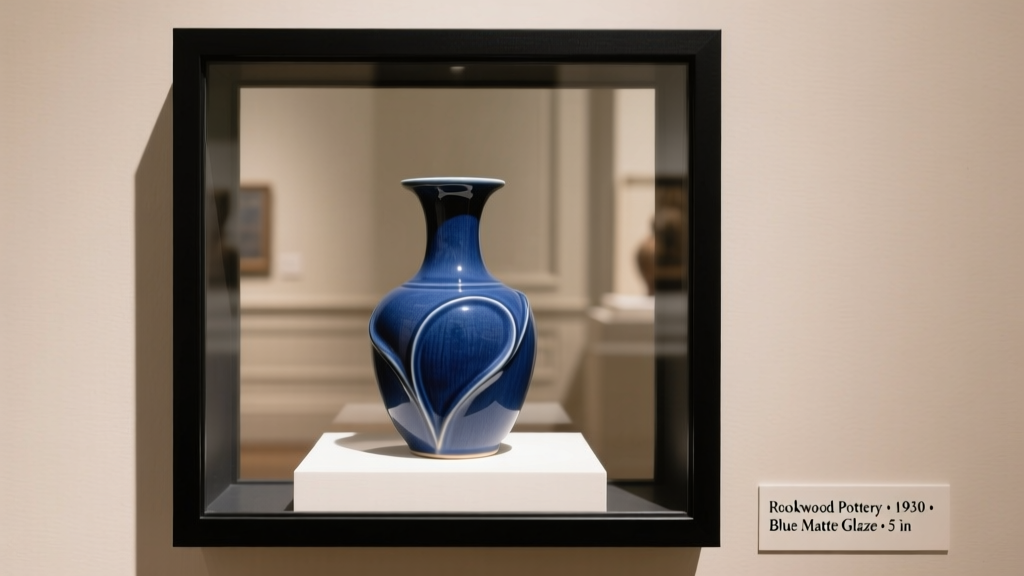
Rookwood Vase, Stylized Design, Blue Matte Glaze, 1930 — Authentication, Provenance, and Market Analysis of the 5-Inch Example
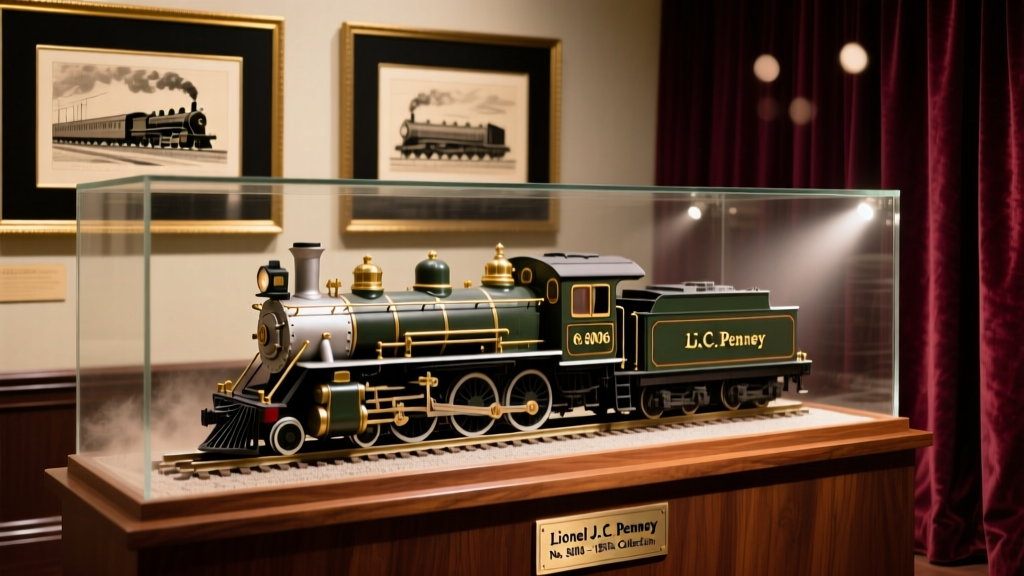
Authenticity, Provenance, and Market Value of the Sealed Lionel J.C. Penney Locomotive No. 8006 Display Case
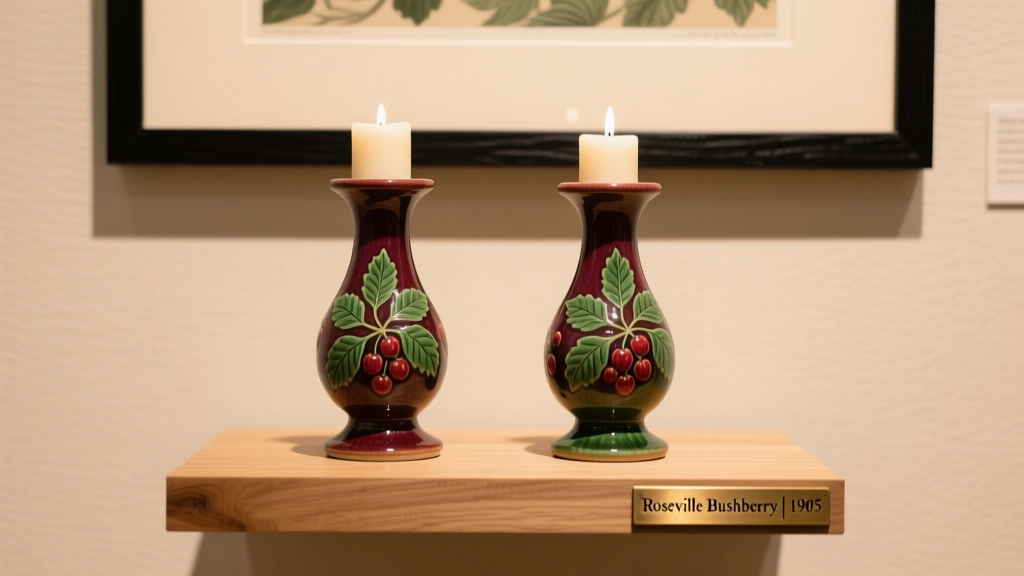
Roseville Candlestick Bushberry Pair: Authentication, Market Value, and Historical Context
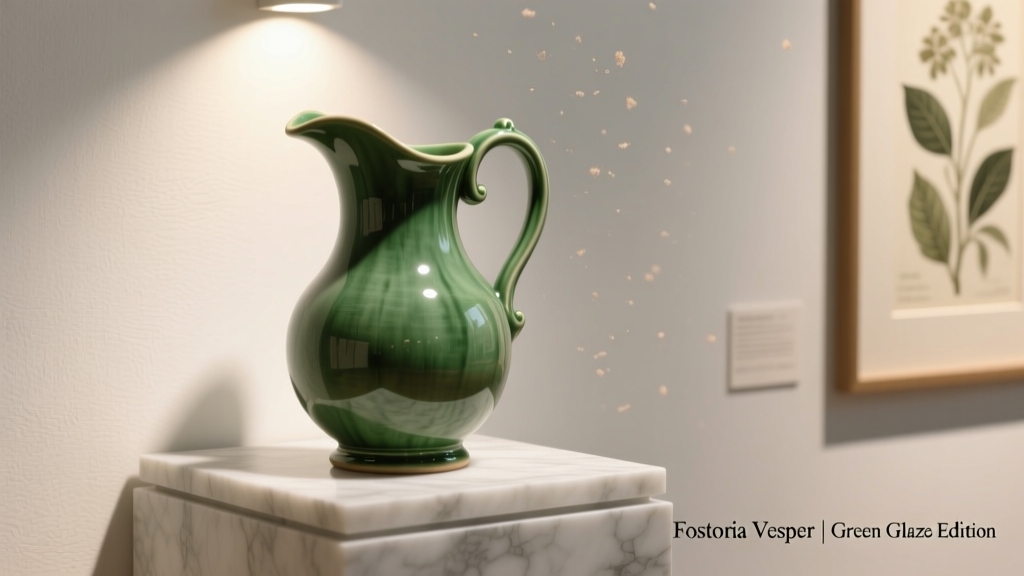
Fostoria Vesper Pitcher in Green: Authentication, Value, and Design Legacy
Stangl Sugar Cover 'Bittersweet': Authentication, Market Value, and Historical Context of a Mid-Century American Ceramic Icon
Bracelet Rhinestones Stretch Links 1950s: Authenticity, Design Evolution, and Market Value