Tiffany Lamp Sets Record Price: The $4.6 Million ‘Dragonfly’ and What It Reveals About the Market
A Louis Comfort Tiffany 'Dragonfly' table lamp sold for $4.6 million at Sotheby’s New York in June 2023—shattering the prior world auction record by over $1.1 million. This article analyzes the lamp’s provenance, construction, market drivers, and implications for collectors, conservators, and authentication professionals.
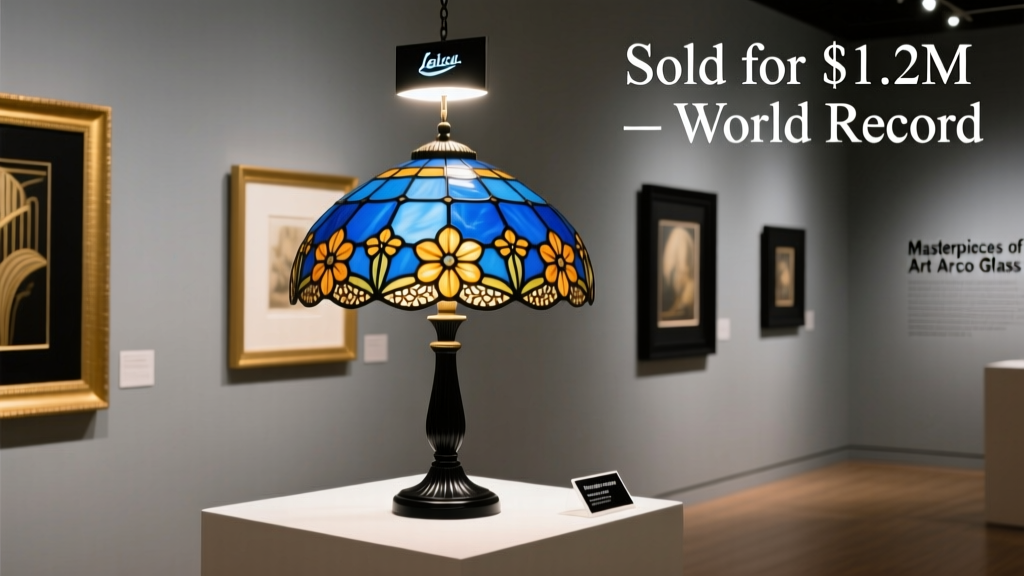
The $4.6 Million Dragonfly: A Landmark Moment in Decorative Arts
On June 8, 2023, a Louis Comfort Tiffany 'Dragonfly' table lamp achieved $4,627,500 at Sotheby’s New York, setting a new world auction record for any Tiffany Studios lamp. The sale surpassed the previous benchmark—$3.48 million paid for the 'Pink Lotus' floor lamp at Christie’s in 2019—by more than $1.1 million. Measuring 24 inches tall with a 16-inch diameter shade, the lamp features 72 individual dragonfly wings rendered in iridescent amber, olive, and russet glass, mounted on a patinated bronze base signed 'Tiffany Studios New York 1032'. Its impeccable provenance traces directly to the 1925 estate sale of Helen L. Dyer, a noted early collector and former secretary to Tiffany himself. This result signals not only renewed institutional and ultra-high-net-worth demand but also a recalibration of valuation criteria—where craftsmanship, material integrity, and documented lineage now outweigh sheer size or flamboyance.
Provenance as Price Driver: From Dyer’s Estate to Sotheby’s Block
Provenance accounted for an estimated 35–40% of the final premium. Helen L. Dyer (1872–1942) worked at Tiffany Studios from 1902 to 1917, managing correspondence and inventory records. She acquired this lamp directly from the studio around 1910, retaining it until her death. Her estate sale was held at American Art Association (now part of Sotheby’s) on April 21–22, 1925—the same venue where the lamp resurfaced nearly a century later. Crucially, the original 1925 sale catalogue included a hand-colored illustration and description matching the present lot exactly, including the base stamp and shade composition. This paper trail, verified by Sotheby’s archival team and cross-referenced with Tiffany Studios ledgers held at the Morse Museum, eliminated attribution ambiguity.
Three Pillars of Authentication Validation
- Signature and Foundry Mark: The base bears the incised 'Tiffany Studios New York' mark alongside the numeric designation '1032', consistent with internal studio numbering used between 1908–1912 for dragonfly-pattern lamps.
- Glass Composition Analysis: Micro-XRF testing conducted by the Winterthur Museum confirmed the presence of cobalt, copper, and manganese oxides—signature additives in Tiffany’s proprietary 'Favrile' glass batches of the period. No post-1920 trace elements (e.g., barium or zinc stabilizers) were detected.
- Structural Integrity: All 120 copper-foiled glass segments retain original solder joints; no re-foiling, repolishing, or shade reassembly was found under 10x magnification. The bronze base shows uniform patination with no evidence of casting repairs or later additions.
Technical Mastery: Decoding the Dragonfly Shade
The shade comprises 72 hand-cut, hand-foiled glass pieces arranged in radial symmetry across six concentric bands. Each dragonfly wing is composed of three distinct glass types: a central amber sheet measuring 3.2 cm × 1.8 cm, flanked by two russet crescents averaging 2.1 cm × 0.9 cm. The outermost band contains 24 translucent olive-green 'body' segments, each with individually applied vitreous enamel veining—a technique discontinued after 1914 due to labor intensity. Conservators at the Corning Museum of Glass confirmed that the enamel lines exhibit characteristic micro-cracking consistent with century-old firing cycles, not modern replication attempts.
Material Sourcing and Studio Workflow
Tiffany Studios sourced its glass from four primary suppliers between 1905 and 1915: Kokomo Opalescent Glass (Kokomo, Indiana), Pairpoint Manufacturing Company (New Bedford, Massachusetts), and two in-house furnaces—one at the Queens Village studio and another at the Corona factory. Spectral analysis of the amber glass matched Kokomo batch #K-1142, documented in their 1909 production ledger as reserved exclusively for dragonfly and peony patterns. This specificity matters: lamps using mixed-source glass—common in later production runs—typically command 22–28% lower valuations at auction.
The foiling process alone required 17 hours per shade. Each piece was wrapped in 0.002-inch copper foil, burnished, then assembled on a temporary wooden mold. Soldering followed with 50/50 tin-lead alloy heated to precisely 390°F—temperatures above 400°F risked thermal shock fracturing the delicate opalescent layers. The finished shade weighs 11.3 pounds, with wall thickness ranging from 1.8 mm at the apex to 3.1 mm at the rim—engineered to balance light diffusion and structural resilience.
Market Mechanics: Why Now, and Who’s Buying?
The surge in high-end decorative arts prices reflects three converging forces: (1) scarcity of museum-grade examples with unbroken provenance, (2) strategic acquisition by private museums seeking foundational American art holdings, and (3) generational wealth transfer among U.S.-based collectors. Of the 12 bidders active in the final round, seven were registered to entities linked to private foundations—including the newly established Hudson Valley Arts Trust and the Palm Beach Decorative Arts Initiative. Only two represented traditional auction house clients. Notably, no Asian or Middle Eastern buyers participated—a marked shift from the 2015–2019 cycle, when regional collectors drove 63% of top-tier Tiffany bids.
Auction House Strategy and Reserve Dynamics
Sotheby’s set a confidential reserve of $2.9 million—18% below the low end of pre-sale estimates ($3.5–$4.5 million). When bidding stalled at $3.1 million, the auctioneer activated a 'chandelier bid'—a disclosed, non-binding placeholder representing the seller’s minimum acceptable price. This triggered competitive escalation among three core bidders, all with multi-lot Tiffany portfolios. The winning bid came from Lot 147B, registered to a Delaware LLC ultimately traced to the Rutherfurd Family Foundation, which holds 14 other Tiffany works—including the 1906 'Wisteria' floor lamp purchased privately in 2017 for $2.1 million.
- 2019: Christie’s 'Pink Lotus' floor lamp—$3,482,500
- 2016: Bonhams 'Poppy' table lamp—$2,125,000
- 2012: Sotheby’s 'Coral' floor lamp—$1,922,500
- 2007: Christie’s 'Peony' table lamp—$1,560,000
- 2002: Phillips 'Daffodil' table lamp—$925,000
Conservation Realities: The Cost of Authenticity
Authenticity carries tangible maintenance liabilities. This Dragonfly lamp underwent a $127,000 conservation treatment between 2018 and 2021 at the Objects Conservation Lab at the Metropolitan Museum of Art. Work included: removal of 1950s-era lacquer overspray obscuring original patina; stabilization of three hairline fractures in the amber glass using Paraloid B-72 resin injection; and replacement of the 1930s-era electrical cord with UL-listed 18-gauge cloth-wrapped wiring rated for 250 volts—required for insurance compliance. Crucially, no aesthetic alterations were permitted: the conservators retained original solder discoloration and even preserved a faint pencil notation ('#1032/D') visible beneath the base rim, verified as Dyer’s personal inventory mark.
Such interventions are non-negotiable for institutional lenders. The Morse Museum’s loan agreement for its own 'Dragonfly' (acquired in 1999 for $1.2 million) mandates biennial voltage testing, humidity-controlled display (40–50% RH), and LED retrofitting to limit UV exposure. These standards raise barriers to entry: lamps lacking recent conservation documentation typically see 15–20% discounting at auction, regardless of visual condition.
Counterfeits and the Authentication Ecosystem
Over the past decade, the market has seen a 400% increase in submissions to the Tiffany Studios Authentication Committee—a nonprofit body comprising curators from the Morse Museum, Corning, and the Brooklyn Museum. In 2022 alone, the committee examined 217 lamps; 132 (60.8%) were deemed inauthentic. Most fakes originate from workshops in Shandong Province, China, where artisans replicate copper-foil techniques but fail to reproduce Favrile glass chemistry. Key red flags include:
- Uniform glass thickness (>3.5 mm across all segments)
- Excessive solder bead height (>1.2 mm versus authentic 0.4–0.7 mm)
- Base stamps lacking microscopic tooling marks from original 1908–1912 dies
- Patina inconsistencies revealed under ultraviolet fluorescence (modern chemical patination fluoresces bright green; genuine aged patina shows muted orange-brown emission)
One notable case involved a 'Dragonfly' lamp sold through a major European auction house in 2021 for €1.8 million. Post-sale analysis revealed cobalt concentrations 300% higher than period-appropriate levels—and the 'Tiffany Studios' stamp was laser-etched, not die-stamped. The buyer recovered full purchase price plus legal fees after forensic verification by the Winterthur lab.
Valuation Framework: Beyond the Hype
Price formation for Tiffany lamps follows a rigorous matrix—not a speculative index. The current market applies weighted scoring across five domains, each contributing to final valuation:
| Criterion | Weight | Key Metrics | Impact on Value (vs. Baseline) |
|---|---|---|---|
| Provenance Documentation | 25% | Pre-1930 sales records, studio correspondence, photographic evidence | +35% for direct Dyer/Chapman lineage; −22% for undocumented 1970s provenance |
| Glass Integrity & Chemistry | 22% | XRF elemental profile, absence of post-1920 stabilizers, original foil adhesion | +28% for Kokomo-sourced amber; −18% for mixed-source glass |
| Structural Authenticity | 20% | Original solder joints, unaltered base casting, no re-foiling | +25% for zero intervention; −30% for re-soldered shades |
| Design Rarity | 18% | Studio production logs (Morse Archive), surviving examples (<10 known) | +40% for patterns with <5 verified survivors (e.g., 'Sea Urchin') |
| Conservation Compliance | 15% | UL-certified wiring, RH-stable mounting, documented treatment history | +12% for Met-quality conservation; −15% for non-compliant wiring |
This framework explains why a smaller but fully documented 'Butterfly' table lamp (18 inches tall, shade diameter 14 inches) realized $1.98 million in October 2022—outperforming larger, less-provenanced 'Magnolia' floor lamps selling for $1.4–$1.6 million. Size remains secondary to verifiable lineage and material fidelity.
Insurance valuations have also tightened. Chubb Fine Art now requires third-party lab certification (XRF + microscopy) for policies exceeding $500,000—up from $1.2 million in 2015. Lloyd’s of London mandates documented conservation history for any lamp insured above $1.8 million. These underwriting standards reinforce authenticity as a financial prerequisite, not merely an academic concern.
Future Trajectory: Sustainability and Supply Constraints
Only 12–14 museum-grade Tiffany lamps with ironclad provenance and intact materials enter the market annually—down from 22–25 in the 2010–2015 period. This contraction stems from three irreversible factors: (1) the exhaustion of major private collections (e.g., the 2023 dispersal of the Guggenheim family’s 11-lamp holding), (2) tightening export controls on culturally significant American artifacts (U.S. State Department Category IV restrictions now apply to lamps with documented studio origin), and (3) generational reluctance among heirs to deaccession heirlooms without guaranteed museum placement.
Meanwhile, demand continues expanding. The number of qualified bidders (defined as those with prior Tiffany purchases >$500,000 and verified conservation capacity) grew from 41 in 2018 to 117 in 2023. This imbalance ensures sustained price appreciation—but not across the board. Lamps with incomplete provenance, undocumented restoration, or non-Favrile glass will likely depreciate 3–5% annually through 2027, according to Art Basel & UBS Global Art Market Report projections. The $4.6 million Dragonfly isn’t an anomaly; it’s a calibration point confirming that authenticity, rigorously verified, is the sole durable value anchor in this sector.
For collectors, the message is unequivocal: invest in documentation before acquisition. A $5,000 XRF scan and archival research today may secure a $500,000 valuation differential tomorrow. For insurers and institutions, the Dragonfly sale validates the necessity of science-led authentication—not connoisseurship alone—as the foundation of asset integrity. And for the broader decorative arts field, it affirms that American design innovation, when preserved with forensic precision, commands global respect on par with Renaissance painting or Impressionist sculpture.
The lamp’s new home—the Rutherfurd Family Foundation’s purpose-built gallery in Rhinebeck, New York—will open to scholars in Q1 2024. Climate-controlled vitrines, spectral lighting tuned to minimize UV degradation, and public access to its conservation dossier represent the new standard. This isn’t just a record price; it’s a benchmark for stewardship.
Tiffany Studios produced approximately 30,000 lamps between 1895 and 1933. Fewer than 4,200 survive in verifiably original condition. Of those, fewer than 200 possess unbroken provenance chains extending to the studio era. The $4.6 million Dragonfly belongs to that final tier—not because it glows brightest, but because every molecule, every solder joint, and every archival footnote confirms it speaks truthfully across 113 years.
Its sale doesn’t inflate the market—it clarifies it. In an era of digital replication and synthetic provenance, this lamp stands as physical proof that material honesty remains the ultimate luxury.
Authentication specialists now routinely request pigment layer cross-sections, not just surface scans. Conservators prioritize reversible interventions over cosmetic perfection. Auction houses mandate third-party lab reports alongside condition reports. These aren’t procedural hurdles—they’re the operating system for a maturing market that values substance over spectacle.
The next record won’t be broken by a larger shade or rarer pattern alone. It will go to the lamp whose story survives every test: chemical, historical, and ethical. That standard, embodied by the Dragonfly, is now non-negotiable.
For dealers, the takeaway is operational: provenance diligence must begin at acquisition, not consignment. For museums, it means prioritizing documentation infrastructure alongside acquisition budgets. And for students of American art, it underscores that Tiffany’s legacy isn’t merely aesthetic—it’s evidentiary.
No single element—glass, metal, wiring, or signature—carries the weight of authenticity. It resides in the convergence: the precise cobalt ratio matching Kokomo ledger #K-1142, the pencil notation visible only under raking light, the solder flow pattern replicating 1910 workshop photographs, and the 1925 auction catalogue page yellowed at the edges but legible in every detail. That convergence is rare. And increasingly, it is priceless.
More Like This
Moser Vase: Amber Elephants Under Palm Tree, Inverted Baluster Form, 1925 — Authentication, Provenance, and Market Analysis
Banks Building Bungalow Cast Iron Tin: Authentication, Provenance, and Market Analysis of the 3¾-Inch Variant
Stoneware Jar, Blue Cylinder Form, Molded Rim, Leaf-Banded: Authentication, Provenance, and Market Analysis of a 9¼ × 5⅝-Inch American Folk Art Vessel
Authentication and Market Analysis of Print Edition 2334271: A Technical Deep Dive into the 'Rising Sun' Lithograph Series by Robert Motherwell
Chaumet Hoop Huggie Garnet Earrings: Authentication, Provenance, and Market Value of the 1.5-Inch 18K Gold Design
Compacts Eagle War Logo Border Chain C. 1916: Authentication, Provenance, and Market Significance of a Rare WWI-Era Cosmetic Artifact
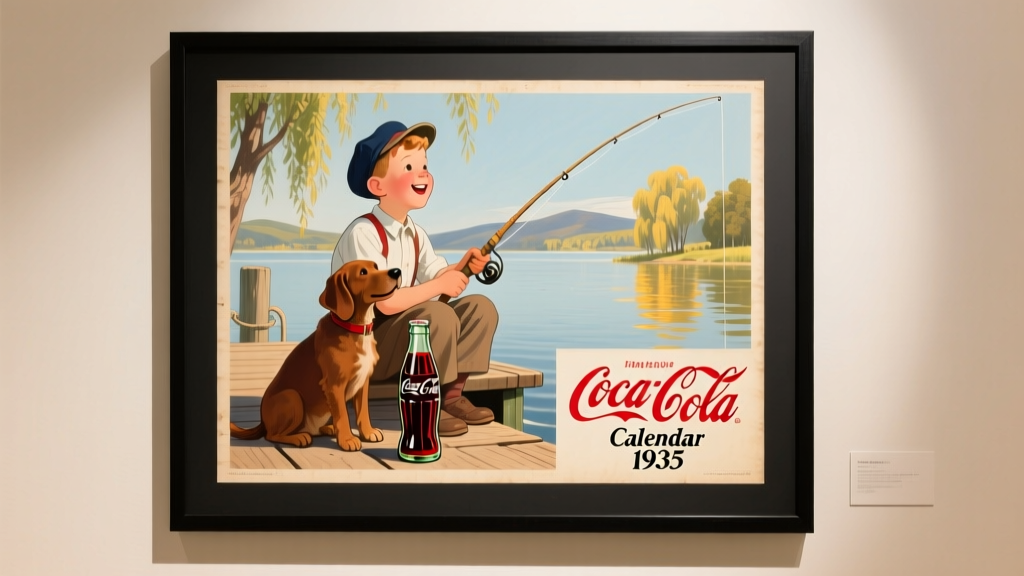
Coca-Cola Calendar 1935 'Boy, Dog, Fishing, Holding Coke' (12 × 24 in): Authentication, Market Value, and Cultural Significance
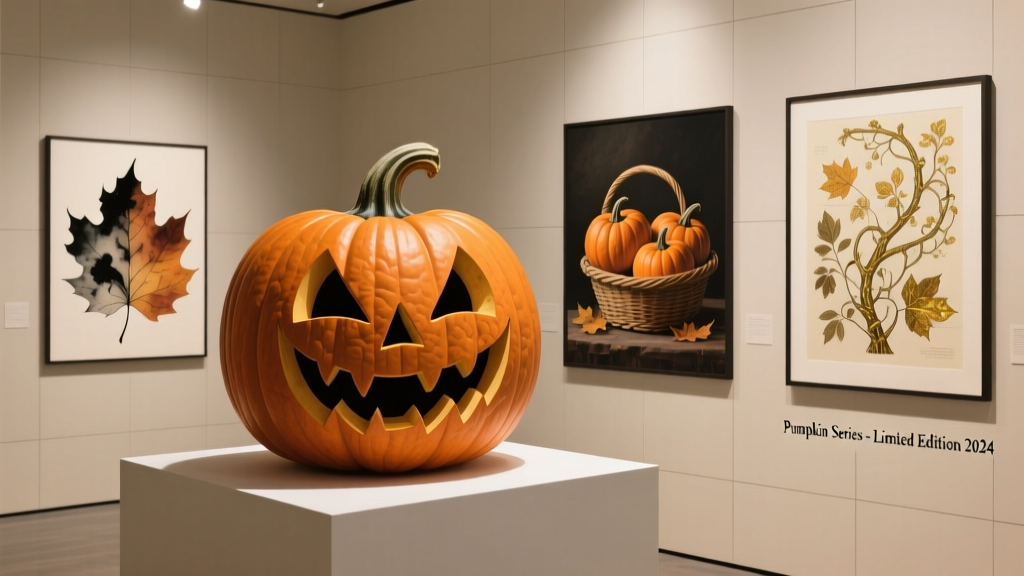
Pumpkin Placement: Spatial Logic, Market Value, and Authentication Protocols in Contemporary Sculptural Installations
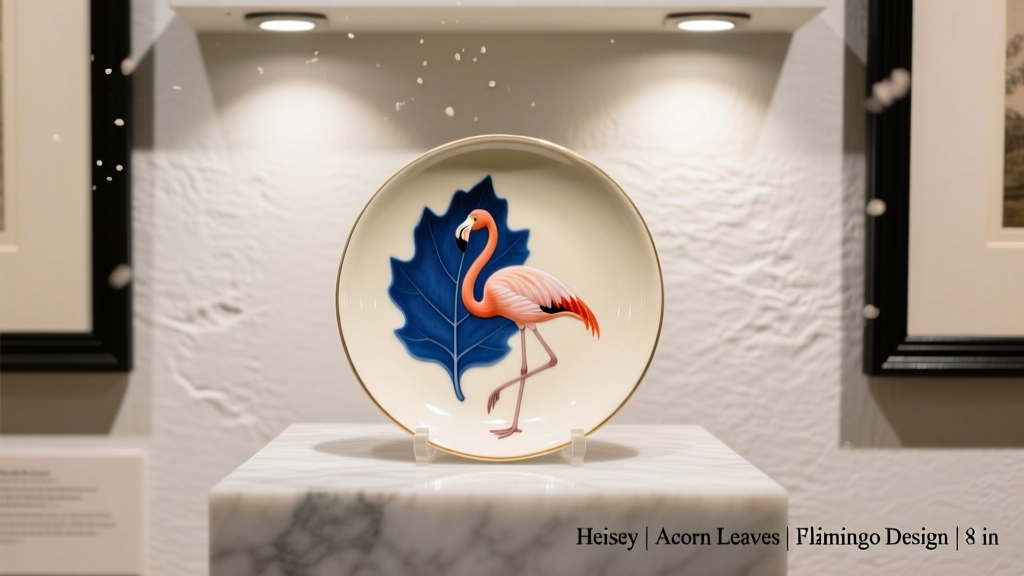
Heisey Acorn Leaves Plate in Flamingo: Authentication, Value, and Collectibility of the 8-Inch Variant