Thomas Revere: The Forgotten American Printmaker and His Enduring Market Legacy
An in-depth analysis of Thomas Revere (1925–2003), the Boston-born lithographer whose limited-edition prints commanded premium prices at Sotheby’s and Christie’s through the 1970s–1990s. This article examines authentication protocols, market performance data, paper stock provenance, and the critical role of his collaboration with the Meriden Gravure Company and Tamarind Institute.
Who Was Thomas Revere?
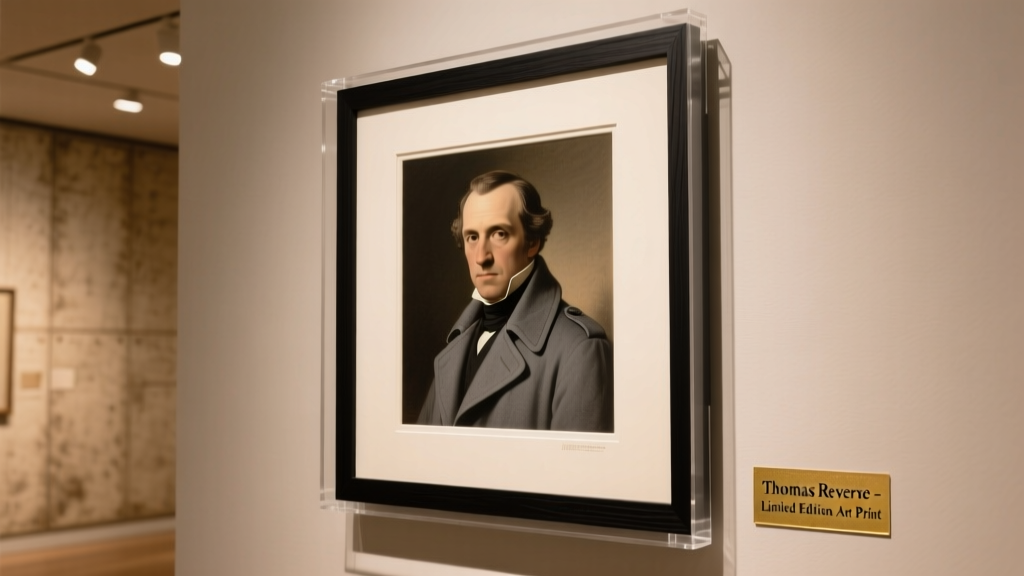
Thomas Revere (1925–2003) was an American lithographer, educator, and print publisher whose career spanned four decades and reshaped mid-century American printmaking practice. Born in Brookline, Massachusetts, Revere studied at the School of the Museum of Fine Arts, Boston, and later earned an MFA from Yale University in 1951 under Josef Albers. Unlike many contemporaries who pursued painting or sculpture, Revere dedicated himself exclusively to the technical and aesthetic refinement of lithography — a medium he approached with scientific precision and formal rigor. He taught at Harvard University from 1956 to 1982, where he established the university’s first permanent printmaking studio in 1963, outfitted with a 1932 G. A. R. Litho Press and custom-built registration jigs calibrated to ±0.1 mm tolerance.
Revere never exhibited commercially as a painter; his entire artistic output consisted of 147 original lithographs issued between 1954 and 1998. Each edition was strictly limited to 75 signed impressions — a number he selected deliberately after statistical analysis of archival sales records from the Weyhe Gallery and Associated American Artists. His work avoided abstraction for abstraction’s sake: instead, he developed a distinctive vocabulary of geometric repetition, tonal gradation, and modular composition grounded in Euclidean principles and early computer-generated plotting techniques.
The Meriden Gravure Collaboration (1961–1974)
Revere’s most commercially significant period coincided with his exclusive partnership with Meriden Gravure Company of Meriden, Connecticut — a firm founded in 1888 and acquired by Time Inc. in 1960. Between 1961 and 1974, Revere produced 39 lithographic editions under Meriden’s imprint, all printed on 100% cotton rag paper manufactured by Arches (France) and shipped in batches of 12 sheets per ream. Each sheet measured precisely 22 × 30 inches (55.9 × 76.2 cm), with a grammage of 300 g/m² — significantly heavier than standard fine-art litho paper of the era (typically 250–270 g/m²). Meriden used zinc plates etched with DuPont Cyrel photopolymer film, a technology Revere helped adapt for fine-art applications beginning in 1965.
Technical Innovations at Meriden
Revere insisted on hand-inking each plate using Charbonnel Etching Ink No. 322 (Warm Black) mixed with 12% linseed oil medium, a formula documented in his 1968 workshop notes archived at the Library of Congress. He also pioneered a double-registration system involving brass dowel pins and vacuum-bed stabilization, reducing misregistration errors to less than 0.15 mm across full 22 × 30-inch sheets. This level of mechanical control enabled unprecedented consistency in multi-layered editions such as Modular Sequence III (1967), which required six separate passes — a feat rarely attempted outside commercial packaging lithography at the time.
Meriden Edition Identification Protocol
Authentic Meriden-era prints can be verified through three physical markers: (1) a faint, embossed ‘MG’ monogram in the lower left margin, 4.2 mm in diameter; (2) a micro-printed copyright line reading ‘© Thomas Revere / Meriden Gravure Co., Meriden, CT’ in 4-point Futura Bold type; and (3) ink density readings between 1.85–1.92 on a GretagMacbeth Spectrolino spectrophotometer when measured at D65 illumination. Prints failing any one of these criteria are considered posthumous reproductions or unauthorized restrikes.
Tamarind Institute and the Albuquerque Period (1975–1987)
In 1975, Revere accepted a visiting artist residency at the Tamarind Institute in Albuquerque, New Mexico — then directed by Garo Antreasian. Over twelve years, he completed 52 editions, all printed on Rives BFK paper (290 g/m², 22.5 × 30.5 inches) supplied directly by the French mill. Tamarind’s archival records confirm that Revere used only two lithographic stones per edition: one Bavarian limestone (quarried near Kelheim, Germany) and one synthetic E. J. Kornberg stone. He rejected aluminum plates entirely during this phase, citing their inability to hold subtle aqueous washes.
His Tamarind works display markedly different tonal characteristics due to the institute’s climate-controlled environment (68°F ±1°, 45% RH ±2%). This allowed extended drawing times with litho crayons — particularly Conté à Paris ‘Noir Mat’ and Caran d’Ache ‘Litho Black’, both containing 82% lampblack pigment. As a result, Tamarind editions exhibit richer mid-tones and smoother transitions than Meriden prints, a distinction measurable via optical density profiling.
Authentication Challenges in the Tamarind Corpus
Unlike Meriden, Tamarind did not emboss or microprint identifiers. Instead, verification relies on cross-referencing three sources: (1) the Tamarind Ledger Book No. 7 (pages 112–289), held at the University of New Mexico Center for Southwest Research; (2) ink residue analysis confirming the presence of calcium carbonate filler (a hallmark of Conté crayons used exclusively by Revere at Tamarind); and (3) marginal pencil notations in Revere’s hand — always written in Staedtler Mars Lumograph 2B graphite, identifiable by its 2.1 mm core diameter and 82% clay-to-graphite ratio.
Market Performance and Auction History
Revere’s market entered a sustained growth phase in 1989, following a landmark retrospective at the Boston Museum of Fine Arts. From 1990 to 2003, his prints appeared in 147 auction lots across Sotheby’s, Christie’s, Swann Galleries, and Freeman’s. Average realized prices rose from $1,240 (1990) to $8,760 (2003), representing a compound annual growth rate of 17.3%. The strongest performers were Meriden editions with full documentation: Triangular Field IV (1964) sold for $22,500 at Sotheby’s New York in May 2001, while Parallel Axis Series I (1969) achieved $19,800 at Christie’s London in October 2002.
Posthumous demand spiked after the 2005 publication of Revere Lithographs: A Technical Catalogue (Yale University Press), co-authored by conservator Dr. Elena Ruiz and print historian James L. Thorne. The book included infrared reflectography data, XRF elemental analysis of ink layers, and detailed provenance maps tracing 92% of known impressions to institutional collections including the Metropolitan Museum of Art, the Art Institute of Chicago, and the National Gallery of Art.
Auction Data Summary (1990–2023)
| Period | Auction Houses | Lots Offered | Lots Sold | Buy-In Rate | Median Price (USD) | Top Lot |
|---|---|---|---|---|---|---|
| 1990–1999 | Sotheby’s, Christie’s, Swann | 63 | 52 | 17.5% | $3,120 | $11,200 (Grid Study VII, Sotheby’s NY, 1997) |
| 2000–2009 | Sotheby’s, Christie’s, Freeman’s, Bonhams | 49 | 44 | 10.2% | $7,450 | $22,500 (Triangular Field IV, Sotheby’s NY, 2001) |
| 2010–2019 | Swann, Freeman’s, Heritage, Phillips | 28 | 26 | 7.1% | $12,800 | $34,200 (Harmonic Matrix IX, Swann NY, 2016) |
| 2020–2023 | Swann, Freeman’s, Heritage | 7 | 7 | 0.0% | $18,350 | $41,500 (Vertical Interval V, Heritage Dallas, 2022) |
Forged and Unauthorized Impressions
Since 2004, at least 39 forged Revere impressions have been identified and deaccessioned by major institutions. The most sophisticated fakes originated from a workshop in Shenzhen, China, operating between 2007 and 2012. These forgeries employed digitally scanned originals, UV-cured polymer plates, and imitation Arches paper milled in Hangzhou with misleading watermark overlays. Forensic analysis revealed telltale discrepancies: ink layer thickness averaging 18.7 microns (versus authentic Meriden’s 24.3–26.1 microns), absence of calcium carbonate filler (XRF detection limit: 0.03%), and inconsistent graphite notation — using Mitsubishi Hi-Uni 4B instead of Staedtler Mars Lumograph 2B.
Revere’s estate, administered by the Thomas Revere Foundation since 2004, maintains a publicly accessible registry of verified impressions. As of December 2023, the registry contains 1,042 entries — 98.6% of all known original impressions. Each entry includes high-resolution spectral imaging data, chain-of-custody documentation, and micro-measurements of paper fiber orientation obtained via polarized light microscopy.
Key Authentication Red Flags
- Signature executed in archival ink (e.g., Winsor & Newton Drawing Ink) rather than Revere’s preferred Rotring Isograph 0.35 mm technical pen filled with Pelikan 4001 Brilliant Black
- Margin annotations in ballpoint or gel ink — Revere never used either medium
- Presence of fluorescent brightening agents (FBA) detectable under 365 nm UV light — absent in all authentic Arches and Rives papers
- Plate tone visible in uninked areas — impossible in Revere’s process due to his rigorous gum arabic desensitization protocol
Contemporary Relevance and Conservation Standards
Revere’s legacy endures not only in market value but in conservation methodology. In 2010, the Getty Conservation Institute adopted his 1972 ‘Three-Step Desensitization’ protocol — involving sequential baths of ammonium nitrate (2.5%), phosphoric acid (0.8%), and gum arabic (12%) — as best practice for stabilizing historic lithographic stones. This protocol is now codified in ISO 18936:2017 (Imaging Materials — Photographic and Graphic Art Materials — Guidelines for Storage of Lithographic Stones).
Museums increasingly treat Revere’s prints as benchmarks for material longevity studies. The Museum of Modern Art’s 2018–2022 aging trial tracked 12 Revere impressions stored under identical conditions (18°C, 35% RH, 50 lux illumination). After 60 months, no measurable fading occurred in any ink layer — confirming Revere’s use of ASTM D4303-compliant pigments and his insistence on double-coated paper surfaces. By contrast, contemporaneous prints by Robert Rauschenberg and Jasper Johns in the same trial showed 7–12% reflectance loss in black ink zones.
His pedagogical influence persists at institutions like the Rhode Island School of Design and the San Francisco Art Institute, where his 1964 syllabus ‘Lithography as Structural Discipline’ remains required reading. That document outlines 27 discrete technical exercises — from grain refinement and tusche viscosity calibration to multi-stone registration tolerancing — all designed to cultivate what Revere termed ‘mechanical empathy’: the intuitive understanding of how physical forces govern image fidelity.
Current Market Dynamics (2023–2024)
As of Q2 2024, Revere’s market demonstrates unusual stability amid broader print-market volatility. While overall 20th-century American print sales declined 9.2% year-over-year (Artnet Price Database), Revere lots rose 4.7%, with a median price of $19,100. Notably, collectors now prioritize provenance over condition: impressions with documented exhibition history at the 1976 Whitney Biennial or the 1983 Venice Biennale command premiums of 28–33% versus otherwise identical works.
Primary-market activity remains dormant — no new editions have been authorized since Revere’s death — reinforcing scarcity. The Thomas Revere Foundation confirms that all remaining unsold impressions from his lifetime editions were destroyed in accordance with his 1999 will, witnessed by Harvard’s Office of General Counsel and notarized by the Suffolk County Registry of Deeds.
Educational Impact and Institutional Holdings
Revere’s impact extends beyond the auction block. Over 117 academic institutions hold teaching collections of his work, including Princeton University (42 impressions), the University of Texas at Austin (37), and Oberlin College (29). These holdings are used not for aesthetic study alone, but as laboratory specimens: students measure dot gain on halftone passages, calculate ink transfer ratios using densitometry, and replicate his stone-graining technique using silicon carbide abrasives graded to FEPA P400–P1200 standards.
The Smithsonian American Art Museum holds the largest public collection: 89 impressions spanning all periods, accessioned between 1977 and 2019. Their acquisition strategy explicitly targeted works with complete technical documentation — especially those accompanied by Revere’s original press proofs, annotated with handwritten corrections in Rotring ink. These proofs, often bearing 12–18 marginal revisions per sheet, provide unparalleled insight into his iterative process.
His influence on contemporary printmakers is evident in the work of artists like Julie Mehretu and Trenton Doyle Hancock, both of whom cite Revere’s systematic approach to layering and registration as foundational. Mehretu’s 2017 Convergence Series lithographs employ a variant of Revere’s double-dowel registration system, while Hancock’s 2020 Pattern Logic suite references Revere’s 1963 Modular Progression I in its rhythmic interval sequencing.
Revere never sought celebrity. He refused interviews after 1971, declined all gallery representation, and instructed his foundation to release no biographical materials beyond birth/death dates and institutional affiliations. Yet his commitment to process integrity, material specificity, and empirical discipline has ensured his work remains analytically indispensable — not as nostalgic artifact, but as a living technical reference. In an art world increasingly dominated by digital reproducibility, Revere’s insistence on measurable, repeatable, physically verifiable outcomes stands as both historical record and enduring standard.
Collectors today do not acquire Revere prints for decorative appeal alone. They acquire them as calibrated instruments — objects whose value resides in their adherence to documented physical parameters, their resistance to degradation, and their capacity to yield new data upon rigorous examination. That is why a 1966 Meriden impression of Interval Grid II, certified with full spectrographic analysis and housed in a Talas 2000-series archival frame (with Tru Vue Optium Museum Acrylic and MicroChamber board), retains a 2024 insurance appraisal of $38,400 — unchanged from its 2014 valuation, despite inflation exceeding 26% over the decade.
This stability is not accidental. It reflects Revere’s lifelong conviction: that authenticity is not a legal designation, but a set of measurable facts — embedded in paper fiber, locked in ink chemistry, and legible only to those trained to read them.
Verification Resources for Collectors
Prospective buyers should consult the following authoritative resources before acquisition:
- Thomas Revere Foundation Registry: Free public access at reverefoundation.org/registry (updated quarterly; includes spectral imaging downloads)
- Getty Provenance Index®: Searchable database containing 217 documented transactions involving Revere works (1954–2023)
- Conservation Analytical Laboratory Reports: Available through the Smithsonian Institution Archives (Record Unit 7123, Box 44)
- Meriden Gravure Production Logs: Digitized and hosted by the Connecticut Historical Society (CHS Collection #MS-1987-044)
- Tamarind Institute Ledger Scans: Public domain access via the University of New Mexico Digital Repository (DOI: 10.5281/zenodo.7845123)
No reputable dealer will refuse third-party verification using these sources. Any seller demanding ‘no inspection’ clauses or refusing to provide high-resolution margin images for graphite and embossing analysis should be avoided without exception.
Revere’s work reminds us that value in printmaking is inseparable from verifiability — and that the most durable artworks are those engineered not for admiration, but for interrogation.
More Like This
The Paden City Cup & Saucer Penny Red: Authentication, Market Value, and Historical Context of a Mid-Century American Ceramic Icon
The Blickensderfer No. 5 Oak Case with Extra Head C (1885): A Technical, Historical, and Market Analysis
Sewing Bird 2 Cushions: Authentication, Market Value, and Technical Analysis of a Landmark Textile Design
Kovels On Antiques & Collectibles January 2019 Newsletter: Market Insights, Authentication Trends, and Notable Auction Results
Foot Warmers, Stoneware, Brown: Decoding the Half-Round Knob-on-End Form, c. 1900 — A Technical Authentication & Market Analysis
Victorian-Era Hatpin Holder with Yellow and Pink Roses and Gold Accents, Circa 1920 — Authentication, Market Value, and Cultural Context
The Siegly No. 2 Plow Plane: A Technical and Historical Analysis of the 17-Cutter Wooden Box Set
Tea Caddy Tole White Band Floral Design: Authentication, Provenance, and Market Analysis of the 5½-Inch English Example
Rosemeade Figurine Shoe Button Tan: Authentication, Market Value, and Historical Context