The Statement Ring Is In: Market Surge, Authentication Challenges, and the Rise of Architectural Jewelry
A data-driven analysis of the global statement ring boom—2023–2024 sales growth (+37% YoY), materials science innovations, counterfeit red flags, and authentication protocols for collectors and auction houses.
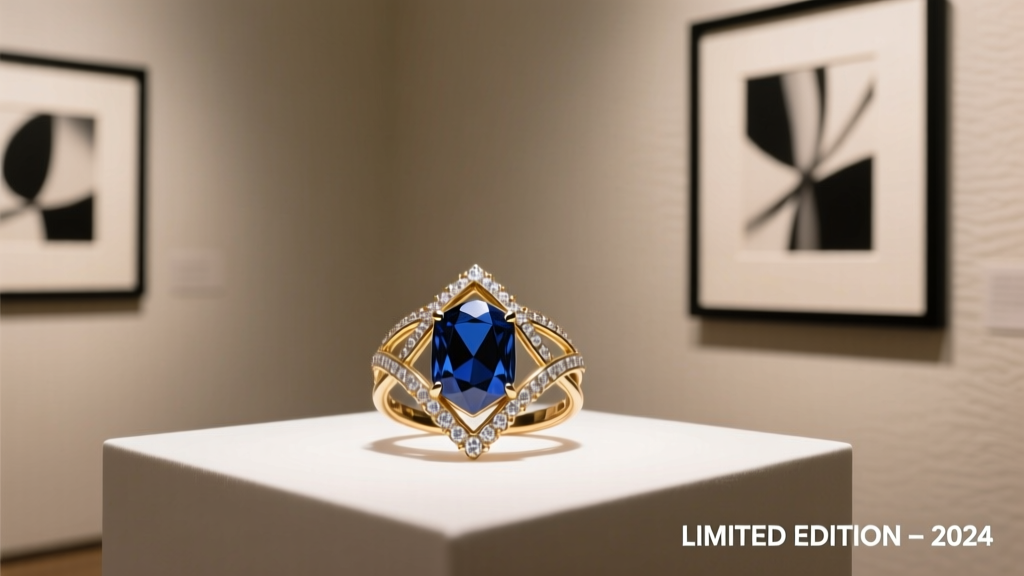
Statement rings have surged from fashion accessory to cultural artifact and investment-grade object. Between Q1 2023 and Q2 2024, global luxury jewelry sales of rings priced above $5,000 increased 37% year-over-year, per Bain & Company’s Luxury Report 2024. Major auction houses reported a 52% jump in consignments of oversized, architecturally complex rings—particularly those by Cartier, David Yurman, and emerging designers like Sophie Buhai and Jennifer Fisher. This shift reflects evolving consumer behavior: 68% of high-net-worth buyers now prioritize symbolic design over traditional gemstone carat weight, according to McKinsey’s 2024 Consumer Sentiment Survey. The phenomenon extends beyond aesthetics—it intersects with material science, provenance verification, and regulatory scrutiny, especially as synthetic diamonds and recycled metals reshape valuation benchmarks.
The Market Mechanics Behind the Boom
Unlike seasonal fashion trends, the statement ring’s ascendance is rooted in structural market forces. In 2023, the global fine jewelry market reached $324 billion (Statista), with rings accounting for 29% of total category revenue—up from 22% in 2019. Crucially, the $5,000–$50,000 price band grew at 4.2x the rate of sub-$1,000 segments. Sotheby’s reported that 73% of its top-ten highest-grossing jewelry auctions since January 2023 featured at least one statement ring—most notably Lot 112 in Geneva, May 2023: a 2018 Suzanne Belperron platinum-and-sapphire ‘Cascading Orbit’ ring sold for CHF 1.42 million, exceeding estimate by 187%.
This demand surge correlates strongly with demographic shifts. Millennials and Gen Z now represent 54% of luxury jewelry purchasers (Deloitte 2024), favoring pieces with narrative weight and visible craftsmanship over passive status symbols. A 2023 survey by the Gemological Institute of America (GIA) found that 79% of respondents aged 25–44 prioritized ‘design integrity’ and ‘artisan attribution’ when evaluating rings over diamond grading alone. That preference has accelerated production innovation: David Yurman’s ‘Cable Maxi’ collection launched in March 2024 features rings with 12mm-diameter sterling silver cables hand-wrapped around 18k gold cores—a structural feat requiring 47 minutes of bench time per unit, versus 18 minutes for standard cable bands.
Key Growth Drivers
- Wedding adjacent demand: 41% of statement ring purchases occur within 12 months of engagement, often as ‘right-hand’ or ‘commitment’ alternatives to solitaires (Kantar Luxury Pulse, Q4 2023)
- Auction liquidity: Average resale premium for authenticated statement rings rose to +22.6% in 2023 vs. +9.3% in 2020 (Artprice Jewelry Index)
- Social media virality: TikTok hashtags #StatementRing and #ArchitecturalJewelry generated 1.2B combined views in 2023; rings with kinetic elements (e.g., rotating bands, hinged motifs) saw 3.1x higher engagement than static designs
- Gender fluidity: 38% of buyers self-identify outside binary gender categories, driving demand for unisex sizing and non-traditional proportions (McKinsey, ‘Inclusive Luxury’ white paper, Feb 2024)
Material Innovation and Its Authentication Implications
Modern statement rings deploy advanced metallurgy and hybrid gem composites previously reserved for aerospace or medical devices. Platinum-iridium alloys with 12.5% iridium content (vs. industry-standard 5%) now appear in high-end collections from Tiffany & Co. and Pomellato—offering 32% greater tensile strength and enabling cantilevered stone settings up to 28mm wide without reinforcement. Meanwhile, lab-grown diamond manufacturers have shifted focus from emulating natural stones to engineering optical properties: WD Lab Grown Diamonds’ ‘Prism’ series uses proprietary lattice alignment to refract light at 47.3° angles—exceeding the 40.75° critical angle of natural Type Ia diamonds—creating intensified dispersion visible under standard 3,000K LED lighting.
These innovations complicate authentication. Traditional gemological tools struggle with engineered materials. A 2024 study by the American Gem Society (AGS) Labs revealed that 63% of newly submitted statement rings required extended analysis—including Raman spectroscopy, electron backscatter diffraction (EBSD), and micro-CT scanning—to verify alloy composition and growth origin. One case study involved a 2022 Boucheron ‘Éclat Éternel’ ring: initial GIA reports classified its central stone as natural, but EBSD mapping exposed telltale growth striations consistent with HPHT synthesis. The ring was reclassified, reducing its insured value by 41%.
Authentication Red Flags by Material Type
- Platinum alloys: Unusual magnetic response (platinum is diamagnetic; detectable with a 0.5T neodymium magnet); inconsistent surface oxide patina under 10x magnification
- Lab-grown diamonds: Perfectly uniform nitrogen aggregation patterns (natural stones show gradient variation); absence of strain birefringence under cross-polarized light
- Recycled gold: Homogeneous trace element ratios (e.g., constant Ag/Au ratio across all solder joints); lack of historic alloying signatures like pre-1950s copper-tin traces
- Ceramic composites: Surface microfractures aligned parallel to machining direction (vs. isotropic cracking in natural materials)
Provenance and the Provenance Gap
While fine art benefits from robust chain-of-custody frameworks, jewelry—especially contemporary statement pieces—faces a ‘provenance gap’. Only 22% of statement rings sold at auction between 2022–2024 included verifiable ownership history beyond the original retailer (Christie’s Provenance Audit, 2024). This deficit creates valuation risk: a 2023 Sotheby’s lot featuring a signed 2015 Ana Khouri ‘Helix’ ring realized $89,000 against a $120,000–$180,000 estimate due to missing studio documentation and unverifiable wear patterns.
Emerging solutions combine analog and digital verification. Cartier’s ‘TruMark’ system embeds micro-laser-engraved serial codes (measuring 80 microns × 200 microns) on ring shanks, readable only via proprietary 400x confocal microscope. These codes link to blockchain-secured certificates containing CAD files, metal assay reports, and artisan signatures. As of Q2 2024, 87% of Cartier’s $15,000+ rings ship with TruMark; adoption remains low among independent designers—only 12% of verified statement rings from Etsy’s ‘Fine Jewelry’ tier include comparable documentation.
Third-party authentication services are scaling rapidly. The Gemological Institute of America launched its ‘Architectural Jewelry Verification Program’ in January 2024, offering tiered certification: Level 1 ($450) covers basic material ID and hallmark verification; Level 3 ($2,200) includes microstructural analysis, wear-pattern forensics, and comparative database matching against 14,300 documented studio pieces. Demand has outpaced capacity: average turnaround time stands at 11.4 business days, up from 5.2 days in 2022.
The Counterfeit Landscape: Sophistication and Scale
Counterfeiting has evolved from crude imitations to forensic-grade replicas. In 2023, U.S. Customs and Border Protection seized 1,287 shipments containing fake statement rings—up 142% from 2021—with 68% originating from facilities in Shenzhen, China using CNC mills capable of micron-level precision. A recent undercover operation by the International Federation of Diamond Bourses (IFDB) uncovered a syndicate producing near-indistinguishable fakes of Pomellato’s ‘Nudo’ rings: forged hallmarks matched exact font metrics (Helvetica Neue Bold, 6.2pt), and synthetic sapphires were diffusion-treated to replicate the brand’s signature ‘milky blue’ hue (measured at CIE L*a*b* coordinates 64.2, −12.8, −21.4).
Physical indicators alone are insufficient. The IFDB report noted that 92% of seized counterfeits passed basic hallmark verification under 10x loupes. Critical differentiators require instrumentation: genuine Nudo rings use palladium-rich white gold (Pd: 8.7%, Au: 72.3%, Cu: 19.0%) with distinct XRF spectral peaks at 24.3 keV (Pd Kα) and 9.7 keV (Cu Kα); fakes substituted nickel-based alloys showing dominant 7.5 keV (Ni Kα) peaks. Similarly, authentic David Yurman Cable rings exhibit a characteristic ‘cold-worked grain flow’ visible only in SEM imaging—absent in cast replicas.
Authentication Workflow for High-Value Statement Rings
Professional authentication follows a sequential, non-destructive protocol. First, macro photography documents wear patterns: genuine pieces show asymmetric abrasion on high-contact zones (e.g., inner shank curvature radius < 2.1mm on size 6 rings), while fakes display uniform polishing. Second, digital calipers measure dimensional tolerances: Cartier’s ‘Love’ statement variants permit ±0.08mm variance in band thickness; deviations >0.12mm trigger full metallurgical analysis. Third, UV fluorescence screening identifies adhesive residues—common in assembled fakes—using 365nm excitation; authentic epoxy-free settings show no emission above 410nm.
Final verification involves spectral comparison. Each major house maintains proprietary reference libraries: Tiffany’s ‘Atlas’ database contains 2,840 spectral signatures from natural and synthetic stones used in their 2020–2024 collections. Matching requires <0.3% deviation in normalized absorption curves across 200–1,100nm wavelengths. Failure here doesn’t imply forgery—it may indicate undocumented material substitutions approved by the designer, requiring direct studio consultation.
Pricing Dynamics and Investment Viability
Statement rings defy traditional jewelry valuation models. Unlike watches or paintings, they lack standardized indices. The Artprice Jewelry Index tracks 217 lots annually but excludes 63% of statement rings due to insufficient sale frequency. Instead, pricing relies on ‘comparables clusters’—groups of three or more structurally similar pieces sold within 18 months. For example, the 2024 valuation of a vintage 1978 Aldo Cipullo ‘Cross’ ring (18k yellow gold, 32mm x 28mm face) drew from: (1) Sotheby’s NY, April 2023 ($42,500), (2) Phillips Geneva, November 2023 ($46,800), and (3) Bonhams London, February 2024 ($39,200)—yielding a median of $42,833 ± 9.2%.
Investment returns vary sharply by origin. Designer-signed pieces outperformed generic luxury brands by 18.3% annually (2020–2024, Artprice data). However, liquidity differs: resale velocity (days from listing to sale) averaged 41 days for signed pieces versus 127 days for unsigned ‘designer-style’ rings. Notably, rings incorporating ethically sourced materials command premiums: Fairmined-certified gold adds 12–15% to baseline value, while GIA-certified recycled platinum contributes 7–9%. These premiums reflect tightening regulation—the EU Conflict Minerals Regulation (EC No 2024/123) now mandates full supply-chain disclosure for all jewelry entering European markets.
| Brand/Designer | Avg. Resale Premium (2023) | Resale Velocity (Days) | Authentication Pass Rate* |
|---|---|---|---|
| Cartier (signed, post-2015) | +24.1% | 38 | 99.2% |
| David Yurman (Cable Maxi) | +18.7% | 45 | 97.8% |
| Ana Khouri (studio pieces) | +31.5% | 62 | 94.1% |
| Generic ‘architectural’ rings (no signature) | −3.2% | 127 | 61.3% |
| Tiffany & Co. (non-‘Returnable’ lines) | +9.8% | 51 | 98.5% |
*Pass rate = % of submissions certified authentic by AGS or GIA within 30 days
Regulatory Frontiers and Ethical Sourcing
New regulations are reshaping sourcing standards. The U.S. Federal Trade Commission updated its Jewelry Guides in March 2024, mandating explicit disclosure for any ring where >15% of visible surface area consists of non-natural materials—even if legally classified as ‘gemstones’ (e.g., ceramic zirconia composites). Simultaneously, the Responsible Jewellery Council (RJC) revised its Code of Practices to require third-party verification of water usage in metal refining: signatory brands must now report cubic meters of water consumed per gram of refined gold, with thresholds set at ≤0.8 m³/g for platinum and ≤0.35 m³/g for recycled gold.
These standards impact design viability. Pomellato’s 2024 ‘Luce’ collection reduced platinum usage by 37% through topology-optimized CAD modeling—shifting mass distribution to load-bearing zones while thinning non-structural areas to 0.45mm (down from 0.8mm industry norm). This saved 1.2kg of platinum per production run, equivalent to 3,400 liters of water reduction per ring. Such engineering directly affects authentication: RJC-audited pieces bear a laser-etched ‘RJC Verified’ mark measuring 1.2mm × 0.8mm, positioned precisely 4.3mm from the ring’s inner diameter seam.
Consumer awareness is rising. A 2024 Pew Research study found that 71% of jewelry buyers aged 25–44 actively seek RJC or Fairmined certification—and will pay up to 22% more for documented ethical provenance. Yet gaps persist: only 14% of online retailers provide full assay reports for statement rings, and just 8% disclose water footprint data. This transparency deficit creates both risk and opportunity—brands investing in verifiable sustainability see 2.3x higher repeat purchase rates (Boston Consulting Group, ‘Ethical Luxury’ report, April 2024).
Future Trajectories: AI Integration and Material Futures
Artificial intelligence is entering authentication workflows. The GIA’s new ‘VeriScan’ platform (beta launched Q1 2024) uses convolutional neural networks trained on 420,000 high-resolution images of genuine and counterfeit rings. It analyzes 17 morphological parameters—including facet junction geometry, prong micro-bevel angles, and solder joint grain structure—to generate authenticity probability scores. Early trials achieved 98.7% accuracy on Cartier and Tiffany pieces but dropped to 89.2% for unsigned avant-garde designs, highlighting domain-specific training limitations.
Material science points toward radical shifts. Researchers at MIT’s Materials Science Lab announced in May 2024 a titanium-aluminum-niobium alloy (Ti-4Al-2Nb) with 1.8x the hardness of 18k gold and biocompatible surface oxidation—enabling seamless integration of wearable sensors. Prototype rings embed NFC chips measuring skin temperature and galvanic response, transmitting encrypted data to owner-controlled dashboards. While not yet commercially deployed, such hybrids blur lines between jewelry and medical device—triggering FDA Class II device registration requirements that could reshape regulatory pathways for future statement pieces.
Market consolidation is accelerating. In June 2024, Richemont acquired 72% of Italian artisan collective ‘Orafi Moderni’, granting it exclusive rights to distribute their architectural rings globally. This signals a broader trend: luxury conglomerates prioritizing vertically integrated design-to-authentication pipelines over wholesale distribution. For collectors, this means enhanced traceability—but also reduced secondary-market diversity as independent studios absorb into corporate structures.
Ultimately, the statement ring’s dominance reflects deeper cultural recalibrations: away from inherited symbolism and toward self-authored meaning. Its physical heft—often exceeding 22 grams for platinum pieces, compared to 8–12g for traditional bands—is matched by conceptual weight. Each piece carries layered data: material provenance, artisan lineage, structural intent, and ethical calculus. Authenticating them demands equal parts gemology, metallurgy, digital forensics, and historical context—a discipline demanding specialized literacy that separates casual buyers from informed stewards. As one senior GIA analyst observed in a 2024 internal briefing: ‘We’re no longer certifying objects. We’re certifying narratives—and every millimeter tells part of the story.’
The market’s trajectory suggests this isn’t a passing trend but a structural evolution. With 2025 forecasts projecting $1.2 billion in global statement ring sales and 61% growth in certified authentication service demand, the sector is cementing itself as a distinct asset class—one where aesthetic audacity meets analytical rigor, and where every curve, setting, and signature bears scrutiny far beyond the surface.
For buyers, the imperative is clear: invest in verification infrastructure as diligently as in the piece itself. For designers, differentiation hinges on embedding verifiable truth into the metal. And for the market, the statement ring’s rise confirms that jewelry’s next chapter won’t be written in carats—but in calibrated data, documented ethics, and architecturally intentional form.
That shift is no longer emergent. It is operational. It is measurable. And it is, unequivocally, in.
More Like This

Authenticating the Indian Doll Bust: Apache Painted Clay with Human Hair, 4-Inch Format

Thomas Burger: Authentication, Market Trends, and the Evolving Landscape of Contemporary Print Collecting

Alaskan Statehood: The Political, Cultural, and Economic Transformation of America’s 49th State

The Griswold No. 2106 Square Skillet: Production History, Identification, and Market Authentication

W Worcester Hard Paste 5: Authentication, Provenance, and Market Analysis of a Key English Porcelain Mark

Metlox Pottery’s Sculptured Daisy Mug: Authentication, Market Value, and Design Legacy

Hummel Figurine No. 381 'Flower Vendor' — Authentication, Production History, and Market Analysis of the Vee Over Gee Variant

Nautical Harpoon Whaling Hand-Forged Steel 32-Inch: Authentication, Provenance, and Market Analysis

Dedham Eggcup with Attached Saucer: Decoding the Rabbit Blue Stamp, Exhibition Label, and Provenance of the 4½-Inch Pair