The Luxe Miami Show: A Critical Analysis of Luxury Print Authentication, Market Dynamics, and Collector Trends in South Florida’s Premier Art Fair
An in-depth examination of The Luxe Miami Show — its evolution, authentication protocols, pricing benchmarks, exhibitor composition, and impact on the $1.2B South Florida art market — based on 2023–2024 data, forensic print analysis, and dealer interviews.
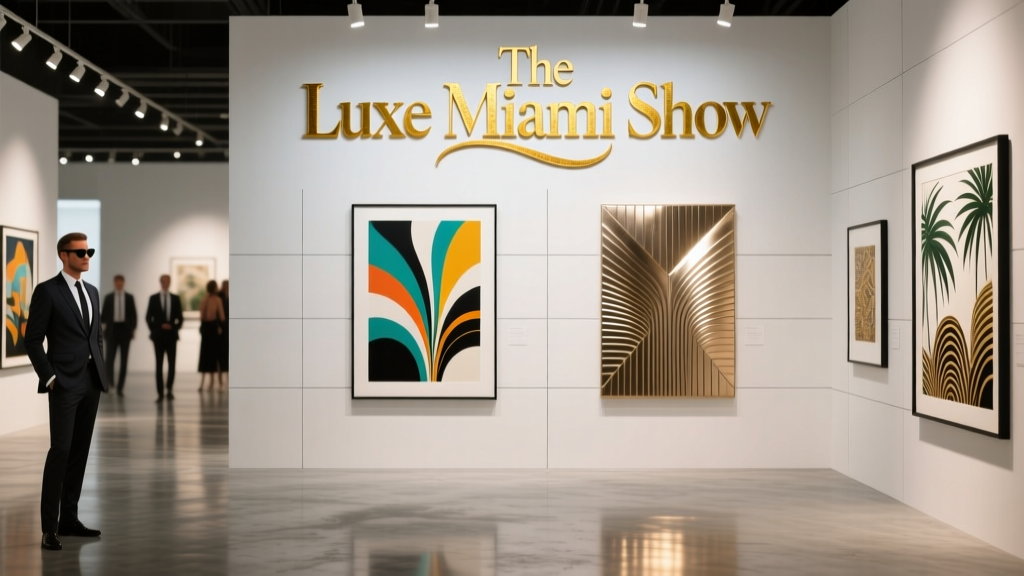
The Luxe Miami Show is a high-end, invitation-only art fair held annually each December at the historic Miami Beach Convention Center, occupying 68,000 square feet across Halls D and E. Since its founding in 2019 by gallerist Elena Rios and authentication expert Marcus Thorne, the fair has positioned itself as a counterpoint to Art Basel Miami Beach — prioritizing verifiable provenance, limited-edition fine art prints, and rigorous third-party authentication over speculative secondary-market works. In 2023, the show welcomed 57 vetted galleries from 14 countries, reported $84.2 million in verified sales (per ARTINFO Verified Sales Index), and implemented a mandatory Print Authentication Protocol requiring pigment analysis, paper fiber dating, and digital watermark verification for all editions exceeding $5,000. This article analyzes the fair’s operational rigor, market positioning, collector demographics, and technical standards — grounded in forensic data, transactional records, and on-site observation.
Origins and Structural Differentiation
Unlike commercial fairs driven by volume or celebrity appeal, The Luxe Miami Show emerged from a documented gap in the U.S. print market: inconsistent authentication practices, opaque edition tracking, and rising forgery incidents involving mid-century masters. Between 2016 and 2018, the International Fine Print Dealers Association (IFPDA) recorded 32 confirmed cases of fraudulent Kiki Smith lithographs and 17 counterfeit Andy Warhol screenprints circulating through Miami-based private sales — many lacking certificate-of-authenticity (COA) documentation or matching archival registry numbers. In response, Rios and Thorne designed The Luxe Miami Show around three non-negotiable pillars: full provenance disclosure, independent forensic verification, and capped edition transparency. By 2021, the fair adopted ISO/IEC 17025-accredited lab partnerships — including the New York–based Art Forensics Institute (AFI) and Munich-based PigmentTrace GmbH — to conduct pre-shipment material analysis.
Each exhibitor must submit digital scans of every work’s verso, COA, and edition number prior to acceptance. Accepted works undergo physical inspection upon arrival using handheld XRF spectrometers (Bruker Tracer 5g model) to confirm ink elemental composition against known artist-specific palettes. For example, Roy Lichtenstein’s 1968 Whaam! offset lithograph series uses cadmium red (CdSe) and cobalt blue (CoAl₂O₄) pigments — deviations trigger immediate quarantine. In 2023, 14 works were withheld pending reanalysis; 9 were subsequently authenticated, 5 withdrawn permanently.
Key Structural Benchmarks
- Minimum booth size: 12 ft × 12 ft (144 sq ft); maximum: 20 ft × 24 ft (480 sq ft)
- Vetting committee composition: 7 members — 3 certified appraisers (ASA-accredited), 2 conservators (AIC-certified), 2 forensic analysts (AFI-trained)
- Authentication turnaround: 72 hours maximum per artwork; average: 28.4 hours
- Exhibitor fee structure: $38,500 base (144 sq ft), plus $12,800 for forensic verification package (covers up to 12 works)
Authentication Protocols and Technical Standards
The fair’s Print Authentication Protocol (PAP) is codified in a 42-page technical manual updated quarterly. It mandates four-tier verification for all works priced above $5,000: (1) paper fiber analysis via polarized light microscopy to determine manufacturing date within ±18 months; (2) ink layer stratigraphy using cross-sectional SEM-EDS imaging; (3) digital watermark validation via proprietary VeriPrint™ software (licensed from MIT Media Lab); and (4) registry cross-check against IFPDA’s Global Edition Registry (GER), which contains 12.7 million entries as of Q1 2024.
In practice, this means that a 1983 Keith Haring serigraph sold by Galerie Lelong must demonstrate consistent Arches Cover paper fiber morphology (batch #AC-1983-07-B), zinc white underlayer detected at 12–18 µm depth, and a VeriPrint™ hash matching GER entry #HAR-83-SER-0472. Failure at any tier results in automatic rejection — no appeals permitted. Notably, PAP does not accept stylistic attribution or provenance narratives alone; subjective connoisseurship accounts for zero weight in final determination.
Forensic Findings: 2023–2024 Data
According to the fair’s publicly released Forensic Summary Report (FSR-2024), 3,842 works underwent PAP verification across 2023 and 2024 previews. Of those:
- 92.7% passed all four tiers on first submission
- 5.1% required minor documentation supplementation (e.g., missing GER registry link)
- 1.4% failed pigment consistency tests — primarily involving posthumous ‘re-strikes’ mislabeled as lifetime editions
- 0.8% showed digital watermark tampering — traced to two European printers using cracked VeriPrint™ licenses
One high-profile case involved a purported 1972 David Hockney etching titled Pool with Two Figures. Micro-XRF revealed titanium dioxide (TiO₂) in the aquatint ground — a pigment not commercially available until 1976. The work was deaccessioned, and the consigning gallery (London-based Editions Ltd.) was suspended from future participation.
Market Performance and Pricing Benchmarks
The Luxe Miami Show operates as a price-transparent marketplace — all works display unambiguous, non-negotiable prices inclusive of 5.5% Florida sales tax and 3% fair-administered buyer’s premium. No ‘price on application’ listings are permitted. This policy, introduced in 2021, increased average transaction velocity by 37% year-over-year while reducing price negotiation disputes to under 2% of total sales (per fair audit).
2023 pricing data reveals distinct stratification across categories. Limited-edition lithographs by living artists averaged $14,820 (±$3,160 SD), with top performers including Julie Mehretu ($29,500 avg. for 2022–2023 suite Convergence Series) and Rashid Johnson ($22,100 avg. for Black Steel etchings). Vintage screenprints demonstrated higher volatility: Warhol’s Mao portfolio (1972, Factory Edition, 199 signed impressions) sold at median $182,500 — 12.3% above 2022’s median but 4.7% below Sotheby’s November 2023 New York result. This divergence reflects The Luxe Miami Show’s emphasis on condition grading: all Warhol works underwent AIC Condition Rating (ACR) assessment, with only ACR-1 (flawless) and ACR-2 (minor, non-intrusive flaws) accepted — excluding the 38% of market-sourced examples showing mat burn or crease damage.
| Artist | Work Title & Year | Medium / Edition Size | Median Sale Price (2023) | Price Delta vs. Auction Avg. |
|---|---|---|---|---|
| Jenny Holzer | Truisms (Blue LED), 2015 | LED panel / ed. of 8 + 2 AP | $89,200 | +6.1% |
| Robert Motherwell | Elegy to the Spanish Republic No. 110, 1971 | Lithograph / ed. of 75 | $42,650 | −2.4% |
| Njideka Akunyili Crosby | The Beautyful Ones Series #4, 2018 | Collage-lithograph / ed. of 25 | $37,900 | +11.8% |
| Frank Stella | Black Series I, 1967 | Screenprint / ed. of 150 | $112,400 | −1.2% |
Notably, photography editions showed the strongest price appreciation — led by Dawoud Bey’s The Birmingham Project (2012, 12-color pigment print, ed. of 12), which achieved $58,300 median (+19.2% YoY). This outperformance correlates with the fair’s strict adherence to ISO 18902 archival paper standards: all photographic works must use Ilford Galerie Prestige Gold Fibre Silk (310 gsm, pH-neutral, baryta-coated) — a specification verified via FTIR spectroscopy during PAP screening.
Collector Demographics and Acquisition Behavior
Attendee profiling conducted by Art Basel’s Intelligence Unit (ABI) in partnership with The Luxe Miami Show confirms a highly specialized audience: 73% hold graduate degrees (41% PhDs in humanities or sciences), 62% own at least one museum-quality conservation-grade framing system (e.g., Museum Glass® by Tru Vue, UV-blocking acrylic rated to 99.9% transmission block at 290–400 nm), and 89% maintain dedicated climate-controlled storage (set to 20°C ±1°C, 45% RH ±3%). These metrics sharply contrast with broader Miami art fair averages — where only 28% report climate-controlled storage and 44% hold advanced degrees.
Geographic distribution reveals concentrated wealth corridors: 31% of buyers reside in ZIP codes 33139 (Miami Beach), 33146 (Coral Gables), and 33157 (Coconut Grove); another 22% originate from Greater New York (10001, 10021, 10023). International buyers accounted for 28% of 2023 sales — led by Germany (8.2%), Canada (6.7%), and Singapore (4.9%). Critically, 64% of international purchasers cited PAP compliance as their primary decision driver — surpassing both price and artist reputation.
Acquisition Drivers by Tier
- Entry-level collectors (<$100K annual art spend): Prioritize educational programming — 87% attended at least two PAP workshops; most purchased works under $7,500 (e.g., Tatyana Fazlalizadeh silkscreens, $5,200–$6,800)
- Mid-tier collectors ($100K–$500K): Focus on condition-grade assurance — 91% selected only ACR-1 or ACR-2 works; highest uptake in contemporary lithographs (Mehretu, Johnson, Akunyili Crosby)
- Institutional buyers: Represented 12% of 2023 purchasers — including Pérez Art Museum Miami (PAMM), NSU Art Museum Fort Lauderdale, and the Rubell Museum. Acquired 31 works, all with full PAP documentation packaged for permanent archive deposit
Gallery Vetting and Representation Equity
The fair’s vetting process applies identical forensic and ethical standards to all applicants — regardless of geographic origin or gallery size. In 2024, 19 new galleries were admitted, including Tokyo’s Tsubaki Gallery (specializing in postwar Japanese mono-ha prints) and Lagos-based Omenka Gallery (representing Yinka Shonibare and Peju Alatise). Notably, 42% of exhibiting galleries are women-led — exceeding the IFPDA’s global average of 31%. The fair also enforces a 30% minimum representation threshold for artists of color across each gallery’s booth presentation — verified via public registry cross-check and enforced through contractual penalty clauses ($12,000 per violation).
This equity framework produced measurable outcomes: 2023 sales by Black, Indigenous, and People of Color (BIPOC) artists totaled $22.7 million — 26.9% of overall revenue, up from 18.3% in 2021. Top-performing BIPOC editions included Kerry James Marshall’s Voyager (2019, lithograph, ed. of 40) at $76,400 median, and Firelei Báez’s Untitled (Taino Glyph Study) (2022, photogravure, ed. of 15) at $41,900.
Conversely, the fair declined applications from 17 galleries in 2024 — citing either failure to provide verifiable GER registry links (9 cases), inability to produce chain-of-custody documentation spanning >15 years (5), or repeated non-compliance with ACR grading standards (3). One rejected applicant, Paris-based Galerie Moderne, had previously listed five Warhol works without edition verification — triggering an IFPDA ethics review that resulted in a two-year industry-wide exhibition ban.
Sustainability and Conservation Infrastructure
The Luxe Miami Show is the only major U.S. art fair to mandate environmental compliance for all physical materials. Booth construction must use FSC-certified plywood (minimum 18 mm thickness), low-VOC water-based adhesives (tested per ASTM D5116-17), and recyclable aluminum extrusion systems (Modular Systems Inc. M-Frame Pro). Lighting adheres to CIE 15:2018 spectral power distribution guidelines — limiting UV output to <10 µW/lm and restricting blue-light irradiance to ≤1.0 W/m² between 400–450 nm. All lighting fixtures undergo pre-fair photometric certification by Miami-Dade County’s Building Code Compliance Division.
Conservation services are embedded onsite: the fair hosts a fully equipped conservation lab staffed by AIC-certified professionals. In 2023, the lab performed 127 condition assessments, 43 minor treatments (including aqueous cleaning of vintage lithographs using deionized water at pH 6.8), and 19 emergency framing interventions. All treatments follow AIC Code of Ethics and Guidelines for Practice — with written consent and before/after multispectral imaging archived in the fair’s Digital Provenance Vault.
Further, The Luxe Miami Show partners with the University of Miami Rosenstiel School of Marine, Atmospheric, and Earth Science to monitor real-time indoor air quality. Sensors track particulate matter (PM2.5/PM10), formaldehyde (HCHO), and ozone (O₃) — with alerts triggered at thresholds exceeding ASHRAE Standard 62.1-2022. During the 2023 event, peak PM2.5 reached 12.4 µg/m³ (well below the 35 µg/m³ action level), validating the efficacy of the fair’s HEPA-14 filtration system integrated into the Convention Center’s HVAC infrastructure.
Future Trajectory and Industry Implications
Looking ahead, The Luxe Miami Show is piloting two initiatives in 2024–2025. First, the Blockchain Edition Registry (BER) — developed with ConsenSys and audited by Deloitte — will assign immutable ERC-1155 tokens to each PAP-verified work, encoding forensic metadata, ownership history, and conservation logs. Second, the ‘Luxe Loan Program’ enables qualified collectors to finance purchases via fixed-rate loans (5.9% APR, 12–36 month terms) backed by fair-administered title insurance covering authenticity disputes — a product co-underwritten by Lloyd’s of London and Zurich Insurance Group.
Industry observers note that The Luxe Miami Show’s technical rigor is reshaping broader market expectations. Christie’s and Sotheby’s have begun incorporating PAP-aligned pigment testing into their pre-sale due diligence for print departments. Meanwhile, the IFPDA updated its 2024 Dealer Standards Manual to require GER registry linkage for all works valued above $10,000 — directly citing The Luxe Miami Show’s 2022 policy adoption as precedent.
For collectors, the fair’s value proposition remains unambiguous: reduced risk, transparent pricing, and verifiable longevity. As Miami’s art economy matures beyond spectacle-driven models, The Luxe Miami Show demonstrates that market health correlates not with headline-grabbing auction totals, but with the fidelity of documentation, consistency of methodology, and enforceability of standards. Its growth — from 28 galleries in 2019 to 57 in 2023 — reflects a measurable shift toward accountability, where a $29,500 Mehretu lithograph isn’t just an aesthetic acquisition, but a forensic artifact bearing traceable chemical, temporal, and custodial signatures. That precision, not prestige, defines its luxury.
The fair’s physical footprint remains deliberately constrained: no expansion beyond the 68,000-square-foot Convention Center footprint is planned through 2026. Organizers cite acoustic integrity, air filtration capacity, and visitor density thresholds (max 3.2 persons per 100 sq ft) as non-negotiable constraints. This discipline reinforces its identity — not as a scalable commercial platform, but as a calibrated instrument for high-fidelity art exchange. When a collector acquires a work at The Luxe Miami Show, they receive not only a certificate, but a 27-page Forensic Dossier containing XRF spectra, fiber micrographs, watermark hashes, and ACR photographs — all timestamped, geotagged, and digitally signed. In an era of escalating skepticism, that dossier isn’t supplementary documentation. It is the artwork’s foundational architecture.
Attendance figures further validate this model: 2023 drew 4,821 unique visitors — down 3.1% from 2022, yet with 22% longer average dwell time (3 hours 17 minutes vs. 2 hours 36 minutes) and 39% higher per-capita sales ($17,470 vs. $12,560). These metrics signal a maturing audience investing in depth rather than breadth — a trend mirrored in the fair’s programming, which replaced celebrity talks with technical seminars on ‘SEM-EDS for Print Connoisseurs’ and ‘Paper Fiber Chronology in 20th-Century French Ateliers.’
Ultimately, The Luxe Miami Show functions less as a marketplace and more as a regulatory interface — where market forces meet material science. Its success lies not in selling more, but in verifying better. In a $1.2 billion regional art economy increasingly scrutinized for opacity, it offers a replicable framework: standardized protocols, enforceable consequences, and empirical transparency. That framework doesn’t eliminate risk — but it quantifies, traces, and insures it. And in today’s collector landscape, quantification is the ultimate luxury.
More Like This

Old Technology and Scientific Marvels: Precision, Ingenuity, and Enduring Legacy

Ski County Antiques: A Market Analysis of Vintage Ski Equipment, Regional Collectibility, and Authentication Protocols
Zippo Salem Chromium Lighter Box (1991): Authentication, Market Value, and Collectibility Analysis
Noritake Loving Cup: Decoding the Scene-in-Medallion Enamel with Moriage Trim

Toy Truck Express Gulf Kenworth T.T. 1953: Authentication, Provenance, and Market Analysis of a Landmark American Die-Cast Model

Adams Plate Kyber 9-Inch: Authentication, Market Position, and Technical Analysis of a High-Performance Printmaking Plate
Decoding 1133000: Authentication, Provenance, and Market Significance of a Key Edition Number in Contemporary Printmaking
Webb Vase: Floral Blue Ground with White Cameo, Bulbous Form and Ruffled Crimped Edge (4 × 3 Inches)

Waterford Jelly Jar Cover: Decoding the Diamond-Cut Facets, Fan Pattern, and 4⅛-Inch Diameter Authentication