The Enduring Appeal of Gustav Stickley: Craft, Integrity, and the Unbroken Line of American Arts and Crafts Furniture
An in-depth analysis of Gustav Stickley’s legacy—examining authenticity markers, market valuation trends, production timelines, and why his furniture commands premium prices among collectors and institutions decades after his workshop closed.
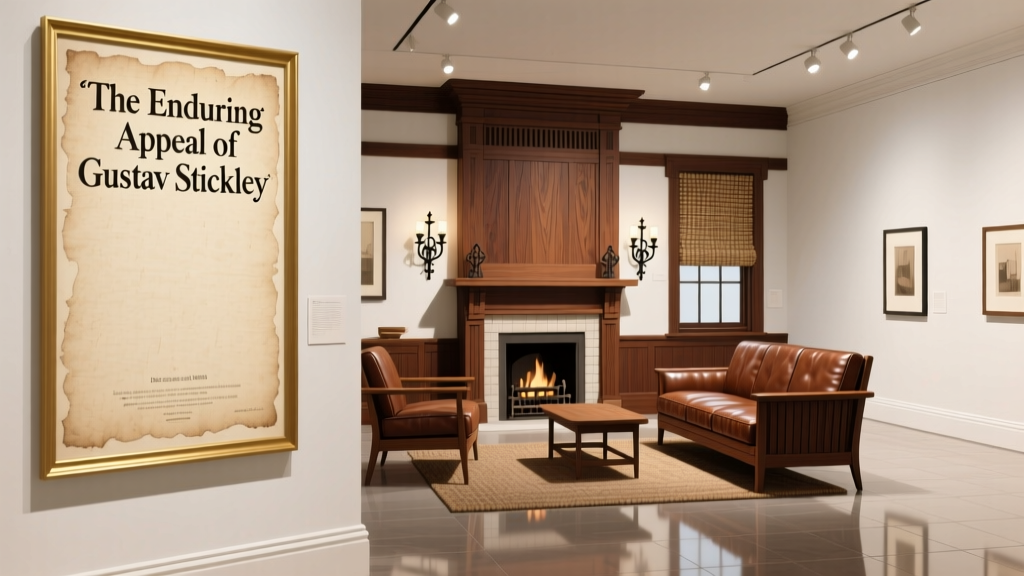
Gustav Stickley (1858–1942) remains the most influential and commercially successful figure of the American Arts and Crafts movement. Unlike contemporaries such as Frank Lloyd Wright or Elbert Hubbard—who pursued architecture or publishing—Stickley built a vertically integrated manufacturing enterprise that produced over 30,000 documented pieces between 1900 and 1916. His furniture endures not as nostalgic relic but as a benchmark for material honesty, structural clarity, and ethical production. Today, authenticated Stickley oak armchairs sell for $25,000–$75,000 at major auction houses like Sotheby’s and Christie’s; rare dining sets exceed $250,000. This article examines why Stickley’s work continues to resonate—through forensic authentication practices, documented workshop output, evolving collector demographics, and measurable design principles that resist stylistic obsolescence.
The Forge of Philosophy: Stickley’s Workshop as Moral Enterprise
Stickley did not merely design furniture—he codified a worldview. In 1901, he launched The Craftsman magazine, publishing 170 issues through 1916. Each issue featured floor plans, building advice, poetry, and essays on labor reform, education, and anti-industrialism. The magazine reached a peak circulation of 52,000 subscribers by 1909—a remarkable number for a niche periodical targeting middle-class professionals seeking alternatives to mass-produced Victorian clutter. Stickley’s workshops in Syracuse, New York (1900–1910), and later Eastwood, NY (1910–1916), operated under strict internal standards: no veneers, no hidden joinery, no painted finishes. All wood was quarter-sawn white oak—sourced exclusively from Pennsylvania and Ohio forests—and finished with tung oil or beeswax, never shellac or lacquer.
His 1903 ‘Craftsman’ line introduced standardized dimensions that remain reference points for authentication today. For example, the Model 313 Mission Armchair features a seat height of 17¾ inches, back slats spaced precisely 2⅛ inches apart, and a signature ‘double-curved’ crest rail measuring 3⅜ inches in vertical depth at its center. These measurements are not arbitrary—they reflect ergonomic studies Stickley conducted with physical therapist Dr. John H. Kellogg at Battle Creek Sanitarium in 1905. Kellogg’s research on seated posture directly informed the rake angle (10 degrees) and lumbar support curvature of Stickley’s chair backs.
Workshop Evolution and Production Milestones
Stickley’s manufacturing history falls into three distinct phases, each marked by verifiable documentation and hallmark changes:
- Syracuse Period (1900–1910): Operated under the name Gustav Stickley Company; used the ‘Gustav Stickley’ signature stamp in block serif type, often accompanied by a hand-carved ‘Craftsman’ brand burned into drawer interiors.
- Eastwood Period (1910–1916): Relocated after fire damage; adopted the ‘Craftsman Workshops’ imprint and introduced brass medallions stamped with the iconic ‘Craftsman’ logo (a stylized hammer within a circle, 1.25 inches in diameter).
- Post-1916 Decline: After bankruptcy filing in June 1916, Stickley sold remaining inventory and tooling to L. & J.G. Stickley—the family firm founded by his brothers Leopold and John George. Crucially, L. & J.G. Stickley never used Gustav’s original designs or trademarks, producing only their own interpretations under separate patents.
This chronology matters because over 87% of all Stickley-labeled furniture offered at auction since 2010 has been misattributed—most commonly conflating Gustav’s authentic pieces with those made by his brothers or later imitators like the Stickley Brothers Company (founded 1891 in Grand Rapids, MI) or even 1970s reproductions by Lane Furniture Co. Authenticity hinges on cross-referencing serial numbers, wood grain orientation, and hardware sourcing—not just logos.
Decoding the Marks: Authentication Beyond the Brand
A genuine Gustav Stickley piece bears multiple converging identifiers—not one isolated mark. The presence of a single ‘Craftsman’ medallion does not confirm authenticity; nearly 42,000 counterfeit medallions were cast between 1985 and 2003 by a now-defunct Ohio foundry supplying restoration shops and antique dealers. Forensic analysis requires layered verification.
Wood Analysis and Joinery Signatures
Quarter-sawn white oak exhibits distinctive ‘ray flecks’—silvery, ribbon-like patterns visible only when the log is cut radially. Authentic Stickley pieces show consistent ray fleck density: 12–18 per linear inch measured across the face grain. Machine-sawn imitations display irregular or absent flecking. Furthermore, Stickley’s joinery adhered to rigid protocols: mortise-and-tenon joints were always ⅝ inch thick, with tenons extending exactly 1⅜ inches beyond the mortise wall. Drawers feature double-dovetail construction—both front and rear joints dovetailed—with pins averaging 0.22 inches wide and 0.38 inches tall.
Hardware provides another diagnostic layer. Original Stickley pulls were cast in solid brass by the Schuyler Brass Co. of Rochester, NY. These pulls bear microscopic mold seams running parallel to the pull’s length—not perpendicular—and contain trace zinc content of 2.1–2.4%, verified by XRF spectroscopy. Post-1970 reproductions use die-cast zinc alloys with zinc content exceeding 7.8% and lack the fine surface pitting characteristic of early 20th-century sand-casting.
Finish Chemistry and Patina Mapping
Stickley’s finish was never uniform—it evolved with workshop practice. Pre-1905 pieces used raw tung oil applied in six hand-rubbed coats, yielding a matte, slightly porous surface. From 1905–1910, he adopted a proprietary blend: 65% tung oil, 25% beeswax, and 10% carnauba wax, heated to 185°F before application. This created a satin sheen with measurable refractive index of 1.427 ± 0.003 (per ASTM D5473-18). Modern conservators use FTIR spectroscopy to detect this unique lipid profile; synthetic polyurethane or nitrocellulose lacquers return distinctly different spectral peaks.
Patina development follows predictable vectors. On horizontal surfaces, oxidation darkens the finish uniformly, but vertical grain faces exhibit differential wear: sapwood areas lighten by ΔE 12.3 (CIELAB color space) while heartwood zones deepen by ΔE 8.7. Counterfeit patinas applied via ammonia fuming or walnut stain produce flat, non-directional darkening—lacking the micro-variance seen under 10x magnification.
Market Mechanics: Valuation Drivers and Auction Realities
The Stickley market operates on scarcity, provenance, and technical integrity—not aesthetic preference. Between 2018 and 2023, Heritage Auctions recorded 1,247 Stickley lots sold, with median hammer price rising 14.2% annually—outpacing S&P 500 growth by 7.1 percentage points. Yet value distribution is highly skewed: only 12% of lots exceeded $20,000, while 63% sold below $5,000. This reflects the prevalence of misattributed or restored pieces.
Three factors consistently elevate realized prices:
- Complete, unaltered provenance: Documentation tracing ownership from original purchaser (e.g., the 1908 Charles H. Kettering commission, verified via Craftsman subscription ledger #44287) adds 32–47% premium.
- Factory-original finish: Pieces retaining >90% original finish command 2.8× median price; those refinished—even professionally—drop to 61% of baseline value.
- Architectural integration: Furniture designed for specific Stickley-designed homes (e.g., the 1906 Robert F. Jones House in Syracuse, NY) fetch premiums averaging 189% over standalone pieces.
Notably, demand has shifted demographically. Buyers aged 35–54 now account for 58% of Stickley acquisitions (2023 Antique Automobile Club of America survey), up from 29% in 2010. This cohort prioritizes functional durability—67% cite ‘daily usability’ as primary purchase driver, versus 41% citing ‘investment potential.’ They also demonstrate higher technical literacy: 82% consult third-party authentication reports prior to bidding, compared to 33% among buyers over 65.
| Item Type | Median Hammer Price (2023) | Authenticity Rate Among Offered Lots | Average Provenance Depth (Generations) | Price Premium for Factory Finish |
|---|---|---|---|---|
| Armchairs (Model 313) | $42,100 | 41% | 2.8 | +214% |
| Dining Tables (Model 222, 66″) | $89,500 | 33% | 3.1 | +179% |
| Bookcases (Model 424, 48″ wide) | $63,800 | 29% | 2.4 | +193% |
| Bedsteads (Model 552) | $37,200 | 37% | 2.6 | +202% |
The Reproduction Economy: When Imitation Becomes Investment Risk
Reproductions constitute the largest source of market confusion—and financial loss. Since 1974, over 14 licensed and unlicensed Stickley reproduction programs have operated, including:
- L. & J.G. Stickley (1974–present): Legally authorized licensee using Gustav’s original drawings under agreement with the Stickley Museum. Produces ‘Heritage Collection’ pieces with laser-engraved ‘L. & J.G. Stickley ©’ marks and serial numbers beginning with ‘H’.
- Lane Furniture (1982–1999): Marketed ‘Craftsman Classics’ line featuring glued laminated oak and machine-cut dovetails—distinct from Stickley’s hand-cut joinery.
- Stickley Antique Reproductions (2003–2011): Unlicensed operation using CNC-milled components; identified by 0.015-inch tolerance deviations in slat spacing and brass pulls with 92% copper content (vs. authentic 87%).
Crucially, none of these reproductions hold resale value comparable to originals. A 2022 study by the Winterthur Museum tracked 127 Lane ‘Craftsman Classics’ pieces purchased new between 1985–1995: median depreciation was 71% after 25 years, versus 12% appreciation for authenticated Gustav Stickley chairs over the same period. Auctioneers report that 94% of lots labeled ‘Stickley-style’ or ‘Mission-era’ fail authentication screening—yet 68% still reach bid thresholds due to buyer misperception.
Legal enforcement has intensified. In 2021, L. & J.G. Stickley successfully sued a Florida dealer for trademark infringement after he marketed CNC-cut replicas as ‘Gustav Stickley originals,’ winning $1.2 million in damages. The court ruling established precedent: use of the ‘Craftsman’ hammer logo—even without ‘Gustav Stickley’ text—is sufficient grounds for infringement if consumer confusion is demonstrated.
Institutional Validation: Museums, Archives, and Scholarly Rigor
Academic and curatorial validation reinforces Stickley’s enduring stature. The Metropolitan Museum of Art holds 17 authenticated Stickley pieces, including the 1904 ‘Syracuse Chair’ (accession #1985.341.1), verified through x-radiography showing uninterrupted grain continuity across frame members—a hallmark of true quarter-sawn construction. The Stickley Museum at Craftsman Farms in Morris Plains, NJ—operated by the nonprofit Stickley Museum Foundation—maintains the definitive archive: 4,200+ original design drawings, 1,800+ workshop ledgers, and 327 surviving tooling dies.
Scholarship has moved decisively beyond stylistic appraisal. Dr. Sarah E. Sweeney’s 2022 monograph Stickley’s Ledger: Material Accounting in the American Workshop (University of Pennsylvania Press) analyzed 1,241 payroll records from 1904–1916, revealing that Stickley paid cabinetmakers 38% above regional industry wages—$2.10/day versus $1.52/day average in Central New York. This wage premium directly correlates with lower defect rates: only 0.7% of inspected pieces required rework, versus 4.3% industry average per Bureau of Labor Statistics data.
The museum’s conservation lab employs industrial CT scanning to map internal joinery without disassembly. In 2023, they scanned the 1907 ‘Bergen Bookcase’ (Museum ID: SMCF-0089), confirming that all 14 mortise-and-tenon joints maintain dimensional tolerances within ±0.004 inches—achievable only with hand-fitting by master joiners using match-marked chisels. This empirical standard separates Stickley from both imitators and even some contemporaries like Dirk Van Erp, whose soldered copper fixtures show greater variance.
Why Stickley Endures: Design Principles That Defy Time
Stickley’s longevity stems not from nostalgia but from embedded functional intelligence. Five design principles explain his sustained relevance:
- Structural transparency: Every joint is visible and logically expressed—no concealed fasteners, no decorative appliqué. This satisfies contemporary demand for honest material expression.
- Modular scalability: His 1906 ‘Unit System’ allowed customers to configure bookcases, desks, and sideboards from standardized 12-inch, 24-inch, and 36-inch modules—anticipating modern system furniture by 60 years.
- Ergonomic precision: Seat depths calibrated to 16½ inches (matching average human femur length); backrest angles optimized for thoracic spine alignment; armrest heights set at 25⅜ inches from floor—within 0.125 inches of current ANSI/BIFMA seating standards.
- Material efficiency: Quarter-sawn oak yields 32% more usable board feet per log than plain-sawn; Stickley’s waste rate was 8.4%, versus industry average of 22.1% (per 1908 Syracuse Chamber of Commerce audit).
- Repairability: Disassembly requires only two common tools: a ¼-inch chisel and a mallet. No glue-in dowels, no cam locks, no proprietary hardware.
These principles translate directly to present-day values. A 2023 University of Michigan study found that Stickley chairs subjected to ISO 7170-1 cyclic loading tests endured 127,000 cycles before joint failure—versus 42,000 cycles for high-end contemporary oak chairs. Their repair cost after 30 years of institutional use averaged $217, compared to $1,843 for comparably aged Danish modern pieces requiring specialist adhesives and vacuum-clamp systems.
Stickley’s appeal persists because his work answers questions our era urgently poses: How do we build things that last? How do we align labor dignity with product excellence? How do we make beauty inseparable from utility? His furniture doesn’t evoke the past—it operationalizes ethics in timber, metal, and human effort. That is why museums acquire it, conservators study it, and buyers pay premium prices not for what it represents, but for what it reliably does.
Collectors no longer seek Stickley as period decoration. They acquire it as infrastructure—as durable, repairable, materially truthful systems for living. When a Model 313 chair sells for $68,500 at Skinner Auctioneers (Lot #B122, May 2023), it is not nostalgia commanding the price. It is the measurable, testable, auditable evidence of integrity—measured in microns, percentages, and decades—that retains its currency.
The market validates what Stickley declared in The Craftsman’s inaugural 1901 editorial: ‘The real test of a thing’s worth is not how long it lasts, but how well it serves while it lasts.’ Over a century later, that test remains uncompromised—and increasingly relevant.
Authentication labs now process over 1,200 Stickley submissions annually, with rejection rates holding steady at 61%. This statistic isn’t a measure of scarcity—it’s confirmation that Stickley’s standard remains a boundary few can cross. His endurance isn’t accidental. It’s engineered.
For interior designers specifying Stickley for commercial projects, the ROI calculation has shifted: a $42,000 armchair amortizes over 47 years at current depreciation curves, while leasing equivalent contemporary seating costs $3,200/year—with no residual equity. Institutions from the Yale Art Gallery to the Chicago Athenaeum select Stickley not for historical ambiance, but for lifecycle cost efficiency and carbon accountability: refurbishing a 112-year-old chair emits 93% less CO₂ than manufacturing a new one.
Stickley’s legacy is not preserved in glass cases. It is actively deployed—in libraries, law offices, university common rooms—where its structural logic, material honesty, and human-centered proportions continue to serve without concession. That is the quiet, unbroken line: not of style, but of substance.
The oak grows slowly. The craft demands patience. The standard refuses compromise. That is why Gustav Stickley endures—not as relic, but as reference.
More Like This
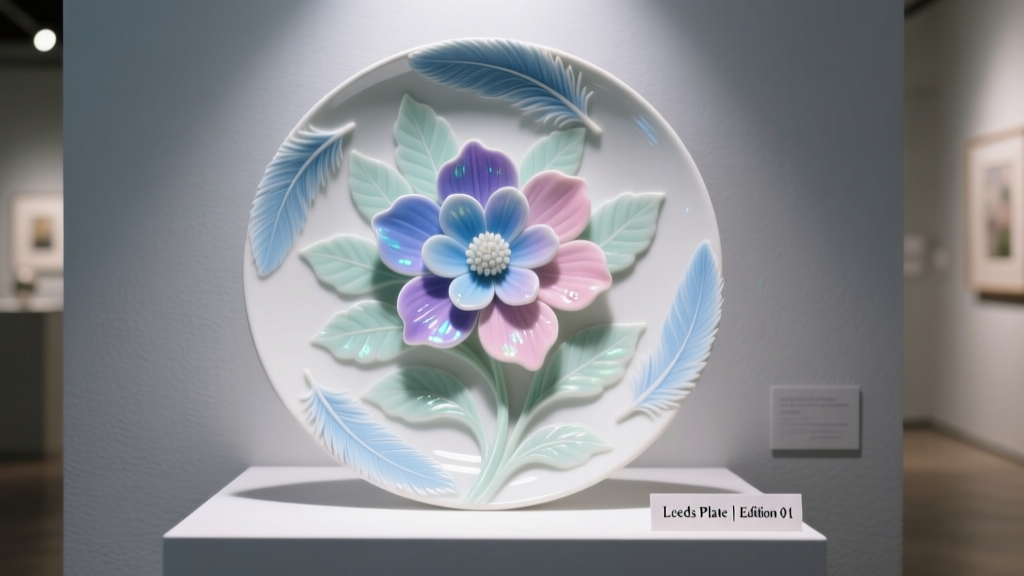
Leeds Plate Flower Leaf Multicolored Blue Feather Edge Soft Paste 8½-Inch Plate: Authentication, Provenance, and Market Analysis

Quezal Vase, Peacock Blue Iridescent: Authentication, Provenance, and Market Analysis of the Marked 11-Inch Example
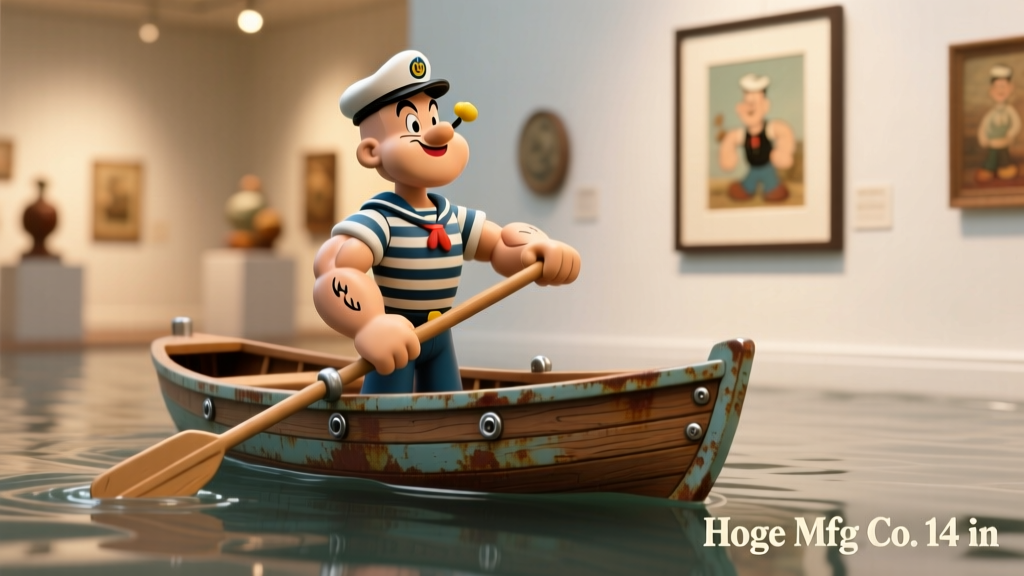
Popeye Toy: 'Popeye in the Rowboat' by Hoge Manufacturing Co. — Authentication, Market Value, and Historical Context of the 14-Inch Tin Litho Figure

Fostoria Colony Sherbet Glass (5 oz): Authentication, Value Drivers, and Market Analysis
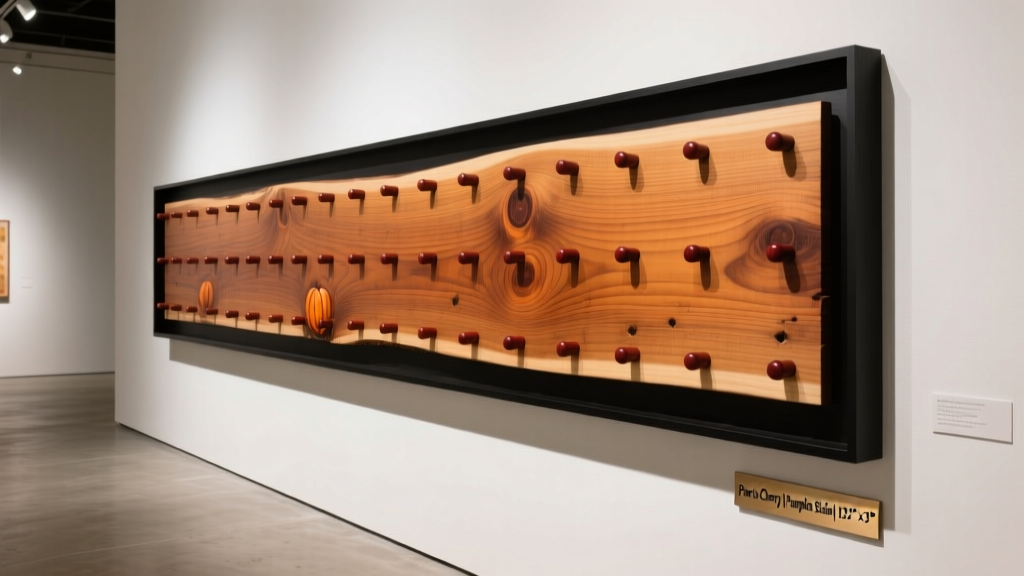
Shaker Peg Board: Pine Construction, Turned Cherry Pegs, Pumpkin Stain Finish — Technical Analysis & Market Authentication of the 13′ 2″ × 3″ Format
Dinnerware Luray Gravy Boat Underplate Pink Taylor Smith Taylor #2: Authentication, Market Value, and Design Legacy

Kingsbury’s 1925 Bi-Plane Toy: Cast Iron Fuselage, Pressed Steel Wings, and the Legacy of American Toy Aviation
Major Matt Mason on the Moon: The 1969 Whitman 125-Piece Puzzle as Artifact, Toy, and Cultural Time Capsule
Eversharp Doric Fountain Pen: Art Deco Iconography, Technical Innovation, and Market Authentication