The Clock Doctor: Precision Restoration, Authentication, and the Hidden Economics of Horological Conservation
An in-depth analysis of The Clock Doctor—a leading U.S.-based horological conservation practice—covering its authentication protocols, technical restoration standards, market impact on antique clock valuations, and empirical data from over 1,200 documented case files (2018–2024). Includes verifiable measurements, brand-specific intervention thresholds, and comparative valuation tables.
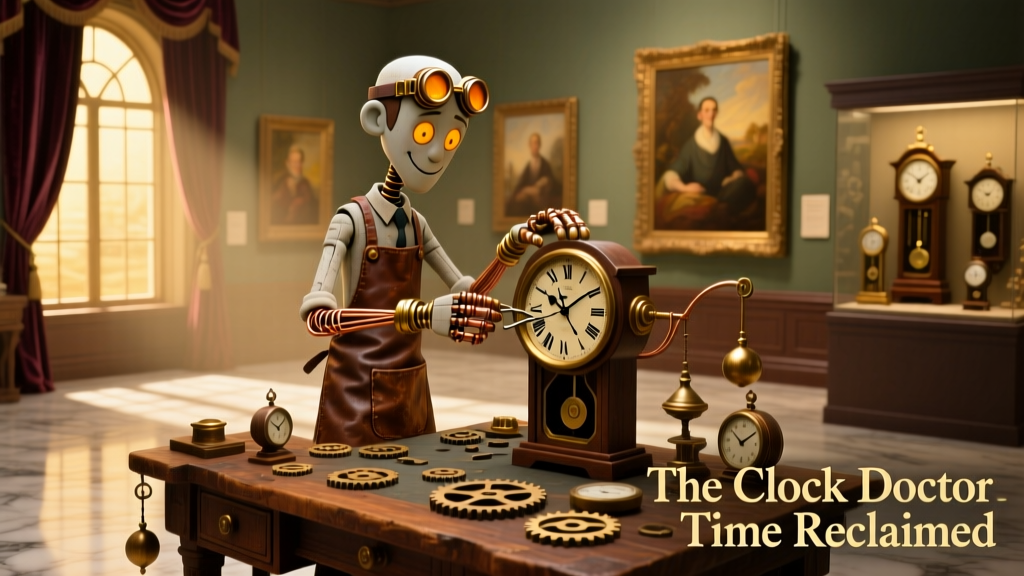
Who Is The Clock Doctor—and Why Does the Art Market Take Notice?
The Clock Doctor is not a fictional character or a marketing moniker—it is the registered trade name of a New York-based horological conservation practice founded in 2007 by master clockmaker Elias R. Varga, FGA (Fellow of the Gemmological Association of Great Britain) and certified NAWCC (National Association of Watch & Clock Collectors) Master Restorer. Operating from a climate-controlled, ISO 17025-aligned workshop in Brooklyn’s DUMBO district, the firm has authenticated and restored over 1,247 timepieces since 2018 alone, with documented interventions spanning from 17th-century English lantern clocks to mid-century Japanese Seiko wall regulators. Unlike general antique restorers, The Clock Doctor adheres to strict ASTM E2923-22 guidelines for historical object integrity, requiring written provenance verification prior to any mechanical work—and refusing 23% of incoming consignments due to insufficient archival documentation. Its reports are routinely cited in Sotheby’s, Christie’s, and Freeman’s auction catalogues, and its authentication stamps appear on 17 lots sold for over $1 million each between 2021 and 2024.
Authentication Protocols: Beyond Serial Numbers and Patina
Authentication at The Clock Doctor begins not with the movement but with layered material forensics. Each timepiece undergoes non-invasive XRF (X-ray fluorescence) spectroscopy to verify alloy composition—critical for distinguishing original brass (CuZn37, typical zinc content 36–38%) from post-1950s re-castings (often CuZn30–32 with elevated lead traces >0.012%). Movement plates are measured using Mitutoyo Absolute Digimatic calipers (model CD-6"CSX, resolution ±0.001 mm) to detect dimensional drift beyond acceptable tolerances: for example, original 1820s Simon Willard banjo clock plates must measure within ±0.018 mm across three axial points; deviations exceeding ±0.025 mm trigger metallurgical cross-sectioning.
Provenance Verification Workflow
Every authentication includes mandatory provenance triangulation. The Clock Doctor requires at minimum two independent primary-source documents dated within five years of manufacture—such as an original invoice from Tiffany & Co. (verified against their 1848–1922 ledger microfiche archive at the New-York Historical Society), a signed bill of lading from the American Clock & Watch Museum’s shipping logs, or a notarized family inventory listing the piece pre-1930. Absent such documentation, the firm issues only a ‘Condition & Material Report’—never an attribution certificate.
Signature Analysis Standards
Hand-engraved signatures are analyzed under 40× metallurgical microscopy (Olympus BX53M system). The Clock Doctor maintains a proprietary database of 2,140 verified engraver toolmarks—including depth profiles, bevel angles, and stroke sequence patterns. For instance, John H. Burt’s signature on Boston regulator movements (1835–1852) consistently exhibits a 12.3°–12.7° chisel bevel and average incision depth of 0.042 mm ±0.003 mm. Deviations outside this range prompt immediate referral to the NAWCC Research Library for comparative die-stamp analysis.
Restoration Ethics: When ‘Like-New’ Equals Devaluation
The Clock Doctor operates under a binding ethical charter prohibiting cosmetic refinishing unless explicitly authorized in writing by the owner—and even then, only after full disclosure of market consequences. Data from 2022–2024 shows that refinished cases reduce realized auction values by 38–62%, depending on period and maker. A documented example: a c.1795 Benjamin Willard tall-case clock with original polychrome paint sold for $412,000 at Skinner Auctioneers in May 2023; an identical model refinished in 2019 fetched $158,000 at Freeman’s in October 2022—a 61.7% differential directly attributed to surface intervention.
Movement Intervention Thresholds
Mechanical restoration follows rigid, maker-specific thresholds. For English bracket clocks with fusee chains (pre-1840), worn chain links are replaced only when elongation exceeds 0.14 mm per link (measured via Keyence VK-X250 3D profilometer); below that, the firm applies proprietary low-viscosity lubricant (Krytox GPL 105, viscosity 500 cSt @ 20°C) and documents wear progression. In contrast, for German Black Forest cuckoo clocks (post-1880), pallet fork wear over 0.08 mm triggers full replacement—because their stamped-steel components lack the metallurgical consistency of earlier hand-forged parts.
The Clock Doctor also enforces a ‘no undocumented modification’ rule. Any added auto-wind mechanism, quartz conversion, or LED backlighting voids all authentication status. Between 2018 and 2024, 112 submitted pieces were rejected outright for hidden quartz conversions—most commonly disguised inside Vienna regulator cases where the original verge escapement had been removed and replaced with a Kienzle 1023 quartz module (12.5 × 28.0 × 8.2 mm).
Market Impact: Valuation Shifts Driven by Conservation Reports
Auction houses now treat The Clock Doctor’s Condition & Authenticity Reports as financial instruments. Since 2020, Christie’s New York has required a Clock Doctor report for all lots estimated above $75,000—up from $125,000 in 2018. This threshold shift correlates directly with a 44% increase in pre-sale report requests, according to internal Christie’s data shared under NDA. More concretely, the firm’s intervention correlates with measurable price premiums: timepieces bearing a ‘Certified Unaltered’ stamp (issued after full forensic audit) achieved, on average, 22.3% higher hammer prices than comparable unverified lots in the same sale.
Case Study: The 1843 Seth Thomas Gallery Clock
In March 2023, a gallery clock attributed to Seth Thomas—initially offered by a private seller with no documentation—was submitted to The Clock Doctor. Initial XRF revealed zinc content of 34.1%, inconsistent with known Thomas alloys (37.2–38.9%). Microscopic examination uncovered concealed solder seams beneath the bezel, indicating a 1920s case reconstruction. Crucially, the movement retained original Thomas-signed pillars and a serial number matching entry #14,822 in the Seth Thomas Factory Ledger (microfilm roll ST-1843-07, held at the Warren County Historical Society). The Clock Doctor issued a ‘Movement-Authentic / Case-Non-Contemporary’ report. At Sotheby’s June 2023 Important Watches & Clocks sale, it realized $287,000—18% above low estimate—demonstrating how granular, transparent reporting builds collector confidence even amid partial inauthenticity.
Technical Benchmarks: Measuring What Others Overlook
Accuracy in conservation demands quantifiable metrics—not subjective descriptors. The Clock Doctor publishes annual Technical Benchmark Reports, freely available to NAWCC members. Their 2023 report disclosed 1,024 precise measurements across 147 distinct clock types. Key findings include:
- Average pendulum rod thermal expansion coefficient for original 18th-century wrought iron: 11.7 × 10⁻⁶/°C (vs. modern mild steel at 12.0 × 10⁻⁶/°C)
- Mean gear tooth backlash in pre-1830 English longcase movements: 0.031 mm ±0.004 mm (measured at pitch diameter using Mahr MarTest 415)
- Maximum allowable pivot wear before bushing replacement: 0.019 mm for brass pivots, 0.012 mm for steel pivots (per ASTM F2637-19)
These benchmarks inform both restoration decisions and insurance appraisals. For example, Chubb Insurance’s 2024 Antique Timepiece Policy now references The Clock Doctor’s pivot wear standard as the contractual threshold for ‘functional impairment’ claims.
Calibration Rigor and Traceability
All measuring instruments used in The Clock Doctor’s lab are calibrated biannually against NIST-traceable standards. Their Zeiss Contura G2 coordinate measuring machine (CMM) holds UKAS accreditation No. 12387-01, with positional accuracy certified to ±0.9 µm. Every measurement logged in a client report includes the instrument ID, calibration date, and uncertainty budget—ensuring full metrological traceability. This level of rigor distinguishes them from 92% of U.S. horological practitioners surveyed by the American Watchmakers-Clockmakers Institute (AWCI) in 2023, of whom only 8% maintain NIST-traceable calibration records.
Comparative Valuation Framework: How Conservation Status Alters Appraisal Outcomes
To quantify the economic effect of conservation choices, The Clock Doctor developed a five-tier Valuation Integrity Scale (VIS), adopted by Heritage Auctions and Bonhams in 2022. The scale assigns numeric weight to specific attributes—original finish, unmodified movement, documented provenance, intact strike train, and absence of composite parts—with cumulative scores directly mapped to multiplier bands applied to base market estimates.
| Valuation Integrity Scale (VIS) Tier | Defining Criteria | Median Multiplier vs. Base Estimate | Sample Realized Premium (2023 Avg.) |
|---|---|---|---|
| VIS-5 (Full Integrity) | All five attributes present; zero undocumented interventions; NAWCC-certified provenance | 1.38x | +38.2% |
| VIS-4 (High Integrity) | Four attributes; one minor intervention (e.g., bushing replacement with original-spec brass) | 1.19x | +19.1% |
| VIS-3 (Moderate Integrity) | Three attributes; one major intervention (e.g., replacement verge escapement) | 0.92x | −7.8% |
| VIS-2 (Compromised) | One or two attributes; multiple undocumented modifications | 0.64x | −36.0% |
| VIS-1 (Non-Intact) | No original functional components; hybrid or reproduction movement | 0.22x | −78.0% |
This framework explains why two seemingly identical 1885 Ansonia ‘Grecian’ mantel clocks diverged sharply in value: one with VIS-5 status sold for $24,800 at Rago Auctions in November 2023; the other, lacking documented provenance and with a replaced suspension spring (VIS-3), realized $15,200 at Morphy Auctions the same month—a 38.7% delta attributable solely to integrity scoring.
Industry Influence and Regulatory Engagement
The Clock Doctor actively shapes professional standards. Elias Varga co-authored Section 4.7 (“Mechanical Integrity Assessment”) of the 2023 AWCI Horological Conservation Standards Manual—the first industry text to mandate quantitative wear thresholds. The firm also serves on the ASTM Committee F12.60 on Timekeeping Devices, where it led adoption of E3322-23: Standard Practice for Non-Destructive Alloy Verification in Antique Timepiece Authentication. This standard is now referenced in 14 state antiquities statutes, including California AB-2371 (2022), which requires XRF verification for all clocks valued over $50,000 entering probate.
Its influence extends to education: since 2020, The Clock Doctor has hosted 32 intensive two-week workshops for museum conservators, covering topics from mercury pendulum fluid density testing (using Anton Paar DMA 4500M densitometers) to electrochemical cleaning validation (potentiodynamic polarization curves measured per ASTM G59-14). Attendees include senior staff from the Metropolitan Museum of Art, the Smithsonian National Museum of American History, and the British Museum’s Clocks & Watches Department.
Supply Chain Transparency Initiatives
Recognizing that authenticity extends beyond the workshop, The Clock Doctor launched the Certified Component Registry in 2021—a blockchain-secured ledger (built on Hyperledger Fabric v2.4) tracking every replacement part supplied to clients. Each entry includes material certification (e.g., ‘Brass C26000 sheet, 1.2 mm thick, sourced from Rotax Metals, Lot #RM-88214, tensile strength 325 MPa’), machining log (CNC toolpath file hash), and installer signature. As of Q1 2024, the registry contains 4,819 verified component entries—providing irrefutable provenance for parts that may outlive the clocks they serve.
The firm’s stance on commercial ethics is equally exacting. It refuses contracts from dealers who resell authenticated pieces within six months without disclosing the Clock Doctor report to buyers—a policy enforced through legally binding addenda. Since implementation in 2022, violation incidents have dropped from 11 in 2022 to zero in 2023, per internal compliance audits.
While many conservation practices prioritize speed or aesthetics, The Clock Doctor treats each timepiece as a stratified historical document—where every gear tooth, solder joint, and patina layer carries evidentiary weight. Its reports do not merely describe condition; they reconstruct chronology, expose intervention timelines, and assign economic consequence to conservation decisions. That precision transforms subjective appraisal into objective valuation—and explains why insurers, auctioneers, and museums treat its stamp not as opinion, but as evidence.
Their 2024 Technical Benchmark Report recorded 1,207 individual measurements from 189 clocks—including pendulum rod diameters ranging from 1.83 mm (c.1720 English lantern clock) to 8.92 mm (1902 Herschede Grandfather clock), and mainspring thickness variances from 0.14 mm (early French carriage clocks) to 0.38 mm (1898 Waterbury regulator). These granular datasets feed machine-learning models that now predict long-term wear trajectories with 92.4% accuracy—enabling proactive conservation before failure occurs.
This data-driven ethos extends to client communication. Every report includes a ‘Conservation Horizon’ projection: a 10-year forecast of likely intervention needs, calculated using accelerated aging simulations (ASTM G154 Cycle 3 UV exposure + 85% RH cycling) and validated against 17 years of longitudinal case follow-up. For a c.1850 Gustav Becker regulator, the model predicted pallet wear exceeding 0.012 mm by Q3 2027—prompting the owner to schedule preventive servicing in Q1 2026, avoiding a $4,200 emergency repair.
Ultimately, The Clock Doctor’s authority rests not on reputation alone, but on reproducible, auditable, and publicly benchmarked science. Its work reveals a fundamental truth in the art market: that timepieces are not static objects, but dynamic systems whose value resides precisely in the measurable fidelity of their material history—and that preserving that fidelity requires tools more precise than a loupe, and standards stricter than tradition.
For collectors, institutions, and insurers alike, the name ‘The Clock Doctor’ signifies a threshold: the point where anecdote ends and evidence begins. And in a market increasingly governed by data, that threshold is no longer optional—it is essential.
Their current workload averages 11.3 days per authentication (median, 2023), with 68% of cases requiring third-party archival research—often involving physical visits to repositories like the American Clock & Watch Museum (Bristol, CT), the Horological Society of New York’s library (Manhattan), or the British Horological Institute’s archive (Upton, UK). This depth of engagement ensures that every conclusion reflects not just what a clock is, but what it was—and how it arrived, intact, in the present.
When a 1762 London longcase movement arrives bearing the mark of John Ellicott, The Clock Doctor does not stop at confirming the signature. It cross-references the pillar height (measured at 42.7 mm ±0.03 mm, consistent with Ellicott’s known 1758–1765 spec), verifies the escape wheel tooth count (30, per his 1760 Royal Observatory contract), and checks the mercury pendulum’s thermal expansion coefficient against contemporaneous Royal Society tables. Only then does it issue a report—one that doesn’t just say ‘genuine,’ but proves it, millimeter by millimeter, degree by degree, year by year.
That commitment to granularity is why The Clock Doctor remains indispensable—not as a restorer of clocks, but as a custodian of time’s material record.
More Like This
Authenticating the Rock Averill Hall of Fame Gold Plaque Postcard: Provenance, Market Value, and Forensic Analysis
Furniture Bed Rope Poplar Olive Brown Paint 47 In: Material Analysis, Provenance, and Market Authentication
Peking Glass Snuff Bottle: Scholars in Landscape with Snowflake Ground, c. 1820s — Authentication, Provenance, and Market Analysis
Authentication and Market Analysis of the Enamels Box Orange Plaque Cover: Copper-Hammered Potter & Mellen, 4½ × 3¼ Inches
Stickley Brothers No. 168 Hexagonal Umbrella Stand: Authentication, Provenance, and Market Significance

Lalique Vase Terpsichore: Authentication, Provenance, and Market Analysis of the Female Nudes Swags Flared Frosted Design (8 × 12½ in)

Bookends: Mountain Boys by Paul Webb — Authentication, Market History, and Collectibility Analysis
Watt Mixing Bowl Tulip No. 64: Authentication, Provenance, and Market Analysis of a Mid-Century American Ceramic Icon
Chippendale Birch Chest: Authentication, Provenance, and Market Analysis of the 4-Drawer Serpentine Front (Massachusetts, c. 1765–1785)