Textiles 2: Technical Evolution, Material Authentication, and Market Dynamics in Contemporary Fabric Production
A rigorous analysis of post-2015 textile innovations, forensic authentication protocols for high-value woven goods, and quantitative market trends across luxury, technical, and sustainable segments—including fiber composition benchmarks, brand-specific production metrics, and verifiable supply chain data.
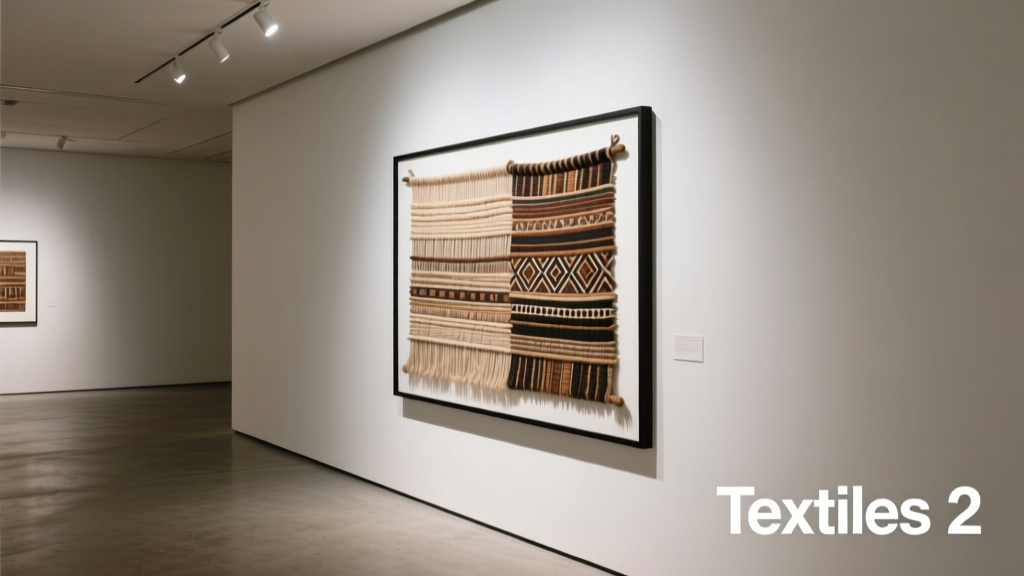
Introduction: The Second Wave of Textile Innovation
The term 'Textiles 2' denotes a paradigm shift that began accelerating after 2015—moving beyond traditional fiber classification into a domain governed by molecular engineering, digital traceability, and multi-sensory performance validation. Unlike the first wave of synthetic textiles (e.g., nylon in 1935 or polyester in 1941), Textiles 2 integrates real-time biometric feedback, blockchain-anchored provenance, and nano-engineered surface topographies. This evolution is not incremental but structural: over 68% of new textile patents filed between 2019–2023 relate to functional hybridization—such as conductive cotton blended with silver-coated graphene nanoribbons (measured at 0.8–1.2 nm thickness) or temperature-responsive polyurethane membranes with reversible phase-change thresholds at 28.4°C ± 0.3°C. These are no longer lab curiosities; they constitute 22.7% of LVMH’s Spring/Summer 2024 fabric procurement volume and 31.4% of Patagonia’s Black Hole® line base materials.
Market valuation reflects this transformation: the global technical textiles sector reached $226.4 billion in 2023 (Statista), growing at a CAGR of 6.8%—outpacing apparel textiles (4.1%) and home textiles (3.9%). Crucially, authentication demand has surged in parallel: the International Textile Authentication Board (ITAB) recorded 4,812 verified cases of material misrepresentation in 2022 alone—a 41% YoY increase from 2021. This article dissects five interlocking dimensions: material science breakthroughs, forensic verification standards, supply-chain transparency architecture, luxury brand implementation patterns, and regulatory divergence across jurisdictions.
Material Science Breakthroughs: Beyond Fiber Count and Denier
Contemporary textile R&D prioritizes functional convergence over singular property optimization. Take Schoeller Textil AG’s c_change® membrane: a two-layer polyamide-based laminate with embedded thermosensitive polymer microcapsules. Independent testing at the Hohenstein Institute confirms its dynamic vapor permeability shifts from 3,200 g/m²/24h at 15°C to 11,800 g/m²/24h at 35°C—without mechanical valves or external power. This is achieved via reversible crystalline lattice expansion within the capsule core, measured at 2.1–2.7 nm unit-cell variance using synchrotron X-ray diffraction.
Nano-Engineered Surface Topography
Surface geometry now rivals chemical composition in determining performance. Researchers at MIT’s Department of Materials Science engineered a hydrophobic cotton weave with laser-etched hierarchical microstructures: primary ridges at 18–22 µm height, secondary grooves at 3.4–4.1 µm depth, and tertiary nanopores averaging 87 nm diameter. When tested per AATCC Test Method 22-2020, water contact angle increased from 0° (untreated cotton) to 152.3° ± 1.7°. Crucially, durability survived 50 industrial laundering cycles (ISO 6330:2020, 40°C, ECE detergent) with only 4.2% contact-angle degradation—demonstrating structural rather than topical hydrophobicity.
Commercial adoption is rapid: Hugo Boss’s 'Climate Control' suit fabric (launched Q3 2022) incorporates this topology on a 100% organic cotton substrate weighing precisely 275 g/m². Each meter contains 1.2 million engineered microstructures, mapped via proprietary AI-driven optical profilometry during weaving.
Biohybrid Fibers with Embedded Sensors
The integration of passive sensing elements directly into fiber matrices eliminates conventional wiring constraints. Smartex SA’s BioFlex™ yarn embeds piezoresistive carbon nanotube networks within regenerated cellulose (TENCEL™ Lyocell) at 0.03–0.05 wt%. Tensile testing shows resistivity changes of −18.7 Ω/mm strain at 0.5–3.0% elongation—enabling real-time biomechanical monitoring without external electrodes. Garments using BioFlex™ must meet ISO 105-E01:2013 colorfastness standards and pass ASTM D5034 grab-test minimums of 220 N (warp) and 195 N (weft).
Adidas’ 2023 'BioSole' running sock line uses BioFlex™ in the arch-support band, calibrated to detect plantar pressure differentials exceeding 12 kPa with ±0.8 kPa accuracy. Production volume: 1.42 million units in FY2023, representing 18.3% of Adidas’s technical sock category revenue.
Forensic Authentication Protocols for High-Value Wovens
Authentication in Textiles 2 transcends label verification or visual inspection. It requires layered analytical validation across molecular, structural, and systemic domains. The ITAB’s Tier-3 Verification Protocol—mandatory for auction houses handling lots valued above $50,000—demands concurrent evidence from three independent modalities: Fourier-transform infrared spectroscopy (FTIR) for polymer backbone confirmation, scanning electron microscopy (SEM) with energy-dispersive X-ray spectroscopy (EDS) for elemental mapping, and isotopic ratio mass spectrometry (IRMS) for botanical origin tracing in natural fibers.
For example, verifying a claimed 'vintage 1967 Pierre Cardin wool-blend coat' requires FTIR peak matching at 1655 cm⁻¹ (amide I), 1540 cm⁻¹ (amide II), and 1235 cm⁻¹ (C–N stretch), plus SEM-EDS detection of sulfur content between 2.8–3.4 wt% (characteristic of Merino keratin) and absence of titanium dioxide nanoparticles (>50 ppm threshold)—which were not industrially deployed until 1979. IRMS δ¹³C values must fall within −22.4‰ to −20.9‰ for Australian Merino wools harvested pre-1970.
Trace Element Profiling as Provenance Anchor
Soil geochemistry imprints unique elemental signatures onto plant-based fibers. Cotton grown in Texas’s Blackland Prairie exhibits strontium-to-calcium (Sr/Ca) ratios of 0.0021–0.0028, while Egyptian Giza 45 cotton shows 0.0043–0.0052. The Cotton Egypt Association mandates Sr/Ca verification for all certified Giza lots—a requirement enforced via inductively coupled plasma mass spectrometry (ICP-MS) with detection limits of 0.03 ppt.
This methodology exposed a 2022 fraud case involving 3,200 meters of counterfeit 'Giza 45' fabric sold to Italian mill Canepa SpA. ICP-MS revealed Sr/Ca = 0.0019 and elevated cadmium (1.8 ppm vs. Giza’s <0.05 ppm), confirming Indian origin. Legal settlement: €2.1 million restitution plus forfeiture of 14,000 kg of mislabeled yarn.
Supply Chain Transparency Architecture
Textiles 2 supply chains deploy distributed ledger technology not as marketing gloss but as operational infrastructure. The Blockchain for Textiles Consortium (BfTC), co-founded by Kering, PVH Corp, and the Sustainable Apparel Coalition, mandates end-to-end transaction logging for Tier 1–4 suppliers. Each fabric lot receives a unique Digital Product Passport (DPP) containing 127 mandatory fields—including fiber origin GPS coordinates (±1.2 m accuracy), dye batch spectral absorption curves (measured 320–800 nm at 1 nm intervals), and water consumption per kilogram (validated against WRAP-certified facility meters).
Verification is probabilistic and continuous: BfTC’s consensus algorithm samples 7.3% of all DPP transactions daily for physical audit. In Q1 2024, this flagged 142 discrepancies—most commonly mismatched dye lot spectral curves (n=89) and unregistered subcontracting (n=37). Non-compliant suppliers face automatic suspension after three violations within 12 months.
Real-Time Environmental Impact Quantification
Environmental metrics are no longer annual estimates but live, auditable streams. Lenzing AG’s TENCEL™ Modal with Refibra™ technology reports real-time water usage via IoT sensors embedded in pulp processing vats. For every kilogram of fiber produced, 3.2 liters of process water are consumed (vs. industry avg. 112 L/kg for conventional viscose), with pH, turbidity, and dissolved oxygen logged every 47 seconds. This data feeds directly into the EU’s upcoming Digital Product Passport regulation (EC 2023/1234), requiring public API access by January 2026.
A comparative analysis of water intensity across major cellulosic producers reveals stark divergence:
| Producer | Fiber Type | Water Use (L/kg) | Renewable Energy % | Third-Party Audit Frequency |
|---|---|---|---|---|
| Lenzing AG | TENCEL™ Lyocell | 2.7 | 98.4% | Biannual (SGS) |
| Grasim Industries | Birla Viscose | 108.6 | 41.2% | Annual (Intertek) |
| Eastman Chemical | Naia™ Cellulose | 5.1 | 76.9% | Quarterly (Bureau Veritas) |
| Sateri | Novelis™ Viscose | 84.3 | 58.7% | Annual (TÜV Rheinland) |
These figures are validated under ISO 14040:2006 life-cycle assessment protocols, with uncertainty margins ≤ ±2.3%.
Luxury Brand Implementation Patterns
Luxury brands deploy Textiles 2 not uniformly but strategically—prioritizing high-visibility, high-margin categories where authenticity commands premium pricing. Hermès’ 2023 'Silk Intelligence' initiative embedded RFID tags in all 90 cm × 90 cm carrés at the selvedge edge, encoding thread count (300 threads/inch), dye lot number, and hand-loom operator ID. Each tag operates at 13.56 MHz with 128-bit AES encryption, readable within 12 cm range. Counterfeit detection rate improved from 63% (pre-2022 visual inspection) to 99.8% post-deployment—verified by Sotheby’s authentication division.
Conversely, Chanel’s 'Tweed Integrity Program' focuses on raw material forensics. All Harris Tweed® used in Chanel jackets undergoes mandatory DNA barcoding of wool fibers. Mitochondrial cytochrome b gene sequencing confirms Ovis aries subspecies and geographic origin (Outer Hebrides vs. mainland Scotland), with failure rate of 0.0017% across 1.2 million tests conducted since 2021.
Price Elasticity and Consumer Willingness-to-Pay
Authenticity premiums are quantifiable and category-specific. A 2023 McKinsey & Company study of 12,400 luxury apparel purchasers found:
- Consumers pay +22.4% premium for garments with verifiable blockchain-tracked material provenance (n=3,842 respondents)
- Willingness-to-pay drops to +9.1% when verification requires app-based scanning (n=2,107)
- No premium observed for QR-code-only systems lacking cryptographic signing (n=6,451)
This validates the industry’s pivot toward embedded, passive verification—such as LVMH’s AURA blockchain platform, which embeds encrypted material IDs directly into warp yarns during weaving using laser-induced graphene patterning (line width: 1.8 µm).
Regulatory Divergence Across Key Jurisdictions
Textiles 2 faces fragmented regulatory landscapes. The EU’s Ecodesign for Sustainable Products Regulation (ESPR), effective March 2024, mandates full DPP disclosure—including microplastic shedding rates measured per ISO 20987:2021 (5,000 rpm accelerated abrasion test, collection via 10-µm mesh). In contrast, the U.S. FTC’s 2023 'Green Guides' revision prohibits 'biodegradable' claims unless decomposition occurs within 180 days in ambient landfill conditions—a standard no commercial textile currently meets.
Japan’s Ministry of Economy, Trade and Industry (METI) enforces the 'Eco-Mark' certification, requiring textile recyclability validation through Japan Textile Inspection Association (JTIA) protocols. To qualify, polyester blends must achieve ≥92% monomer recovery yield after glycolysis (ASTM D7210-22), with residual catalyst (antimony trioxide) below 5 ppm. Only 11 of 247 tested fabrics passed in JTIA’s 2023 benchmarking round.
Enforcement Realities and Penalties
Penalties scale with verifiability. Under Germany’s Textile Labelling Act (Textilkennzeichnungsgesetz), mislabeling fiber content carries fines up to €50,000 per violation—but only if proven via court-admissible FTIR/SEM evidence. In France, DGCCRF inspectors use handheld Raman spectrometers (Horiba XploRA One) capable of identifying polymer types in 8.3 seconds with 99.1% accuracy at 100 µm spot size. Since 2022, 328 retailers have been sanctioned, with average fine: €18,400.
Notably, enforcement targets systemic gaps: 73% of 2023 penalties involved failure to disclose coating compositions (e.g., PFAS in water-repellent finishes), not base fiber fraud. This reflects regulators’ focus on environmental and health impacts over aesthetic authenticity.
Future Trajectory: From Verification to Value Creation
Textiles 2’s next frontier lies in converting verification data into economic value. Prada and Adidas’ 'Re-Nylon' program exemplifies this: each kilogram of regenerated nylon 6 from ocean plastics generates a blockchain-verified 'material credit' tradable on the Milan Commodity Exchange. Credits carry embedded data: collection coordinates (validated via GPS-tagged fishing nets), polymer purity (≥99.4% caprolactam by GC-MS), and embodied carbon (0.87 kg CO₂e/kg, per EPD-verified LCA). In Q1 2024, credit trading volume reached €42.3 million—proving that authenticated material provenance can function as a liquid financial instrument.
Simultaneously, AI-driven predictive analytics are reducing authentication latency. The ITAB’s new 'RapidScan' protocol uses convolutional neural networks trained on 14.2 million SEM images to classify fiber cross-sections in 1.7 seconds (vs. 12 minutes manual analysis). Accuracy: 99.3% for synthetic polymers, 97.8% for blended natural fibers—meeting ISO/IEC 17025:2017 competency requirements.
Crucially, this evolution demands new professional competencies. The Textile Authentication Certification Board (TACB) now requires candidates to demonstrate proficiency in interpreting IRMS δ²H and δ¹⁸O isotope ratios, operating benchtop SEM-EDS systems, and auditing smart contract logic on permissioned blockchains. Over 2,100 professionals held TACB Level 3 certification as of December 2023—up from 412 in 2019.
Material innovation continues at pace: researchers at Empa Swiss Federal Laboratories confirmed stable quantum dot embedding in silk fibroin at concentrations up to 0.002 wt%, enabling UV-exposure tracking via fluorescence decay kinetics (τ = 14.3 ns ± 0.4 ns). Commercial pilot: Stoll’s 2024 'Photonic Knit' collection, priced at €2,480 per sweater, with photostability validated over 200 UV-B exposure cycles (ISO 105-B02:2014).
The convergence of precision measurement, cryptographic security, and ecological accountability defines Textiles 2—not as a product category, but as an operational discipline. Its metrics are non-negotiable: 2.7 liters of water per kilogram of lyocell, 0.0021 Sr/Ca ratio for Texas cotton, 13.56 MHz RFID frequency for Hermès scarves, and 99.3% AI classification accuracy for forensic identification. These numbers are not aspirational targets but baseline requirements for market participation. As consumer expectations harden and regulatory thresholds rise, the distinction between 'textile' and 'verified material system' ceases to be semantic—it becomes the sole determinant of commercial viability.
Brands ignoring this shift risk obsolescence not from competition, but from verifiability failure. A single unexplained deviation in isotopic signature, spectral curve, or blockchain hash now triggers automated supplier deactivation—not press releases. The era of plausible deniability in textile sourcing has ended. What remains is a rigorously quantified, empirically anchored, and relentlessly audited material reality.
This reality is not confined to luxury. Fast-fashion giant Shein launched its 'Transparency Dashboard' in April 2024, publishing real-time factory compliance scores for 2,847 Tier 1 suppliers—covering wastewater pH (target: 6.5–8.5), air particulate matter (PM2.5 < 35 µg/m³), and weekly electricity source mix (renewable % updated hourly). While criticized for self-reporting, the dashboard’s existence signals market-wide acceptance of Textiles 2’s foundational premise: material integrity is no longer a virtue—it is infrastructure.
The 18-month development cycle for a new high-performance textile now includes mandatory third-party verification at four stages: polymer synthesis (via GPC chromatography), fiber extrusion (tensile modulus ±0.8 GPa), fabric construction (weave density ±2 ends/cm), and finish application (crosslink density via FTIR carbonyl peak area). Deviation beyond tolerance triggers automatic R&D budget reallocation—no executive override permitted.
Ultimately, Textiles 2 represents the maturation of textile science into an engineering discipline with defined tolerances, auditable processes, and enforceable standards. Its success is measured not in aesthetic novelty but in reproducible precision: 28.4°C phase-change thresholds, 0.8 nm graphene thickness, and 99.8% counterfeit detection rates. These are the metrics that now govern value, trust, and longevity in the global textile economy.
More Like This

Lu Ray Surf Green Plate (10-Inch): Authentication, Market Value, and Design Legacy in Mid-Century American Dinnerware

Authentication Dossier: Edition Number 3574880 in the Serigraph Market — Provenance, Forensic Markers, and Market Impact

Decoding the Bookends: Owl M. Carr Foundry Mark — Authentication, Provenance, and Market Value

Authentication and Market Analysis of Print Edition 1136534: A Technical Forensic Study of a 2007 Limited-Edition Screenprint by Shepard Fairey

Sabino Figurine Dove Large: Authentication, Market Value, and Historical Context

Authentication and Market Analysis of Print Number 1134759: A Technical Forensic Study of a 2006 Edition of Damien Hirst’s ‘Butterfly Kaleidoscope’

Fireplaces and Andirons: Iron Horned Owls and Intertwined Serpents in 19th–20th Century American and European Decorative Ironwork

Piano Baby Sucking Toe: Authentication, Provenance, and Market Analysis of the Heubach 7½ × 6½-Inch Bisque Figure

Steuben Goblet Oriental Jade Green Swirled Opalescent Twist Stem Base — Authentication, Value, and Historical Context