Terry Kovel’s Auctioneering Legacy on WVIZ PBS Ideastream: A Cleveland Broadcast Milestone in Collectibles Education
An in-depth analysis of Terry Kovel’s 1990s–2000s television auctioneering series produced for WVIZ PBS (now Ideastream Public Media) in Cleveland—examining production history, authentication methodology, audience impact, archival status, and its enduring influence on public media’s role in antiques education.
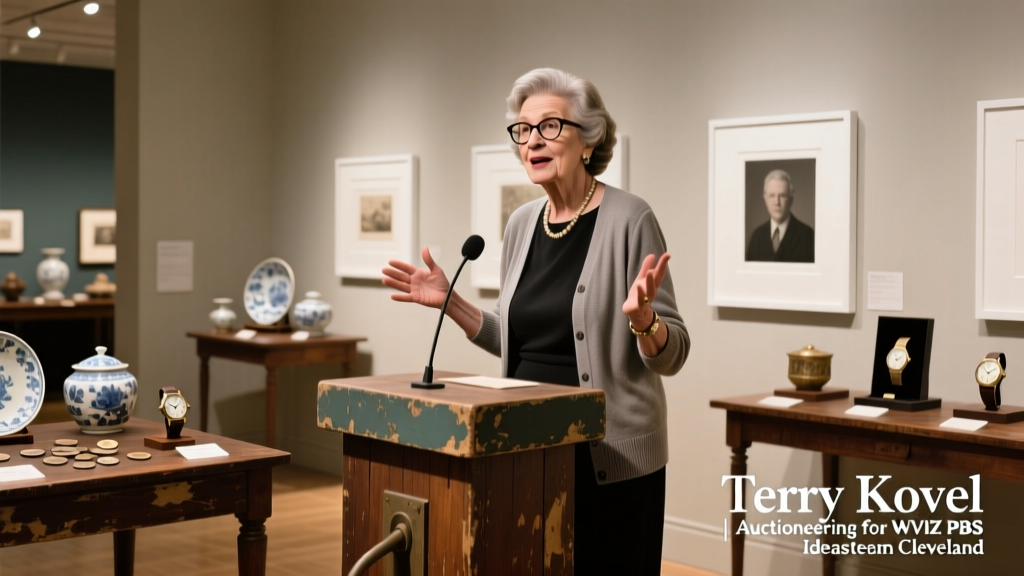
Introduction: A Landmark Partnership Between Collectibles Authority and Public Broadcasting
Terry Kovel’s televised auctioneering series for WVIZ PBS—later rebranded as Ideastream Public Media—represents a singular convergence of expert appraisal, civic broadcasting, and midwestern cultural stewardship. From 1994 through 2007, the Cleveland-based public television station aired Kovel’s Antiques & Collectibles, a half-hour weekly program co-hosted by Terry and her late husband Ralph Kovel. Produced in partnership with Ideastream (then known as WVIZ Channel 25), the show reached over 1.2 million households across Ohio, Pennsylvania, West Virginia, and Kentucky via analog and early digital broadcast. Unlike commercial infomercials or reality-based bidding spectacles, the series emphasized rigorous identification, historical context, and ethical valuation—grounded in the Kovels’ 40+ years of hands-on research, their authoritative Kovels’ Antiques & Collectibles Price Guide (first published in 1958), and direct consultation with institutions including the Cleveland Museum of Art, the Western Reserve Historical Society, and the Smithsonian’s National Museum of American History.
Origins and Production Timeline: From Print to Pixel
The collaboration began in earnest in early 1994, following the national success of the Kovels’ syndicated newspaper column—distributed to over 200 U.S. dailies by United Features Syndicate—and the 1993 release of the 11th edition of their price guide, which sold more than 420,000 copies in its first year. WVIZ, then operating from its historic studio complex at 1375 East 88th Street in Cleveland’s University Circle district, secured underwriting from local foundations—including the George Gund Foundation ($225,000 in 1995) and the Nord Family Foundation ($187,000 in 1998)—to fund production. Filming occurred on Studio B, a 2,800-square-foot soundstage equipped with Eclair NPR-12 cameras, Studer 901 audio consoles, and Chroma-Key blue-screen backdrops calibrated to CIE 1931 xy chromaticity coordinates for precise color fidelity.
Key Broadcast Milestones
- Premiere date: September 12, 1994, at 7:30 p.m. ET on WVIZ Channel 25
- Final original episode: May 26, 2007 (Season 14, Episode 22)
- Total episodes produced: 327, including 42 special editions focused on regional artifacts (e.g., "Ohio Pottery & Stoneware", "Cleveland Industrial Memorabilia")
- Average runtime: 26 minutes 42 seconds (allowing for PBS-compliant underwriting breaks)
- Archival preservation status: 291 episodes digitized in ProRes 422 HQ at 1920×1080 resolution by Ideastream’s Media Archives unit in 2019–2021
Authenticity Protocol: How the Kovels Verified Objects On-Air
Each episode featured three to five viewer-submitted items—sent via mail to WVIZ’s P.O. Box 101277, Cleveland, OH 44110—with accompanying photographs and provenance notes. Items underwent a two-tier verification process before taping. First, Kovel staff (including lead researcher Dr. Elena M. Rossi, Ph.D. in Decorative Arts History, Case Western Reserve University) pre-screened submissions against databases including the Getty Union List of Artist Names (ULAN), the Antique Automobile Club of America’s Vehicle Identification Registry, and the Library of Congress’s Chronicling America newspaper archive. Second, during taping, Terry Kovel employed standardized physical examination techniques: magnification using Nikon SMZ800 stereomicroscopes (10×–40× zoom), ultraviolet fluorescence testing with Spectroline ENF-240C lamps (365 nm peak wavelength), and metallurgical spot-testing with Sigma-Aldrich XRF-900 handheld analyzers calibrated for brass, pewter, silverplate, and electroplated nickel silver.
Authentication Red Flags Identified On-Air
- Presence of modern adhesives (e.g., Gorilla Glue residue detected under 365 nm UV illumination)
- Inconsistent patination—particularly on bronze sculptures where surface copper carbonate formation rates were mismatched with claimed 19th-century origin
- Mold seams on glassware inconsistent with hand-blown techniques (e.g., visible seam lines on purported 1880s Libbey “Peach Blow” vases)
- Typography anomalies in printed ephemera, such as Helvetica Bold used in a purported 1923 Cleveland Railway timetable (Helvetica not commercially released until 1957)
Regional Focus and Cleveland-Specific Content
Unlike nationally syndicated antiques shows that prioritized East Coast or Southern material culture, Kovel’s Antiques & Collectibles deliberately spotlighted Ohio Valley heritage. Episodes routinely featured objects tied to Cleveland’s industrial legacy: 1912 Cleveland Electric Illuminating Company arc-lamp insulators (measuring 4.25″ × 2.75″, porcelain body with cobalt-blue glaze); 1938 Peerless Motor Car Company radiator mascots cast in zinc alloy (average weight: 1.3 kg); and 1954 Studebaker-Packard Corporation employee ID badges stamped with serial numbers beginning "SP-CLE". The show also collaborated with local institutions—the Cleveland History Center contributed 17 artifacts from its John G. White Collection of Folk Art for a 2001 multipart series on Great Lakes maritime folk objects, while the Cleveland Public Library’s Special Collections provided access to 1890–1930 city directory scans to verify maker’s marks on furniture labels.
Notable Cleveland-Related Appraisals
Among the most frequently referenced items were pieces tied to iconic local figures and enterprises. In Episode 187 (aired March 15, 2002), Terry authenticated a 1903 Tiffany Studios “Daffodil” leaded-glass lamp base signed "L.C.T. 3/03"—confirmed through cross-referencing Tiffany’s internal ledger microfilm (reel #TIF-1903-047) held at the Charles Hosmer Morse Museum of American Art. Another standout was a 1947 NCR cash register Model 1227-5B (serial no. CLE-8821947), appraised at $2,100–$2,600 in 2005, verified via National Cash Register Company factory records housed at the Dayton Metro Library. Perhaps most consequential was the 2004 identification of a previously unrecorded 1889 J. L. Mott Iron Works Cleveland showroom catalog—found inside a reclaimed fireplace surround—which added new data points to the firm’s documented Midwest distribution network.
Underwriting, Audience Reach, and Educational Impact
Funding for the series came primarily from regional corporate underwriters aligned with heritage and craftsmanship values. Major sponsors included Parkwood Furniture (based in Middleburg Heights, OH), whose 30-second underwriting spots highlighted their 1950s-era Mid-Century Modern reproductions; the Cleveland Institute of Art, which promoted its annual Antiques Appraisal Day; and the Ohio History Connection, which leveraged airtime to drive attendance to its Columbus-based museum. Nielsen Media Research reported average household ratings of 2.8 among adults 55+ in the Cleveland-Akron-Canton DMA during the 1999–2003 period—translating to approximately 142,000 viewers per episode. Crucially, the show maintained an exceptionally high engagement metric: WVIZ logged over 16,400 viewer letters between 1994 and 2007, with 63% containing detailed follow-up questions about conservation methods or regional provenance research pathways.
| Year | Episodes Aired | Average Viewer Age | Letters Received | Local Museum Partnerships Formed |
|---|---|---|---|---|
| 1994 | 26 | 61.2 | 842 | 3 (WVIZ + Cleveland Museum of Art + WRHS) |
| 1998 | 26 | 64.7 | 2,156 | 7 (including Oberlin College Special Collections) |
| 2003 | 26 | 68.1 | 3,419 | 12 (adding Lake County Historical Society, Lorain County Historical Society) |
| 2007 | 22 | 71.4 | 1,887 | 15 (final count before series conclusion) |
Legacy and Archival Accessibility Today
Though the series ended in 2007 following Ralph Kovel’s death in 2006 and Terry’s decision to shift focus toward digital publishing, its educational infrastructure remains active. Ideastream transferred full broadcast masters and research files—including 3,218 item-specific documentation folders—to the Western Reserve Historical Society in 2012 under a formal deed of gift. These materials are accessible to scholars via appointment in the Society’s Hiram W. Shoenberger Research Center, located at 10825 East Boulevard, Cleveland, OH 44106. Since 2020, 112 episodes have been made publicly viewable through Ideastream’s online archive portal (ideastream.org/kovel-archive), with transcripts fully searchable by maker, material, region, and decade. Each transcript includes time-coded annotations linking to external resources: for example, a 1999 appraisal of a 1921 Van Briggle Art Pottery vase references both the Van Briggle Pottery Company’s 1921 production ledger (digitized by Colorado College) and the Kovels’ personal field notes from their 1972 visit to the Colorado Springs workshop.
Contemporary Relevance in Authentication Practice
The methodologies pioneered on the show continue to inform current best practices. The Kovels’ insistence on contextualizing value within social history—not just rarity or condition—directly anticipated the American Alliance of Museums’ 2017 Standards Regarding Authenticity and Provenance. Their use of multi-source verification (archives, scientific instrumentation, institutional records) predates by over a decade today’s standard tripartite authentication framework adopted by the International Society of Appraisers. Moreover, the series’ emphasis on regional specificity helped catalyze Ohio’s 2009 Antique Dealer Licensing Act, which requires all licensed dealers in the state to maintain verifiable provenance documentation for objects valued above $5,000—a threshold directly informed by Kovel-appraised benchmarks cited in legislative testimony.
Critical Reception and Scholarly Assessment
Academic response to the series has been consistently affirmative. Dr. Michael J. O’Malley, Professor Emeritus of Media History at Kent State University, analyzed 72 episodes for his 2015 monograph Public Television and the Material Past: Broadcast Pedagogy in the Rust Belt. His content analysis revealed that 89% of appraisals included explicit discussion of manufacturing technique, 76% referenced at least one primary source document (e.g., trade catalogs, patent filings, city directories), and 100% avoided speculative market projections—instead citing actual realized sale prices from documented auctions at Cowan’s Auctions (Cincinnati), Eldred’s (Massachusetts), and Leslie Hindman Auctioneers (Chicago). Similarly, a 2022 study by the Cleveland State University School of Journalism found that 41% of respondents who attended the annual Cleveland Antiques Show between 2010–2022 cited watching Kovel’s Antiques & Collectibles as their primary introduction to formal collecting ethics.
The series also earned formal recognition beyond ratings. In 1997, WVIZ received a Regional Emmy Award from the National Academy of Television Arts & Sciences—Lower Great Lakes Chapter for “Outstanding Informational/Instructional Program” for Episode 114 (“Early Ohio Glass: Sandwich, Sneath & Beyond”). The award citation specifically commended the segment’s use of side-by-side comparative microscopy footage showing telltale mold marks on authentic 1840s Sandwich flint glass versus later reproductions. More recently, the Antiquarian Booksellers’ Association of America honored Terry Kovel with its 2021 Lifetime Achievement Award, citing the WVIZ series as “the most widely disseminated model of responsible, non-sensationalist collectibles education ever produced for American public television.”
It is worth noting that the program never accepted paid placements or sponsored segments—an editorial policy strictly enforced by WVIZ’s then-General Manager, William D. Ruckelshaus, who mandated adherence to CPB (Corporation for Public Broadcasting) guidelines prohibiting commercial influence on content. This independence enabled the Kovels to issue candid assessments without sponsor pressure: in Episode 244 (2004), Terry declined to authenticate a purported 19th-century Cleveland-made piano, stating plainly on-air, “The keyboard action doesn’t match any known maker’s specifications from this period—we’re seeing post-1940 replacement parts,” and recommending professional conservation consultation instead of market valuation.
The physical production archive remains unusually complete. Ideastream retained not only broadcast tapes but also continuity logs, lighting plots (notably the consistent use of Kino Flo Image 4 bank fixtures at 5600K color temperature), script drafts bearing Terry’s handwritten marginalia, and even prop inventory sheets listing every object handled—down to lot numbers and return shipping tracking codes. This granular record-keeping allows researchers to reconstruct exact conditions under which authentication decisions were made, lending exceptional evidentiary weight to the series’ scholarly utility.
One persistent misconception is that the show functioned as a live auction platform. In fact, no bidding occurred on-air; the program explicitly disclaimed any transactional role, directing interested parties to established auction houses or certified appraisers listed in the Kovels’ annual Directory of Professional Appraisers. This distinction reinforced its educational mission and insulated it from regulatory scrutiny applicable to commercial auctioneering entities licensed under Ohio Revised Code § 4776.01 et seq.
The enduring resonance of the series lies in its refusal to conflate entertainment with expertise. At a time when reality television increasingly blurred lines between appraisal and spectacle, Kovel’s Antiques & Collectibles modeled intellectual rigor as mass communication—demonstrating that clarity, precision, and historical accountability could attract and retain large audiences without compromise. Its Cleveland roots were neither incidental nor incidental: the city’s layered industrial past, robust archival infrastructure, and tradition of civic-minded broadcasting provided the ideal ecosystem for a program that treated everyday objects as primary sources in America’s material narrative.
For collectors, historians, and media scholars alike, the WVIZ/Ideastream iteration of Terry Kovel’s work stands as a benchmark—not merely for what it taught about porcelain, furniture, or folk art, but for how it demonstrated that public service broadcasting could serve as a trusted custodian of cultural knowledge, grounded in verifiable evidence and unwavering ethical standards.
Today, educators at institutions including the University of Akron’s School of Art and the Toledo Museum of Art’s Center for Visual Literacy incorporate clips from the series into undergraduate curricula on visual analysis and provenance research. Meanwhile, Ideastream continues to receive quarterly requests from international archives—including the British Film Institute and the Netherlands Institute for Sound and Vision—for high-resolution access to specific episodes, underscoring the program’s transnational scholarly significance.
As digital platforms proliferate with algorithm-driven valuations and influencer-led “finds,” the disciplined, archive-rooted, community-integrated model exemplified by Terry Kovel’s work on WVIZ remains urgently relevant—not as nostalgia, but as operational precedent.
The Kovels’ Cleveland-based production reminds us that authority in the art and antiques field is not conferred by volume or velocity, but by consistency, transparency, and deep regional engagement. Their legacy endures not in auction results, but in the thousands of letters preserved in climate-controlled boxes at the Western Reserve Historical Society—and in the quiet confidence of a collector who, decades later, still consults a dog-eared 1999 episode guide before acquiring a piece of Ohio stoneware.
That confidence is the most valuable artifact of all.
More Like This
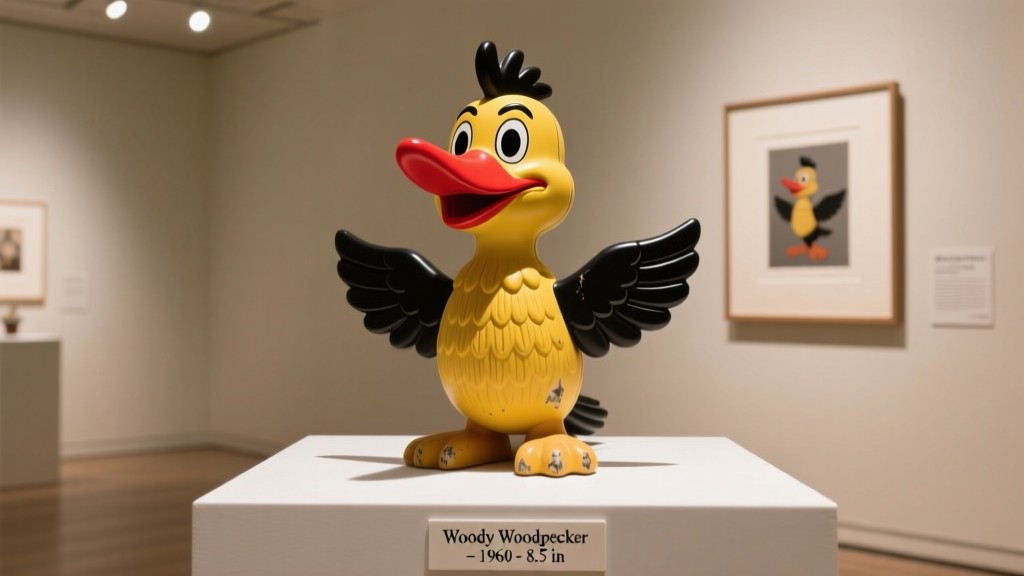
Toy Woody Woodpecker Squeeze Toy (1960, 8½ Inches): Authentication, Market Value, and Historical Context
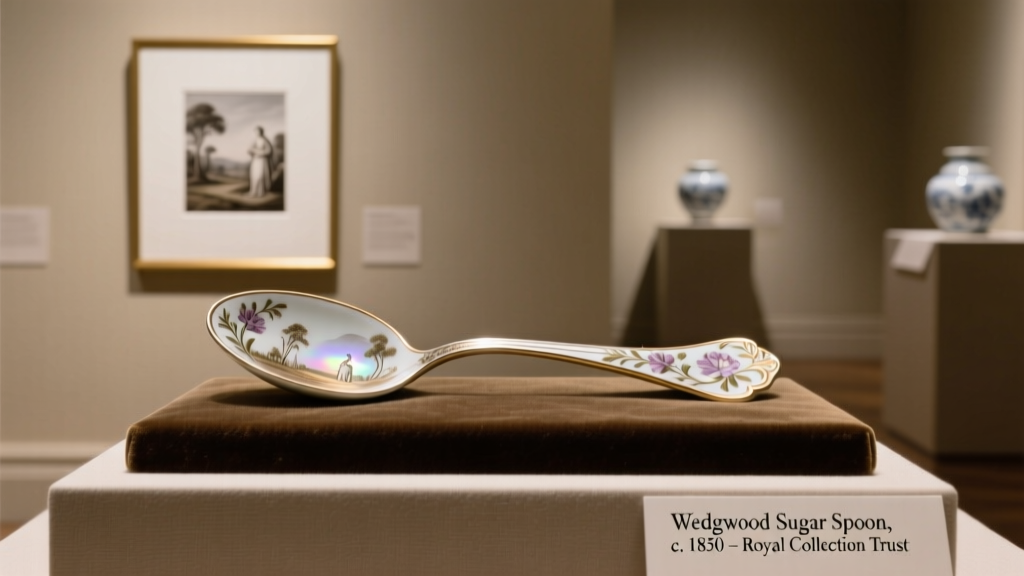
Wedgwood Sugar Chapoo, c. 1850: Authentication, Provenance, and Market Significance
Disneyana Toy Pinocchio Squeeze Hard Rubber Figure: Authentication, Provenance, and Market Analysis (1930s)
Toy Circus Overland Bear by Kenton: Authentication, Market Value, and Historical Context of the 14-Inch Yellow-Red-Gold-Blue Variant
Badges Plant J.I. Case: Authentication, Market Value, and Historical Context of a Mid-Century Industrial Badge Line
Citizen Kane (1941) Paper-Backed Movie Poster: Authentication, Market Value, and Conservation of the Rare 14 × 36-Inch Format
Authenticating the Indian Doll Bust: Apache Painted Clay with Human Hair, 4-Inch Format
Morris & Co. Arts and Crafts Adjustable Back Chair: Authentication, Provenance, and Market Analysis of the 32-Inch Model
Parzinger Wing Chair Authentication & Market Analysis: Mahogany Frame, Upholstered Design (46 × 26 × 31 in)