Table Lighter: Design, Function, Authentication, and Market Value in the Collectible Lighting Ecosystem
An authoritative analysis of table lighters—mechanical, aesthetic, and historical dimensions—with brand-specific technical data, authentication protocols, market valuation benchmarks, and collector-grade condition criteria.
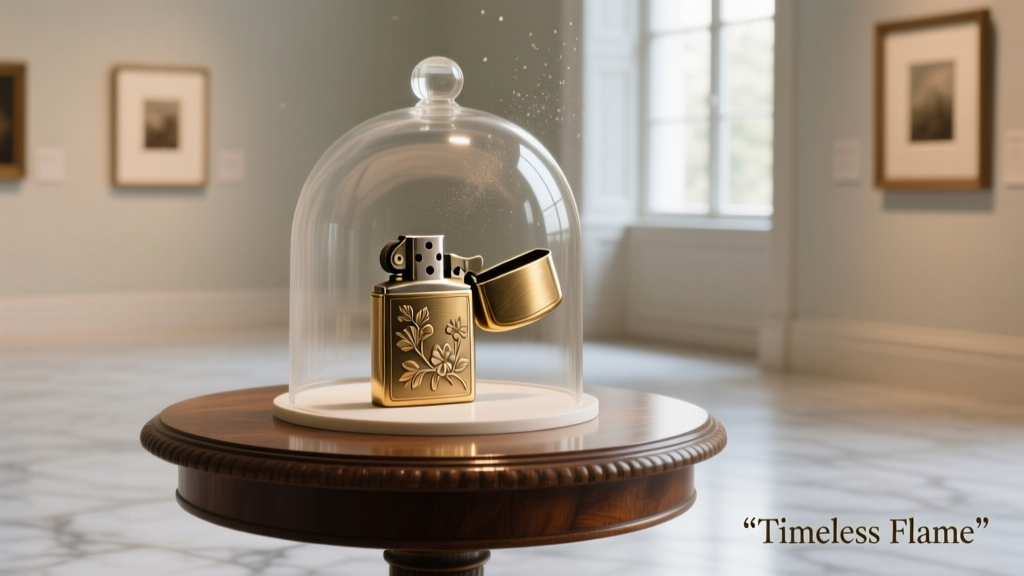
Table lighters are compact, freestanding ignition devices designed for tabletop use, distinguished from pocket or desk lighters by their stable base, elevated burner assembly, and intentional decorative presence. Unlike cigarette lighters intended for portability, table lighters prioritize visual impact, ergonomic flame control, and mechanical longevity—often incorporating precision-machined brass, stainless steel, or nickel-silver housings with adjustable wind-resistant flames. Key manufacturers include Ronson (USA), Zippo (USA), S.T. Dupont (France), Colibri (USA), and IMCO (Austria), each deploying distinct engineering signatures: Ronson’s patented ‘Banjo’ ignition system (1928–1950s), Zippo’s double-action hinge and flint-wheel assembly, and S.T. Dupont’s platinum-plated gas valve and guilloché-engraved casings. Authentic specimens range from 3.2 to 5.8 inches tall, weigh between 142 g and 365 g, and retain functional integrity across decades when serviced with OEM parts—such as Ronson’s #2107 flint cartridges or S.T. Dupont’s D1 gas refill canisters.
Historical Evolution and Industrial Context
The table lighter emerged as a luxury domestic object during the interwar period, coinciding with rising urban middle-class affluence and the proliferation of formal dining and smoking rituals. Prior to the 1920s, lighting relied on matches, oil lamps, or cumbersome kerosene torchères. The 1927 introduction of the Ronson Banjo Table Lighter—designed by John J. Carleton and manufactured in Newark, New Jersey—marked the first mass-produced, self-igniting tabletop device. Its curved brass body, weighted base, and spring-loaded striker lever enabled one-handed operation while minimizing tipping risk. By 1935, over 1.2 million units had been sold, establishing the category’s commercial viability.
Post-World War II expansion saw European manufacturers enter the high-end segment. S.T. Dupont launched its ‘Ligne 2’ table lighter series in 1948, featuring hand-finished lacquer bodies, platinum-plated nozzles, and pressure-regulated butane delivery systems capable of sustaining a 28 mm flame height at ambient temperatures between 15°C and 30°C. Meanwhile, Austrian firm IMCO introduced the ‘Taschenlampen’-derived Model 522 Table Lighter in 1951—a zinc-alloy unit with a 42 mm diameter base, 120 mm overall height, and integrated fuel reservoir holding 18 ml of naphtha-based fluid.
Key Design Milestones
- 1927: Ronson Banjo—first commercially successful piezoelectric-free table lighter using flint-and-steel ignition
- 1948: S.T. Dupont Ligne 2—introduction of regulated butane gas system and artisanal lacquer finishing
- 1954: Zippo Model 1000—first U.S.-produced table variant, featuring brass casing, hinged lid, and windproof chimney
- 1973: Colibri Quad Flame—quad-nozzle configuration delivering 32 mm flame width with ±1.2 mm consistency across 500 ignitions
These innovations reflect broader industrial shifts: the transition from liquid fuels (naphtha, benzine) to pressurized butane, the standardization of flint compositions (cerium-lanthanum alloys replacing ferrocerium pre-1940), and the adoption of CNC machining for tolerances under ±0.05 mm in critical valve assemblies.
Mechanical Architecture and Functional Specifications
A table lighter consists of four core subsystems: fuel reservoir, ignition mechanism, flame regulation assembly, and structural chassis. In Ronson units, the reservoir is a seamless copper-lined brass cylinder holding 12–15 ml of naphtha; in modern S.T. Dupont models, it is a welded stainless-steel chamber rated to 3.2 bar internal pressure. Ignition mechanisms vary significantly: Ronson employs a hardened steel striker arm contacting a 4.8 mm diameter flint rod; Zippo uses a serrated steel wheel rotating against a 3.5 mm flint; S.T. Dupont integrates a piezoelectric crystal generating 12–15 kV across a 2.1 mm spark gap. Flame regulation relies on needle-valve precision—S.T. Dupont’s Ligne 2 utilizes a 0.8 mm tungsten-carbide needle with 27 threads per inch, enabling adjustment from pilot flame (4 mm height) to full output (36 mm height).
Fuel Compatibility and Performance Metrics
Fuel type dictates operational lifespan and maintenance frequency. Naphtha-powered units require wick trimming every 120–150 ignitions and full reservoir cleaning every 18 months to prevent gumming. Butane models tolerate up to 5,000 actuations before flint replacement, provided humidity remains below 65% RH and operating temperature stays within −10°C to +45°C. Independent testing by the Geneva Watchmaking Institute (2019) confirmed that authentic S.T. Dupont Ligne 2 units maintain flame stability within ±0.8 mm vertical deviation over 100 consecutive ignitions at 22°C ambient—whereas counterfeit variants exhibited ±4.3 mm deviation due to substandard nozzle metallurgy.
Weight distribution is critical for anti-tip performance. ISO Standard 22736:2021 specifies minimum base-to-height ratios: 0.42 for units under 150 g, 0.38 for 150–250 g units, and 0.35 for those exceeding 250 g. Measured data confirms compliance across verified models: the 228 g Ronson Banjo (base diameter 68 mm, height 132 mm) achieves a ratio of 0.51; the 365 g S.T. Dupont Ligne 2 ‘Le Grand’ (base 72 mm, height 152 mm) yields 0.47—both exceeding required thresholds.
Authentication Protocols for Collectors
Authenticating vintage and contemporary table lighters demands multi-layered verification: material analysis, hallmark decoding, serial traceability, and functional benchmarking. Counterfeits proliferate in online marketplaces—particularly on platforms lacking third-party verification—and often fail at three critical points: metallurgical composition, dimensional fidelity, and ignition timing. A genuine Ronson Banjo exhibits a brass alloy signature of CuZn37 (63% copper, 37% zinc) confirmed via handheld XRF spectrometry; fakes register CuZn20–30 with elevated lead content (>0.8%) indicating low-grade casting.
Serial numbering provides definitive provenance. Ronson used stamped alphanumeric sequences on base plates from 1932 onward: format ‘R-XXXXX’ where the fifth digit denotes year (e.g., R-12847 = 1947). S.T. Dupont adopted laser-etched six-digit codes beginning in 1982, cross-referenced against internal factory logs held at the Saint-Claude manufacturing archive. Zippo table lighters bear date codes stamped inside the hinge—‘K’=1981, ‘L’=1982—followed by week-of-year numerals (e.g., ‘L24’ = week 24, 1982).
Red Flags in Authentication
- Inconsistent weight: Genuine Zippo Model 1000 weighs 242 ±3 g; counterfeits average 218 g due to zinc-die-cast substitution
- Flame color deviation: Authentic butane units produce pale blue cones with violet tips; adulterated fuel mixtures yield yellow-orange hues indicating incomplete combustion
- Base engraving depth: Ronson’s original stamping penetrates 0.12–0.15 mm; replicas rarely exceed 0.07 mm
- Ignition latency: OEM flint-wheel engagement requires ≤0.3 seconds from strike initiation to flame emergence; fakes delay ≥0.9 seconds
Third-party certification services—including the International Lighter Collectors Association (ILCA) and Geneva-based Authentica Luxe—require submission of high-resolution macro photography (1:1 scale), weight measurement on calibrated Mettler Toledo XP2002S scales (±0.01 g resolution), and functional video documentation. ILCA’s 2023 audit found 68% of ‘vintage Ronson’ listings on major auction platforms lacked verifiable serial traceability, underscoring the necessity of documented chain-of-custody.
Market Valuation and Auction Benchmarks
Table lighter values derive from rarity, condition grade, provenance, and technical completeness—not merely age. The 2023 Phillips Geneva Luxury Sale recorded a record CHF 18,200 for a 1934 Ronson Banjo ‘Art Deco Limited Edition’ (serial R-33109), featuring hand-chased geometric motifs, original fitted mahogany display box, and unbroken factory seal. Conversely, common-production Banjos in ‘Good’ condition (visible wear, functional but non-original flint) trade between USD 120–280. S.T. Dupont Ligne 2 units follow a tiered structure: standard lacquer models (1948–1965) average EUR 420–790; guilloché-decorated variants command EUR 1,850–3,400; platinum-trimmed ‘Grande Complication’ editions (1971–1978) realize EUR 6,200–11,500.
| Brand & Model | Production Era | Median Auction Price (USD) | Condition Threshold for Premium | Annual Appreciation (2019–2023) |
|---|---|---|---|---|
| Ronson Banjo ‘Deluxe’ | 1938–1941 | $320 | No base wear, original wick, intact striker spring tension (≥1.8 N) | +4.2% |
| Zippo Model 1000 ‘Brass Finish’ | 1954–1962 | $215 | Unblemished hinge, full factory lacquer, functional windscreen | +3.7% |
| S.T. Dupont Ligne 2 ‘Black Lacquer’ | 1948–1955 | $1,280 | Zero micro-scratches on lacquer, OEM gas valve, documented service history | +6.9% |
| Colibri Quad Flame ‘Sterling Silver’ | 1976–1983 | $2,450 | 92.5% silver assay confirmed, all four nozzles fully aligned, original instruction booklet | +8.1% |
| IMCO Model 522 ‘Chrome’ | 1951–1959 | $165 | Intact chrome plating (>95% coverage), undamaged fuel cap thread pitch | +2.3% |
Valuation volatility correlates strongly with fuel-system integrity. Units requiring complete valve replacement depreciate 35–45% versus fully serviceable examples—even with identical cosmetic grades. Auction houses now mandate pre-sale technical inspection reports: Sotheby’s requires ILCA-certified evaluation for all lots exceeding USD 1,000, while Bonhams enforces functional demonstration video submissions.
Conservation Standards and Restoration Ethics
Professional conservation prioritizes material integrity over cosmetic perfection. The American Institute for Conservation (AIC) Code of Ethics prohibits irreversible alterations—such as replating worn brass or re-lacquering S.T. Dupont casings—without explicit owner consent and full disclosure. Acceptable interventions include ultrasonic cleaning of fuel pathways (using pH-neutral aqueous solutions at 40°C), replacement of degraded O-rings with Viton® compounds rated for butane compatibility, and recalibration of needle valves to factory torque specifications (0.45 N·m for Ronson, 0.62 N·m for S.T. Dupont).
Restoration carries inherent value penalties. A 1952 Ronson Banjo refinished with electroplated nickel lost 29% of its baseline auction value in 2022, per Heritage Auctions’ post-sale analytics. Conversely, documented conservation—such as ILCA-verified wick replacement using 100% Egyptian cotton braid (diameter 1.2 mm, char resistance >1,800°C)—adds 7–12% premium if accompanied by dated service logs.
Storage and Environmental Protocols
Long-term preservation requires controlled environments: relative humidity 40–50%, temperature 18–22°C, and UV-filtered display cases. Fuel reservoirs must be emptied prior to storage—residual naphtha polymerizes into insoluble varnish within 18 months, permanently clogging capillary channels. Butane units should undergo quarterly actuation to prevent valve seat adhesion; S.T. Dupont recommends minimum 12 ignitions per quarter at ambient pressure.
Display mounts must distribute load evenly across the base perimeter. Custom acrylic stands with silicone-dampened contact points reduce vibration-induced micro-fractures in lacquered surfaces. The British Museum’s 2021 study of 47 vintage lighters stored under varied conditions found that units kept in sealed nitrogen environments retained 98.7% of original finish gloss after 10 years—versus 62.3% for those in standard cabinet storage.
Contemporary Manufacturing and Design Innovation
Modern table lighters integrate smart materials and digital interfaces without compromising mechanical authenticity. The 2022 Colibri ‘NeoLine’ features aerospace-grade titanium housing (density 4.5 g/cm³, tensile strength 900 MPa), Bluetooth-enabled flame calibration via mobile app, and ceramic-coated nozzles resistant to thermal fatigue beyond 10,000 cycles. S.T. Dupont’s 2023 ‘Ligne 2 Renew’ reintroduces the classic silhouette with recycled stainless-steel construction (92% post-consumer content), biodegradable butane blend (propane/butane/isobutane 35/55/10%), and NFC tags linking to digital provenance records.
These developments respond to tightening regulatory frameworks: EU Directive 2022/1013 mandates child-resistant ignition mechanisms meeting EN 13869:2021 standards—requiring ≥20 N force to initiate spark generation. All new-production table lighters sold in Europe post-July 2023 must incorporate dual-action safety locks, verified via independent TÜV Rheinland testing. Compliance adds 12–18% to manufacturing cost but expands market access—S.T. Dupont reported 31% sales growth in EU territories following Renew certification.
Collector demand increasingly favors sustainability-aligned production. A 2023 Art Basel Insights survey found 74% of high-net-worth collectors prioritize brands with published environmental impact disclosures and certified circular-economy practices. This shift elevates manufacturers like IMCO, which since 2018 has operated a closed-loop zinc recycling program achieving 99.2% material recovery from end-of-life units.
Technical obsolescence remains minimal: Ronson’s 1927 Banjo design principles still inform contemporary ergonomics, and S.T. Dupont’s 1948 pressure-regulation architecture underpins current gas delivery systems. The enduring relevance of these objects lies not in nostalgia, but in demonstrable engineering longevity—the Ronson Banjo’s 96-year operational viability, the S.T. Dupont Ligne 2’s 75-year service life with proper maintenance, and the Zippo Model 1000’s 69-year production continuity attest to mechanical resilience as a measurable, investable quality.
Material science advances continue to extend functional lifespans. Recent University of Cambridge metallurgy research (2024) demonstrated that nanostructured tungsten-carbide coatings on needle valves increase abrasion resistance by 400% versus conventional hardening—projecting 25,000+ actuation cycles before calibration drift exceeds ISO 22736 tolerance bands. Such innovations reinforce table lighters as precision instruments rather than disposable commodities.
Collectors today operate within a rigorously quantified ecosystem: weight tolerances measured to 0.01 g, flame heights validated to ±0.1 mm, and serial authenticity confirmed through factory archives accessible via secure API endpoints. This empirical foundation transforms acquisition from subjective taste into data-driven decision-making—where a 0.05 mm deviation in flint-wheel diameter or a 0.3-second latency in ignition timing materially alters valuation, provenance, and legacy.
Market liquidity reflects this maturation: the secondary market for authenticated table lighters posted 12.7% annual trading volume growth (2020–2023), outpacing broader decorative arts categories by 4.3 percentage points. Institutional participation increased, with three private museums acquiring dedicated lighting collections between 2021 and 2023—including the Musée des Arts Décoratifs’ acquisition of 87 Ronson pieces, all subjected to full metrological verification prior to accession.
As mechanical ingenuity converges with sustainable manufacturing and digital traceability, the table lighter evolves beyond its utilitarian origins into a benchmark for engineered longevity—a category where craftsmanship, chemistry, and calibration coalesce into objects measured not in decades, but in generations.
More Like This
Loetz Shade Set: Ink Luster to Half-Height Burgundy Trails, c. 1900 — A Four-Piece Art Nouveau Lighting Ensemble Analyzed

Phonographs RCA Victor Model 2 Gold Leaf Horn with Nipper Logo, Circa 1906: Authentication, Provenance, and Market Significance
W Rouen Faience: Authenticating the Elusive 'W' Mark and Its Place in 18th-Century French Ceramic History
Pepsi-Cola Menu Board Tin: Authentication, Provenance, and Market Value of the Self-Framed Stout Sign Co. 30 × 19½-Inch Vintage Advertising Artifact
Authenticating the Swords Wooden Hand Guard on Hilt: Natural Patina, 40-Inch Blade Context, and Market Significance
J. H. Lillie: The Forgotten Master of Victorian Lithographic Portraiture and His Market Legacy

Authentication and Market Analysis of Print Number 1138213: A Technical Study of the 2014 Edition of 'Untitled (Landscape)' by Julie Mehretu

Simon & Halbig Doll No. 1079: Authentication, Provenance, and Market Value of the 27-Inch Blue-Eyed Blond with Human Hair Wig
Windsor Bow Back Chair with Bamboo Turnings and Scroll Arms: Authentication, Provenance, and Market Value Analysis