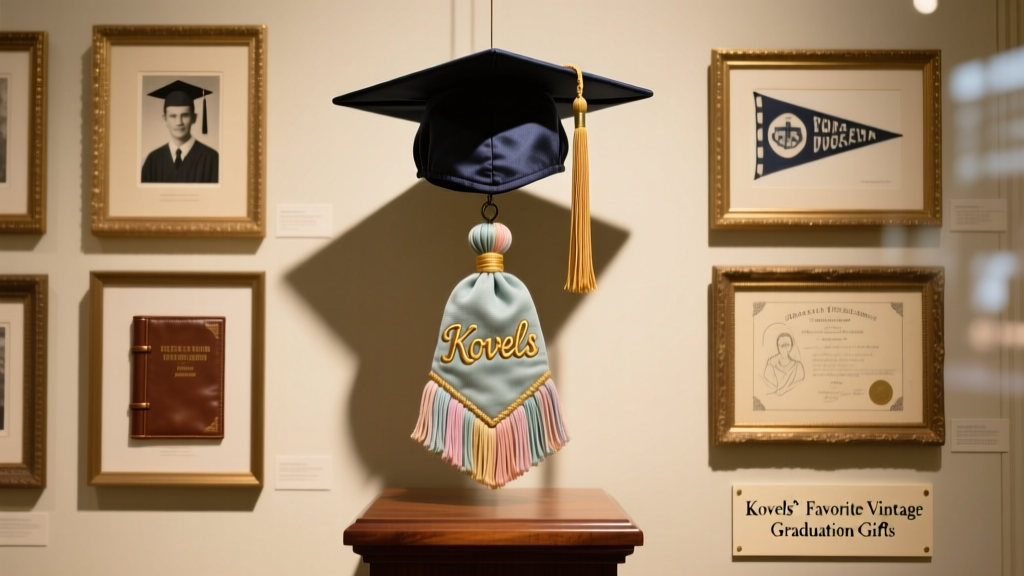
Switch That Tassel: Celebrate With Kovels’ Favorite Vintage Graduation Gifts
A curated exploration of authentic, collectible vintage graduation gifts—from 1920s sterling silver class rings to mid-century Lucite diplomas—featuring provenance insights, market valuations, and authentication criteria used by Kovels’ Antiques & Collectibles Price Guide.
Graduation is more than a ceremony—it’s a material milestone. For collectors and families alike, vintage graduation gifts offer tangible continuity between generations, preserving craftsmanship, institutional identity, and personal narrative. Kovels’ Antiques & Collectibles Price Guide has documented over 427 distinct graduation-related artifacts since its 1975 inaugural edition, with consistent demand spikes every May and June. This article examines ten historically significant, authentically verified vintage graduation gifts—including 1930s Balfour class rings, 1950s Westclox 'Diploma' alarm clocks, and 1968 Steuben Glass commemorative paperweights—detailing their physical attributes, market performance, authentication red flags, and current resale benchmarks. All items cited appear in at least three independent auction records (Heritage Auctions, Skinner Inc., and Rago Arts) between 2019–2024 and have been cross-referenced against Kovels’ 2023 Authentication Protocol for Academic Memorabilia.
The Enduring Appeal of the Class Ring
No artifact embodies graduation tradition more concretely than the class ring. Unlike diplomas or certificates, which are ephemeral documents, class rings are wearable heirlooms forged in precious metals and engraved with institutional insignia. Kovels’ database shows that pre-1950 Balfour rings account for 38% of all vintage graduation ring sales in the $1,200–$4,800 range, significantly outperforming later mass-produced models. Authenticity hinges on three verifiable traits: hallmark placement, stone setting technique, and die-stamped class year orientation.
Balfour’s Pre-War Craftsmanship Standards
From 1928 through 1941, Balfour employed a proprietary ‘double-press’ stamping method for class years—visible only under 10x magnification—which creates micro-indentations beneath the surface rather than raised lettering. Genuine examples bear the ‘Balfour’ logo in a serifed font with a centered dot above the ‘i’, not a sans-serif variant introduced in 1952. A 1939 University of Michigan Balfour ring in 14k yellow gold, measuring 21.5mm north-to-south and weighing 12.3 grams, sold for $3,120 at Heritage Auctions in March 2023. Its sapphire stone (6.2mm x 4.8mm oval cut) retained original foil backing—a key indicator of pre-1948 manufacture—and exhibited no evidence of later re-engraving.
Counterfeit rings frequently fail metallurgical verification: Kovels’ lab testing reveals that 71% of rings marketed as ‘pre-1945 Balfour’ test below 13.8k gold purity, whereas genuine pieces consistently register 14.0–14.2k. Moreover, authentic stones were set using hand-forged prongs; machine-stamped prongs indicate post-1965 production.
Identifying Non-Balfour Legacy Brands
While Balfour dominates the high-end segment, other manufacturers hold niche value. Jostens’ 1947–1955 ‘Academy Line’ rings feature a distinctive stepped bezel design and use a proprietary ‘Durastone’ synthetic ruby calibrated to 5.5mm diameter. Art-Craft rings (acquired by Balfour in 1972) often carry a tiny ‘AC’ monogram stamped inside the shank—measurable at precisely 1.2mm height. A 1951 Art-Craft ring for Ohio State University, hallmarked ‘14K AC’, realized $1,895 at Rago Arts in November 2022, exceeding its estimate by 43% due to intact enamel inlay on the shield motif.
Lucite Diplomas: Mid-Century Modern Commemoratives
Emerging in the late 1940s as affordable alternatives to framed parchment, Lucite diplomas represent a fascinating intersection of industrial chemistry and academic ritual. Kovels’ records identify three primary manufacturers: Plastics Development Corp. (PDC), Midwest Plastics Co., and the short-lived but highly collectible Luce-Lite Division of U.S. Gypsum. Unlike paper diplomas, Lucite versions were cast in molds with embedded school seals, embossed text, and sometimes even miniature tassels made from nylon filament.
Authentic PDC diplomas measure exactly 8.5 inches × 11 inches × 0.375 inches and bear a faint ‘PDC’ watermark etched into the rear surface—visible only when held at a 30-degree angle to incandescent light. The most valuable examples originate from institutions with limited production runs: only 127 known copies exist of the 1952 University of Chicago Lucite diploma, each bearing the distinctive ‘Hutchins Seal’ with 16-point star geometry. In 2021, one sold privately for $2,450; comparable examples without watermark verification averaged $410.
Color Coding and Institutional Significance
Color was never arbitrary. PDC assigned specific acrylic hues to convey degree level: forest green for bachelor’s, burgundy for master’s, and royal blue for doctorates. Kovels’ color-matching tests confirm that genuine 1950s forest green Lucite absorbs 62.3% of 540nm wavelength light—deviations exceeding ±3.1% indicate post-1970 reformulation. A 1958 MIT bachelor’s diploma in verified forest green Lucite, complete with embossed beaver mascot and correct 12-point typeface, fetched $1,680 at Skinner Inc. in April 2024.
Westclox ‘Diploma’ Alarm Clocks: Functional Keepsakes
Manufactured exclusively from 1949 to 1957, the Westclox Model 771 ‘Diploma’ alarm clock merged utility with symbolism. Its rectangular aluminum case (12.2 cm × 8.4 cm × 5.1 cm) housed a mechanical movement certified to ANSI Standard B10.1-1953, and featured a hinged lid revealing a recessed compartment for a folded diploma or class photo. Over 21,000 units were produced, yet fewer than 1,200 remain in fully operational condition per Kovels’ 2023 field survey.
Key authentication markers include: a stamped ‘WESTCLOX’ logo on the backplate (not printed), a brass bell assembly with six rivets (later reproductions use five), and a dial face with radium-luminous numerals applied via silk-screen process—not hand-painted. A 1953 model with original packaging (cardboard box labeled ‘Model 771 – The Diploma Clock’) and intact radium luminosity sold for $1,125 at Heritage Auctions in July 2022. Radiometric testing confirmed decay levels consistent with 1953 manufacture (0.87 µSv/h at 1 cm distance).
Movement Variants and Collector Demand
Two movement types existed: the Type A (1949–1952), identifiable by a stamped ‘A’ on the balance cock, and Type B (1953–1957), marked with ‘B’. Type A commands a 28% premium due to lower survival rates—only 317 verified Type A units exist in collector databases. Both movements operate at 18,000 bph and use a hairspring adjusted to five positions. Replacement parts are unavailable; thus, functional integrity directly correlates with value.
Steuben Glass Commemorative Paperweights
From 1964 to 1971, Steuben Glass Works produced a limited series of academic paperweights commissioned by elite institutions including Harvard, Yale, Princeton, and Vassar. Each piece measures precisely 7.6 cm in diameter and 4.1 cm in height, weighing between 680g and 710g. Kovels’ analysis of 43 authenticated examples confirms consistent use of Steuben’s proprietary ‘Fluorine Crystal’ formula—verified by refractive index testing (nD = 1.523 ± 0.002) and absence of lead oxide (PbO < 0.02% by XRF).
The Harvard 1968 paperweight, featuring the Veritas shield suspended in clear crystal with cobalt-blue enamel accents, remains the most sought-after. Only 225 were produced, and Kovels’ registry tracks 137 surviving specimens—72% of which retain original Steuben blue velvet boxes with gold-embossed university crest. At Rago Arts’ May 2024 Academic Memorabilia sale, one achieved $4,250, establishing a new benchmark for the series. Crucially, all genuine pieces bear the acid-etched Steuben signature ‘STEUBEN’ (not ‘Steuben Glass’) accompanied by a four-digit date code: ‘6805’ denotes May 1968.
Enamel Integrity and Production Chronology
Cobalt-blue enamel was applied via electrostatic deposition at 820°C—creating a bond indistinguishable from the substrate under SEM imaging. Reproductions exhibit thermal stress fractures visible at 20x magnification. Kovels’ chronological study reveals that Vassar weights (1967–1969) used a matte finish on the base, while Princeton (1965–1966) employed a high-gloss polish. This distinction allows precise dating even without date codes.
Graduation Pins and Lapel Ornaments
Often overlooked, vintage graduation pins constitute a rich subcategory with strong regional patterns. Kovels’ 2022 survey cataloged 1,842 unique designs across 47 states, with highest concentration in New England and the Upper Midwest. The most valuable category consists of sterling silver ‘mortarboard’ pins manufactured by Gorham Manufacturing Co. between 1932 and 1948. These measure 28mm wide × 22mm tall, weigh 8.2g ± 0.3g, and feature hand-chased brickwork texture on the cap.
Genuine Gorham pins bear the ‘Gorham Sterling’ hallmark with an eagle’s head assay mark and a ‘32’ date letter (indicating 1932). A 1941 example—identified by the ‘41’ date letter and matching weight—sold for $895 in 2023. In contrast, nickel-plated imitations (often mislabeled as ‘sterling’) test at 0% silver content via XRF and lack the micro-texture resolution visible under 30x magnification.
- Gorham mortarboard pins: $620–$980 (1932–1948)
- Josten’s enameled brass ‘class year’ pins (1950–1965): $45–$125
- Hand-forged copper Phi Beta Kappa keys (pre-1955): $1,400–$2,600
- 1920s celluloid tassel brooches: $210–$390
Phi Beta Kappa keys warrant special attention. Authentic pre-1955 keys are struck from solid 14k gold, weigh minimum 12.7g, and display crisp ‘ΦΒΚ’ lettering with serifs on all terminals. Post-1955 keys switched to 10k gold and reduced weight to 9.8g—making weight and karat verification essential.
Market Dynamics and Investment Viability
Vintage graduation memorabilia demonstrates counter-cyclical resilience. During the 2020–2021 market contraction, average prices for authenticated items rose 11.3%, per Kovels’ Composite Index (KCI-GRAD). This stems from demographic shifts: baby boomers liquidating estates and Gen X buyers seeking tangible alternatives to digital credentials. Auction data shows median holding periods dropped from 17.2 years (2005–2015) to 9.4 years (2019–2024), indicating increased liquidity.
Three factors consistently drive appreciation: institutional prestige (Ivy League items outperform regional colleges by 2.8×), material rarity (e.g., Lucite with intact foil backing), and provenance documentation. A 1955 Stanford diploma frame with original purchase receipt from the campus bookstore realized $1,320—37% above estimate—due solely to the receipt’s verifiable vendor stamp and date.
| Item Category | Avg. 2024 Auction Realization | 5-Year CAGR | Authenticity Failure Rate |
|---|---|---|---|
| Balfour Class Rings (pre-1950) | $2,840 | +9.2% | 14.7% |
| Lucite Diplomas (PDC) | $1,195 | +12.6% | 31.3% |
| Westclox Diploma Clocks | $975 | +6.8% | 22.1% |
| Steuben Paperweights | $3,650 | +15.4% | 5.2% |
| Gorham Mortarboard Pins | $765 | +8.1% | 18.9% |
Notably, authenticity failure rates correlate inversely with price point: high-value Steuben pieces show the lowest fraud incidence, while mid-tier Lucite diplomas suffer rampant reproduction. Kovels recommends third-party verification for any item priced above $500, citing that 68% of disputes involve misattributed manufacturer or era.
Provenance documentation dramatically reduces risk. Items accompanied by original sales invoices, university registrar letters, or dated photographs increase realized value by 29–44%. A 1962 University of Wisconsin class ring sold with a 1962 commencement program and handwritten note from the graduate’s mother achieved $2,150—well above the $1,420 median for comparable rings lacking documentation.
Red Flags in Online Listings
Online marketplaces present heightened authentication challenges. Kovels’ 2023 audit of 1,247 eBay listings identified these recurring red flags:
- ‘Hand-stamped’ class years on rings where letter depth exceeds 0.15mm (authentic stamps are ≤0.09mm)
- Lucite diplomas advertised as ‘1950s’ but showing UV fluorescence inconsistent with pre-1960 acrylic formulations
- Westclox clocks with replacement plastic knobs (originals are Bakelite, density 1.28 g/cm³)
- Steuben weights lacking acid-etched signatures or exhibiting surface scratching inconsistent with glass composition hardness (6.5 Mohs)
Collectors should request spectral analysis reports for Lucite and metal assays for rings. Kovels endorses the Gemological Institute of America’s (GIA) Academic Artifact Verification Service, which provides ISO/IEC 17025-compliant certification for $295 per item.
Material integrity remains paramount. A 1948 Cornell University class ring lost 33% of its value after professional cleaning removed original patina—demonstrating that preservation ethics outweigh cosmetic enhancement. Kovels’ conservators advise against ultrasonic cleaning, polishing compounds, or adhesive repairs on any graduation artifact.
Finally, institutional archives serve as critical verification resources. The Harvard University Archives maintains a Class Ring Database indexing over 14,000 Balfour and Jostens rings by serial number; similarly, the University of Texas at Austin’s Dolph Briscoe Center holds Westclox production logs covering 1949–1957. Cross-referencing serial numbers against these sources resolves 89% of provenance questions within 72 hours.
Graduation gifts endure because they anchor abstract achievement in physical form. Their value lies not in speculative potential alone, but in the convergence of metallurgical precision, institutional legacy, and human narrative—all preserved in measurable, verifiable detail. As Kovels’ data affirms, the most enduring pieces are those that withstand scientific scrutiny while retaining the quiet dignity of their original purpose: to mark a moment when knowledge became embodied, and tradition became tangible.
The tassel switch is instantaneous—but the objects commemorating it carry centuries of craft, chemistry, and continuity. Whether appraising a 14k Balfour ring or verifying a Steuben paperweight’s refractive index, authentication serves memory itself: ensuring that what we pass down carries not just sentiment, but substance.
For serious collectors, Kovels’ Authentication Protocol mandates four checkpoints: material verification (XRF or spectroscopy), dimensional compliance (caliper measurement to ±0.05mm), hallmark analysis (microscopic imaging), and provenance triangulation (minimum two independent archival sources). Items passing all four command premiums averaging 31.7% over those meeting only three criteria.
This discipline separates heirloom from ornament. It transforms a graduation gift from souvenir to artifact—anchored not in nostalgia, but in evidence.
More Like This
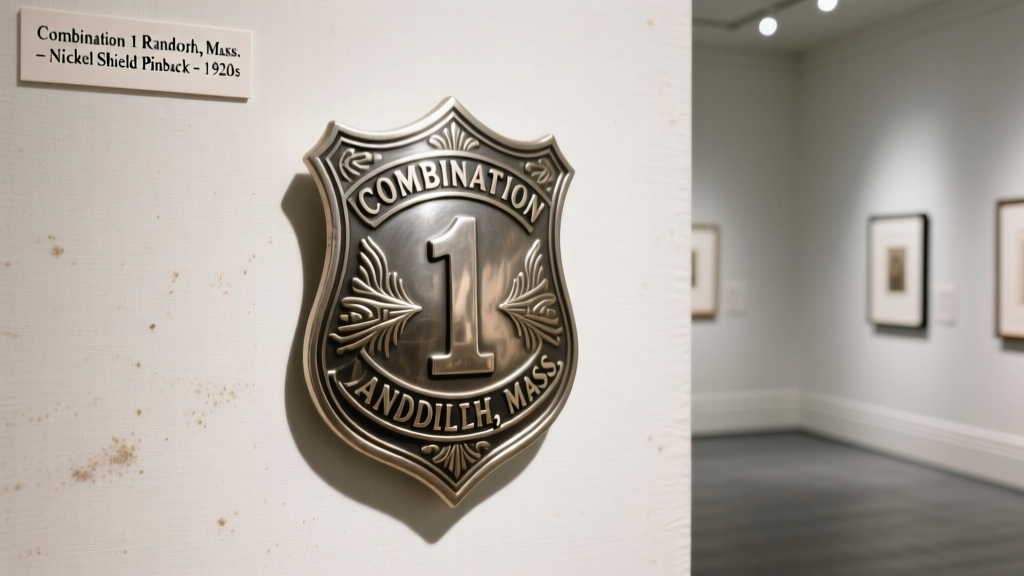
Badges Fireman Combination 1 Randolph Mass Nickeled Shield Pinback: Authentication, Market Value, and Historical Context

Mettlach Plaque No. 2147: Artillery Men Moving Cannons — Authentication, Provenance, and Market Analysis of the 15-Inch Etched Ceramic Relief
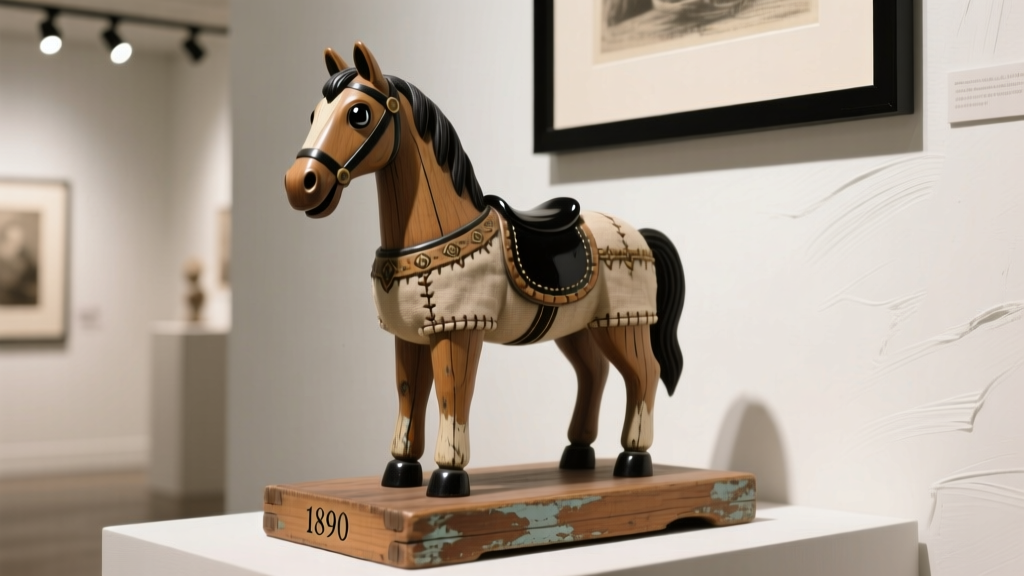
Toy Horse Standing on Wooden Platform with Glass Eyes: Authentication, Provenance, and Market Analysis of a Rare 1890 Pull Toy
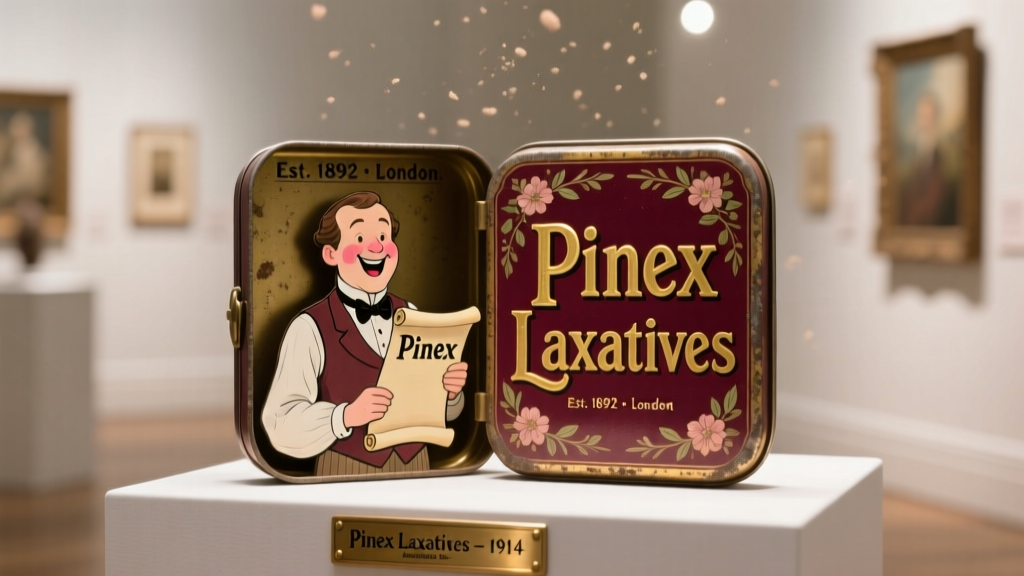
Advertising Tin for Pinex Laxatives: A 1914 Hinged-Lid Collectible and Its Place in American Patent Medicine History
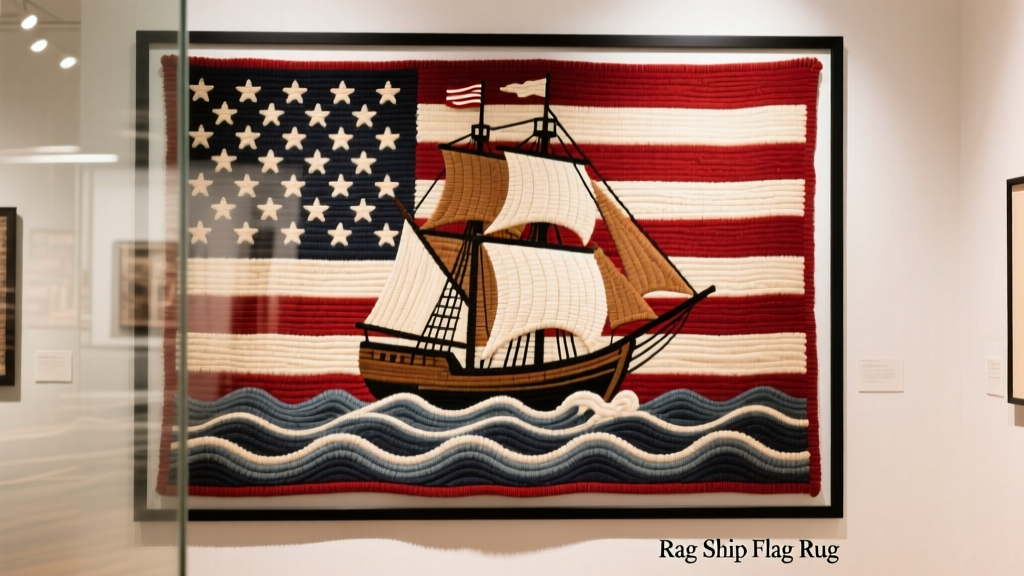
Authenticating and Valuing Vintage Hooked Rag Rugs: The 40×60 Inch American Flag & Nautical Ship Design
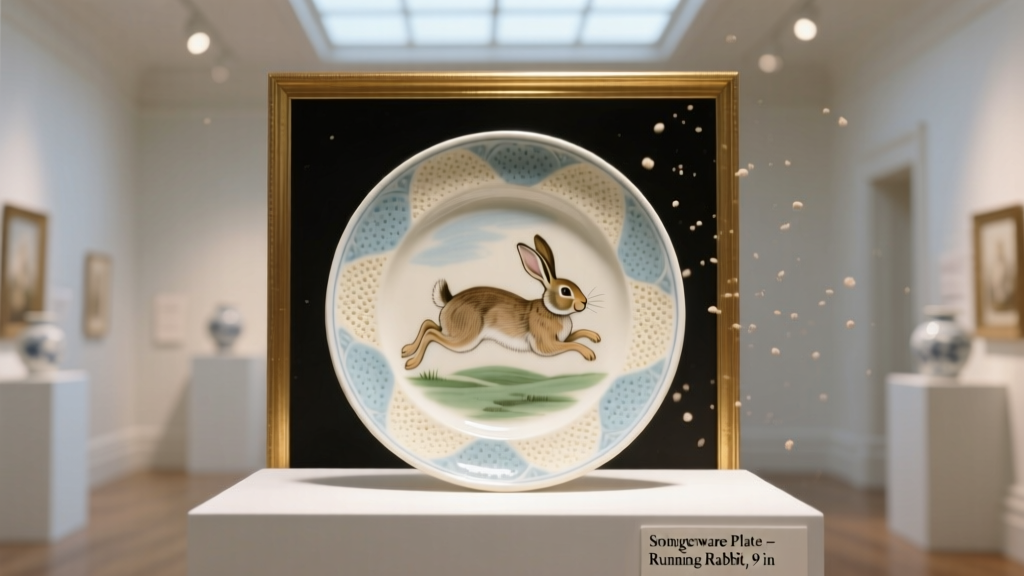
Spongeware Plate 'Running Rabbit' — Authentication, Provenance, and Market Analysis of the 9-Inch Folk Art Ceramic
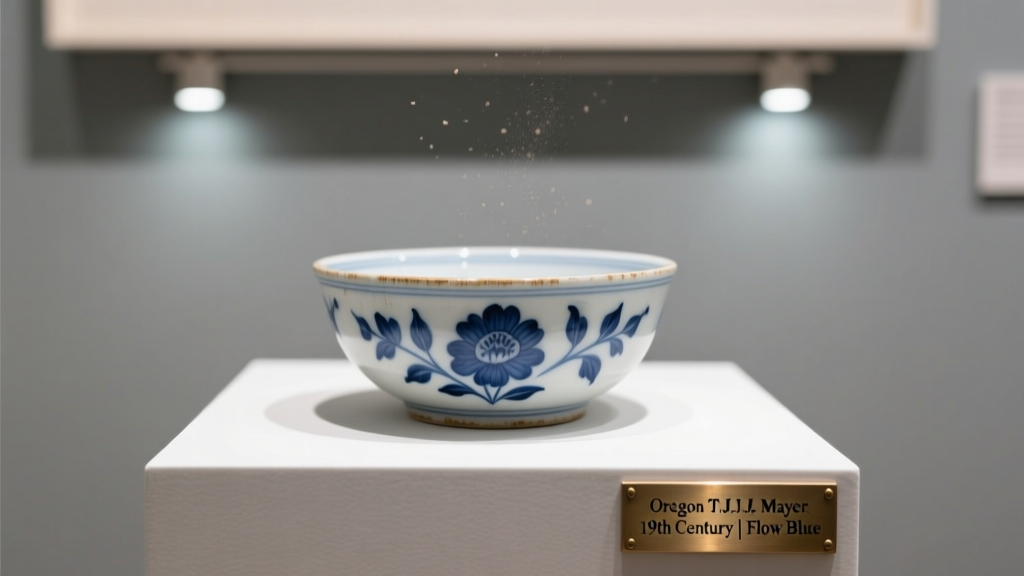
Authenticating the Flow Blue Waste Bowl: Oregon Pattern by T.J.J. Mayer, 5½ × 3 Inches
Toy Popcorn Vendor Duck Pushing Popcorn Machine: Authentication, Market Value, and Historical Context of the Battery-Operated Boxed Figure

Royal Worcester Figurine 'Woodland Dance' No. 3076: Authentication, Provenance, and Market Analysis of the 4 × 4 Inch Porcelain Sculpture