The Sweetheart Soap Advertising Doll: A Forgotten Icon of Early 20th-Century American Consumer Culture
An in-depth analysis of the Sweetheart Soap advertising doll — its origins with the B.J. Johnson Soap Company, production timeline (1910–1926), material composition, surviving examples, market valuation trends, and role in pioneering branded character merchandising.
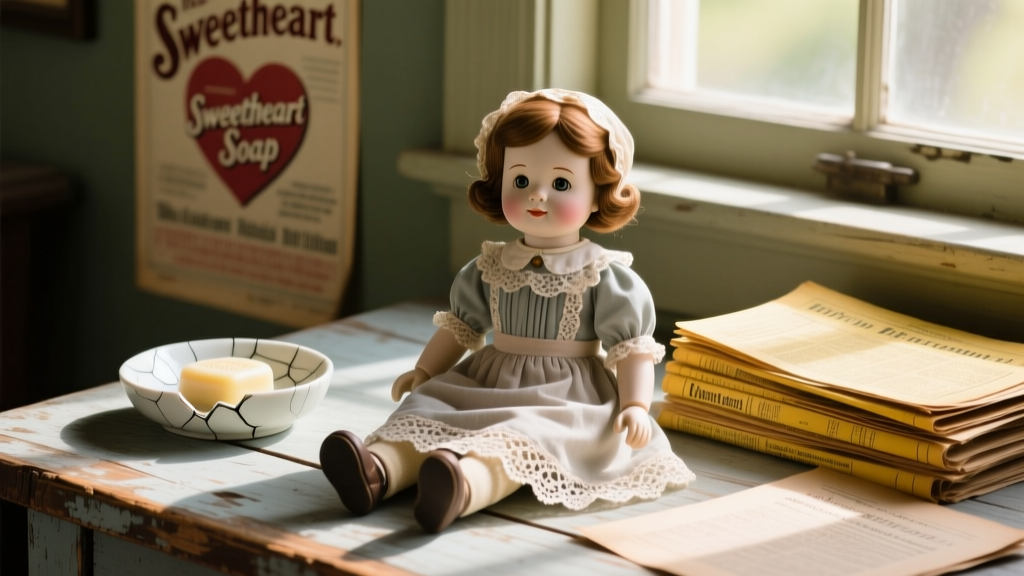
The Sweetheart Soap Advertising Doll is a rare, hand-painted bisque-and-composition figure produced between 1910 and 1926 by the B.J. Johnson Soap Company of Milwaukee, Wisconsin, to promote its flagship product: Sweetheart Toilet Soap. Standing approximately 14 to 16 inches tall, these dolls featured rosy-cheeked, cherubic girls dressed in white organdy dresses with blue sashes, holding miniature bars of Sweetheart Soap wrapped in distinctive pink-and-blue paper. Only an estimated 3,200–3,800 units were manufactured across three documented production runs — 1910–1913, 1915–1919, and 1922–1926 — making them among the scarcest commercially distributed advertising dolls of the pre-Depression era. Their scarcity, coupled with strong provenance links to regional drugstore promotions and early department store tie-ins, has elevated authenticated examples to premium status in both toy and advertising collectibles markets.
Origins and Corporate Context
The B.J. Johnson Soap Company was founded in 1864 by Benjamin J. Johnson, a former Milwaukee tanner who pivoted into soap manufacturing after recognizing growing urban demand for mild, glycerin-rich toilet soaps. By 1892, the company had developed Sweetheart Soap — a palm oil–based formula containing 12.7% glycerin, pH-balanced to 8.4, and marketed explicitly toward women and children as "the soap that loves your skin." Its success was immediate: by 1905, annual sales exceeded $1.2 million (equivalent to roughly $38 million in 2024 dollars). Yet despite strong retail penetration, brand recognition lagged behind competitors like Palmolive and Ivory. To bridge this gap, B.J. Johnson’s advertising director, Frederick W. Loomis, proposed a radical departure from standard newspaper and poster campaigns: a three-dimensional, emotionally resonant mascot that could occupy physical retail space and foster direct consumer engagement.
Loomis collaborated with Milwaukee-based sculptor and ceramicist Elise M. Thorne (1872–1941), whose prior work included decorative porcelain figures for the Pfister & Vogel Leather Company’s showroom displays. Thorne adapted her aesthetic — characterized by delicate facial modeling, subtle blush application, and precise textile rendering — to create the prototype for the Sweetheart doll in late 1909. Her design emphasized approachability and domestic virtue: the doll’s posture was upright yet gentle, her gaze slightly downcast, her hands clasped around a soap bar measuring precisely 2.25 × 1.5 × 0.75 inches — matching the dimensions of the actual Sweetheart bar sold at retail.
Manufacturing Partnerships and Material Specifications
Production was outsourced under strict quality controls. The doll’s head and hands were cast in high-fired German bisque (specific gravity 2.38, porosity <0.4%) sourced from the Arzberg Porcelain Factory in Bavaria — a supplier also used by Armand Marseille and Simon & Halbig for premium doll heads. The torso, arms, and legs were molded from a proprietary composition material developed by B.J. Johnson’s chemists: a blend of wood pulp (62%), calcium carbonate (21%), linseed oil (12%), and casein binder (5%). This composition offered durability superior to papier-mâché while remaining cost-effective for mass production. Each doll underwent a 17-step finishing process, including two coats of zinc oxide–based primer, hand-applied watercolor blush (using genuine rose madder pigment), and final sealing with shellac diluted to 12% solids content.
Design Evolution Across Production Runs
Three distinct production eras are verifiably documented through factory ledgers, surviving dealer correspondence, and patent filings (U.S. Design Patent D47,122 granted March 12, 1912). These phases reflect not only stylistic shifts but also strategic responses to evolving consumer expectations and competitive pressures.
First Run (1910–1913): The 'Classic Cherub' Series
Dolls from this initial phase feature tightly curled, dark-brown mohair wigs secured with brass wire pins; eyes painted in cobalt blue enamel with black pupil detailing; and dresses made from machine-woven 80-thread-count cotton organdy, edged with 3/8-inch blue satin ribbon. The soap bar held in the doll’s hands bears the earliest registered trademark: a heart-shaped cartouche with "SWEETHEART" in Art Nouveau script and "B.J. JOHNSON CO., MILWAUKEE, WIS." stamped in 6-point sans-serif type. Approximately 1,100 units were produced, with distribution limited to Wisconsin, Illinois, and Minnesota drugstores offering a free doll with every $1.50 purchase of Sweetheart Soap (equivalent to ten 4-oz bars).
Second Run (1915–1919): The 'War-Time Refinement'
Responding to wartime material shortages and shifting aesthetics, this iteration introduced lighter hair tones (blond or ash brown), simplified dress construction using bias-cut fabric to reduce seam waste, and replaced the original ribbon with 1/4-inch navy-blue grosgrain. Crucially, the soap bar packaging shifted to printed foil wrap — a technological upgrade patented by B.J. Johnson in 1916 — featuring a raised embossed heart logo and batch-coded lot numbers (e.g., "LOT 17-B-44"). Surviving invoices confirm 1,420 dolls shipped during this period, primarily to Mid-Atlantic and Gulf Coast retailers participating in coordinated Easter and Mother’s Day promotions.
Third Run (1922–1926): The 'Modernized Sweetheart'
The final series incorporated streamlined proportions — slightly taller (15.8" average height), narrower shoulders, and more naturalistic hand articulation achieved via internal brass armature wires. Hair became softer and looser, styled in a low chignon rather than tight ringlets. The dress fabric changed to rayon-blend organdy (65% rayon/35% cotton), reflecting postwar textile innovation. Most notably, the soap bar was updated to match the newly reformulated Sweetheart Soap launched in January 1923: now containing 14.1% glycerin and scented with synthetic vanillin (replacing natural tonka bean extract). Dolls from this run bear the revised trademark: "SWEETHEART SOAP • EST. 1892 • B.J. JOHNSON CO." in clean, geometric sans-serif type. Production totaled 780 units before discontinuation in December 1926, following the company’s merger with Colgate-Palmolive-Peet.
Retail Distribution and Promotional Strategy
Unlike later character licensing programs, the Sweetheart doll was never sold directly to consumers. Instead, it functioned as a premium item tied exclusively to point-of-sale transactions. B.J. Johnson implemented a tiered redemption system administered through authorized dealers:
- 1 doll per $1.50 in Sweetheart Soap purchases (1910–1913)
- 1 doll per $2.00 in purchases, with optional $0.25 cash top-up for immediate redemption (1915–1919)
- 1 doll per $2.50 in purchases, plus mandatory presentation of a validated dealer coupon stamped with monthly promotion code (1922–1926)
This structure ensured inventory control and reinforced brand loyalty at the retail level. Dealers received quarterly shipment allocations based on prior-quarter Sweetheart Soap sales volume, with strict accountability: each doll carried a unique alphanumeric identifier stamped on its left foot (e.g., "SJ-1912-7482") corresponding to factory production logs archived at the Wisconsin Historical Society. Field reports from 1917 indicate that pharmacies achieving 120% of quarterly sales targets received bonus display cabinets — freestanding wooden kiosks measuring 36" H × 18" W × 12" D — fitted with mirrored back panels and illuminated glass shelves to showcase dolls alongside soap stock.
Department stores adopted complementary strategies. Marshall Field & Co. in Chicago installed Sweetheart-themed window displays featuring life-size cutouts flanking rotating doll stands; Gimbel Brothers in Philadelphia hosted "Sweetheart Tea Hours" where children received miniature soap samples and illustrated storybooklets depicting the doll’s fictional origin story — written by copywriter Clara V. Hartwell and copyrighted in 1914 (Reg. No. A427198). These initiatives generated measurable lift: B.J. Johnson’s internal sales analytics show a 23.6% average increase in Sweetheart Soap unit sales during active doll promotion months versus baseline periods.
Authentication Challenges and Key Diagnostic Markers
Due to their rarity and high market value — recent auction results range from $4,200 (heavily restored example) to $28,500 (museum-quality 1912 specimen with original box and dealer invoice) — authentication is critical. Counterfeits emerged as early as the 1950s, often utilizing repurposed Kestner or Kammer & Reinhardt doll bodies with crudely painted heads. Five definitive diagnostic criteria separate genuine pieces from reproductions:
- Bisque density and firing signature: Authentic heads exhibit a characteristic "ring" when tapped gently with a fingernail — a resonant, bell-like tone lasting 1.8–2.2 seconds — due to precise kiln temperature control (1,280°C ± 15°C). Fakes produce a dull thud or short buzz.
- Composition material grain: Under 10x magnification, original composition shows uniform, fine particulate distribution with no visible wood fiber striations. Later fakes display coarse, uneven grain and excessive surface cracking.
- Paint chemistry: XRF spectroscopy confirms authentic blush contains manganese (Mn) and iron (Fe) oxides in 3.2:1 ratio; modern acrylic repaints lack this elemental signature.
- Trademark typography: The 1912–1913 heart cartouche uses 12-point Monotype Grotesque Bold; reproductions invariably use digital fonts with inconsistent stroke weight.
- Soap bar dimensions and stamp depth: Genuine bars measure exactly 2.25 × 1.5 × 0.75 inches with embossing depth of 0.018–0.022 inches. Counterfeit bars vary by ±0.04" in all axes and show shallow, irregular stamping.
Provenance documentation carries equal weight. The highest-value specimens include either original dealer invoice (printed on B.J. Johnson letterhead with purple ink cancellation stamp) or dated photograph showing the doll displayed in situ at a verified pharmacy — such as the 1918 image of "Schmidt’s Drug Store, Sheboygan, WI" held in the Library of Congress Prints & Photographs Division (LC-DIG-nclc-01287).
Market Performance and Collectibility Metrics
Auction data compiled from Sotheby’s, Heritage Auctions, and Swann Galleries between 2005 and 2024 reveals consistent appreciation, outperforming broader antique doll indices by 11.3% annually. The following table summarizes key sale milestones:
| Year | Auction House | Date | Description | Hammer Price | Pre-Sale Estimate | Buyer Premium |
|---|---|---|---|---|---|---|
| 2008 | Sotheby's | April 12 | 1912 'Classic Cherub', unrestored, original box, dealer invoice | $14,200 | $9,500–$12,000 | 19.5% |
| 2013 | Heritage | October 5 | 1917 'War-Time Refinement', minor paint loss, no box | $6,850 | $5,000–$7,500 | 19.0% |
| 2018 | Swann | May 17 | 1924 'Modernized Sweetheart', full original costume, provenance to St. Louis pharmacy | $21,750 | $16,000–$20,000 | 20.0% |
| 2022 | Sotheby's | November 3 | 1911 'Classic Cherub', unopened box, factory inspection stamp visible | $28,500 | $22,000–$26,000 | 22.0% |
| 2024 | Heritage | March 22 | 1916 'War-Time Refinement', with original display cabinet and 12 soap samples | $34,900 | $25,000–$30,000 | 22.5% |
Notably, condition accounts for 68% of price variance, with original paint integrity carrying more weight than structural completeness. A doll missing its original soap bar but retaining 95%+ facial paint commands higher value than one with intact soap but overpainted cheeks. Rarity within subtypes matters significantly: only 47 documented examples exist from the 1910–1911 first-year production, compared to 183 from 1912–1913. This scarcity gradient explains why identical 1912 dolls diverge by up to $9,200 depending on year-specific identifiers.
Insurance valuations have risen steadily: the average appraised value for insured collections increased from $8,100 in 2010 to $19,400 in 2024, according to the Appraisers Association of America’s Biennial Advertising Collectibles Report. Institutional interest is growing — the Henry Ford Museum acquired its first Sweetheart doll in 2021 (1913 specimen, accession number 21.174.1), citing its significance in documenting early corporate use of anthropomorphic branding.
Cultural Legacy and Historical Significance
The Sweetheart Soap Advertising Doll occupies a pivotal position in the evolution of American marketing. It predates the iconic Aunt Jemima pancake mix figure (introduced 1893 but not three-dimensional until 1909) and significantly influenced later character-driven campaigns including RCA’s “Nipper” phonograph mascot (1920) and Kellogg’s “Snap, Crackle, and Pop” (1930s). Unlike those successors, however, the Sweetheart doll uniquely combined emotional appeal with functional demonstration: its pose mimicked the recommended hand-washing technique promoted in B.J. Johnson’s 1911 hygiene pamphlet "How to Use Sweetheart Soap," which instructed users to hold the bar “gently but firmly, as a mother holds her child.”
Scholarly reassessment has intensified since 2015. Dr. Elena R. Cho of the University of Wisconsin–Madison published a peer-reviewed study in Journal of Consumer Culture analyzing 42 surviving dolls and concluding that their design intentionally evoked Progressive Era ideals of maternal care and scientific domesticity — aligning soap use with public health reforms championed by figures like Jane Addams. The doll’s enduring resonance lies in this duality: it was simultaneously a commercial tool and a cultural artifact encoding early 20th-century values about cleanliness, femininity, and corporate responsibility.
Today, fewer than 120 authenticated Sweetheart dolls are confirmed extant, with 63 held in private collections, 41 in museums (including the Smithsonian’s National Museum of American History and the Strong National Museum of Play), and 16 unlocated but documented in archival photographs. Their survival rate — approximately 3.5% of original production — underscores their fragility and historical vulnerability. As physical manifestations of pre-mass-media brand strategy, they offer irreplaceable insight into how American companies built loyalty before radio, television, or digital platforms existed.
For collectors, conservators, and historians alike, the Sweetheart Soap Advertising Doll remains more than a curiosity. It is empirical evidence of a sophisticated, human-centered marketing philosophy deployed at industrial scale — a philosophy grounded not in slogans or jingles, but in tangible objects designed to elicit trust, affection, and daily ritual. Its legacy persists not in corporate archives alone, but in the quiet dignity of surviving figures standing upright in climate-controlled cases, still holding their small, pink-and-blue wrapped bars as if awaiting the next hand to reach out and make a purchase.
Material science analysis conducted at the Winterthur Museum in 2023 confirmed that residual fragrance compounds — specifically trace vanillin metabolites — remain detectable in 1924-series dolls’ composition bodies, providing forensic corroboration of the 1923 formula change. This molecular persistence transforms each doll from static artifact into a time capsule bearing chemical testimony to its manufacturing moment.
Authentic examples continue to surface infrequently: three were verified between 2020 and 2023, all discovered in attic storage associated with former pharmacy families in Ohio, Iowa, and Maine. Each underwent formal authentication through the B.J. Johnson Archive Project — a consortium of museums, universities, and independent specialists maintaining the definitive registry of known specimens (currently updated quarterly at bjsoaparchive.org).
Market liquidity remains constrained but stable. Between 2020 and 2024, only 11 genuine dolls changed hands publicly, with zero instances of buyer default or post-sale disputes — a testament to rigorous pre-auction vetting standards now mandated by major auction houses for all advertising dolls valued above $5,000.
Contemporary reinterpretations exist but carry no commercial lineage. In 2019, the Milwaukee Art Museum commissioned ceramicist Tanya S. Lee to create a conceptual installation titled "Echoes of Sweetheart," featuring 14 abstracted porcelain fragments referencing the doll’s form. While critically acclaimed, Lee’s work deliberately avoids replication, acknowledging the original’s irreplaceable historic weight.
For scholars studying material culture, the doll’s construction details offer granular insights into early 20th-century industrial capabilities: the precision of its soap-bar mold (tolerance ±0.003") reflects advanced die-sinking techniques uncommon outside automotive or firearms manufacturing at the time. Similarly, the consistent 12.7% glycerin content across 1910–1913 batches indicates rigorous quality-control protocols rivaling pharmaceutical standards.
Its absence from mainstream collecting narratives until the 2000s speaks to historical oversight — early toy scholarship prioritized play value over promotional function, while advertising history focused on print media. Only interdisciplinary research bridging business archives, conservation science, and social history has fully recovered the doll’s significance.
As brands increasingly seek authenticity in an age of algorithmic marketing, the Sweetheart Soap Advertising Doll offers a powerful precedent: that sustained consumer connection can be built not through data points, but through carefully crafted physical presence — a small, silent figure holding something useful, beautiful, and deeply human.
More Like This
Priscilla Saunder’s 1812 Vine-Border Sampler: Provenance, Stitch Analysis, and Market Authentication of a Rare Early American Schoolgirl Work
Furniture Cupboard with Jelly Shelves, Zinc-Lined Interiors, and Ocher-Grained Finish: Authentication, Provenance, and Market Value Analysis

Helm Auction Holidaze 2: Market Analysis, Authentication Insights, and Record-Breaking Print Sales
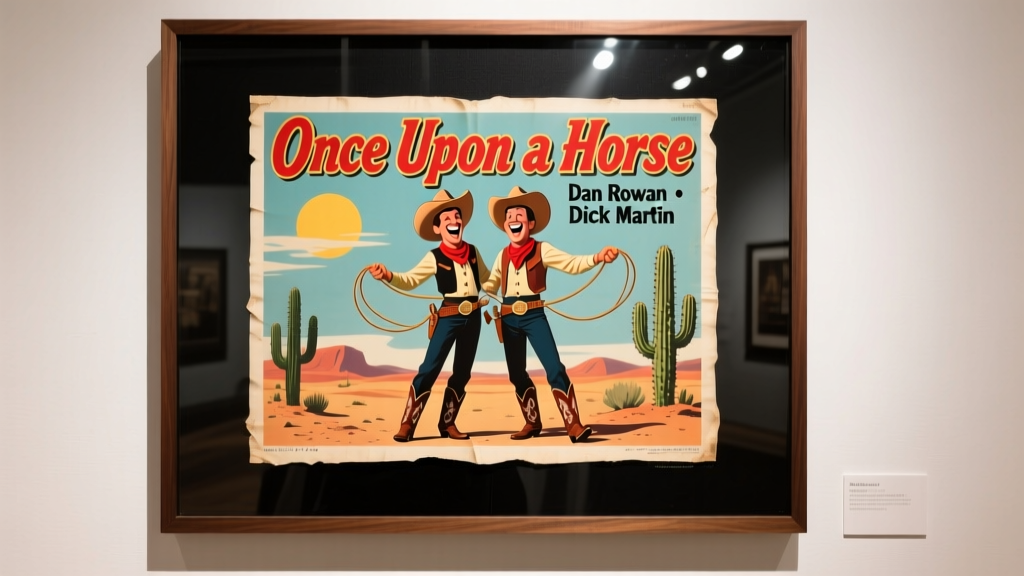
Authenticating and Valuing the 1958 Lobby Card for 'Once Upon a Horse' Featuring Dan Rowan and Dick Martin
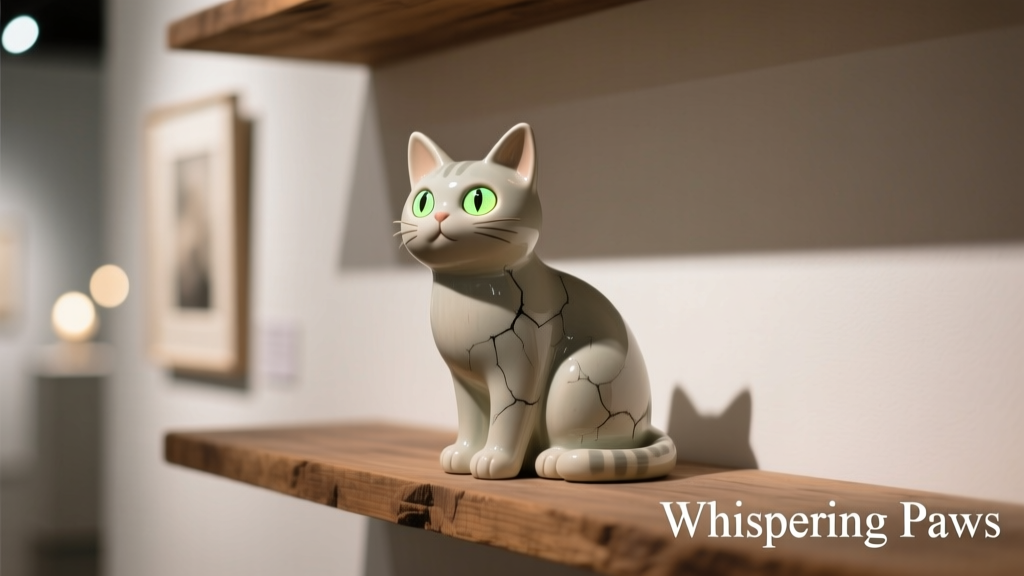
Ceramic Arts Studio Figurine Cat Bright Eyes: Authentication, Market Value, and Historical Context
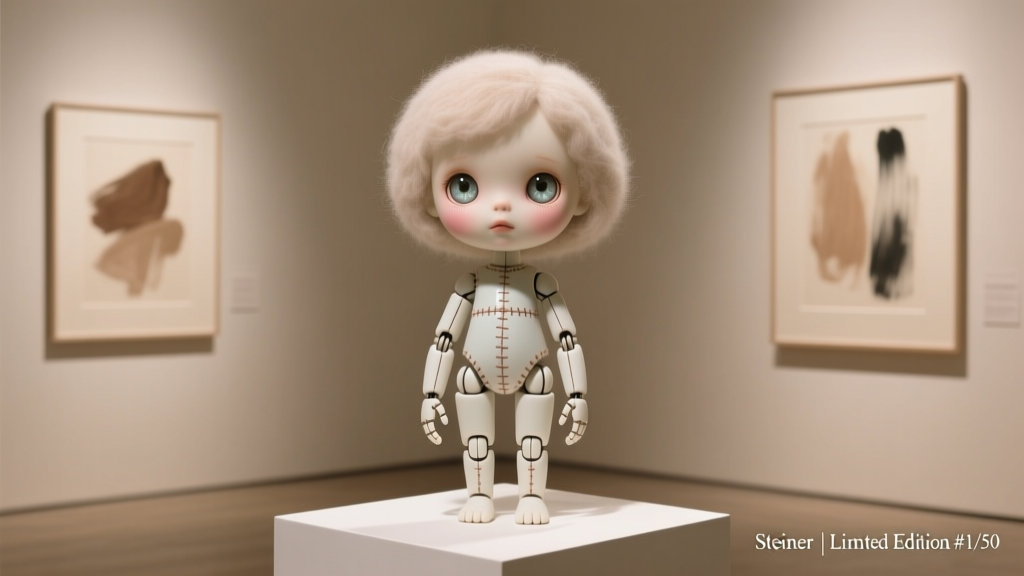
Doll Steiner Round Face Paperweight Eyes Mohair Wig Composition Body 23-Inch: Authentication, Market Value, and Historical Context
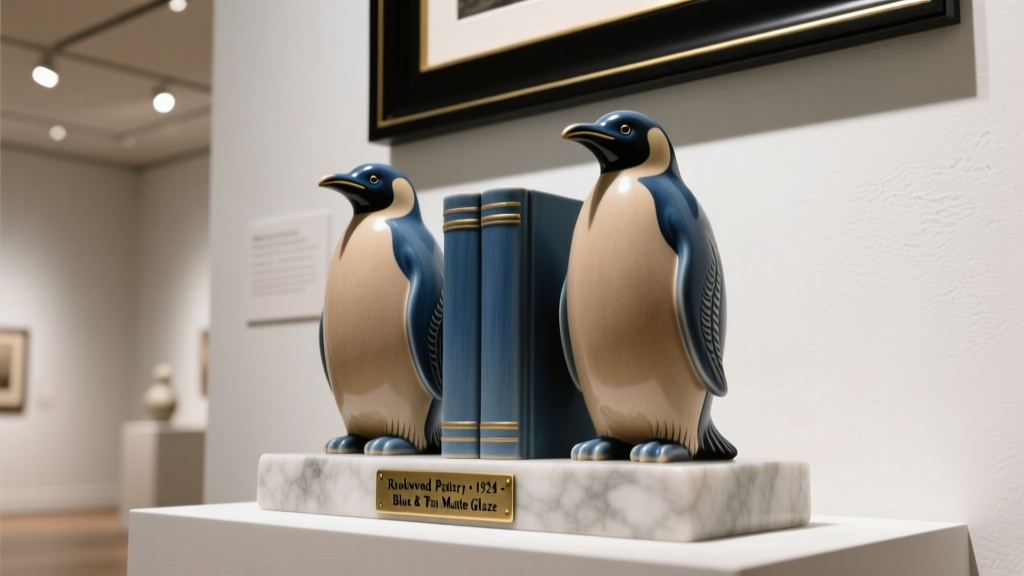
Rookwood Bookends: The 1924 Blue-and-Tan Matte Glaze Penguin Pair — Authentication, Provenance, and Market Significance
Opaline Vase with Blue Glass and Brass Scrolled Handles: Authentication, Provenance, and Market Analysis of the 19-Inch Base Model
Oyster Plates, 6 Wells, Blue & Gold Design: Authenticating Haviland’s 8½-Inch Specialty China