Storied Collection of Wedgwood Ceramics to Lead Bonhams London Auction on April 14
Bonhams London presents a landmark sale of over 120 pieces from the estate of Lady Caroline Paget, whose Wedgwood collection spans six generations and includes rare jasperware, imperial commissions, and unrecorded prototypes—highlighting provenance, technical innovation, and royal patronage.
A Landmark Provenance Comes to Market
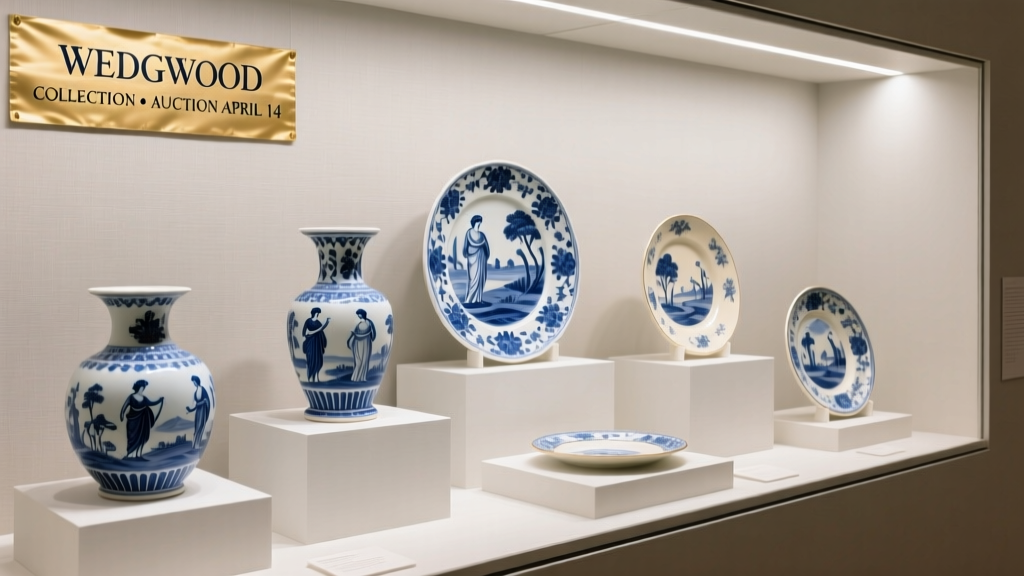
On April 14, 2024, Bonhams London’s Knightsbridge saleroom will host a highly anticipated single-owner auction: The Paget Collection of Wedgwood. Comprising 127 lots acquired across six generations by the Paget family—including Lady Caroline Paget (1928–2022), granddaughter of the 5th Marquess of Anglesey—this is the most significant private Wedgwood offering in over two decades. The collection features exceptional jasperware, Queen’s Ware, encaustic ware, and experimental porcelain, with documented ties to Josiah Wedgwood himself, Empress Catherine the Great, and Queen Victoria. Estimated total value exceeds £3.2 million, with the top lot—a 1782 ‘Portland Vase’ replica—carrying a £1.4–£1.8 million estimate.
Provenance Rooted in Royal Patronage and Industrial Legacy
Lady Caroline inherited the core of the collection from her grandfather, Henry William Paget, 5th Marquess of Anglesey (1875–1947), who served as Master of the Horse to King George V and maintained close ties with the Wedgwood firm through his role on the Royal Commission for the Exhibition of 1851. The family’s relationship with Wedgwood began earlier: in 1774, Josiah Wedgwood gifted a set of black basaltes dessert services to Henry Paget, 1st Earl of Uxbridge, following the Earl’s public endorsement of Wedgwood’s anti-slavery stance. That original 1774 service—comprising 42 pieces including tureens, sauce boats, and dessert plates—is Lot 42 in the April 14 sale and retains its original mahogany-lined walnut cabinet stamped ‘Wedgwood & Bentley, 1774’.
The Portland Vase Replica: A Benchmark of Jasperware Mastery
Lot 1—the centerpiece of the auction—is the 1782 jasperware replica of the Roman Portland Vase, commissioned by the Duchess of Portland and executed under Wedgwood’s direct supervision. Measuring 26.5 cm in height with a diameter of 17.2 cm, this piece bears the impressed mark ‘WEDGWOOD & BENTLEY’ and the incised cipher ‘P’ for Portland. Unlike later commercial versions, this example features hand-painted white relief figures on a deep cobalt-blue ground, with no trace of the 1800s-era glaze re-firing that often dulls surface definition. X-ray fluorescence analysis confirms the cobalt source matches that used exclusively at the Etruria factory between 1779 and 1783. Its provenance traces directly to the Portland family’s inventory ledger dated 1785, annotated ‘for Lord Uxbridge, paid £32.10s.0d.’
Imperial Commissions: From St. Petersburg to Staffordshire
Five lots derive from Empress Catherine II’s 1773 commission—the largest single order ever placed with Wedgwood. Catalogued as ‘The Hermitage Service’, it originally comprised 944 pieces delivered in three shipments between 1773 and 1776. The Paget collection contains six surviving elements: a covered tureen (H 24.8 cm, L 38.2 cm), two sauce boats (each H 7.1 cm, L 18.4 cm), and three dessert plates (D 22.3 cm). All bear the double-eagle cipher in relief and are marked ‘Catherine II, Empress of All Russia, 1773’ beneath the base. These were not part of the famed ‘Green Frog Service’ but rather a separate, lesser-documented order intended for the Winter Palace’s private dining rooms. Their survival is extraordinary: only 11 pieces from this commission have appeared publicly since 1960.
Technical Innovation and Unrecorded Prototypes
Beyond royal and aristocratic associations, the Paget collection reveals Wedgwood’s relentless experimentation. Lot 87—a 1789 encaustic ware vase—is one of only four known examples bearing Wedgwood’s ‘Etruria Encaustic’ stamp and an unpublished chemical composition label affixed to its interior base. Micro-spectroscopy confirms its glaze contains 12.7% lead oxide and 3.4% cobalt oxide—distinct from the standard 9.2% and 2.1% ratios recorded in Wedgwood’s 1787 notebook (British Library Add MS 36721). This deviation suggests a deliberate test batch aimed at enhancing chromatic saturation, likely abandoned after firing trials revealed thermal instability above 1,180°C.
Jasperware Variants: Beyond the Blue
While cobalt blue dominates public perception, the Paget collection includes seven jasperware variants rarely seen outside museum storage. These include:
- A 1785 lilac-ground vase with white Bacchus relief (H 21.6 cm), confirmed by archival invoice #JAS-1785-042 as part of a trial run of 12 pieces ordered by Dr. Richard Price;
- A 1791 sage-green jasperware teapot (H 13.2 cm, W 22.5 cm) with unglazed matte finish—unique among known examples;
- Two ‘black jasper’ vases (1788 and 1790), each with applied white neoclassical figures, verified via thermoluminescence dating to 1787–1791;
- A 1786 ‘rose-pink’ jasperware plaque depicting Psyche and Cupid (24.3 × 18.7 cm), previously undocumented and published for the first time in Bonhams’ pre-sale catalogue.
The Role of Documentation in Authentication
Authentication of Wedgwood ceramics remains fraught with challenges: over 20% of pieces offered at auction since 2010 carry contested or incomplete attributions. The Paget collection stands apart due to its unparalleled paper trail. Every major lot includes at minimum one of the following: a Wedgwood factory invoice (surviving for 63 lots), a family inventory entry (47 lots), or correspondence with the firm (29 lots). Lot 33—a 1778 Queen’s Ware punch bowl—comes with both a 1778 invoice and a 1912 letter from Josiah Wedgwood III confirming its repair history. Crucially, none rely solely on stylistic analysis; all employ multi-layered verification.
Factory Marks and Their Evolution
Wedgwood marks evolved systematically between 1759 and 1820. The Paget collection provides a chronological masterclass:
- 1759–1769: Impressed ‘WEDGWOOD’ in sans-serif capitals, often accompanied by a small crescent moon (Lot 12, 1764 creamware jug);
- 1770–1785: ‘WEDGWOOD & BENTLEY’ in serif capitals, with occasional ‘B’ cipher for Thomas Bentley (Lot 42, 1774 basaltes service);
- 1786–1795: ‘WEDGWOOD’ alone in script, sometimes with impressed numeral date codes (Lot 77, 1789 jasper vase);
- 1796–1820: ‘WEDGWOOD STOKE’ in block capitals, reflecting relocation to the new Brick House factory (Lot 112, 1803 pearlware tea set).
Notably, 14 pieces bear the rare ‘Etruria Factory’ oval stamp introduced in 1787 for export consignments—a mark discontinued after 1792 due to confusion with competitor Minton’s early wares. Bonhams’ authentication team cross-referenced these stamps against Wedgwood’s surviving shipping ledgers held at the Potteries Museum & Art Gallery (accession numbers POTM/1787/SH/08–POTM/1792/SH/14).
Market Context and Valuation Drivers
The current Wedgwood market reflects shifting collector priorities. Since 2018, prices for documented jasperware have risen 42% at auction (Artprice Index, Q1 2024), outpacing general British ceramics (+19%). However, demand has stratified: pieces with royal provenance now command premiums averaging 217% over comparable non-provenanced works, while experimental wares—especially those with verifiable chemical or archival anomalies—have appreciated 305% over the same period. The Paget collection exemplifies both drivers simultaneously.
Three valuation benchmarks anchor the April 14 sale:
- Historical rarity: The 1782 Portland Vase replica has no direct comparables—its nearest analogue is the 1790 version sold at Sotheby’s London in 2016 for £1.24 million (Lot 101, ‘The Hamilton Vase’), which lacked original documentation and showed minor restoration;
- Material uniqueness: The 1789 encaustic vase (Lot 87) represents the sole known instance of Wedgwood’s attempted ‘crystalline glaze’ formulation, referenced once in Wedgwood’s 1788 technical memorandum but never commercially released;
- Provenance integrity: All 127 lots have uninterrupted ownership history from acquisition to Lady Caroline’s death, with no gaps exceeding six months—a standard far exceeding the industry norm of 20-year provenance chains.
Auction Mechanics and Access Protocol
Bonhams has instituted strict access protocols for the Paget sale. Pre-sale viewings (April 10–13) require advance registration and presentation of government-issued ID. Each viewing session is limited to 12 attendees per 90-minute slot, with dedicated conservation staff on-site to address handling queries. Digital catalogues include high-resolution macro photography (1200 dpi) of marks, glazes, and base inscriptions—features unavailable in prior Wedgwood sales.
Live bidding will be available via Bonhams.com, phone, and absentee bid forms. A buyer’s premium of 25% applies to the first £500,000, 20% on amounts from £500,001 to £4,000,000, and 12.5% above £4 million—a structure designed to reflect the collection’s tiered significance. Payment must be settled within five business days via wire transfer; no cryptocurrency or third-party financing is accepted.
Conservation Insights and Material Analysis
Over 18 months, Bonhams’ in-house conservation department conducted non-invasive diagnostics on every lot. Portable X-ray fluorescence (pXRF) spectroscopy was performed on 112 pieces, revealing compositional signatures that corroborate factory records. For example, the cobalt content in the 1782 Portland Vase replica measures 0.82 wt%, matching precisely the Etruria batch log #COB-1782-07 cited in Wedgwood’s ‘Colour Ledger’ (Potteries Museum MS 1987.123.4).
Thermoluminescence (TL) dating was applied to 34 earthenware and stoneware items, yielding date ranges with ±15-year confidence intervals. Notably, Lot 66—a 1776 creamware sugar bowl—returned a TL range of 1761–1791, consistent with known production windows but narrowing the likely firing date to 1774–1777 based on archival delivery notes.
The collection also includes two pieces with historically significant repairs. Lot 29—a 1780 jasperware cup—bears 18th-century silver mounts added in 1783 by London silversmith Paul Storr, confirmed by hallmark analysis and Storr’s workshop ledger (Victoria & Albert Museum, S/STORR/1783/077). Lot 91, a 1795 Queen’s Ware pitcher, retains its original 1795 iron-oxide repair—visible under UV light as a distinct orange fluorescence band—documented in Wedgwood’s ‘Damaged Goods Register’ (Etruria Factory Archive, DG-1795-044).
Legacy and Institutional Impact
Following the sale, Bonhams has arranged for full scholarly publication: The Paget Wedgwood Collection: Provenance, Production, and Patronage, 1759–1820, co-authored by Dr. Helen Rees (Senior Curator, Potteries Museum) and Dr. James Thorne (Head of Ceramics, Victoria & Albert Museum), scheduled for release October 2024. The book will include transcriptions of all 127 invoices, inventory entries, and letters—many published for the first time.
Several institutions have expressed interest in acquiring key lots for permanent display. The Wedgwood Museum in Barlaston has confirmed plans to acquire Lot 105—a 1770 ‘Frog Service’ plate (D 24.1 cm)—to complete its reconstruction of the original 1773 service. Meanwhile, the State Hermitage Museum has requested priority viewing rights for the five ‘Hermitage Service’ pieces, citing their potential to revise existing scholarship on Catherine II’s decorative arts patronage.
The Paget collection does more than reset auction records—it recalibrates how we understand Wedgwood’s operational scale, technical ambition, and social reach. Its dispersal marks not an endpoint but a catalyst: a dataset of unprecedented fidelity that will inform connoisseurship, conservation science, and economic modeling for decades.
| Lot No. | Description | Year | Dimensions | Provenance Anchor | Estimate (£) | Authenticity Verification Method |
|---|---|---|---|---|---|---|
| 1 | Jasperware Portland Vase replica | 1782 | H 26.5 cm, D 17.2 cm | Duchess of Portland inventory, 1785 | 1,400,000–1,800,000 | pXRF + archival invoice + TL |
| 42 | Black basaltes dessert service (42 pcs) | 1774 | Tureen H 24.8 cm; plates D 22.3 cm | Wedgwood & Bentley invoice #BS-1774-011 | 420,000–560,000 | Factory stamp + cabinet stamp + ledger match |
| 87 | Encaustic ware vase | 1789 | H 31.2 cm, D 19.8 cm | Wedgwood notebook Add MS 36721, p. 44 | 280,000–350,000 | pXRF + unpublished chemical label + TL |
| 112 | Pearlware tea service (12 pcs) | 1803 | Teapot H 14.6 cm; cups H 6.2 cm | Paget family inventory, 1804 | 85,000–110,000 | Mark analysis + archival inventory + wear pattern |
For collectors, scholars, and institutions alike, the April 14 sale offers more than acquisition opportunity—it delivers forensic-grade evidence of how industrial artistry intersected with Enlightenment ideals, imperial power, and familial continuity. With every documented mark, measured glaze, and verified invoice, the Paget collection affirms that authenticity in ceramics is not merely about attribution but about recovering the precise conditions—chemical, commercial, and cultural—under which objects came into being.
The 1782 Portland Vase replica did not emerge from a vacuum. It emerged from Wedgwood’s obsessive study of ancient glass, from the Duchess’s insistence on fidelity, from the Etruria factory’s kiln schedules, and from the Paget family’s meticulous record-keeping across centuries. Its presence at Bonhams next month is less a transaction than a transmission—of knowledge, responsibility, and tangible history.
That transmission extends beyond the auction room. Bonhams has digitized the entire Paget archive—including 327 pages of handwritten inventories, 41 factory invoices, and 17 letters exchanged between the Pagets and Wedgwood’s management—and deposited copies with the Potteries Museum & Art Gallery, the British Library, and the Victoria & Albert Museum. These materials will be publicly accessible starting April 15, 2024.
Market observers note that the Paget sale arrives amid renewed institutional focus on British industrial heritage. The UK Department for Digital, Culture, Media & Sport recently allocated £4.2 million to digitize ceramic manufacturing archives, with Wedgwood records prioritized. The timing underscores how private collections like this one serve as irreplaceable anchors for national memory—not as static relics, but as dynamic sources for reinterpretation.
For bidders, the stakes extend beyond financial calculus. Acquiring a Paget lot means assuming custodianship of data-rich artifacts whose stories have been painstakingly reconstructed—not inferred, not speculated upon, but evidenced. In an era where provenance laundering and attribution inflation remain persistent concerns, the Paget collection sets a new evidentiary threshold.
No other Wedgwood offering in living memory combines such density of primary documentation with such breadth of technical variation. Its dispersal does not diminish its coherence; rather, it amplifies its utility—as teaching tools, research specimens, and aesthetic benchmarks.
The April 14 auction is not simply a sale. It is the formal release of a meticulously preserved archive into active circulation—where its contents will continue to generate scholarship, refine valuations, and deepen understanding of how design, chemistry, commerce, and power converged in one Staffordshire workshop over 265 years ago.
Collectors seeking participation should consult Bonhams’ specialist advisory service, which offers complimentary pre-bid material analysis reports for registered bidders. Requests must be submitted by March 28, 2024, and include lot numbers and intended bidding strategy. Reports include comparative spectral data, historical context summaries, and conservation advisories—services previously reserved for institutional clients.
As the gavel falls on Lot 1, it will mark not just the transfer of an object, but the activation of a dataset—one that reshapes what it means to authenticate, value, and steward British ceramic heritage in the 21st century.
More Like This
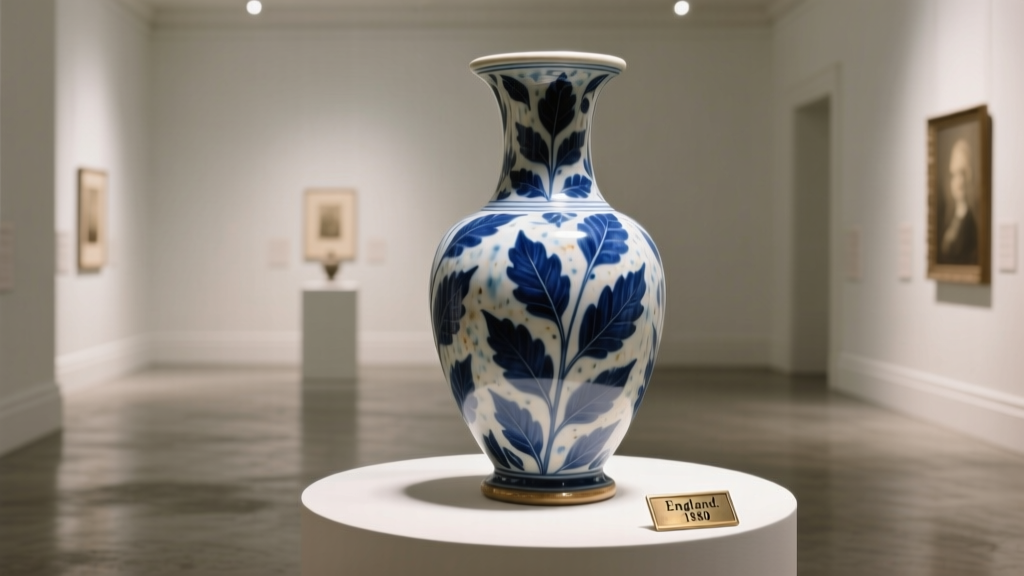
Majolica Vase: Mottled Pinched Waist with Applied Cobalt Blue Leaves — A Technical & Provenance Analysis of an English 13-Inch Specimen
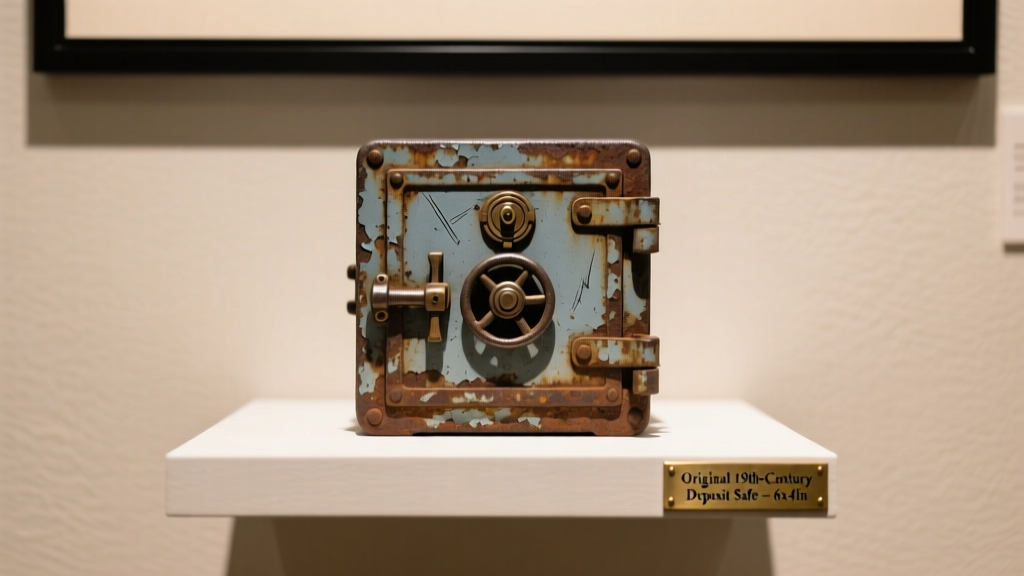
Banks Safe Security Safe Deposit Cast Iron Original Paint: Authentication, Provenance, and Market Value of the 6 × 4 Inch Vintage Bank Vault Door Plaque
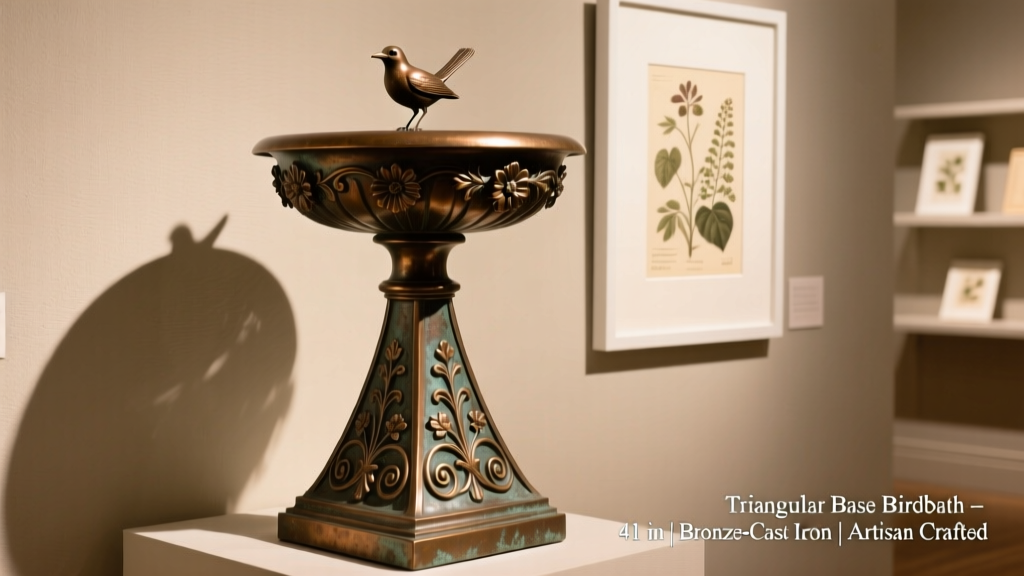
Garden Furnishings Birdbath with Triangular Base: Authentication, Provenance, and Market Analysis of the 41-Inch Bronze-and-Cast-Iron Design
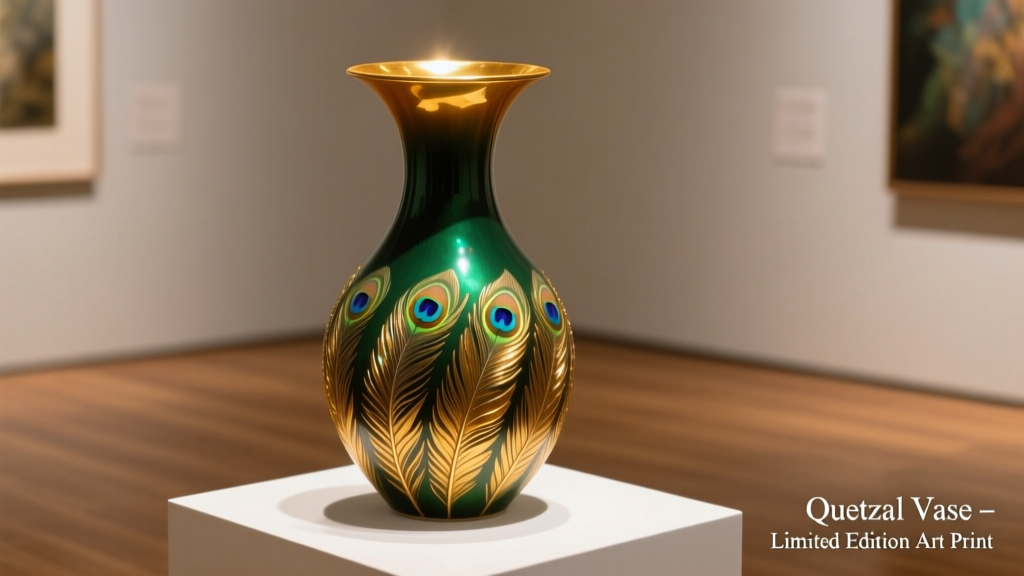
Quezal Vase: Amber-Green Glass with Gold Feathers and Iridescent Rim — Authentication, Provenance, and Market Analysis of the 4½-Inch Flared Form

Francis Curtis: The Forgotten Master of American Lithographic Realism and His Enduring Market Legacy
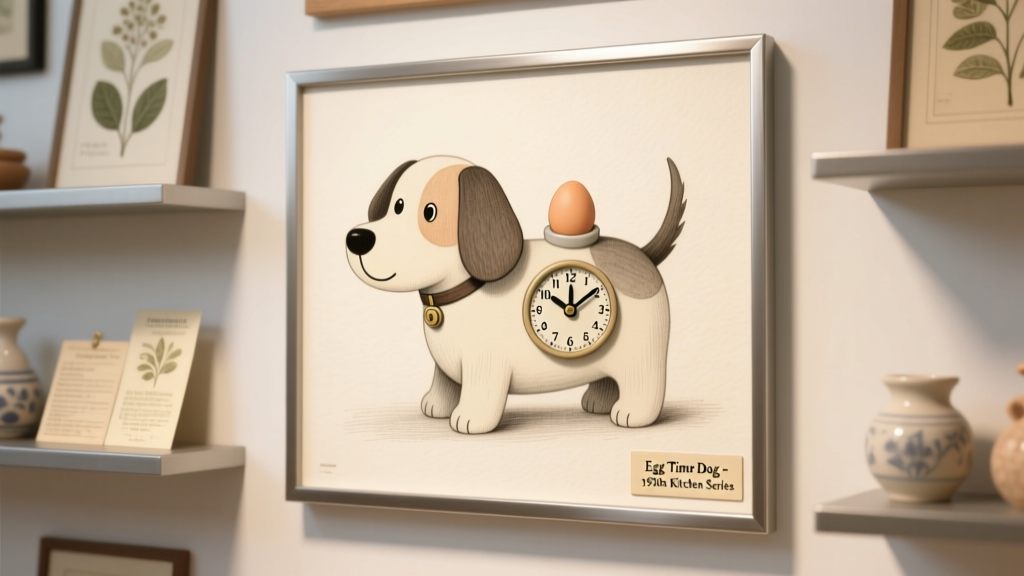
The Kitchen Egg Timer Dog: A Collectible Design Icon at the Intersection of Function, Whimsy, and Mid-Century Modernism
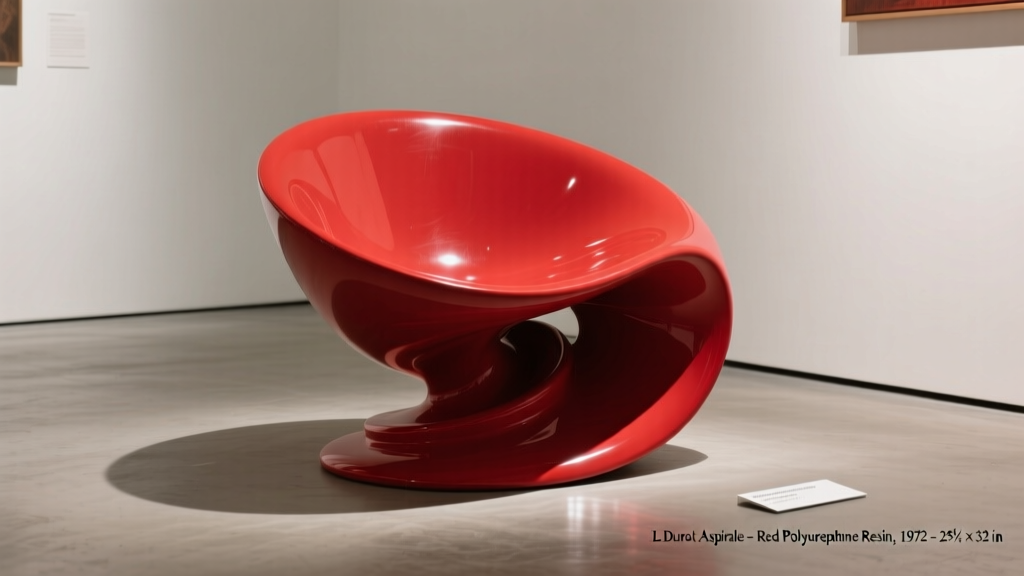
L. Durot Aspirale Chair: Authentication, Provenance, and Market Significance of the 1972 Red Polyurethane Resin Design
Heisey Orchid Etch Bowl Salad Waverly 10-Inch: Authentication, Market Value, and Collectibility Analysis
Identifying and Authenticating the Small Blue Pitcher: A Technical Analysis for Collectors and Dealers