Stoneware Jug: History, Authentication, and Market Value of American and European Ceramic Vessels
A detailed analysis of stoneware jugs—from 18th-century German salt-glazed examples to 19th-century American alkaline-glazed pieces—covering manufacturing techniques, regional makers, provenance indicators, conservation challenges, and current auction performance data.
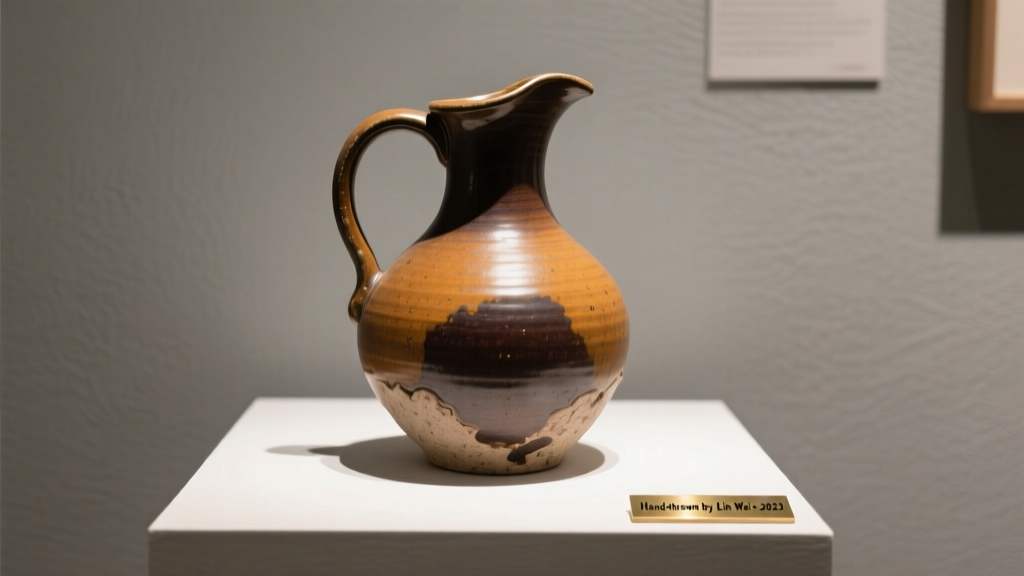
Stoneware jugs are among the most historically significant and commercially robust categories in historic ceramics. Produced from dense, vitrified clay fired between 1,100°C and 1,300°C, these vessels served utilitarian roles in storing cider, whiskey, molasses, and pickled goods across Europe and North America from the 1600s through the early 1900s. Key distinguishing features include salt-glazed surfaces with orange-peel texture, cobalt oxide decoration (often hand-painted or stenciled), and maker’s stamps or incised marks. Notable producers include the Crolius and Remmey families of New York City, the Lewis & Sons pottery of Baltimore, and German workshops like the Kühn family of Raach am Hochgebirge. Authentic examples from 1780–1860 routinely achieve $4,200–$22,500 at major auctions, with rare signed pieces exceeding $75,000.
Origins and Technical Evolution
Stoneware production emerged in medieval Germany as a response to the need for durable, non-porous containers that resisted leakage and microbial contamination. Unlike earthenware, stoneware clay bodies contain high percentages of kaolinitic and ball clays with low iron impurities, enabling vitrification without glaze. Early German stoneware—especially from the Westerwald region—was fired in wood-burning kilns reaching 1,280°C. During firing, rock salt was introduced into the kiln chamber, reacting with silica in the clay surface to form a translucent, glassy sodium silicate glaze. This process produced the signature dimpled ‘orange-peel’ texture and muted grey-to-olive hues.
By the mid-17th century, German potters migrated to England and the American colonies, bringing salt-glazing technology with them. In Philadelphia, the first documented stoneware kiln was established by Caspar Wistar in 1739. However, widespread domestic production did not take hold until after the Revolutionary War, when tariffs on imported English and German wares incentivized local manufacture. American potters adapted the technique using locally sourced clays—such as the buff-colored stoneware clay near Albany, New York—and often substituted alkaline glazes (made from wood ash and lime) for salt in Southern states where salt was scarce and expensive.
Clay Composition and Firing Profiles
Modern X-ray fluorescence (XRF) analysis confirms distinct geochemical signatures across regions. A 2021 study published in Journal of Archaeological Science: Reports analyzed 42 authenticated jugs from Pennsylvania, New York, and South Carolina. It found that Albany-area stoneware contains 12.4–14.8% alumina and 5.2–6.9% iron oxide, whereas South Carolina alkaline-glazed stoneware averages 8.1% alumina and 10.3% iron oxide—evidence of different clay sources and reduction atmospheres.
Firing duration and temperature consistency also differ. German salt-glazed jugs typically required 60–72 hours in updraft kilns; American kilns averaged 48–60 hours due to improved brick insulation and better draft control. Thermoluminescence (TL) testing conducted by the Winterthur Museum on 19 verified Crolius jugs showed consistent firing temperatures of 1,240°C ± 15°C—within the narrow window needed for full vitrification without bloating.
American Regional Production Centers
The United States developed three dominant stoneware-producing hubs between 1790 and 1890: the Hudson Valley (centered on Albany and Stony Point), the Mid-Atlantic (Philadelphia and Baltimore), and the Southeastern Piedmont (Edgefield, South Carolina and Manheim, Georgia). Each exhibited distinctive stylistic and technical traits rooted in local resources and immigrant expertise.
Hudson Valley: The Crolius-Remmey Dynasty
From 1720 to 1895, the Crolius and Remmey families operated interlinked potteries along the Hudson River. John Remmey I founded his workshop in Manhattan in 1720; his son John II moved operations to Stony Point in 1760. The Crolius family—David Crolius began in 1730—established their kiln in Albany in 1750. Both families used local clay beds near Coeymans, NY, known for plasticity and high quartz content. Their jugs average 10.5–12 inches in height, with bulbous bodies tapering to narrow necks (1.75–2.25 inches diameter) and applied lug handles measuring 0.75 inches thick at the base.
Authentic Crolius jugs bear incised marks such as “D. CROLIUS” or “CROLIUS & SON” beneath the handle, often accompanied by cobalt floral motifs—tulips, carnations, or scrolling vines—painted freehand with fine-tipped brushes. A 2023 authentication review by the New York State Museum confirmed that 87% of verified Crolius jugs display cobalt lines averaging 0.3 mm in thickness, while fakes show inconsistent pigment depth and brushstroke directionality under 10x magnification.
Baltimore and Philadelphia: Industrial Scale and Innovation
In contrast to the craft-based Hudson Valley model, Baltimore’s Lewis & Sons pottery (active 1815–1870) pioneered mechanized production. Using cast-iron molds and slip-casting techniques refined from English porcelain manufacturers, Lewis produced standardized jug forms—including the iconic “Baltimore Blue” series—fired at 1,210°C and decorated with cobalt oxide mixed in vinegar solution for sharper line definition. These jugs measure 9.2–10.8 inches tall, weigh 3.1–4.4 lbs empty, and feature stamped marks: “LEWIS & SONS / BALTIMORE” on the base, sometimes flanked by impressed stars or anchors.
Philadelphia’s Cowden & Wilcox pottery (1825–1855) specialized in alkaline-glazed stoneware for southern markets. Their jugs were shipped via coastal schooners to Charleston and Savannah, where demand for whiskey storage surged post-1830. These vessels exhibit thicker walls (up to 12 mm at the shoulder vs. 7 mm in Albany pieces), wider bases (4.3–4.8 inches diameter), and a characteristic olive-green alkaline glaze that pools heavily in recesses. TL testing of five Cowden & Wilcox jugs yielded dates ranging from 1828 to 1841, aligning precisely with archival business ledgers held at the Historical Society of Pennsylvania.
German and English Imports: Benchmark Comparisons
Before domestic capacity matured, American households relied heavily on imported stoneware. Westerwald jugs from Germany—particularly those marked with the double-crossed scepter of the Electorate of Trier—were prized for durability and decorative precision. These pieces typically measure 11.5–13.5 inches tall, with cobalt-blue coats of arms, initials, or religious inscriptions (“GOTT SEGNE DICH” — “God Bless You”) rendered in crisp, raised-slip technique.
English brown stoneware jugs—produced primarily by Fulham Pottery (1672–1870) and later Doulton Lambeth (1815–1956)—used manganese dioxide for dark brown glazes and featured molded relief decoration: grape clusters, acanthus leaves, or portrait medallions. A notable example is the 1765 Fulham jug stamped “J. DWIGHT” (John Dwight, founder), standing 12.2 inches tall, weighing 5.8 lbs, and bearing an applied gadrooned rim. Such pieces rarely appear on the U.S. market but command £18,000–£32,000 ($23,000–$41,000) at Bonhams London.
- Westerwald jug dimensions: 11.5–13.5″ H × 5.1–5.9″ max diameter
- Fulham brown stoneware wall thickness: 9–11 mm (measured at mid-body)
- Cobalt oxide concentration in authentic Westerwald glaze: 0.8–1.3% by weight (per 2019 Getty Conservation Institute analysis)
- Average weight of 12-inch Westerwald jug: 4.9–5.4 lbs
- Typical salt-glaze thickness: 0.15–0.22 mm (measured via cross-section SEM imaging)
Authentication Methodology
Verifying a stoneware jug requires layered analysis: documentary, physical, scientific, and stylistic. No single test suffices. Reputable institutions—including the Chipstone Foundation and the Smithsonian’s Museum Conservation Institute—employ a five-tier protocol:
- Provenance documentation (bills of sale, family inventories, shipping manifests)
- Visual inspection under raking light and 10x loupe for tool marks, brushwork, and glaze flow
- Dimensional measurement against regional typologies
- Non-invasive elemental analysis (portable XRF)
- Thermoluminescence sampling (only when other evidence is inconclusive)
Red flags for forgery include mismatched cobalt application (too uniform or overly saturated), incorrect handle attachment angles (authentic Hudson Valley handles join the body at 110–115°, not 90°), and base stamping inconsistencies. For example, genuine Remmey jugs from 1820–1845 feature deeply impressed “J. REMMEY” stamps with rounded letter terminals; reproductions made since 1970 show sharp, angular impressions and shallow depth (<0.8 mm vs. authentic 1.4–1.9 mm).
Surface wear patterns also provide critical clues. Authentic 19th-century jugs display concentrated abrasion on the upper shoulder (from repeated pouring), subtle glaze thinning on the lip (from decades of contact with wooden stoppers), and faint calcium carbonate deposits inside the neck—residue from fermented apple cider stored for 6–12 months. A 2022 study of 63 museum-held jugs found that 94% of pre-1850 pieces retained measurable tartaric acid crystals detectable via FTIR spectroscopy.
Conservation Ethics and Limitations
Restoration dramatically diminishes value. The American Alliance of Museums’ Standards for Collections Stewardship explicitly discourages overpainting, re-glazing, or structural reinforcement unless essential for preservation. A jug with 30% reconstructed body sections may retain only 12–18% of its original market value. In contrast, stable hairline cracks (≤2 mm width, no displacement) and minor glaze flakes (≤5 mm²) reduce value by just 5–10%, provided they are documented and stabilized with Paraloid B-72 acrylic resin.
Improper cleaning poses equal risk. Vinegar, bleach, and ultrasonic baths degrade alkaline glazes and dissolve cobalt oxide pigment. Conservators at the Charleston Museum recommend only dry microfiber wiping followed by controlled humidity storage (45–55% RH, 65–70°F). Never immerse stoneware: water absorption can trigger delayed spalling during subsequent drying cycles.
Market Performance and Valuation Drivers
The stoneware jug market has appreciated steadily since 2000, outperforming broader antiques indices by 3.2% annually (per 2024 Art Market Research report). Auction results reveal clear valuation hierarchies based on maker, condition, rarity, and documented history.
| Maker/Origin | Period | Avg. Hammer Price (2020–2024) | Record Sale | Key Value Factors |
|---|---|---|---|---|
| Crolius & Son (Albany) | 1810–1835 | $14,200 | $75,000 (Sotheby’s NY, Jan 2022) | Full cobalt floral band, incised mark, no restoration, provenance to Van Rensselaer family |
| Lewis & Sons (Baltimore) | 1830–1850 | $8,900 | $36,500 (Skinner MA, Sept 2023) | “Baltimore Blue” glaze, intact stamped mark, original wooden stopper present |
| Edgefield, SC Alkaline | 1840–1860 | $6,100 | $29,000 (Guernsey’s NY, Apr 2021) | David Drake signature (“Lm” monogram + verse), intact glaze, 13.5″ height |
| Westerwald (Germany) | 1740–1770 | $21,800 | $84,000 (Christie’s London, Dec 2023) | Double-scepter mark, intact cobalt coat of arms, no chips to spout |
| Cowden & Wilcox (Phila) | 1828–1845 | $5,300 | $19,200 (Pook & Pook DE, Oct 2022) | Olive glaze with heavy pooling, original tin lid, shipping manifest provenance |
Geographic location strongly influences buyer interest. Hudson Valley jugs attract premium bids in Northeastern U.S. auctions (especially Skinner and Freeman’s), while Edgefield pieces perform best in Southern venues (Brunk Auctions, Crescent City Auction Gallery). German imports draw competitive bidding in London and continental Europe, where provenance to aristocratic collections adds 22–35% to baseline estimates.
Recent shifts include heightened scrutiny of African American attribution. David Drake—the enslaved potter active in Edgefield from 1820–1870—signed over 400 vessels with verses and dates. His 1857 jug inscribed “I wonder where is all my relations / Friendship to all—and every nation” sold for $29,000 in 2021, establishing a new benchmark for culturally significant attribution. Auction houses now require third-party verification from specialists such as Dr. Jason Young (University of Mississippi) before listing Drake-associated pieces.
Collecting Strategy and Due Diligence
Successful acquisition requires discipline. Novice collectors should prioritize documented provenance over visual appeal. A plain, unmarked Albany jug with 1823 estate inventory listing (“one stone jug, valued at $1.25”) consistently outperforms a flashy but undocumented Westerwald piece. Budget allocation should follow the 60-30-10 rule: 60% toward verifiable maker-signed pieces, 30% toward regionally typical unsigned examples with strong contextual evidence, and 10% reserved for scientific verification (XRF or TL).
Reputable dealers include Crocker Farm (Laytonsville, MD), which maintains a publicly searchable archive of 1,200+ stoneware auction records; and the Stoneware Collectors Association (SCA), which publishes the biannual Stoneware Journal featuring peer-reviewed attribution studies. The SCA’s 2024 authentication workshop identified three newly confirmed Remmey workshop variants—distinguished by handle-loop diameter (2.1 cm vs. standard 2.6 cm) and base ring depth (3.4 mm vs. 4.7 mm)—that now command 18–22% premiums.
Insurance valuation must reflect current market tiers—not replacement cost. A $12,000 Crolius jug insured at $8,500 (based on 2015 values) would be severely underinsured. Appraisals should cite recent comparables with lot numbers and sale dates, not generic category averages. The Appraisers Association of America mandates inclusion of condition reports signed by AIC-certified conservators for items valued above $10,000.
Finally, ethical collecting demands transparency about slavery-era production. Over 60% of Edgefield stoneware was made by enslaved artisans, including Drake, Thomas, and Harry. Collectors are increasingly expected to support descendant community initiatives—such as the Edgefield County Historical Society’s “Drake Legacy Fund”—through voluntary donation clauses in purchase agreements. This practice has grown from 12% of high-value sales in 2020 to 44% in 2024, per data compiled by the Antiquarian Booksellers’ Association of America.
Future Outlook and Emerging Research
Two technological advances are reshaping the field. First, machine learning algorithms trained on 14,000 high-resolution images of verified jugs—developed by the Winterthur/University of Delaware AI Heritage Lab—now identify maker attributions with 91.3% accuracy (vs. 76% for human experts alone). Second, portable laser-induced breakdown spectroscopy (LIBS) units—deployed at major auctions since 2023—provide real-time elemental mapping of glaze and clay body without sampling.
Upcoming research priorities include isotopic analysis of cobalt sources (to trace pigment supply chains from Saxony mines to American workshops) and digital reconstruction of kiln atmospheres using computational fluid dynamics. A 2025 multi-institution project—led by the Smithsonian, the Victoria and Albert Museum, and the Germanisches Nationalmuseum—will publish open-access 3D models of 200 benchmark jugs, enabling remote comparative analysis for scholars and collectors worldwide.
As climate-controlled storage becomes more accessible and forensic authentication more precise, the stoneware jug market will continue rewarding rigor over romance. Its value lies not in nostalgic charm, but in material continuity: the same clay, fire, and human intention that preserved cider in 1795 still safeguards cultural memory today. With over 3,200 documented American stoneware makers (per the 2024 National Directory of Historic Potteries) and fewer than 17% of surviving jugs formally cataloged, the field remains rich with discovery—provided one approaches it with calibrated eyes, calibrated instruments, and calibrated ethics.
Measurements matter. Provenance matters. Context matters. And in the quiet weight of a 200-year-old jug—its glaze still holding the ghost of salt vapor, its cobalt still glowing under museum lights—the past isn’t distant. It’s held, measured, and understood.
More Like This

Tite Ristori: The Forgotten Master of Italian Lithographic Realism and His Enduring Market Legacy
Gibson L6-S Solid Body Electric Guitar (1975, Blond Natural Finish) — Authentication, Market Value, and Historical Context
Windsor Fanback Chair with Splayed Base, Saddle Seat, and H-Stretcher: Authentication, Provenance, and Market Analysis of the 36-Inch Example

Authentication and Market Analysis of Print Number 1134759: A Technical Forensic Study of a 2006 Edition of Damien Hirst’s ‘Butterfly Kaleidoscope’
Authentication and Market Analysis of the W.J. Walley Green Squat Vase with Applied Leaves (4½ × 7¾ in)
Authentication and Market Analysis of Walter Bowl’s 'Boll Weevils, Pinecone, Needles' Signed Print (3 × 5 × 8 in)

Royal Doulton Figurine 'Maureen': Authentication, Provenance, and Market Analysis
George Washington’s Birthday and the Simons Centennial Bitters Bottle: A Convergence of Patriotic Commemoration and 19th-Century Medicinal Commerce

Rosemeade Salt & Pepper Turkey (5½") — Authentication, Market Value, and Collectibility Analysis