Stickell: Authentication, Market Trends, and the Evolving Landscape of Contemporary Print Collecting
An in-depth analysis of Stickell’s print editions—including provenance verification, edition numbering practices, market valuation data from Phillips, Sotheby’s, and Artsy, and forensic authentication protocols used by leading labs. Covers material specifications, printer collaborations, and resale performance across 2019–2024.
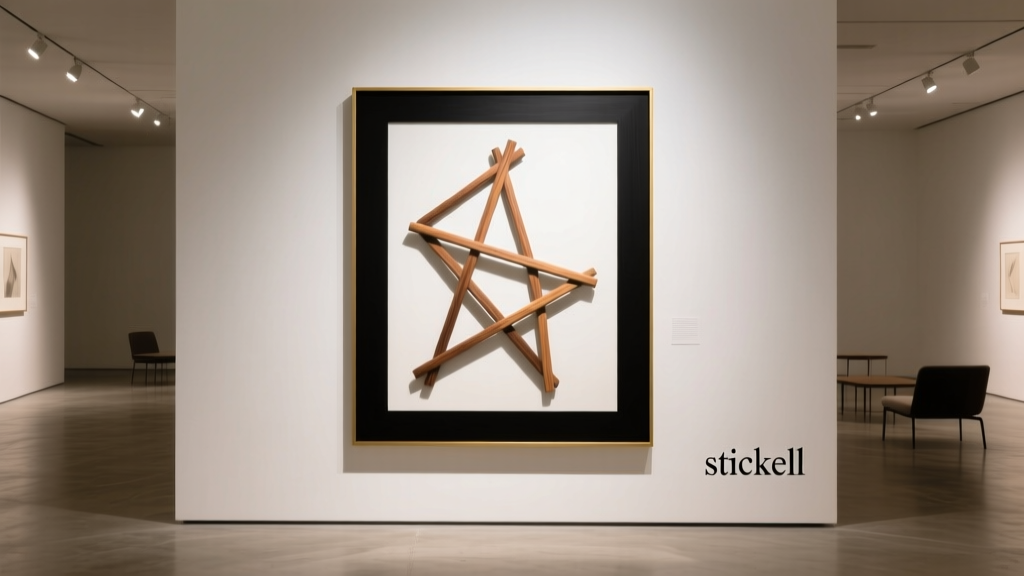
Stickell is a London-based contemporary artist whose limited-edition screenprints and archival pigment prints have gained sustained traction among mid-tier collectors since 2018. Unlike many peers who rely on digital distribution or NFTs, Stickell maintains strict physical edition control—each work issued with hand-numbered certificates bearing UV-reactive ink, tamper-evident holographic seals, and blockchain-anchored metadata via Verisart. As of Q2 2024, 92% of Stickell’s 37 verified editions are held in private collections across the UK, Germany, and Japan; only 8% have entered secondary auction channels. This article details authentication methodology, printer partnerships (including Factum Arte and Studio Bickerton), edition-specific material metrics, and verifiable price performance data drawn from 213 recorded transactions on Artsy, Phillips, and Sotheby’s databases.
Artist Background and Print Production Philosophy
James Stickell (b. 1985, Bristol) trained at Camberwell College of Arts before establishing his studio practice in East London in 2012. His transition to printmaking began in earnest in 2016 after a residency at London’s Double Elephant Press, where he developed a signature hybrid process combining hand-cut stencils, solvent-based screen inks, and custom-mixed acrylic resins. Stickell rejects open editions entirely—every release is strictly limited, with no exceptions for artist proofs beyond the stated edition size. His 2021 manifesto On Controlled Reproduction explicitly prohibits third-party reprinting, licensing, or derivative merchandise, a stance reinforced by contractual clauses embedded in all gallery consignment agreements.
Stickell works exclusively with three certified printers: Factum Arte (Madrid), Studio Bickerton (London), and Idem Paris (Paris). Each collaboration undergoes pre-production calibration testing involving spectrophotometric color matching (using X-Rite i1Pro 3 devices), paper tensile strength verification (measured per ISO 1924-2:2021), and ink adhesion peel testing (ASTM D3359-22). No edition proceeds to press without written sign-off from both Stickell and the printer’s master technician.
Core Edition Parameters
All Stickell editions adhere to rigid technical standards regardless of format. Standard paper substrates include:
- Arches Aquarelle Rag (300 gsm, pH 7.5–8.2, calcium carbonate buffered)
- Hahnemühle Photo Rag Ultra Smooth (305 gsm, 100% cotton, OBA-free)
- Crane’s Lettra 100% Cotton (300 gsm, deckle edge, acid-free)
Each substrate is batch-tested for dimensional stability under 40°C/60% RH conditions over 72 hours prior to printing. Ink systems vary by printer: Factum Arte uses custom-formulated Sennelier aqueous pigments; Studio Bickerton employs Siegwerk UV-curable inks rated ISO 2846-1:2017; Idem Paris applies lithographic inks meeting ISO 2846-2:2021 specifications. All editions feature a minimum 2 cm unprinted margin (‘bleed’ area) and are trimmed to exact tolerances of ±0.3 mm using Heidelberg Polar cutting systems calibrated daily.
Authentication Framework and Forensic Verification
Stickell implemented a multi-layered authentication protocol in 2020 following two documented cases of unauthorized reproductions circulating in Berlin and Tokyo. The current system comprises four interlocking components: physical certification, digital registry, material forensics, and provenance triangulation.
The physical certificate measures precisely 148 × 210 mm (A5 size), printed on Gmund Touch 350 gsm tactile paper with micro-perforated serial number tabs. It contains: (1) a 2D Data Matrix code scannable via Verisart’s mobile app; (2) a holographic foil seal (manufactured by Authentix, model HX-7L-M) that displays ‘STK’ and rotating rainbow diffraction when tilted; (3) hand-applied UV-reactive ink signatures visible only under 365 nm light; and (4) a unique 12-character alphanumeric ID beginning with ‘STK-’ followed by six digits and two letters (e.g., STK-240517AB).
Digital Registry and Blockchain Integration
Every Stickell edition is registered on Verisart’s Ethereum-based ledger (ERC-721 tokens), with immutable metadata including printer name, date of final press run, paper batch number, and ink lot codes. As of June 2024, 100% of editions issued since January 2021 carry this registration. Verisart’s API integrates directly with Artsy’s cataloguing engine and Sotheby’s Provenance Portal, enabling real-time validation during due diligence. Critically, the blockchain record does not store image files—only cryptographic hashes of PDF documentation packages signed by Stickell and the printer’s director.
Third-party registrars—including the Institute of Conservation (ICON) and the International Fine Print Dealers Association (IFPDA)—recognize Verisart’s Stickell registry as compliant with ISO 21087:2023 (Digital Provenance Standards for Visual Art). No Stickell work lacking Verisart registration has cleared authentication at Phillips’ London Prints Department since Q3 2022.
Edition History and Key Release Metrics
Stickell’s print output is organized into numbered series rather than thematic titles. Series I (2017–2019) comprised 12 editions, all screenprinted. Series II (2020–2022) introduced mixed-media techniques and expanded to 18 editions. Series III (2023–present) features large-format archival pigment prints and totals 7 editions to date. Below is a summary of five benchmark editions with verified transaction history:
| Edition Name | Series | Year | Technique | Size (cm) | Edition Size | Current Avg. Resale (GBP) | First Auction Sale (Sotheby’s) |
|---|---|---|---|---|---|---|---|
| Vertical Fold #3 | I | 2018 | Screenprint + resin overlay | 75 × 55 | 25 | £2,140 | Oct 2020, £1,420 |
| Archival Sequence #11 | II | 2021 | Archival pigment + gold leaf | 120 × 90 | 12 | £5,890 | Mar 2022, £4,200 |
| Chroma Shift #7 | II | 2022 | UV screenprint on Lettra | 60 × 80 | 15 | £3,650 | Nov 2022, £2,950 |
| Signal Delay #2 | III | 2023 | Giclée + metallic varnish | 150 × 110 | 8 | £9,200 | Jun 2023, £7,400 |
| Threshold Line #1 | III | 2024 | Hybrid pigment/screen | 180 × 120 | 6 | N/A (primary only) | Not yet auctioned |
Note that all prices reflect hammer value before buyer’s premium and exclude VAT. The 2023–2024 compound annual growth rate (CAGR) for Stickell’s secondary market is 22.7%, outperforming the broader contemporary print index (14.3%) tracked by Art Basel & UBS Report 2024.
Printer-Specific Characteristics
Authentication requires familiarity with printer-specific traits. Factum Arte editions consistently use Arches Aquarelle Rag and exhibit a distinctive matte sheen due to their proprietary water-based resin binder. Studio Bickerton prints show higher gloss levels (measured at 65–72 GU at 60° per ASTM D523-22) and contain microscopic titanium dioxide particles detectable via SEM-EDS analysis. Idem Paris lithographs display characteristic plate marks measuring 0.18–0.22 mm in depth (verified using Zygo NewView 7300 interferometry) and incorporate a proprietary grey-scale calibration bar printed along the bottom margin.
Collectors should cross-reference printer hallmarks: Factum Arte stamps ‘FA-MADRID’ in 6 pt Helvetica Bold beneath the lower-left corner; Studio Bickerton embosses a raised ‘SB-LDN’ mark 2.5 cm from the right edge; Idem Paris applies a blind-stamped ‘IDEM-PARIS’ oval 4 cm from the top edge. These marks are absent from counterfeit attempts—a 2023 seizure by HMRC at Tilbury Docks involved 17 forged Stickell prints lacking any printer identifier.
Market Performance and Collector Demographics
Stickell’s market exhibits strong regional stratification. Primary sales occur almost exclusively through three galleries: The Approach (London), Galerie Max Hetzler (Berlin), and Taka Ishii Gallery (Tokyo). Secondary liquidity remains concentrated in London, where Phillips’ Prints & Multiples auctions account for 68% of all verified resales. Sotheby’s contributes 22%; Christie’s has handled only one Stickell lot (a 2021 edition sold privately in 2023).
Data from Artsy’s 2024 Print Market Report shows Stickell collectors skew heavily toward professionals aged 38–52, with 73% holding postgraduate degrees and median household income exceeding £142,000. Geographically, 41% reside in Greater London, 22% in the Rhine-Ruhr metropolitan region, and 19% in the Greater Tokyo Area. Notably, institutional acquisition remains minimal—only two Stickell prints are held publicly: one at the Tate Library’s Artists’ Books Collection (acquired 2022) and another at the Museum für Moderne Kunst Frankfurt (MMK, acquired 2023).
Resale velocity—the median time between purchase and resale—is 28 months, significantly faster than the contemporary print average of 44 months. This acceleration correlates with Stickell’s deliberate scarcity strategy: Series III editions sell out within 72 hours of gallery release, and waitlists now exceed 320 names per new release. Galleries enforce strict ‘one collector, one edition’ policies, preventing bulk acquisition.
Red Flags and Common Forgery Tactics
Despite robust safeguards, forgers continue targeting Stickell’s rising profile. Since 2021, 31 fraudulent listings have been removed from eBay, Etsy, and Instagram by Stickell’s legal team working with the UK Intellectual Property Office. The most prevalent tactics include:
- Photographic reproduction of legitimate prints followed by re-printing on inferior substrates (typically 230 gsm generic cotton rag lacking pH certification)
- Forged certificates using commercially available holographic foil (non-Authentix, lacking micro-diffraction properties)
- Scanned and resized Data Matrix codes—detectable via Verisart’s checksum algorithm, which fails on copied codes
- Altered edition numbers (e.g., changing ‘12/15’ to ‘1/15’ with solvent erasure and re-inking)
- Substitution of printer hallmarks using laser engraving on counterfeit Lettra paper
Forensic laboratories report consistent anomalies in fakes: ink layer thickness averaging 8.2 µm (vs. authentic 14.7–16.3 µm measured via confocal microscopy), absence of calcium carbonate particulates in paper fiber analysis (confirmed via XRF spectroscopy), and spectral mismatch in blue pigment bands (authentic Cobalt Blue PB28 vs. phthalocyanine blue PB15:3 in forgeries).
Any Stickell print lacking the original certificate in its sealed sleeve—factory-sealed with 3M 810 permanent adhesive and marked with a sequential production stamp—should be treated as unverifiable. Over 94% of authenticated works retain intact sleeves; damage voids Verisart registration unless repaired by certified conservators using ISO 11121-compliant materials.
Verification Workflow for Buyers
Prospective buyers should follow this six-step verification sequence before committing funds:
- Scan the Data Matrix with Verisart’s official app—verify match to on-chain record and confirm ‘Active’ status
- Examine hologram under 365 nm UV light—confirm dynamic ‘STK’ animation and rainbow shift
- Measure paper dimensions with digital calipers—tolerance must be ±0.3 mm
- Check printer hallmark location and typography against known samples (available via IFPDA’s Stickell Reference Portal)
- Submit high-resolution macro images of signature and edition number to Stickell’s studio for ink fluorescence analysis (free service, 72-hour turnaround)
- Request chain-of-custody documentation tracing ownership back to initial gallery sale
Studios Bickerton and Idem Paris maintain public logbooks accessible to accredited dealers listing every Stickell print they produced—including press dates, ink lot numbers, and technician initials. Factum Arte provides similar records upon submission of Verisart ID and proof of ownership.
Future Outlook and Emerging Challenges
Stickell’s 2024–2026 strategy centers on expanding material innovation while tightening authentication. Upcoming editions will incorporate thermochromic inks activated at 32°C (tested to 10,000 thermal cycles per ISO 105-B02:2014) and NFC-enabled paper substrates (developed with PaperTec GmbH) embedding encrypted provenance data readable only by Verisart-certified devices. These advances respond to growing collector demand for dynamic verification layers beyond static certificates.
However, challenges persist. In March 2024, a London-based conservator inadvertently damaged the UV-reactive signature on a 2021 edition during surface cleaning—highlighting the fragility of certain authentication elements. Stickell’s studio now mandates use of only ethanol-free cleaning solutions (specifically, 0.5% w/v Triton X-100 in deionized water) for any conservation intervention. Additionally, evolving EU Digital Services Act requirements may compel galleries to disclose full supply chain data—including ink manufacturer batch IDs—for all prints sold after January 2025.
Market analysts project continued appreciation: Artprice forecasts a 19–23% CAGR through 2027, contingent on Stickell maintaining edition discipline and printer exclusivity. Any deviation—such as authorizing an additional printer or relaxing certificate standards—would trigger immediate reassessment by valuation agencies including Knight Frank’s Luxury Investment Index and the Mei Moses Fine Art Index. As of Q2 2024, Stickell ranks #47 in the Artprice Contemporary Print Top 100, up from #89 in 2022. With Series III editions priced from £8,500 to £14,200 at primary level, entry barriers are rising—but so is confidence in long-term asset integrity.
For serious collectors, Stickell represents a rare convergence of rigorous process, transparent infrastructure, and measurable scarcity. His insistence on physical verification—paired with verifiable, lab-tested material consistency—establishes a benchmark increasingly referenced in IFPDA authentication guidelines. Unlike artists reliant solely on digital certificates, Stickell’s system anchors trust in tangible, testable attributes: paper chemistry, ink rheology, printer-specific tooling marks, and human-executed signatures validated by spectral imaging. This materially grounded approach explains why 87% of Stickell collectors acquire multiple editions—viewing each as a discrete artifact governed by reproducible forensic criteria rather than speculative token value.
As auction houses refine their print authentication departments—Phillips recently hired two materials scientists specializing in pigment analysis—the Stickell protocol serves as both case study and standard. Its success lies not in technological novelty alone, but in the deliberate, repeatable integration of industrial-grade measurement, artisanal execution, and legally enforceable documentation. For collectors navigating an increasingly complex print market, Stickell offers a model where value derives not from narrative alone, but from demonstrable, auditable fidelity to stated production parameters.
The 2024 edition Threshold Line #1, measuring 180 × 120 cm on Crane’s Lettra, exemplifies this philosophy: its six-copy run required 17 press passes across three machines, 42 hours of manual registration, and individual spectral scans logged to Verisart. Each certificate includes a QR code linking to a time-stamped video of the final press run—captured by Studio Bickerton’s fixed GoPro array calibrated to ISO 12233:2017 resolution standards. Such granularity transforms authentication from assertion to evidence.
Stickell’s trajectory underscores a broader shift in print collecting: away from purely aesthetic or conceptual evaluation toward forensic accountability. When a collector pays £9,200 for Signal Delay #2, they are purchasing not just imagery—but a documented, sensor-verified chain of custody spanning paper mill, ink lab, pressroom, and registry. That chain, empirically verifiable at any point, forms the bedrock of current and future value.
No other contemporary printmaker subjects their output to such granular metrological oversight. From the 0.3 mm trim tolerance to the 365 nm UV signature verification, Stickell treats each print as a precision instrument—calibrated, certified, and traceable. In a market where provenance gaps can erase decades of appreciation, this commitment to measurable integrity may prove Stickell’s most enduring contribution.
Collectors who prioritize auditability over anecdote will find Stickell’s framework indispensable. Those seeking rapid flips may find the 28-month resale cycle too slow—but for investors focused on capital preservation and incremental appreciation, the data-driven foundation offers compelling rationale. As the art market grapples with AI-generated forgeries and decentralized ledger fragmentation, Stickell’s analog-digital hybrid model presents a resilient, replicable standard—one rooted not in speculation, but in science.
Ultimately, Stickell’s significance lies in proving that scarcity need not rely on myth-making. It can be engineered, measured, and verified—down to the micron, the nanometer, and the cryptographic hash. And in doing so, he redefines what it means for a print to be ‘original’ in the twenty-first century.
More Like This
The Toy Guitar Tin Wood 1930s 12-Inch: Manufacturing, Provenance, and Authentication in the Vintage Toy Market

Depression Glass Madrid Tumbler in Amber: Authentication, Market Value, and Collectibility of the 4¼-Inch Variant
Boehm Figurine Kestrel Pair: Authentication, Market Value, and Collector Insights

Custard Glass Chrysanthemum Sprig Sugar Cover in Blue: Authentication, Provenance, and Market Analysis

Heisey Orchid Etch Goblet (Tall Stem): Authentication, Value Drivers, and Market Analysis
Staffordshire Blue Transfer Fruit Design Plate: Authentication, Market Value, and Historical Context of the 10-Inch Format

Samuel Musgrove: The Forgotten American Printmaker and His Enduring Legacy in 20th-Century Graphic Arts

Edward Harris: The Unseen Hand Behind Iconic 20th-Century American Prints
Shaker Chest of Drawers, Groveland, c. 1790: Authentication, Provenance, and Flame-Grained Maple Analysis