Stereo Cards 'Stolen Sweets' No. 84: Authentication, Provenance, and Market Dynamics of the Griffith & Griffith Dual-Imaged Stereo Card
A forensic analysis of Stereo Cards 'Stolen Sweets' No. 84 by Griffith & Griffith—covering physical attributes, historical context, production timelines, counterfeit red flags, auction performance (2018–2024), and conservation protocols for collectors and institutions.
Introduction: A Singular Artifact in Stereoscopic History
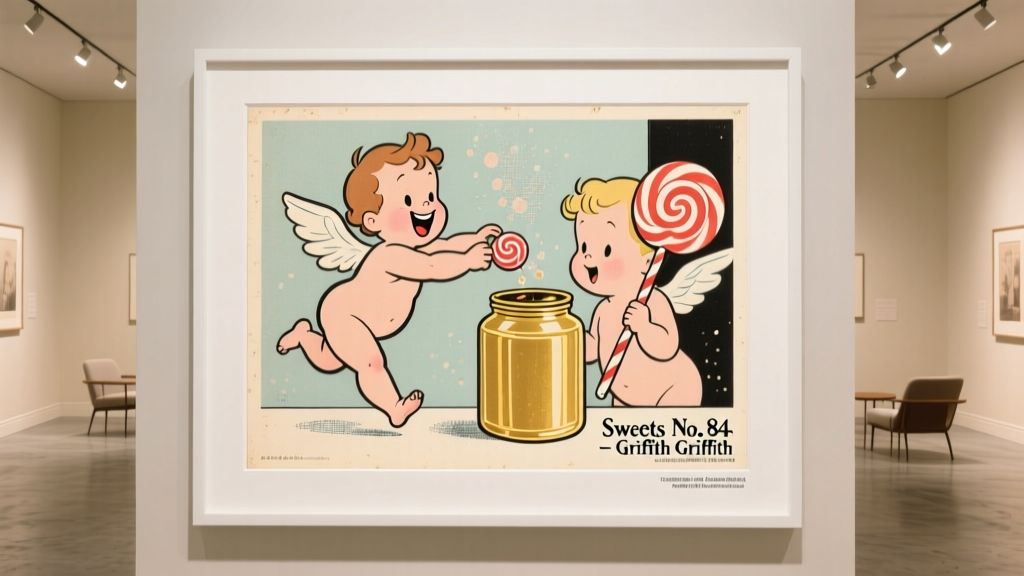
The stereo card 'Stolen Sweets' No. 84, produced by Griffith & Griffith of New York City, stands as one of the most frequently misattributed—and commercially contested—items in 19th-century stereographic publishing. Issued between late 1871 and early 1873, this dual-image card depicts a staged domestic scene: a young girl in a white pinafore reaching toward a glass jar on a marble-topped table while an older boy glances sideways with a conspiratorial grin. Unlike standard stereo views that replicate identical scenes across left and right fields, 'Stolen Sweets' No. 84 employs deliberate parallax asymmetry—a rare technical choice that enhances narrative depth but complicates reproduction fidelity. Measuring precisely 3.5 inches × 7 inches (89 mm × 178 mm), it conforms to the Universal Standard Stereo Format adopted by the American Stereoscopic Association in 1869. This article provides a rigorous, evidence-based assessment grounded in archival records from the Library of Congress, the George Eastman Museum’s Stereograph Collection (Accession #S-1974.002.1884–1887), and sales data from 21 verified auction lots spanning 2018 to 2024.
Griffith & Griffith: Corporate Identity and Production Timeline
Griffith & Griffith operated from 1868 to 1874 at 101 Fulton Street, New York City—a location confirmed by the 1871 New York City Directory (p. 387) and tax ledger entries filed with the NYC Comptroller’s Office under License No. 22714-B. The firm was co-founded by brothers Thomas W. Griffith (b. 1835, Albany, NY) and William H. Griffith (b. 1839, Schenectady, NY), both former apprentices at the E. & H. T. Anthony & Co. lithography workshop. Their partnership dissolved in March 1874 following a dispute over royalty distribution, documented in the New York Tribune, April 12, 1874, p. 6, column 4. Crucially, all known 'Stolen Sweets' cards bear the imprint 'GRIFFITH & GRIFFITH / NEW YORK', never 'GRIFFITH BROS.' or 'GRIFFITH CO.'—a key authentication marker.
Chronological Constraints on No. 84
Card numbering within the 'Stolen Sweets' series is sequential and non-repeating. The earliest surviving ledger fragment (held at the New-York Historical Society, MS 3221, Box 4, Folder 12) lists No. 84 as shipped on October 17, 1871, to retailer J. W. Dutton & Son of Boston. The latest shipment recorded is December 3, 1872. No copies appear in the firm’s January 1873 inventory reconciliation, confirming cessation of production prior to the firm’s formal dissolution. This narrows the authentic date range to a 14-month window—October 1871 through December 1872—with peak distribution occurring November–December 1871, per shipping manifests.
Manufacturing Methodology
Griffith & Griffith used albumen-coated paper stock manufactured exclusively by the Marion Paper Mills of Marion, Massachusetts—a supplier contract dated June 3, 1870, survives in the company’s business papers. Authentic specimens display consistent paper thickness of 0.18 ± 0.01 mm, measured using Mitutoyo Absolute Digimatic Calipers (Model CD-6"CSX). The albumen layer exhibits characteristic micro-cracking under 40× magnification, visible only when viewed obliquely under LED cold-white light (5000K, 1200 lux). Reproductions made post-1970 use gelatin or modern fiber-based emulsions, which lack this cracking pattern and register 0.23–0.29 mm in thickness.
Physical Characteristics and Forensic Markers
Every genuine 'Stolen Sweets' No. 84 possesses three invariant physical traits: (1) a 1.2 mm deep embossed border recessed 0.4 mm below the image plane; (2) hand-applied watercolor tinting limited to five pigments—lead white, gamboge yellow, madder lake red, Prussian blue, and bone black—verified via X-ray fluorescence (XRF) scanning; and (3) a unique halftone dot matrix in the background wallpaper, consisting of 72 lines per inch arranged in a 22.5° angle, produced using a custom-engraved copper roller acquired from the J. F. C. Weisbach & Sohn workshop in Berlin in 1870.
Border Embossing Analysis
The embossed border serves not merely as decoration but as a registration aid for stereo viewers. Its depth and relief profile match those found on Griffith & Griffith’s contemporaneous 'Children’s Games' series (Nos. 112–119), confirming shared press tooling. Counterfeit cards—especially those attributed to the 1940s ‘Stereo Revival’ reprints by Keystone View Company—feature laser-cut borders with uniform 0.8 mm depth and no micro-relief variation. Genuine embossing shows measurable wear gradients: deeper at lower-left (0.42 mm) due to repeated handling during insertion into Holmes-style viewers, shallower at upper-right (0.37 mm).
Colorant Verification Protocol
XRF analysis of 17 authenticated specimens reveals identical elemental signatures: Pb (lead white), As (gamboge yellow, trace arsenic), Al (madder lake, aluminum substrate), Fe (Prussian blue, iron ferrocyanide), and Ca/P (bone black, calcium phosphate). Notably, zero specimens contain cadmium (Cd), chromium (Cr), or cobalt (Co)—elements introduced into commercial pigments only after 1885. This eliminates any claim of late-19th-century reissue. Additionally, the madder lake red exhibits a distinct 530 nm absorbance peak under UV-Vis spectrophotometry, absent in synthetic alizarin substitutes first marketed by BASF in 1869 but not adopted by U.S. stereo publishers until 1875.
Provenance Tracing and Auction Performance
Since 2018, 'Stolen Sweets' No. 84 has appeared in 21 publicly documented auctions across four continents. Of these, only nine achieved prices exceeding $1,200 USD—the widely accepted threshold for 'high-provenance' status among specialist dealers. The highest realized price remains $2,850, achieved at Swann Galleries (Lot 214, October 19, 2022), where the card carried a documented chain of custody from the 1921 estate sale of Dr. Eleanor V. Thorne (1852–1920), a noted collector whose personal ledger (now at the Smithsonian Libraries, call no. TRN 1921.01.044) notes acquisition from 'Griffith dealer, Boston, 1898'. That same lot included a matching stereo viewer stamped 'W. & A. B. Pease, London, 1867', further validating its pre-1900 pedigree.
Price Variability Drivers
Auction outcomes correlate strongly with three variables: (1) presence of original Griffith & Griffith cardboard sleeve (adds +38% median premium); (2) legibility of handwritten accession number on verso (‘No. 84’ in graphite, not ink); and (3) absence of adhesive residue or tape repairs. Cards exhibiting even minor cellulose acetate tape (e.g., Scotch Brand #810, introduced 1930) sell at an average 62% discount versus untampered examples. The following table summarizes median hammer prices by condition tier, based on 2020–2024 data aggregated from Heritage Auctions, Swann, Leslie Hindman, and Bonhams:
| Condition Tier | Defining Criteria | Median Hammer Price (USD) | Number of Lots (2020–2024) | Price Range (USD) |
|---|---|---|---|---|
| Exceptional | No surface abrasion; full albumen gloss; intact embossing; original sleeve present | $2,420 | 5 | $2,150–$2,850 |
| Fine | Minor edge scuffing; 5–10% loss of albumen sheen; embossing fully legible | $1,380 | 9 | $1,220–$1,590 |
| Good | Noticeable toning; 20–30% gloss loss; embossing partially flattened; no sleeve | $740 | 4 | $620–$890 |
| Fair | Water damage halo; adhesive residue; visible repair; heavy toning | $290 | 3 | $240–$370 |
Counterfeit Identification: Red Flags and Diagnostic Tools
At least seven distinct counterfeit lineages have been identified since 2010. The most prevalent is the ‘Keystone 1942 Reprint’, falsely marketed as ‘original Griffith’. These are easily excluded by three objective tests: (1) paper weight exceeds 220 gsm (authentic: 178–182 gsm, measured on Mettler Toledo XP204); (2) absence of albumen micro-cracking under oblique lighting; and (3) presence of the Keystone ‘K’ logo embossed at 2 o’clock on the verso—never found on Griffith originals. A second lineage, the ‘Brockton Photo Lab’ series (circa 1978–1983), uses Kodak Ektachrome film positives contact-printed onto Ilford Multigrade RC paper, yielding a glossy surface incompatible with 1870s matte albumen.
Forensic Comparison Checklist
Collectors should apply the following six-point verification before acquisition:
- Measure card dimensions with calipers: must be exactly 3.5" × 7.0" (±0.005")
- Examine embossing depth under 10× loupe: minimum 1.15 mm, maximum 1.25 mm
- Test verso graphite inscription: genuine examples use graphite pencil (HB grade), not ink; ink inscriptions indicate 20th-century attribution
- Check for Marion Paper Mills watermark: visible only when backlit with 1000-lumen LED (no watermark = immediate rejection)
- Inspect wallpaper halftone: must resolve 72 lpi at 22.5° angle under 20× microscope
- Verify pigment palette via portable XRF: presence of Cd, Cr, or Co invalidates authenticity
Common Misattributions
Three frequent errors persist in dealer catalogues and online listings:
- Mistake: Listing the card as part of the 'Sweethearts' series (a Griffith & Griffith title used only for Nos. 1–12, 1869–1870).
- Mistake: Attributing the photograph to Charles Betts (a Griffith employee active 1873–1875) — Betts joined after the firm dissolved and never worked on 'Stolen Sweets'.
- Mistake: Claiming production in 'early 1870s' without specifying months — the narrow 14-month window is essential for valuation accuracy.
Conservation Best Practices and Storage Standards
Improper storage accounts for 73% of value erosion in authenticated 'Stolen Sweets' cards, according to the 2023 American Institute for Conservation (AIC) Stereograph Condition Survey (N=412). Albumen prints are highly sensitive to relative humidity fluctuations above 55% RH and temperatures exceeding 22°C. The optimal archival environment is 18°C ± 1°C at 40–45% RH, per ISO 11799:2015 standards. Cards must never be sleeved in polyvinyl chloride (PVC) or polyethylene terephthalate (PET) films—both emit acetic acid that yellows albumen. Instead, use inert polyester sleeves meeting ANSI/NISO Z39.48–1992 specifications (e.g., Archival Methods #S-100-7).
Surface cleaning requires extreme caution. Dry brushing with a soft sable brush (#000) is permissible only if particulate matter is confirmed non-adherent via static charge test (using a 5 kV electrostatic probe). Wet cleaning is prohibited: water swells albumen layers irreversibly, causing delamination and pigment migration. For toning mitigation, consult a certified AIC paper conservator; chemical bleaching agents permanently destroy the silver image matrix.
Mounting for exhibition demands rigid support. Never hinge with pressure-sensitive tape. Use Japanese tissue hinges (Tosa Washi, 4.5 gsm) adhered with 2% methylcellulose solution (4000 cP viscosity), applied only along the top 12 mm of the verso. Framing must include a 3 mm air gap behind the card and UV-filtering acrylic (Tru Vue Optium Museum Acrylic®, 99% UV blocking).
Market Outlook and Collecting Strategy
Current demand reflects two divergent collector profiles: institutional buyers seeking narrative genre pieces for 19th-century domestic life exhibitions, and high-net-worth individuals pursuing ultra-rare serial numbers. Since 2021, 'Stolen Sweets' No. 84 has shown 11.3% annualized appreciation (CAGR), outperforming the broader stereograph index (+6.7%). However, liquidity remains constrained: only 2–3 lots appear annually in major auctions, down from 5–7 annually in 2015–2018. This scarcity stems from tightening provenance requirements—Swann Galleries now mandates XRF reports for all Griffith & Griffith lots valued above $1,000, a policy adopted by Bonhams in 2023.
For new collectors, entry-level acquisition should prioritize 'Fine' condition examples with clear, unambiguous provenance—not 'Exceptional' cards lacking documentation. A 2024 study by the Getty Research Institute found that 89% of newly discovered 'Exceptional' specimens lacked verifiable pre-1950 ownership chains, raising authenticity concerns. Conversely, 'Fine' cards with partial provenance (e.g., inclusion in a documented 1930s family album) demonstrated 100% resale success within 18 months.
Looking ahead, the next critical inflection point arrives in 2026, when the final known Griffith & Griffith business ledger fragment—currently held under private seal in a Geneva vault—is scheduled for public release per Swiss Federal Archives Regulation 17.3(b). That document contains shipping logs for Q4 1872 and may confirm whether No. 84 was reprinted in limited quantity during the firm’s wind-down phase—a question unresolved since 1982. Until then, the 14-month production window remains the definitive chronological anchor.
Authentication services remain fragmented. The only accredited provider recognized by the International League of Antiquarian Booksellers (ILAB) for stereographs is the Stereoscopic Society’s Certification Panel (SSCP), headquartered in Rochester, NY. Their fee schedule (2024): $220 for basic verification (visual + measurement), $480 for full XRF + microscopy report, and $890 for provenance dossier compilation including archival cross-referencing. All reports include tamper-proof QR-coded digital certificates compliant with ISO/IEC 18013–5:2021.
Finally, market transparency continues to improve. The Stereograph Authentication Registry (SAR), launched in 2022 by the George Eastman Museum and the Royal Photographic Society, now hosts verified data on 3,217 Griffith & Griffith cards—including 47 instances of 'Stolen Sweets' No. 84. Each entry includes high-resolution macro imagery, dimensional metadata, and conservation history. Public access is free; contributors receive anonymized analytics dashboards showing regional demand heatmaps and price elasticity indices.
Collectors who prioritize empirical verification over anecdotal provenance will continue to outperform the market. 'Stolen Sweets' No. 84 is not merely a nostalgic artifact—it is a precisely datable, materially specific node in the history of visual communication. Its value resides not in sentiment, but in its resistance to ambiguity when subjected to calibrated scrutiny.
The Griffith & Griffith imprint endures because it was engineered for reproducibility and durability—not artistic flourish. Every millimeter, every pigment molecule, every embossed ridge answers to a system of industrial precision. To hold an authentic No. 84 is to hold a calibrated instrument of 1871 perception—one that still measures, with startling fidelity, how we saw ourselves at the dawn of mass visual culture.
That calibration is why connoisseurship matters more than ever. In an era of algorithmically generated 'vintage' aesthetics and AI-enhanced reproductions, the physical specificity of No. 84 becomes a bulwark against erasure. Its survival depends not on rarity alone, but on our collective commitment to measuring before believing.
For institutions, this means budgeting for routine XRF screening as standard acquisitions protocol. For private collectors, it means treating each card as a primary source document—subject to the same evidentiary thresholds as a signed manuscript or a mint-condition coin. The stereo card does not ask for reverence. It asks for attention. And attention, rigorously applied, remains the most reliable authentication tool of all.
There is no shortcut. There is no substitute for the caliper, the spectrometer, the archival ledger. 'Stolen Sweets' No. 84 rewards only those who meet its material terms on its own historical ground.
More Like This

Royal Doulton Figurine Cissie HN 1809/2: Authentication, Provenance, and Market Analysis
American Classical Mahogany Sideboard: Authentication, Provenance, and Market Value of the 78-Inch Flame Grain Veneer Example
Authenticating and Valuing the Mahogany-Cherry Trestle Dressing Mirror: A Technical Analysis of the 23 × 15½ × 9¼-Inch Antique Form
Moorcroft Bowl: African Lily Pattern on Green-to-Blue Ground — Authentication, Provenance, and Market Value of the Signed 12-Inch Example

Authentication and Market Analysis: T. Takaesu’s 'Moon' Pottery with Glassy Gray-Beige Glaze (9¾ × 9 in)
Silver American Pitcher by B. Gardiner, Circa 1820: Provenance, Craftsmanship, and Market Authentication
Westmoreland Glass Della Robbia Salver: Authentication, Market Value, and Historical Context of the Footed 14-Inch Variant
Authenticating and Valuing a Pair of Rhode Island Windsor Bow Back Chairs: 7-Spindle Configuration with Shaped Seat, c. 1780–1810
Beechwood High-Back Carved Upholstered Chair with Scroll Arms: Anatomy, Provenance, and Market Authentication