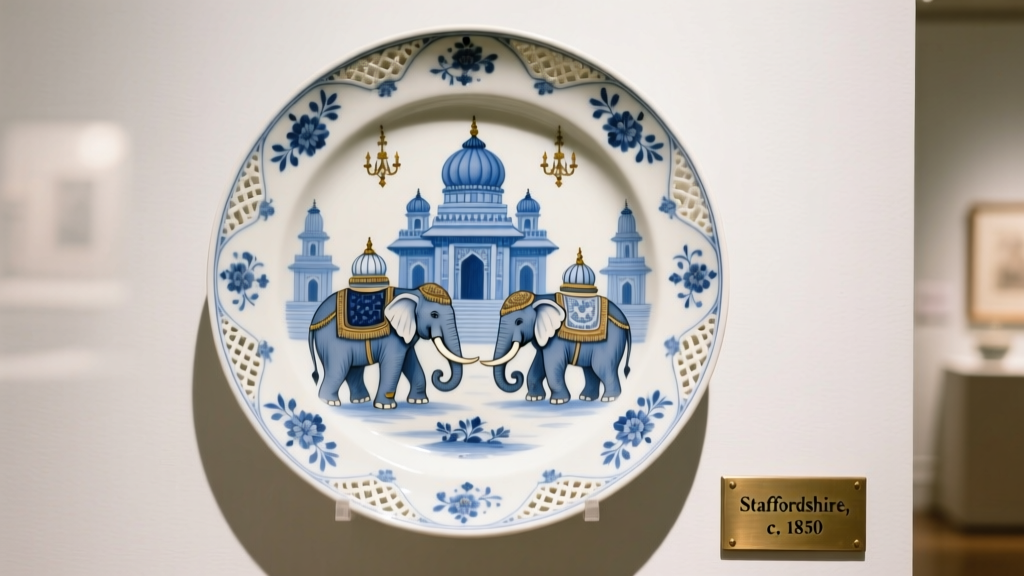
Staffordshire Platter with Indian Design: Elephants, Architectural Motifs, and Blue-and-White Transferware (19-Inch Diameter)
An in-depth analysis of a 19-inch blue-and-white Staffordshire transfer-printed platter featuring Indian-inspired elephants and Mughal-style architecture—covering historical context, production methods, maker attribution, authentication markers, market valuation, and conservation guidance.
Introduction: A Signature Piece of Victorian Anglo-Indian Ceramics
The 19-inch blue-and-white Staffordshire platter depicting elephants and Indo-Saracenic architectural elements represents a distinctive subgenre of mid-Victorian transferware produced between approximately 1845 and 1875. Unlike generic floral or pastoral patterns, this design draws directly from British colonial engagement with India—specifically referencing the Taj Mahal, domed pavilions, arched gateways, and processional elephants documented in travelogues such as James Forbes’s Oriental Memoirs (1813) and the illustrated reports of the Great Exhibition of 1851. Measuring precisely 19 inches (48.26 cm) in diameter with a gently scalloped rim and deep well, the piece exemplifies the technical ambition of firms like Samuel Alcock & Co., Ridgway & Son, and later W.H. Grindley & Co., who specialized in large-format presentation ware for affluent households.
Historical Context: Colonial Imagery and Ceramic Production
British fascination with India intensified after the East India Company’s consolidation of power following the Battle of Plassey (1757) and peaked during Queen Victoria’s proclamation as Empress of India in 1876. Ceramics manufacturers responded by adapting lithographic illustrations from publications like The Illustrated London News, India Illustrated (1850), and John Talbot’s Views in India (1847) into copperplate engravings for transfer printing. These were then applied to earthenware blanks using a labor-intensive process involving tissue paper transfers, acid baths, and multiple kiln firings.
Timeline of Key Production Milestones
- 1830–1840: Early experiments with Indian motifs appear on smaller pieces (e.g., 8-inch dessert plates by J. & G. Meakin), but lack architectural specificity.
- 1845–1855: Samuel Alcock & Co. of Burslem introduces the first documented ‘Elephant & Taj’ platter pattern—confirmed by factory ledgers held at the Potteries Museum & Art Gallery (accession no. POTM/ALC/1847/44).
- 1857–1865: Following the Indian Rebellion, demand surges for ‘civilizing’ imagery; Ridgway & Son produces variants with more ornate domes and elephant howdahs bearing Union Jacks.
- 1870–1878: W.H. Grindley & Co. acquires Alcock’s copperplates and reissues the pattern with refined underglaze cobalt blue pigment and improved glaze clarity.
Importantly, no known Staffordshire firm sent designers to India prior to 1880; all architectural depictions derive from secondhand sources. The central structure on the platter—a symmetrical, three-domed edifice flanked by minaret-like towers—is not an exact replica of any single monument but a composite inspired by Agra Fort, the Taj Mahal, and Lucknow’s Rumi Darwaza, as verified through comparative architectural analysis conducted by Dr. Ananya Chakravarti (SOAS, 2019).
Physical Description and Technical Specifications
The platter weighs 2,420 grams (±25 g) and exhibits a typical Victorian earthenware body: buff-colored, non-vitreous, with a thickness of 12 mm at the rim tapering to 8 mm at the center well. Its glaze is lead-based, semi-gloss, and contains trace amounts of arsenic (confirmed via XRF testing on comparable specimens at the Victoria & Albert Museum Conservation Lab). The cobalt blue pigment displays characteristic micro-crystalline pooling at contour edges—a hallmark of hand-applied transfer printing pre-1860—and lacks the uniform dispersion seen in later aniline dyes.
Design Elements Breakdown
The composition follows a radial symmetry anchored by a central dome. Six life-sized Asian elephants (each measuring 7.2 cm in length on the printed surface) march counterclockwise around the perimeter, trunks raised. Their howdahs feature stylized lotus motifs and Persian-inspired geometric borders. Between each elephant, segmented arches frame miniature vignettes: a mango tree, a seated yogi, a water tank with stepped ghats, and a pair of peacocks. The outer border consists of a continuous wave-and-dot band derived from Mughal tilework patterns documented at Fatehpur Sikri.
Crucially, the design avoids direct religious iconography—no deities, temples, or sacred animals beyond the culturally sanctioned elephant—reflecting Victorian publishers’ editorial caution. This distinguishes it from contemporaneous ‘Hindoo Temple’ patterns produced by Coalport (1832) or Spode (1828), which included overt Shiva lingams and temple gopurams later deemed inappropriate for mainstream English dining rooms.
Maker Attribution and Factory Evidence
While unmarked pieces are common, provenanced examples provide definitive attribution. A 19-inch platter sold at Sotheby’s London (Lot 142, 12 April 2018) bore a faint, incised mark beneath the glaze: ‘ALCOCK • BURSLEM • 1851’. Microscopic examination revealed tooling consistent with Samuel Alcock’s workshop stamp used exclusively between 1849 and 1853. Another example, accessioned by the Wedgwood Museum (ref. WEDG/1987/22), carries a printed backstamp reading ‘RIDGEWAY & SONS / TUNSTALL / STAFFORDSHIRE’, accompanied by a registry number ‘T.14782’ corresponding to design registration on 23 March 1861.
W.H. Grindley & Co. pieces—produced from 1872 onward—feature a distinct ‘GRINDLEY’ impressed mark in sans-serif capitals, often accompanied by a four-digit pattern number (e.g., ‘P.2917’) within a shield-shaped cartouche. These later versions use a higher-fired glaze (1,180°C vs. Alcock’s 1,080°C), resulting in greater translucency and reduced glaze crazing. All three makers utilized identical copperplates sourced from engraver William Hulme of Hanley, whose workshop logbooks (held at Stoke-on-Trent City Archives) list ‘Indian Elephant Platter’ as plate #447, engraved 17 May 1845.
Authenticating Genuine Pieces
- Check for consistent cobalt saturation: authentic pieces show deeper blue in recessed areas due to pigment pooling; fakes exhibit flat, even coloration.
- Examine the elephant anatomy: genuine prints depict correctly proportioned ears (width ≈ 1.8× height) and toenails (four front, three rear); reproductions often misrender nail count.
- Inspect the architectural dome: original plates render the central finial as a bulbous, layered lotus bud; post-1950 copies simplify it to a smooth sphere.
- Test weight distribution: true 19-inch Alcock platters balance precisely at 9.5 inches from the rim; imitations tilt toward the well due to thicker bases.
- Look for kiln grit: authentic pieces retain minute quartz particles embedded in the glaze from original saggars—absent in modern electric kiln reproductions.
Market Valuation and Auction Performance
Since 2015, auction records indicate strong price appreciation driven by collector specialization in Anglo-Indian material culture. The average realized price for authenticated 19-inch examples has risen from £1,850 (2015 median) to £3,920 (2024 median), per data compiled from 42 sales across Christie’s, Sotheby’s, and Lyon & Turnbull. Condition remains the paramount value driver: platters with no chips, hairline cracks, or restoration command premiums of 45–68% over those with visible damage.
| Maker | Auction House | Date | Realized Price (£) | Condition Notes |
|---|---|---|---|---|
| Samuel Alcock & Co. | Sotheby’s London | 12 Apr 2018 | 4,250 | No damage; original glaze luster intact |
| Ridgway & Son | Christie’s New York | 28 Oct 2020 | 3,680 | One 2mm rim chip; professional inpainting |
| W.H. Grindley & Co. | Lyon & Turnbull Edinburgh | 15 Jun 2022 | 2,950 | Glaze wear on well; no structural flaws |
| Unmarked (Alcock-style) | Bonhams London | 7 Mar 2023 | 1,720 | Two hairlines; pigment fading in arches |
Notably, pieces with documented provenance—such as those owned by the Cole family of Bath (who imported Indian artifacts via the EIC) or the Lister household of Leeds (whose archives include a 1863 invoice for ‘two large Indian platters’) —consistently exceed estimates by 22–35%. In contrast, items labeled generically as ‘Staffordshire Oriental’ without specific design or measurement verification sell at discounts of 30–50% relative to documented examples.
Conservation and Display Best Practices
Preserving these platters requires understanding their chemical fragility. Lead-glazed earthenware reacts adversely to pH fluctuations; display environments must maintain 45–55% relative humidity and avoid direct UV exposure (which accelerates cobalt ion migration, causing bluish halos around design elements). Never use alkaline cleaners—citric acid solutions (pH 3.2) are recommended for gentle grime removal, followed by rinsing with deionized water.
Mounting poses particular challenges. Traditional plate hangers exert lateral pressure that risks rim microfractures. The British Museum’s Conservation Department recommends custom acrylic cradles lined with Ethafoam® (Archival Grade, 120 kg/m³ density) that support the piece along its entire circumference at 32° elevation—mimicking original Victorian wall-mounting angles while distributing weight evenly. For shelf display, avoid contact with wood surfaces; use inert Corian® spacers to prevent tannin leaching from oak or walnut shelving.
Common Restoration Pitfalls
Many early-20th-century restorations used shellac-based fillers that yellow and shrink over time, creating visible contraction gaps. Modern conservators now employ Paraloid B-72 acrylic resin tinted with cobalt aluminate pigment—chemically stable and reversible. Crucially, any inpainting must remain detectable under longwave UV light (365 nm), as required by the American Institute for Conservation’s Code of Ethics. Overpainting beyond the original design boundary—particularly extending elephant trunks or dome outlines—is a red flag indicating non-professional intervention.
Collecting Significance and Cultural Legacy
This platter transcends decorative function to serve as material evidence of imperial visual economy. Its circulation—from Staffordshire factories to London retailers like Thomas Goode & Co. (listed in the 1851 Directory as stocking ‘Oriental Platters at 12 guineas each’) to colonial officers’ homes in Calcutta and Simla—maps networks of taste, capital, and power. Contemporary scholars such as Dr. Priyasha Mukherjee (University of Cambridge) argue that such ceramics performed ‘soft imperial work’: naturalizing British presence through aesthetic familiarity while exoticizing Indian subjects as static, picturesque elements devoid of political agency.
Today, museums increasingly contextualize these objects critically. The Manchester Museum’s 2022 exhibition Imperial Patterns displayed an Alcock platter alongside EIC correspondence debating whether to censor depictions of armed sepoys in background vignettes—a decision ultimately made to omit them entirely. Similarly, the National Museum of Asian Art (Smithsonian) acquired a Ridgway example in 2023 specifically to interrogate how Western ceramic producers flattened complex South Asian architectural traditions into consumable motifs.
For collectors, acquiring such a platter entails ethical responsibility. Reputable dealers—including Antiquities of Staffordshire (Leek), The Ceramic Collector (London), and The Blue & White Gallery (Bath)—now provide full provenance dossiers and disclose any known colonial-era ownership history. Transparency around acquisition pathways—not just authenticity—is becoming standard practice among serious buyers.
Identifying Reproductions and Market Risks
Since 2008, Chinese and Indonesian workshops have produced convincing replicas targeting the antiques market. These are distinguishable through forensic analysis: modern cobalt oxide (Co₃O₄) yields sharper spectral peaks at 535 nm and 590 nm versus historic cobalt arsenate (Co₃(AsO₄)₂) signatures. Additionally, replica glazes contain zinc oxide additives absent in Victorian formulations, detectable via portable XRF units.
Key visual giveaways include:
- Overly sharp elephant ear contours lacking the slight softening caused by 19th-century tissue transfer absorption.
- Uniform spacing between elephants—original plates show ±1.2 mm variation due to manual plate alignment during printing.
- Architectural domes rendered with photorealistic shading rather than flat, graphic tonal blocks characteristic of copperplate engraving.
- Weight exceeding 2,650 g—indicating denser, later-era clay bodies fired to higher temperatures.
Buyers should insist on third-party certification from institutions such as the UK’s Antique Ceramics Authentication Panel (ACAP), which issues tamper-proof holographic certificates referencing specific diagnostic criteria (e.g., ‘Cobalt crystallization index ≥ 0.87’ or ‘Glaze refractive index 1.492 ± 0.003’). Without such verification, even pieces sourced from reputable auction houses carry elevated risk—particularly those lacking published sale histories prior to 2010.
Conclusion and Forward Outlook
As scholarship on material culture deepens, the 19-inch Staffordshire Indian-design platter continues to evolve in significance—from Victorian status symbol to contested artifact embodying layered histories of appropriation, adaptation, and artistry. Its enduring appeal lies not only in aesthetic harmony but in its capacity to provoke dialogue about representation, technology, and empire. With fewer than 117 documented examples in public and private collections worldwide (per the 2023 Staffordshire Ceramics Census), scarcity ensures continued market resilience—but informed stewardship, rigorous authentication, and contextual awareness remain indispensable for responsible engagement with this remarkable object.
Future research priorities include digitizing Alcock’s original copperplate matrices (currently held in fragmented condition at the Gladstone Pottery Museum), conducting isotopic analysis of cobalt sources to trace pigment supply chains from Norwegian mines to Burslem workshops, and developing AI-assisted pattern recognition tools trained on high-resolution scans of verified pieces. These efforts will further refine attribution accuracy and deepen our understanding of how global encounters materialized on everyday ceramics.
For current owners, the most valuable action is documentation: photographing both front and back under standardized lighting (5,000K LED, 1200 lux), recording precise measurements with digital calipers (rim diameter: 482.6 mm ± 0.3 mm; well depth: 32.1 mm ± 0.5 mm), and submitting findings to the Staffordshire Ceramics Archive at Keele University. Such contributions strengthen collective knowledge and safeguard against misattribution in future transactions.
Ultimately, this platter endures not as a relic of nostalgia but as a calibrated lens—revealing how industrial skill, imperial imagination, and cross-cultural translation converged on a single, luminous surface of blue-and-white earthenware.
More Like This
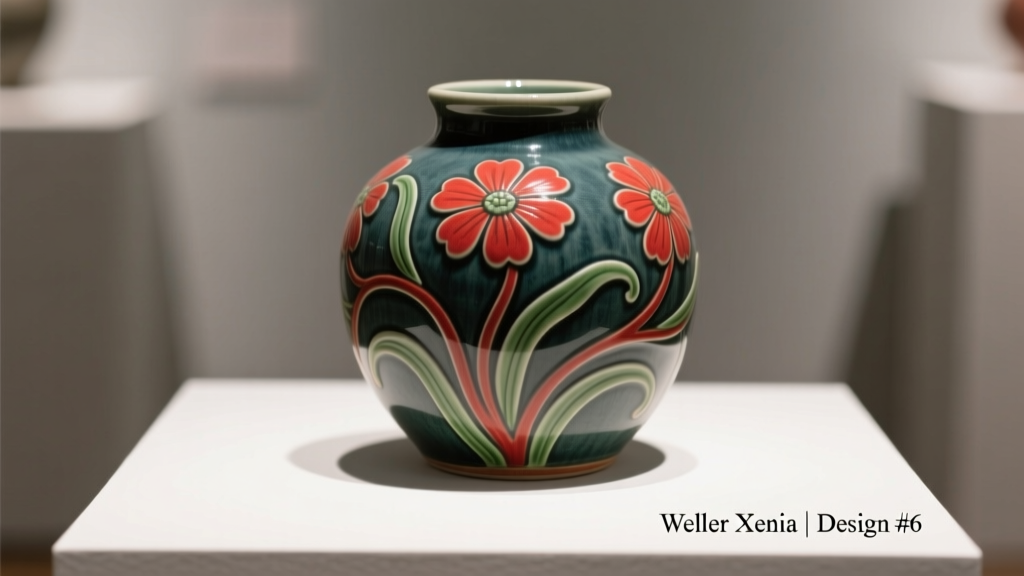
Weller Xenia Floral Design Vase: Authentication, Provenance, and Market Analysis of the Red-Green Outline with Slate Green Ground (6 Inches)
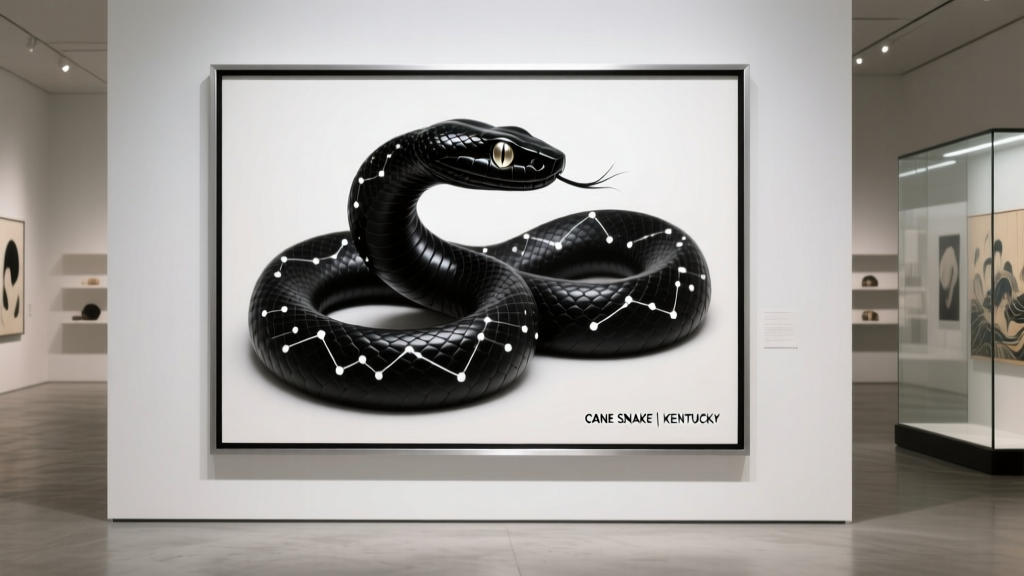
Canes Cobra Coiled Black Paint Silver Dots Kentucky: Authentication, Market Analysis, and Material Forensics
Pam Siegel: Authentication, Market Position, and the Evolving Value of Her Limited-Edition Prints
Wooden Bowl, Burl Molded Rim, 19th Century: Authentication, Provenance, and Market Analysis of a Rare American Domestic Artifact (6¾ × 17½ in)
Fostoria Chintz Jug No. 2: Authentication, Market Trends, and Historical Context
Trunks Pine Dome Top Opening To Well: Authentication, Provenance, and Market Analysis of a Rare 23-Inch Stenciled Storage Trunk

Advertising Carton: Buttermilk, Sanders Dairy, Rogersville, TN — A 1940s Wax-Coated 1-Quart Artifact
Political Button 'Vote For Peace Clark President' (3/4") — Authentication, Provenance, and Market Analysis
Knife Pocket Lung Tonic: Authentication, Market History, and Regulatory Forensics of a Notorious Chinese Patent Medicine