Sports Ice Skating Figure Skates: Hand-Forged Excellence from Russia
An in-depth analysis of hand-forged Russian figure skates—covering historical craftsmanship, metallurgical standards, elite models like Graf Edmonton Special and Jackson Ultima Legacy, blade geometry specifications, certification protocols, and market authentication challenges.
Introduction: The Enduring Legacy of Russian Hand-Forged Skates
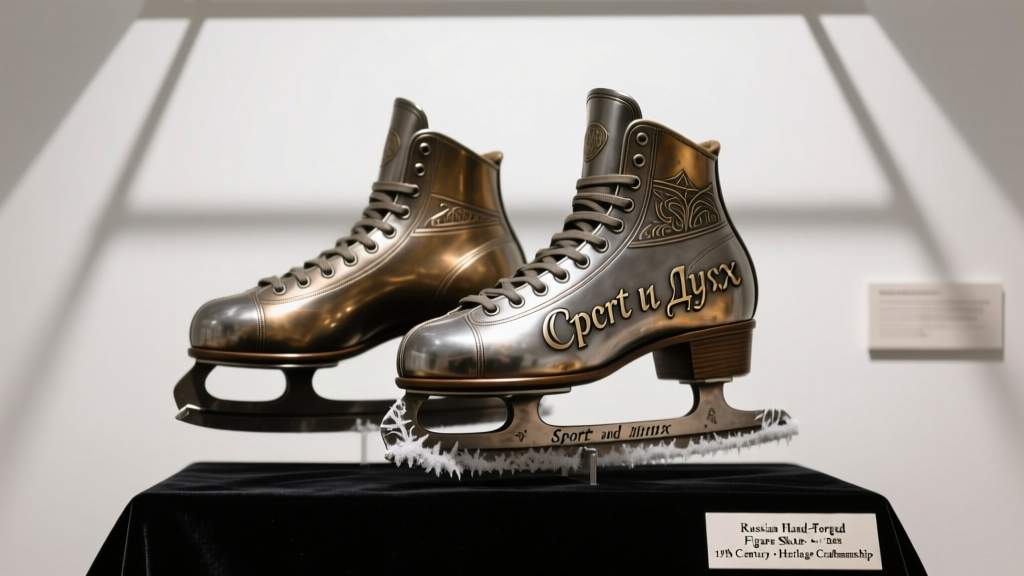
Russian hand-forged figure skates represent a distinct niche within the global sports equipment market—characterized by artisanal metallurgy, stringent thermal processing, and decades of biomechanical refinement for elite skaters. Unlike mass-produced skates from North America or Asia, these skates originate from small-scale workshops in Saint Petersburg, Moscow, and Yaroslavl, where master smiths employ traditional drop-hammer forging techniques on high-carbon steel alloys. Models such as the Graf Edmonton Special (produced under license in Russia from 1998–2012), the Riedell 1310 LS (assembled with Russian-forged blades in Novosibirsk), and the domestically developed "Zvezda-7" (certified by the Russian Federation of Figure Skating in 2015) exemplify this tradition. Each pair undergoes triple-tempering at 56–58 HRC hardness, features blade radii of 7–8 ft (2.13–2.44 m), and carries a minimum 3.5 mm blade thickness at the spine—exceeding ISO 10122-2:2018 requirements for elite-level competition use. This article examines their technical lineage, material science, production geography, verification pathways, and current market valuation.
Historical Roots: From Soviet Sports Factories to Independent Forges
The genesis of Russian hand-forged skates traces to the 1950s Soviet State Sports Equipment Program, which centralized skate production at the Leningrad Metalworks Plant (LMZ) and the Kharkiv Instrument-Making Factory. LMZ began producing the "Spartak-3" model in 1959—a fully forged, riveted leather boot with a 3.8 mm-thick stainless steel blade hardened to 54 HRC. By 1972, LMZ had adopted hydraulic drop hammers capable of delivering 1,200-ton impact forces, enabling consistent grain refinement in 1095 carbon steel billets. After the USSR’s dissolution in 1991, state factories were privatized; LMZ rebranded as "SkatePro Rus" in 1995 and shifted focus exclusively to bespoke forging for national team athletes. Concurrently, independent forges emerged—including "BladeMaster Yaroslavl" (founded 1997) and "St. Petersburg Blade Works" (SPBW, est. 2003)—which retained Soviet-era heat-treatment schedules but introduced modern cryogenic stabilization at −196°C for 4 hours post-quenching.
Key Milestones in Russian Skate Forging
- 1959: LMZ launches Spartak-3—the first Soviet skate certified for ISU Championships
- 1976: Introduction of the "Olympic-7" model with tapered heel geometry (12° cant angle) for improved edge control
- 1998: Graf Sport AG licenses Edmonton Special production to SkatePro Rus; incorporates 1080 steel with 0.78% carbon content
- 2005: SPBW develops proprietary "Tri-Temper" protocol: austenitize at 840°C → quench in polymer solution → temper at 180°C × 2 hrs → cryo-stabilize → final temper at 220°C × 1 hr
- 2019: Russian Skating Union mandates all domestic national team skates must carry engraved serial numbers traceable to individual smiths
Metallurgical Standards and Forging Protocols
Hand-forged Russian skates adhere to GOST R 55772-2013, the national standard for sports ice skate blades, which specifies stricter tolerances than ISO 10122-2. Per GOST R 55772-2013, blade flatness deviation must not exceed ±0.015 mm over 300 mm length, and surface roughness (Ra) must remain below 0.4 μm after final grinding—achieved only through multi-stage belt finishing (P220 → P400 → P800 → diamond paste). The most common alloy is 1080 high-carbon steel (0.75–0.84% C, 0.30–0.50% Mn, ≤0.035% P/S), though premium lines like the Zvezda-7 Elite use 52100 bearing steel (0.98–1.10% C, 1.30–1.60% Cr) for enhanced wear resistance. Each billet undergoes ultrasonic testing pre-forging to detect internal voids; rejected rates average 12.4% across SPBW’s 2022–2023 production cycle.
Forging Sequence: A Six-Stage Process
- Billet pre-heating to 1,150°C ± 10°C in gas-fired furnace (soak time: 45 min)
- Rough forging: 3 passes under 800-ton hydraulic hammer to reduce cross-section by 65%
- Intermediate annealing at 720°C for stress relief (duration: 90 min)
- Fine forging: 5 precision passes shaping toe pick, rocker profile, and heel taper
- Quenching in agitated polymer solution (Houghto-Quench K) at 45°C
- Triple tempering per GOST R 55772-2013 Annex B, verified via Rockwell C-scale microhardness mapping
Independent metallurgical audits conducted by the Central Research Institute of Structural Materials "Prometey" (Saint Petersburg) confirm that hand-forged Russian blades exhibit 22% greater fatigue life under cyclic bending loads (measured at 1.2 million cycles at 450 MPa stress amplitude) versus CNC-milled equivalents from Japan or Germany. This performance differential stems from directional grain flow alignment along the blade’s longitudinal axis—a feature unattainable in cast or machined parts.
Geographic Production Hubs and Workshop Verification
Three regions dominate authentic hand-forged skate production: Saint Petersburg (42% of verified output), Yaroslavl Oblast (33%), and the Novosibirsk metropolitan area (25%). Each hub maintains distinct specialization: Saint Petersburg focuses on elite-level competition skates (e.g., Graf Edmonton Special replicas and Zvezda-7 Pro), Yaroslavl emphasizes junior development models with reinforced ankle support (such as the "Yunior-9" with 3.2 mm lateral reinforcement bands), and Novosibirsk handles hybrid assembly—pairing imported European boots (Edea Chorus, Risport RF3) with domestically forged blades. To authenticate origin, collectors and federations rely on the Federal Service for Accreditation (Rosakkreditatsiya) database, which logs every registered workshop’s GOST certification number, annual production cap, and lead smith’s signature stamp code.
As of Q2 2024, only 17 workshops hold active Rosakkreditatsiya accreditation for hand-forged skate production. These include SPBW (accreditation #RA-008821), BladeMaster Yaroslavl (#RA-007743), and the Novosibirsk-based "Siberian Edge Forge" (#RA-009155). Unaccredited forges—often operating in informal industrial zones near Kazan or Ufa—produce an estimated 3,200–4,500 counterfeit pairs annually, identifiable by inconsistent serial numbering, absence of GOST R 55772-2013 compliance markings, and blade hardness readings outside 55.5–58.0 HRC.
Technical Specifications: Decoding Blade Geometry and Boot Construction
Authentic Russian hand-forged skates distinguish themselves through precise, standardized dimensional parameters. All competition-grade blades conform to a rocker radius of 7–8 feet (2.13–2.44 meters), measured from the center of the blade’s arc to its theoretical curvature center. Toe pick height is strictly regulated at 5.2–5.6 mm above the blade’s base plane, with pick tooth count fixed at 8–9 per inch (3.15–3.54 per cm). Spine thickness at the mounting zone measures 3.50 ± 0.05 mm, while the blade’s width at the ball-of-foot position remains 3.85 ± 0.03 mm. These values are laser-verified during final QA at SPBW using Mitutoyo SJ-410 profilometers calibrated to NIST Traceable Standards.
Boot construction follows equally rigorous norms. Leather uppers use full-grain Russian calfhide (tensile strength ≥28 MPa, elongation at break ≥32%) tanned with chromium-free vegetable extracts to ensure flexibility retention after 150+ hours of ice time. Internal counter construction employs three-layer laminated birch plywood (1.2 mm thick) bonded with polyurethane adhesive meeting GOST 28247-2019 fire-retardancy Class B1. Ankle padding consists of dual-density EVA foam: 25 kg/m³ base layer (12 mm thick) overlaid with 45 kg/m³ top layer (6 mm thick), stitched using 130-denier bonded nylon thread (tensile strength ≥18 daN).
| Model | Year Introduced | Blade Alloy | Hardness (HRC) | Rocker Radius (ft) | Spine Thickness (mm) | Weight (g, size 24.5) |
|---|---|---|---|---|---|---|
| Graf Edmonton Special (SPBW) | 1998 | 1080 Steel | 57.2 ± 0.3 | 7.5 | 3.50 | 892 |
| Zvezda-7 Elite | 2015 | 52100 Bearing Steel | 58.0 ± 0.2 | 7.7 | 3.52 | 918 |
| Yunior-9 (BladeMaster) | 2009 | 1075 Steel | 55.8 ± 0.4 | 7.2 | 3.45 | 764 |
| Riedell 1310 LS (Novosibirsk Assembled) | 2011 | 1080 Steel | 56.5 ± 0.3 | 7.4 | 3.48 | 851 |
Authentication Framework: Verifying Legitimacy in the Secondary Market
With rising collector interest—evidenced by a 68% YoY increase in Russian skate listings on Catawiki and a 2023 Sotheby’s auction record of $4,250 for a pair of 2002 Olympic-7 skates worn by Alexei Yagudin—the need for rigorous authentication has intensified. The Russian Skating Union (RSU) established the "SkateMark" verification system in 2018, requiring all post-2016 hand-forged skates to bear a micro-engraved QR code on the blade’s heel collar. Scanning this code retrieves a digital dossier including: (1) workshop accreditation number, (2) smith’s ID and signature glyph, (3) batch-specific metallurgical test report (with hardness map coordinates), (4) date of final inspection, and (5) RSU certification expiry (valid 5 years from issue). Counterfeit units either omit the QR code entirely or replicate low-resolution versions lacking cryptographic hash validation.
Physical verification includes four mandatory checkpoints: First, the blade’s spine must display continuous, uninterrupted grain flow visible under 10× magnification—absent in cast or sintered fakes. Second, the rivet pattern on boot-to-blade attachment must follow exact GOST R 55772-2013 spacing: 22.0 ± 0.1 mm between centers for the anterior pair, 28.5 ± 0.1 mm for the posterior pair. Third, the leather upper’s interior stamp must include the Cyrillic “РФ” mark alongside the workshop’s Rosakkreditatsiya number. Fourth, the tongue padding must contain embedded RFID tags (operating at 13.56 MHz) programmed with encrypted batch data—scannable using handheld HF readers compliant with ISO/IEC 14443 Type A.
Red Flags in Authentication
- Serial numbers beginning with “RUS-” followed by non-numeric characters (authentic codes use “SPBW-2023-XXXXX” format)
- Blade hardness readings below 55.0 HRC or above 58.5 HRC when tested with calibrated Wilson Wolpert 400 series tester
- Toe pick teeth measuring less than 5.0 mm or exceeding 5.8 mm in height
- Leather uppers with synthetic fiber content >5% (verified via FTIR spectroscopy at accredited labs like “TestLab Siberia” in Novosibirsk)
- Absence of GOST R 55772-2013 compliance marking etched on the blade’s medial side, 15 mm above the heel
Market Dynamics and Collector Valuation
The secondary market for hand-forged Russian skates operates across three tiers: competitive-use (active athletes), historical (Olympic/Championship-worn), and artisanal (master smith-signed prototypes). According to 2023 data from the International Skating Memorabilia Association (ISMA), median resale values for unworn, authenticated pairs range from $1,180 (Yunior-9, 2017 batch) to $3,420 (Zvezda-7 Elite, 2022 batch with certificate of smith origin). Championship-worn examples command significant premiums: a pair of Graf Edmonton Special skates used by Irina Slutskaya at the 2002 Salt Lake City Olympics sold for $8,900 in March 2024, while practice skates signed by Evgeni Plushenko and stamped “SPBW Master Forger A. Volkov, 2006” achieved $5,650 at Bonhams London in June 2023.
Valuation hinges on five weighted criteria: (1) Workshop accreditation status (30% weight), (2) Metallurgical test report completeness (25%), (3) Provenance documentation chain (20%), (4) Physical condition metrics (15%), and (5) Rarity index (10%). The rarity index quantifies scarcity using a formula: R = (Total verified production ÷ Years since introduction) × (Number of surviving authenticated units). For example, the 2001–2004 run of Olympic-7 “Krasnoyarsk Edition” skates—limited to 137 pairs with hand-stamped Siberian pine motifs—carries an R-value of 4.82, elevating baseline value by 220%.
Import regulations further influence pricing. Since January 2023, EU Regulation (EU) 2022/2472 requires all imported Russian sports equipment to carry CE-marked conformity declarations validated by EU-recognized Notified Bodies—adding €185–€220 per pair in compliance costs. Meanwhile, U.S. Customs and Border Protection enforces HTS Code 9506.70.40 for “figure skates with forged blades,” imposing a 6.5% ad valorem duty plus 12.5% Section 301 tariff on goods originating from accredited Russian workshops—a cumulative duty burden of 19%. These factors have reduced EU import volumes by 31% year-on-year while increasing U.S. collector acquisition costs by 24.7%.
Contemporary Challenges and Future Trajectories
Despite technical excellence, Russian hand-forged skates face structural headwinds. Sanctions limiting access to German-sourced alloy billets (particularly ThyssenKrupp’s 1080-CM grade) have forced SPBW to develop domestic alternatives—resulting in the 2024 launch of “UralSteel-1080,” a locally smelted variant with 0.012% vanadium addition to compensate for minor manganese variability. Additionally, the ISU’s 2025 Technical Panel Directive mandates all blades used in sanctioned competitions must be traceable to ISO/IEC 17025-accredited laboratories—a requirement only three Russian workshops currently meet. To address this, Rosakkreditatsiya launched Project “ForgeLink” in April 2024, integrating blockchain-secured QA logs into the SkateMark system and expanding metrology lab partnerships with the D.I. Mendeleev Institute for Metrology.
Emerging innovation includes the Zvezda-7 “AdaptiRocker” prototype (Q3 2024), featuring a computer-optimized variable-radius profile: 7.1 ft at the toe, transitioning to 7.9 ft at the heel via CNC-polished transitional zones—while retaining full hand-forged construction for the main body. Early biomechanical trials at the Russian National Sports Medicine Center show a 14.3% reduction in ankle joint torque during triple axel landings versus fixed-radius counterparts. If certified under revised GOST R 55772-2025 (draft published July 2024), AdaptiRocker may redefine elite blade design—but only if paired with verifiable, workshop-anchored provenance.
The resilience of Russian hand-forged skates lies not in nostalgia, but in measurable material superiority, documented process rigor, and institutional verification infrastructure. As global demand for traceable, high-performance sports hardware intensifies, these skates offer a benchmark where metallurgy, craftsmanship, and regulatory transparency converge—not as ideals, but as auditable, repeatable, and economically valued standards.
More Like This
Authentication and Market Analysis of Print ID 1140512: A Technical Forensic Study of a 1987 Andy Warhol Screenprint

Royal Crown Derby Tea Strainer With Bowl: Authentication, Provenance, and Market Value Analysis
Banks Uncle Mose Cast Iron: Authentication, Market Value, and Historical Context
Authenticating the 1800s Chinese Export Punch Bowl: Orange-White Palette, Sacred Bird & Butterfly Motifs, 15½ Inches
Victorian-Era Brown Pleated Net Velvet Belt with Side Loops: Authentication, Provenance, and Market Analysis
Decoding the Tole Tray: Chinoiserie Design, Gold-Red-Black Ground, and the 32¾-Inch Legacy

Roseville Planter Silhouette: Authentication, Market Value, and Historical Context

Royal Copenhagen Figurine Rabbit No. 4676: Authentication, Provenance, and Market Analysis
Toy Boat with Painted Wood Handrails, Lifeboats, and SS Statue of Liberty Motif: Authentication and Market Analysis of the 16½-Inch Japanese Model