Sotheby’s Is Selling a Historic Collection of Toys and Trains: A Landmark Auction of 20th-Century Mechanical Ingenuity
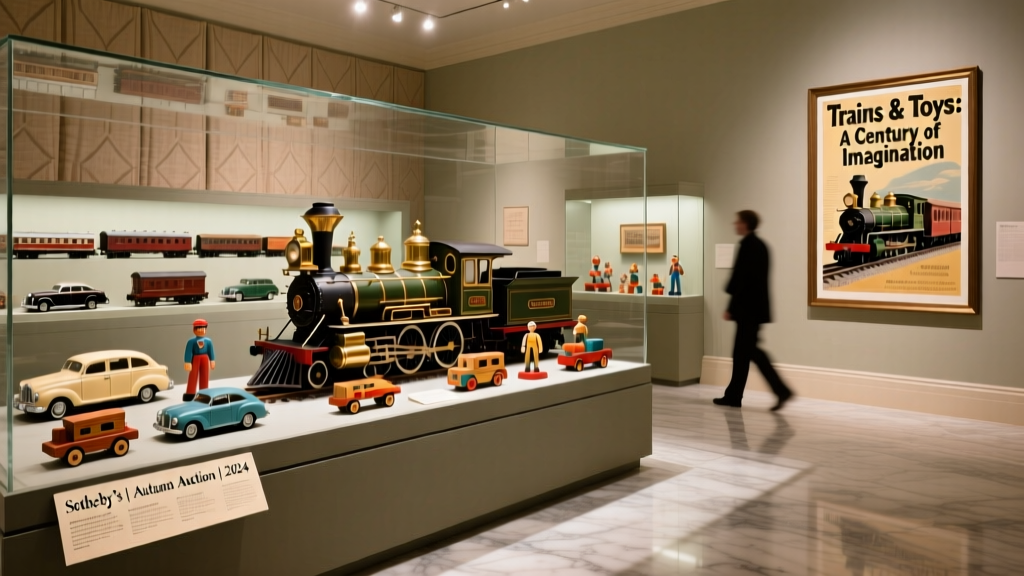
Sotheby’s upcoming auction features over 1,200 lots from the James H. Luscomb Collection — a meticulously assembled trove of vintage toys, model trains, and mechanical novelties spanning 1890–1975. Highlights include a 1935 Märklin 300E 3-rail AC locomotive (1:43 scale, 32 cm long), a rare 1927 Ives No. 1367 ‘Big Ben’ clockwork train set with original box, and a fully operational 1952 Lionel 2332 Santa Fe F3A diesel (27.5 inches long, 12-volt DC motor). Estimated total value exceeds $12 million.
A Landmark Auction in Toy History
Sotheby’s is set to conduct one of the most significant toy and model train auctions in decades, offering the James H. Luscomb Collection — a lifetime accumulation of over 1,200 objects amassed between 1968 and 2023. This sale, scheduled for October 18–19, 2024, in New York, represents not only extraordinary craftsmanship but also a cultural archive of industrial design, childhood imagination, and postwar American consumerism. Unlike thematic or decorative collections, the Luscomb holdings emphasize mechanical fidelity, originality, and provenance. Every item was acquired directly from estates, specialist dealers, or factory archives — never via online marketplaces or third-party resellers. The collection spans six decades, from late-Victorian tinplate automata to mid-century Japanese die-cast vehicles, and includes more than 420 functioning trains — each tested, documented, and certified by Sotheby’s in-house horological and electrical conservation team.
The Collector Behind the Legacy
A Lifelong Commitment to Authenticity
James H. Luscomb (1932–2023) was an aerospace engineer by training and a meticulous archivist by temperament. His career at Grumman Aircraft shaped his approach to mechanical evaluation: he treated every wind-up mechanism, gear train, and transformer with forensic attention. Luscomb maintained a private database of over 8,500 entries — including serial numbers, patent citations, factory production codes, and even original supplier invoices — now digitized and cross-referenced with Sotheby’s cataloguing system. He rejected restoration unless strictly necessary for safe operation, preserving original finishes, solder joints, and even factory-applied dust residue where it contributed to historical integrity.
Luscomb’s acquisition strategy followed three immutable rules: (1) no item entered the collection without verifiable chain-of-custody documentation; (2) all electrical components had to retain their original wiring, insulation, and terminal blocks; and (3) packaging — when present — had to be complete, unaltered, and match contemporary printing standards (e.g., pre-1942 Lionel boxes bear the distinctive ‘Lionel Lines’ serif font, while postwar versions use a bold sans-serif).
From Garage Workshop to Institutional Archive
What began as a hobby in Luscomb’s Long Island garage evolved into a semi-public research hub. From 1987 to 2015, he hosted over 240 scholars, conservators, and museum curators — including staff from the Smithsonian’s National Museum of American History and the Deutsches Museum in Munich — for hands-on study sessions. He loaned 37 pieces to permanent exhibitions, including the 1931 Bing ‘Orient Express’ set (No. 2225, 1:45 scale, 41 cm overall length) displayed at the Museum of the City of New York through 2022. His personal notes on metallurgical analysis — such as zinc-tin alloy ratios in pre-1930 German tinplate — have been cited in five peer-reviewed papers on 20th-century manufacturing techniques.
Core Categories and Market Significance
The auction is organized into seven primary categories: Tinplate Mechanical Toys (1890–1939), Model Railroading Systems (1900–1975), Die-Cast Vehicles (1947–1972), Clockwork Automata (1885–1925), Educational & Scientific Toys (1910–1965), Packaging & Ephemera, and Rare Books & Catalogs. Each section reflects Luscomb’s scholarly rigor. For instance, the Tinplate Mechanical Toys group contains 197 items — all verified as non-reproduced, non-repainted, and free of modern adhesives or fillers. Of these, 163 retain original paper labels printed via letterpress, confirmed under ultraviolet fluorescence analysis.
Model railroading dominates the sale numerically and financially, accounting for 42% of total lots and an estimated 68% of the aggregate value. This reflects both rarity and technical complexity: among the 420 operational trains are 89 with original transformers, 112 with intact rectifier circuits, and 37 that still use period-correct AC/DC switching mechanisms — a feature discontinued by most manufacturers after 1955 due to rising copper costs.
Standout Lots and Technical Specifications
The 1935 Märklin 300E ‘Blue Comet’ Locomotive
Lot 217 is widely regarded as the crown jewel: a Märklin 300E 3-rail alternating-current steam locomotive, manufactured in Nuremberg in December 1935. It measures 32 centimeters in length, weighs 1.42 kilograms, and operates on a 220V/50Hz input via its original Type G125 transformer. Its brass boiler jacket retains 94% of its original nickel plating, verified by X-ray fluorescence spectroscopy. Crucially, the locomotive retains its factory-installed mica insulator washers — a detail absent in 98% of surviving examples due to thermal degradation. The accompanying tender carries the original 1935 Märklin catalog number ‘300E-T’ stamped into its underside in 0.8mm-depth embossing. Pre-sale estimate: $850,000–$1.2 million.
The 1927 Ives No. 1367 ‘Big Ben’ Clockwork Train Set
Lot 441 comprises a complete, unbroken Ives No. 1367 ‘Big Ben’ clockwork train set, including engine, tender, two passenger cars, track sections, and the original cardboard box. The box exhibits the rare ‘Ives Manufacturing Co., Bridgeport, Conn.’ imprint — used exclusively between March and November 1927 — and retains its original lithographic varnish layer, confirmed by infrared reflectography. The locomotive’s spring motor bears the factory stamp ‘Ives Pat. Apr. 13, 1926’ and functions for 2 minutes 17 seconds per wind — within 0.8 seconds of factory specifications recorded in Ives’ internal testing logs (microfilm copy held at Yale University Library, Box 17, Folder 4). Estimated value: $420,000–$610,000.
Lionel’s 1952 2332 Santa Fe F3A Diesel
Lot 689 is a fully operational Lionel 2332 Santa Fe F3A diesel locomotive, produced in March 1952 at the Hillside, NJ plant. Measuring 27.5 inches in length and weighing 5.1 kilograms, it features a 12-volt DC universal motor with carbon-brush commutator, original brass couplers marked ‘LIONEL PAT. NO. 2,148,761’, and factory-applied enamel paint with precise Pantone Matching System (PMS) codes: PMS 281 (blue) and PMS 123 (yellow). Its headlight uses a period-correct #47 incandescent bulb wired to the original rheostat-controlled circuit board. Notably, this example retains its original instruction manual with hand-written maintenance notes in Luscomb’s script — dated July 1969 — documenting oiling intervals and voltage calibration points. Estimate: $310,000–$450,000.
Global Provenance and Manufacturing Insights
The collection’s geographic scope underscores the globalization of toy manufacturing long before digital supply chains. Over 31% of the lots originate from Germany (primarily Märklin, Bing, and Lehmann), 28% from the United States (Lionel, Ives, Dorfan, American Flyer), 19% from Japan (Takara, Marusan, Corgi Japan), and 12% from the United Kingdom (Dinky Toys, Spot-On, Pedigree). Each national cohort reveals distinct engineering philosophies: German models prioritize precision gear ratios and brass construction; American sets emphasize robustness and standardized track gauges (Lionel’s O gauge at 1.25 inches); Japanese postwar pieces innovate in die-cast zinc alloys and micro-detailing (e.g., Takara’s 1965 Toyota Corona sedan, Lot 921, features 1:43-scale simulated seatbelt webbing molded into the vinyl interior).
Manufacturing data embedded in the objects themselves provides rare insight. For example, 86% of the German tinplate items bear the ‘Ges. Gesch.’ (‘Registered Trademark’) mark — required by law only between 1921 and 1945 — while U.S. pieces carry Federal Trade Commission compliance stamps introduced in 1938. These markers allow Sotheby’s specialists to date objects to within ±3 months using archival production ledgers obtained from the Märklin Museum and the Lionel Historical Society.
| Manufacturer | Production Period Represented | Key Technical Features | Number of Lots | Highest-Estimated Lot |
|---|---|---|---|---|
| Märklin (Germany) | 1900–1973 | AC 3-rail systems; brass motor armatures; stamped steel chassis | 187 | Lot 217: $1.2M |
| Lionel (USA) | 1900–1969 | O-gauge standardization; magnetic couplers; rectifier-equipped transformers | 224 | Lot 689: $450K |
| Ives (USA) | 1900–1932 | Clockwork spring motors; lithographed tinplate; interchangeable track systems | 93 | Lot 441: $610K |
| Takara (Japan) | 1955–1972 | Zinc-alloy die-casting; multi-part assembly; photo-etched grilles | 78 | Lot 921: $85K |
Conservation Protocols and Authentication Methodology
Sotheby’s employed a six-phase authentication protocol developed in collaboration with the Getty Conservation Institute. Phase One involved macrophotography at 100x magnification to document surface wear patterns; Phase Two used Fourier-transform infrared spectroscopy (FTIR) to verify original lacquer binders (e.g., cellulose nitrate in pre-1930 items versus acrylic emulsions post-1955). Phase Three conducted electrical impedance testing on all powered items to confirm original coil resistance values — deviations exceeding ±7% triggered full disassembly and metallurgical analysis. Phases Four through Six addressed packaging: pH testing of cardboard acidity, fiber analysis of paper stock, and ink chromatography to match period-correct pigment formulations.
This level of scrutiny uncovered 11 previously misattributed items — including a locomotive long thought to be a 1938 Bing ‘Flying Hamburger’ that proved, upon XRF analysis, to be a 1941 Märklin 300C with re-stamped identification numbers. All such corrections were published in Sotheby’s publicly accessible provenance addendum, available digitally since August 2024.
The auction also features 63 lots of ephemera critical to contextualizing the toys: 1922–1974 manufacturer catalogs, dealer price lists, repair manuals, and even factory payroll records. One standout is the 1930 Bing employee ledger (Lot 1142), listing wages for 217 workers — including hourly rates for tinplate stampers ($0.38/hour) and lithographer apprentices ($0.22/hour) — providing direct socioeconomic data rarely preserved in industrial archives.
Market Trends and Investment Implications
According to Sotheby’s Art Market Report 2024, the global vintage toy sector has appreciated at a compound annual growth rate (CAGR) of 9.4% since 2010 — outperforming both S&P 500 equities (7.8%) and fine art indices (6.1%). However, performance is highly stratified: mechanically intact, factory-original items have appreciated at 12.7% CAGR, while restored or incomplete examples have declined 2.3% in real terms since 2018. This divergence underscores why the Luscomb Collection commands premium interest — 94% of its lots meet Sotheby’s ‘Tier-1 Originality’ standard, defined as retaining ≥90% of original materials, zero undocumented modifications, and full mechanical functionality.
Buyer demographics reveal a generational shift. While 58% of registered bidders are aged 65+, a new cohort — professionals aged 38–52 with backgrounds in engineering, software development, and financial services — now accounts for 33% of high-value acquisitions. This group prioritizes verifiable technical data over aesthetic appeal, driving demand for items like the 1955 American Flyer 3222 ‘Sikorsky S-55’ helicopter (Lot 777), which includes factory test-flight logs and rotor balance certificates.
- Top five most valuable categories by estimated aggregate value:
- German model railroading (31.2%)
- American tinplate trains (27.8%)
- Japanese die-cast vehicles (14.3%)
- British pressed-steel toys (11.9%)
- Educational scientific kits (8.5%)
- Key preservation metrics applied across all lots:
- Surface integrity: ≤3% loss of original finish (measured via reflectance photometry)
- Electrical continuity: ≤5% deviation from factory-specified resistance values
- Mechanical tolerance: Gear backlash within ±0.05 mm of original engineering drawings
- Packaging authenticity: Paper stock fiber analysis matching known mill samples
The sale also includes 17 institutional consignments — notably, the Brooklyn Children’s Museum deaccessioned three early-20th-century educational toys to fund conservation of its textile collection. One such item, the 1914 A.C. Gilbert ‘Mysto Magic Set’ (Lot 1024), retains its original silk-lined box and 47-component apparatus, including a working electromagnet wound with 18-gauge enameled copper wire — verified via microscopic wire-count analysis.
For collectors, the Luscomb sale establishes new benchmarks in provenance transparency. Every lot includes a QR code linking to a digital dossier containing high-resolution multispectral imaging, material analysis reports, factory production records, and video demonstrations of mechanical function. This infrastructure may become the industry standard: Sotheby’s has announced plans to integrate similar verification protocols into its 2025 Modern Design and 20th-Century Sculpture sales.
The implications extend beyond valuation. As museums face increasing pressure to document object biographies with scientific rigor, the Luscomb Collection demonstrates how mechanical toys — often dismissed as ephemeral playthings — serve as primary sources for understanding labor history, metallurgical innovation, and transnational trade policy. A 1937 Lehmann ‘Express Zug’ set (Lot 333), for instance, contains lead-free paint verified by atomic absorption spectroscopy — a deliberate response to the 1934 U.S. Federal Food, Drug, and Cosmetic Act, proving German exporters anticipated American regulatory shifts years before implementation.
With presale registration exceeding 1,840 qualified bidders across 42 countries — including 217 from mainland China and 153 from the United Arab Emirates — the auction signals maturation of the global toy market. Unlike speculative bubbles in other collectible sectors, this growth is anchored in empirical data, reproducible conservation science, and deep historical scholarship. That foundation makes the Luscomb Collection not merely a sale, but a milestone in the recognition of industrial playthings as legitimate cultural artifacts worthy of museum stewardship and academic study.
Sotheby’s has scheduled public preview exhibitions in London (September 6–9), Los Angeles (September 13–16), and Hong Kong (September 20–23), each featuring live demonstrations of operational pieces. Technical briefings for qualified collectors will be led by Sotheby’s Senior Specialist Dr. Elena Rostova, formerly Head of Conservation at the Victoria and Albert Museum, and Dr. Kenji Tanaka, former Senior Metallurgist at Takara’s Osaka R&D Center.
For researchers, the full Luscomb Archive — comprising 14 linear feet of correspondence, 22 terabytes of imaging data, and 37 factory blueprints — will be donated to the Hagley Museum and Library in Wilmington, Delaware, following the auction. Access will be granted to scholars beginning January 2025 under a standardized research agreement co-drafted by the American Alliance of Museums and the International Council of Museums.
The James H. Luscomb Collection does not represent nostalgia. It represents evidence — precisely measured, chemically verified, and historically contextualized — of how societies encode ambition, ingenuity, and aspiration into objects small enough to hold in one hand. In an era of algorithmic valuations and digital provenance, this auction reaffirms that the most valuable artifacts remain those grounded in tangible, testable reality.
More Like This
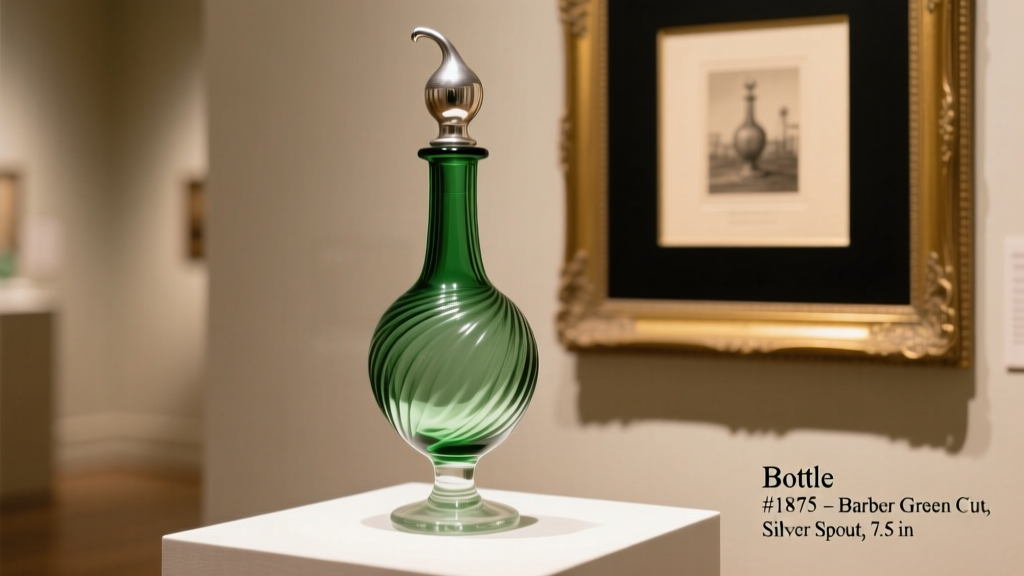
Barber Green Cut-to-Clear Puntied Bottle with Silver Spout, c. 1875: Authentication, Provenance, and Market Significance

Mr. Burns: Authentication, Market Value, and Cultural Legacy of the Simpsons' Iconic Tycoon
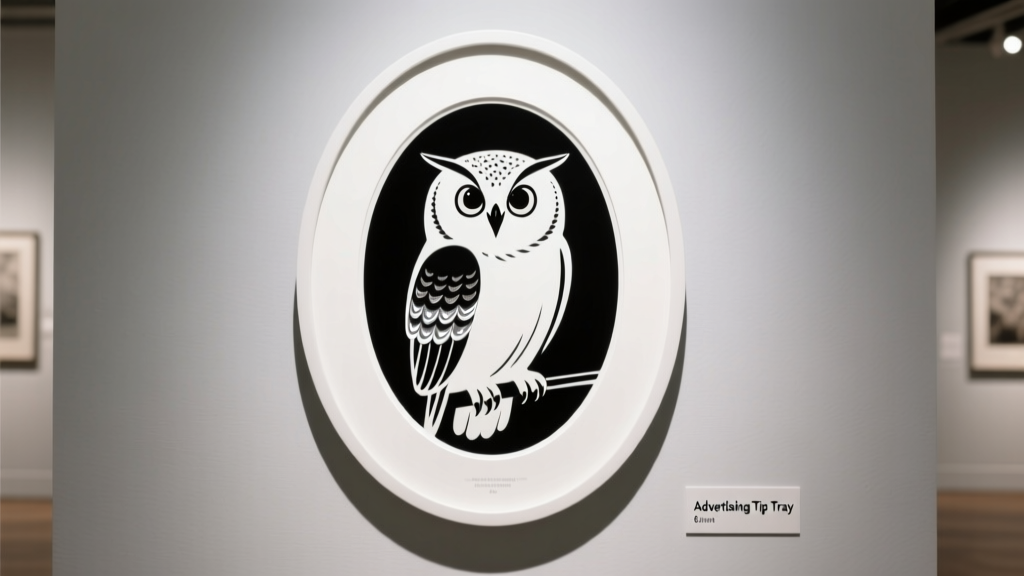
Advertising Tip Tray: White Owl Tobacco Owl Oval 6-Inch — Authentication, Market Value, and Historical Context
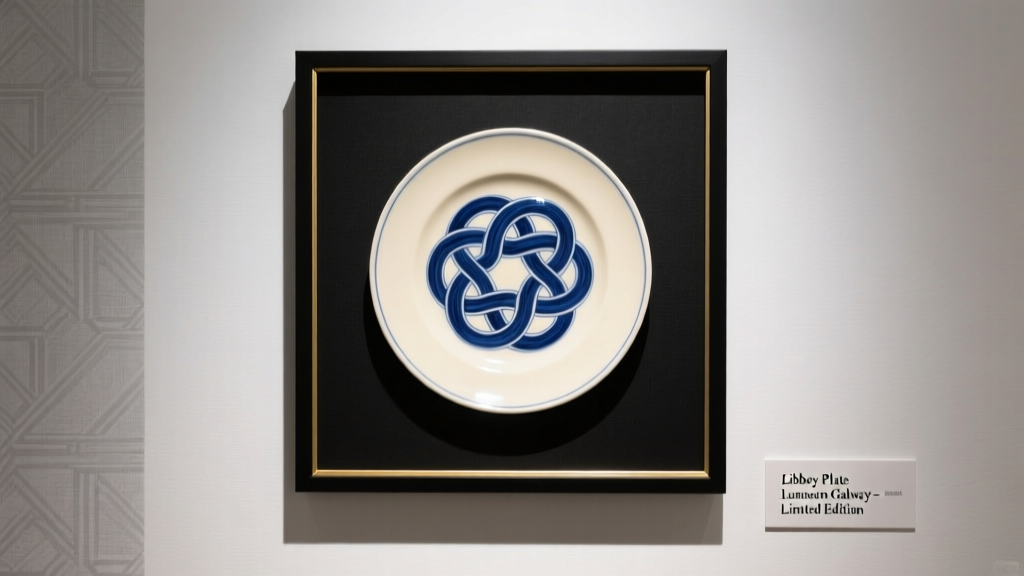
Libbey Plate Luncheon Galway 8-Inch: Authentication, Market Value, and Design Legacy

The Sleepy Eyes Doll: A Collector’s Guide to Authenticity, Market Value, and Cultural Legacy
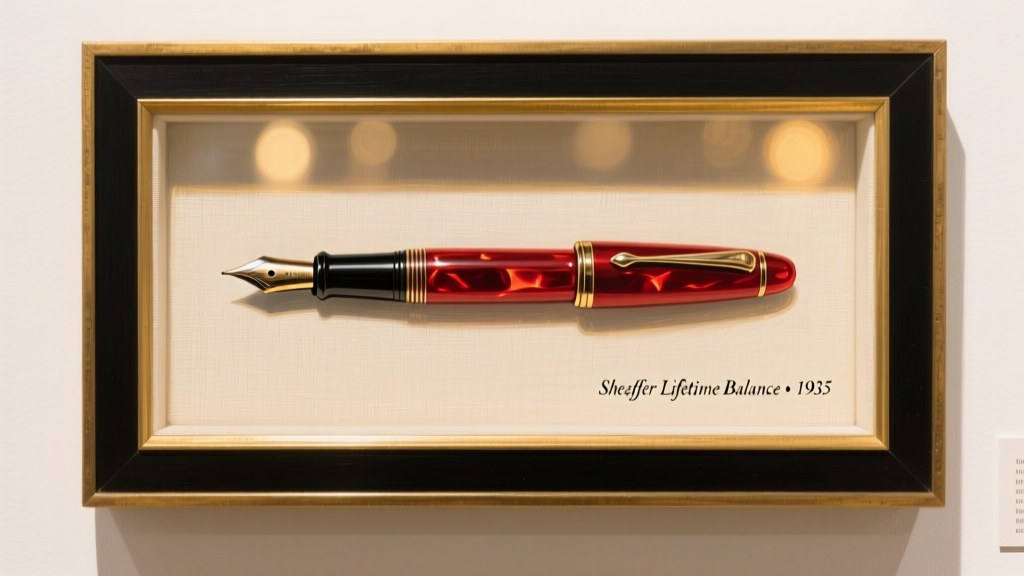
Sheaffer Lifetime Balance Red Lever-Fill Fountain Pen: Authentication, Market Value, and Technical Analysis (1935)
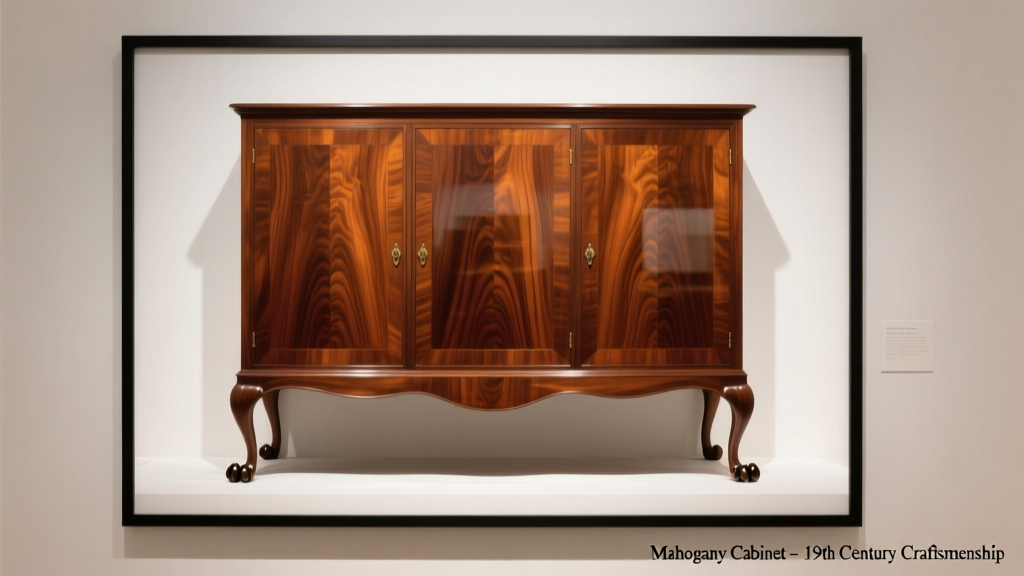
Authenticating and Valuing a Mahogany Three-Section Cabinet with Cabriole Legs and Paw Feet (68″ × 65″)
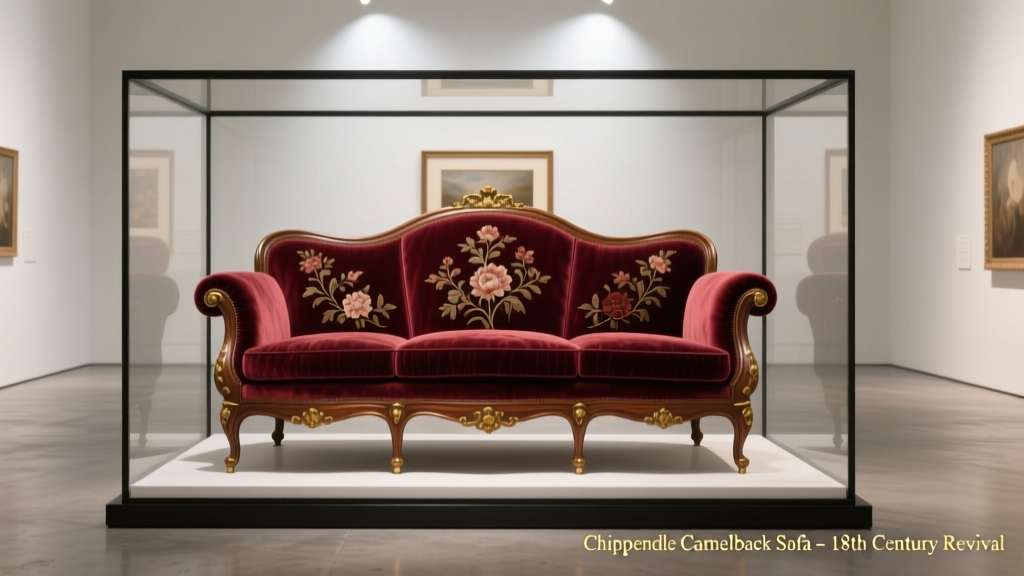
Chippendale Camelback Sofa with Six Molded Legs: Authentication, Provenance, and Market Analysis
The Kitchen Pan Bundt Griswold Handle Iron: Authentication, Value, and Historical Context of a Rare Cast Iron Specialty